
 En
 Español
 русский
 عربى

Why Ocean-Themed Double-Row Roller Skates Are an Excellent Choice for Young Beginners
Date:Nov 08, 2026
Content
- 1 1. Product Overview and Design Positioning
- 2 2. Advantages of the Double-Row Configuration
- 3 3. Comfortable Performance for Leisure Skating
- 4 4. Protective Comfort Around the Foot and Ankle
- 5 5. Ocean-Themed Styling and Illuminated Wheels
- 6 6. Product Advantages Compared with More Specialized Alternatives
- 7 7. Suitable Applications and User Scenarios
- 8 8. Manufacturing Strengths of Ningbo Feile Sporting Goods Co., Ltd.
- 9 9. Mold and Injection Molding Capabilities
- 10 10. Sewing, Assembly, and Product Integration
- 11 11. Research, Development, and Product Improvement
- 12 12. Quality Systems and Certifications
- 13 13. OEM and One-Stop Sourcing Advantages
- 14 14. Size and Packaging Information
- 15 15. Safety and Responsible Use
- 16 16. Value for Retailers and Distributors
- 17 17. Value for OEM Buyers
- 18 18. Why Manufacturing Integration Matters
- 19 19. Overall Product Assessment
- 20 20. Questions and Answers
- 20.1 Q1: Who is the BW-211-D Kids Roller Skate designed for?
- 20.2 Q2: What is the main advantage of the double-row design?
- 20.3 Q3: Do the wheels light up automatically?
- 20.4 Q4: Are the skates suitable for indoor use?
- 20.5 Q5: Can children use the skates outdoors?
- 20.6 Q6: Are the wheels hard or soft?
- 20.7 Q7: What comfort features does the upper provide?
- 20.8 Q8: What sizes are available?
- 20.9 Q9: What do the listed dimensions represent?
- 20.10 Q10: Is the product suitable for professional skating competitions?
- 20.11 Q11: What protective equipment should children wear?
- 20.12 Q12: What manufacturing facilities does the supplier operate?
- 20.13 Q13: Can the supplier support OEM projects?
- 20.14 Q14: What other products does the company manufacture?
- 20.15 Q15: What certifications or quality systems are reported?
- 20.16 Q16: Why is manufacturing integration valuable for buyers?
- 21 Conclusion
- 22 References
- 23 Product: BW-211-D Kids Roller Skate
Children’s roller skates should do more than look attractive. They should help young users develop balance, confidence, coordination, and a lasting interest in active play. For parents, schools, retailers, and distributors, the ideal product must combine safety, comfort, visual appeal, stable performance, and dependable manufacturing quality. The BW-211-D Kids Roller Skate is designed around these requirements, offering an ocean-themed double-row configuration for children and teenagers who are beginning to explore recreational skating.
With marine-life graphics, automatically illuminated wheels, a low-center-of-gravity chassis, soft-padded support, quiet polyurethane wheels, and a beginner-friendly gliding rhythm, this model provides a balanced introduction to skating. Its structure is intended to reduce the risk of tipping, cushion ankle impact, and help young skaters maintain a comfortable posture during leisure sessions. At the same time, its playful appearance makes the product suitable for family activities, themed events, parties, and recreational venues.
The product is manufactured by Ningbo Feile Sporting Goods Co., Ltd., an experienced Chinese supplier specializing in children’s scooters, inline skates, roller skates, and ice skates. The company combines product development, mold production, injection molding, sewing, assembly, quality management, and export-oriented manufacturing within an integrated facility. This one-stop capability enables the manufacturer to control more stages of production and respond efficiently to OEM and sourcing requirements.
This article examines the design advantages, user benefits, manufacturing strengths, application scenarios, and sourcing value of the BW-211-D Kids Roller Skate. It also explains why double-row roller skates can be particularly suitable for beginners and how a mature production system contributes to consistent product performance.
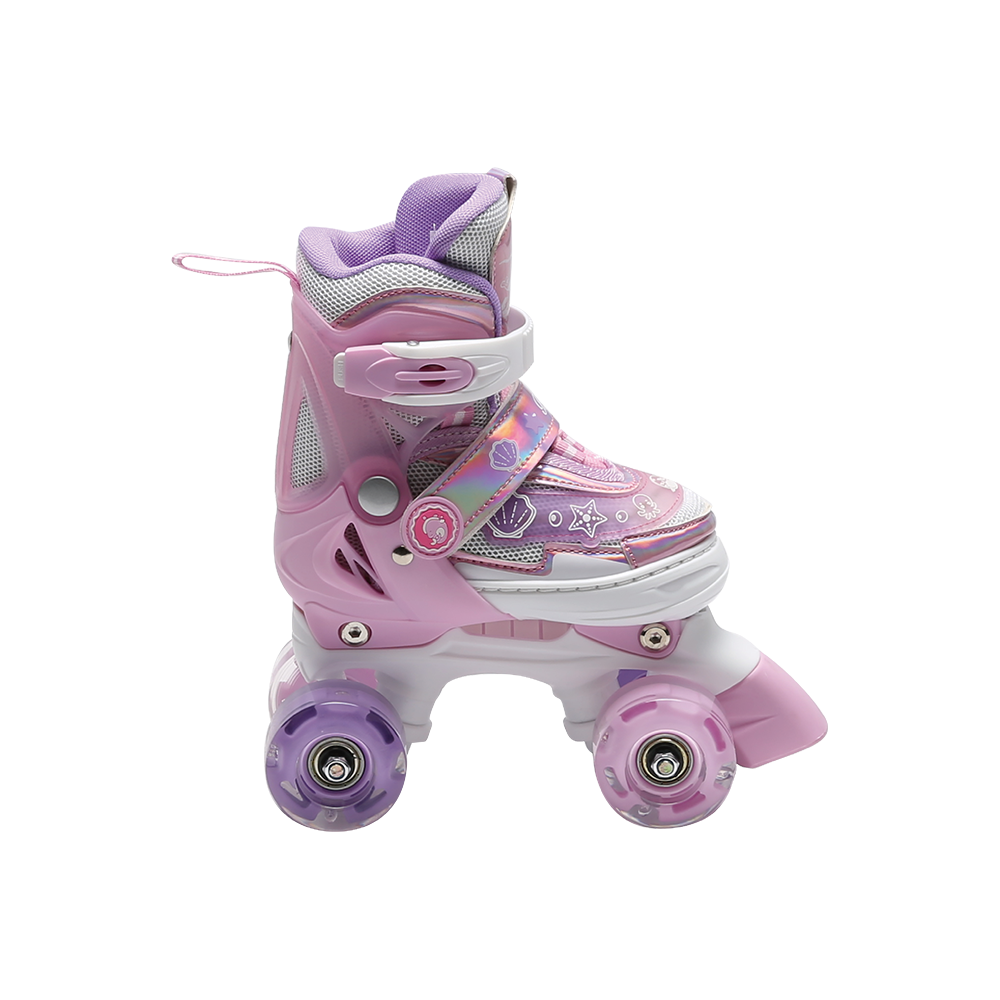
BW-211-D Kids Roller Skate
1. Product Overview and Design Positioning
The BW-211-D is a children’s and teenagers’ double-row roller skate featuring an ocean-inspired appearance. Marine-life patterns are printed across the upper, creating a cheerful and fresh visual identity. The design is intended to appeal to children while remaining practical for daily recreational use.
Unlike many products that focus primarily on decoration, this roller skate combines visual styling with beginner-oriented construction. Its double-row wheel arrangement provides a broad support base, while the chassis is positioned to maintain a relatively low center of gravity. These structural characteristics can help young skaters feel more secure as they learn how to stand, shift their weight, and move forward.
The wheels include an automatic lighting function. When the skates roll, the wheels illuminate with vibrant colors without requiring separate batteries or manual activation. This feature adds excitement to ordinary skating sessions and can encourage children to remain active for longer periods. It also gives the product strong visual appeal in retail displays, indoor recreational venues, and themed events.
The model is positioned for leisure skating, beginner practice, family recreation, light fitness, and performance-related activities. It is not presented as a high-speed professional racing skate. Instead, its strengths lie in stability, comfort, attractive styling, moderate rolling resistance, and accessible handling for children and teenagers.
| Product Feature | Practical Benefit | Primary User Value |
|---|---|---|
| Double-row wheel layout | Creates a broad and stable support base | Helps beginners develop balance and confidence |
| Low-center-of-gravity chassis | Reduces the tendency to tip during basic movement | Supports safer first skating experiences |
| Ocean-themed printed upper | Provides a colorful and distinctive appearance | Attracts children and supports themed use |
| Illuminated wheels | Lights automatically during rolling | Makes skating more engaging and visually exciting |
| Soft polyurethane wheels | Offers quiet rolling, cushioning, and grip | Improves comfort on suitable smooth surfaces |
| Padded, breathable upper | Provides support while reducing rubbing | Allows more comfortable extended leisure use |
2. Advantages of the Double-Row Configuration
The double-row configuration is one of the most important reasons this model is appropriate for beginners. The wheels are arranged in two parallel rows rather than in a single front-to-back line. This arrangement creates a wider base of support, which can make it easier for a new skater to remain upright while standing still or moving slowly.
Children who have never skated may initially struggle with ankle control, weight distribution, and forward movement. A narrow wheel arrangement can feel demanding because small shifts in body position may influence balance quickly. A double-row design generally provides a more forgiving platform. It allows beginners to focus on posture, knee bending, and controlled movement without immediately needing advanced ankle strength.
The wide support base can also be helpful during family activities and casual practice. Parents can guide children by hand while the child becomes familiar with the sensation of rolling. Teachers and recreation supervisors may find that a stable beginner skate simplifies introductory exercises such as standing, stepping, stopping, and turning at low speeds.
The BW-211-D complements this layout with a low-center-of-gravity chassis. A lower center of gravity can help reduce the effect of sudden weight shifts and may lower the risk of tipping during basic practice. This does not eliminate the need for supervision or protective equipment, but it supports a more stable learning environment than a design intended primarily for speed or aggressive maneuvers.
Compared with many performance-oriented skates, this model prioritizes controlled movement over maximum velocity. That positioning is an advantage for its intended users. Young children and first-time skaters often benefit more from predictability and comfort than from high-speed rolling. Moderate resistance can make it easier to manage movement and reduce the likelihood that a beginner will accelerate beyond their ability to stop safely.
Support for Early Balance Training
Learning to skate requires a gradual development of balance. Children must understand how their feet interact with the ground, how to bend their knees, and how to keep their upper body centered over the chassis. The BW-211-D is designed to make these early stages less intimidating.
Because the skate is intended for a gentle gliding rhythm, it can support repeated low-speed practice. A child can learn to shift weight from one foot to the other, take short gliding steps, and gradually coordinate arm and leg movement. This makes the model suitable for introductory lessons, family outings, and casual practice after school.
For retailers and distributors, a beginner-friendly configuration also expands the potential customer base. The product is not limited to experienced skaters. It can be marketed to parents purchasing a child’s first pair, families searching for an indoor activity, schools organizing basic movement programs, and event organizers looking for attractive recreational equipment.
3. Comfortable Performance for Leisure Skating
Comfort is essential for children’s sports equipment. If a skate causes pressure, rubbing, excessive noise, or leg fatigue, children may lose interest quickly. The BW-211-D addresses these concerns through a combination of wheel material, chassis behavior, and upper construction.
The model uses high-elasticity polyurethane wheels. Polyurethane is widely used in recreational skate products because it can provide a useful balance between resilience, smooth rolling, surface contact, and durability. In this application, the wheels are described as soft, quiet, slip-resistant, and capable of absorbing some vibration. These properties support a more pleasant experience on suitable smooth indoor and outdoor surfaces.
Quiet operation is especially valuable in indoor skating venues, schools, community halls, and family recreation spaces. Excessive wheel noise can make a venue uncomfortable and can interfere with conversations or instruction. The soft polyurethane wheels help create a gentler rolling sound, making the product suitable for everyday leisure sessions where comfort and atmosphere matter more than competitive speed.
The wheels are also intended to reduce impact transmitted from the skating surface. Smooth indoor floors are generally more comfortable, but small surface imperfections can still be felt through the feet and ankles. Wheel elasticity can help moderate these sensations, allowing children to skate for longer without experiencing unnecessary discomfort.
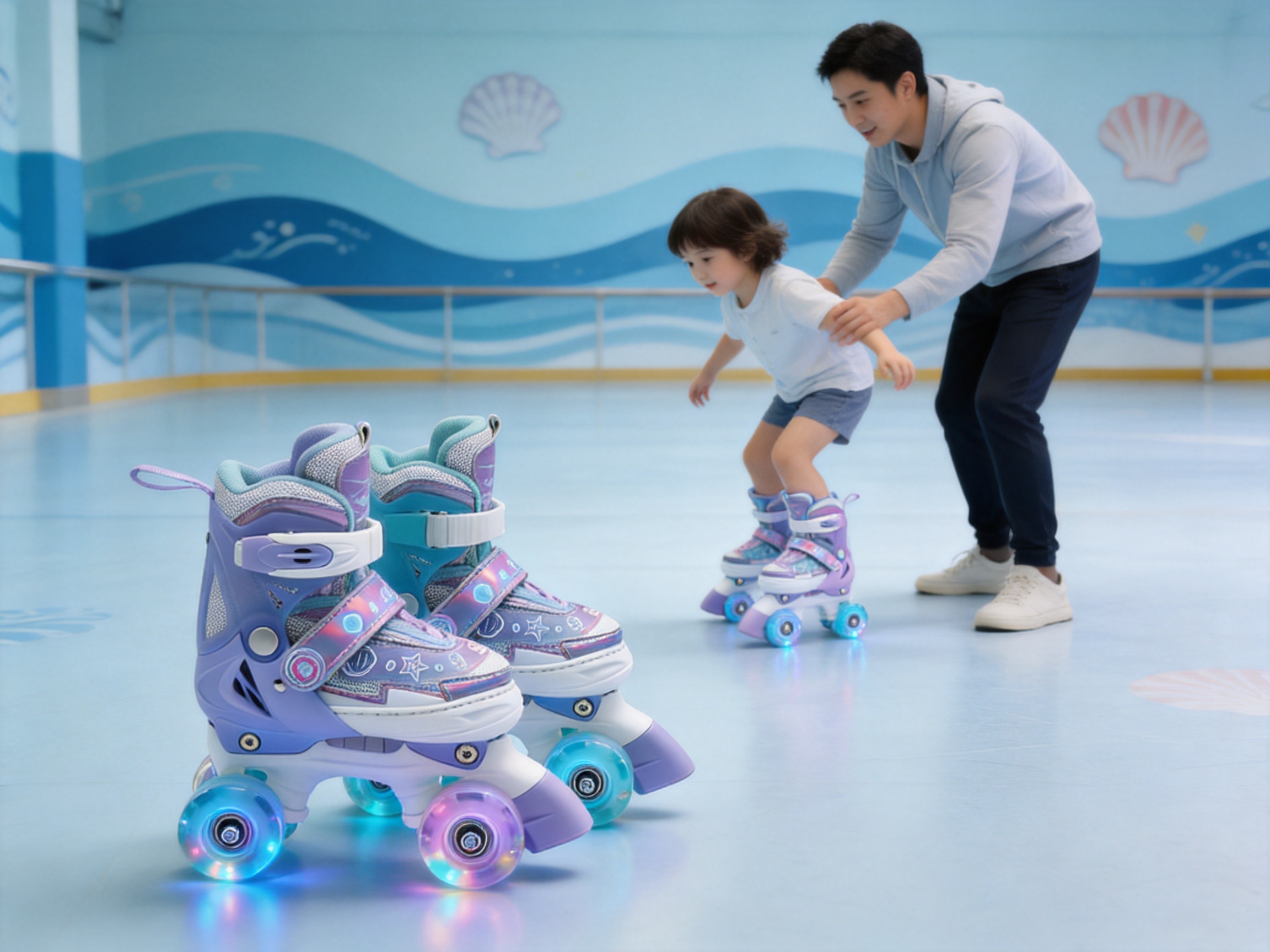
Although the product can be used outdoors on smooth surfaces, it should not be treated as an all-terrain skate. Rough pavement, loose gravel, wet floors, steep slopes, and damaged surfaces can affect control and accelerate wear. The best performance will be achieved on clean, dry, smooth skating areas.
4. Protective Comfort Around the Foot and Ankle
A skate should hold the foot securely without creating excessive pressure. The BW-211-D uses a soft-padded upper designed to conform to the shape of the foot. Its cushioning helps distribute contact more evenly around the foot and ankle area, while the lining is described as skin-friendly and breathable.
This combination can help reduce common sources of discomfort during extended leisure use. A rigid or poorly finished upper may create pressure points, while rough internal seams can cause rubbing. Soft padding and a breathable lining provide a more comfortable interface between the product and the user’s foot.
The upper is also designed to offer even support. Balanced support is important because a child may not yet know how to position the ankle correctly while rolling. The skate should feel secure enough to guide the foot but comfortable enough to allow natural movement. A supportive fit can help the user maintain a more consistent posture during beginner exercises.
Comfort also affects safety indirectly. When children experience discomfort, they may adjust their feet, loosen fastenings, or adopt an unstable posture. A properly fitted and comfortable skate encourages the child to concentrate on balance and movement instead of distraction caused by pressure or rubbing.
Parents and buyers should select the correct size and ensure that the skate is fastened appropriately. The product’s comfort features cannot replace proper fitting. The foot should remain securely positioned without being painfully compressed, and children should be supervised during initial use.
5. Ocean-Themed Styling and Illuminated Wheels
The visual character of the BW-211-D is a major part of its appeal. Ocean-themed graphics featuring playful marine-life patterns create a fresh, cheerful, and soothing style. The design is suitable for children who enjoy animals, sea life, colorful products, and imaginative play.
Appearance can influence whether a child wants to participate in a physical activity. A product that looks attractive may encourage children to try it, practice more frequently, and develop a more positive relationship with exercise. The ocean theme also provides opportunities for coordinated displays, party decorations, school activities, and seasonal promotions.
The illuminated wheels add a second visual element. As the skates roll, the wheels automatically produce vibrant colors. No separate manual lighting operation is needed, allowing the feature to activate naturally during use. The lights are particularly noticeable in indoor venues with moderate lighting and can make ordinary gliding feel more dynamic.
For retailers, illuminated wheels can help products stand out on shelves or in online product imagery. For rental venues and family entertainment centers, colorful wheel illumination can add atmosphere and make the equipment more appealing to children. For parents, the feature can serve as an extra incentive for active play without changing the fundamental beginner-oriented structure of the skate.
The styling also supports event use. The skates may be suitable for festival parties, artistic performances, children’s celebrations, and ocean-themed activities. Their appearance makes them more than basic sports equipment; they can also become part of a visual experience.
Balancing Appearance with Function
A common concern with highly decorative children’s products is that appearance may take priority over usability. The BW-211-D is designed to combine both. The graphics provide personality, but the underlying product features remain focused on stability, comfort, and controlled rolling.
This balance is important for commercial buyers. A product may attract attention at the point of sale, but repeat satisfaction depends on how it performs after purchase. By combining a distinctive exterior with a practical chassis, soft wheels, and padded support, the model is positioned to deliver both immediate visual appeal and everyday recreational value.
6. Product Advantages Compared with More Specialized Alternatives
The BW-211-D should be evaluated according to its intended purpose. It is not designed to compete directly with advanced speed skates, aggressive inline skates, or professional artistic equipment. Its advantage is that it offers a more approachable solution for young beginners and casual recreational users.
Compared with speed-oriented products, the model emphasizes stability and moderate resistance. This can be more suitable for children who are still learning basic balance and stopping skills. A skate that moves too quickly may increase anxiety and make it difficult for a beginner to control direction or speed.
Compared with narrow single-line configurations, the double-row layout offers a broader base. This can make standing and slow movement feel more stable, especially for younger children with limited ankle strength or skating experience.
Compared with basic low-cost skates that use simple hard wheels and minimal padding, this model offers a more complete recreational package. Its soft polyurethane wheels, quiet rolling behavior, illuminated function, ocean-themed upper, and padded lining create a more engaging and comfortable user experience.
Compared with products that focus only on indoor use, the BW-211-D can also support light skating on smooth outdoor plazas. This gives families and venues greater flexibility, provided that the surface is clean, dry, level, and free from significant cracks or debris.
Compared with highly technical products, the model may be easier for non-specialist buyers to understand. Its benefits can be communicated clearly: stable double-row construction, beginner-friendly movement, attractive graphics, soft wheels, and comfortable support. This clarity is useful for distributors and retailers who need to explain product value quickly.
| Comparison Point | BW-211-D Positioning | Value for Buyers |
|---|---|---|
| Primary user | Children, teenagers, and beginners | Broad entry-level market |
| Movement style | Gentle gliding with moderate resistance | More manageable learning experience |
| Stability design | Double-row wheels and low center of gravity | Supports balance development |
| Visual appeal | Ocean-themed graphics and illuminated wheels | Strong child appeal and retail visibility |
| Comfort features | Soft polyurethane wheels and padded breathable upper | Better suitability for leisure sessions |
| Application range | Indoor recreation, family activities, events, and smooth outdoor areas | Flexible use across multiple scenarios |
7. Suitable Applications and User Scenarios
Indoor Recreational Skating
The primary application for the BW-211-D is indoor leisure skating. Indoor rinks and smooth recreational floors provide a controlled environment where children can practice balance and movement. The quiet polyurethane wheels and stable chassis are well suited to relaxed sessions rather than high-speed competition.
Indoor use also allows parents, instructors, and venue staff to monitor young skaters more effectively. Beginners can practice standing, stepping, gliding, and turning in a relatively predictable environment. The illuminated wheels add atmosphere and can make group sessions more enjoyable.
Beginner Balance Training
Children and teenagers can use the model for introductory balance training. Exercises may include standing with knees slightly bent, shifting weight from side to side, taking short controlled steps, and practicing gradual stops. The wide base and moderate movement characteristics can help reduce the intimidation that some children experience when trying skates for the first time.
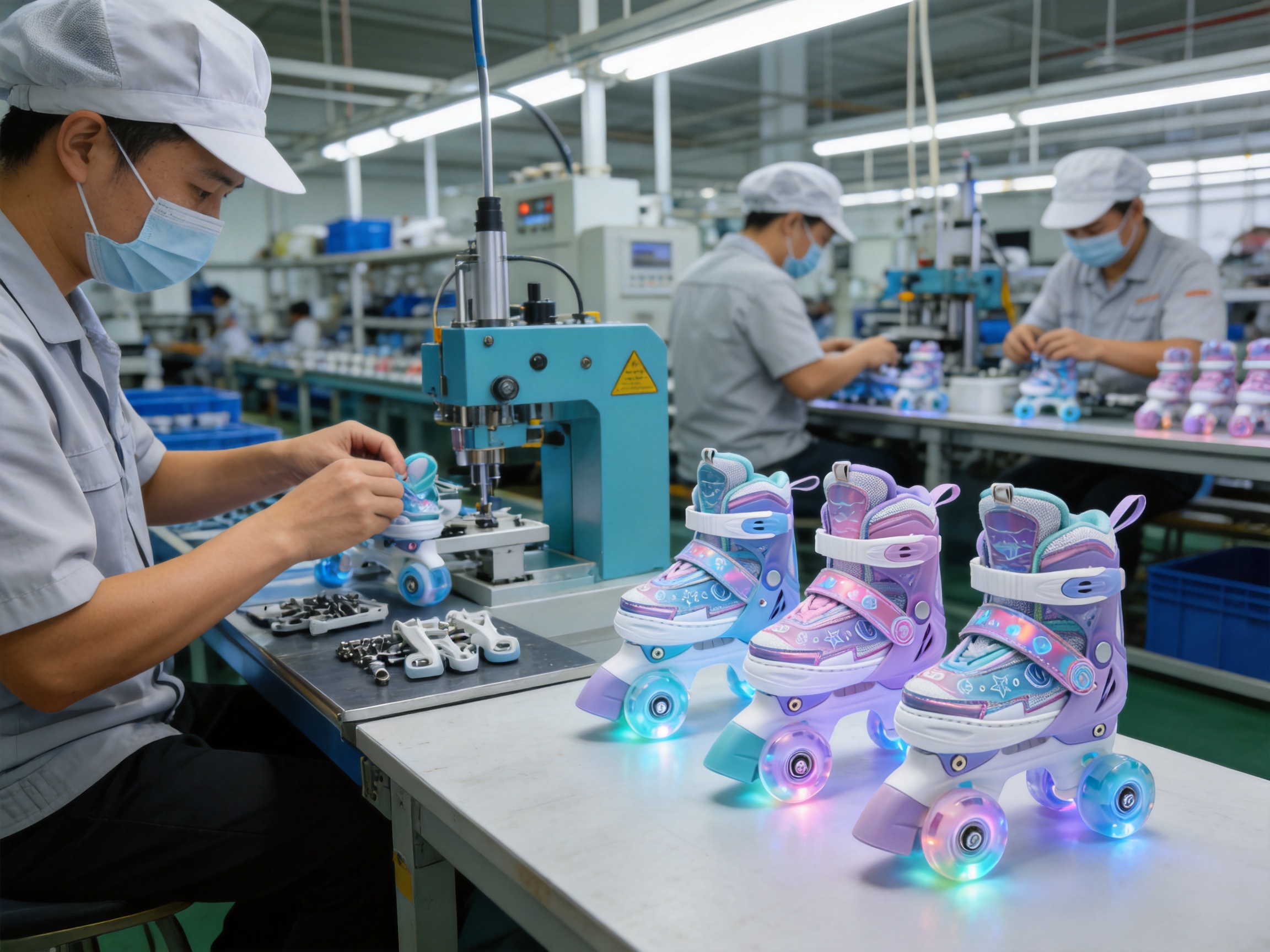
Training should always be progressive. A child should first become comfortable standing before attempting longer glides or turns. Protective equipment, including a helmet, knee pads, elbow pads, and wrist protection, is strongly recommended.
Family Activities
The skates are appropriate for parent-child recreation. Families can use them during supervised visits to indoor skating venues, community events, and smooth outdoor plazas. The ocean-themed styling may appeal to siblings and can make a shared activity feel more festive.
Family skating can support communication and cooperation. Parents can encourage children, demonstrate basic movements, and help them develop confidence. The product’s beginner-focused design is particularly relevant in these situations because not every family member will have advanced skating experience.
Daily Fitness and Coordination Practice
Recreational skating can contribute to physical activity by engaging the legs, hips, core, and stabilizing muscles. It also requires coordination between vision, posture, foot placement, and movement. The BW-211-D can be used for light daily exercise, provided that sessions are conducted on suitable surfaces and at an appropriate intensity.
For children, enjoyable movement is often more sustainable than formal exercise. The illuminated wheels and colorful graphics can make activity feel like play. Regular, moderate skating may help support coordination and confidence while providing a break from sedentary routines.
Performances and Themed Events
The distinctive marine-life appearance makes the product suitable for artistic performances, festival parties, and themed events. Children can incorporate the skates into simple choreographed activities or ocean-themed presentations. The illuminated wheels can contribute to the visual effect during evening or indoor performances.
Event organizers should ensure that the performance surface is appropriate and that participants receive adequate practice time. The skates are intended for recreational and beginner-friendly movement, so routines should be designed around controlled gliding rather than advanced tricks.
Smooth Outdoor Plazas
Children may use the skates outdoors on smooth plazas, clean paved areas, and other level surfaces. Outdoor use can provide a refreshing after-school activity. However, surface conditions should be checked carefully before each session. Water, sand, gravel, leaves, cracks, and steep inclines can reduce traction and control.
8. Manufacturing Strengths of Ningbo Feile Sporting Goods Co., Ltd.
The product’s commercial value is supported by the manufacturing capabilities of Ningbo Feile Sporting Goods Co., Ltd. Established in 2010, the company specializes in children’s scooters, inline skates, roller skates, and ice skates. This focused product experience allows the manufacturer to develop knowledge across wheels, chassis systems, molded components, soft goods, fastening systems, and assembly procedures.
The company operates in Yuyao City, Ningbo, Zhejiang Province, an area recognized for its strong plastics industry and extensive manufacturing network. Its location provides access to component suppliers, skilled production labor, transportation infrastructure, and export channels connected with Ningbo and Shanghai.
The company reports more than 200 employees and a workshop covering approximately 20,000 square meters. It has five advanced automatic production lines, as well as a professional research and development engineering team. This scale enables the manufacturer to support volume production while maintaining dedicated capabilities for product improvement and customization.
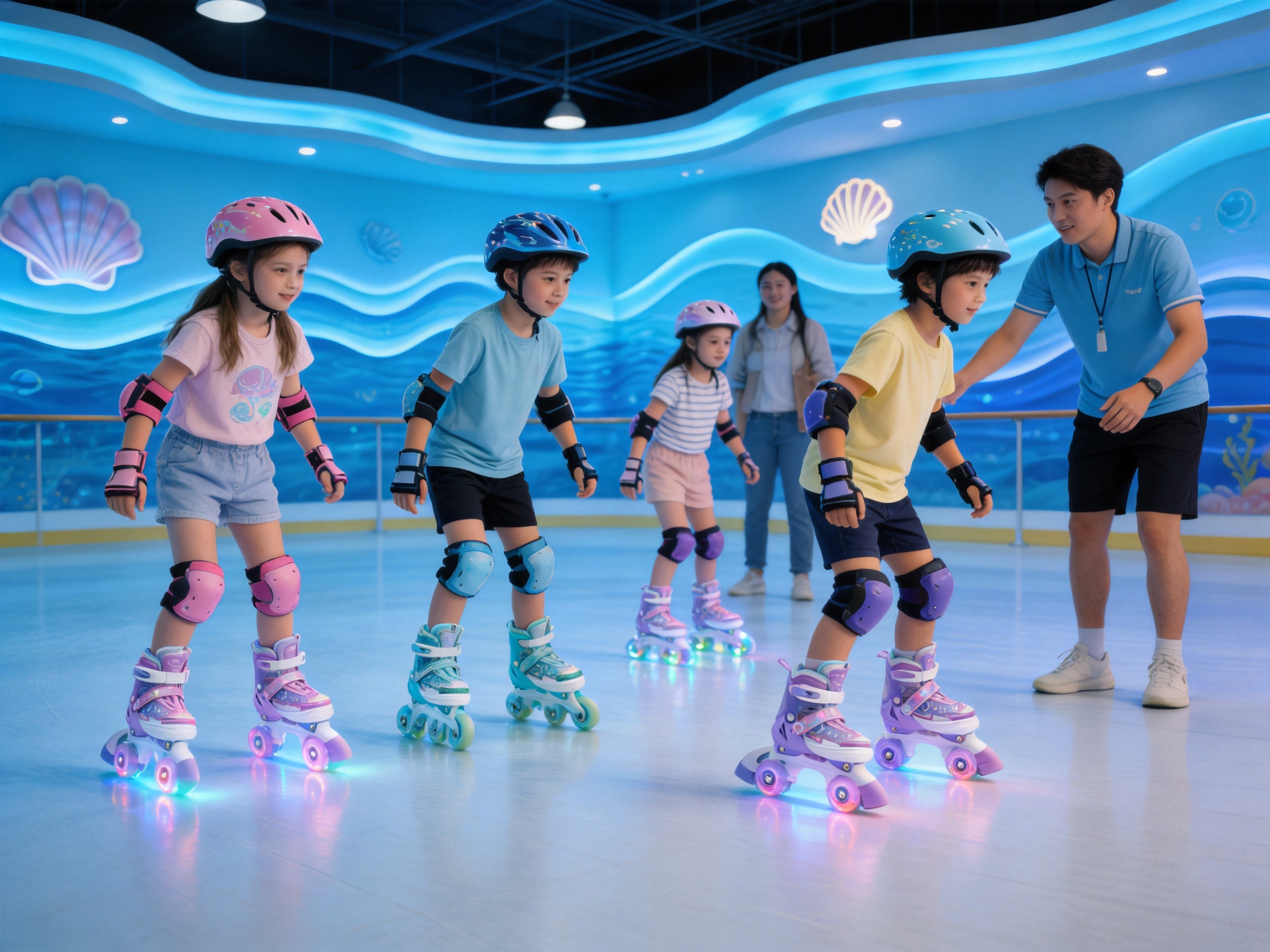
The facility includes mold, injection molding, sewing, and assembly workshops. Bringing these processes into one coordinated production system can provide several advantages. Mold development can be aligned with injection molding requirements. Sewing operations can be coordinated with upper design. Assembly teams can integrate wheels, chassis components, padding, and finished uppers according to defined specifications.
For OEM customers, integrated manufacturing can simplify communication. Instead of coordinating multiple unrelated suppliers, buyers can work with one experienced manufacturer for product development, component production, assembly, and quality coordination. This can help reduce delays, improve traceability, and make product revisions more efficient.
9. Mold and Injection Molding Capabilities
Mold production is particularly important for skating products because the shape and consistency of molded parts influence fit, appearance, strength, and assembly. The company’s mold workshop provides an internal foundation for developing and refining components such as chassis parts, wheel-related elements, structural supports, and other plastic assemblies.
In-house or closely managed mold capability can support more efficient design changes. If an OEM customer requires an adjustment to a component, the engineering team can evaluate the design, review mold implications, and coordinate production modifications more directly. This is valuable for customers seeking product differentiation, private-label development, or market-specific configurations.
Injection molding requires control over material preparation, temperature, pressure, cycle time, cooling, and part inspection. Consistency across these stages helps reduce visual defects and dimensional variation. Stable molded parts are important because they must fit correctly during assembly and withstand normal recreational use.
The company’s location within a major plastics manufacturing region also supports access to relevant technical resources and supplier networks. This regional advantage can contribute to material availability, tooling support, and production flexibility.
10. Sewing, Assembly, and Product Integration
Roller skates are not purely molded products. The upper, lining, padding, stitching, fastening elements, chassis, wheels, and decorative components must work together as one finished product. The company’s sewing workshop enables it to manage soft upper construction and internal comfort components as part of the wider manufacturing system.
Sewing quality affects comfort, appearance, and durability. Even stitching, suitable seam placement, secure thread finishing, and accurate alignment help create a cleaner and more reliable upper. The padded construction must be assembled so that cushioning remains properly positioned during use.
Assembly is equally important. Wheels must be installed correctly, structural components must be aligned, and the finished skate must be checked for movement, stability, and appearance. A well-designed component can still perform poorly if assembly tolerances are inconsistent. Integrated production and defined inspection procedures help reduce this risk.
Product integration also supports customization. Different markets may require changes to graphics, colors, packaging, size ranges, labels, or other details. A manufacturer with experience across molding, sewing, printing, and assembly is better positioned to manage these changes as a coordinated project.
11. Research, Development, and Product Improvement
The company maintains a professional research and development engineering team and launches new products regularly to respond to market and customer needs. This ongoing development approach is important in the children’s sports equipment industry, where product expectations change quickly.
Children’s products must balance safety, comfort, appearance, ease of use, and price. An engineering team can evaluate how these elements interact. For example, a new upper design may need to preserve softness while improving support. A decorative concept may need to be adapted for printing or production. A wheel design may need to retain its visual effect while meeting performance and durability requirements.
Product development also involves feedback from customers, distributors, retailers, and end users. A manufacturer that works with international buyers can gain insight into different market preferences, size requirements, packaging expectations, and compliance practices.
The company has obtained multiple national patents, demonstrating investment in technical development and product innovation. Patents alone do not replace practical testing, but they indicate that the organization actively develops and protects its product concepts.
12. Quality Systems and Certifications
Quality assurance is a key consideration for importers and distributors of children’s sports products. Ningbo Feile Sporting Goods Co., Ltd. reports certification through ISO9001, BSCI, and Kmart factory certification systems. These systems relate to quality management, social compliance, and customer-specific factory requirements.
The company also reports product certifications and compliance credentials including 3C, CE, EN71, EN62115, ASTM, EMC, and EN13843:2009. The precise applicability of each certification depends on the product, market, configuration, and current regulatory requirements. Buyers should confirm the documentation relevant to the exact BW-211-D version, destination country, and intended sales channel.
ISO9001-based quality management emphasizes documented processes, responsibility, corrective action, and continual improvement. For a product such as a children’s roller skate, a structured quality system can support consistency in incoming materials, production operations, inspection records, and final release procedures.
Social compliance systems are also important for international sourcing. Buyers increasingly evaluate not only product quality but also working conditions, ethical manufacturing, and supply-chain responsibility. Factory certification systems and social audits can provide additional information during supplier qualification.
For professional buyers, quality discussions should cover material specifications, wheel hardness, load expectations, size tolerances, decorative durability, packaging, inspection standards, sampling methods, and documentation. Clear communication before production helps reduce misunderstandings and supports more predictable results.
13. OEM and One-Stop Sourcing Advantages
The manufacturer’s product range includes children’s scooters, inline skates, roller skates, and ice skates. It also serves the wider category of sports protective gear and skating-related equipment. This category breadth creates opportunities for one-stop sourcing.
A buyer may be able to coordinate several related product lines through one experienced supplier. For example, a retailer could source roller skates, inline skates, children’s scooters, helmets, pads, and complementary accessories within a coordinated purchasing program. This may simplify communication, product planning, packaging development, and shipment management.
OEM capability is valuable when a customer wants a private-label product or a design tailored to a specific market. Possible areas of customization may include colors, printed graphics, packaging, labels, size combinations, promotional themes, and selected structural details. Any customization should be evaluated for tooling cost, minimum order quantity, lead time, compliance, and testing requirements.
One-stop manufacturing may also improve product family consistency. When related items are developed by the same supplier, colors, graphic themes, packaging language, and quality expectations can be coordinated more effectively. This can help retailers build a recognizable children’s sports collection.
14. Size and Packaging Information
The available size group information is listed as 27–30, 31–34, and 35–38. These ranges are intended to cover different stages of children’s and teenagers’ growth. Buyers should confirm whether the sizing is based on foot length, regional sizing conventions, or adjustable product specifications before placing an order.
The supplied dimensional information is recorded as follows: 27–30, 420 by 360 by 345 millimeters; 31–34, 470 by 390 by 345 millimeters; and 35–38, 500 by 420 by 345 millimeters. Because the source information does not explicitly identify whether these measurements refer to cartons, packaging units, or another logistics dimension, purchasers should confirm the exact measurement basis with the manufacturer.
| Listed Size Range | Listed Dimensions | Buyer Verification Point |
|---|---|---|
| 27–30 | 420 × 360 × 345 mm | Confirm whether dimensions refer to packaging or product configuration |
| 31–34 | 470 × 390 × 345 mm | Confirm carton quantity, gross weight, and measurement method |
| 35–38 | 500 × 420 × 345 mm | Confirm logistics data and final packaging specifications |
Accurate size and packaging information is important for inventory planning, warehouse storage, shipping calculations, and online product listings. Importers should request a finalized specification sheet before production approval.
15. Safety and Responsible Use
The BW-211-D is designed to support beginner skating, but no skate can remove every risk associated with rolling sports. Children should wear appropriate protective equipment, including a properly fitted helmet, knee pads, elbow pads, and wrist guards. Parents or instructors should supervise young users, particularly during their first sessions.
Skating areas should be clean, dry, level, and free from traffic, obstacles, loose objects, and sudden changes in elevation. Wet floors can reduce traction. Gravel and sand can interfere with wheel movement. Cracks and uneven surfaces can create unexpected resistance. Steep slopes can lead to speeds beyond the user’s ability to control.
Beginners should learn stopping techniques before attempting longer distances or higher speeds. They should also practice falling safely under supervision and understand that illuminated wheels are a decorative and functional feature, not a substitute for visibility equipment or safety instruction.
Regular inspection is recommended. Parents and venue operators should check the wheels, fasteners, chassis, upper, seams, and padding for signs of damage or excessive wear. Any loose component, cracked structural part, damaged wheel, or compromised fastening should be addressed before further use.
16. Value for Retailers and Distributors
The BW-211-D offers several qualities that can support retail positioning. First, its appearance is immediately understandable and appealing to children. The marine-life graphics create a clear theme, while illuminated wheels provide a strong point of differentiation. Second, its beginner-friendly structure makes it relevant to a broad customer group rather than only experienced skaters.
Third, its comfort and stability features provide meaningful selling points for parents. Buyers can understand the value of soft padding, breathable lining, quiet wheels, and a low center of gravity. These features address practical concerns such as comfort, confidence, and ease of learning.
Fourth, the model can be included in several merchandising themes. Retailers may present it as a beginner skating product, a family activity item, a children’s fitness product, a festival accessory, or part of a broader ocean-themed sports collection.
For distributors, the manufacturer’s wider product portfolio may support category expansion. A buyer can evaluate related scooters, inline skates, ice skates, and protective gear while working with one established supplier. This may improve purchasing efficiency and create opportunities for bundled offerings.
17. Value for OEM Buyers
OEM buyers generally require more than a finished product. They need dependable communication, development support, stable production, documentation, and the ability to coordinate design changes. The manufacturer’s engineering team, workshops, automatic production lines, and international certification experience provide a foundation for this type of cooperation.
Potential OEM discussions may include custom upper graphics, private-label branding, packaging design, color changes, market-specific size ranges, promotional editions, and coordinated protective gear. Each project should begin with a detailed technical brief covering intended users, sales territory, quantity, target price, materials, compliance requirements, packaging, and delivery schedule.
Samples should be evaluated before mass production. Buyers should assess fit, wheel movement, chassis stability, lighting performance, upper comfort, printing quality, packaging condition, and instructions. For children’s products, compliance documentation and test reports should be reviewed for the precise production version rather than assumed from a similar model.
Clear approval procedures help protect both parties. A signed sample, approved artwork, agreed specification, and defined inspection standard can reduce disputes and improve production consistency.
18. Why Manufacturing Integration Matters
The combination of mold production, injection molding, sewing, assembly, engineering, and quality management gives the manufacturer a more complete production structure than a trading-only supplier. This integration can improve accountability because more stages are managed within the same organization.
When a problem occurs, integrated teams can investigate whether it relates to design, material, tooling, sewing, assembly, or packaging. Faster communication between departments may help shorten the time needed to identify and correct the issue.
Integration can also support cost control. Efficient mold utilization, coordinated material purchasing, organized production scheduling, and standardized assembly procedures may contribute to competitive pricing while preserving product functionality. The final commercial result depends on order quantity, customization, materials, packaging, and shipping terms, but manufacturing depth gives buyers more options.
For international customers, production scale is another important consideration. A company with more than 200 employees, five automatic production lines, and a substantial workshop can be better positioned to handle repeat orders and seasonal demand than a very small workshop. Buyers should still confirm capacity, lead time, and production allocation for each project.
19. Overall Product Assessment
The BW-211-D Kids Roller Skate is best understood as a stable, comfortable, visually engaging recreational skate for children and teenagers. Its strongest advantages are not focused on professional speed. Instead, they are concentrated in beginner accessibility, family enjoyment, attractive styling, and practical comfort.
The double-row structure and low-center-of-gravity chassis support a more stable learning platform. Soft polyurethane wheels provide quiet, cushioned rolling on suitable surfaces. The padded upper and breathable lining contribute to comfort during longer leisure sessions. Ocean-themed graphics and automatic wheel illumination make the product visually distinctive and attractive to young users.
These features give the model several advantages over simpler entry-level products that may lack visual differentiation or comfort-focused construction. They also make it more approachable than specialized performance skates that require greater skill and control.
From a sourcing perspective, the product benefits from the manufacturer’s broad capabilities. Ningbo Feile Sporting Goods Co., Ltd. has experience in skating and scooter products, maintains mold, injection molding, sewing, and assembly workshops, and supports product development through an engineering team. Its reported certifications, international market experience, and one-stop production structure provide useful support for OEM and wholesale buyers.
The product should be used responsibly, with protective equipment and supervision. Buyers should confirm size information, packaging dimensions, testing documentation, and market-specific compliance before ordering. When properly matched with the intended user and environment, the BW-211-D can offer children an enjoyable and confidence-building introduction to recreational skating.
20. Questions and Answers
Q1: Who is the BW-211-D Kids Roller Skate designed for?
The product is designed for children and teenagers, especially beginners and recreational users. Its double-row configuration, low-center-of-gravity chassis, moderate resistance, and comfortable upper make it suitable for early balance training and leisure skating.
Q2: What is the main advantage of the double-row design?
The double-row wheel arrangement creates a broad support base that can help beginners maintain balance. It is intended to make standing and slow movement more manageable than a narrow, performance-oriented configuration.
Q3: Do the wheels light up automatically?
Yes. The wheels are designed to illuminate automatically with vibrant colors while rolling. This feature does not require the user to activate the lights manually.
Q4: Are the skates suitable for indoor use?
Yes. They are suitable for indoor skating rinks, smooth halls, community venues, and other clean, dry surfaces intended for recreational skating. The quiet polyurethane wheels are appropriate for environments where reduced rolling noise is desirable.
Q5: Can children use the skates outdoors?
They can be used outdoors on smooth, level, clean, and dry surfaces such as suitable plazas. Rough pavement, gravel, wet floors, steep slopes, and damaged surfaces should be avoided because they can reduce control and increase wheel wear.
Q6: Are the wheels hard or soft?
The wheels are made from high-elasticity polyurethane and are described as soft. They are intended to provide quiet rolling, cushioning, and slip resistance on appropriate surfaces.
Q7: What comfort features does the upper provide?
The upper includes soft padding and a skin-friendly, breathable lining. These features are intended to conform more comfortably to the foot, provide even support, and reduce rubbing during extended leisure use.
Q8: What sizes are available?
The listed size groups are 27–30, 31–34, and 35–38. Buyers should confirm the detailed size chart, foot-length recommendations, regional sizing system, and adjustment method with the manufacturer before ordering.
Q9: What do the listed dimensions represent?
The supplied information lists dimensions for each size group, but it does not clearly identify whether they are product, carton, or logistics dimensions. Buyers should request confirmation of the measurement basis, carton quantity, gross weight, and packaging configuration.
Q10: Is the product suitable for professional skating competitions?
The BW-211-D is positioned as a beginner and leisure roller skate rather than a specialized professional racing or aggressive skating product. It is best suited to controlled recreational movement, basic practice, family activities, and themed events.
Q11: What protective equipment should children wear?
Children should wear a properly fitted helmet, knee pads, elbow pads, and wrist guards. They should also be supervised, particularly during first use and whenever they skate in a new environment.
Q12: What manufacturing facilities does the supplier operate?
The company reports mold, injection molding, sewing, and assembly workshops, five automatic production lines, a professional research and development engineering team, and a workshop covering approximately 20,000 square meters.
Q13: Can the supplier support OEM projects?
Yes. The company is positioned as an OEM manufacturer and can discuss private-label development, graphics, colors, packaging, size ranges, and related product requirements. Specific customization conditions depend on tooling, quantity, materials, testing, and delivery requirements.
Q14: What other products does the company manufacture?
The company specializes in children’s scooters, inline skates, roller skates, and ice skates. Its broader product category also includes sports protective gear and skating-related equipment.
Q15: What certifications or quality systems are reported?
The company reports ISO9001, BSCI, and Kmart factory certification systems, as well as product certifications or compliance credentials including 3C, CE, EN71, EN62115, ASTM, EMC, and EN13843:2009. Buyers should verify the documents applicable to the exact product and destination market.
Q16: Why is manufacturing integration valuable for buyers?
Integrated mold, injection molding, sewing, assembly, engineering, and quality operations can simplify communication, improve coordination, support customization, and strengthen production accountability. It may also help the supplier respond more efficiently to design changes and repeat orders.
Conclusion
The BW-211-D Kids Roller Skate combines beginner-friendly stability, comfortable construction, attractive ocean-themed styling, and automatically illuminated wheels. Its double-row chassis and low center of gravity are designed to help young users build confidence, while soft polyurethane wheels and a padded breathable upper support comfortable leisure skating.
For families, the product offers an engaging way to encourage active play and coordination. For retailers and distributors, it provides clear visual differentiation and a broad entry-level market. For OEM customers, it is supported by a manufacturer with specialized skating experience, integrated production workshops, engineering resources, international certifications, and one-stop sourcing capabilities.
Its greatest strength is the balance between enjoyment and practicality. The product looks playful, feels approachable, and is structured for controlled recreational use. When combined with proper sizing, protective equipment, supervision, and suitable skating surfaces, it can serve as a reliable introduction to the healthy and enjoyable activity of roller skating.
References
1. Product specification and descriptive materials for the BW-211-D Kids Roller Skate.
2. Ningbo Feile Sporting Goods Co., Ltd. company profile and manufacturing information.
3. ISO 9001 quality management system principles and manufacturing process guidance.
4. General product safety principles for children’s wheeled sports equipment.
5. General technical information concerning polyurethane wheels, recreational skating, and impact cushioning.
6. General guidance on protective equipment and supervised beginner skating practice.
Product: BW-211-D Kids Roller Skate

Recommended Articles

Get in Touch
Your email address will not be published. Required fields are marked *
Have a project in mind? Contact with us!
We are happy to answer your questions. Please fill out this form
and one of our professional team will get back to you as soon as possible.

We specialize in producing various types of children's toy cars, children's skateboards, and ice skates.
