
 En
En
 Español
 русский
 عربى
عربى
4-in-1 Roller Skates: A Flexible, Cost-Effective Choice for Children’s Skating Development
Date:Jul 29, 2026
Content
- 1 Why Multi-Functional Skating Equipment Matters
- 2 Core Product Concept of the BW-125-A
- 3 Key Advantages Over Conventional Single-Mode Products
- 4 Engineering and User Convenience
- 5 Design for Girls and Everyday Use
- 6 Applications Across Different Activities
- 7 Product Specifications and Configuration Overview
- 8 Manufacturing Strengths Behind the Product
- 9 Quality Systems and Product Compliance
- 10 OEM and Wholesale Potential
- 11 Safety, Maintenance, and Responsible Use
- 12 How the Product Supports Sustainable Purchasing
- 13 Comparison with Alternative Product Types
- 14 Manufacturing Process Considerations
- 15 Why Select an Experienced Sporting Goods Factory
- 16 Recommended Buyer Evaluation Checklist
- 17 Market Positioning and Communication Strategy
- 18 Q&A
- 18.1 What is the main feature of the BW-125-A?
- 18.2 Is the product suitable for beginners?
- 18.3 How does the base replacement system work?
- 18.4 Does one shoe body support both roller skating and ice skating?
- 18.5 What sizes are available?
- 18.6 Who is the target customer?
- 18.7 Can the product be used outdoors?
- 18.8 Is protective gear necessary?
- 18.9 What should be checked before skating?
- 18.10 What manufacturing capabilities support this product?
- 18.11 Does the manufacturer support OEM projects?
- 18.12 What certifications and standards are associated with the company’s products?
- 19 Conclusion
- 20 References
- 21 Product: BW-125-A 4 In 1 Roller Skate

Choosing suitable skating equipment for a child is often more complicated than selecting a single pair of shoes. Young skaters may want to try inline skating, traditional quad skating, and ice skating, while parents usually want equipment that is safe, practical, easy to maintain, and capable of supporting changing interests. Buying a separate pair for every skating mode can be expensive and inconvenient, particularly when children are still developing their balance, coordination, and confidence.
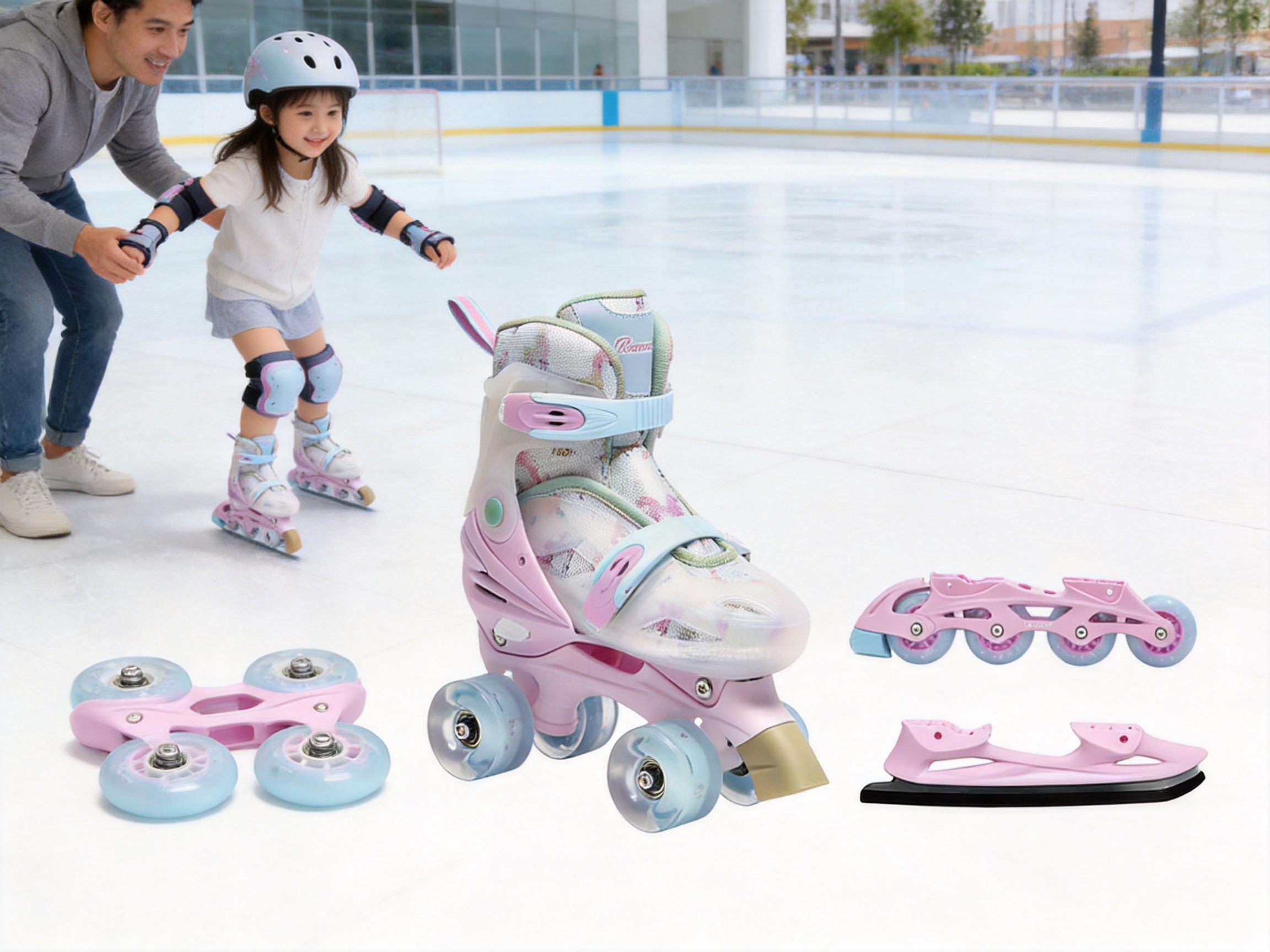
The BW-125-A 4 In 1 Roller Skate is designed to address this challenge through a multi-functional interchangeable-base construction. Instead of requiring a complete new shoe for each skating activity, the product uses one shoe body with detachable and replaceable bases. This design enables users to switch among inline skating, quad skating, and ice skating configurations while retaining the same familiar shoe fit.
For families, retailers, distributors, and professional buyers, the product represents more than a colorful children’s skate. It demonstrates how thoughtful product engineering can combine versatility, user convenience, manufacturing efficiency, and attractive design in one compact item. Its adaptable structure is particularly appropriate for beginners, children who are exploring different skating styles, and households seeking better value from sports equipment purchases.
Why Multi-Functional Skating Equipment Matters
Children often learn physical skills through experimentation. A child may begin with slow balance exercises, progress to outdoor recreational skating, and later show interest in ice rinks or performance activities. Each environment presents different surface conditions and movement requirements. Inline skates are suited to forward movement and outdoor practice, quad skates provide a broad wheel layout that many beginners find reassuring, and ice skate bases are designed for rink activities.
Traditional product purchasing models generally treat each skating mode as a separate category. This means a household may need to purchase several pairs of skates, store them in different places, and ensure that each pair remains correctly sized and maintained. For a child whose feet are growing quickly, the cost of replacing multiple pairs can become especially significant.
The 4-in-1 concept changes the purchasing equation. A single shoe body can be paired with different bases, allowing the user to select a configuration according to the activity and venue. This approach reduces equipment duplication and makes it easier for parents to introduce children to several types of skating without making a large initial investment in multiple complete products.
The concept also helps retailers and wholesalers. A multi-functional product can occupy a distinctive position between ordinary roller skates and specialized ice skates. It gives sales teams a clear value proposition: one product supports several recreational applications. For buyers seeking efficient inventory, a versatile product can reduce the need to stock as many closely related models and sizes.
Core Product Concept of the BW-125-A
The BW-125-A is a girls’ 4-in-1 multi-functional roller skate built around a single shoe body and interchangeable bases. The shoe is designed to maintain a consistent fit while the lower skating assembly is changed. This arrangement allows children to become familiar with the feel of the upper shoe rather than adjusting to a completely different pair every time they try another skating mode.
The product is available in size ranges 31–34, 35–38, and 39–42. These size groups are intended to cover several stages of childhood use. Actual fitting should always be checked against the child’s foot length, wearing habits, and the sizing guidance supplied for the specific sales market.
Its principal configurations include inline skating, quad skating, and ice skating. The product information describes the base as detachable and replaceable, with a snap-fit design intended to make installation and removal straightforward. When correctly fitted, the replacement base is designed to sit securely and reduce unwanted movement between the shoe and the skating assembly.
The product is especially suitable for recreational and introductory applications. These include indoor ice rink skating, children’s balance training, parent-child activities, outdoor plaza relaxation, coordination exercises, holiday events, stage performances, and photo sessions. It is not presented as a professional competition skate; its strongest position is accessible, versatile, family-oriented recreation.
Key Advantages Over Conventional Single-Mode Products
One Shoe Body, Multiple Skating Experiences
The most visible advantage is the ability to use one shoe body with different bases. Conventional single-mode skates are normally limited to the wheel or blade system permanently attached to the shoe. A family that wants both inline and quad skating must therefore purchase and store two products. The BW-125-A combines these uses within one product concept.
This does not mean that every skating configuration feels identical. Inline, quad, and ice skating have different movement characteristics and require different techniques. However, the same upper shoe can provide continuity in fit and appearance while the base adapts the equipment to the activity. This can make the transition between recreational modes more approachable for children.
Improved Purchase Value
A multi-functional skate can offer better overall value than buying several complete pairs. The buyer receives several types of use from a single core product, while the child can explore different activities before the family decides whether a specialized product is needed later.
For younger users, this value is particularly relevant because growth can quickly make equipment unsuitable. A family may hesitate to invest in multiple pairs when a child’s foot size is changing. A 4-in-1 product helps concentrate the purchase into one adaptable item and may reduce the financial impact of early experimentation.
Reduced Storage Requirements
Storage is an often-overlooked part of sports equipment ownership. Multiple pairs of skates require additional shelf space, protective packaging, and maintenance. They also create more opportunities for parts to be misplaced. A product based on one shoe body and interchangeable bases can be organized more efficiently, especially in apartments, family homes, schools, and recreational facilities.
Consistent Style and Fit Familiarity
Children often respond positively to familiar equipment. Changing from one complete pair of skates to another can involve differences in padding, fastening, weight distribution, and foot support. With the BW-125-A, the user can retain the same upper shoe while changing the lower assembly. This familiar feel may help children concentrate on learning balance and movement rather than adapting to a new shoe every time.
The girls’ exclusive styling is another product advantage. The design is described as exquisite, simple, soft, and visually pleasing. This makes the product suitable not only for practice but also for everyday play, photographs, performances, and themed events. Appearance can influence a child’s willingness to wear protective sports equipment and participate regularly.
Useful for Several Venues
Different skating activities require different environments. Outdoor plazas and smooth recreational areas may be used for casual skating, while indoor ice rinks support blade-based activities. A multi-functional product gives families more freedom to select an activity based on the venue available to them.
This flexibility is also useful for retailers serving customers with varied lifestyles. In regions where ice rinks, outdoor plazas, and indoor sports centers coexist, a single adaptable product can appeal to a broader customer group than a narrowly defined skate model.
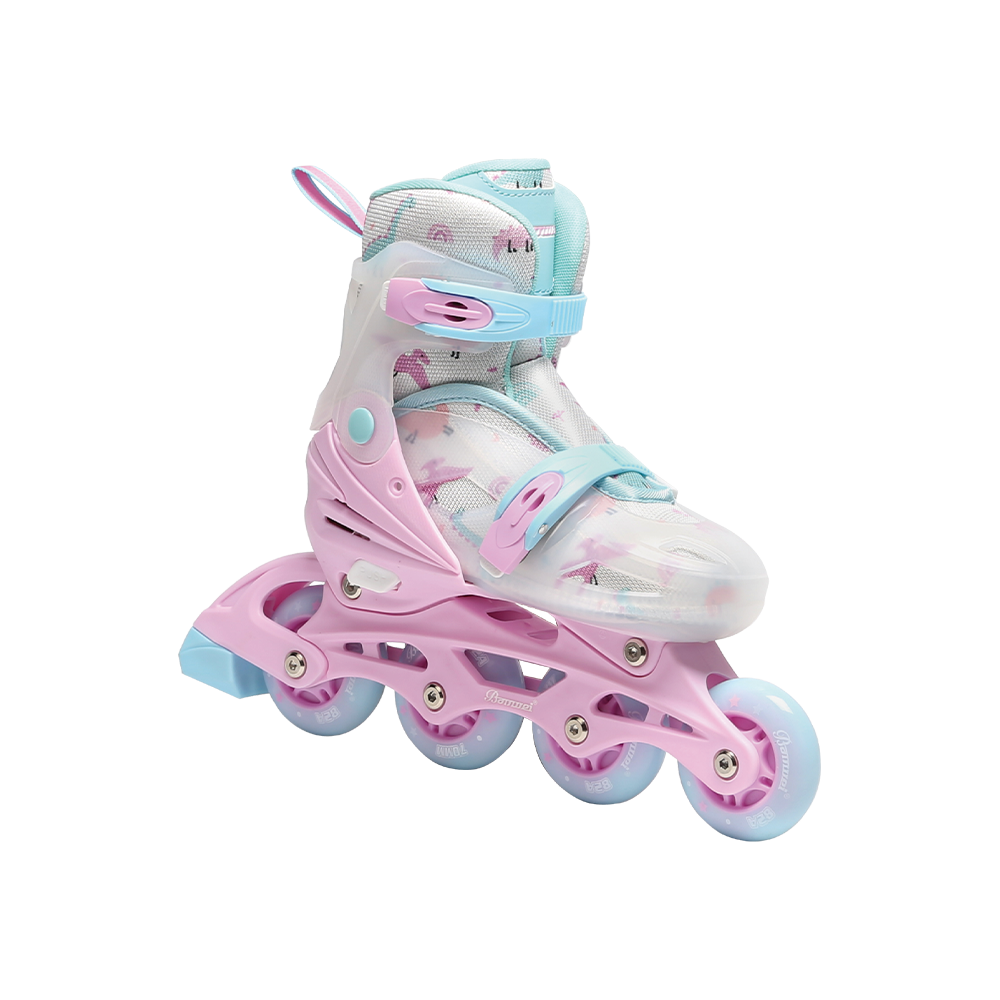
BW-125-A 4 In 1 Roller Skate
Engineering and User Convenience
Interchangeable Base Structure
The detachable base is the functional center of the 4-in-1 design. It allows the same shoe to be connected to different lower assemblies. The product information identifies three primary skating modes: inline skating, quad skating, and ice skating. The “4-in-1” designation indicates a multi-mode product family in which the user can access several skating experiences through interchangeable components.
A successful interchangeable system must balance two competing requirements. The base must be simple enough for an adult user to replace without specialized tools, yet secure enough to remain stable during ordinary recreational skating. The BW-125-A uses a snap-fit design intended to support both objectives. The connection is described as easy to install and remove while also providing a snug fit after replacement.
For manufacturers, this type of structure requires careful attention to dimensional accuracy. The shoe interface, connection points, locking features, and base geometry must work consistently across repeated assembly and removal cycles. A loose connection could create unwanted movement, while an overly tight connection could make replacement frustrating. Production consistency is therefore essential to the user experience.
Secure Connection and Stability
Stability is particularly important for children and beginners. When a base is attached, the shoe and lower assembly should function as a coordinated unit. The product’s snap-fit design is intended to prevent wobbling or looseness after the base has been correctly installed.
Parents and retailers should explain that an interchangeable base is not automatically safe simply because it is detachable. Before every use, the adult responsible for the child should inspect the connection, verify that the base is fully engaged, and look for damage, deformation, or missing parts. Children should not be expected to judge mechanical security independently.
Correct use also includes selecting a suitable skating environment, wearing protective gear, following local safety rules, and supervising beginners. The product supports recreational skating; it does not remove the need for responsible instruction and safe behavior.
Beginner-Friendly Product Positioning
The BW-125-A is positioned especially well for beginners because it reduces the number of equipment decisions that must be made at the beginning of a child’s skating journey. A parent does not need to predict immediately whether the child will prefer inline skating, quad skating, or ice skating. The family can start with one product and explore gradually.
Beginners can also benefit from repeated use of a familiar shoe. Repetition helps children develop balance, foot placement, stopping habits, and confidence. When the external activity changes but the upper fit remains familiar, the learning process may feel less intimidating.
The product is also suitable for parent-child interaction. Adults can participate in recreational skating with children, help change the base when needed, and use the different configurations to create varied practice activities. This shared experience can make exercise more enjoyable and encourage regular participation.
Design for Girls and Everyday Use
Children’s sports products must perform well while also appealing visually to their intended users. The BW-125-A uses a girls-focused appearance with soft lines and an elegant, versatile character. The product is designed to look appropriate in casual settings, photographs, themed parties, and stage performances as well as on the skating surface.
A visually attractive product can support long-term engagement. If a child likes the appearance of her equipment, she may be more willing to practice, participate in family activities, and take responsibility for storing the product. Good design therefore contributes not only to sales appeal but also to product usage.
The simple styling also supports broader merchandising. Retailers can present the skates as recreational equipment, a special-event accessory, a children’s fitness product, or a gift. The product can be displayed in skating sections, children’s sports departments, seasonal activity promotions, and holiday campaigns.
Its multi-purpose character is useful for events. A child can use the product for a recreational session, a school or community performance, a themed party, or a photo shoot. This broader use differentiates it from equipment designed exclusively for one technical activity.
Applications Across Different Activities
Indoor Ice Rink Recreation
With the appropriate ice skate base installed, the product can be used for recreational skating in an indoor ice rink. This application is suitable for family outings and beginner-level practice. Rink operators and parents should ensure that the equipment meets the venue’s requirements and that the base is installed correctly before entering the ice.
Children using ice skates should receive guidance on entering the ice, maintaining balance, holding the rink barrier when necessary, and stopping safely. The product’s adaptability makes ice skating more accessible, but basic instruction remains important.
Outdoor Plaza and Recreational Skating
Outdoor plazas and other suitable smooth surfaces can provide spaces for casual skating, fitness, and coordination exercises. Inline or quad configurations may be selected according to the child’s ability, surface conditions, and preferred skating style.
Outdoor use requires attention to surface quality. Cracks, loose gravel, wet areas, steep slopes, traffic, and crowded pedestrian zones can increase risk. A responsible adult should select a flat, clean, and legally permitted area with enough space for the child to move and stop.
Balance and Coordination Training
Skating can support the development of balance, body control, lower-body coordination, and spatial awareness. Beginners can start with simple standing and stepping exercises before progressing to gliding. The interchangeable design allows training to evolve with the child’s confidence.
Quad skating may be selected when a child prefers a broad wheel arrangement, while inline skating can introduce a different balance challenge. Activities should remain age-appropriate, gradual, and enjoyable. The objective is to develop confidence and healthy movement habits rather than force rapid technical progress.
Parent-Child Entertainment
Shared skating activities create opportunities for parents and children to exercise together. Adults can demonstrate safe movement, provide encouragement, and supervise practice. Because the product supports multiple configurations, families may create different experiences without purchasing separate complete products for every outing.
Parties, Performances, and Photography
The product’s attractive design makes it suitable for holiday-themed parties, stage performances, and photo sessions. In these settings, appearance and versatility may be as important as technical performance. The skates can become part of a costume or activity theme, provided that the surface and usage conditions are appropriate.
For performances, organizers should inspect the floor, establish a clear practice area, and ensure that the skating configuration matches the choreography. Children should not skate on unsuitable stages or crowded areas without proper preparation and supervision.
Product Specifications and Configuration Overview
| Item | Specification or Feature | Customer Value |
|---|---|---|
| Product model | BW-125-A 4 In 1 Roller Skate | Multi-functional children’s skating solution |
| Product category | Roller skate | Suitable for recreational and introductory skating |
| Skating modes | Inline skating, quad skating, and ice skating configurations | One shoe body supports several activities |
| Connection system | Detachable and replaceable snap-fit base | Simple installation and convenient replacement |
| Design direction | Girls’ exclusive stylish appearance | Suitable for daily use, events, performances, and photos |
| Size range | 31–34, 35–38, and 39–42 | Supports several stages of childhood use |
| Recommended settings | Indoor rinks, suitable outdoor plazas, family activities, and performances | Broad recreational application |
| Primary commercial advantage | Multiple functions in one product | Reduced need to purchase several complete pairs |
The listed carton dimensions are 470 × 390 × 345 millimeters for sizes 31–34, 500 × 420 × 345 millimeters for sizes 35–38, and 545 × 430 × 350 millimeters for sizes 39–42. These measurements can assist distributors and logistics teams with packaging planning, warehouse allocation, container loading, and shipping cost estimation.
Packaging teams should confirm whether the dimensions refer to individual cartons, master cartons, or another packaging unit before finalizing logistics documents. Buyers may also request current packaging specifications, gross weight, net weight, and quantity per carton during the purchasing process.
Manufacturing Strengths Behind the Product
The product is manufactured by Ningbo Feile Sporting Goods Co., Ltd., a sporting goods producer established in 2010. The company specializes in children’s scooters, inline skates, roller skates, and ice skates. Its product focus is directly aligned with the requirements of the BW-125-A, particularly the need to combine plastic components, skating assemblies, soft goods, and final product assembly.
Integrated Workshop Capabilities
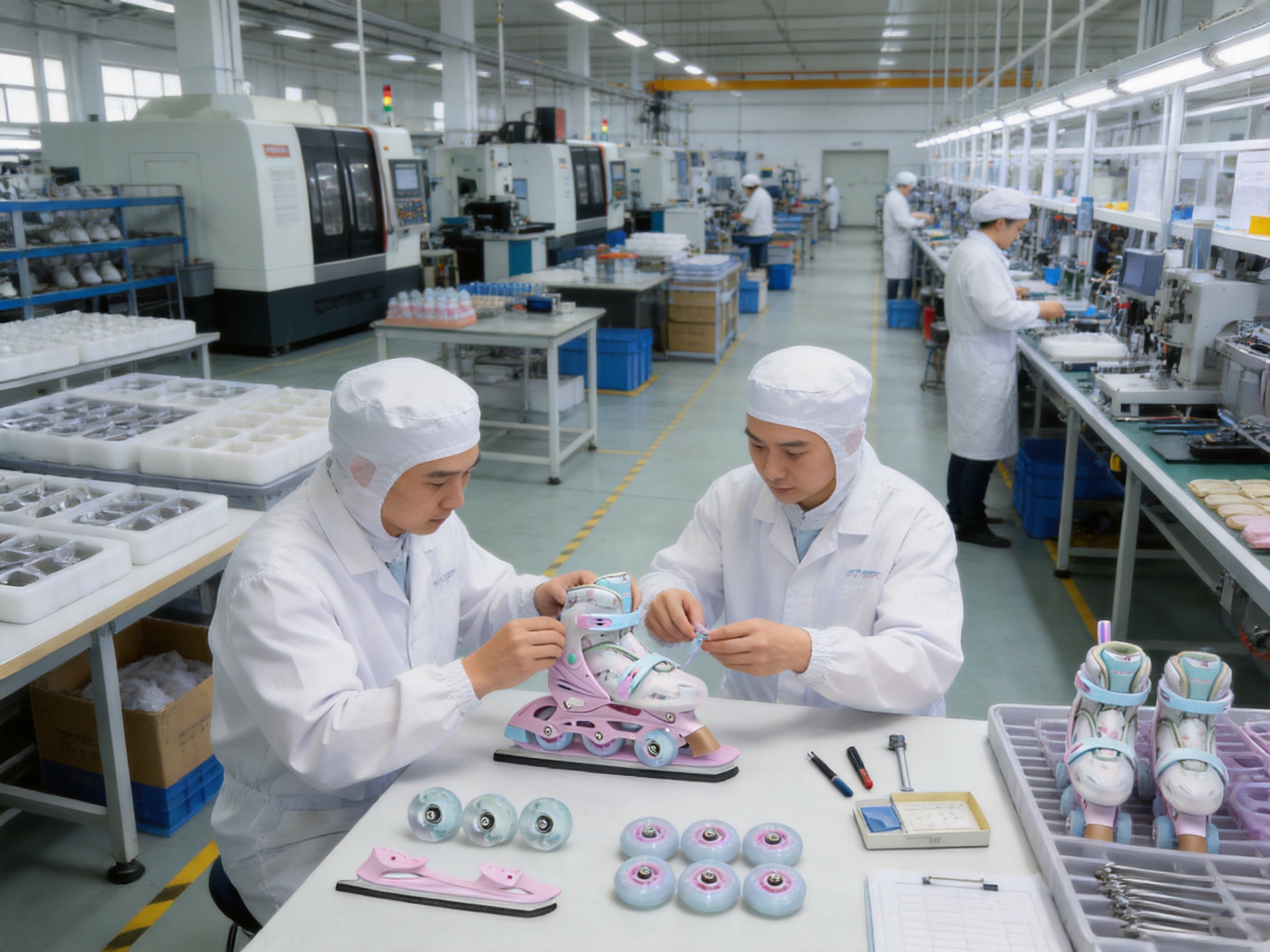
The company operates a 20,000-square-meter workshop with facilities covering mold production, injection molding, sewing, and assembly. This integrated capability is valuable for skating equipment because many products require coordinated control of different manufacturing stages.
Mold capability supports the development and production of shaped plastic components, housings, structural parts, connection features, and cosmetic elements. Injection molding allows repeated production of parts with controlled geometry and consistent appearance. Sewing facilities support soft components such as liners, padding, fabric sections, and other textile elements. Assembly operations bring the shoe, fastening components, base, and finishing details together into a sellable product.
When these operations are managed within one manufacturing organization, communication between engineering, production, quality control, and assembly teams can be more direct. This can help reduce delays caused by external coordination and make it easier to address fit, appearance, or assembly issues during product development.
Five Advanced Automatic Production Lines
The company has five advanced automatic production lines. Automation can support repeatability, production rhythm, and process control when it is correctly implemented and monitored. For a product involving interchangeable components, consistent production is especially important because the shoe-base interface must remain within controlled dimensional tolerances.
Automatic production lines may also help manufacturers handle larger orders for distributors, retailers, and private-label customers. Buyers benefit from a supplier that can organize production at commercial scale while maintaining a structured workflow. Capacity should still be confirmed for each order, especially when customers require special colors, packaging, labels, or market-specific compliance documents.
Automation does not replace skilled employees. It works together with engineering personnel, operators, inspectors, maintenance teams, and production managers. Proper calibration, preventive maintenance, process records, and inspection procedures are necessary to convert equipment investment into reliable product quality.
Professional Research and Development
The company maintains a professional research and development engineering team and introduces new products each year. This continuing development is important in a competitive children’s sporting goods market, where buyers expect improvements in safety, comfort, appearance, convenience, and price.
For the BW-125-A, research and development may involve coordination between the upper shoe design and several lower bases. Engineers must consider the fit of the connection system, the appearance of the product, ease of replacement, durability under normal use, and compatibility with the intended age group. A multi-functional design requires more than simply combining several products; it requires the components to work as a coherent system.
Management and Workforce Resources
The company has more than 200 employees and more than 30 college-educated management staff. A workforce of this scale can support specialized responsibilities in purchasing, production planning, engineering, quality control, export documentation, customer service, and factory management.
For international buyers, organizational capability can be as important as machinery. Product development, order communication, packaging confirmation, inspection scheduling, and shipping coordination all affect the success of an OEM or wholesale program. A structured management team can help reduce communication gaps between the customer’s requirements and the final production result.
Quality Systems and Product Compliance
The company reports certification through ISO9001, BSCI, and Kmart factory certification systems, as well as national patents. It also reports product certifications and standards including 3C, CE, EN71, EN62115, ASTM, EMC, and EN13843:2009.
These certifications and standards cover different areas and should not be interpreted as identical approvals. ISO9001 relates to quality management systems. BSCI concerns social compliance and responsible supply-chain practices. Product-related standards may address safety, electrical or electromagnetic considerations where applicable, toys and children’s products, or roller sports equipment. The relevance of a specific certificate depends on the exact product configuration, destination market, and testing scope.
Importers should request current copies of applicable certificates, test reports, declarations, and technical files before placing an order. They should also verify that the documentation applies to the exact model, size range, components, materials, and market in which the product will be sold.
For children’s sporting goods, quality management should include inspection of appearance, stitching, fastening systems, component fit, base attachment, wheel or blade assemblies, packaging, and labeling. Testing should reflect ordinary foreseeable use and should be supported by appropriate instructions and warnings.
Quality Control for Interchangeable Components
Interchangeability creates specific quality-control requirements. A conventional fixed skate has one principal shoe-to-base connection. A multi-functional product has repeated replacement operations and several compatible bases. Each connection must be checked for correct engagement and stable fit.
Factory inspection can include dimensional checks of connection points, visual inspection for molding defects, functional assembly tests, repeated replacement tests, and verification that the correct base is packed with the correct product. Production records can help identify recurring issues and support corrective action.
Packaging inspection is also important. If bases are packed separately within the same product set, the packaging must protect them from damage and prevent missing components. Clear instructions should explain how an adult can install, remove, inspect, and store each base.
OEM and Wholesale Potential
The BW-125-A has commercial potential for importers, retailers, children’s sports brands, department stores, specialty skating shops, online sellers, and promotional product distributors. Its strongest selling points are easy to communicate: multi-functional use, one shoe body, interchangeable bases, girls’ styling, and beginner-friendly value.
For OEM customers, the product may be considered as a base platform for different market presentations. Potential customization topics can include color combinations, printed packaging, brand labels, size markings, instruction manuals, promotional photography, and retail display materials. Any customization should be reviewed with the factory to confirm its influence on tooling, minimum order quantity, lead time, packaging, and certification.
Retailers can position the product in several ways. A children’s sports store may present it as an introductory skating system. A gift retailer may emphasize its attractive appearance and multi-use value. A family recreation business may promote it for parent-child activities. An online seller can explain the interchangeable-base concept through diagrams, assembly instructions, and mode-by-mode product photography.
Wholesale buyers should evaluate the product using more than unit price. Important factors include product consistency, packaging efficiency, replacement-part availability, documentation, order flexibility, delivery planning, inspection support, and after-sales communication. A slightly higher-quality product may create better long-term value if it generates fewer returns and stronger customer satisfaction.
Inventory Efficiency
A multi-functional skate can simplify inventory planning, but it does not eliminate the need for careful stock management. Buyers should determine whether all bases are included in every set, whether replacement bases are available separately, and how size groups are packed. They should also confirm whether demand is expected to differ between inline, quad, and ice configurations.
Because the product serves several use cases, it can support seasonal sales planning. Ice-related demand may increase during colder months or holiday periods, while outdoor skating may perform better during spring and summer. Retailers can use the same core product in multiple seasonal campaigns rather than changing entirely from one product category to another.
Customer Education as a Sales Advantage
The product is more distinctive when customers understand how it works. Retail staff should explain that the upper shoe remains in use while the skating base changes. Demonstration samples, clear illustrations, and short instruction panels can help customers understand the value immediately.
Customer education should also include safety information. The adult purchaser should be told to inspect the attachment before use, select suitable surfaces, ensure proper sizing, and use protective gear. Transparent information protects the customer and helps retailers build credibility.
Safety, Maintenance, and Responsible Use
Children should use skates under appropriate adult supervision, particularly when learning. A properly fitting helmet, wrist guards, elbow pads, and knee pads are strongly recommended for recreational skating. The child should begin in a controlled area away from traffic, stairs, water, steep slopes, and obstacles.
Before each session, an adult should inspect the shoe, fastening system, base connection, wheels or blades, and visible structural components. Any loose, cracked, bent, excessively worn, or damaged part should be examined before the product is used again.
The interchangeable base should be replaced according to the manufacturer’s instructions. The adult should verify that the snap-fit connection is fully seated and that there is no unusual movement. Children should not change bases without adult assistance, particularly if the replacement process is unfamiliar.
After use, the skates should be cleaned and dried appropriately. Moisture should be removed from metal parts and ice-related components to help reduce corrosion. Dirt and debris should be cleared from wheels and moving areas. The bases should be stored in a clean, dry location away from excessive heat, direct sunlight, and chemicals.
Ice skate blades require particular care because moisture can affect their condition. They should be dried after rink use and stored in a manner that protects the edges. Wheels and other moving parts should be checked periodically for wear according to the frequency of use and the surface on which the skates are operated.
Children should use the configuration appropriate to the intended venue. An ice skate base is not designed for ordinary outdoor plaza skating, and outdoor wheel configurations are not substitutes for proper ice blades on a rink. Selecting the correct base is a central part of responsible product use.
How the Product Supports Sustainable Purchasing
Although product sustainability depends on materials, durability, repairability, packaging, and end-of-life practices, a multi-functional design can support more efficient purchasing. One shoe body serving multiple activities may reduce the need to buy several complete pairs at the beginning of a child’s skating development.
A longer useful life is also supported when the user can continue using the same upper shoe for different recreational interests. Instead of setting aside an entire pair because the child wants to try another activity, the family can change the lower configuration if the product remains properly fitting and in good condition.
Manufacturers can further support responsible ownership by offering clear maintenance instructions, suitable replacement components, and packaging that protects parts without unnecessary excess. Buyers interested in sustainability should discuss material information, packaging design, repair options, and product-life expectations directly with the supplier.
Comparison with Alternative Product Types
| Product type | Typical strength | Typical limitation | Position of the 4-in-1 skate |
|---|---|---|---|
| Single-mode inline skate | Focused inline skating design | Cannot normally be used for quad or ice skating | Offers broader recreational flexibility |
| Single-mode quad skate | Familiar four-wheel layout for casual skating | Requires another product for inline or ice use | Provides quad use while adding other configurations |
| Dedicated ice skate | Designed specifically for rink use | Limited use away from ice | Combines ice recreation with other skating modes |
| Several separate pairs | Each pair can be optimized for one activity | Higher total purchase cost and storage demand | Uses one shoe body for multiple experiences |
| 4-in-1 interchangeable model | Versatility, convenience, and value | Requires correct base replacement and inspection | Well suited to beginners and family recreation |
The comparison shows that the BW-125-A should not be marketed as a direct replacement for every professional or specialized skate. Dedicated products may be preferable for advanced competitors, intensive training, or users seeking highly specialized performance. The strength of the 4-in-1 model is different: it provides accessible versatility for children and families who value exploration, convenience, and economical ownership.
Manufacturing Process Considerations
A high-quality children’s skate begins with product planning. Engineers define the intended user group, size range, skating modes, visual style, connection structure, materials, and performance expectations. For a multi-functional model, the development process must coordinate the upper shoe with each base from the earliest design stage.
Mold Development and Plastic Component Production
Mold development is essential for producing consistent shells, base interfaces, protective components, and decorative parts. Mold accuracy affects the dimensions, surface finish, alignment, and repeatability of molded components. In a snap-fit product, small dimensional deviations can influence assembly force and connection stability.
Injection molding then produces repeated plastic components under controlled process conditions. Operators and quality teams should monitor material preparation, temperature, pressure, cooling, cycle time, and visual appearance. Proper control helps reduce defects such as warping, short shots, sink marks, flash, and inconsistent color.
Sewing and Comfort Components
Children’s skates require more than rigid structural parts. Internal liners, padding, fabric coverings, and other soft components contribute to comfort and fit. Sewing operations must provide clean seams, secure stitching, appropriate reinforcement, and consistent positioning.
Comfort is especially important for beginners, who may spend extended periods practicing basic balance. A product that looks attractive but causes discomfort is unlikely to generate repeat use. Integrated sewing capability allows the manufacturer to coordinate soft components with the molded shoe structure.
Assembly and Functional Inspection
During assembly, the factory brings together the shoe body, fastening components, bases, wheels or blades, labels, and packaging. Functional inspection should verify that each product is complete, visually acceptable, correctly sized, and compatible with the supplied configurations.
For international orders, assembly inspection can be combined with barcode checks, carton verification, instruction-sheet review, and sampling according to the buyer’s quality requirements. These steps are particularly valuable when products are being prepared for retail distribution across multiple markets.
Continuous Improvement
The company’s ongoing new-product development supports a process of continuous improvement. Feedback from customers, retailers, engineers, inspectors, and market research can identify opportunities to improve appearance, installation convenience, packaging, durability, or user instructions.
Continuous improvement is especially relevant to products with several functions. Each skating mode may reveal different user expectations. Inline users may focus on rolling performance, quad users may emphasize balance and appearance, and ice users may prioritize correct blade configuration and rink suitability. Product development teams must balance these needs within a coherent family design.
Why Select an Experienced Sporting Goods Factory
Working with an experienced factory can simplify the development and supply of children’s skating products. A supplier that already specializes in scooters, inline skates, roller skates, and ice skates understands the component relationships, production challenges, safety expectations, and market requirements associated with these categories.
The company’s location in Yuyao, Ningbo, Zhejiang Province provides access to a major manufacturing region with strong plastics, tooling, logistics, and export resources. The area is known for its plastics industry, while proximity to Ningbo Airport and Shanghai supports domestic and international transportation planning.
For OEM customers, category experience may reduce the need to explain basic product structures and allow discussions to focus on the buyer’s market needs. The factory’s mold, injection molding, sewing, and assembly resources can support a more coordinated development process from prototype through production.
Factory certifications, product testing, patents, and participation in international exhibitions also indicate a commitment to serving broader markets. Nevertheless, every buyer should conduct its own due diligence, confirm current documentation, and establish clear quality expectations in the purchase agreement.
Recommended Buyer Evaluation Checklist
Before purchasing the BW-125-A for wholesale or OEM distribution, buyers should confirm the complete product configuration. The inquiry should specify which bases are included, how many shoe bodies are supplied, and whether all components are packed together as one retail set.
Buyers should also confirm size availability, color options, packaging dimensions, carton quantities, gross and net weights, product labeling, instruction manuals, warranty terms, and replacement-part policies. These details influence both customer experience and import planning.
Testing and compliance documentation should be reviewed for the intended destination market. A certificate issued for one product version or market may not automatically cover another configuration. Buyers should provide the factory with current destination-country requirements and request the appropriate technical documentation.
Samples should be evaluated before mass production. The buyer can inspect appearance, fit, base replacement, connection security, packaging, instructions, and practical use. Sample feedback should be recorded clearly so that agreed improvements can be reflected in production specifications.
Finally, buyers should establish inspection procedures. These may include pre-production approval, during-production inspection, final random inspection, carton drop or packaging checks where appropriate, and verification of model and quantity. Clear inspection criteria help both parties understand what constitutes acceptable product quality.
Market Positioning and Communication Strategy
The product’s market message should focus on flexibility without creating unrealistic performance expectations. Strong communication points include “one shoe body with interchangeable bases,” “multiple skating experiences,” “beginner-friendly recreational design,” “girls’ stylish appearance,” and “convenient family value.”
Retail descriptions should explain the difference between the skating modes in simple language. Inline skating uses wheels arranged in a line, quad skating uses a broader four-wheel layout, and ice skating uses a blade-based configuration. Customers should understand that each mode requires suitable surfaces and different basic techniques.
Visual merchandising can show the shoe body alongside the available bases. Packaging may include step-by-step replacement illustrations, safety reminders, size guidance, and care instructions. Online listings can use separate images for the upper shoe, base interfaces, and completed configurations.
Sales copy should avoid claiming that the product is suitable for professional competition unless specific evidence supports that statement. Its strongest and most credible advantages are versatility, convenience, attractive design, and recreational value for children and families.
Q&A
What is the main feature of the BW-125-A?
The main feature is its 4-in-1 multi-functional construction. One shoe body can be used with detachable and replaceable bases for different skating experiences, including inline skating, quad skating, and ice skating configurations.
Is the product suitable for beginners?
Yes. The product is positioned for children, especially beginners who are exploring skating. The familiar shoe body and multiple base options allow children to experience different activities without immediately purchasing several complete pairs.
How does the base replacement system work?
The product uses a snap-fit design. An adult should remove the existing base and install the selected replacement base according to the supplied instructions. The connection must be checked carefully before each use to confirm that it is fully engaged and stable.
Does one shoe body support both roller skating and ice skating?
The product information states that the interchangeable base allows switching between roller skating modes and an ice skate mode. The correct ice skate base must be installed for rink use, and the equipment should be checked according to the ice rink’s requirements.
What sizes are available?
The listed size groups are 31–34, 35–38, and 39–42. Buyers should confirm the detailed sizing chart, foot-length recommendations, and market-specific size labeling before placing an order.
Who is the target customer?
The primary target customer is a child or family seeking recreational skating equipment with multiple uses. It is also suitable for retailers, importers, online sellers, skating shops, gift retailers, and distributors looking for a differentiated children’s sports product.
Can the product be used outdoors?
It can be used for suitable outdoor recreational activities with the appropriate roller-skating base. The surface should be smooth, dry, clean, level, and free from traffic or dangerous obstacles. The ice skate base should not be used on ordinary outdoor pavement.
Is protective gear necessary?
Protective gear is strongly recommended, especially for beginners. A helmet, wrist guards, elbow pads, and knee pads can help reduce the consequences of falls. Adult supervision and appropriate instruction are also important.
What should be checked before skating?
An adult should check the shoe fit, fasteners, base connection, wheels or blades, visible structural parts, and general condition. Any loose, cracked, damaged, or excessively worn component should be addressed before use.
What manufacturing capabilities support this product?
The manufacturer operates mold, injection molding, sewing, and assembly workshops, along with five automatic production lines and a professional R&D engineering team. These capabilities support the production of coordinated plastic, textile, structural, and assembled components.
Does the manufacturer support OEM projects?
The company is described as a China OEM skating and scooter equipment manufacturer and sports equipment factory. Potential OEM discussions may include colors, packaging, labels, manuals, and other market-specific requirements, subject to feasibility, minimum order quantities, tooling, lead time, and certification review.
What certifications and standards are associated with the company’s products?
The company reports ISO9001, BSCI, and Kmart factory certification systems, as well as product certifications or standards including 3C, CE, EN71, EN62115, ASTM, EMC, and EN13843:2009. Buyers should request current documents applicable to the exact product and destination market.
Conclusion
The BW-125-A 4 In 1 Roller Skate offers a practical response to the changing needs of young skaters. Its interchangeable-base construction gives one shoe body several recreational functions, helping families reduce equipment duplication while allowing children to explore inline skating, quad skating, and ice skating. Its girls-focused styling expands its use beyond ordinary practice into photography, performances, parties, and everyday play.
Compared with conventional single-mode products, its principal advantages are flexibility, storage convenience, purchase value, and continuity of fit. These benefits make it particularly suitable for beginners and families rather than users seeking highly specialized professional performance.
The product is supported by a manufacturer with experience in children’s scooters, inline skates, roller skates, and ice skates. Mold, injection molding, sewing, assembly, automatic production lines, research and development, quality management, and international market experience provide a strong foundation for OEM and wholesale cooperation.
For buyers, the most important next steps are to confirm the complete configuration, verify sizing and packaging, review current compliance documentation, evaluate samples, and establish inspection standards. When combined with proper supervision, protective equipment, correct base selection, and regular maintenance, the BW-125-A can become a versatile and attractive addition to the children’s sports equipment market.
References
1. Product information sheet for BW-125-A 4 In 1 Roller Skate, including product description, features, size ranges, applications, and packaging dimensions.
2. Ningbo Feile Sporting Goods Co., Ltd. company profile, including manufacturing facilities, workforce information, research and development capabilities, and product categories.
3. ISO 9001 quality management system principles and supplier quality-assurance practices.
4. General guidance for children’s recreational skating equipment, protective gear, supervision, maintenance, and safe-use instruction.
5. International product compliance and testing references identified by the manufacturer, including 3C, CE, EN71, ASTM, EMC, and EN13843:2009 requirements where applicable.
6. General supply-chain evaluation practices for OEM sporting goods, including sample approval, packaging review, production inspection, documentation verification, and after-sales support.
Product: BW-125-A 4 In 1 Roller Skate
Recommended Articles
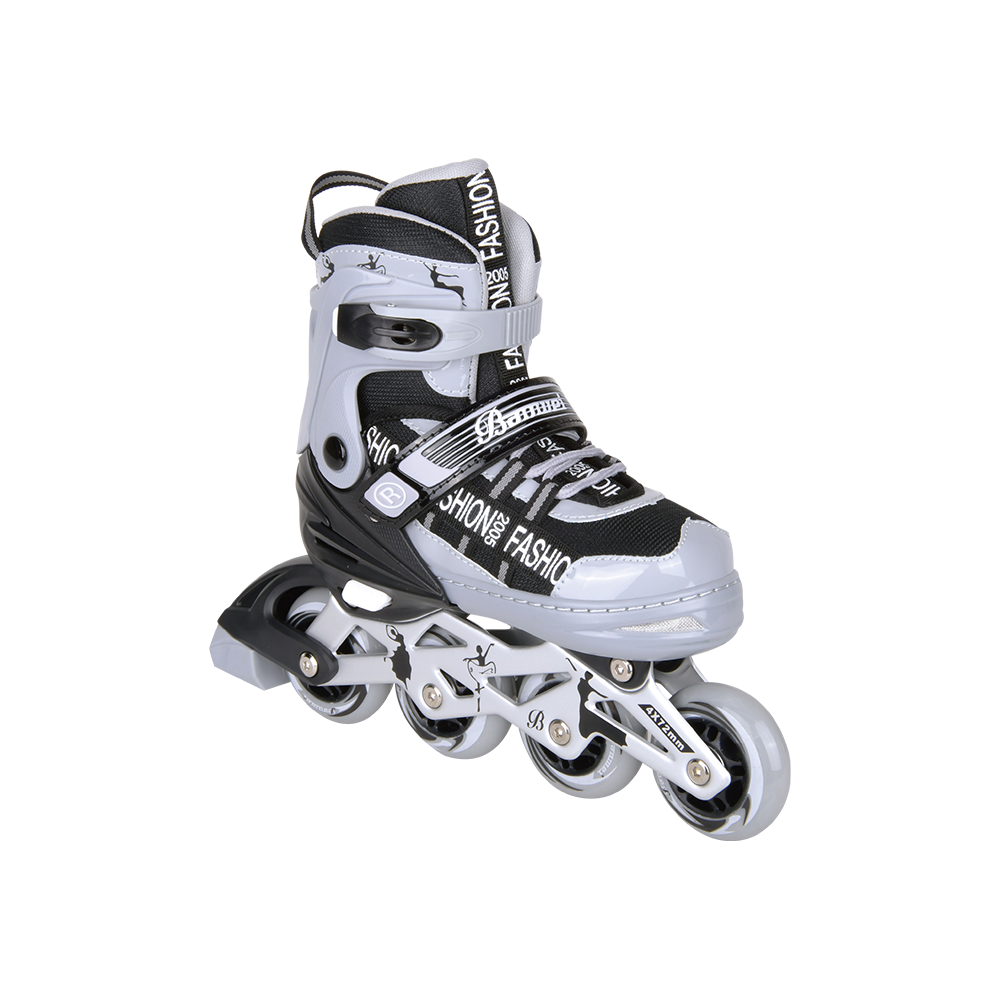

Get in Touch
Your email address will not be published. Required fields are marked *
Have a project in mind? Contact with us!
We are happy to answer your questions. Please fill out this form
and one of our professional team will get back to you as soon as possible.

We specialize in producing various types of children's toy cars, children's skateboards, and ice skates.
