
 En
En
 Español
 русский
 عربى
عربى
Adjustable Camouflage Inline Skates for Growing Children: Comfort, Control, and OEM Value
Date:Aug 08, 2026
Content
- 1 Designed Around the Real Needs of Growing Children
- 2 Key Product Specifications
- 3 Comfort Through a Soft, Close-Fitting Upper
- 4 Secure Fit for Better Control
- 5 Three-Stage Size Adjustment and Long-Term Value
- 6 Camouflage Styling That Appeals to Children
- 7 Outdoor Durability for Everyday Play
- 8 Simple Operation for Beginners
- 9 Supporting Balance, Coordination, and Active Play
- 10 Advantages Compared with Conventional Children’s Inline Skates
- 11 Manufacturing Strengths Behind the Product
- 12 OEM and One-Stop Sourcing Capability
- 13 Quality Systems and Compliance Awareness
- 14 Product Development and Innovation
- 15 Packaging and Commercial Planning
- 16 Recommended Use and Care
- 17 Suitable Markets and Customer Groups
- 18 Why the Product Offers a Balanced Competitive Position
- 19 Buying Considerations for Importers and Distributors
- 20 Frequently Asked Questions
- 20.1 What type of product is the BW-185?
- 20.2 Which sizes are available?
- 20.3 Why is adjustable sizing useful for children?
- 20.4 Does adjustable sizing mean the skate should be purchased much larger?
- 20.5 What is the benefit of the soft upper?
- 20.6 Is the upper breathable?
- 20.7 What makes the design different from ordinary children’s skates?
- 20.8 Is the product suitable for beginners?
- 20.9 What protective equipment should children wear?
- 20.10 Can the product be used for professional training?
- 20.11 Where can children use these skates?
- 20.12 How should the size be adjusted?
- 20.13 What manufacturing capabilities does the supplier have?
- 20.14 Does the supplier support OEM projects?
- 20.15 What quality certifications are reported?
- 20.16 What should commercial buyers confirm before ordering?
- 21 Conclusion
- 22 References
- 23 Product: BW-185 Children's Inline Skate
Children’s inline skates are more than recreational footwear. They are a combination of a rolling platform, a protective support system, and a piece of sports equipment that must respond to a child’s changing body, developing balance, and varied outdoor environment. For parents, retailers, distributors, and sourcing professionals, the ideal children’s inline skate must provide comfort, stability, adjustability, durability, visual appeal, and practical value. It must also be easy for children to use and straightforward for adults to maintain.
The BW-185 children’s inline skate is designed around these requirements. It combines a growth-adjustable structure with a soft, close-fitting upper, breathable construction, outdoor-oriented durability, and a camouflage appearance intended to stand apart from ordinary solid-color designs. Its three adjustable size ranges, identified as S, M, and L, allow one pair to accommodate different stages of a child’s foot development. This helps reduce the need for frequent replacement while giving children a more secure and comfortable platform for casual skating.
The product is intended for light outdoor leisure, play, and introductory skating rather than high-intensity professional training. It is suitable for children using flat surfaces such as parks, plazas, recreational paths, and other appropriate outdoor areas. Within this category, its principal value lies in balancing ease of use, fit, appearance, and long-term practicality.
Designed Around the Real Needs of Growing Children
Children’s feet develop quickly. A fixed-size skate that fits perfectly at the time of purchase may become uncomfortable after a relatively short period. If parents buy a larger size to allow for growth, the skate may be loose during use. Excess space can allow the foot to move inside the shoe, making balance more difficult and reducing the child’s sense of control. An adjustable design addresses this problem by allowing the internal length to change as the child grows.
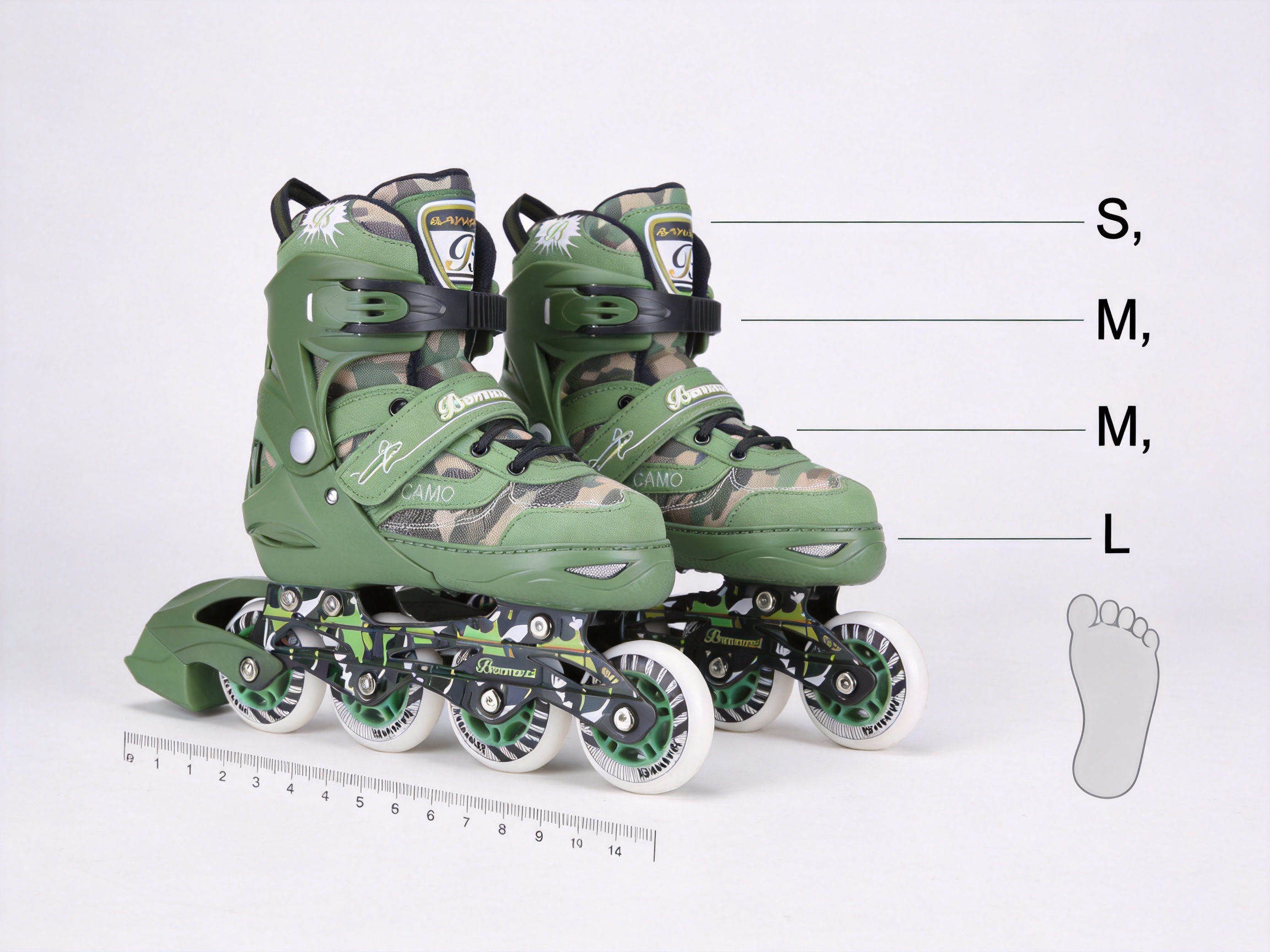
The BW-185 uses three adjustable size groups: S, M, and L. The supplied size information includes 31–34, 35–38, and 39–42 ranges. These ranges are intended to serve children at different growth stages, although buyers should always compare the actual foot measurement with the seller’s size guidance before ordering. A growth-adjustable skate is most effective when the selected range is appropriate and the adjustment is set correctly.
The adjustable structure provides a practical advantage over conventional fixed-size children’s skates. Families can potentially use the product for a longer period, while retailers can present it as a value-oriented option for parents who want equipment that can adapt to changing foot size. This feature also makes the product useful for siblings or rental-style recreational settings when proper hygiene and fit procedures are followed.
Adjustability must not be confused with excessive looseness. A child’s foot should remain securely positioned inside the skate, with the heel held in place and the toes able to rest naturally without being compressed. The BW-185’s stated snug-fit concept is intended to reduce unwanted foot movement. A stable fit helps the child transfer body weight more consistently, which is especially important when learning basic forward motion, stopping, turning, and balance.
Key Product Specifications
| Item | Specification |
|---|---|
| Product type | Children’s adjustable inline skate |
| Model | BW-185 |
| Primary use | Outdoor leisure, play, and light skating activity |
| Adjustment groups | S, M, and L |
| Listed size ranges | 31–34, 35–38, and 39–42 |
| Upper construction | Soft, skin-friendly, form-fitting fabric structure |
| Design style | Camouflage pattern |
| Use environment | Flat outdoor surfaces, parks, plazas, and recreational areas |
| Recommended activity level | Casual skating and light outdoor exercise |
| Packaging dimensions provided | 31–34: 540 × 410 × 290 mm; 35–38: 560 × 420 × 305 mm; 39–42: 600 × 430 × 315 mm |
The dimensions listed in the product information appear to describe packaging or logistical measurements rather than the physical dimensions of an individual skate. Buyers should confirm carton quantity, gross weight, net weight, and packing configuration with the supplier before placing a commercial order. This distinction is important for freight planning, warehouse organization, and retail packaging calculations.
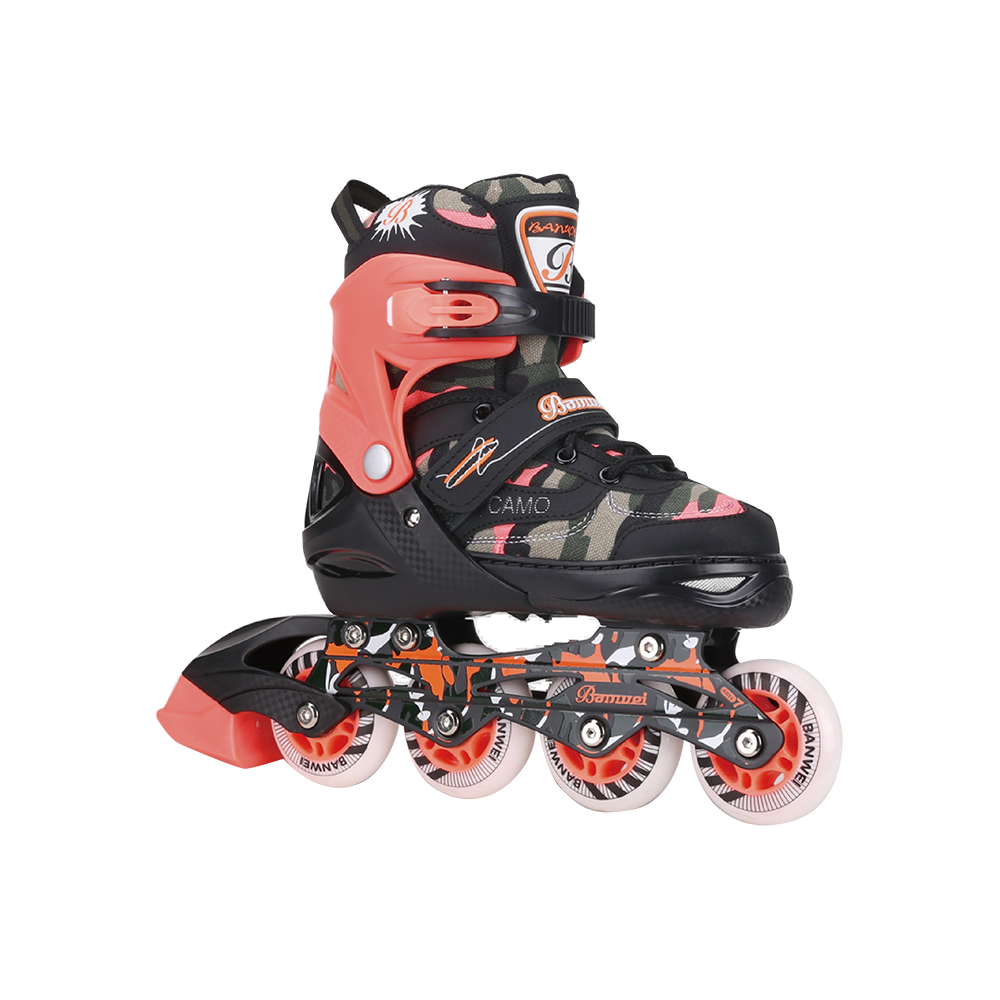
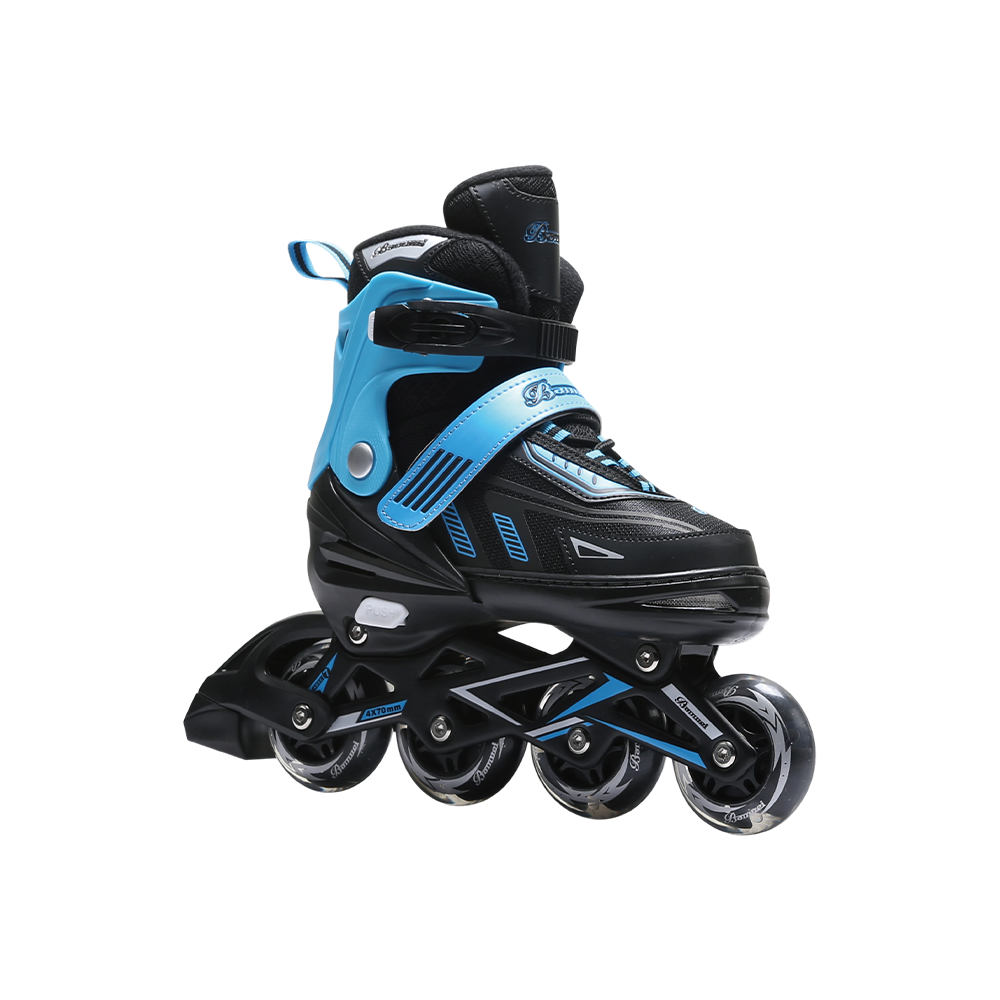
BW-185 Children's Inline Skate
Comfort Through a Soft, Close-Fitting Upper
Comfort is one of the most important factors in children’s sports equipment. When a skate rubs, traps heat, or feels rigid around the ankle, a child may lose interest before developing basic skating confidence. The BW-185 uses a soft, skin-friendly upper material designed to follow the shape of the foot and ankle. Instead of relying only on a hard outer shell, the construction is intended to offer a closer, more flexible contact area.
A form-fitting upper can help distribute pressure more evenly. This matters because children often have sensitive skin and may not immediately explain that a seam, edge, or pressure point is causing discomfort. A smoother fit reduces distractions and allows the child to concentrate on posture and movement. It also supports a more natural relationship between the foot and the skate, which can make basic skating actions feel less awkward.
The upper is also described as breathable and sweat-resistant in use. Outdoor play can involve repeated movement, warm weather, and long periods of activity. Airflow through the upper structure helps reduce the feeling of trapped heat. While breathability cannot eliminate perspiration, it can improve the overall wearing experience and help the foot feel drier during ordinary recreational use.
For parents, comfort contributes directly to product value. A skate that children are willing to wear repeatedly is more useful than a product that is technically functional but uncomfortable. For retailers, comfort is also a meaningful selling point because it addresses one of the most common concerns in children’s footwear: whether the child will actually enjoy using the product.
The upper’s flexibility should be understood as part of a balanced support system. Children need enough structure to prevent excessive movement, but they also need freedom to flex naturally. The BW-185 is positioned for leisure and introductory use, where a moderate, supportive fit is more appropriate than an extremely rigid design intended for specialized performance.
Secure Fit for Better Control
A stable foot position is central to skating control. When the foot shifts inside the skate, the child may need to compensate with the ankle, knee, or hip. This can make simple movements feel unpredictable. A snug fit helps reduce internal movement and allows the child’s body weight to transfer more directly into the skate.
The BW-185’s fit-oriented construction is intended to keep the foot firmly in place during ordinary skating. This may help reduce wobbling and unwanted shifting, particularly when the child is starting, slowing down, or changing direction. A secure fit can also help create a smoother skating rhythm because the child is not constantly repositioning the foot inside the shoe.
Correct adjustment remains essential. Parents should set the skate so that it is secure without causing discomfort or restricting circulation. The child should be able to stand naturally, with the heel seated and the foot aligned with the skate. After a short period of use, the adjustment should be checked again because movement can reveal areas that feel too loose or too tight.
Compared with a fixed-size skate that is intentionally purchased too large, a properly adjusted growth skate offers a more controlled solution. The child can receive additional length as needed without having to accept excessive internal space from the beginning. This is one of the most important practical advantages of an adjustable model.
Three-Stage Size Adjustment and Long-Term Value
The three-stage size system is designed to extend the useful life of the product. Children’s feet do not all grow at the same speed, and a range-based adjustment system provides room for variation. Rather than replacing a skate every time the child moves up a size, parents can modify the skate within its specified range.
This approach offers potential economic benefits. The initial purchase may provide value across multiple growth stages, reducing the frequency of replacement. It can also simplify purchasing decisions for families who want a product that remains useful beyond one season. Retailers may present the skate as a practical solution for customers who are concerned about rapid growth and changing footwear needs.
For distributors and wholesalers, adjustable sizing can improve inventory flexibility. A product covering several conventional sizes may require fewer individual stock-keeping units than a fully fixed-size range. This does not remove the need for careful demand planning, but it can simplify assortment management and make shelf presentation more efficient.
Size adjustment also supports gifting. Adults purchasing skates for children may not know the exact foot size, especially when buying for birthdays or seasonal occasions. A range-based product gives the recipient some flexibility, although a correct measurement is still recommended for the best fit and safety.
The adjustment mechanism should be operated by an adult or under adult supervision. Children should not be expected to understand how much tension is appropriate or how to verify that the locking system is secure. Before each skating session, the adult should check that the selected size is locked, the skate is not damaged, and the child’s foot remains properly positioned.
Camouflage Styling That Appeals to Children
Visual design has a meaningful role in children’s sports products. Children are often attracted to equipment that reflects their personality, interests, and sense of fun. The BW-185 uses a camouflage pattern to create a distinctive appearance. This separates it from the many conventional inline skates that rely on simple solid colors or minimal decoration.
The camouflage look can make the product more visually memorable. It may appeal to children who enjoy active, adventurous, or outdoor-themed designs. It also gives retailers another style option when building a children’s skating assortment. A distinctive pattern can help a product stand out in an online catalog, store display, or seasonal sports promotion.
Appearance alone does not determine product quality, but it can influence whether a child wants to participate. When children feel positive about their equipment, they may be more motivated to practice and spend time outdoors. In this way, the design supports the broader purpose of the product: encouraging enjoyable physical activity.
The camouflage pattern also offers a point of differentiation in competitive product comparisons. If two skates offer similar basic functions, a unique appearance can help one product attract attention. For private-label buyers, the pattern may also serve as a starting point for discussions about packaging, color combinations, or future design variations, subject to supplier capabilities and order requirements.
Outdoor Durability for Everyday Play
Children’s skates used outdoors encounter a variety of practical conditions. They may be carried across pavement, placed on the ground, exposed to dust, or bumped during ordinary play. The BW-185 is described as using robust fabric and a durable construction intended to withstand outdoor surfaces and minor impacts.
This outdoor-oriented design supports everyday leisure use. Parents generally want equipment that can tolerate normal handling without requiring constant special treatment. A durable upper and reliable overall assembly can help the skate maintain its appearance and function over repeated sessions.
Durability does not mean that the product should be used carelessly. Inline skates should be kept away from unsuitable terrain, standing water, steep roads, traffic areas, and surfaces with large cracks or loose debris. They should also be inspected regularly for wear. No recreational skate is intended to eliminate all risk associated with falls or collisions.
For commercial buyers, durability is connected to customer satisfaction and return rates. Products that are designed for their stated environment are more likely to meet user expectations. Clear product positioning is therefore important: the BW-185 is intended for children’s light outdoor skating and leisure, not for professional racing, aggressive tricks, or high-intensity training.
Retailers can strengthen the product offering by pairing it with basic protective equipment, care instructions, and age-appropriate skating guidance. This helps customers understand how to obtain the best performance and prolong the useful life of the skates.
Simple Operation for Beginners
Children often need equipment that is easy to put on, adjust, and understand. Complicated fitting procedures can cause frustration, especially when a child is eager to begin playing. The BW-185 is designed for simple operation, allowing adults to make size adjustments and secure the skate without an unnecessarily complicated learning process.
Ease of use is particularly valuable during family outings. Parents may need to help a child put on skates in a park, at a recreational venue, or before a short neighborhood activity. A straightforward adjustment process saves time and helps the child begin with a positive attitude.
Once properly fitted, the skate supports a gentle skating rhythm. This is appropriate for children who are learning basic movement and balance. The product is not positioned as a substitute for formal instruction, but its accessible design can help children become familiar with the feeling of rolling movement.
Beginners should start on a clean, flat, controlled surface. They should first practice standing, bending the knees slightly, shifting weight, and taking short controlled steps. An adult should remain nearby, especially during the first sessions. The child should learn how to stop safely before attempting faster movement or longer distances.
The skate’s simple operation also benefits retailers and sales staff. When product features are easy to explain, customers can make more confident purchasing decisions. Demonstrating the adjustment process, explaining the size ranges, and showing how the foot should sit inside the skate can be more persuasive than relying on technical language alone.
Supporting Balance, Coordination, and Active Play
Inline skating involves balance, timing, weight transfer, and coordination. Even light recreational skating can encourage children to use their legs and core muscles while developing awareness of movement. The BW-185 is intended to support these benefits through casual outdoor activity.
Children do not need professional-level training to gain value from skating. Short, enjoyable sessions can introduce them to an active lifestyle and help them build confidence gradually. Skating with friends in a suitable outdoor area can turn exercise into a social experience, making physical activity feel natural rather than compulsory.
Balance development should occur progressively. Children may begin by standing with support, then take small steps, glide for short distances, and practice controlled stopping. The goal is not speed but confidence and safe movement. A properly adjusted skate helps by reducing unnecessary foot movement and allowing the child to focus on body position.
Parents should choose locations appropriate to the child’s ability. Flat plazas, smooth recreational paths, and designated skating areas are generally more suitable than steep slopes, crowded roads, or rough ground. Weather conditions should also be considered. Wet surfaces can reduce traction and increase the likelihood of slipping.
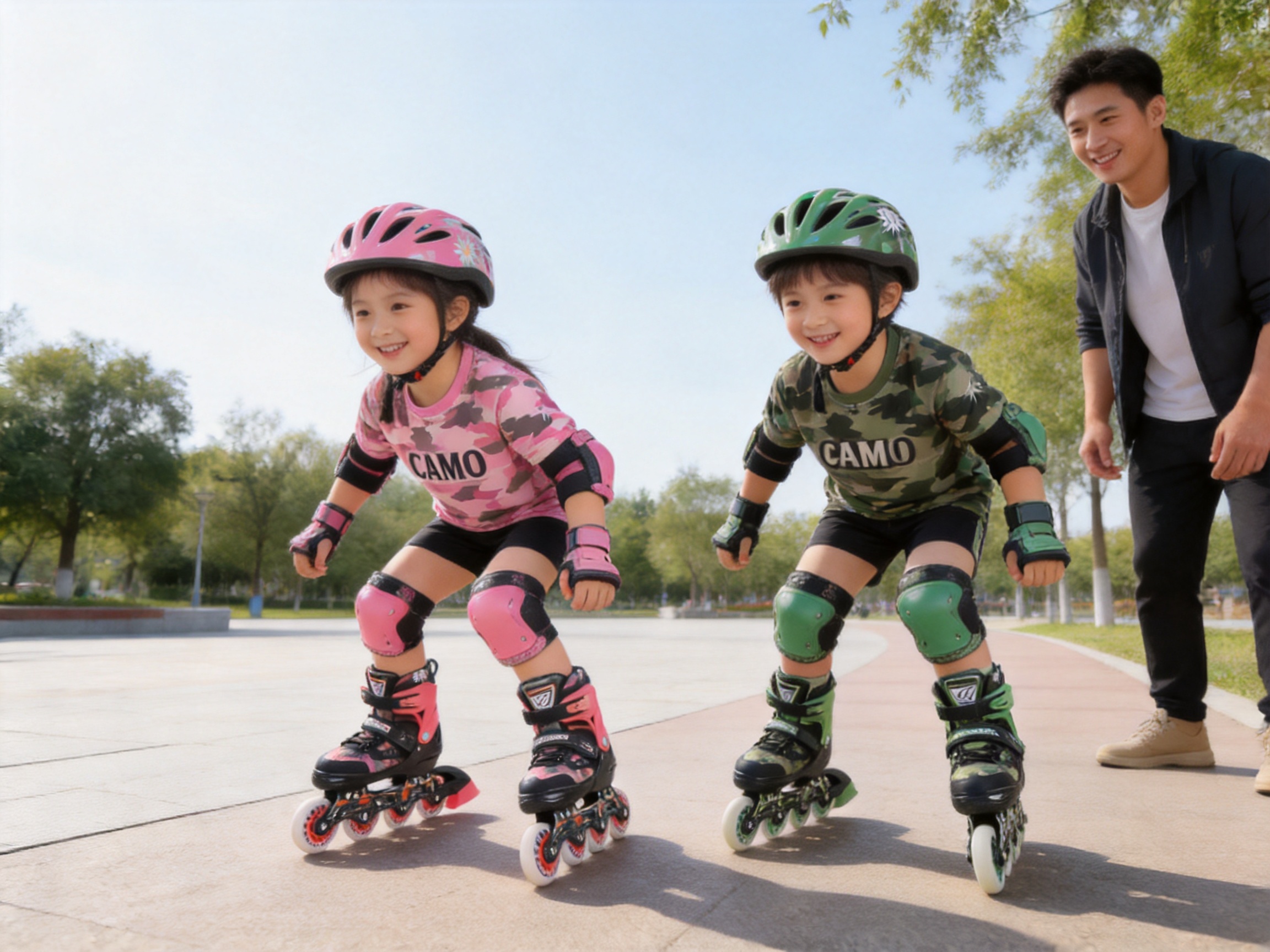
Protective gear is strongly recommended. A helmet, wrist guards, elbow pads, and knee pads can help reduce the severity of common falls. Protective equipment should fit correctly and be worn consistently, even when the child is skating slowly. Adult supervision remains important because equipment alone cannot prevent every accident.
Advantages Compared with Conventional Children’s Inline Skates
The children’s inline skate market includes fixed-size models, hard-shell recreational skates, fashion-oriented products, and entry-level adjustable designs. The BW-185 competes by combining several practical attributes in one product rather than focusing on only one feature.
First, its adjustable size structure provides a clear advantage over fixed-size products. A fixed skate may offer a precise fit at one moment but become unsuitable as the child grows. The BW-185 is intended to remain useful across three size groups, helping address the rapid changes associated with childhood development.
Second, the soft, form-fitting upper differentiates the product from designs that may feel excessively rigid or bulky. A flexible fabric construction can offer a more comfortable relationship with the foot and ankle during light recreational use. This is especially relevant for children who are sensitive to pressure or who are still becoming familiar with skating footwear.
Third, the breathable structure supports comfort during extended casual activity. Traditional footwear that holds heat and moisture may become unpleasant during outdoor play. The BW-185’s airflow-oriented upper is designed to help the foot feel more comfortable during ordinary use.
Fourth, the camouflage pattern provides visual differentiation. Many children’s skates rely on familiar color blocks or simple graphics. A camouflage design offers a stronger lifestyle identity and may attract children who want equipment that looks more distinctive.
Fifth, the product is positioned for simple operation. Entry-level children’s equipment should not create unnecessary barriers. An easy adjustment process helps adults fit the skate efficiently and allows children to begin learning with less frustration.
These advantages should be considered together. Adjustability without comfort may not satisfy the user. Comfort without secure support may not provide adequate control. Attractive styling without durability may lead to disappointment. The BW-185’s value comes from bringing fit, comfort, appearance, and outdoor practicality into a unified design.
| Evaluation area | Common concern with basic fixed-size skates | BW-185 design response |
|---|---|---|
| Growth | Product may become too small quickly | Three adjustable size groups accommodate changing foot length |
| Fit | Oversized skates may allow foot movement | Snug, form-fitting construction is intended to improve foot stability |
| Comfort | Rigid or poorly ventilated uppers may feel uncomfortable | Soft, skin-friendly, breathable upper structure |
| Style | Basic solid-color appearance may feel ordinary | Distinctive camouflage design |
| Usability | Complicated adjustment may discourage beginners | Simple size adjustment and easy operation |
| Outdoor use | Light constructions may show wear during regular play | Robust fabric and construction intended for everyday outdoor activity |
Manufacturing Strengths Behind the Product
Product performance is influenced not only by the design concept but also by the manufacturer’s ability to control materials, tooling, assembly, inspection, and product development. The supplier behind the BW-185 has been operating since 2010 and specializes in children’s scooters, inline skates, roller skates, and ice skates.
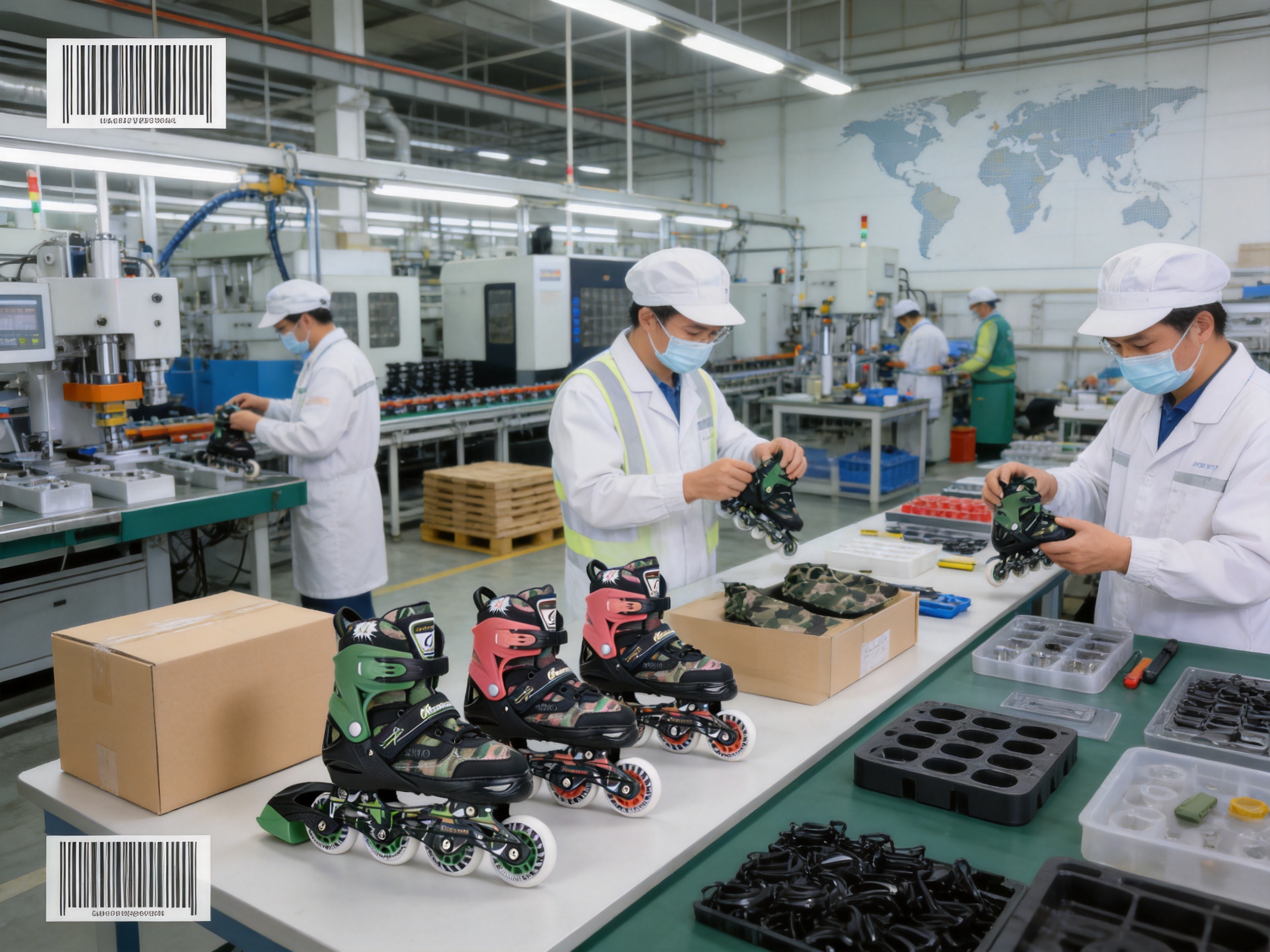
The company operates a workshop of approximately 20,000 square meters and employs more than 200 people. Its reported manufacturing structure includes five advanced automatic production lines and a professional research and development engineering team. These resources provide a foundation for producing sports equipment in volume while maintaining repeatability across production batches.
The company’s facilities include mold, injection molding, sewing, and assembly workshops. This combination is significant for skating products because different components require different production methods. Plastic components may depend on accurate molds and stable injection parameters. Fabric uppers require sewing control, material handling, and consistent stitching. Final assembly requires coordination between the upper, chassis, wheels, fastening components, and other structural parts.
In-house or closely coordinated production capabilities can improve communication between design and manufacturing teams. When a product requires modification, the engineering team can work with tooling and production personnel to evaluate changes. This may support faster development of new models, improved manufacturability, and more consistent execution of product specifications.
Automatic production lines can also help with process repeatability. Automation does not replace human quality control, but it can reduce variation in repetitive operations and improve production efficiency. For international buyers, efficient production is important because it supports delivery planning, cost control, and the ability to respond to seasonal demand.
The company also maintains more than 30 college-educated management staff and a professional engineering team. A structured management organization can support purchasing, production scheduling, quality control, export coordination, and customer communication. These functions are especially important for OEM and sourcing projects in which product specifications, packaging requirements, and shipment schedules must be managed together.
OEM and One-Stop Sourcing Capability
For importers and brand owners, the value of a supplier extends beyond the individual product. A capable factory should be able to support product selection, technical communication, sampling, production, inspection, packaging, and shipment coordination. A manufacturer specializing in several related product categories can provide a more unified sourcing experience.
The company’s product scope includes children’s scooters, inline skates, roller skates, and ice skates, as well as related sports equipment. This category knowledge can be useful for buyers developing a broader children’s activity assortment. Instead of sourcing every product from an unrelated factory, a buyer may discuss complementary products with a supplier familiar with the same general market.
The BW-185 can serve as an entry point for discussions about private-label or OEM programs. Depending on order quantities and technical feasibility, commercial buyers may explore customized colors, packaging, printed materials, size labeling, or other market-specific requirements. Such details should be confirmed directly with the manufacturer because customization availability, minimum order quantities, tooling charges, and lead times vary by project.
One-stop sourcing can simplify vendor management. A buyer may coordinate product development, documentation, packaging review, and shipment planning through one principal supplier. This can reduce communication gaps and make it easier to maintain a consistent quality standard across related product lines.
International buyers should still conduct normal due diligence. They should confirm product specifications, test reports, applicable standards, sample approval procedures, inspection requirements, carton markings, shipping terms, and after-sales policies before placing an order. A capable factory provides a strong foundation, but successful sourcing also depends on clear written agreements and effective quality management by the buyer.
Quality Systems and Compliance Awareness
The manufacturer reports certification and compliance experience that includes ISO9001 and BSCI, as well as Kmart factory certification systems. It also states that its products have received certifications or approvals including 3C, CE, EN71, EN62115, ASTM, EMC, and EN13843:2009.
These references indicate experience with quality management, social compliance, and international market requirements. However, buyers should verify which certification applies to the specific BW-185 model, which market it covers, the issuing organization, the validity period, and the exact product configuration tested. Certifications should not be assumed to apply automatically to every model or every production variation.
For children’s inline skates, a professional quality process may include incoming material checks, component inspections, assembly controls, functional testing, appearance checks, and carton inspections. The specific inspection plan should be agreed upon with the buyer. Important areas may include adjustment operation, fastening security, wheel alignment, structural integrity, stitching, surface finish, labeling, and packaging protection.
Quality consistency is particularly important for adjustable products. The adjustment system must operate smoothly while remaining secure in the selected position. If the mechanism is difficult to operate, children and parents may misuse it. If it does not hold correctly, the fit and control benefits can be reduced. Production inspection should therefore pay close attention to both operation and retention.
Material traceability and production documentation can also support commercial confidence. Buyers may request a bill of materials, approved sample, inspection criteria, test documentation, and batch records where appropriate. These tools help ensure that mass production remains consistent with the approved sample.
Product Development and Innovation
The company reports that it maintains a professional research and development engineering team and launches new products each year. Continuous product development is valuable in the children’s sports equipment sector because consumer preferences, safety expectations, materials, and retail trends continue to change.
Innovation does not always require a completely new category. It may involve improving the fit, simplifying adjustment, refining the upper material, enhancing ventilation, updating the appearance, or making packaging more efficient. The BW-185 demonstrates how several user-focused improvements can be combined into a practical recreational product.
National patents are also reported as part of the company’s intellectual property portfolio. Buyers interested in exclusive designs or custom developments should discuss ownership, licensing, confidentiality, and tooling arrangements before beginning a project. A clear agreement helps protect both the manufacturer’s existing intellectual property and the buyer’s custom requirements.
Research and development should remain connected to real user needs. For children’s skates, useful development questions include how quickly an adult can adjust the size, how the upper performs during warm-weather play, how the skate feels during basic balance exercises, and how the product withstands ordinary handling. Product feedback from retailers and families can help guide future improvements.
Packaging and Commercial Planning
The listed packaging dimensions for the three size ranges are 540 × 410 × 290 millimeters for sizes 31–34, 560 × 420 × 305 millimeters for sizes 35–38, and 600 × 430 × 315 millimeters for sizes 39–42. These measurements can assist preliminary logistics planning, but commercial buyers should confirm whether they refer to master cartons, packed sets, or another configuration.
Packaging should protect the skates from abrasion, compression, moisture, and contamination during storage and transport. It should also communicate the size range, product model, usage category, and basic care information clearly. For children’s products, packaging may need to include safety reminders and warnings appropriate to the destination market.
Retail presentation is another consideration. The camouflage appearance can be used as a visual feature in product photography and shelf display. Clear images should show the adjustment structure, upper construction, wheel arrangement, and overall fit. Online listings should avoid vague size claims and should provide a measurement guide that explains how customers can check a child’s foot length.
For wholesalers, carton efficiency and loading plans can affect landed cost. Before finalizing an order, buyers should request carton dimensions, quantity per carton, gross and net weights, pallet information if applicable, and estimated loading quantities. These details help calculate freight costs and warehouse requirements.
Recommended Use and Care
The BW-185 is intended for children’s casual skating on suitable flat outdoor surfaces. Before use, an adult should inspect the skates for visible damage, confirm that the size adjustment is locked, and check that all fastening components are secure. The child should wear appropriate protective equipment and skate in an area free from traffic and major obstacles.
After use, the skates should be allowed to dry naturally in a ventilated location. They should not be placed directly against a strong heat source, as excessive heat may affect fabrics, plastics, adhesives, or other components. Dirt should be removed using a soft cloth and suitable cleaning methods. The exact cleaning instructions should follow the manufacturer’s recommendations.
Wheels and other wear components should be checked periodically. Uneven wear, excessive noise, looseness, cracks, or a change in rolling behavior may indicate that maintenance or replacement is required. Children should not continue skating on equipment that appears damaged.
Storage conditions also influence product life. Skates should be stored away from prolonged direct sunlight, extreme temperatures, excessive humidity, and sharp objects. Keeping the pair together helps prevent loss of accessories and makes it easier to inspect both skates before use.
Suitable Markets and Customer Groups
The product is suitable for retailers and distributors serving families interested in recreational skating, outdoor play, and introductory sports activities. It may fit seasonal collections for spring and summer, children’s sporting goods assortments, outdoor leisure promotions, and gift-oriented product ranges.
Its adjustable sizing makes it relevant to parents who prioritize value and longer use. Its camouflage styling may appeal to children who want a more adventurous appearance. Its soft upper and breathable construction can attract customers who are concerned about comfort. These different benefits allow retailers to present the product to several customer motivations rather than relying on a single selling point.
The product may also be appropriate for sports clubs, recreational venues, and educational activity programs, subject to their own safety procedures and purchasing requirements. Institutional buyers should pay particular attention to fit management, inspection schedules, user supervision, cleaning procedures, and replacement parts.
For export markets, product information should be localized carefully. Size charts, warning labels, care instructions, packaging language, and compliance documentation should match the destination market. The factory’s reported experience with international standards may support this process, but the importer remains responsible for confirming the requirements applicable to its market and sales channel.
Why the Product Offers a Balanced Competitive Position
The BW-185 is not presented as a high-performance racing skate or an aggressive skating model. Its competitive position is different. It is designed to make recreational skating easier to access for children and more practical for families. Its value is based on a combination of adaptive sizing, comfort, control, appearance, and everyday usability.
Against low-cost fixed-size alternatives, the adjustable design offers a stronger response to children’s growth. Against overly rigid entry-level models, the soft upper aims to provide a more comfortable and natural fit. Against visually plain products, the camouflage design supplies a distinctive identity. Against complicated equipment, the simple operation supports a gentler learning experience.
For commercial buyers, the manufacturing platform adds another layer of value. The supplier has specialized category experience, multiple production workshops, automatic production lines, engineering resources, reported quality and compliance systems, and OEM-oriented capabilities. These strengths can help buyers develop a more complete sourcing program rather than purchasing a standalone product without manufacturing support.
The strongest product presentation should therefore connect the features to real customer benefits. Instead of listing “adjustable sizing” alone, retailers can explain that the skate is designed to accommodate growth. Instead of listing “breathable upper,” they can explain that the structure is intended to improve comfort during outdoor play. Instead of presenting the camouflage pattern as decoration only, they can describe it as a distinctive style that helps children feel more enthusiastic about wearing their equipment.
Buying Considerations for Importers and Distributors
Before ordering, buyers should request a current sample and verify that the physical product matches the written specification. The sample review should cover size adjustment, fit, upper softness, ventilation, fastening operation, wheel performance, structural alignment, appearance, and packaging.
Buyers should also clarify minimum order quantities, production lead time, sample charges, payment terms, available colors, customization options, replacement parts, warranty conditions, and inspection arrangements. If the product will be sold under a private label, artwork approval and packaging specifications should be documented before mass production.
Compliance documentation should be checked for the intended destination market. Buyers should confirm the test standard, product model, sample configuration, test date, and issuing laboratory or authority. They should also confirm whether any changes to materials, colors, packaging, or components would require renewed testing.
Logistics planning should account for the provided carton dimensions and the final packing configuration. The buyer should obtain confirmed carton quantity, gross weight, net weight, cubic volume, and loading information. These details affect freight quotations, warehouse capacity, and pricing calculations.
Finally, the buyer should prepare clear product content for the end customer. This should include size selection instructions, adjustment guidance, recommended use conditions, protective equipment reminders, care instructions, and a statement that the skates are intended for recreational use rather than professional high-intensity training.
Frequently Asked Questions
What type of product is the BW-185?
It is a children’s adjustable inline skate designed for outdoor leisure, play, and light skating activities. It is intended for use on suitable flat surfaces and is not described as a professional racing or aggressive skating model.
Which sizes are available?
The listed size groups are 31–34, 35–38, and 39–42. These correspond to the product’s three adjustable size ranges. Customers should compare a child’s measured foot length with the seller’s current size chart before purchasing.
Why is adjustable sizing useful for children?
Children’s feet grow quickly. An adjustable skate can accommodate changes within its specified range, potentially extending the useful life of the product and reducing the need for frequent replacement.
Does adjustable sizing mean the skate should be purchased much larger?
No. The skate should be selected within the appropriate range and adjusted so that the foot is secure and comfortable. Purchasing an excessively large skate may reduce control and allow unwanted foot movement.
What is the benefit of the soft upper?
The soft, skin-friendly upper is designed to conform more closely to the foot and ankle. It aims to provide a comfortable fit while reducing the rigid feeling that some children may experience with harder constructions.
Is the upper breathable?
The product information describes an all-around breathable upper structure intended to support airflow and comfort during outdoor skating. Breathability can improve the wearing experience, although normal perspiration may still occur during active use.
What makes the design different from ordinary children’s skates?
The camouflage appearance gives the product a distinctive visual identity compared with many simple solid-color designs. It may appeal to children who prefer an outdoor or adventurous style.
Is the product suitable for beginners?
It is intended for simple daily skating and light recreational use, making it suitable for children beginning to explore inline skating. Beginners should start slowly on appropriate flat surfaces under adult supervision.
What protective equipment should children wear?
A properly fitted helmet, wrist guards, elbow pads, and knee pads are recommended. Protective gear should be used together with adult supervision and responsible selection of skating areas.
Can the product be used for professional training?
The product is positioned for leisure, play, and light outdoor exercise rather than professional or high-intensity training. Buyers seeking racing or advanced performance equipment should request a model specifically designed for those purposes.
Where can children use these skates?
Suitable locations include smooth, flat outdoor surfaces such as parks, plazas, designated recreational paths, and appropriate skating areas. Wet, steep, crowded, rough, or traffic-exposed surfaces should be avoided.
How should the size be adjusted?
An adult should adjust the skate according to the child’s foot size and confirm that the selected position is securely locked. The heel should remain seated, the foot should not slide inside the skate, and the child should not experience excessive pressure or numbness.
What manufacturing capabilities does the supplier have?
The supplier reports a 20,000-square-meter workshop, more than 200 employees, five automatic production lines, mold, injection molding, sewing, and assembly workshops, and a professional research and development engineering team.
Does the supplier support OEM projects?
The company is described as a China OEM manufacturer and one-stop sourcing supplier for skating and scooter equipment. Buyers can discuss customization, packaging, order quantities, and development requirements directly with the supplier.
What quality certifications are reported?
The company reports ISO9001, BSCI, and Kmart factory certification systems, along with product-related certifications or standards including 3C, CE, EN71, EN62115, ASTM, EMC, and EN13843:2009. Buyers should verify the documents applicable to the exact model and destination market.
What should commercial buyers confirm before ordering?
They should confirm the approved sample, size chart, materials, adjustment mechanism, packaging, carton dimensions, order quantity, lead time, customization terms, inspection procedures, compliance documents, shipping information, and after-sales arrangements.
Conclusion
The BW-185 children’s inline skate is designed as a practical and visually distinctive option for growing children who want to enjoy light outdoor skating. Its three adjustable size groups address the challenge of changing foot size, while its soft, form-fitting upper is intended to improve comfort and reduce internal foot movement. Breathable construction supports a more pleasant wearing experience, and the robust fabric and assembly are designed for ordinary outdoor play.
The camouflage style gives the product a strong point of visual differentiation, helping it stand out from conventional minimalist children’s skates. Its straightforward operation makes it accessible to beginners, while the snug fit supports better control and a smoother skating rhythm. Used on suitable flat surfaces with adult supervision and appropriate protective gear, it can encourage balance, coordination, confidence, and healthy outdoor activity.
For importers, retailers, and private-label buyers, the product is supported by a manufacturer with category specialization, engineering resources, automatic production lines, multiple production workshops, reported quality systems, international certification experience, and OEM sourcing capabilities. Together, these strengths position the product as more than a single recreational skate. It can serve as part of a broader children’s sports equipment program focused on comfort, adaptability, style, and dependable manufacturing support.
References
1. Product specification and descriptive materials for the BW-185 children’s adjustable inline skate, including size ranges, construction features, intended use, and packaging dimensions.
2. Manufacturer profile for Ningbo Feile Sporting Goods Co., Ltd., including company history, production facilities, employee information, research and development resources, and product categories.
3. General principles of children’s footwear fitting, recreational skating instruction, and protective equipment selection.
4. ISO 9001 quality management system principles and supplier quality-control practices.
5. General international guidance concerning children’s sports equipment, product labeling, inspection, and market-specific compliance verification.
Product: BW-185 Children's Inline Skate
Recommended Articles

Get in Touch
Your email address will not be published. Required fields are marked *
Have a project in mind? Contact with us!
We are happy to answer your questions. Please fill out this form
and one of our professional team will get back to you as soon as possible.

We specialize in producing various types of children's toy cars, children's skateboards, and ice skates.
