
 En
 Español
 русский
 عربى

BW-012 Strong EPS Helmet: Lightweight Protection for Active Children and Everyday Sports
Date:Oct 25, 2026
Content
- 1 Product Overview and Design Purpose
- 2 Dual-Material Construction
- 3 Protective Advantages Compared with Basic Alternatives
- 4 Comfort and Usability for Young Riders
- 5 Applications Across Sports and Leisure Markets
- 6 Manufacturing Capabilities and Company Strengths
- 7 Quality Systems, Certifications, and International Readiness
- 8 OEM and Private-Label Opportunities
- 9 Inspection and Care Recommendations
- 10 Why the BW-012 Is a Practical Competitive Choice
- 11 Frequently Asked Questions
- 11.1 What materials are used in the BW-012 Strong EPS Helmet?
- 11.2 Who is the helmet designed for?
- 11.3 Does the helmet protect against every type of injury?
- 11.4 What colors are available?
- 11.5 How does the ventilation system improve comfort?
- 11.6 Is the PVC shell waterproof?
- 11.7 Can the helmet be used for industrial work?
- 11.8 Can the helmet be customized for an OEM project?
- 11.9 What should buyers request before ordering?
- 11.10 How should the helmet be cleaned?
- 11.11 Why is a high-density EPS liner important?
- 11.12 What makes the product suitable for retailers?
- 12 Conclusion
- 13 References
- 14 Product: BW-012 Strong EPS Helmet
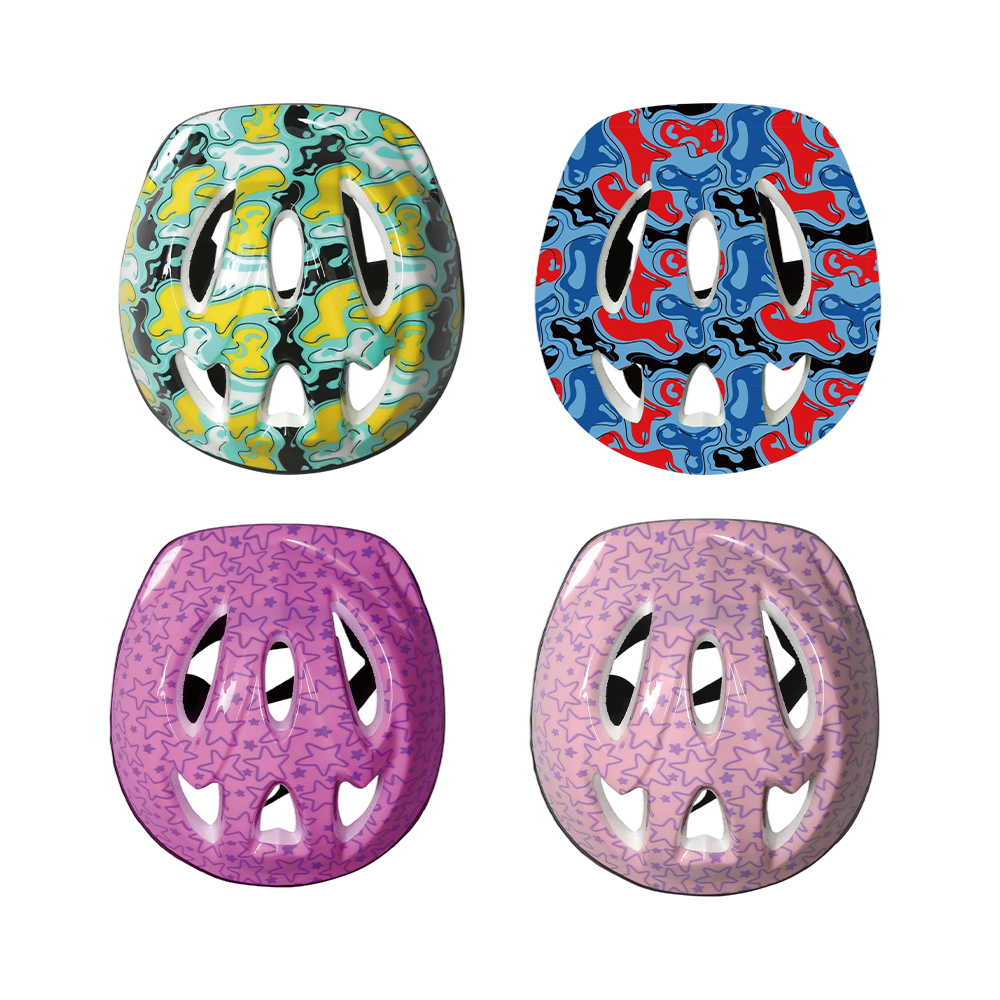
Choosing suitable protective equipment is an important part of creating a safer and more enjoyable experience for children and recreational athletes. Whether the activity involves cycling, inline skating, roller skating, skateboarding, or scooter riding, a properly designed helmet can help reduce the consequences of accidental impacts. The BW-012 Strong EPS Helmet is developed as a practical protective solution that combines a durable PVC outer shell, a high-density expanded polystyrene inner liner, ventilation openings, and a lightweight structure.
Designed for children, teenagers, and users participating in light-intensity outdoor sports, the BW-012 focuses on the essential qualities expected from a modern recreational helmet: impact-energy absorption, comfortable wear, resistance to everyday surface damage, simple maintenance, and attractive color choices. Its dual-material construction gives the product a clear functional identity. The PVC shell forms the durable exterior, while the high-density EPS liner provides the principal cushioning layer inside the helmet.
The helmet is part of a broader range of skating, scooter, and sports protective equipment manufactured by Ningbo Feile Sporting Goods Co., Ltd. The company has specialized in children’s scooters, inline skates, roller skates, and ice skates since 2010. Its experience across these connected product categories provides a useful foundation for designing protective gear intended for young users and active families.
This article examines the BW-012 Strong EPS Helmet in detail, including its material structure, protective advantages, comfort features, appearance options, applications, manufacturing background, quality systems, and potential value for distributors, retailers, importers, and original equipment manufacturing customers.
BW-012 Strong EPS Helmet
Product Overview and Design Purpose
The BW-012 Strong EPS Helmet is designed to provide fundamental head protection during recreational sports and outdoor activities. Its main construction consists of a PVC outer shell and a high-density EPS inner liner. These two materials perform different but complementary functions. The outer shell is intended to resist abrasion, moisture, and routine external wear, while the inner liner is intended to absorb and disperse impact energy.
The product name emphasizes strength, but strength in a protective helmet should not be understood as simply making the product heavier or harder. Effective helmet design requires a balance between exterior durability, internal energy management, fit, ventilation, and user comfort. A helmet that is too heavy, too hot, or uncomfortable may be less likely to be worn correctly or consistently. The BW-012 addresses this balance by pairing a resilient PVC exterior with a lightweight EPS core.
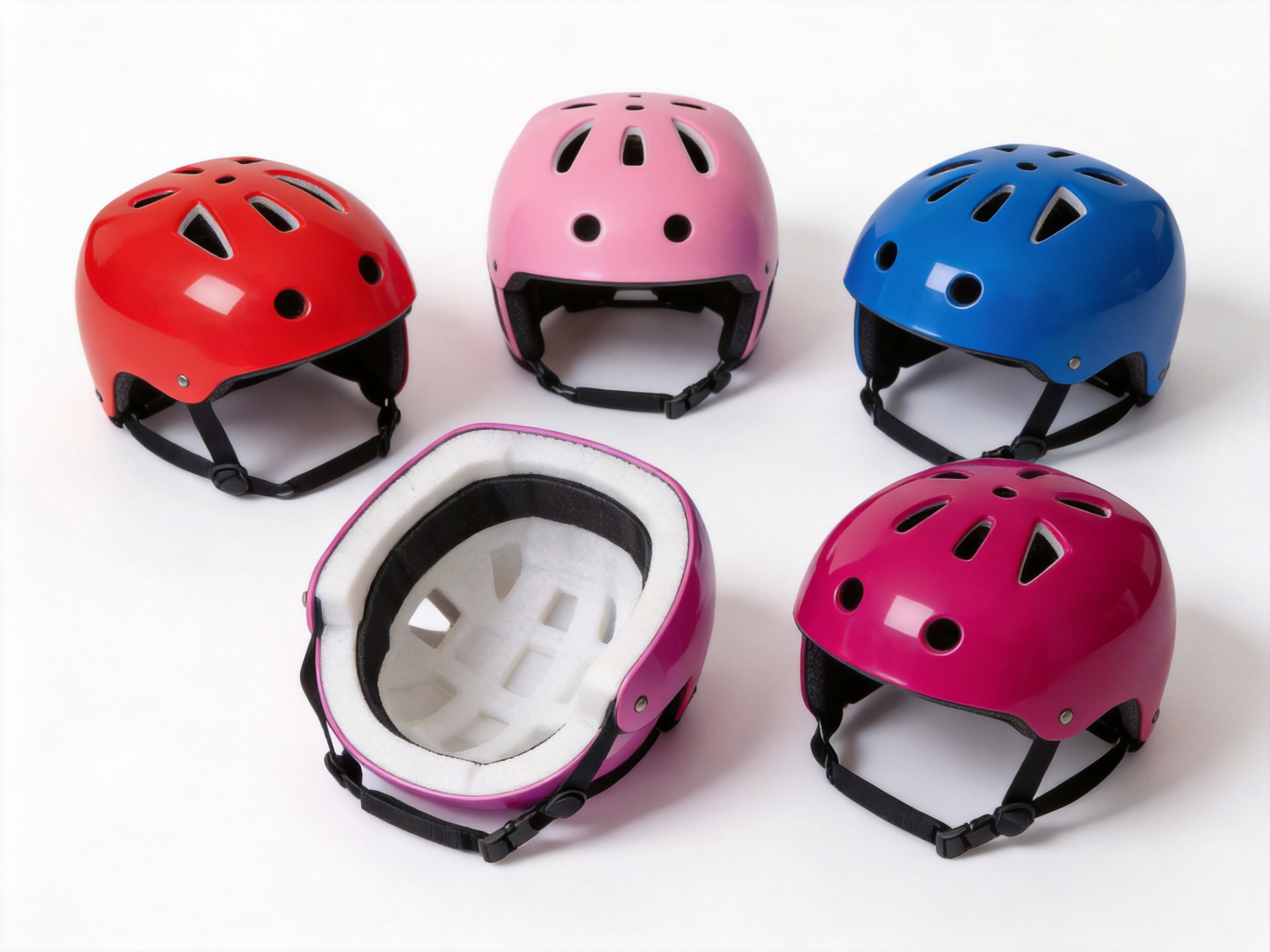
The helmet is particularly appropriate for children and teenagers who participate in cycling, balance-bike riding, skateboarding, rollerblading, and scooter activities. These users often require equipment that is easy to wear, visually appealing, and simple for parents or guardians to maintain. The available color choices, including red, pink, blue, and magenta, help make the helmet more attractive to different age groups and personal preferences.
The BW-012 can also be considered for recreational programs, sporting-goods retailers, school activity suppliers, family leisure centers, and distributors that need a versatile helmet for multiple related activities. Its design is not limited to one sport category. Instead, it fits within a wider protective-equipment assortment that may include inline skates, scooters, roller skates, and other outdoor products.
Dual-Material Construction
PVC Outer Shell
The outer shell is made from polyvinyl chloride, commonly known as PVC. In this product, the PVC layer serves as the helmet’s first external barrier. It helps protect the inner structure from scratches, minor surface contact, splashes, and general handling during transport and use.
PVC is widely used in sporting goods because it can offer a useful combination of durability, flexibility, colorability, and processing efficiency. Its surface is relatively easy to clean, which is valuable for children’s protective equipment. After outdoor use, the helmet may collect dust, light mud, or perspiration. A wipe-clean exterior can simplify routine maintenance and help the product maintain a presentable appearance.
The PVC shell also supports the helmet’s visual design. It can be produced in strong, bright colors that are easy to recognize and attractive to young users. For retailers and private-label customers, color variety can help create product families, seasonal collections, or market-specific assortments without changing the basic protective concept.
High-Density EPS Inner Liner
The inner liner uses high-density expanded polystyrene, or EPS. EPS is a lightweight cellular material commonly used in impact-absorbing applications. Its structure contains numerous small cells that can compress under force. During an impact, the liner is intended to help absorb and distribute energy rather than allowing all of the force to transfer directly to the wearer’s head.
This energy-management function is the central protective advantage of the BW-012 design. A hard outer shell alone may resist surface damage, but it does not provide the same cushioning function as a dedicated energy-absorbing liner. By combining PVC with high-density EPS, the helmet uses each material for the role it performs most effectively.
The EPS liner also contributes to the low weight of the helmet. Children may find heavy protective equipment tiring, especially during extended recreational sessions. A lightweight helmet is easier to carry, easier to put on, and less likely to become an unnecessary burden during activity. Reducing weight can also support better overall comfort when the helmet is worn for cycling, skating, or outdoor play.
It is important to understand that an EPS liner is designed to help manage impact energy, not to make a wearer invulnerable. A helmet should be used together with safe riding practices, suitable supervision, and equipment appropriate for the activity. After a significant impact, protective headgear should be inspected and replaced when necessary, even if visible damage is limited.
Protective Advantages Compared with Basic Alternatives
The BW-012 offers several advantages over very basic head coverings or single-material designs. Its most significant distinction is the combination of a protective outer shell and a dedicated high-density cushioning layer. This approach creates a more complete product structure than a simple thin plastic cap or a fabric accessory.
Impact-Energy Management
The high-density EPS liner is intended to help dissipate impact energy during accidental falls. When a user loses balance while riding a scooter or skating, the head may be exposed to contact with the ground or another object. The internal EPS layer provides a cushioning zone between the outer shell and the wearer’s head, helping to reduce the intensity of transmitted forces.
This is especially important for children, who may still be developing balance, coordination, and hazard awareness. A protective helmet cannot prevent every accident, but it can form an important part of a broader safety system. The BW-012 is therefore a practical addition to family recreation, training programs, and youth sports activities.
Exterior Durability
The PVC outer layer is designed to withstand the normal conditions associated with outdoor use. It offers resistance to abrasion and helps protect against light exposure to rain and moisture. Compared with an uncoated foam liner, the PVC shell gives the product a more finished and durable exterior that is better suited to repeated handling.
For retailers and fleet operators, exterior durability can be an important consideration. Products that remain visually acceptable after regular use may be easier to maintain in rental, school, club, or recreational environments. The smooth exterior can also support easier cleaning between uses.
Low-Weight Comfort
A helmet must be worn to provide its intended benefit. If it is excessively heavy or uncomfortable, a child may remove it during activity or resist wearing it at all. The BW-012 combines a relatively lightweight EPS core with a protective PVC shell to create a structure intended for comfortable extended use.
Light weight is also beneficial for packaging, inventory management, and transportation. Importers and distributors may appreciate products that can be handled efficiently during warehouse operations while still offering meaningful protective functionality to the end user.
Ventilation
The helmet includes multiple vents positioned symmetrically across the top and sides. These openings help promote air movement around the wearer’s head. Improved ventilation can reduce heat buildup and make the helmet more comfortable during warm-weather activity or longer periods of use.
Ventilation openings also contribute to overall weight reduction. Rather than creating a completely closed structure, the design uses carefully positioned openings to support breathability while retaining the essential protective form. The symmetrical arrangement contributes to a balanced appearance and a consistent product design.
Visual Appeal and Personalization
Bright colors are more than a decorative feature in children’s protective equipment. Attractive colors can encourage children to accept and regularly use safety gear. The BW-012 is available in red, pink, blue, and magenta, providing options for different preferences, retail strategies, and age segments.
Color variety can also help parents identify a child’s helmet quickly in group settings such as skating classes, schools, camps, and family activity centers. For businesses, multiple color options can make it easier to build coordinated product displays alongside scooters, skates, protective pads, and other sporting goods.
| Feature | BW-012 Design | Practical Benefit |
|---|---|---|
| Outer shell | PVC | Supports abrasion resistance, moisture resistance, easy cleaning, and color variety |
| Inner liner | High-density EPS | Provides a lightweight cushioning layer intended to absorb and disperse impact energy |
| Ventilation | Multiple top and side vents | Improves airflow and helps reduce heat buildup |
| Color options | Red, pink, blue, and magenta | Supports user preference, product differentiation, and retail presentation |
| Primary users | Children, teenagers, and recreational athletes | Suitable for family leisure and light-intensity outdoor sports |
| Maintenance | Wipe-clean exterior | Helps simplify routine care and product upkeep |
Comfort and Usability for Young Riders
Children’s protective equipment must be functional, but it must also be approachable and easy to use. The BW-012 is designed around practical considerations that affect whether young users will wear a helmet consistently. Its lightweight construction helps reduce neck and head fatigue, while the ventilation openings support a cooler wearing experience.
The bright color selection provides an immediate visual appeal. A child who likes the appearance of protective gear may be more willing to include it as part of a regular riding routine. Parents and guardians can also use color choice as a way to involve children in selecting their equipment, helping create a more positive attitude toward safety.
The PVC surface is another usability advantage. Children’s products are frequently exposed to dirt, grass, pavement dust, and accidental spills. A smooth outer shell can generally be wiped with a soft damp cloth, allowing caregivers to maintain the helmet without complicated cleaning procedures.
Although the helmet is designed for comfort, correct use remains essential. The helmet should be selected in an appropriate size, positioned level on the head, and adjusted according to the fitting system supplied with the product. The front should not be pushed too far backward, and the helmet should not move excessively when the wearer turns or bends the head.
Comfort also depends on correct matching between the helmet and the intended activity. The BW-012 is suitable for light-intensity recreational cycling, skating, skateboarding, rollerblading, and scooter use as described in the product information. Users should follow applicable local safety requirements and select specialized equipment where a particular sport or environment requires it.
Applications Across Sports and Leisure Markets
Cycling and Balance-Bike Riding
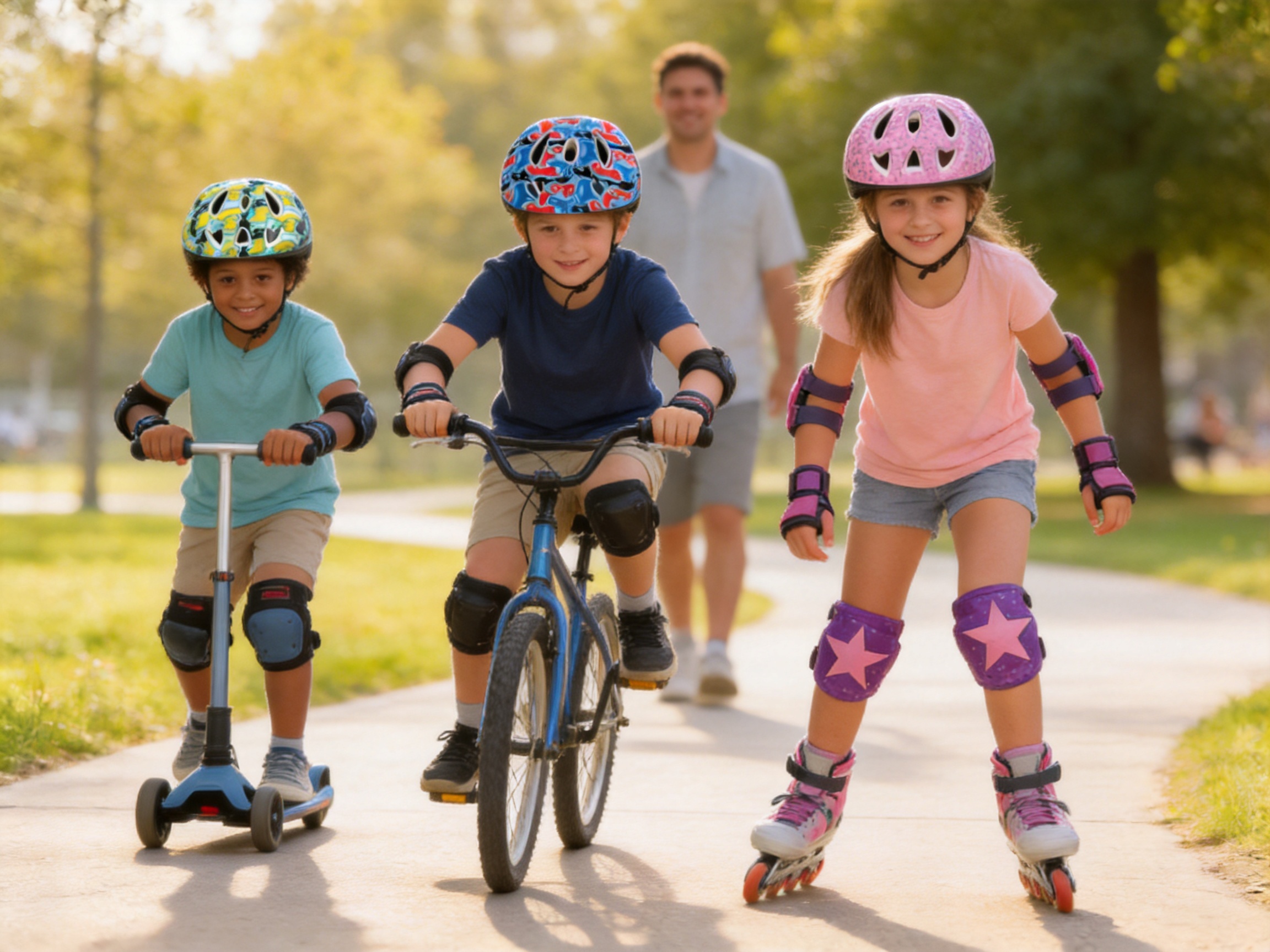
Learning to ride a bicycle or balance bike involves frequent changes in speed, direction, and body position. Beginners may place a foot down suddenly, lose balance, or fall while learning to control the vehicle. The BW-012 offers a practical head-protection option for children practicing these foundational skills.
For retailers, the helmet can be displayed with children’s bicycles, balance bikes, scooters, and cycling accessories. Its bright color choices may support age-specific merchandising and coordinated sales. Parents purchasing a first bicycle or balance bike can be encouraged to consider protective equipment as part of the same purchase.
Inline Skating and Roller Skating
Inline skates and roller skates are closely associated with protective gear because falls can occur while users are learning to balance or developing speed control. The BW-012 complements wrist guards, elbow pads, and knee pads as part of a broader skating safety package.
Its lightweight profile is useful for skating lessons and recreational sessions where users may wear multiple protective items at the same time. A helmet that does not add excessive weight can help maintain freedom of movement while still providing a dedicated protective layer for the head.
Scooter Riding
Children’s scooters are popular for neighborhood recreation, parks, and family outings. Scooter riders can encounter uneven surfaces, curbs, sudden stops, and unexpected obstacles. The BW-012 is suited to this environment as a practical component of a scooter safety assortment.
For manufacturers and distributors, bundling the helmet with scooters or presenting it as an optional accessory can create additional retail value. Matching colors between a scooter and helmet may appeal to children, while parents may appreciate the convenience of obtaining related safety equipment from one source.
Skateboarding
Skateboarding involves balance, momentum, and repeated practice. Beginners may experience falls during basic maneuvers, while more experienced recreational users may still encounter unexpected loss of control. The BW-012 can serve as a protective option for light-intensity recreational skateboarding when used according to appropriate safety guidance.
Skateboard users should also consider other protective equipment, including knee pads, elbow pads, and wrist protection. A helmet is one element of a complete safety approach, and its use should be combined with suitable surfaces, supervision for younger children, and instruction in safe riding practices.
Outdoor Recreation and Activity Programs
The helmet can be considered for outdoor adventure programs, family recreation centers, school activities, and theme-park-style leisure environments. Its colors and simple maintenance characteristics may be useful where equipment is issued to a group of children or used repeatedly.
Organizations that provide shared equipment should establish inspection, cleaning, storage, and replacement procedures. Helmets should be checked regularly for cracks, deformation, damaged straps, loose components, or other signs of wear. A helmet that has experienced a major impact should not remain in service without appropriate evaluation.
Workplace and Industrial Support Uses
The product information also identifies light workplace uses such as warehouse handling or light machinery environments. In these applications, the BW-012 may be considered where a lightweight helmet-style protective product is appropriate. However, workplace buyers must confirm that the product meets the specific legal and technical requirements of their location and task.
A recreational sports helmet should not automatically be treated as a substitute for certified industrial head protection. Worksites involving falling objects, electrical hazards, high-impact risks, or specialized machinery may require helmets designed and tested for those specific conditions. Buyers should conduct a formal risk assessment before selecting protective equipment for occupational use.
Manufacturing Capabilities and Company Strengths
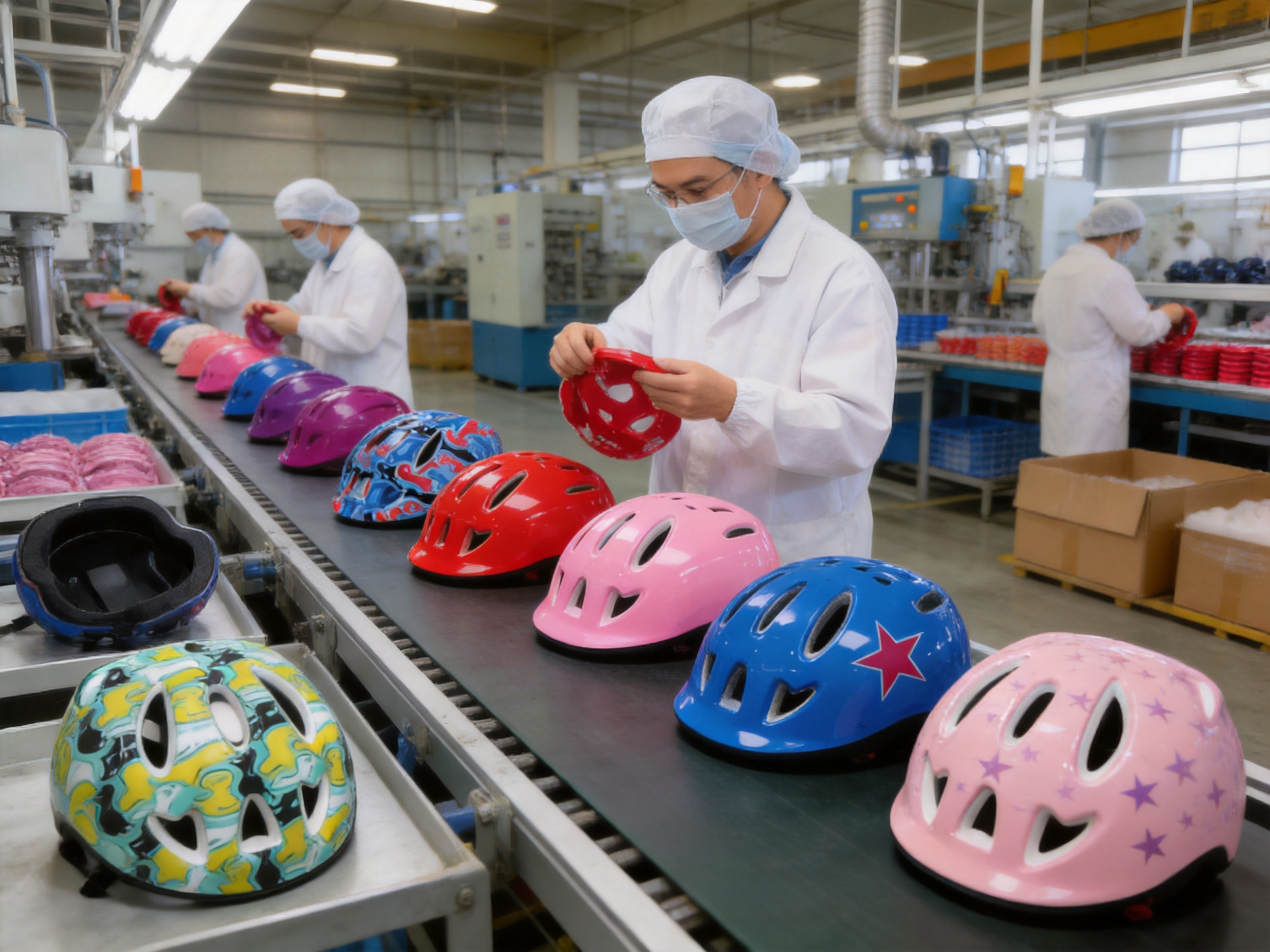
The BW-012 is supported by the manufacturing capabilities of Ningbo Feile Sporting Goods Co., Ltd., a Chinese sporting-goods manufacturer based in Yuyao City, Ningbo, Zhejiang Province. The company was established in 2010 and specializes in children’s scooters, inline skates, roller skates, and ice skates. This product concentration gives the company experience in designing and manufacturing equipment for active children and recreational sports markets.
The company operates a workshop of approximately 20,000 square meters and employs more than 200 people. Its facilities include five advanced automatic production lines, together with mold, injection molding, sewing, and assembly workshops. These capabilities are relevant to protective-equipment production because they allow different manufacturing stages to be coordinated within an organized industrial setting.
In-house or closely coordinated mold and injection-molding capabilities can support consistency in shaped plastic components. For a product such as the BW-012, controlled forming of the outer shell is important for appearance, repeatability, and compatibility with the inner liner and other components. Production-line organization can also help maintain stable output for larger orders.
The company’s sewing and assembly facilities support its wider product portfolio, especially skates, scooters, and related equipment that may include fabric, fastening, and soft-goods components. This broader manufacturing base can be valuable for customers seeking coordinated sourcing across multiple categories rather than purchasing a helmet from an unrelated supplier.
Research and Development
Feile maintains a professional research and development engineering team and launches new products each year to respond to market and customer requirements. For OEM and private-label buyers, product development capability is an important consideration. It can support adjustments to colors, packaging, product combinations, styling, and market-specific requirements, subject to technical feasibility and order conditions.
Research and development in children’s sporting goods must address more than visual appearance. Designers need to consider comfort, handling, material selection, assembly, ventilation, durability, production efficiency, and the practical habits of young users. Experience across scooters, skates, and protective gear can help inform these decisions.
Integrated Production Resources
The company’s mold, injection molding, sewing, and assembly workshops create a more integrated manufacturing structure than a trading-only operation. Integrated resources can improve communication between design, tooling, production, and quality teams. They may also reduce dependence on multiple external suppliers and simplify project coordination for international customers.
For buyers sourcing several categories of sporting goods, this structure can help consolidate purchasing. A customer may be able to develop a broader assortment consisting of scooters, inline skates, roller skates, ice skates, helmets, and other protective equipment through one established manufacturing partner.
Quality Systems, Certifications, and International Readiness
According to the provided company information, Feile has passed ISO9001, BSCI, and Kmart factory certification systems and has obtained multiple national patents. The company also reports product certifications and compliance records including 3C, CE, EN71, EN62115, ASTM, EMC, and EN13843:2009 across its product range.
These credentials demonstrate the company’s attention to structured management, social responsibility assessment, product safety, and international market requirements. However, certifications must always be reviewed in relation to the specific product, model, market, and current certificate scope. Buyers should request the applicable technical documents, test reports, declarations, and certification records for the exact BW-012 configuration being ordered.
ISO9001-based quality management can support documented procedures, traceability, corrective action, process control, and continuous improvement. For international buyers, these systems may provide greater confidence that production is organized according to repeatable processes rather than relying solely on individual inspection.
BSCI-related factory assessment is associated with social compliance and responsible workplace practices. This can be particularly relevant to global retailers and brands that maintain supplier codes of conduct or require factory audits before placing orders.
Product safety standards vary according to destination market and intended use. A buyer importing the BW-012 should confirm labeling, packaging, user instructions, chemical requirements, age grading, testing, and helmet-specific performance obligations applicable in the target country. The manufacturer can support the sourcing process by providing the relevant documentation for review.
| Buyer Consideration | Why It Matters | Recommended Review |
|---|---|---|
| Material specification | Confirms the outer shell and liner match the agreed product structure | Review technical specification, samples, and production records |
| Helmet performance | Confirms suitability for the intended recreational activity | Request applicable test reports and certification documents |
| Factory quality system | Supports consistency and corrective-action processes | Review ISO-related documentation and audit information |
| Color and appearance | Supports retail positioning and customer preferences | Approve color standards and pre-production samples |
| Packaging and labeling | Helps meet retail and destination-market requirements | Confirm warnings, instructions, barcodes, and language needs |
| Inspection procedure | Reduces the risk of shipping defects | Define pre-production, during-production, and final inspections |
| After-sales support | Improves long-term sourcing reliability | Clarify replacement, complaint, and communication procedures |
OEM and Private-Label Opportunities
The BW-012 provides a suitable foundation for OEM and private-label business because its main product identity is clear and adaptable. Buyers can evaluate the helmet as part of a children’s safety range, a skating collection, a scooter accessory line, or a wider sports-equipment program.
Potential customization areas may include color selection, logo application, packaging design, instruction materials, retail labels, product photography, and coordinated color matching with scooters or skates. Any customization should be evaluated with attention to production quantities, tooling requirements, lead times, minimum order quantities, and compliance documentation.
For a brand developing a complete children’s sports range, the helmet can function as an important cross-category product. A coordinated series might include a scooter, inline skates, knee pads, elbow pads, wrist guards, and a helmet using matching or complementary colors. Such a collection can simplify merchandising and help customers recognize the brand’s safety-oriented product family.
Packaging is especially important for protective equipment. Retail packaging should communicate the intended use, material structure, available colors, fitting guidance, care instructions, and safety limitations in a clear manner. Importers should also confirm whether the destination market requires specific warnings, language translations, recycling marks, age information, or traceability labels.
OEM customers should request a representative sample before approving mass production. The sample should be evaluated for appearance, shell finish, liner fit, ventilation openings, fastening components, labeling, packaging, and general comfort. A documented approval process can reduce misunderstandings between the buyer and manufacturer.
Inspection and Care Recommendations
Quality inspection should begin before production. Buyers can confirm the agreed materials, dimensions, colors, packaging structure, logo artwork, and technical requirements during the pre-production stage. This is particularly important when the helmet is produced for a private label or when multiple colors are included in the same order.
During production, inspection teams may review shell molding, surface appearance, vent formation, liner assembly, component alignment, fastening performance, and labeling. Any visible cracks, sharp edges, incomplete molding, excessive flashing, loose components, or inconsistent colors should be investigated before the product proceeds to packing.
Final inspection can include carton quantity, product assortment, color distribution, packaging condition, barcode accuracy, and random product checks. The exact inspection plan should be agreed between the buyer and supplier before production begins. Independent third-party inspection may also be considered for larger or strategically important orders.
End users should store the helmet in a cool, dry location away from direct sunlight, excessive heat, solvents, and sharp objects. The exterior can generally be cleaned with a soft cloth and mild soapy water. Abrasive cleaners, strong chemicals, and unapproved adhesives may damage the PVC shell or other components.
The helmet should be inspected before each use. Users should look for cracks, deep scratches, deformation, loose parts, damaged straps, or changes in the liner. After a serious impact, the helmet should be replaced or professionally evaluated according to the applicable product guidance. Protective equipment can lose its effectiveness even when damage is not immediately obvious.
Why the BW-012 Is a Practical Competitive Choice
The BW-012 competes effectively by focusing on a balanced set of features rather than relying on a single selling point. Its PVC shell offers a durable and easy-care exterior. Its high-density EPS liner provides the key cushioning function. Its lightweight structure improves wearability, and its ventilation openings support comfort. Its color range gives children and families a degree of personalization.
Compared with very low-cost products that may offer limited structure or minimal cushioning, the BW-012 presents a more complete protective design. Compared with overly specialized helmets intended for high-performance disciplines, it may be more suitable for general recreational use, family activities, and broad retail distribution.
The product also benefits from its manufacturer’s category expertise. A company producing scooters, inline skates, roller skates, and ice skates understands the surrounding market in which the helmet will be sold. This can support product bundling, coordinated development, and more efficient communication with buyers seeking a complete children’s sporting-goods assortment.
Its manufacturing infrastructure is another competitive advantage. A 20,000-square-meter workshop, five automatic production lines, dedicated mold and injection-molding capabilities, and a professional engineering team provide a foundation for repeatable production and product development. The reported quality systems and international certifications further support its suitability for global sourcing, subject to verification for the specific order.
Frequently Asked Questions
What materials are used in the BW-012 Strong EPS Helmet?
The helmet uses a PVC outer shell and a high-density EPS inner liner. The PVC shell is intended to provide exterior durability, abrasion resistance, moisture resistance, and easy cleaning. The EPS liner is designed to provide lightweight cushioning and help absorb impact energy.
Who is the helmet designed for?
The BW-012 is primarily designed for children and teenagers participating in recreational cycling, balance-bike riding, scooter riding, skateboarding, inline skating, and roller skating. It may also be considered for suitable outdoor leisure programs and other light-intensity activities.
Does the helmet protect against every type of injury?
No. A helmet can help reduce the risk or severity of certain head injuries, but it cannot eliminate all risks. Users should follow safe riding practices, use appropriate protective equipment, obey local regulations, and replace the helmet after a significant impact or when it shows damage.
What colors are available?
The listed color options include red, pink, blue, and magenta. Buyers should confirm available color combinations, minimum order quantities, color standards, and customization possibilities with the manufacturer before placing an order.
How does the ventilation system improve comfort?
The helmet includes multiple vents distributed across the top and sides. These openings encourage airflow around the head, helping reduce heat buildup and supporting a cooler wearing experience during outdoor activity.
Is the PVC shell waterproof?
The product information describes the PVC exterior as offering waterproofing or moisture resistance. This makes it suitable for exposure to light rain and routine outdoor conditions. However, the helmet should not be submerged, left in standing water, or stored while wet.
Can the helmet be used for industrial work?
The product information identifies light workplace applications such as warehouse handling or light machinery operation. Before occupational use, the buyer must confirm that the helmet meets all applicable workplace laws, standards, and risk-control requirements. It should not automatically replace specialized industrial head protection.
Can the helmet be customized for an OEM project?
The manufacturer provides OEM-oriented sports-equipment sourcing and has product development capabilities. Possible project elements may include colors, logos, packaging, labels, and coordinated product ranges. Final customization options depend on technical feasibility, order volume, tooling, and compliance requirements.
What should buyers request before ordering?
Buyers should request product specifications, samples, applicable test reports, certification documents, packaging details, color standards, inspection requirements, lead times, minimum order quantities, and warranty or complaint procedures. The documents should correspond to the exact BW-012 configuration being purchased.
How should the helmet be cleaned?
The exterior can generally be wiped with a soft cloth and mild soapy water. Strong solvents, abrasive materials, excessive heat, and unapproved chemicals should be avoided because they may damage the shell, liner, straps, or printed surfaces.
Why is a high-density EPS liner important?
The EPS liner provides a lightweight energy-absorbing structure. During an impact, it is intended to compress and help disperse force. This is a key difference between a structured protective helmet and a simple decorative cap or thin plastic covering.
What makes the product suitable for retailers?
The helmet combines broad recreational applications, child-friendly colors, a simple dual-material design, and compatibility with scooters and skating products. These characteristics can support cross-selling, product bundling, seasonal displays, and private-label sports-equipment programs.
Conclusion
The BW-012 Strong EPS Helmet is a versatile protective product built around a practical combination of PVC and high-density EPS. The PVC outer shell supports durability, moisture resistance, easy maintenance, and attractive color presentation. The EPS inner liner provides the essential lightweight cushioning structure intended to absorb and disperse impact energy. Together, these materials create a balanced design for children, teenagers, and recreational sports users.
Multiple vents improve airflow, while the lightweight construction supports comfort during cycling, skating, scooter riding, skateboarding, and other light-intensity activities. The range of bright colors helps make the helmet more appealing to young users and gives distributors opportunities to create varied retail assortments.
Beyond the product itself, the manufacturing foundation is an important part of its value. Ningbo Feile Sporting Goods Co., Ltd. offers experience in children’s scooters, inline skates, roller skates, and ice skates, supported by automatic production lines, mold and injection-molding workshops, sewing and assembly facilities, and a professional research and development team. Its reported ISO9001, BSCI, factory-audit, certification, and patent resources provide additional support for international sourcing, subject to product-specific verification.
For importers, wholesalers, retailers, and OEM customers seeking a practical helmet for a broader skating and scooter portfolio, the BW-012 offers a combination of protective structure, user comfort, visual appeal, manufacturing capability, and sourcing flexibility. Proper fitting, responsible use, regular inspection, and compliance with applicable standards remain essential to achieving the best possible safety outcome.
References
1. Product specification and technical information supplied for the BW-012 Strong EPS Helmet.
2. Manufacturer profile and company information supplied by Ningbo Feile Sporting Goods Co., Ltd.
3. General technical literature concerning expanded polystyrene materials and impact-energy absorption in protective equipment.
4. General guidance on helmet fitting, inspection, maintenance, and replacement after impact.
5. General quality-management principles associated with ISO9001 manufacturing systems.
6. General product-safety and conformity-assessment principles applicable to children’s sporting goods and protective equipment.
Product: BW-012 Strong EPS Helmet

Recommended Articles

Get in Touch
Your email address will not be published. Required fields are marked *
Have a project in mind? Contact with us!
We are happy to answer your questions. Please fill out this form
and one of our professional team will get back to you as soon as possible.

We specialize in producing various types of children's toy cars, children's skateboards, and ice skates.
