
 En
En
 Español
 русский
 عربى
عربى
How Adjustable Aluminum Inline Skates Support Safer, More Comfortable Beginner Practice
Date:Sep 07, 2026
Content
- 1 Designed Around the Needs of New Skaters
- 2 Professional Aluminum Alloy Chassis
- 3 Three Adjustable Size Ranges for Growing Feet
- 4 Breathable Upper and Cushioned Interior
- 5 Easy-to-Learn Control Characteristics
- 6 Practical Comparison with Basic Recreational Skates
- 7 Carrying Case and Everyday Convenience
- 8 Recommended Uses and User Groups
- 9 Manufacturing Strengths Behind the Product
- 10 Quality Systems and International Standards
- 11 Product Positioning for Retailers
- 12 Care and Maintenance Recommendations
- 13 Safety Considerations for Children
- 14 Q&A
- 14.1 What type of skater is the BW-230-1 designed for?
- 14.2 What size ranges are available?
- 14.3 Why is the aluminum chassis important?
- 14.4 Can the skates accommodate growing feet?
- 14.5 Are the skates comfortable for longer practice sessions?
- 14.6 Does the product include a carrying bag?
- 14.7 Where can beginners use these inline skates?
- 14.8 Are protective accessories required?
- 14.9 How does the product compare with a basic entry-level skate?
- 14.10 Is it intended for professional racing?
- 14.11 What manufacturing capabilities support this product?
- 14.12 Can buyers discuss OEM requirements?
- 15 Conclusion
- 16 References
- 17 Product: BW-230-1 ALUM chassis inline skate
Choosing a first pair of inline skates involves more than selecting an attractive color or the lowest available price. Beginners need equipment that feels stable, remains comfortable during repeated practice, and offers enough adjustment to keep pace with growing feet. Parents, retailers, distributors, and sports-equipment buyers also need to consider durability, manufacturing consistency, safety, storage convenience, and long-term value.
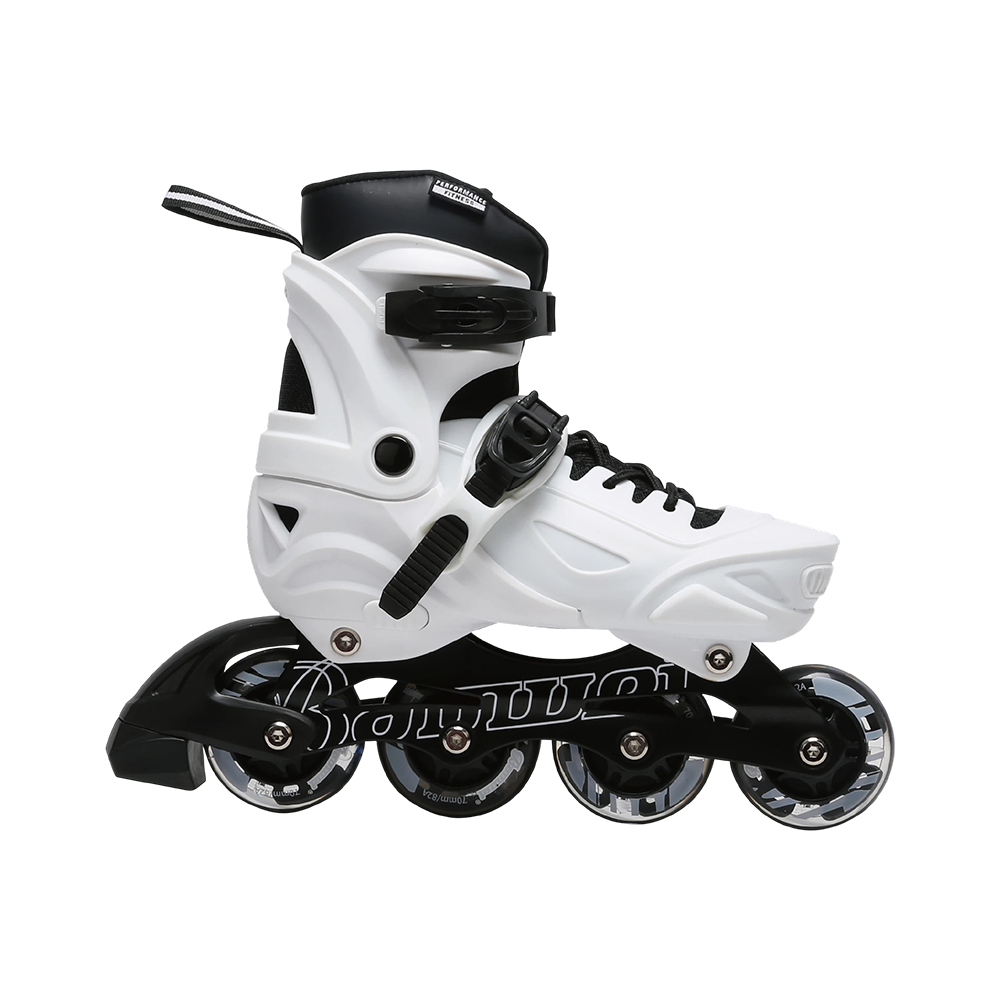
The BW-230-1 ALUM chassis inline skate is designed around these practical requirements. It combines a professional aluminum alloy chassis with an adjustable boot structure, breathable materials, supportive internal cushioning, and a carrying case. Available in three size ranges—31–34, 35–38, and 39–42—it is intended to serve children and older teenagers as they progress from their first balance exercises to relaxed recreational skating.
Unlike a basic skate designed only for occasional use, this model places particular emphasis on frame rigidity, center-of-gravity stability, easy control, and fit adjustment. Its construction is suitable for introductory practice, family recreation, light daily exercise, and use on level outdoor or indoor surfaces. These characteristics make it a practical option for buyers seeking an accessible aluminum-framed skate without moving into highly specialized professional equipment.
Designed Around the Needs of New Skaters
New skaters often experience difficulty with balance, turning, stopping, and maintaining a comfortable stance. Equipment that twists easily or fits poorly can make these challenges more frustrating. A stable skate helps beginners concentrate on learning body position and movement instead of constantly compensating for an unstable chassis.
The BW-230-1 is structured to provide a solid platform beneath the foot. Its aluminum alloy chassis resists excessive flexing, twisting, and deformation during ordinary practice. This rigidity supports a more predictable relationship between the skater’s foot, the wheels, and the skating surface. As a result, beginners can develop confidence while learning basic gliding movements.
The design is also intended to keep the overall center of gravity reasonably positioned. A balanced skate can make weight transfer easier to understand. When the skater shifts weight forward, turns gradually, or practices a controlled stop, the equipment responds in a stable and understandable manner. This does not replace instruction or protective equipment, but it can make the learning process more approachable.
For children, confidence is especially important. A skate that feels secure can encourage regular practice, while an uncomfortable or unstable model may be abandoned after only a few sessions. The combination of adjustability, cushioning, ventilation, and chassis support gives the BW-230-1 the features needed for repeated beginner use.
Professional Aluminum Alloy Chassis
The aluminum chassis is one of the product’s most important advantages. Compared with simpler frame constructions, an aluminum alloy chassis offers a strong and rigid foundation. It is designed to resist bending and twisting when the skate is subjected to normal impacts, changes in direction, and repeated loading.
During skating, the frame carries the forces generated by the skater’s weight and movement. Every push, turn, and landing places pressure on the chassis. If the frame flexes excessively, the skater may feel less stable and may need more effort to control the skate. A rigid frame helps transfer movement more directly and supports consistent handling.
The BW-230-1 chassis is intended to remain firm during long-term everyday use. Minor friction and ordinary collisions during beginner practice should not easily compromise its basic function. While all skating equipment should be used responsibly and inspected regularly, the impact-resistant and bump-resistant characteristics of the aluminum structure provide an extra level of durability for active family use.
This construction also creates a value advantage. Buyers receive a more robust frame design without necessarily moving into the price range associated with advanced performance skates. For retailers, this makes the product easier to position between inexpensive entry-level models and highly specialized equipment. It can appeal to families that want stronger construction than a basic recreational skate but do not need a competition-focused model.
Rigidity and Riding Stability
A rigid chassis can support a stable skating posture because it reduces unwanted movement under the foot. The skater can maintain a more consistent alignment between the ankle, boot, frame, and wheels. This is particularly useful for beginners who are still developing balance and lower-body coordination.
Greater rigidity can also help the skate feel more predictable when changing direction. Turning requires controlled weight transfer from one side of the skate to the other. A frame that remains stable under this movement gives the skater clearer feedback. This can make basic turning practice easier to understand and may reduce hesitation.
Stability is not the same as stiffness without comfort. The product combines the firm aluminum chassis with a cushioned inner structure and a flexible upper. The result is intended to provide a stable base while remaining suitable for casual skating sessions.
Durability for Everyday Practice
Children’s sporting equipment is frequently exposed to rough handling. Skates may be placed in storage areas, carried across playgrounds, or used on different flat surfaces. An aluminum frame provides a practical level of resistance to everyday bumps and minor impacts.
The longer service potential of a durable chassis can reduce the need for frequent replacement. This is valuable for families and institutional buyers such as recreation centers, training programs, and retailers creating beginner packages. Proper maintenance remains essential, but a sound chassis gives the product a stronger foundation for repeated use.
BW-230-1 ALUM chassis inline skate
Three Adjustable Size Ranges for Growing Feet
Children’s feet grow quickly, and a fixed-size skate may become unsuitable before the rest of the equipment shows significant wear. The BW-230-1 addresses this challenge with a multi-size adjustment system. The available ranges are 31–34, 35–38, and 39–42, allowing one pair to accommodate several stages of growth.
The one-button adjustment design is intended to make size changes simple. Parents can adjust the skate without complicated procedures or specialized tools. This is useful when different children share equipment, when a child moves between thicker and thinner socks, or when the skate needs to be enlarged as the child grows.
A correct fit is essential for both comfort and control. A skate that is too loose can allow the foot to move inside the boot, making balance and turning more difficult. A skate that is too tight can press against the toes and create discomfort during longer sessions. The adjustable structure helps users find a closer fit while providing room for gradual growth.
Adjustability also supports long-term value. Instead of replacing the entire pair after a small change in foot length, families may continue using the same skates within the applicable size range. Retailers can present this feature as a practical benefit for parents who carefully consider total ownership cost.
Simple Adjustment for Parents and Children
A size adjustment system should be convenient enough to use before every session if necessary. The BW-230-1’s one-button concept is designed to reduce the time and effort required. This can be particularly helpful for younger children who need assistance preparing their equipment.
The adjustment should always be checked before skating. The boot must fit securely, and the fastening system should hold the foot firmly without creating painful pressure. A correct adjustment supports control, reduces unnecessary foot movement, and helps the skater maintain a more stable posture.
Supporting Comfort During Growth
Growing feet need space, but excessive extra space can reduce control. The three size ranges offer a more measured approach than buying a skate that is several sizes too large. Parents can select the range that best matches the child’s current foot length and then make gradual adjustments as growth occurs.
The product’s internal cushioning is designed to follow the shape of the foot and arch area. This helps reduce pressure points during extended use. Combined with the breathable upper, the adjustable boot is intended to remain comfortable during casual practice, outdoor recreation, and light exercise.
Breathable Upper and Cushioned Interior
Comfort influences how often a child will use skating equipment. Even a durable chassis may not encourage regular practice if the upper feels stiff, hot, or abrasive. The BW-230-1 uses a breathable, skin-friendly upper with flexible and durable fabric characteristics.
Ventilation helps manage heat and moisture inside the boot. During skating, feet can become warm, especially in mild or humid weather. A breathable upper allows greater air circulation, helping the foot feel drier and cooler during ordinary sessions.
The inner cushioning layer is designed to support the arch and reduce rubbing. Cushioning can be especially useful for beginners, who may spend more time practicing slowly and may place pressure on unfamiliar areas of the foot. A supportive interior helps create a more comfortable transition into skating.
The upper is intended to balance flexibility with durability. It needs to move naturally with the foot while maintaining enough structure to support the ankle and hold the foot in position. This balance is important because excessive softness can reduce support, while excessive stiffness can make the skate uncomfortable.
Comfort for Longer Sessions
Beginner practice often includes repeated starts, stops, and balance exercises. These activities may take place over an extended period, even when the skating speed is low. The combination of ventilation and cushioning is intended to help reduce fatigue and discomfort during these sessions.
Comfort does not eliminate the need for correct socks, proper fastening, and regular breaks. However, a well-cushioned and breathable boot can make it easier for the skater to remain focused on technique. Parents can also monitor fit and adjust the boot as needed instead of allowing the foot to slide forward or become compressed.
Easy-to-Learn Control Characteristics
The BW-230-1 is designed for basic gliding control rather than highly specialized racing or freestyle performance. Its stability-oriented construction makes it suitable for users who are learning the fundamentals of inline skating.
Beginners generally need to develop several connected skills: standing securely, shifting weight, pushing off, maintaining a straight line, turning gradually, and stopping with control. Equipment that provides predictable handling can help these skills develop in a logical sequence.
The aluminum chassis supports a stable base, while the adjustable fit helps keep the foot aligned with the frame. Together, these features can make movements feel more direct. The skater can practice changing direction and controlling speed without dealing with excessive movement inside the boot.
The product is appropriate for flat indoor surfaces, community trails, parks, squares, and similar recreational areas. Users should avoid uneven, wet, or unsafe surfaces, especially during early practice. The skate’s design supports learning, but safe location selection and adult supervision remain important for children.
Balance and Center-of-Gravity Practice
Balance is the foundation of inline skating. Beginners must learn to keep their knees slightly bent, maintain a comfortable stance, and distribute weight across both skates. A stable chassis helps provide a consistent platform while these habits are being formed.
The reasonably designed overall center of gravity supports steady gliding. It can help beginners feel less nervous when standing and moving slowly. As confidence improves, the skater can gradually work on longer glides, controlled turns, and basic stopping techniques.
Turning and Stopping
Turning and stopping are essential safety skills. The BW-230-1 is designed to make these basic controls accessible to beginners. A secure fit allows the skater to apply pressure more accurately, while chassis rigidity helps the movement remain predictable.
New users should practice turning at low speed and in an open area. Stopping should be learned under supervision and with suitable protective equipment. The product’s stable structure can support the learning process, but technique, patience, and gradual progression remain essential.
Practical Comparison with Basic Recreational Skates
Product selection often involves comparing construction, convenience, comfort, and price. The BW-230-1 is positioned as an aluminum-framed recreational and beginner skate that provides more structural support than a very basic frame design while remaining approachable for everyday family use.
Some entry-level skates prioritize low initial cost and simple construction. These models may be suitable for occasional use, but their frames may offer less resistance to twisting, and their adjustment systems may be limited. A more rigid aluminum chassis can provide a stronger foundation for users who expect repeated practice.
At the other end of the market, advanced skates may include specialized wheels, performance-oriented boots, or competition features. Those products can be appropriate for experienced skaters, but they may be unnecessary for children who are still learning basic control. The BW-230-1 focuses on practical stability, comfort, and growth accommodation rather than highly specialized performance.
| Evaluation Area | BW-230-1 ALUM Chassis Inline Skate | Typical Basic Recreational Alternative | Practical User Benefit |
|---|---|---|---|
| Frame construction | Professional aluminum alloy chassis | May use a simpler or less rigid frame structure | Improved support and resistance to bending during ordinary practice |
| Size flexibility | Three adjustable ranges: 31–34, 35–38, and 39–42 | May offer fewer adjustment options | Helps accommodate growing feet and reduce premature replacement |
| Fit adjustment | One-button adjustment concept | May require more manual steps | Convenient preparation for parents and children |
| Interior comfort | Breathable upper and cushioned arch-supporting interior | Comfort features vary by construction | Better suitability for repeated casual practice |
| Storage | Includes an original carrying bag | Bag may be sold separately or not included | Simple transport and organized storage |
| Primary use | Beginner learning, family recreation, and light exercise | Often focused on occasional recreational use | Supports a wider range of everyday activities |
| Value position | Aluminum-frame experience at an accessible entry-level positioning | Lower initial cost may come with fewer structural features | Balances durability, comfort, and affordability |
This comparison is not intended to suggest that one skate is suitable for every user. Experienced skaters may prioritize different wheel sizes, bearings, boot stiffness, or specialized performance characteristics. However, for children and beginners, the BW-230-1 offers a well-rounded combination of the features most relevant to early skill development and recreational use.
Carrying Case and Everyday Convenience
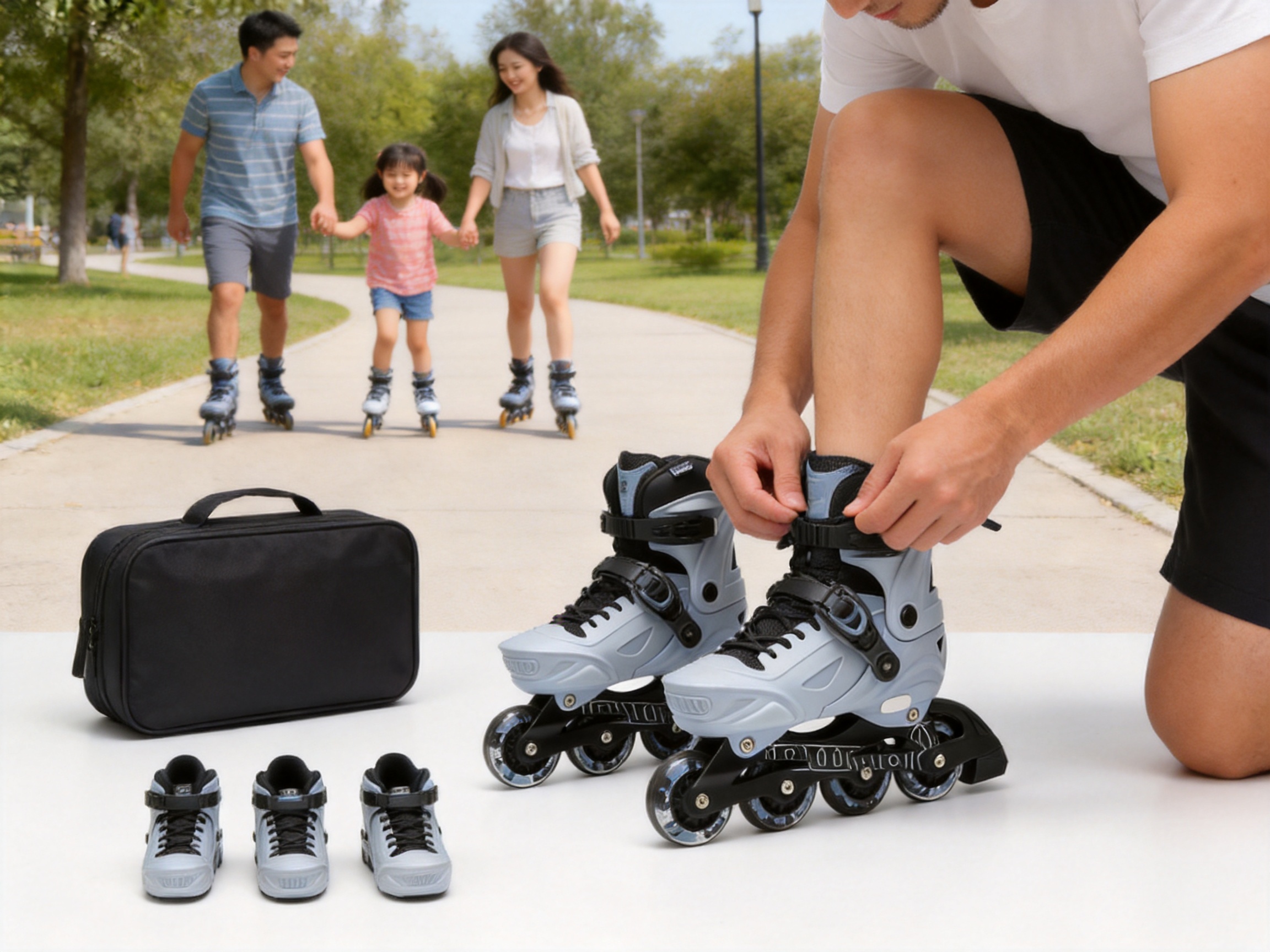
The included carrying case adds practical value to the product. Skates are often used away from home, and carrying them by hand can be inconvenient. A dedicated case helps keep the pair together, simplifies transport, and provides a place to store the skates after use.
Storage is important for equipment longevity. Keeping the skates in a case can reduce exposure to dust, accidental contact, and disorganized storage. It can also make it easier for families to prepare for a visit to a park, sports facility, or community skating area.
The case is especially useful for children who may not yet be able to organize their sports equipment independently. Parents can place the skates and basic protective gear together, creating a more consistent preparation routine.
After skating, users should allow the skates to dry before placing them in the case. Damp equipment should not be sealed immediately, as trapped moisture may affect fabrics and metal components over time. Simple maintenance habits help preserve the comfort and appearance of the product.
Recommended Uses and User Groups
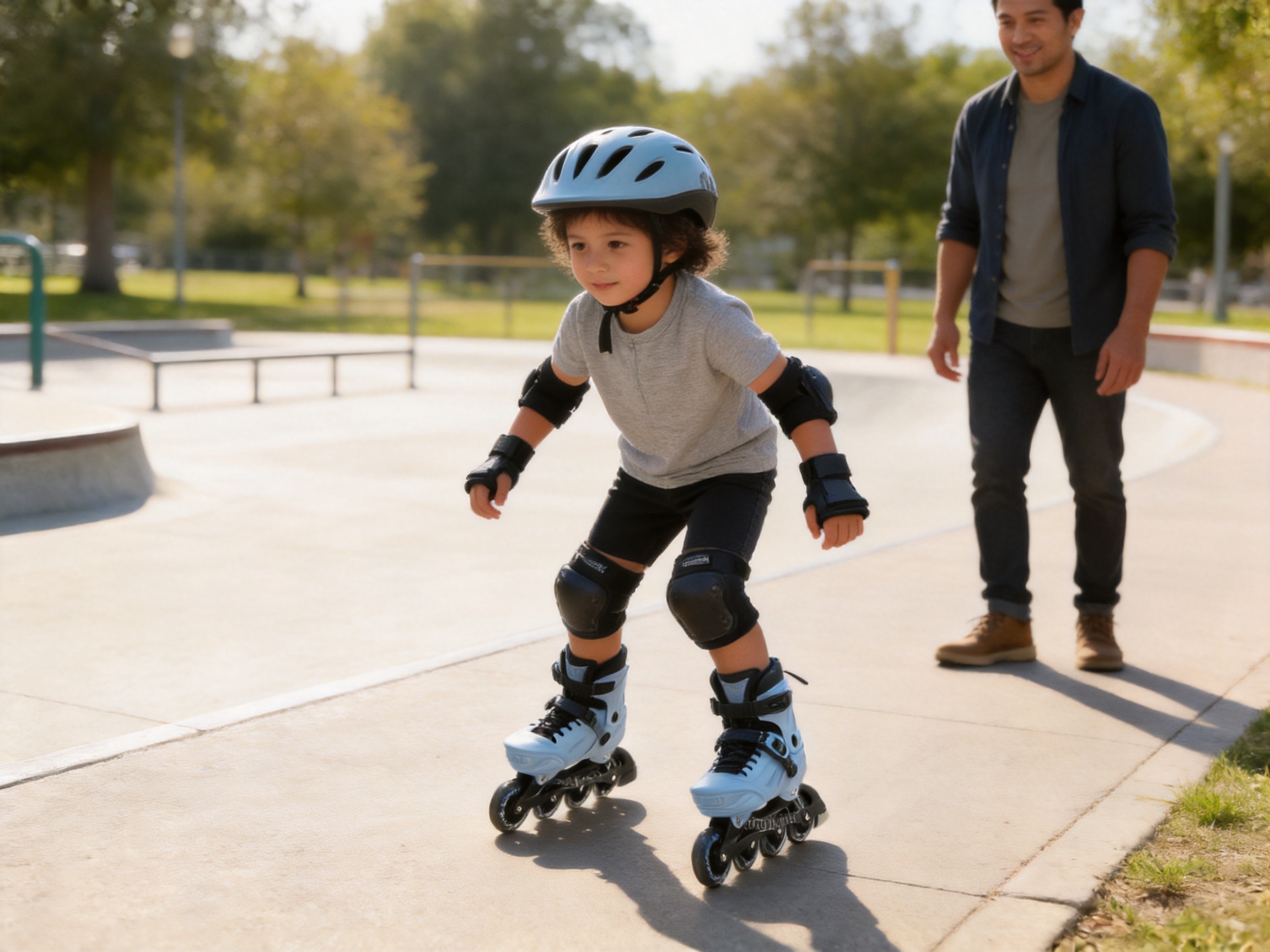
The BW-230-1 is suitable for children beginning to learn inline skating. It can help them practice balance, basic gliding, controlled turns, and stopping in a progressive manner. The adjustable design also makes it appropriate for growing children and older teenagers within the available size ranges.
For families, the product supports relaxed parent-child recreational activities. Parents and children can skate together on suitable flat paths, parks, squares, and indoor surfaces. The adjustable sizes may also be useful when equipment needs to be shared among family members with compatible foot lengths.
The skates are also suitable for light daily exercise. Inline skating involves the legs, hips, core, and arms, while also challenging balance and coordination. Regular low-intensity practice can become an enjoyable way to encourage outdoor activity and healthy habits.
Beginner Training
Training should begin in a safe, open, and level area. The skater should first learn to stand, bend the knees slightly, and maintain a balanced stance. Short glides can follow once the skater feels comfortable. Turning and stopping should be introduced gradually.
Children should be supervised by an experienced adult during early practice. A helmet, wrist guards, elbow pads, and knee pads are strongly recommended. Protective gear is particularly important while the child is developing balance and learning how to respond to unexpected movement.
Outdoor Recreation
The product can be used for relaxed skating on smooth community trails, parks, squares, and other flat surfaces. Users should inspect the route before skating and avoid wet ground, loose gravel, steep slopes, heavy traffic areas, and surfaces with large cracks.
Outdoor conditions can affect skating control. Wind, dust, moisture, and surface debris may change how the wheels respond. Beginners should choose familiar locations and maintain a controlled speed.
Light Exercise and Coordination
Inline skating provides an engaging form of movement. Repeated gliding exercises the lower body and requires coordination between the legs, arms, eyes, and core. For children, the activity can feel like play while still encouraging physical development.
Short, regular sessions are often more productive than infrequent, exhausting sessions. Users should stop if they experience pain, excessive fatigue, or discomfort. Properly adjusted equipment and suitable rest periods support a more positive experience.
Manufacturing Strengths Behind the Product
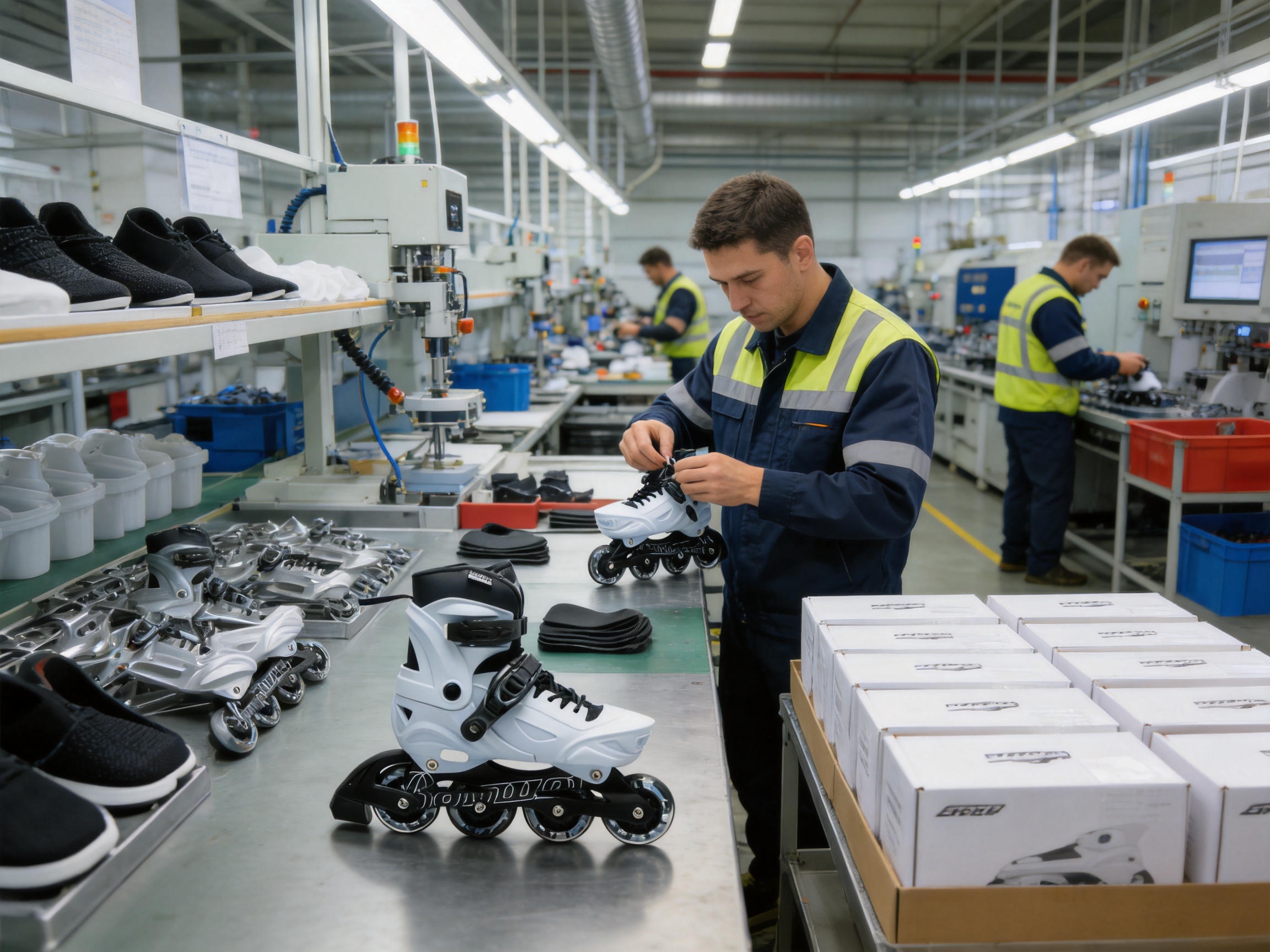
The product is manufactured by Ningbo Feile Sporting Goods Co., Ltd., a sporting-goods company established in 2010. The company specializes in children’s scooters, inline skates, roller skates, and ice skates. Its focus on several related product categories supports experience in plastic components, fabric assemblies, mechanical structures, and final product integration.
The company operates from Yuyao City in Zhejiang Province, an area recognized for its plastics industry. Its location provides access to established supply chains, transportation infrastructure, and nearby commercial centers. Convenient access to Ningbo Airport and Shanghai also supports communication with international customers and logistics planning.
The reported facility includes more than 200 employees and a 20,000-square-meter workshop. Five advanced automatic production lines support manufacturing capacity and production organization. A facility of this scale can help coordinate material preparation, component processing, assembly, quality checks, packaging, and shipment scheduling.
Integrated Production Resources
The manufacturing operation includes mold, injection molding, sewing, and assembly workshops. This integrated structure is important for products such as inline skates, which combine hard plastic parts, metal chassis components, textiles, padding, fasteners, and packaging accessories.
In-house or closely coordinated mold and injection-molding capabilities can help the manufacturer manage component accuracy and design updates. Mold development affects the consistency of boot shells, adjustment components, protective parts, and other molded elements. Stable molding processes can contribute to more predictable fitting and assembly.
The sewing workshop supports the production of textile uppers, liners, straps, and related fabric components. Sewing quality influences comfort, durability, appearance, and the ability of the upper to maintain its shape. A coordinated sewing operation can help align fabric construction with the requirements of the boot design.
The assembly workshop brings together the chassis, boot, adjustment mechanism, wheels, fasteners, interior components, and carrying case. Assembly accuracy is essential because the final skating experience depends on the relationship between these parts. Organized assembly procedures can help reduce variation and support consistent product performance.
Research and Development Capabilities
The company maintains a professional R&D engineering team and launches new products each year. This ongoing development activity allows the manufacturer to respond to changes in customer preferences, safety expectations, market requirements, and product functionality.
For adjustable children’s skates, research and development may involve improving fit ranges, simplifying adjustment, refining cushioning, balancing frame rigidity with comfort, and creating designs that are attractive to young users. Engineering input is also relevant to manufacturability, packaging, maintenance, and long-term product reliability.
The company has obtained multiple national patents, demonstrating continued attention to product development and technical design. Patents alone do not determine product quality, but they indicate that the manufacturer invests in original engineering and product innovation.
Quality Systems and International Standards
The company has passed ISO9001, BSCI, and Kmart factory certification systems. These qualifications reflect attention to quality management, social compliance, and customer-specific factory requirements. For importers and distributors, documented systems can provide greater confidence in supplier organization and production oversight.
The company also reports certifications and compliance credentials including 3C, CE, EN71, EN62115, ASTM, EMC, and EN13843:2009. The applicable standard depends on the product, market, and intended use. Buyers should confirm current documentation, testing scope, and regional requirements before placing an order or launching a product in a specific market.
Quality management is especially important for children’s sports equipment. A reliable process should address incoming materials, component dimensions, assembly consistency, product appearance, packaging, and final inspection. It should also include procedures for identifying nonconforming products and correcting recurring issues.
For an aluminum-framed inline skate, inspection may include checking chassis attachment, adjustment function, fastening security, wheel installation, boot construction, fabric stitching, cushioning placement, and package completeness. Consistent inspection helps ensure that the product delivered to the customer matches the intended specification.
Advantages for OEM and Wholesale Buyers
As an OEM manufacturer, the company can support businesses seeking a one-stop sourcing partner for skating and scooter equipment. Its product range includes children’s scooters, inline skates, roller skates, ice skates, and protective gear. This broader portfolio can simplify supplier management for buyers developing a complete youth sports category.
A buyer may be able to source related products from one manufacturing partner rather than coordinating separate factories for skates, scooters, accessories, and protective equipment. This can simplify communication, product planning, packaging coordination, and shipment administration.
The factory’s engineering resources may also support product customization and future model development. Depending on project requirements, buyers can discuss specifications such as size ranges, colors, surface graphics, packaging, accessories, materials, and market documentation. Specific customization options, minimum order quantities, lead times, and testing requirements should be confirmed directly during the purchasing process.
Product Positioning for Retailers
Retailers can position the BW-230-1 as a practical step-up model for families who want more than a basic beginner skate. The aluminum chassis provides a clear product story, while the adjustable size system addresses the concern of children quickly outgrowing sports equipment.
The product also has several features that can be communicated clearly at the point of sale: professional aluminum alloy chassis, three adjustable size ranges, breathable upper, cushioned interior, one-button adjustment concept, carrying case, and beginner-friendly handling.
Visual merchandising can emphasize the relationship between durability and value. Parents may understand the benefit of an aluminum frame when it is presented as a stable foundation designed for repeated practice. The size adjustment feature can be presented as a way to extend usability during a child’s growth period.
Retail staff should explain that adjustable skates still require correct fitting. The selected size range must correspond to the user’s current foot length, and the mechanism should be secured before skating. Customers should also be reminded that the product is intended for suitable recreational surfaces and should be used with protective gear.
Care and Maintenance Recommendations
Regular inspection is a simple way to support safe and reliable use. Before each session, users should check that the chassis is secure, the wheels are correctly installed, the adjustment mechanism works properly, and the boot fastenings hold the foot firmly.
The upper and interior can be wiped with a soft, slightly damp cloth. Strong solvents or harsh chemicals should be avoided unless specifically approved for the relevant materials. The skates should be allowed to dry naturally in a ventilated area and should not be placed directly against intense heat.
Wheels and other moving components should be checked for unusual looseness, damage, or excessive wear. If a component appears damaged or the skate no longer feels stable, use should be discontinued until the issue has been assessed and corrected.
The carrying case should be stored in a dry environment. Keeping the skates and accessories together reduces the chance of losing adjustment components, protective equipment, or maintenance items.
Safety Considerations for Children
Inline skating involves movement and the possibility of falls. Children should wear a properly fitted helmet, wrist guards, elbow pads, and knee pads. Protective gear should be inspected regularly and replaced if it is damaged or no longer fits correctly.
Beginners should practice under adult supervision in an open, flat, and obstacle-free area. Roads, crowded walkways, wet surfaces, steep slopes, and areas with loose stones are not appropriate for early training. The child should learn to control speed before skating near other people.
Parents should check the fit of the skates as the child grows. The boot should hold the heel and foot securely without squeezing the toes. The size adjustment should be locked according to the product instructions, and both skates should be adjusted evenly.
The aluminum chassis improves structural support, but it cannot prevent every injury or compensate for unsafe behavior. Safe skating depends on suitable protective equipment, responsible supervision, appropriate surfaces, and gradual skill development.
Q&A
What type of skater is the BW-230-1 designed for?
It is designed primarily for children, older teenagers, beginners, and recreational users who want a stable and adjustable inline skate. It is suitable for learning basic balance, gliding, turning, and stopping, as well as for relaxed outdoor activity.
What size ranges are available?
The product is available in three adjustable ranges: 31–34, 35–38, and 39–42. Users should select the range that matches the current foot length and then adjust the skate for a secure, comfortable fit.
Why is the aluminum chassis important?
The aluminum chassis provides a rigid and supportive foundation. It is designed to resist twisting, bending, and deformation during ordinary practice, helping create a stable platform for beginners and recreational skaters.
Can the skates accommodate growing feet?
Yes. The multi-size adjustment structure is intended to accommodate gradual foot growth within each size range. This can extend the useful period of the skates and reduce the need for frequent replacement.
Are the skates comfortable for longer practice sessions?
The breathable upper, flexible fabric construction, and cushioned interior are designed to improve comfort and ventilation. Users should still select suitable socks, adjust the boot correctly, and take regular breaks.
Does the product include a carrying bag?
Yes. The product comes with an original carrying case for transport and storage. Users should allow the skates to dry before placing them inside the case.
Where can beginners use these inline skates?
They are suitable for flat indoor surfaces, parks, community trails, squares, and other smooth recreational areas. Beginners should avoid wet, uneven, steep, crowded, or debris-covered surfaces.
Are protective accessories required?
Protective equipment is strongly recommended, especially for children and beginners. A helmet, wrist guards, elbow pads, and knee pads can help reduce the risk of injury during falls.
How does the product compare with a basic entry-level skate?
The BW-230-1 offers a professional aluminum alloy chassis, adjustable size ranges, breathable construction, cushioning, and a carrying case. These features provide a stronger combination of structural support, comfort, and convenience than many simpler recreational designs.
Is it intended for professional racing?
The product is primarily intended for beginner practice, family recreation, daily gliding, and light exercise. Experienced racers may require specialized equipment with different wheel, bearing, boot, and performance specifications.
What manufacturing capabilities support this product?
The manufacturer operates a large workshop with automatic production lines, mold and injection-molding facilities, sewing and assembly workshops, an R&D engineering team, and quality-management systems. These resources support coordinated production of hard components, textile parts, chassis assemblies, and finished skates.
Can buyers discuss OEM requirements?
Yes. As an OEM sporting-goods manufacturer, the company can discuss product specifications, packaging, colors, accessories, market requirements, and related product programs. Buyers should confirm minimum quantities, testing documents, production schedules, and customization scope for each project.
Conclusion
The BW-230-1 ALUM chassis inline skate combines a stable aluminum foundation with features designed for children and beginners. Its strongest benefits include a professional aluminum alloy chassis, resistance to ordinary bending and twisting, three adjustable size ranges, simple size adjustment, breathable materials, cushioned interior support, and an included carrying case.
These features address the most common concerns associated with children’s first skates: stability, comfort, fit, durability, growth, and convenient storage. The product is suitable for basic training, relaxed outdoor recreation, parent-child activities, and light physical exercise on appropriate flat surfaces.
Its manufacturing background further strengthens its market position. The producer has specialized in skating and scooter products since 2010 and operates an integrated facility with mold, injection-molding, sewing, assembly, automatic production, and engineering resources. Quality systems, international certifications, patents, and a broad product portfolio provide additional support for OEM buyers, wholesalers, retailers, and distributors.
For families, the skate offers a practical way to encourage active play and gradual skill development. For commercial buyers, it represents a well-rounded product that combines an aluminum-frame experience with an accessible recreational positioning. When paired with correct fitting, protective equipment, supervision, and regular maintenance, it can provide a dependable starting point for enjoyable inline skating.
References
1. Product specification and feature information for the BW-230-1 ALUM chassis inline skate.
2. Manufacturer information concerning Ningbo Feile Sporting Goods Co., Ltd., its facilities, product categories, and production capabilities.
3. General principles of inline-skating safety, protective equipment, beginner training, and surface selection.
4. General guidance on children’s footwear fit, adjustable sports equipment, ventilation, cushioning, and growth accommodation.
5. Manufacturer-reported quality systems and certification information, including ISO9001, BSCI, 3C, CE, EN71, EN62115, ASTM, EMC, and EN13843:2009.
6. General product-development and manufacturing practices for molded components, textile uppers, aluminum chassis assemblies, and recreational sporting goods.
Product: BW-230-1 ALUM chassis inline skate

Recommended Articles

Get in Touch
Your email address will not be published. Required fields are marked *
Have a project in mind? Contact with us!
We are happy to answer your questions. Please fill out this form
and one of our professional team will get back to you as soon as possible.

We specialize in producing various types of children's toy cars, children's skateboards, and ice skates.
