
 En
En
 Español
 русский
 عربى
عربى
Why a Stable Hard-Shell Inline Skate Is the Right First Step for Young Beginners
Date:Sep 13, 2026
Content
- 1 Designed Specifically for the First Stage of Skating
- 2 Reinforced PP One-Piece Hard Shell
- 3 Supportive Ankle Structure for Developing Posture
- 4 Comfort Through a Cushioned Inner Lining
- 5 Simple Locking and Velcro Closure System
- 6 Adjustable Sizing for Growing Feet
- 7 Child-Friendly Cartoon Styling
- 8 Advantages Compared with Generic Beginner Alternatives
- 9 Applications in Home, School, and Training Environments
- 10 Manufacturing Capabilities Behind the Product
- 11 Research, Development, and Product Improvement
- 12 Quality Management and International Market Readiness
- 13 OEM and One-Stop Sourcing Strengths
- 14 Production Location and Logistics Benefits
- 15 Quality Control Considerations for Buyers
- 16 Safety and Responsible Use
- 17 How Retailers Can Position the Product
- 18 Why the Manufacturer Is a Strong B2B Partner
- 19 Q&A
- 19.1 What type of product is the BW-210?
- 19.2 What makes the shell suitable for beginners?
- 19.3 Is the BW-210 designed for high-speed skating?
- 19.4 How does the skate close?
- 19.5 Does the skate accommodate growing children?
- 19.6 Is the inner lining comfortable?
- 19.7 Where can children use the product?
- 19.8 What protective equipment should be used with the skates?
- 19.9 Can the product be used for OEM orders?
- 19.10 What manufacturing resources does the supplier have?
- 19.11 What certifications and standards are associated with the company’s products?
- 19.12 What should an importer request before placing an order?
- 20 Conclusion
- 21 References
- 22 Product: BW-210 Kids Beginner Inline Skate
Learning to skate is an exciting milestone for a child. It combines movement, balance, coordination, confidence, and outdoor play in one engaging activity. However, the first pair of inline skates can strongly influence whether a child enjoys the experience or becomes discouraged. A beginner needs more than an attractive appearance. Young skaters need dependable ankle support, a secure fit, simple adjustments, a forgiving ride, and a construction that can withstand frequent falls and everyday use.
The BW-210 Kids Beginner Inline Skate is designed around these needs. It is a children’s inline skate shoe developed for early learners, especially toddlers and young children who are practicing standing, balancing, moving forward, and controlling their first short glides. Its reinforced PP one-piece hard shell offers structural support, while its playful cartoon styling helps make skating more appealing. The skate also combines soft inner cushioning with adjustable sizing and a straightforward locking system, providing a practical balance between protection, comfort, and usability.
For importers, distributors, retailers, training centers, and private-label buyers, the product represents more than a children’s recreational skate. It reflects a complete product-development approach supported by a manufacturer with experience in children’s scooters, inline skates, roller skates, ice skates, and protective sports equipment. From mold development and injection molding to sewing, assembly, quality management, and certification support, the manufacturing foundation behind the product is intended to meet the expectations of international markets.
Designed Specifically for the First Stage of Skating
Children who are new to inline skating have different requirements from experienced skaters. Advanced users may prioritize speed, responsiveness, lightweight construction, or specialized wheel and bearing configurations. A beginner, by contrast, needs a platform that feels stable and predictable. The BW-210 is tuned for this early learning stage, providing a stable, low-speed ride with a high margin for error.
This beginner-focused design helps children practice the basic sequence of skating: putting on the equipment, standing upright, finding balance, shifting weight, moving in a straight line, and gradually learning to stop or slow down under adult supervision. The skate is not presented as a high-speed performance model. Its purpose is to make the first lessons less intimidating and more manageable.
The rigid shell gives the foot and ankle a defined support structure. For a young child who has not yet developed strong skating posture, this support can help reduce excessive lateral movement. When the ankle is better supported, the child can concentrate on balance and movement instead of constantly correcting a loose or unstable foot position.
The product is suitable for leisure practice in residential areas, parks, indoor spaces, kindergarten interest classes, and children’s roller-skating training sessions. It can also be used for short outdoor skating trips with a parent. These applications reflect the product’s intended role: a reliable entry-level skate for skill development, light recreation, and family activity.
Parents and instructors should still provide suitable protective equipment, select an appropriate skating surface, and supervise every beginner. A stable skate can support learning, but it does not replace instruction, protective gear, or responsible use.
Reinforced PP One-Piece Hard Shell
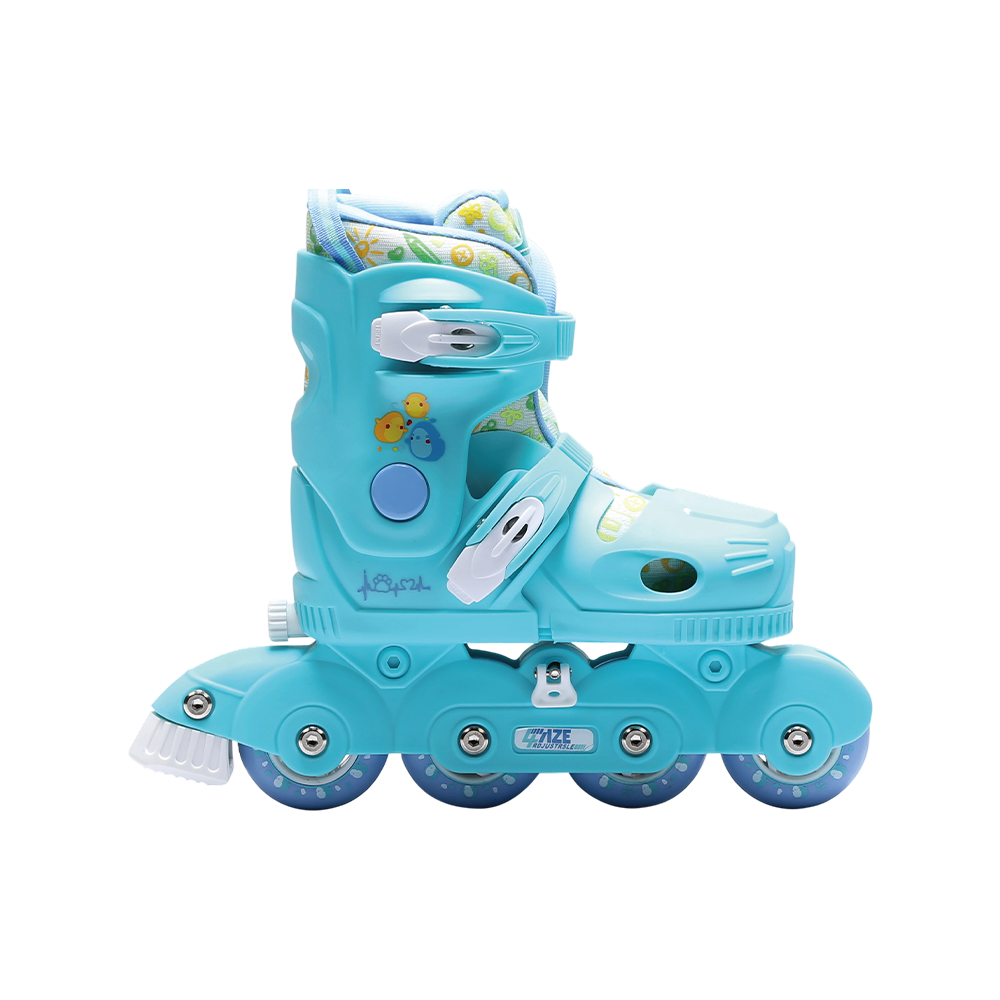
One of the principal advantages of the BW-210 is its reinforced PP one-piece hard shell. Polypropylene is widely used in sports equipment because it can offer a useful combination of impact resistance, structural strength, processability, and reasonable weight. In a children’s skate, the shell must be sufficiently rigid to provide support while remaining practical for everyday handling.
The one-piece shell structure helps create a continuous protective body around the lower foot and ankle area. Compared with soft-sided recreational footwear, a rigid shell is less likely to collapse when a child leans to one side. It also provides a more defined platform for the inner lining and closure system. This construction is particularly useful for first-time skaters who may not yet know how to maintain correct ankle alignment.
The reinforced PP construction is also resistant to deformation during normal use. Young children frequently experience minor falls, contact with the ground, and accidental bumps against furniture or playground edges. A durable shell helps the skate retain its functional shape through repeated practice. This can extend the useful life of the product and reduce the likelihood that a child quickly outgrows the performance of the equipment because of premature structural wear.
Compared with thin, highly flexible alternatives, the hard shell offers stronger lateral support. Compared with overly complex performance-oriented constructions, it remains easy to understand and suitable for entry-level buyers. This balance is valuable in the children’s market, where product safety, durability, comfort, and ease of use are often more important than advanced speed features.
The shell also supports a secure fit around the ankle. By limiting unwanted side-to-side movement, it can help reduce the risk of sprains caused by poor alignment or uncontrolled lateral tilting. It is important to describe this as supportive protection rather than a guarantee against injury. Skating remains a physical activity, and correct sizing, supervision, and protective equipment are essential.
Supportive Ankle Structure for Developing Posture
Posture is one of the earliest challenges faced by a child learning to skate. Beginners may stand with their feet too far apart, lean backward, bend the ankles inward, or turn the feet outward. These movements are natural during the learning process, but an unstable skate can make them more difficult to correct.
The BW-210’s rigid shell provides a stable boundary around the foot and ankle. This structure helps children maintain a more consistent position while they learn to stand and move. It also gives parents and instructors a clearer starting point when explaining basic technique, such as keeping the knees slightly bent and the body centered over the feet.
A supportive ankle structure can also improve a child’s confidence. When children feel that their feet are securely held, they may be more willing to attempt small movements and repeat exercises. Confidence is particularly important during the first sessions because hesitation can lead to stiff posture, sudden weight shifts, and unnecessary falls.
The product is therefore designed not only as protective footwear but also as a learning aid. It encourages a controlled introduction to skating, where the child can develop balance before attempting faster movement or more advanced turns.
Comfort Through a Cushioned Inner Lining
Protection and comfort must work together. A hard shell without adequate interior cushioning may create pressure points, friction, or ankle irritation. Children are less likely to enjoy regular practice if the skate feels harsh or uncomfortable after only a short period.
The BW-210 uses a hard-shell inner lining with soft cushioning. This lining helps create a more comfortable contact surface between the rigid outer shell and the child’s foot. It is intended to reduce foot irritation and ankle chafing during extended wear, while still preserving the supportive character of the hard-shell design.
The cushioning also contributes to a more secure fit. If the interior is too loose, the foot can move excessively inside the shell. If it is too hard or poorly shaped, the child may experience discomfort and try to remove the skate. A cushioned lining helps balance these concerns by combining gentle contact with structural support.
For manufacturers and retailers, this combination is important because parents often evaluate children’s sports equipment through several practical questions: Does the product look safe? Is it easy to put on? Will the child tolerate wearing it? Can it survive regular use? The BW-210 addresses these questions through a combination of shell stability, lining comfort, and simple adjustment.
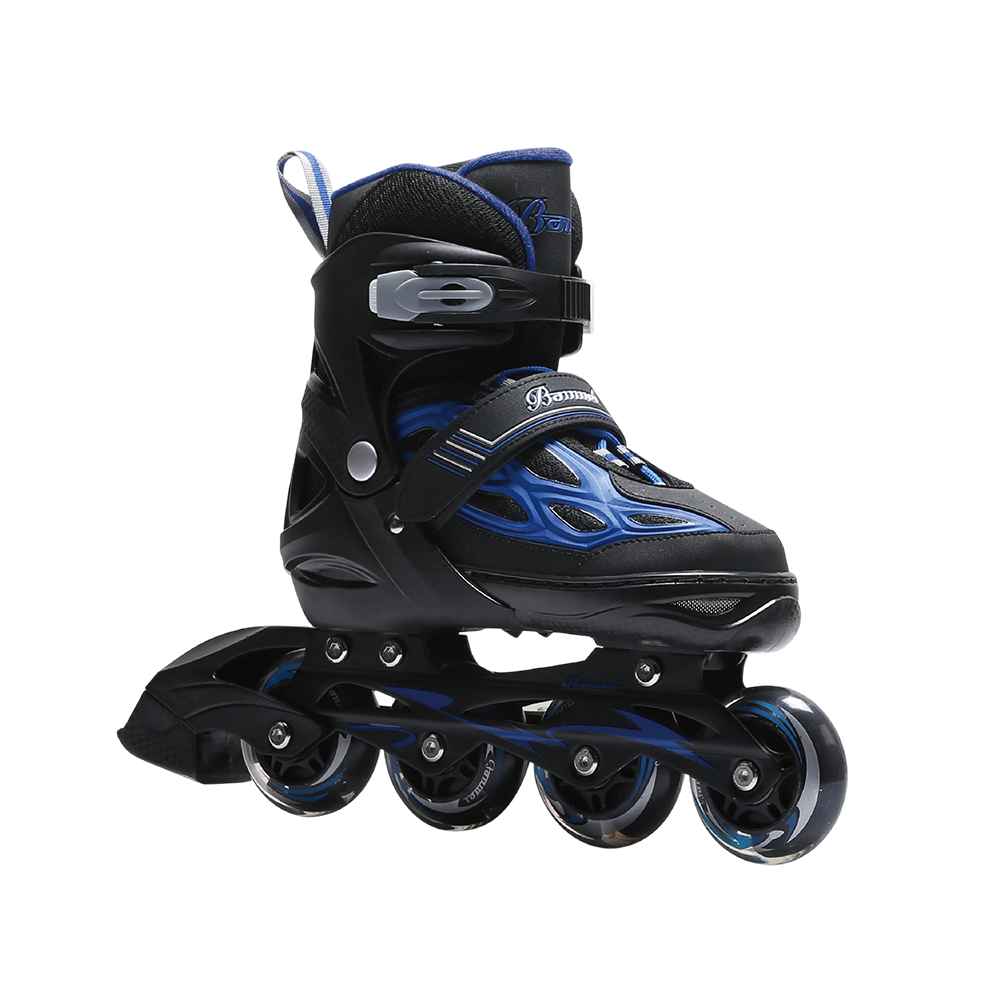
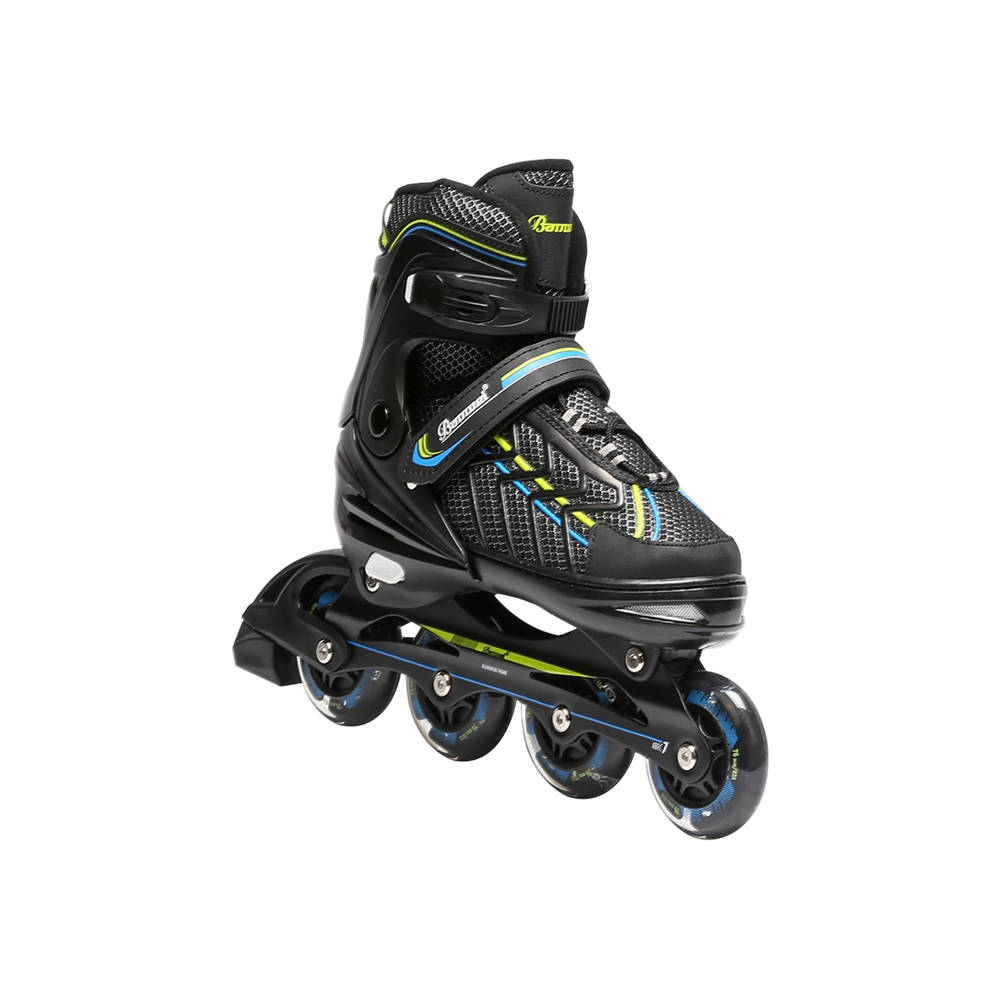
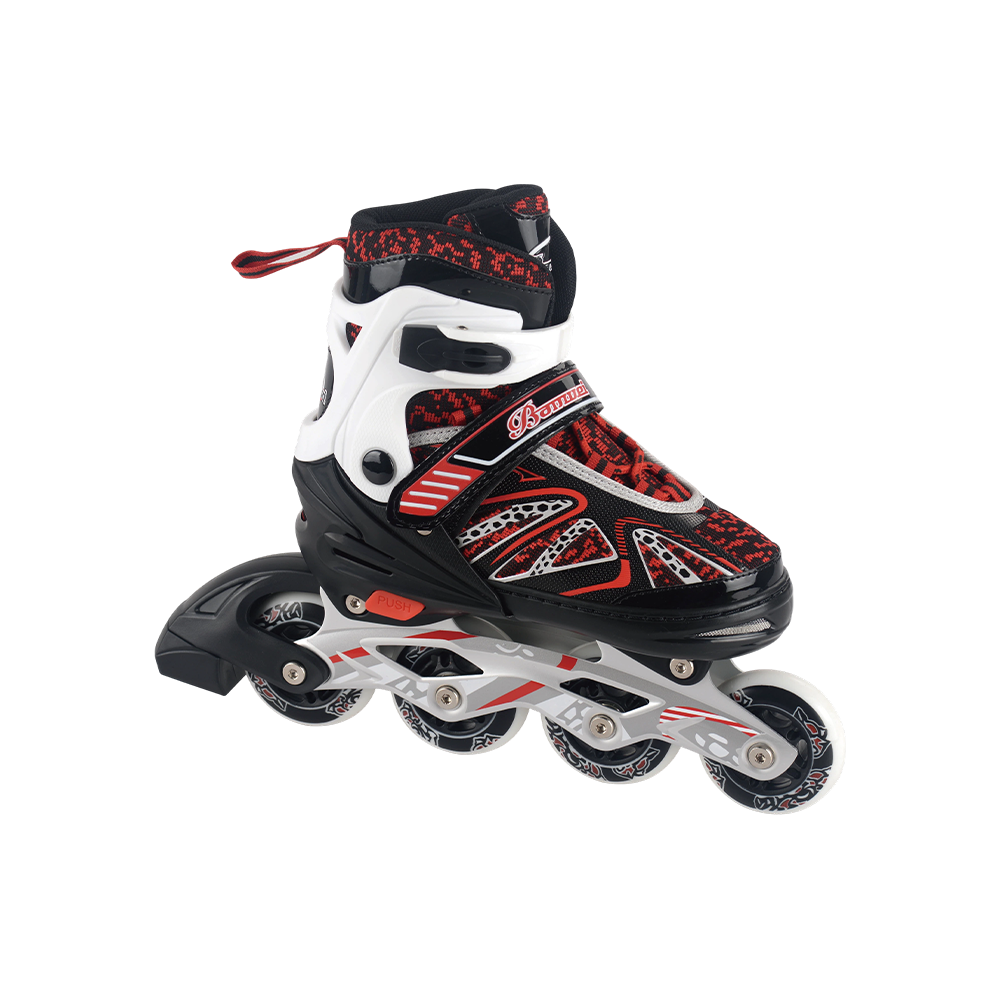
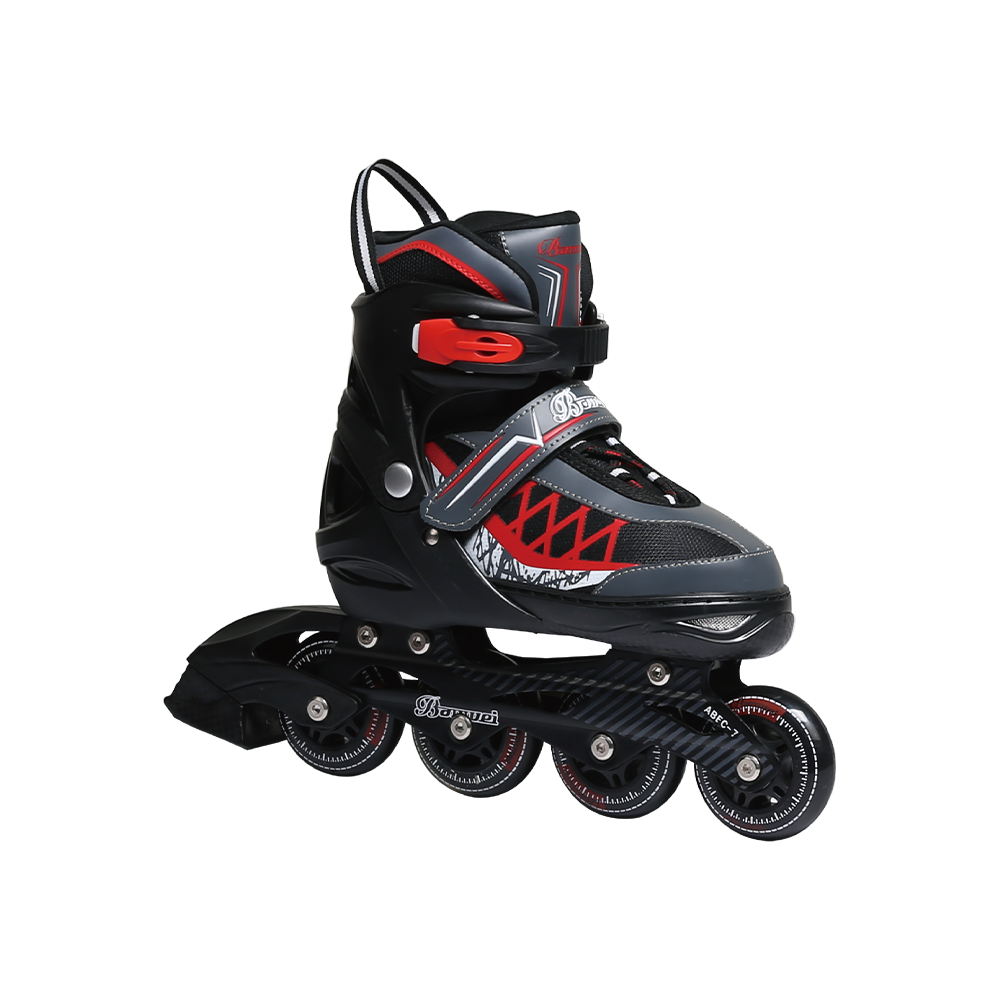
BW-210 Kids Beginner Inline Skate
Simple Locking and Velcro Closure System
Children’s equipment should be easy for parents to operate and simple enough for older children to understand. The BW-210 includes an easy-to-use locking mechanism with Velcro closures and a straightforward on-and-off lock. This arrangement is intended to make the product quick to put on and remove without requiring complicated lacing or technical adjustments.
Velcro closures are particularly practical for younger children. They can be opened widely to make entry easier, then secured with a simple pulling motion. Parents can tighten the straps according to the child’s foot shape and clothing, while older children can gradually learn to participate in the process.
The closure system also supports daily convenience. Children may use the skates during a short recreational session, a class, or a family outing. A system that takes too long to adjust can discourage frequent use. By contrast, a simple strap and lock arrangement makes it easier to include skating in normal leisure activities.
A secure closure is essential because a loose skate can reduce stability. The shell may provide excellent support, but that support is less effective if the foot is moving inside the skate. The Velcro straps and locking mechanism help hold the foot in position so that the shell, lining, and skating base can work together.
Retailers can also benefit from the system’s accessibility. Products that are easy to demonstrate in stores or online videos are easier for customers to understand. Clear operating instructions can show parents how to open the skate, place the child’s foot correctly, fasten the straps, and check the fit before use.
Adjustable Sizing for Growing Feet
Children’s feet grow quickly, which makes fixed-size footwear inconvenient for families. Parents may hesitate to purchase a product that will become too small after a short period. The BW-210 addresses this concern with multiple adjustable sizes that accommodate smaller children’s feet as they grow.
The available size ranges are 26–29, 30–33, and 34–37. These ranges allow one skate model to serve children across several stages of early development. Instead of requiring a complete replacement each time the child grows slightly, the adjustable structure can provide a longer period of practical use, subject to correct fit and normal product life.
Adjustability is also valuable for distributors because it simplifies product planning. A retailer can offer a clear range of size groups rather than stocking a large number of individual fixed sizes. For e-commerce sellers, the size range can be explained in a simple chart, supported by foot-measurement guidance and fitting instructions.
| Size Range | Primary Retail Advantage | Recommended Fitting Focus |
|---|---|---|
| 26–29 | Suitable for smaller beginners and early learners | Confirm that the heel is secure and the toes are not compressed |
| 30–33 | Provides an adaptable option for growing children | Check ankle alignment and strap tension after adjustment |
| 34–37 | Serves older children who still need beginner support | Ensure the foot remains centered and does not slide inside the shell |
The size ranges should not be treated as a substitute for measuring the child’s foot. Children’s foot shapes differ, and the correct fit depends on length, width, sock thickness, and the child’s individual comfort. A properly fitted adjustable skate should hold the heel and ankle securely without creating painful pressure.
Child-Friendly Cartoon Styling
Appearance has a direct influence on whether a child wants to use sports equipment. The BW-210 uses a cute cartoon design developed specifically to appeal to young learners. This visual approach can make the skates feel less intimidating and more like an exciting personal possession.
A playful design may also encourage children to participate in practice sessions. Parents can introduce skating as an enjoyable activity rather than a difficult lesson. When the product looks friendly and approachable, children may be more willing to wear it, stand up, and repeat basic exercises.
For retailers, cartoon styling creates strong shelf and online presentation value. Children’s sporting products compete not only on technical features but also on color, character, shape, and emotional appeal. The BW-210 combines functional protection with a design language that is easier for children to connect with.
The styling does not replace performance. Instead, it complements the product’s structural features. A child may be attracted by the appearance, while the parent is reassured by the reinforced shell, soft lining, adjustable sizing, and secure closure system. This combination addresses both sides of the purchasing decision.
Advantages Compared with Generic Beginner Alternatives
When comparing the BW-210 with generic children’s inline skates, the main difference is the extent to which the product is organized around early learning. Some entry-level products may emphasize appearance without providing sufficient ankle support. Others may offer a rigid shell but lack comfortable interior cushioning or practical adjustment. Some may be difficult for parents to fasten, while others provide limited size flexibility.
The BW-210 combines these features in one beginner-oriented package. Its reinforced PP shell supports posture and resists deformation. Its cushioned lining improves wearing comfort. Its Velcro closure and simple lock make daily use easier. Its adjustable size groups address children’s growth. Its cartoon appearance helps create emotional interest. Its low-speed, stable ride supports the first stages of practice.
These advantages should be understood as product-positioning strengths rather than absolute claims that every competing product is inferior. The children’s skate market includes many different designs, and buyers should compare materials, fit, safety instructions, certifications, and intended use. Nevertheless, the BW-210 has a clear value proposition for customers looking for a supportive and accessible first skate.
Another advantage is the relationship between product simplicity and usability. A beginner does not necessarily benefit from complicated mechanisms or performance features that are difficult for parents to understand. A straightforward system can reduce setup errors and help families spend more time practicing.
The product also has commercial advantages. Its adjustable sizing can reduce the need for multiple replacements, while its broad application range allows it to be sold for home recreation, children’s classes, parks, indoor practice, and family outings. This versatility can help distributors serve multiple customer segments with one focused model.
Applications in Home, School, and Training Environments
Home and Residential Practice
The BW-210 is suitable for supervised practice in appropriate residential areas. Children can begin by standing on a flat surface, learning to shift weight, and taking small steps. Parents can gradually introduce straight-line movement as the child becomes more comfortable.
Because the product is designed for low-speed beginner use, it can be integrated into short sessions rather than demanding intensive training. Short, positive sessions are often more effective for young children than long periods that lead to fatigue or frustration.
Parks and Outdoor Recreation
Parks can provide a pleasant environment for family skating when the surface is smooth, clean, and free of traffic. The BW-210 can support light daily exercise and recreational activity in these settings. Parents should inspect the area before use and avoid steep slopes, wet ground, crowded paths, and rough surfaces that may increase the risk of falling.
The product is particularly suited to short outdoor trips. Families can combine skating with walking, play, and other healthy activities. Its child-friendly design can help make movement a regular part of leisure time.
Indoor Spaces
Indoor practice areas can offer a controlled environment for beginners. A suitable indoor floor allows children to practice balance without exposure to rain, uneven outdoor surfaces, or vehicle traffic. The BW-210’s stable design and supportive shell are useful for these introductory sessions.
Indoor users should confirm that skating is permitted and that the surface is appropriate. Protective gear, supervision, and sufficient clearance remain important regardless of location.
Kindergarten and Training Classes
The BW-210 is appropriate for kindergarten interest classes and children’s beginner roller-skating training. Instructors can use it during lessons focused on standing, balance, posture, straight-line movement, and basic control.
For organized programs, adjustable sizing can simplify equipment management. A class may serve children of different ages and foot sizes, and the three available ranges provide a practical starting point for allocation. Instructors should still inspect the fit of each individual child before a session begins.
Manufacturing Capabilities Behind the Product
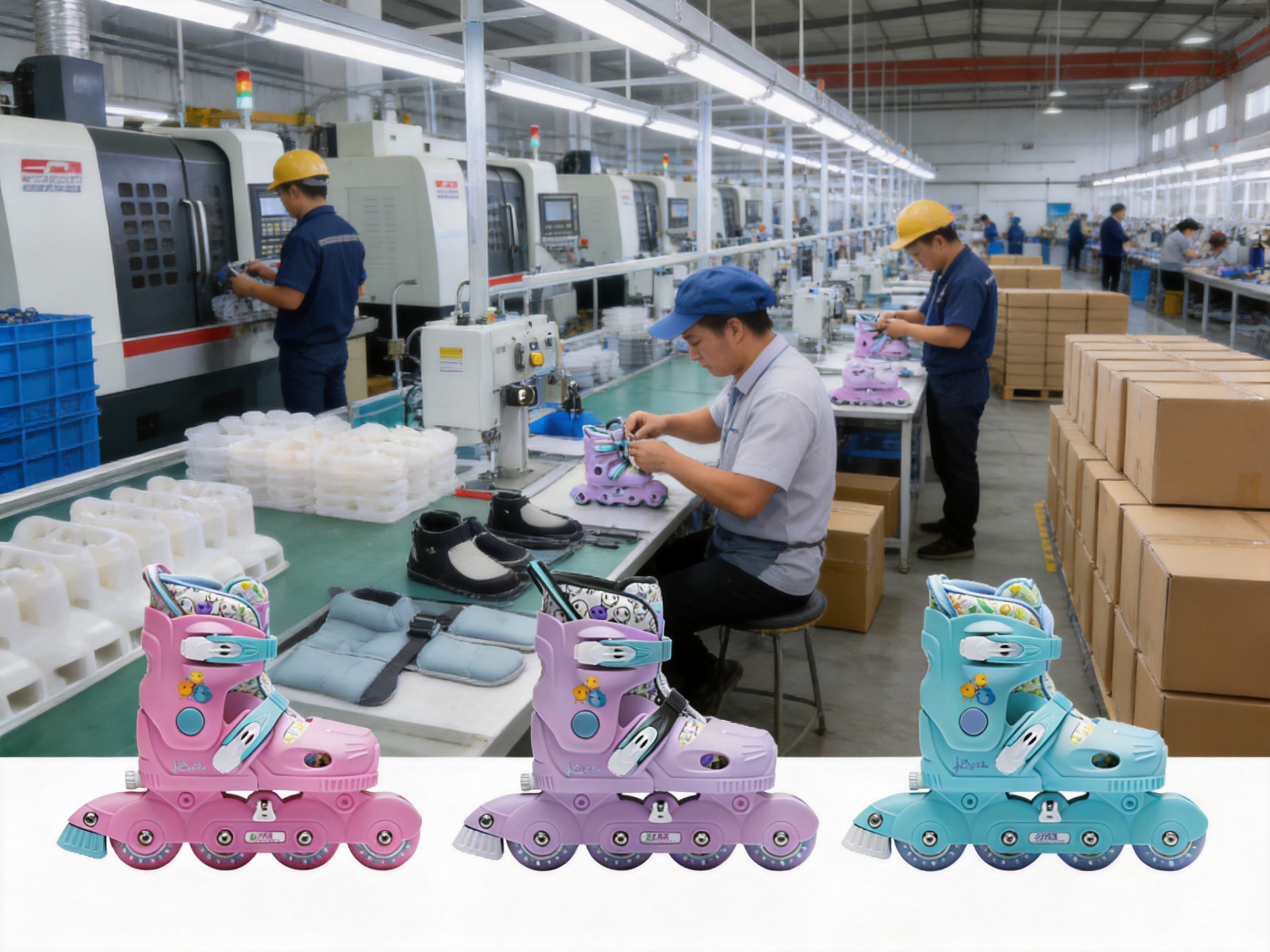
The performance of a children’s skate depends not only on its visible design but also on the manufacturing system used to produce it. Ningbo Feile Sporting Goods Co., Ltd. was established in 2010 and specializes in children’s scooters, inline skates, roller skates, and ice skates. Its experience across related product categories supports the development of children’s wheeled sporting goods with shared requirements for safety, comfort, durability, and attractive design.
The company operates a workshop of approximately 20,000 square meters and employs more than 200 people. Its production resources include five advanced automatic production lines, as well as dedicated mold, injection molding, sewing, and assembly workshops. These capabilities are relevant to the BW-210 because the product requires coordinated control of plastic shell production, soft material preparation, component fitting, closure installation, and final assembly.
Dedicated mold capability can support the development and refinement of shell shapes, structural details, and product styling. For a one-piece PP shell, mold accuracy influences consistency from one production batch to another. It also supports the repeatability of features such as shell contours, attachment points, and exterior design elements.
Injection molding capability is central to the production of reinforced plastic components. Process control can influence surface quality, dimensional consistency, filling performance, and the overall appearance of the shell. A stable injection molding operation is especially important for products that must be produced in volume for international customers.
The sewing workshop contributes to the production of cushioned inner components, linings, and related soft goods. These parts must fit correctly inside the hard shell and provide a comfortable interface for the child’s foot. Sewing quality, material placement, and finishing can affect both comfort and visual presentation.
Assembly operations bring the shell, lining, straps, locks, skating base, and other components together. Consistent assembly is necessary to ensure that the closure system functions properly and that the finished product meets the intended design requirements. A complete manufacturing system helps reduce dependence on multiple external suppliers and can improve coordination between development and production.
Research, Development, and Product Improvement
The company maintains a professional research and development engineering team. This is important in a product category where children’s needs evolve with age, activity level, and market expectations. Product development must address more than appearance. It must consider fit, posture, structural support, ease of use, material selection, manufacturability, and compliance with relevant standards.
An internal engineering team can help translate market feedback into design improvements. Feedback may come from distributors, retailers, parents, instructors, or factory quality data. For example, customer demand for easier adjustment may influence closure design, while feedback about growing children may encourage broader size adjustability.
The company launches new products every year to meet market and customer needs. This continuing development supports private-label and OEM buyers seeking updated product collections. It also allows the manufacturer to respond to trends in children’s sports, seasonal demand, color preferences, and regional market requirements.
The company has obtained multiple national patents, reflecting its investment in product development and technical innovation. Patents do not automatically define the performance of every individual model, but they indicate an established approach to creating and protecting original product solutions.
Quality Management and International Market Readiness
International buyers require confidence that a supplier can support stable production, documentation, quality management, and market compliance. The company has passed ISO9001, BSCI, and Kmart factory certification systems. These qualifications provide evidence of structured management and factory assessment processes.
ISO9001 is associated with quality management systems and process control. For a skate manufacturer, this type of system can support documented procedures covering incoming materials, production operations, inspection, corrective action, and continuous improvement.
BSCI assessment is relevant to social compliance and responsible supply-chain practices. Factory certification systems requested by major retailers also demonstrate the company’s experience in meeting external audit expectations. Buyers should confirm current validity, product scope, and market-specific documentation during the sourcing process.
The company’s products have received certifications and testing recognition including 3C, CE, EN71, EN62115, ASTM, EMC, and EN13843:2009. The exact applicability of each standard depends on the product type, destination market, product configuration, and current regulatory requirements. Importers should request the relevant reports, declarations, and certificates for the specific BW-210 configuration before placing an order.
Certification support is a significant advantage for international sourcing. It can help buyers prepare technical files, product listings, customs documentation, and retail compliance packages. It also demonstrates that the manufacturer is familiar with the expectations of different markets rather than producing only for one domestic channel.
OEM and One-Stop Sourcing Strengths
Feile Sporting Goods Co., Ltd. presents itself as an OEM manufacturer and one-stop sourcing partner for skates, scooters, and protective gear. This positioning is useful for distributors that want to build a coordinated children’s sports range instead of purchasing every product category from a separate factory.
A product line can include beginner inline skates, children’s scooters, roller skates, ice skates, helmets, knee pads, elbow pads, wrist guards, and other protective equipment. A manufacturer with experience across these categories may help buyers create a more consistent assortment in terms of packaging, target age, color direction, and retail positioning.
OEM cooperation can also allow businesses to develop customized colorways, packaging, logos, instruction materials, and product combinations, subject to technical feasibility and order requirements. The BW-210 provides a strong base model for customers seeking an attractive and accessible beginner skate that can be integrated into a broader sports equipment portfolio.
One-stop sourcing may reduce communication complexity. Instead of coordinating separate factories for plastic parts, soft goods, skates, scooters, and safety gear, a buyer can discuss a broader program with one experienced sporting-goods supplier. This can make seasonal planning, quality coordination, and shipment organization more efficient.
Customization should always be evaluated with attention to mold changes, minimum order quantities, lead times, packaging requirements, testing, and certification implications. A responsible OEM process begins with a clear product brief and continues through sampling, approval, production inspection, and shipment release.
Production Location and Logistics Benefits
The company is located at No. 27 Maosheng Road, Lianghui Economic District, Yuyao City, Ningbo, Zhejiang Province, China. Yuyao is situated in a manufacturing region known for plastics and related industrial supply chains. This environment can provide access to material suppliers, tooling resources, component manufacturers, packaging services, and logistics networks.
The factory location also offers convenient access to Ningbo Airport and Shanghai. For international buyers, access to major transportation hubs can support export planning and shipping coordination. Logistics performance still depends on order volume, season, destination, carrier availability, and customs procedures, but an established manufacturing region provides a practical foundation for global distribution.
For the BW-210, transportation planning should consider product cartons, size assortment, packaging protection, and seasonal demand. The supplied package dimension information includes the following measurements: 26–29, 685 × 320 × 395 mm; 30–33, 710 × 345 × 400 mm; and 34–37, 775 × 350 × 430 mm. Buyers should confirm whether these dimensions refer to master cartons, shipping cartons, or another packaging unit before finalizing freight calculations.
| Size Range | Provided Dimension Information | Purchasing Consideration |
|---|---|---|
| 26–29 | 685 × 320 × 395 mm | Confirm carton quantity and gross weight for freight planning |
| 30–33 | 710 × 345 × 400 mm | Review carton configuration and pallet utilization |
| 34–37 | 775 × 350 × 430 mm | Allow for larger packaging volume in warehouse planning |
Accurate packaging information helps importers estimate container utilization, warehouse requirements, retail carton dimensions, and delivery costs. It is recommended that buyers request a formal packing list and approved packaging specification before mass production.
Quality Control Considerations for Buyers
When sourcing the BW-210, buyers should evaluate both product function and production consistency. A pre-production sample should be checked for shell appearance, edge finishing, structural integrity, lining attachment, strap operation, lock performance, adjustment range, and overall fit.
During mass production, inspection can include visual checks, dimensional verification, closure testing, shell examination, packaging review, and random functional tests. Particular attention should be given to the areas children and parents handle most often: the shell edges, strap anchors, Velcro surfaces, lock components, inner lining, and adjustment mechanism.
Buyers should also confirm that the final production version matches the tested and approved sample. Changes to materials, shell design, lining, wheels, fasteners, packaging, or labeling may affect compliance and should be reviewed before implementation.
Product documentation should include user instructions and safety guidance appropriate to the destination market. Instructions can explain how to select the correct size, secure the straps, inspect the skate before use, clean and store the product, and use suitable protective equipment.
Safety and Responsible Use
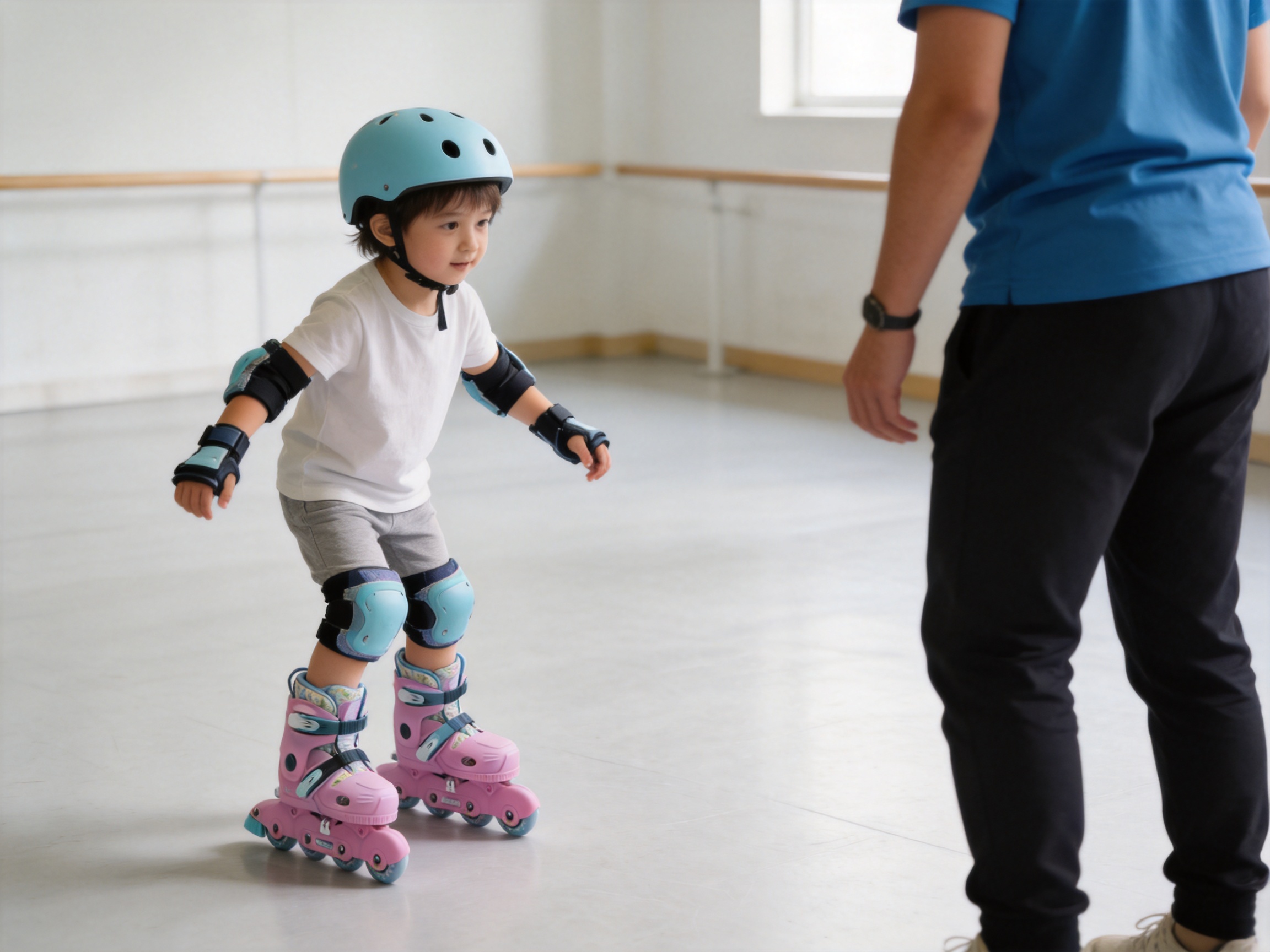
The BW-210 is intended to support beginner skating, but no skate can eliminate all risks. Children should wear a properly fitted helmet, wrist guards, knee pads, and elbow pads. Parents or instructors should supervise every session, particularly when a child is learning to stand and move.
Children should practice on smooth, dry, level surfaces away from traffic, stairs, water, steep slopes, and obstacles. Beginners should not skate beyond their ability. Training should begin slowly and include instruction on balance, posture, stopping, and safe falling techniques.
Before each use, an adult should check that the shell is not cracked, the lining is positioned correctly, the straps are secure, and the lock functions as intended. Any damaged component should be repaired or replaced before the skate is used again.
Correct sizing is equally important. A skate that is too large may allow excessive foot movement, while a skate that is too small may cause discomfort or restrict circulation. The adjustable mechanism should be set so that the heel remains secure, the ankle is supported, and the child can wear the skate comfortably with suitable socks.
How Retailers Can Position the Product
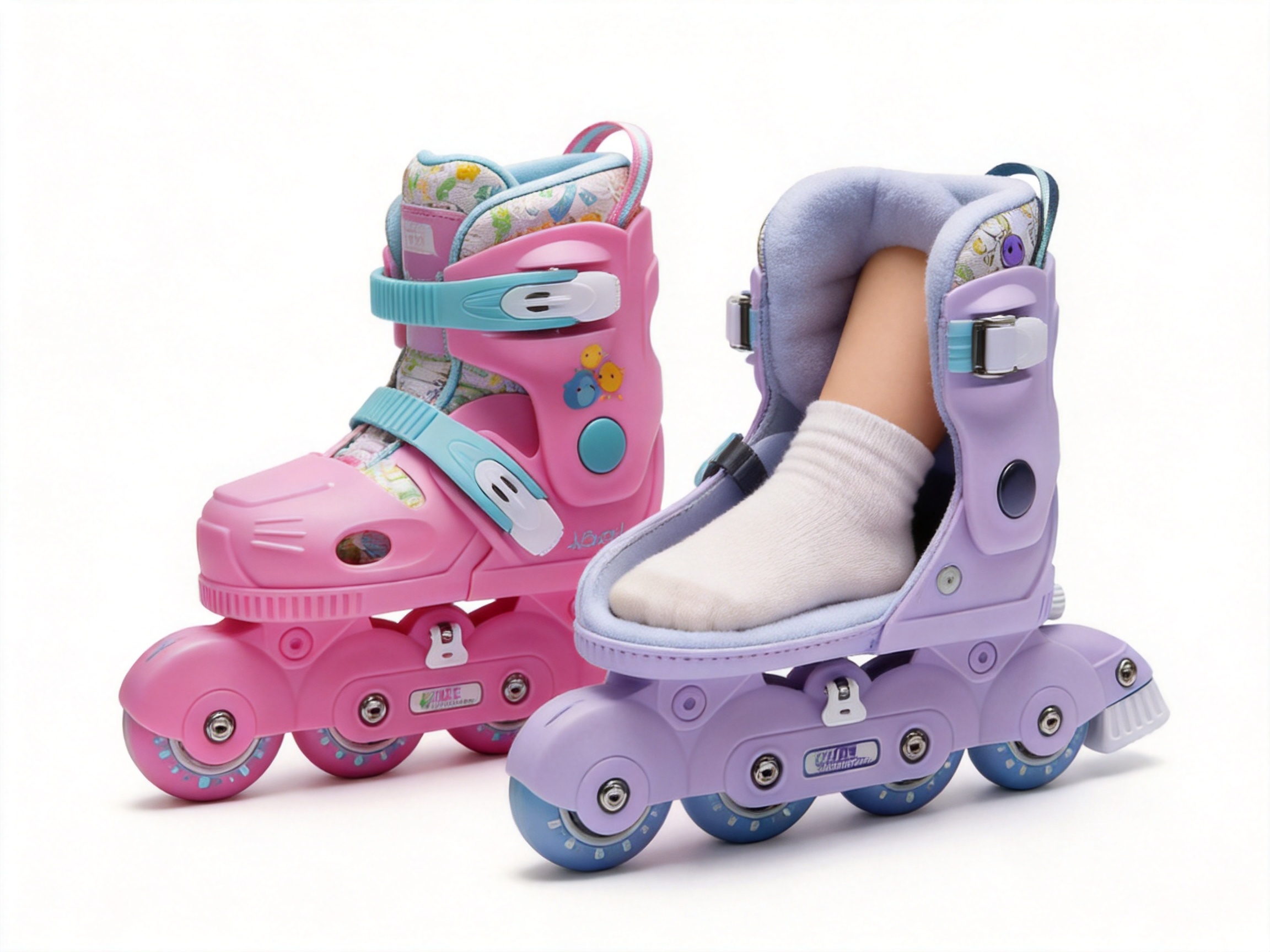
Retailers can present the BW-210 as a first-skating solution rather than simply another pair of children’s shoes. Product descriptions should explain that it is designed for young beginners and that its main benefits are stable support, easy adjustment, comfort, durability, and playful styling.
Visual merchandising can show the size ranges, closure system, reinforced shell, cushioned lining, and recommended use environments. Demonstration content should focus on how a parent opens the lock, places the child’s foot inside, adjusts the size, and fastens the Velcro straps.
The product can be positioned in several retail categories, including children’s sports equipment, beginner skating gear, family outdoor recreation, kindergarten activity equipment, and seasonal gifts. It may also be bundled with protective gear to create a complete entry-level skating package.
For online stores, a clear fitting guide is essential. Retailers should avoid relying only on age because children’s feet vary considerably. A measurement diagram, size-range explanation, and reminder to check the fit can reduce returns and improve customer satisfaction.
Retailers can also emphasize the product’s growth-friendly construction. Parents may see greater value in an adjustable skate that can remain useful across a child’s development, especially when the product is introduced as equipment for learning and regular recreation rather than one-time novelty use.
Why the Manufacturer Is a Strong B2B Partner
The BW-210 benefits from the broader capabilities of Ningbo Feile Sporting Goods Co., Ltd. The company has operated since 2010, has more than 200 employees, and maintains a 20,000-square-meter workshop. These resources indicate experience with organized production rather than small-scale assembly alone.
Five advanced automatic production lines support manufacturing efficiency and repeatability. The presence of mold, injection molding, sewing, and assembly workshops provides control over important stages of the product process. A professional R&D engineering team supports new product development and technical improvement.
The company’s product coverage is another strength. Its experience includes children’s scooters, inline skates, roller skates, and ice skates, allowing buyers to explore multiple categories through one supplier. Its participation in international exhibitions also indicates regular engagement with overseas customers and market trends.
More than 30 college-educated management staff contribute to administration, production coordination, engineering, quality, and customer service functions. While personnel numbers alone do not guarantee product quality, a structured management team can support communication, documentation, and the execution of OEM programs.
Certifications, factory assessments, patents, and international product testing experience further support the company’s suitability for global B2B sourcing. Buyers should conduct their own due diligence, but the available manufacturing profile provides a credible basis for cooperation.
Q&A
What type of product is the BW-210?
The BW-210 is a children’s beginner inline skate designed for young learners and early-stage skating practice. It is intended for learning standing, balance, straight-line movement, and light recreational skating.
What makes the shell suitable for beginners?
The reinforced PP one-piece hard shell provides strong support around the foot and ankle. It helps limit excessive lateral movement, supports posture correction, and resists deformation during normal falls and bumps.
Is the BW-210 designed for high-speed skating?
No. It is tuned for a stable, low-speed beginner ride with a high margin for error. Its primary purpose is introductory learning and light recreation rather than advanced speed performance.
How does the skate close?
The skate uses Velcro closures together with a simple on-and-off locking mechanism. This makes it easier for parents to put on, adjust, and remove the product.
Does the skate accommodate growing children?
Yes. The product is available in adjustable size ranges of 26–29, 30–33, and 34–37. Buyers should still measure the child’s foot and confirm that the adjusted skate provides a secure and comfortable fit.
Is the inner lining comfortable?
The hard-shell inner lining includes soft cushioning intended to balance support and comfort. It helps reduce irritation and ankle chafing during normal periods of use.
Where can children use the product?
The BW-210 is suitable for supervised practice in appropriate residential areas, parks, indoor spaces, kindergarten interest classes, children’s skating training classes, and short outdoor family trips.
What protective equipment should be used with the skates?
Children should use a properly fitted helmet, wrist guards, knee pads, and elbow pads. Adult supervision and an appropriate skating surface are also essential.
Can the product be used for OEM orders?
The manufacturer offers OEM and one-stop sourcing services for skates, scooters, and protective gear. Buyers should discuss customization options, order quantities, packaging, lead times, testing, and certification requirements directly with the factory.
What manufacturing resources does the supplier have?
The supplier has a 20,000-square-meter workshop, more than 200 employees, five automatic production lines, mold and injection molding workshops, sewing and assembly facilities, and a professional R&D engineering team.
What certifications and standards are associated with the company’s products?
The company reports product certifications and testing recognition including 3C, CE, EN71, EN62115, ASTM, EMC, and EN13843:2009. The applicable documents for a specific order should be confirmed according to the final product configuration and destination market.
What should an importer request before placing an order?
An importer should request an approved sample, product specification, size chart, packing details, test reports, certificates, user instructions, labeling requirements, production lead time, minimum order quantity, and inspection arrangements.
Conclusion
The BW-210 Kids Beginner Inline Skate is built around a clear and valuable purpose: helping young children begin skating with greater stability, comfort, and confidence. Its reinforced PP one-piece hard shell supports the ankle and helps resist deformation. Its cushioned lining improves comfort, while the Velcro closures and simple lock make the product accessible to parents and children. Adjustable sizes from 26–29, 30–33, and 34–37 help accommodate growing feet, and the cartoon design gives the product strong child-friendly appeal.
Compared with generic beginner alternatives that may focus on only one feature, the BW-210 combines protective structure, comfort, ease of use, growth flexibility, and approachable styling. It is suitable for family recreation, indoor practice, parks, kindergarten activities, and beginner training programs.
For B2B customers, the product is supported by the broader strengths of Ningbo Feile Sporting Goods Co., Ltd., including long-term industry experience, automatic production lines, mold and injection molding resources, sewing and assembly workshops, product development expertise, factory certifications, international testing experience, and one-stop OEM capabilities. This combination makes the BW-210 a practical choice for distributors and retailers seeking a dependable entry-level children’s inline skate and a capable manufacturing partner.
References
1. Product specification and feature information supplied for the BW-210 Kids Beginner Inline Skate.
2. Manufacturer profile and company information supplied for Ningbo Feile Sporting Goods Co., Ltd.
3. General principles of children’s inline-skating equipment selection, fit, supervision, and protective gear use.
4. ISO 9001 quality management system principles and manufacturing process control guidance.
5. General product-safety and conformity considerations associated with CE, EN, ASTM, 3C, and related sporting-goods requirements.
Product: BW-210 Kids Beginner Inline Skate

Recommended Articles
-
BW-137 Boys Inline Skate05/09

Get in Touch
Your email address will not be published. Required fields are marked *
Have a project in mind? Contact with us!
We are happy to answer your questions. Please fill out this form
and one of our professional team will get back to you as soon as possible.

We specialize in producing various types of children's toy cars, children's skateboards, and ice skates.
