
 En
 Español
 русский
 عربى

Why Lightweight Plastic Shell Ice Skates Are a Smart Choice for Young Beginners
Date:Sep 23, 2026
Content
- 1 A Beginner-Oriented Ice Skate Design
- 2 Key Advantages Compared with Conventional Beginner Skates
- 3 Size Selection and Fit Considerations
- 4 Applications in Training and Recreation
- 5 Materials, Construction, and User Experience
- 6 Advanced Manufacturing Strengths
- 7 OEM and Customization Potential
- 8 Packaging, Storage, and Maintenance Guidance
- 9 How the Product Supports Beginner Confidence
- 10 Comparison with Other Product Approaches
- 11 Purchasing Checklist for Importers and Institutions
- 12 Safety and Responsible Use
- 13 Why the Manufacturer Is Suitable for Global Sourcing
- 14 Frequently Asked Questions
- 14.1 What type of user is the BW-125BD designed for?
- 14.2 What sizes are available?
- 14.3 Does the product use traditional laces?
- 14.4 What is the benefit of the plastic shell?
- 14.5 Can the skates be rinsed with water?
- 14.6 Are the skates suitable for professional competition?
- 14.7 Is the product available without a brand logo?
- 14.8 Can the manufacturer support OEM projects?
- 14.9 What certifications are associated with the manufacturer’s products?
- 14.10 How should institutions maintain shared skates?
- 14.11 What should buyers confirm before ordering?
- 15 Conclusion
- 16 References
- 17 Product: BW-125BD Plastic Shell Ice Skate
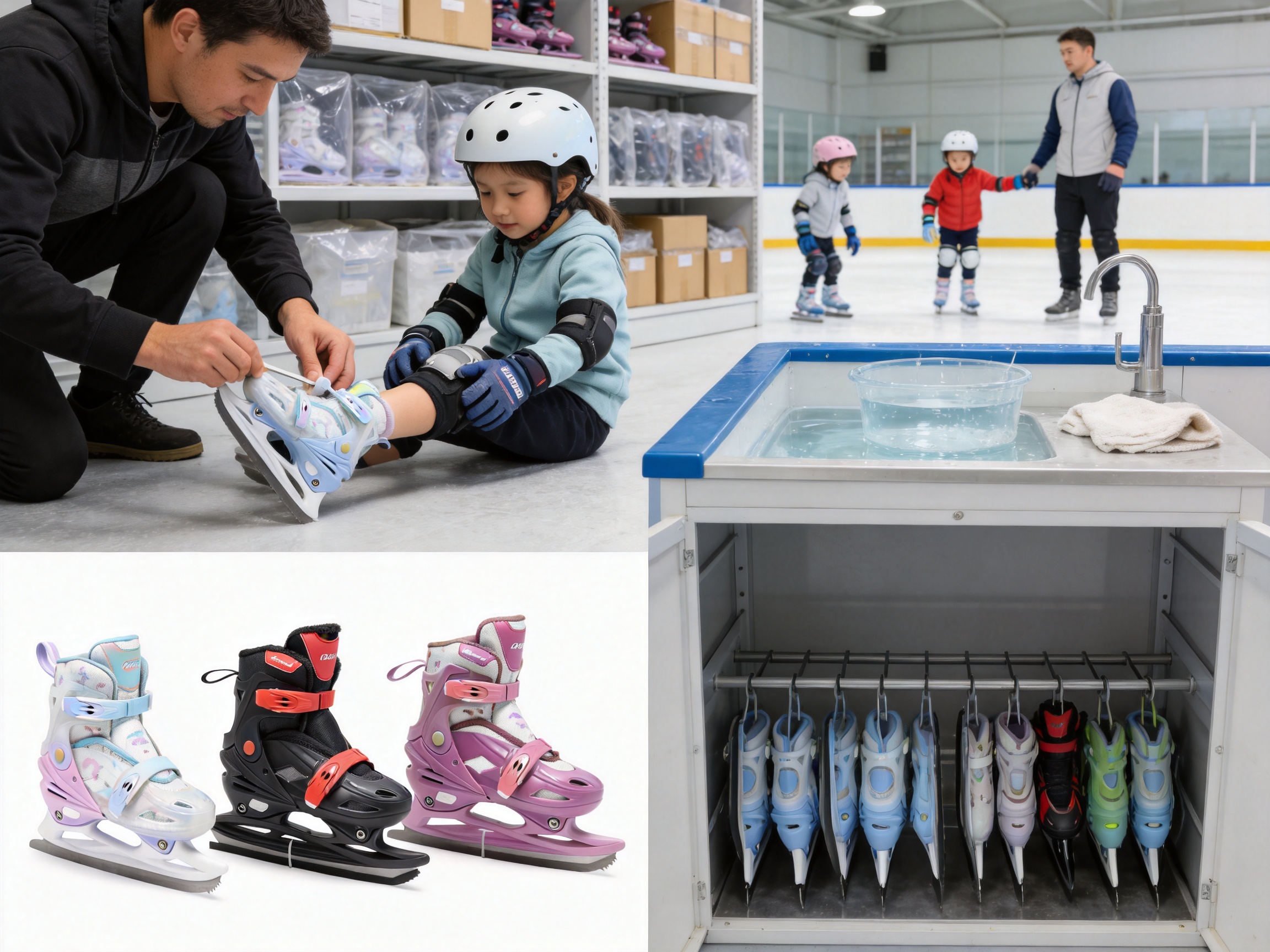
Learning to ice skate should be exciting, comfortable, and safe. For children taking their first steps on the ice, the right pair of skates can make the difference between an enjoyable introduction to the sport and an experience that feels difficult or intimidating. The BW-125BD plastic shell ice skate is designed specifically for this early learning stage. It combines a lightweight construction, a child-friendly adjustment system, a soft plastic shell, and a practical design that supports family recreation, skating instruction, clubs, and other beginner-focused applications.
Unlike many traditional ice skates that use heavier materials and require complicated lacing, this model is designed around simplicity. Children can learn to put on and remove the skates with less assistance, while parents and instructors can check the fit more easily. Its plastic construction is also simple to clean and maintain, making it suitable for frequent use in skating schools, rental programs, sports clubs, and family ice-skating activities.
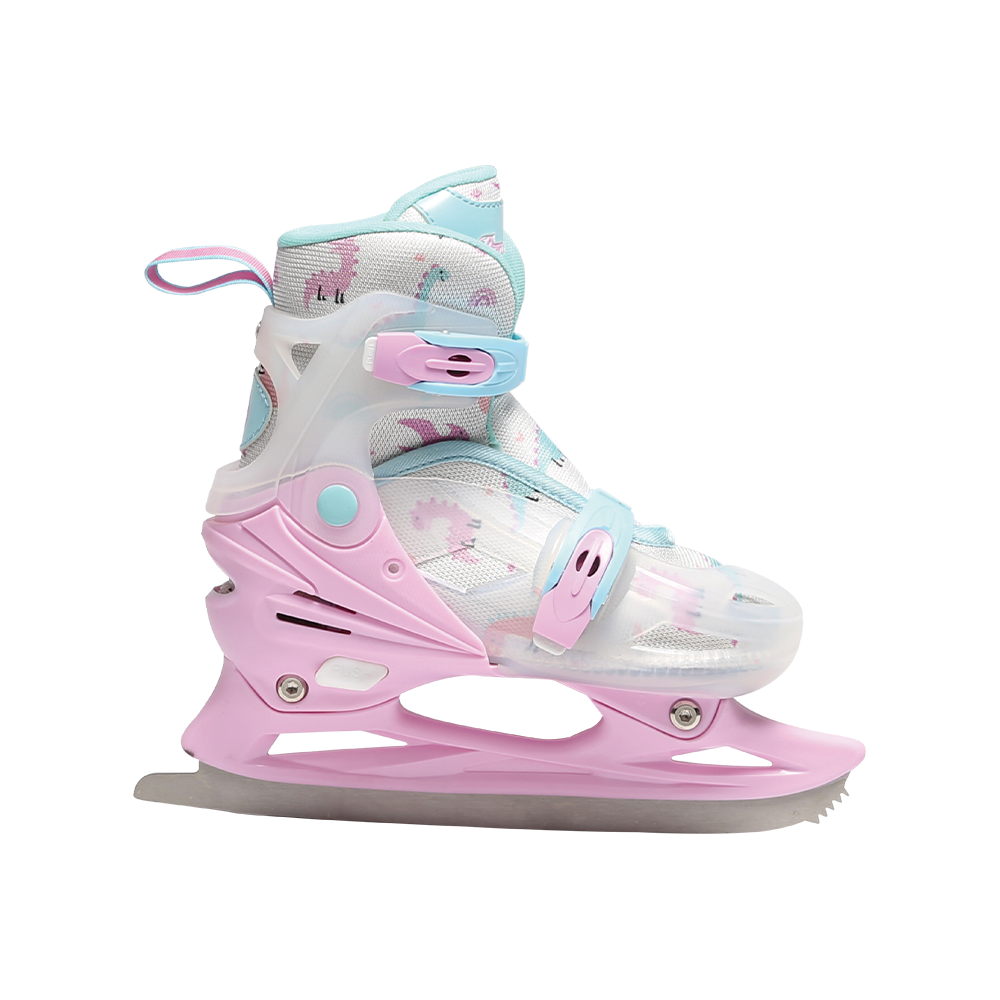
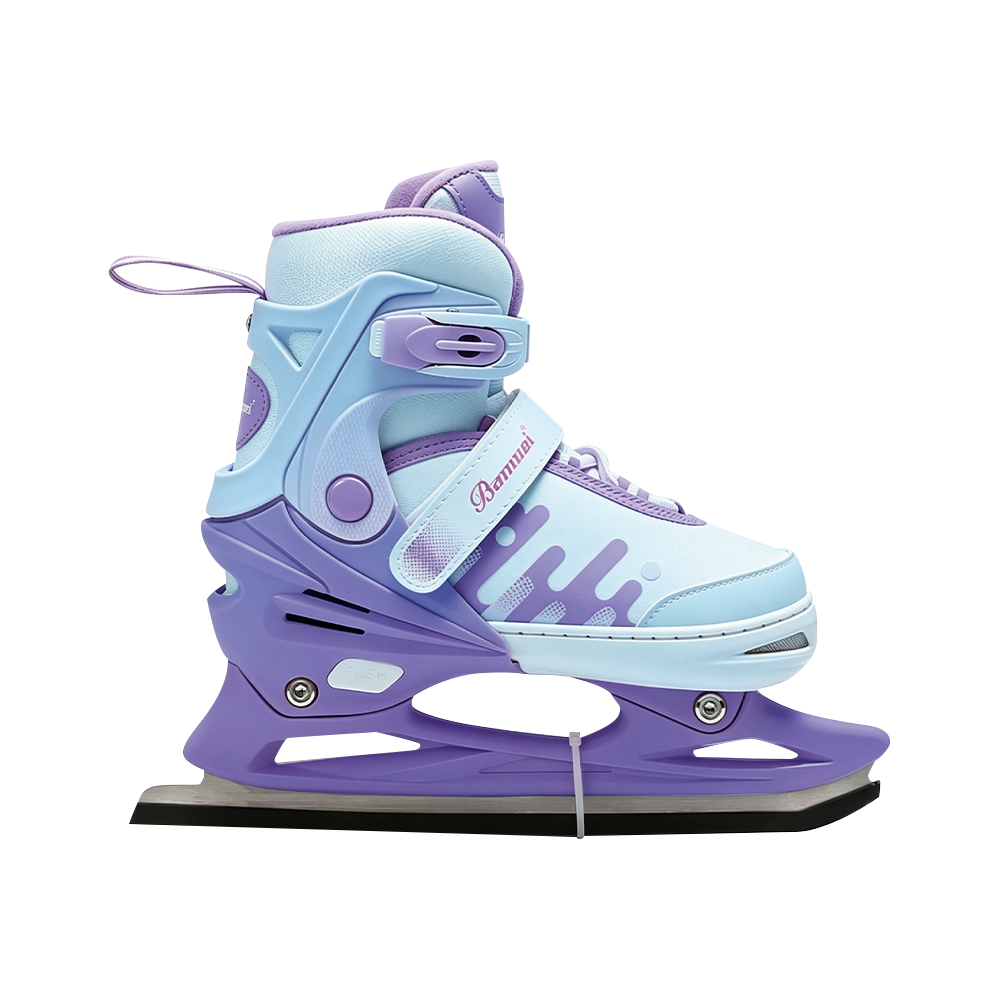
The product is available in three size ranges: S, covering sizes 31 to 34; M, covering sizes 35 to 38; and L, covering sizes 39 to 42. This range supports children at different stages of growth and allows buyers to select a suitable size for beginners, recreational skaters, or training programs. The soft light-blue and pink color design, together with the possibility of cartoon patterns or decorative elements, gives the skate a friendly appearance that can help stimulate a child’s interest in learning.
A Beginner-Oriented Ice Skate Design
Children’s ice skates must do more than hold a blade to the foot. They need to provide an appropriate balance of stability, comfort, adjustability, and ease of use. Young skaters may not yet have the strength, coordination, or confidence required to manage a highly technical skate. A beginner-oriented design therefore needs to remove unnecessary complexity while helping the child develop basic balance and movement skills.
The BW-125BD addresses this requirement with a plastic shell structure. The shell helps maintain the general shape of the skate while making it easier for parents or coaches to inspect how the child’s foot is positioned. The transparent or translucent appearance also gives the product a distinctive visual identity and makes the construction appear open and easy to understand. For children, the soft colors and playful appearance can make the equipment feel less intimidating than a heavy, highly technical adult-style skate.
Many competing entry-level ice skates depend on conventional laces. Although laces can offer fine adjustment, they may be difficult for children to tighten correctly. Loose laces can affect stability, while overly tight laces can create pressure and discomfort. The BW-125BD uses a wide carrying handle and a snap-on adjustment mechanism to make the basic fitting process faster and more manageable. This is particularly useful when several children need to be prepared for a lesson or when a child is learning to become more independent.
The design is also appropriate for situations in which adults need to supervise equipment quickly. A parent can check the snap mechanism, inspect the shell, and confirm that the skate is positioned correctly without spending a long time tying and retying laces. Coaches can perform similar checks before a class begins, helping streamline group preparation.
Key Advantages Compared with Conventional Beginner Skates
Reduced Weight for Young Skaters
Weight is an important consideration for children. A heavy skate can make it more difficult for a beginner to lift the foot, maintain balance, and perform basic skating movements. It can also increase fatigue during a lesson. The lightweight plastic shell of the BW-125BD reduces the burden placed on the child’s legs and feet, allowing more attention to be directed toward posture, balance, and forward movement.
This advantage is especially relevant for first-time skaters. Beginners often take short, careful steps rather than immediately gliding. If the equipment feels cumbersome, the child may become tired before developing confidence. A lighter structure can make the early learning process feel more manageable and may encourage children to remain engaged for longer practice sessions.
Compared with heavier traditional constructions, the plastic shell approach can also be more convenient for families who transport skates to and from an ice rink. The equipment is easier for a child or parent to carry, store, and organize with other sports accessories.
Simple On-and-Off Operation
The wide carrying handle and snap-on adjustment mechanism are practical features for children and caregivers. A child can hold the skate securely while putting it on, and the adjustment system can be operated more quickly than a long set of laces. This is useful at public ice rinks, where families may need to prepare beside a bench, as well as in training centers where many children are getting ready simultaneously.
Independence is another benefit. Children often enjoy being able to manage their own sports equipment. When a child can participate in putting on and taking off the skates, the experience becomes more engaging and can help build responsibility. Adult supervision remains important, but the fitting process does not have to depend entirely on a parent or instructor.
Easy Visual Inspection
The soft plastic shell allows adults to observe the exterior of the skate and check whether the equipment appears to be worn correctly. While a visual inspection cannot replace proper fitting or professional supervision, it can make routine checks more straightforward. Parents can look for an incorrectly positioned foot, an open snap, unusual movement, or visible damage before the child enters the ice.
For skating schools and clubs, this feature can support a consistent pre-activity inspection procedure. Staff can check that the adjustment system is engaged, the shell is intact, and the skater is using the correct size. A clear inspection routine is particularly valuable when equipment is shared among multiple users.
Convenient Cleaning and Maintenance
Children’s sports equipment is frequently exposed to moisture, ice residue, dirt, and contact with benches or rink surfaces. Materials that absorb stains can be difficult to maintain, especially when equipment is used by many children. The plastic material used in the shell does not easily absorb stains and can be rinsed directly with water after use.
Simple cleaning supports better equipment care. After skating, users can remove visible dirt, wipe away excess moisture, and allow the skates to dry before storage. This routine helps preserve the appearance of the shell and supports hygienic use. For rental departments, schools, and clubs, easy maintenance can reduce the time required between sessions.
Child-Friendly Visual Appeal
Children respond strongly to color, shape, and decoration. The BW-125BD is available in a soft color scheme that includes light blue and pink, with the possibility of cartoon patterns or other cute decorative elements. These details are not merely cosmetic. An appealing product can help a child feel more positive about trying an unfamiliar sport.
A child who is excited to wear the skates may be more willing to practice basic movements, listen to coaching instructions, and return for another session. This is particularly important in beginner programs, where emotional comfort and motivation are closely connected to skill development.
At the same time, the current logo-free version creates flexibility for buyers. Importers, distributors, skating schools, clubs, and private-label customers can explore customization options without being limited by a prominent existing brand mark. The plain version may be suitable for general use, co-branded programs, promotional projects, or product collaborations.
| Feature | Benefit for Children | Benefit for Parents, Schools, and Clubs |
|---|---|---|
| Lightweight plastic shell | Reduces the burden during early practice | Makes transport and handling easier |
| Wide carrying handle | Supports easier carrying and handling | Helps speed up preparation and storage |
| Snap-on adjustment mechanism | Allows simpler fitting than traditional laces | Enables quick checks and efficient group preparation |
| Soft plastic exterior | Provides a friendly, less intimidating appearance | Allows easy visual inspection and cleaning |
| Three size ranges | Supports different stages of childhood growth | Helps buyers organize stock for broader age groups |
| Logo-free version | Maintains a clean, simple appearance | Offers potential for customization and private labeling |
BW-125BD Plastic Shell Ice Skate
Size Selection and Fit Considerations
Selecting the correct size is essential for comfort, stability, and safe skating practice. The BW-125BD is offered in three size groups: S for sizes 31 to 34, M for sizes 35 to 38, and L for sizes 39 to 42. These ranges are designed to cover key stages of children’s foot development and provide a practical product selection for families and institutions.
Buyers should not select a size solely according to a child’s age. Children of the same age can have different foot lengths and widths, and footwear sizing can vary among markets. The child’s actual foot measurement and the product’s fitting guidance should be considered together. A skate that is too large may allow the foot to move excessively inside the shell, while a skate that is too small may cause pressure and discomfort.
When checking the fit, the child should wear the type of socks normally used for skating. The foot should be positioned naturally, and the adjustment mechanism should be secured without creating excessive pressure. The heel should remain reasonably stable, and the toes should not be forced into a cramped position. Parents should also inspect the shell and fastening system after the child has stood up and taken a few controlled steps on a safe surface.
Children grow quickly, so buyers may be tempted to choose a much larger skate for future use. However, excessive extra space can affect control and confidence. It is generally better to choose a size that provides a suitable current fit while leaving reasonable comfort room, rather than purchasing equipment that is visibly oversized.
For skating schools and clubs, the three size ranges make inventory planning simpler. A facility can organize stock by S, M, and L groups, then maintain a fitting procedure for assigning skates to individual users. Clearly labeled storage areas can reduce preparation time and help prevent size mix-ups.
Applications in Training and Recreation
Skating Schools
Skating schools need equipment that can withstand repeated preparation, use, cleaning, and storage. A beginner skate should be easy for instructors to explain and easy for students to operate. The BW-125BD is suitable for introductory classes in which children are learning to stand, balance, step, glide, and stop under supervision.
The snap-on adjustment system can help teachers prepare groups efficiently. Instead of spending several minutes tying and checking laces for every student, instructors can focus on confirming the general fit and teaching the fundamentals of skating. The lightweight design also supports lessons in which children spend time practicing off-ice movement before entering the rink.
Because the skates can be rinsed and cleaned, they are practical for programs that use shared equipment. A school can establish a simple maintenance routine after each lesson. Staff may inspect the outer shell, clean visible residue, dry the product, and return it to the correct size section.
Training Institutions and Sports Clubs
Sports clubs often need equipment that serves both regular members and new participants. The BW-125BD can be used for beginner training sessions, introductory activities, open days, and temporary equipment support. Its friendly appearance may also be useful for attracting younger participants to club programs.
Clubs can use the logo-free version as a starting point for customized equipment. Depending on the customer’s requirements and applicable regulations, future projects may include color coordination, printed packaging, decorative treatment, or other forms of product presentation. Customization should always be reviewed with the manufacturer to confirm feasibility, durability, and compliance.
Family Recreation
For families, ice skating is often a seasonal leisure activity rather than a daily training program. Parents may want equipment that is easy to transport, quick to put on, and simple to clean after a visit to the rink. The BW-125BD meets these practical expectations through its lightweight construction and straightforward adjustment system.
The product can also be used for supervised outdoor ice recreation where local conditions permit. Outdoor use should always follow local safety guidance, and the ice surface must be suitable and safe. Children should remain under adult supervision, particularly when they are still learning to balance and control their speed.
Temporary and Backup Equipment
Ice rinks and clubs sometimes need spare skates for visitors, new students, or participants whose regular equipment is unavailable. A lightweight plastic shell model can be useful in these situations because it is easy to store and distribute. The three size ranges help facilities keep a practical selection for different children.
Backup equipment should be inspected before every use. Staff should check the shell, adjustment components, interior condition, and blade area. Any product showing damage or a fastening problem should be removed from service until it has been evaluated and, when appropriate, repaired or replaced.
Materials, Construction, and User Experience
The central construction feature of the BW-125BD is its plastic shell. Plastic is widely used in children’s sports products because it can be formed into consistent shapes, cleaned easily, and produced in attractive colors. In this application, it provides a structured exterior while keeping the overall product light enough for young users.
The shell material also supports efficient manufacturing. Plastic components can be produced through injection molding, allowing repeated parts to maintain consistent dimensions when molds and process controls are properly managed. Consistency is important for adjustment components, fit-related areas, and the visual quality of finished products.
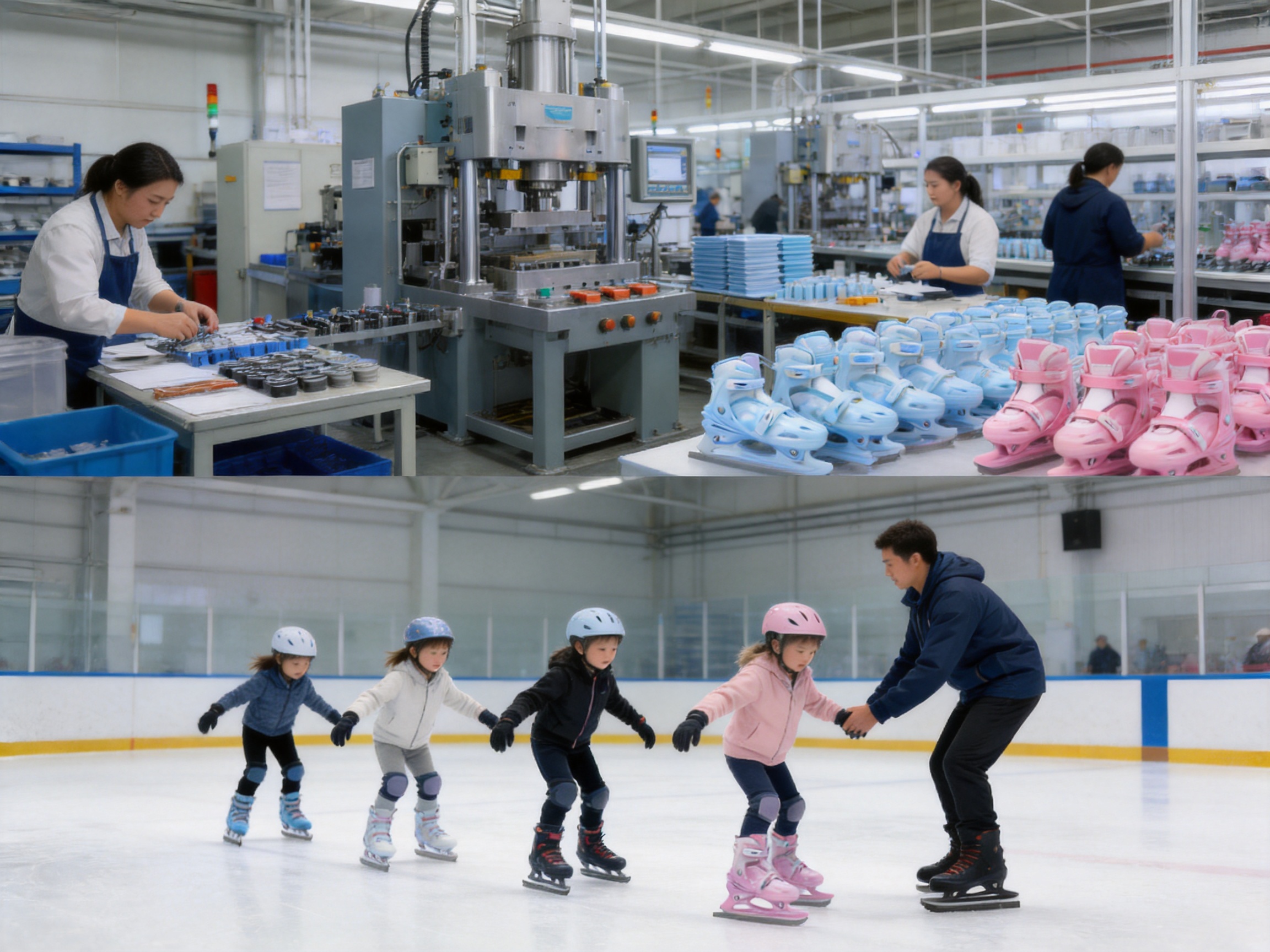
Feile Sporting Goods operates mold and injection molding workshops as part of its manufacturing system. These capabilities allow the company to coordinate important stages of production internally rather than relying entirely on unrelated external suppliers. Internal control over molds and molded components can support faster product development, more direct quality management, and improved communication between design and production teams.
The product’s carrying handle and snap-on mechanism are examples of features that require practical coordination between design and manufacturing. The handle must be convenient to hold, while the adjustment components must operate smoothly and remain secure during normal use. Engineering review, mold accuracy, assembly control, and inspection all contribute to the final user experience.
A comfortable product is not determined by one feature alone. The shell shape, inner contact surfaces, adjustment system, blade assembly, product weight, and size range must work together. A manufacturer with experience in children’s scooters, inline skates, roller skates, and ice skates can apply knowledge from multiple product categories to these design decisions.
Advanced Manufacturing Strengths
Integrated Production Capabilities
Ningbo Feile Sporting Goods Co., Ltd. was established in 2010 and specializes in children’s scooters, inline skates, roller skates, and ice skates. Its production capabilities include mold manufacturing, injection molding, sewing, and assembly workshops. This combination provides a broad manufacturing foundation for products that contain plastic parts, soft components, fastening systems, and assembled sports structures.
The company operates a workshop of approximately 20,000 square meters and has more than 200 employees. It also maintains five advanced automatic production lines and a professional research and development engineering team. These resources are valuable for customers seeking an experienced OEM partner rather than a trading company with limited control over production.
Integrated facilities can improve coordination from concept to finished product. Product engineers can communicate with mold specialists, injection molding technicians, sewing personnel, and assembly workers. This helps identify design issues earlier and can make it easier to implement revisions for different markets or customer requirements.
Research and Development
Children’s sports products require continual attention to safety, usability, appearance, and market preferences. Feile maintains an R&D engineering team and launches new products each year. This ongoing development focus supports the creation of products that respond to changing customer needs while maintaining a practical manufacturing foundation.
For an OEM customer, engineering support can be important during specification development. A buyer may need to discuss size ranges, color schemes, packaging, decorative features, adjustment systems, material options, or market-specific requirements. A professional engineering team can help evaluate whether a requested change is technically suitable and commercially practical.
Product development also involves more than creating a visually attractive sample. The design must be considered in relation to tooling, repeatability, assembly time, quality inspection, packaging, shipping, and user instructions. A manufacturer with its own production departments can examine these factors as part of a coordinated process.
Automatic Production Lines
Automatic production lines can support consistency and efficiency when they are properly managed. For a product such as a children’s ice skate, consistent molding, reliable component positioning, and repeatable assembly are important. Automation can reduce variation in repetitive operations and help the factory meet planned production volumes.
Automation does not eliminate the need for skilled workers. Technicians are still needed to maintain equipment, inspect output, manage materials, and respond to process changes. The strongest manufacturing approach combines equipment capability with experienced staff, documented procedures, and systematic quality control.
Quality Management and Factory Systems
Feile has passed ISO9001, BSCI, and Kmart factory certification systems according to the supplied company information. ISO9001 reflects a structured approach to quality management, while BSCI relates to social compliance and responsible supply chain expectations. Factory certification requirements can vary by customer and market, so buyers should confirm the current status and scope of any certification relevant to a particular order.
The company also holds multiple national patents and participates in international exhibitions. These activities indicate an organization that invests in product development, market communication, and long-term manufacturing capabilities. For international buyers, a factory’s ability to communicate specifications clearly and support documentation can be as important as its equipment.
Product Testing and Certification Awareness
Feile’s products have received certifications including 3C, CE, EN71, EN62115, ASTM, EMC, and EN13843:2009, according to the supplied information. The specific applicability of each certification depends on the product, destination market, configuration, and current regulatory requirements. Buyers should request relevant test reports and conformity documents for the exact product and order specification.
For children’s sports equipment, regulatory planning should be addressed early. Materials, physical construction, labeling, packaging, instructions, and testing may all influence market access. An experienced supplier can help customers identify the documentation needed for a particular region, although the importer or brand owner remains responsible for confirming its own legal obligations.
OEM and Customization Potential
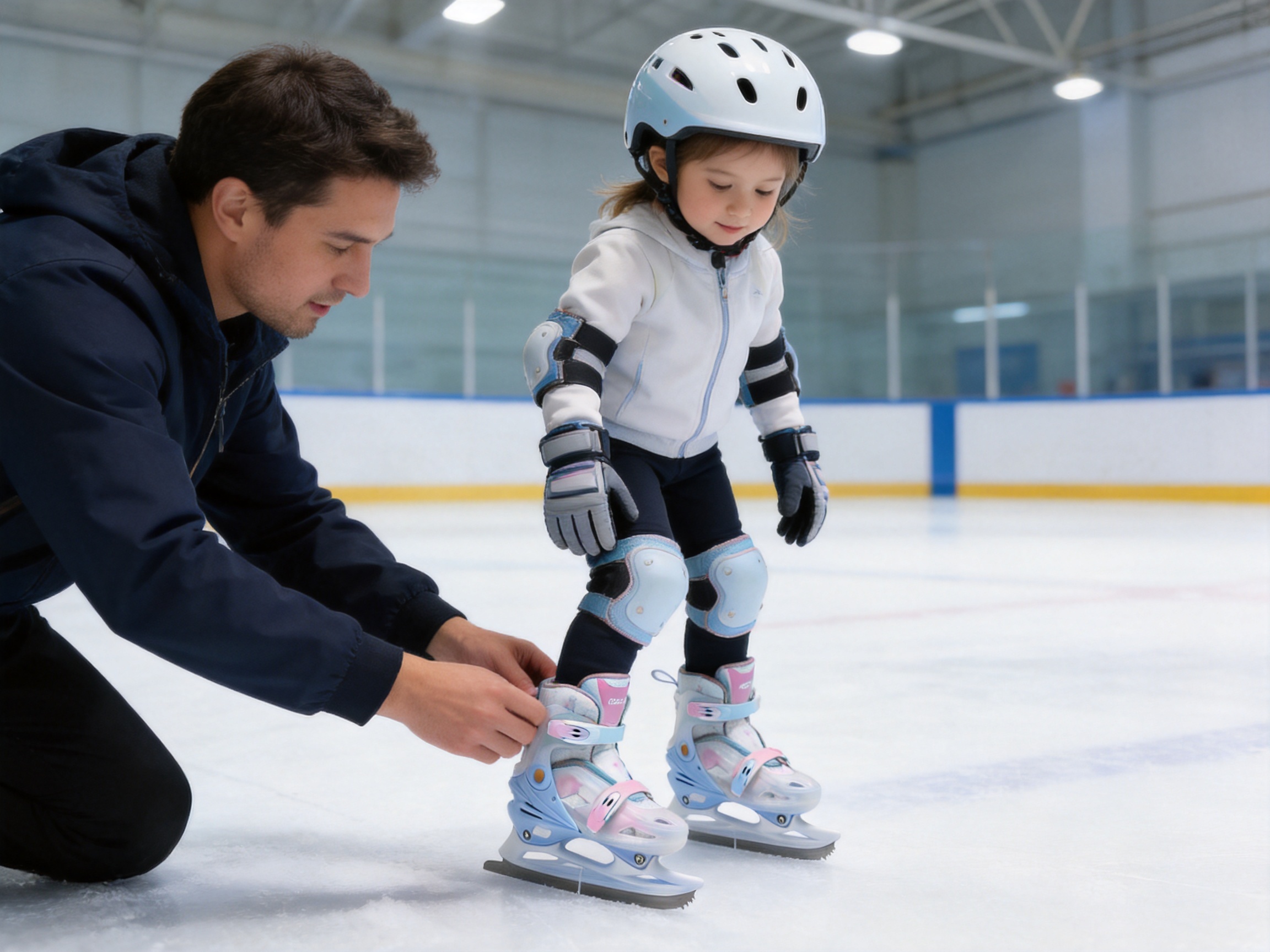
The current logo-free version of the BW-125BD provides a flexible starting point for OEM projects. Customers may be able to discuss customized colors, packaging, labels, printed materials, decorative patterns, or other presentation elements. The final possibilities depend on order quantity, tooling requirements, production schedules, and technical review.
A logo-free product can be useful for distributors that want a neutral product for several sales channels. It can also support skating schools or sports clubs that wish to create a coordinated equipment program. For private-label customers, the absence of a fixed brand logo reduces the need to modify an existing exterior design before discussing their own identity.
Customization should be planned in stages. First, the buyer should define the target market, user age range, expected quantity, required certifications, color preferences, packaging format, and sales channel. Next, the customer and manufacturer can review drawings, samples, artwork, material specifications, and testing requirements. Only after these details are confirmed should the final production schedule be established.
Color and decoration are important for children’s products, but they must not compromise functional performance. Any applied pattern, printed element, or surface treatment should be evaluated for adhesion, durability, cleaning resistance, and suitability for the intended use. The manufacturer can advise on practical methods based on the product material and order conditions.
Packaging, Storage, and Maintenance Guidance
Proper care helps preserve the appearance and function of children’s ice skates. After use, visible ice residue and dirt should be removed. The skates should be allowed to dry in a ventilated area before being placed into closed storage. Direct high heat should be avoided unless specifically approved, because excessive heat may affect plastic components or other materials.
Users should inspect the adjustment mechanism before each session. The snap-on components should close securely, and there should be no obvious cracking, deformation, or looseness. The carrying handle should also be checked for visible damage. If the product has been dropped heavily or exposed to unusual force, it should be inspected before further use.
Storage areas should be dry, clean, and organized by size. For institutional buyers, separate sections for S, M, and L sizes can make distribution more efficient. A simple check-in and check-out record may help staff monitor usage, cleaning, and maintenance, especially when the skates are shared by many children.
Packaging should protect the plastic shell and adjustment components during transportation. OEM customers should discuss carton dimensions, internal protection, labeling, and shipping marks with the factory. The supplied product information lists approximate size-related package dimensions as 540 by 410 by 290 millimeters for sizes 31 to 34, 560 by 420 by 305 millimeters for sizes 35 to 38, and 600 by 430 by 315 millimeters for sizes 39 to 42. Buyers should confirm whether these measurements refer to product packaging, shipping cartons, or another packing configuration before final logistics planning.
How the Product Supports Beginner Confidence
Confidence is a major part of children’s sports participation. A child who feels uncomfortable or overwhelmed may hesitate to practice, while a child who feels secure may be more willing to try new movements. The BW-125BD supports confidence through a combination of simple fitting, manageable weight, friendly styling, and visible construction.
The skate does not remove the need for instruction. Children still need to learn how to stand, bend their knees, balance, move slowly, and stop safely. However, equipment that is easy to put on and comfortable to handle allows instructors and parents to spend more time on these skills instead of struggling with complicated preparation.
The colorful appearance can also make the first session feel more like an enjoyable activity than a test. This emotional response can influence whether a child wants to continue. For families and programs seeking to introduce children to skating, product appeal and practical performance should therefore be considered together.
Comparison with Other Product Approaches
Traditional lace-up skates may provide detailed manual adjustment, but they can be time-consuming for children and inexperienced caregivers. Their fit depends heavily on tying technique. The BW-125BD offers a simpler alternative for beginner use, particularly when speed, convenience, and straightforward operation are priorities.
Heavier rigid skates may be selected for specialized performance applications, but they can be more demanding for small children who are still developing basic leg strength and balance. The lightweight plastic shell of the BW-125BD is better aligned with introductory learning and recreational use, where ease of handling is a primary concern.
Some children’s products use soft fabric or heavily padded structures. These may provide a different type of comfort, but they can be more difficult to clean if they absorb moisture or stains. The plastic shell offers a practical advantage for users who value rinsing and fast routine maintenance.
Finally, products with fixed branding may not be ideal for every distributor or institutional buyer. The logo-free version provides more room for private-label development and customization discussions. This flexibility can be a meaningful advantage for importers, schools, clubs, and promotional programs.
Purchasing Checklist for Importers and Institutions
Before placing an order, buyers should confirm the exact size assortment required. A retailer serving families may need a balanced selection of S, M, and L sizes, while a skating school may need more of the sizes that match its enrollment profile. Historical sales data, local age distribution, and planned class capacity can help determine the appropriate mix.
Buyers should also confirm the product color, decorative treatment, packaging format, logo requirements, and instruction materials. If the product is intended for a regulated market, the buyer should request the relevant test reports, declarations, labels, and technical documents for the final configuration.
Sample approval is recommended before mass production. A sample allows the customer to examine the shell appearance, snap operation, handle comfort, interior finish, blade area, packaging, and overall presentation. If customization is requested, artwork and color samples should be approved in writing.
Production and inspection plans should be agreed in advance. Buyers may wish to discuss incoming material checks, in-process inspections, final assembly inspection, carton verification, and pre-shipment sampling. Clear communication helps reduce misunderstandings about acceptable appearance, dimensions, packaging, and function.
| Purchasing Item | Questions to Confirm |
|---|---|
| Size assortment | How many S, M, and L units are required for the target market? |
| Product appearance | Which colors, patterns, and decorative details should be used? |
| Branding | Will the product remain logo-free, or will private-label artwork be added? |
| Packaging | What are the carton dimensions, unit packing method, labels, and shipping marks? |
| Compliance | Which tests, certifications, warnings, and instructions are required? |
| Quality inspection | What inspection standard and defect criteria will apply? |
| Delivery schedule | What are the sample approval, production, and shipping deadlines? |
Safety and Responsible Use
Children should use ice skates under appropriate adult supervision, especially during their first sessions. A properly selected size and securely closed adjustment system are essential, but they are only part of safe skating practice. The child should receive basic instruction and use a suitable rink or approved skating surface.
Protective equipment may include a properly fitted helmet, gloves, knee protection, elbow protection, and other gear recommended by the rink or instructor. Children should be taught to move at a controlled speed, maintain awareness of nearby skaters, and follow rink rules.
The skates should be inspected before use. Parents and staff should look for visible cracks, loose components, damaged adjustment parts, or other conditions that could affect normal use. A damaged product should not be used until it has been evaluated.
Safety information supplied with the final product should be followed. Importers and distributors should ensure that instructions, warnings, and labels are provided in the language and format required by the destination market.
Why the Manufacturer Is Suitable for Global Sourcing
For international buyers, the value of a supplier extends beyond the individual product. A reliable OEM partner should be able to support product development, manufacturing, quality systems, testing coordination, packaging, and communication. Feile’s specialization in children’s wheeled and ice sports products gives it relevant category experience.
The company’s location in Yuyao, Ningbo, Zhejiang Province, places it in an area known for plastics manufacturing and provides access to established industrial resources. The company information also notes convenient access to Ningbo Airport and Shanghai. These logistics connections can support international sourcing, although actual shipping arrangements depend on the order, destination, freight conditions, and agreed trade terms.
More than 200 employees, a 20,000-square-meter workshop, automatic production lines, internal mold and injection molding capabilities, and an R&D engineering team create a substantial manufacturing base. The company’s participation in international exhibitions can also help facilitate communication with overseas customers and keep the product range aligned with market expectations.
Its focus on quality, reasonable pricing, safety, comfort, and innovation is relevant to buyers seeking children’s sports equipment for retail, institutional, and recreational channels. The BW-125BD illustrates how these priorities can be combined in one product: it is practical enough for repeated use, approachable enough for beginners, and flexible enough to support OEM discussions.
Frequently Asked Questions
What type of user is the BW-125BD designed for?
The BW-125BD is designed primarily for children who are learning to ice skate or participating in recreational skating. It is suitable for skating schools, training institutions, sports clubs, family activities, and temporary or spare equipment programs.
What sizes are available?
The product is available in S, M, and L size ranges. S covers sizes 31 to 34, M covers sizes 35 to 38, and L covers sizes 39 to 42. Buyers should confirm the correct fit using actual foot measurements and the manufacturer’s size guidance.
Does the product use traditional laces?
The supplied product information describes a snap-on adjustment mechanism rather than a traditional lace-based closure. This design is intended to make the skates easier for children and caregivers to put on, remove, and adjust.
What is the benefit of the plastic shell?
The plastic shell helps keep the product lightweight, easy to clean, and visually inspectable. It also supports consistent molded production and provides a structured exterior suitable for beginner-oriented skating equipment.
Can the skates be rinsed with water?
The product information states that the plastic material can be rinsed directly with water after use. Users should remove visible residue, avoid excessive heat during drying, and store the skates in a dry, ventilated location.
Are the skates suitable for professional competition?
The BW-125BD is primarily positioned for children’s beginner training, family recreation, skating clubs, and temporary use. Buyers seeking specialized competitive equipment should evaluate the product against the technical requirements of their specific discipline and competition rules.
Is the product available without a brand logo?
Yes. The supplied information identifies the current version as logo-free. This may be suitable for general distribution, customization, private labeling, or collaboration projects. Any branding or decoration request should be discussed with the manufacturer before production.
Can the manufacturer support OEM projects?
The company specializes in OEM skating and scooter equipment and has mold, injection molding, sewing, assembly, automatic production, and R&D capabilities. Customers can discuss product colors, packaging, labels, decorative elements, and other requirements subject to technical review and order conditions.
What certifications are associated with the manufacturer’s products?
The supplied company information lists 3C, CE, EN71, EN62115, ASTM, EMC, and EN13843:2009 among the certifications received by its products. Certification applicability depends on the exact product and destination market, so buyers should request current documents for the specific order.
Institutions should inspect the skates before and after use, clean visible residue, allow the products to dry, check the adjustment mechanism, and store them by size. Any skate with visible damage or a faulty fastening component should be removed from service.
What should buyers confirm before ordering?
Buyers should confirm sizes, quantities, colors, decorative details, branding, packaging, certifications, inspection standards, delivery schedules, and customization requirements. Sample approval is recommended before mass production.
Conclusion
The BW-125BD plastic shell ice skate is designed around the practical needs of young beginners. Its lightweight construction helps reduce fatigue, while the wide carrying handle and snap-on adjustment mechanism simplify preparation. The soft plastic shell supports easy cleaning and visual inspection, and the light-blue and pink color options provide a friendly appearance that can encourage children to participate.
Its three size ranges make the product suitable for families, skating schools, clubs, training organizations, and rental or backup programs. Compared with more complicated lace-up or heavier beginner designs, it offers advantages in convenience, handling, maintenance, and child-oriented presentation.
The product is also supported by a manufacturer with integrated mold, injection molding, sewing, assembly, automatic production, and R&D capabilities. Feile’s experience in children’s scooters, inline skates, roller skates, and ice skates provides a relevant foundation for OEM and global sourcing projects. Its quality systems, factory certifications, product testing experience, and customization potential further strengthen its suitability for international buyers.
For customers seeking a practical children’s ice skate that combines easy operation, lightweight construction, simple maintenance, and flexible sourcing support, the BW-125BD offers a well-balanced solution for beginner skating and recreational markets.
References
1. Product specification and feature information for the BW-125BD Plastic Shell Ice Skate, supplied by the manufacturer.
2. Manufacturer profile and company capability information for Ningbo Feile Sporting Goods Co., Ltd.
3. General principles of children’s sports equipment fitting, inspection, cleaning, and supervised use.
4. General quality management concepts associated with ISO9001 manufacturing systems.
5. General product safety and conformity considerations for children’s sporting goods in international markets.
Product: BW-125BD Plastic Shell Ice Skate

Recommended Articles
-
BW-127BD Kids Ice Skate05/09

Get in Touch
Your email address will not be published. Required fields are marked *
Have a project in mind? Contact with us!
We are happy to answer your questions. Please fill out this form
and one of our professional team will get back to you as soon as possible.

We specialize in producing various types of children's toy cars, children's skateboards, and ice skates.
