
 En
 Español
 русский
 عربى

Fixed-Size Inline Skates for Stable Training, Everyday Fitness, and Long-Term Performance
Date:Oct 27, 2026
Content
- 1 Introduction
- 2 Product Positioning and Core Design Philosophy
- 3 Key Product Advantages
- 4 Wheelset and Bearing Performance
- 5 Frame, Brake, and Protective Structure
- 6 Performance in Different Use Scenarios
- 7 Advantages Over Ordinary Adjustable Entry-Level Skates
- 8 Manufacturing Strengths and Production Capabilities
- 9 Quality, Certification, and International Supply
- 10 OEM and Customization Potential
- 11 Recommended Customer Groups
- 12 Care, Maintenance, and Safe Use
- 13 Commercial Value for Distributors and Retailers
- 14 Q&A
- 14.1 What type of skate is the BW-229?
- 14.2 What sizes are available?
- 14.3 Who should choose a fixed-size inline skate?
- 14.4 Are fixed-size skates better than adjustable skates?
- 14.5 What surfaces are suitable for the BW-229?
- 14.6 Does the skate include a brake?
- 14.7 Are the wheels suitable for quiet skating?
- 14.8 What makes the upper comfortable?
- 14.9 Is the BW-229 suitable for professional racing?
- 14.10 What safety equipment should be worn?
- 14.11 What manufacturing capabilities does the supplier have?
- 14.12 Can the product be customized for OEM orders?
- 15 Conclusion
- 16 References
- 17 Product: BW-229 Fixed Size Inline Skate
Introduction
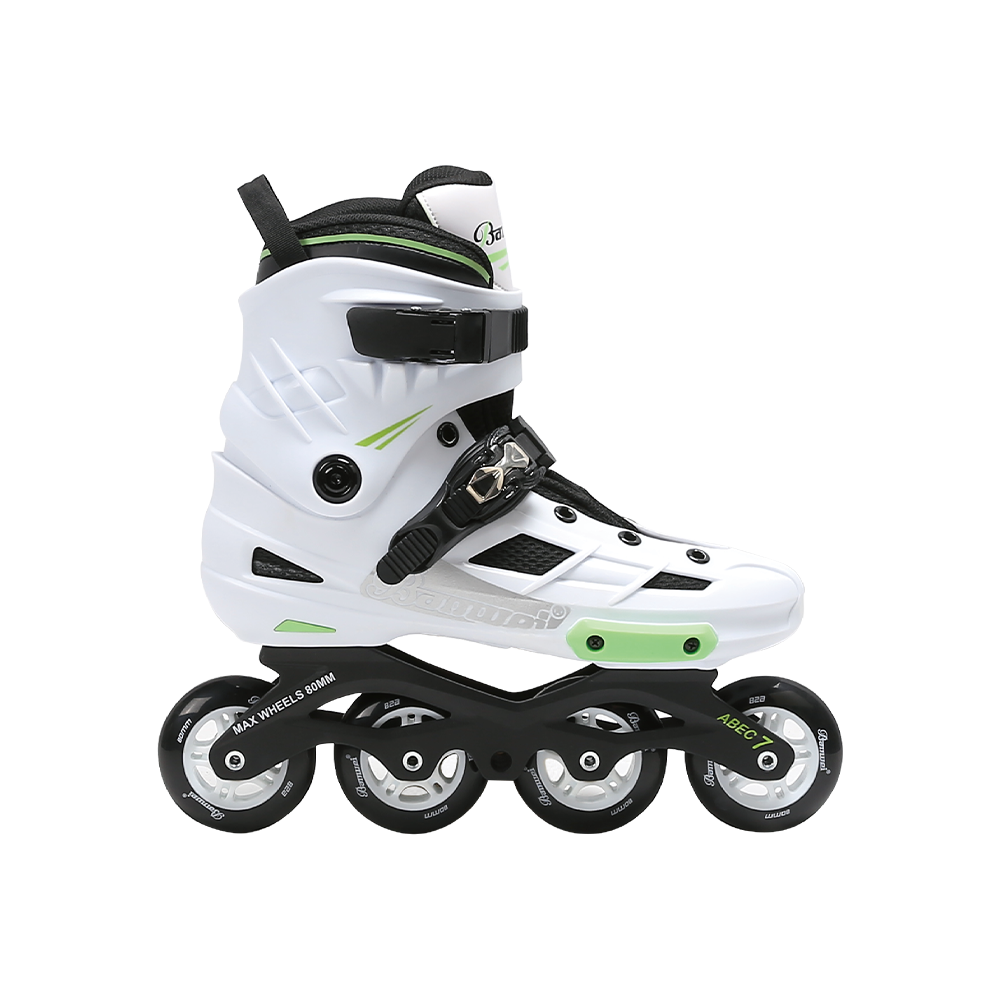
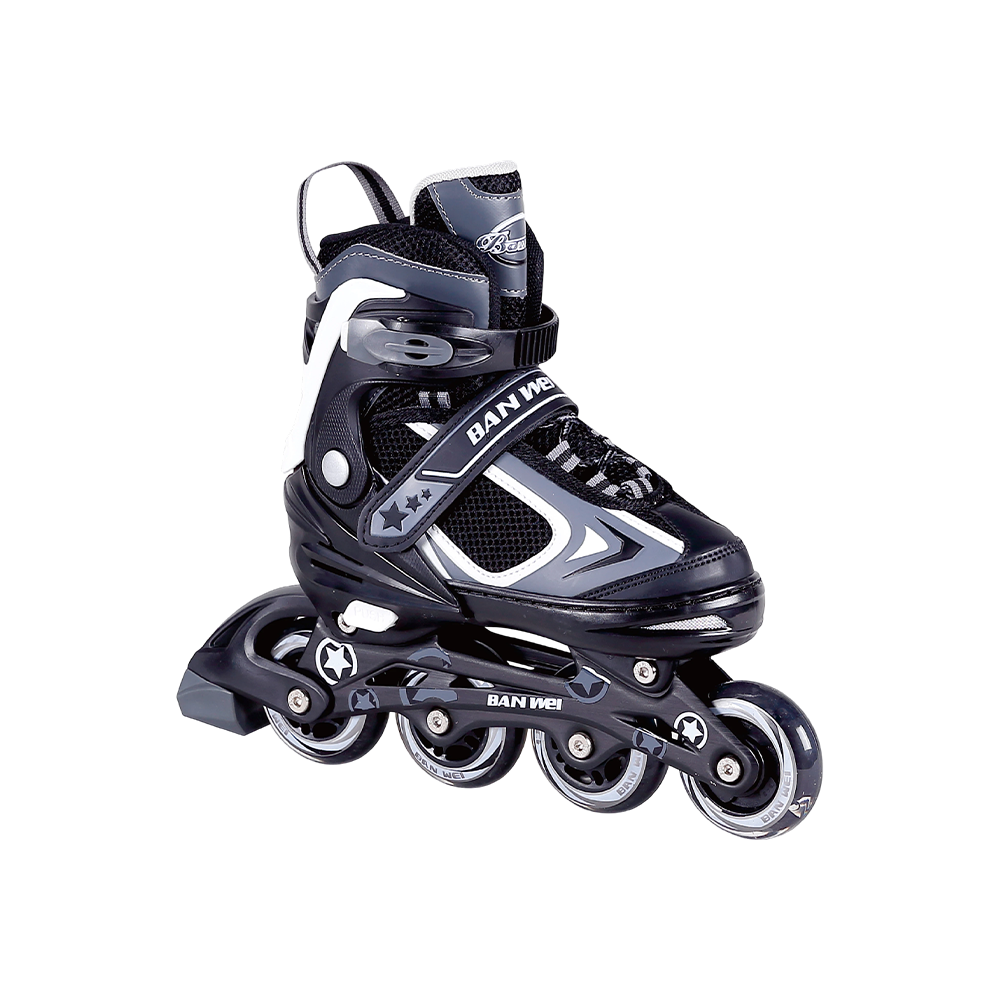
Choosing the right inline skate is one of the most important decisions for anyone who wants to enjoy skating safely, improve technique, or build a consistent fitness routine. While adjustable skates are convenient for growing children and occasional users, many teenagers, adults, and experienced beginners eventually need a more secure and responsive fit. A skate that is too loose can reduce control, waste energy, create instability, and make technical progress more difficult. The BW-229 Fixed Size Inline Skate is designed to address these concerns with a firm, one-piece construction, durable materials, stable support, and a professional-style wheel and frame system.
Unlike adjustable inline skates that depend on sliding mechanisms, movable shells, and internal sizing components, the BW-229 focuses on a precise fixed-size structure. It is available in several size ranges from 37/38 through 45/46, making it suitable for teenagers, adults, and older children whose feet have reached a relatively stable size. The close fit helps reduce unwanted movement inside the boot and supports more direct power transfer from the foot to the frame and wheels.
The skate is intended for several types of use. It can be used for casual skating in parks, city plazas, smooth outdoor trails, and other regular flat surfaces. It is also suitable for basic fitness training and more advanced practice involving turns, direction changes, braking, and controlled acceleration. Its reinforced aluminum frame, carbon steel bearings, PU wheels, safety brake, composite upper, and cushioned lining combine to create a product that balances stability, comfort, durability, and value.
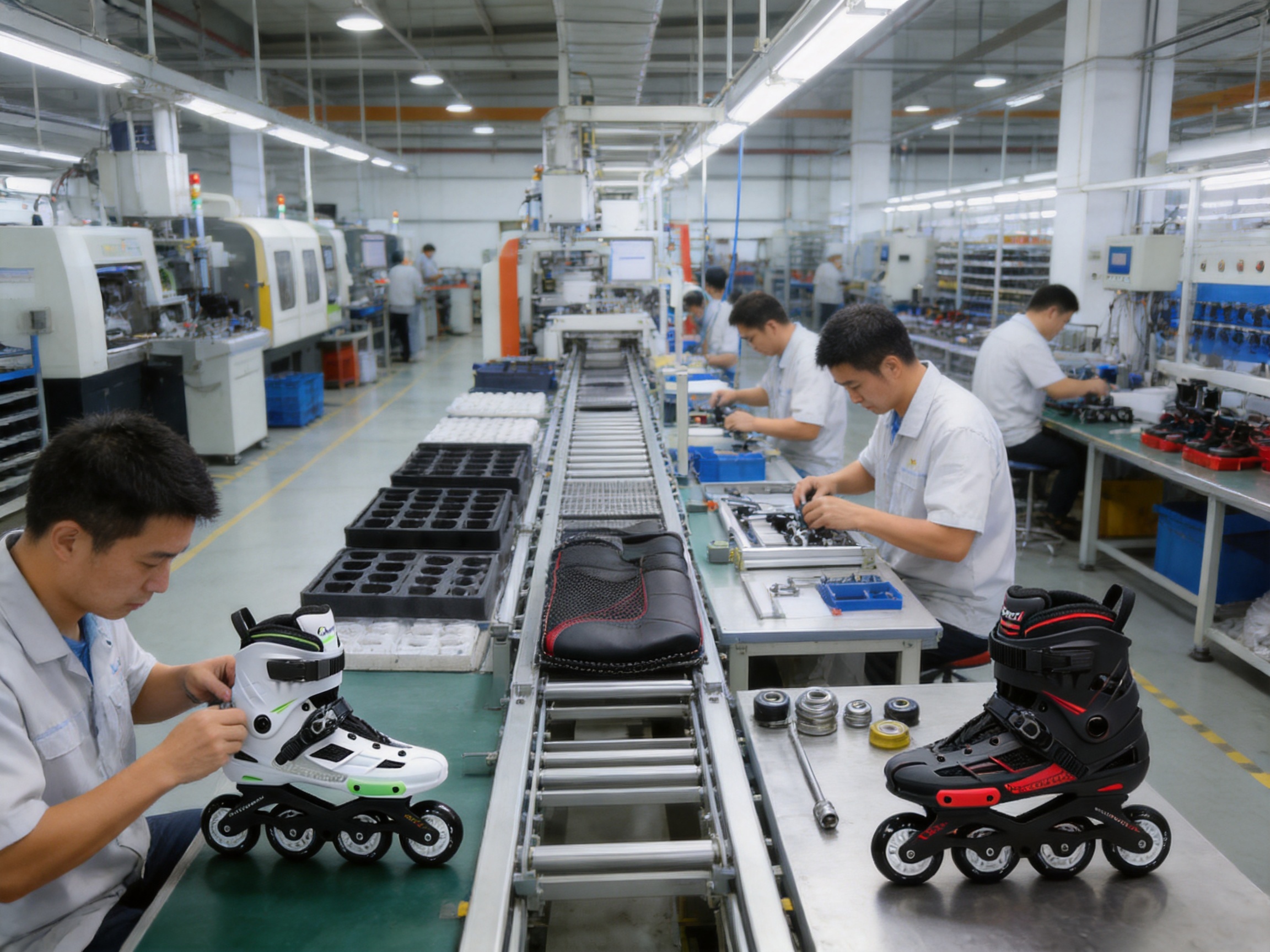
Beyond the product itself, the manufacturing capabilities behind this skate are also important. Ningbo Feile Sporting Goods Co., Ltd. operates a large production facility with automatic production lines, mold and injection molding workshops, sewing and assembly departments, and a dedicated research and development engineering team. These resources allow the company to manage multiple stages of production internally, improve consistency, develop new designs, and provide OEM support for international customers.
This article examines the BW-229 in detail, explains its advantages over ordinary adjustable entry-level skates, discusses its construction and applications, and explores the manufacturing strengths that support its quality and commercial potential.
BW-229 Fixed Size Inline Skate
Product Positioning and Core Design Philosophy
The BW-229 is a fixed-size inline skate designed for users who prioritize a stable and close-fitting skating experience. Its design philosophy is based on a simple principle: when the skate fits securely, the skater can control movement more accurately. A fixed shell avoids the looseness that may develop when adjustable components are repeatedly extended, retracted, or exposed to impact. This makes the skate especially useful for users who want to move beyond casual experimentation and begin developing reliable skating habits.
The product is positioned between basic recreational skates and higher-level training equipment. It offers many of the structural advantages associated with more supportive skates while maintaining an accessible price point. Users do not necessarily need to make frequent upgrades as their ability improves because the skate is designed to support casual use, regular fitness, and foundational technical training.
The available fixed-size ranges include 37/38, 39/40, 41/42, 43/44, and 45/46. This range covers a broad section of the teenage and adult market. Since fixed-size products are not intended to accommodate large changes in foot length, customers should select the size that most closely matches their actual foot measurements. The result should be a snug fit without excessive pressure or discomfort.
A close fit is particularly valuable during turning and braking. In a loose skate, the foot may shift inside the shell before the frame responds. That delay can make the skater feel unstable and can reduce confidence. In the BW-229, the one-piece molded structure helps keep the foot aligned with the frame. This supports smoother movements and more even weight distribution across the ankle, heel, and forefoot.
Fixed Size Versus Adjustable Construction
Adjustable inline skates are popular because one pair can accommodate some foot growth. This makes them practical for younger children and families seeking a temporary recreational product. However, the adjustment mechanism introduces additional moving parts. Over time, these parts may become loose, damaged, or less precise. The shell may also feel less rigid when it is extended to a larger size.
The fixed-size construction of the BW-229 eliminates the need for these adjustment gaps. Its molded upper and shell create a more unified structure, allowing the frame and boot to work together as a stable platform. For teenagers and adults with established foot sizes, this can provide a more direct and controlled skating experience.
The advantage is not simply a tighter feeling. A well-fitted fixed skate can help the user apply pressure more effectively when accelerating, leaning into a turn, or practicing a controlled stop. When the foot remains in the intended position, less energy is lost through internal movement. This can make skating feel smoother and more efficient.
Key Product Advantages
Stable and Wobble-Free Gliding
Stability is one of the main strengths of the BW-229. The fixed-size upper is designed to offer greater rigidity than many adjustable beginner skates. This rigidity helps reduce unwanted flex and movement when the skater changes direction, shifts body weight, or applies stronger pressure through the feet.
For new skaters, stability can make the learning process less intimidating. A secure skate helps them concentrate on posture, balance, and basic forward movement instead of constantly correcting movement caused by a loose boot. For more experienced users, the same stability can support technical practice such as crossovers, controlled turns, edge transitions, and braking drills.
The frame also contributes to stability. A thickened aluminum frame creates a firm connection between the boot and the wheelset. Aluminum is widely used in performance-oriented skate structures because it can provide strength while maintaining a relatively manageable weight. In the BW-229, the frame is intended to withstand regular skating and repeated training without easily deforming.
Strong Fit and Efficient Power Transfer
Power transfer describes how efficiently the force generated by the skater’s foot reaches the wheels. If the foot moves inside the boot, some of that force is absorbed by the lining, shell, or loose closure rather than being transferred to the frame. A fixed-size skate minimizes this issue by holding the foot more securely.
The one-piece molded design helps support even pressure distribution. Instead of allowing the heel or forefoot to shift independently, the boot keeps the foot aligned with the skate. This can be particularly helpful when accelerating or pushing laterally. The skater receives a more immediate response from the wheels, which can improve confidence and reduce unnecessary effort.
Efficient power transfer is also useful for fitness users. When the skate responds consistently, the user can maintain a steady rhythm and focus on endurance. During longer sessions, a stable structure may reduce the need for repeated corrections, allowing the skater to concentrate on movement quality and overall comfort.
Durable Composite Upper
The upper combines thickened synthetic leather with breathable mesh. This combination is intended to balance protection, durability, and ventilation. Synthetic leather provides resistance against everyday wear, minor abrasion, and repeated flexing, while mesh sections help support air circulation and heat dissipation.
Breathability is important because inline skating is an active sport. Feet can become warm and damp during extended sessions, particularly during summer use or high-intensity training. The breathable sections are designed to encourage airflow, while the soft lining helps maintain a more comfortable internal environment.
The upper is reinforced for regular use. A durable outer material can help the skate maintain its appearance and structure over time, especially when it is used frequently on outdoor surfaces. Although no skate is completely immune to damage caused by misuse, the construction is intended to withstand the demands of routine recreational skating and training.
Cushioned Interior and Extended Comfort
Comfort is essential for users who plan to skate for more than a few minutes at a time. The BW-229 includes a high-density cushioned lining designed to support the foot and ankle during movement. The lining helps reduce pressure points and provides a softer interface between the foot and the structured outer shell.
A properly cushioned interior can also reduce the risk of irritation caused by repeated rubbing. This is especially important for beginners, who may not yet have developed efficient skating movements. The combination of a snug fit and soft internal padding helps the skate remain secure without feeling excessively harsh.
Customers should still wear suitable sports socks and select the correct size. Cushioning cannot compensate for a boot that is significantly too small or too large. A correct fit allows the lining to perform its intended function while preserving ankle support and circulation.
Wheelset and Bearing Performance
High-Elasticity PU Wheels
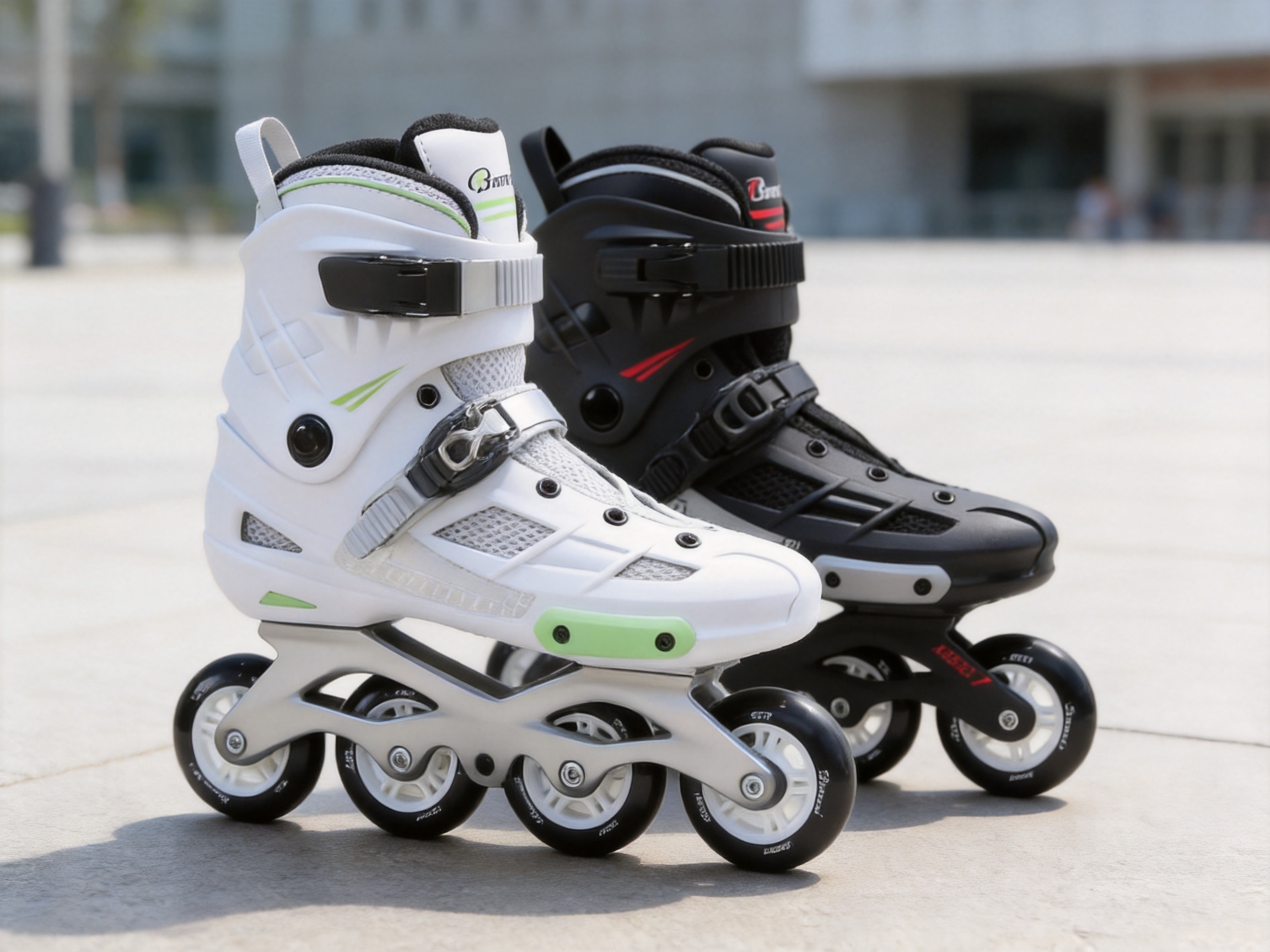
The BW-229 uses high-elasticity, wear-resistant PU wheels. Polyurethane is widely selected for inline skate wheels because it can offer a useful combination of grip, rebound, durability, and smooth rolling. Compared with very soft materials, PU wheels can maintain their shape more effectively under normal use. Compared with extremely hard wheels, they can provide a more comfortable ride on regular flat surfaces.
The wheelset is designed for indoor gyms, smooth plazas, park paths, city recreation areas, and similar environments. It is not intended to make rough gravel, broken pavement, wet ground, or heavily damaged surfaces safe for skating. Users should always select a smooth, dry, and suitable skating area.
High elasticity helps the wheels return energy during each stride. This can contribute to a more responsive skating feel, particularly when the user maintains a consistent rhythm. Wear resistance is equally important because frequent training can quickly expose weaknesses in low-quality wheels. The BW-229 wheel material is intended to support repeated use while retaining reliable rolling characteristics.
Smooth, Quiet Rolling
Noise and vibration can influence the overall skating experience. Wheels with an appropriate material formulation and accurate production can roll more quietly across suitable surfaces. The BW-229 is designed to provide smooth and relatively quiet gliding, making it appropriate for leisure skating in places where excessive noise would be undesirable.
Smooth rolling also helps users maintain control. Wheels that hesitate, jam, or produce irregular resistance can interrupt a stride and make balance more difficult. Consistent rolling allows the skater to anticipate how the skate will respond during acceleration, cruising, and deceleration.
Carbon Steel Bearings
The skate includes high-precision carbon steel bearings. Bearings reduce friction between the wheel and axle, allowing the wheels to rotate with less rolling loss. Precision and appropriate assembly are important because even a good wheel can perform poorly if the bearing fit is inconsistent.
For casual users, smooth bearings make skating easier and more enjoyable. For training users, they help create repeatable movement. A predictable wheel response allows the skater to practice speed control, turns, and stopping without dealing with unnecessary mechanical resistance.
As with all bearings, maintenance influences service life. Users should avoid prolonged exposure to water, mud, and corrosive substances. After outdoor use, the skates should be stored in a dry, ventilated location. Regular inspection can help identify dirt buildup, unusual noise, or reduced rotation before these issues become more serious.
Frame, Brake, and Protective Structure
Reinforced Aluminum Frame
The frame is the structural bridge between the boot and the wheels. The BW-229 uses a thickened aluminum frame with a balanced design intended to support stability, load-bearing strength, and efficient power transmission.
A strong frame is important because it receives repeated force during every stride, turn, landing, and stop. It must remain aligned while carrying the user’s weight and transmitting lateral pressure to the wheels. A frame that bends or becomes misaligned can negatively affect balance and wheel contact. The reinforced construction of the BW-229 is intended to reduce these risks during normal use.
The balance of the frame also matters. Excessive weight can cause fatigue, while insufficient structural support may reduce control. The product is designed to provide a practical middle ground for recreational and training applications.
Rear-Mounted Safety Brake
A rear-mounted brake is included as standard equipment. The brake provides a practical method for slowing down and stopping, especially for beginners who are still developing confidence with alternative stopping techniques.
Braking should be practiced in a clear, dry area at low speed before the skater attempts faster movement. The user should maintain a stable posture, bend the knees slightly, keep the body controlled, and apply the brake gradually. Sudden or excessive pressure may affect balance. Experienced users may use other braking methods, but the standard brake remains useful for emergency speed control and everyday safety.
Having a brake included also broadens the product’s appeal. Parents and new adult skaters often prefer a skate that provides a familiar stopping option. Retailers can present the BW-229 as a product suitable for both skill development and practical recreational use.
Overall Protective Support
The boot, frame, wheelset, and brake work together as a protective structure. The boot supports the ankle, the frame helps maintain alignment, the wheels provide controlled movement, and the brake assists with speed reduction. This integrated approach is more effective than evaluating any single component in isolation.
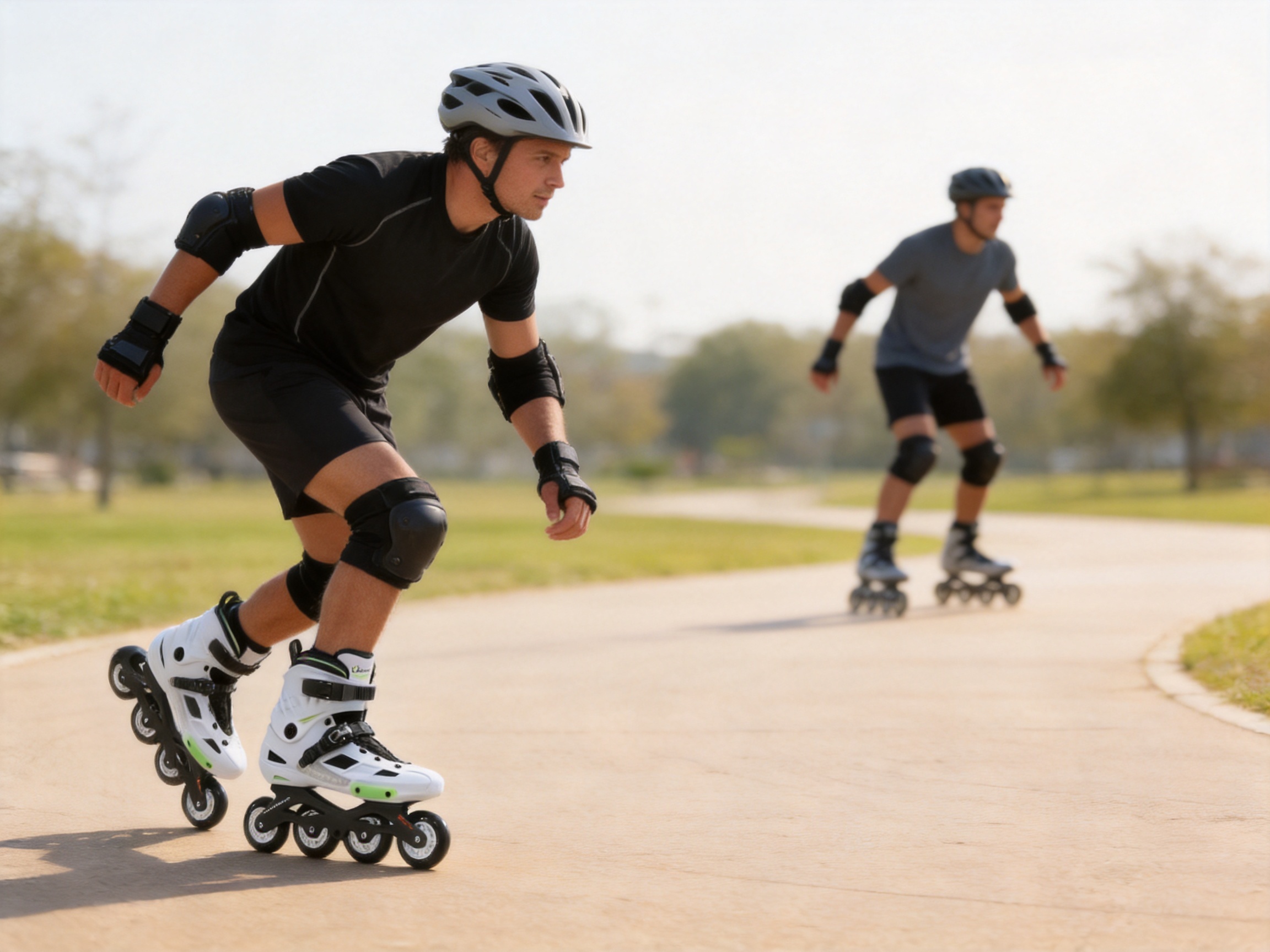
Skaters should still wear a helmet, wrist guards, elbow pads, and knee pads, particularly during early training or outdoor use. Inline skates can reduce risk through stable design, but no product can eliminate the possibility of falls. Protective equipment and responsible skating habits remain essential.
Performance in Different Use Scenarios
Daily Leisure Skating
The BW-229 is suitable for casual skating in parks, city squares, leisure trails, and smooth outdoor areas. Its fixed fit provides a stable platform for users who want to enjoy skating without dealing with a loose or shifting adjustable boot.
For leisure use, comfort and ease of control are often more important than maximum speed. The cushioned lining, breathable upper, PU wheels, and rear brake support a relaxed skating experience. Users can move at a moderate pace, practice basic turns, and enjoy outdoor activity with family or friends.
Advanced Foundation Training
The skate is also designed for users who want to improve their technique. It can support training in turning, shifting weight, changing direction, and braking. The firm structure provides more immediate feedback than a soft or overly flexible recreational skate.
When practicing, skaters should begin with posture and balance. The knees should remain slightly bent, the torso should stay relaxed, and the arms should be used for balance rather than excessive movement. Once basic gliding becomes stable, the user can gradually practice wider turns, tighter turns, controlled stops, and direction changes.
A fixed-size skate can be especially useful during this stage because the student receives more consistent feedback from the equipment. If the skate shifts unpredictably, it becomes harder to determine whether a problem comes from technique or from the product. A stable skate makes training results easier to evaluate.
Fitness and Aerobic Exercise
Inline skating can provide effective aerobic exercise while engaging the lower body, core, and stabilizing muscles. Regular skating may help develop leg strength, coordination, balance, and cardiovascular endurance. The BW-229 is suitable for users who want to incorporate skating into a daily or weekly fitness routine.
Beginners should start with short sessions and moderate speeds. As balance and endurance improve, they can gradually increase the duration of each session. The skate’s smooth wheelset and supportive frame help users maintain a consistent rhythm on appropriate surfaces.
Fitness users should warm up before skating and cool down afterward. They should also inspect the route for cracks, loose stones, wet patches, traffic, pedestrians, and other hazards. Good route selection is an important part of safe and productive training.
Advantages Over Ordinary Adjustable Entry-Level Skates
| Feature | BW-229 Fixed-Size Inline Skate | Typical Adjustable Entry-Level Skate | Practical Benefit |
|---|---|---|---|
| Fit structure | One-piece fixed-size design | Sliding or expandable sizing system | More consistent foot placement and reduced internal movement |
| Support | Rigid upper and reinforced frame | Often softer or more flexible construction | Improved stability during turns and direction changes |
| Power transfer | Direct connection between foot, boot, frame, and wheels | Possible energy loss through adjustment gaps | More efficient pushing and acceleration |
| Durability | Fewer adjustable parts and reinforced materials | More moving components subject to wear | Better suitability for repeated training |
| Wheelset | Wear-resistant PU wheels and carbon steel bearings | Basic wheel and bearing specifications may vary | Smoother and more predictable rolling |
| Brake | Standard rear-mounted safety brake | May vary according to model | Convenient speed control for new skaters |
| User profile | Teenagers, adults, older children, and developing skaters | Growing children and occasional beginners | Better matching for users with stable foot sizes |
The table shows that adjustable skates remain useful in the right situation. They are practical for children whose feet are still growing and for families who need a flexible size range. However, they may not provide the same degree of rigidity or precision as a fixed-size skate.
The BW-229 is particularly advantageous for users who have already decided to practice regularly. Instead of treating the skate as a temporary item, they can use it as a longer-term training and fitness tool. The fixed structure reduces the likelihood that the product will feel loose as the user develops stronger skating movements.
Durability is another important point of comparison. Every adjustable mechanism introduces an additional area that may require attention. By eliminating the need for size adjustment, the BW-229 uses a more straightforward construction. This does not mean maintenance is unnecessary, but it can reduce the number of components that may loosen or wear during ordinary use.
Manufacturing Strengths and Production Capabilities
Established Sporting Goods Experience
Ningbo Feile Sporting Goods Co., Ltd. was established in 2010 and specializes in children’s scooters, inline skates, roller skates, and ice skates. This focused product experience allows the company to understand the structural, safety, comfort, and appearance requirements of wheeled sports equipment.
Product development in this field requires cooperation between material selection, industrial design, mold development, sewing, assembly, testing, and quality management. A manufacturer that works across several related categories can apply experience from one product line to another. For example, knowledge of wheel systems, protective structures, injection-molded components, and child-oriented safety requirements can support the development of improved skating products.
Large Workshop and Automatic Production Lines
The company operates a 20,000-square-meter workshop with more than 200 employees and five advanced automatic production lines. This scale provides important advantages for production planning and order management. Automatic production can help improve repeatability, reduce variation, and maintain consistent output across larger orders.
For international customers, production capacity is often as important as product design. A supplier must be able to maintain stable quality while meeting agreed delivery schedules. Multiple production lines can provide greater flexibility when different models, sizes, colors, or customer specifications need to be handled within the same period.
Automation does not replace skilled personnel. It works together with engineers, line workers, quality teams, and production managers. The best results come from combining accurate equipment with clear operating procedures, material control, inspection standards, and experienced supervision.
Integrated Mold and Injection Molding Workshops
The company has mold and injection molding workshops, allowing it to manage important plastic components internally. Mold control is valuable because the accuracy of a mold directly influences the consistency of the final product. Small variations in shell dimensions, structural ribs, mounting points, or adjustment interfaces can affect fit and performance.
Internal mold capability can also accelerate product development. When a new skate or scooter design requires changes, engineers can coordinate more directly with mold technicians. This can shorten communication cycles and make it easier to refine prototypes before mass production.
Injection molding is used for many components in skating equipment. Proper control of material temperature, pressure, cooling, and cycle time helps ensure that parts achieve the intended strength and dimensional accuracy. Consistent molding supports reliable assembly and helps reduce defects caused by warping, incomplete filling, or uneven surfaces.
Sewing and Assembly Departments
Inline skates are not made only from rigid molded parts. The upper, lining, padding, straps, collars, and other textile components require accurate cutting and sewing. The company’s sewing workshop supports the production of these soft components and contributes to comfort, fit, and appearance.
Assembly is another critical stage. The boot must be correctly connected to the frame, wheels must be installed with proper alignment, bearings must be seated correctly, and the brake must be secured. A well-organized assembly process helps ensure that the complete skate performs as intended rather than merely meeting the specifications of individual parts.
Inspection should cover both appearance and function. Teams may check stitching, shell surfaces, wheel rotation, frame alignment, fastening points, brake installation, and overall fit. These checks help identify problems before products are packed and shipped.
Research and Development Engineering Team
The company has a professional R&D engineering team and more than 30 college-educated management staff. Engineering capability is important for a product such as the BW-229 because fixed-size skates must balance support and comfort carefully. A shell that is too soft may feel unstable, while one that is excessively rigid may become uncomfortable. The frame must provide strength without creating unnecessary weight, and the wheelset must suit the intended user and surface conditions.
Research and development can include material evaluation, structural refinement, prototype testing, size development, appearance design, and market feedback analysis. Continuous improvement helps manufacturers respond to changing customer preferences and retailer requirements.
Quality, Certification, and International Supply
Feile has passed ISO9001, BSCI, and Kmart factory certification systems. These certifications and audits indicate attention to quality management, social compliance, and factory operating practices. They are valuable for international buyers who need confidence in a supplier’s production environment and management systems.
The company’s products have received certifications including 3C, CE, EN71, EN62115, ASTM, EMC, and EN13843:2009. Specific certification applicability depends on the product category, market, model, and applicable testing requirements. Buyers should confirm the relevant documentation for the exact product and destination market before placing an order.
International compliance is more than a marketing statement. It requires documentation, testing, traceability, production control, and attention to labeling and packaging. A supplier familiar with different certification systems can help customers reduce delays during product approval and import preparation.
The company also participates in international exhibitions. Exhibition participation allows manufacturers to collect market feedback, observe competitor developments, meet distributors, and present new products. It can also help overseas customers evaluate product ranges and discuss OEM or private-label opportunities directly with the factory team.
OEM and Customization Potential
As an OEM sports equipment manufacturer, Feile can support customers seeking products for retail, e-commerce, sports schools, distributors, and branded collections. The BW-229 can serve as a starting point for discussions regarding size combinations, colors, packaging, logos, materials, and market positioning.
OEM cooperation requires more than placing a logo on an existing item. Successful projects depend on clear specifications, confirmed samples, packaging approval, production schedules, inspection procedures, and communication between the buyer and factory. A manufacturer with internal mold, injection molding, sewing, and assembly resources can provide a more coordinated development process.
Potential customization areas may include upper colors, graphic patterns, logo placement, packaging artwork, instruction manuals, size labeling, wheel specifications, and regional product configurations. Any proposed change should be evaluated for safety, durability, production feasibility, and certification impact.
For retailers, the fixed-size format offers useful merchandising opportunities. It can be positioned as a more supportive alternative to basic adjustable skates. Product descriptions can emphasize stability, durable construction, training suitability, breathable materials, PU wheels, aluminum frame support, and included braking equipment.
Recommended Customer Groups
Teenagers and Older Children
The BW-229 is appropriate for older children and teenagers whose feet are no longer changing rapidly. These users may be ready to move from adjustable recreational skates to a more secure fixed-size model. Parents should confirm the child’s foot measurement, skating ability, protective equipment, and intended skating environment before purchase.
Adult Beginners
Adults who are new to inline skating often benefit from equipment that feels stable and predictable. The BW-229 provides a firm fit, supportive upper, rear brake, and smooth wheelset. These features can help reduce the uncertainty that beginners sometimes experience when learning to stand, glide, turn, and stop.
Fitness Skaters
Users who plan to skate regularly for exercise may appreciate the durability and direct response of a fixed-size product. The skate can support repeated sessions on suitable flat surfaces, provided that it is correctly maintained and used within its intended environment.
Developing Technical Skaters
Skaters working on turns, direction changes, shifting, and braking can benefit from the firm connection between the foot and the frame. The product is not presented as a specialized professional racing skate, but it provides a stable foundation for users who want to develop stronger basic and intermediate skills.
Care, Maintenance, and Safe Use
Proper maintenance helps preserve skating performance. After each session, users should inspect the wheels, bearings, frame, brake, fasteners, and upper. They should look for loose components, unusual wear, cracks, damaged stitching, or changes in wheel rotation.
Wheels may wear unevenly depending on skating style and turning direction. Rotating or replacing wheels according to the manufacturer’s maintenance guidance can help maintain balanced performance. Bearings should be kept reasonably clean and dry. Water exposure should be avoided because it can cause corrosion and reduce smoothness.
The skates should be stored in a dry, ventilated place away from extreme heat. They should not be left in direct sunlight for extended periods or placed near strong heat sources. After use, users can remove excess moisture and allow the interior to air out before storing the skates in a bag or cabinet.
Safe use begins with the skating surface. Smooth, dry, level areas are preferred. Wet pavement, loose gravel, sand, broken concrete, steep slopes, and heavy traffic create additional hazards. Users should obey local regulations, remain aware of pedestrians, and avoid skating beyond their skill level.
Protective equipment is strongly recommended. A certified helmet, wrist guards, elbow pads, and knee pads can reduce the severity of common skating injuries. Beginners should practice near a safe open area and learn how to slow down before attempting higher speeds.
Commercial Value for Distributors and Retailers
The BW-229 offers a clear product story for distributors and retailers. It can be presented as a fixed-size upgrade for users who have outgrown adjustable skates or want a more stable training product. The combination of professional appearance, practical price positioning, durable materials, and multiple adult sizes gives retailers a broad target market.
Its product benefits are easy to communicate. The fixed structure supports a snug fit, the composite upper balances durability and ventilation, the cushioned lining improves comfort, the aluminum frame supports stability, the PU wheels provide smooth rolling, and the rear brake offers practical speed control.
The product can also be included in several sales categories. It may be marketed as recreational sports equipment, outdoor fitness equipment, beginner-to-intermediate skating gear, or a training-oriented inline skate. This flexibility is helpful for distributors serving sporting goods stores, online marketplaces, sports clubs, and school activity programs.
From a sourcing perspective, the manufacturer’s integrated facilities and international certification experience can simplify cooperation. Buyers can discuss product development, packaging, documentation, and production requirements with a factory that already works across multiple skating categories.
Q&A
What type of skate is the BW-229?
The BW-229 is a fixed-size inline skate designed for teenagers, adults, older children, casual skating, fitness, and foundational technical training. It is not an adjustable growth skate.
What sizes are available?
The listed fixed-size ranges are 37/38, 39/40, 41/42, 43/44, and 45/46. Customers should select the size that corresponds most closely to their actual foot measurement.
Who should choose a fixed-size inline skate?
Fixed-size skates are suitable for users whose feet have reached a relatively stable size and who want a close, supportive fit. They are especially useful for teenagers, adults, regular fitness skaters, and users developing better skating technique.
Are fixed-size skates better than adjustable skates?
Neither design is best for every user. Adjustable skates are useful for growing children and occasional users who need flexible sizing. Fixed-size skates generally provide a more direct fit, stronger support, and fewer adjustment components for users with stable foot sizes.
What surfaces are suitable for the BW-229?
The skate is intended for smooth, dry, regular surfaces such as indoor gyms, outdoor plazas, park paths, and suitable leisure trails. Rough, wet, sandy, broken, or heavily uneven surfaces should be avoided.
Does the skate include a brake?
Yes. A rear-mounted safety brake is included as standard equipment to assist with speed control and stopping.
Are the wheels suitable for quiet skating?
The high-elasticity PU wheels are designed for smooth and relatively quiet rolling on suitable flat surfaces. Actual noise levels depend on the surface, skating speed, wheel condition, and maintenance.
What makes the upper comfortable?
The upper combines durable synthetic leather with breathable mesh, while the interior includes high-density cushioning. This combination is intended to balance support, ventilation, and comfort during extended use.
Is the BW-229 suitable for professional racing?
The BW-229 is designed for leisure skating, fitness, and advanced foundation training. It should not automatically be classified as a specialized racing skate. Professional racers should select equipment designed specifically for their discipline and performance requirements.
What safety equipment should be worn?
Users should consider wearing a certified helmet, wrist guards, elbow pads, and knee pads. Protective equipment is especially important for beginners, children, and users practicing new techniques.
What manufacturing capabilities does the supplier have?
The company operates a 20,000-square-meter workshop with more than 200 employees, five automatic production lines, mold and injection molding workshops, sewing and assembly departments, and an R&D engineering team. These capabilities support coordinated production and OEM development.
Can the product be customized for OEM orders?
OEM discussions may include colors, logos, packaging, artwork, materials, size combinations, and other specifications. Final customization depends on order quantities, technical feasibility, safety requirements, and certification needs.
Conclusion
The BW-229 Fixed Size Inline Skate is designed for users who want more than a temporary adjustable skate. Its fixed-size construction provides a firm and secure fit, helping reduce internal movement and improve control. The reinforced aluminum frame, high-precision carbon steel bearings, wear-resistant PU wheels, cushioned lining, breathable composite upper, and rear-mounted brake create a balanced product for casual skating, fitness, and technical foundation training.
Its main advantage over ordinary adjustable entry-level skates is the combination of stability, direct power transfer, and simplified fixed construction. For teenagers, adults, and older children with established foot sizes, this can create a more predictable and supportive skating experience. The product is also positioned as a value-oriented option for users who want to continue practicing without needing frequent equipment upgrades.
The manufacturing strengths behind the product add further value. Ningbo Feile Sporting Goods Co., Ltd. combines industry experience, automatic production lines, internal mold and injection molding resources, sewing and assembly workshops, engineering support, quality systems, international certifications, and OEM service capabilities. These advantages make the company a suitable sourcing partner for distributors, retailers, private-label brands, and sports equipment buyers seeking reliable skating products.
With correct sizing, suitable protective equipment, proper maintenance, and responsible use, the BW-229 can support a wide range of skating activities. It offers a practical combination of comfort, support, durability, and performance for users who are ready to progress beyond basic adjustable equipment.
References
1. Product specification and technical description for the BW-229 Fixed Size Inline Skate, supplied materials.
2. Ningbo Feile Sporting Goods Co., Ltd. company profile and manufacturing information, supplied materials.
3. General principles of inline skate fitting, wheel construction, bearing maintenance, and recreational skating safety.
4. ISO 9001 quality management principles and supplier quality-control practices.
5. General guidance related to personal protective equipment for recreational wheeled sports.
6. General product development principles for molded plastics, sewn sports uppers, aluminum frames, polyurethane wheels, and sporting goods assembly.
Product: BW-229 Fixed Size Inline Skate

Recommended Articles

Get in Touch
Your email address will not be published. Required fields are marked *
Have a project in mind? Contact with us!
We are happy to answer your questions. Please fill out this form
and one of our professional team will get back to you as soon as possible.

We specialize in producing various types of children's toy cars, children's skateboards, and ice skates.
