
 En
 Español
 русский
 عربى

BW-228 Speed Inline Skate: A Practical Guide to High-Speed Design, Adjustable Fit, and OEM Manufacturing Value
Date:Oct 29, 2026
Content
- 1 Introduction
- 2 Product Positioning and Core Design
- 3 Performance Advantages Compared with Conventional Recreational Skates
- 4 Applications Across Different User Groups
- 5 Construction Details and Functional Benefits
- 6 OEM Customization and Commercial Value
- 7 Advanced Manufacturing Capabilities
- 8 Research, Development, and Product Improvement
- 9 Quality Management and Certifications
- 10 Recommended Use and Safety Considerations
- 11 Purchasing Considerations for Importers and Distributors
- 12 Comparison with Other Product Types
- 13 Maintenance and Service Life
- 14 Environmental and Operational Efficiency
- 15 Q&A
- 15.1 What type of skate is the BW-228?
- 15.2 What sizes are available?
- 15.3 Why does the skate use three large wheels?
- 15.4 Is the BW-228 suitable for beginners?
- 15.5 Can the frame be customized with a logo?
- 15.6 What surfaces are appropriate for use?
- 15.7 What protective equipment should users wear?
- 15.8 What makes the frame important?
- 15.9 How should the skates be maintained?
- 15.10 What manufacturing strengths support the product?
- 15.11 Can the product be used for OEM orders?
- 16 Conclusion
- 17 References
- 18 Product: BW-228 Speed Inline Skate
Introduction
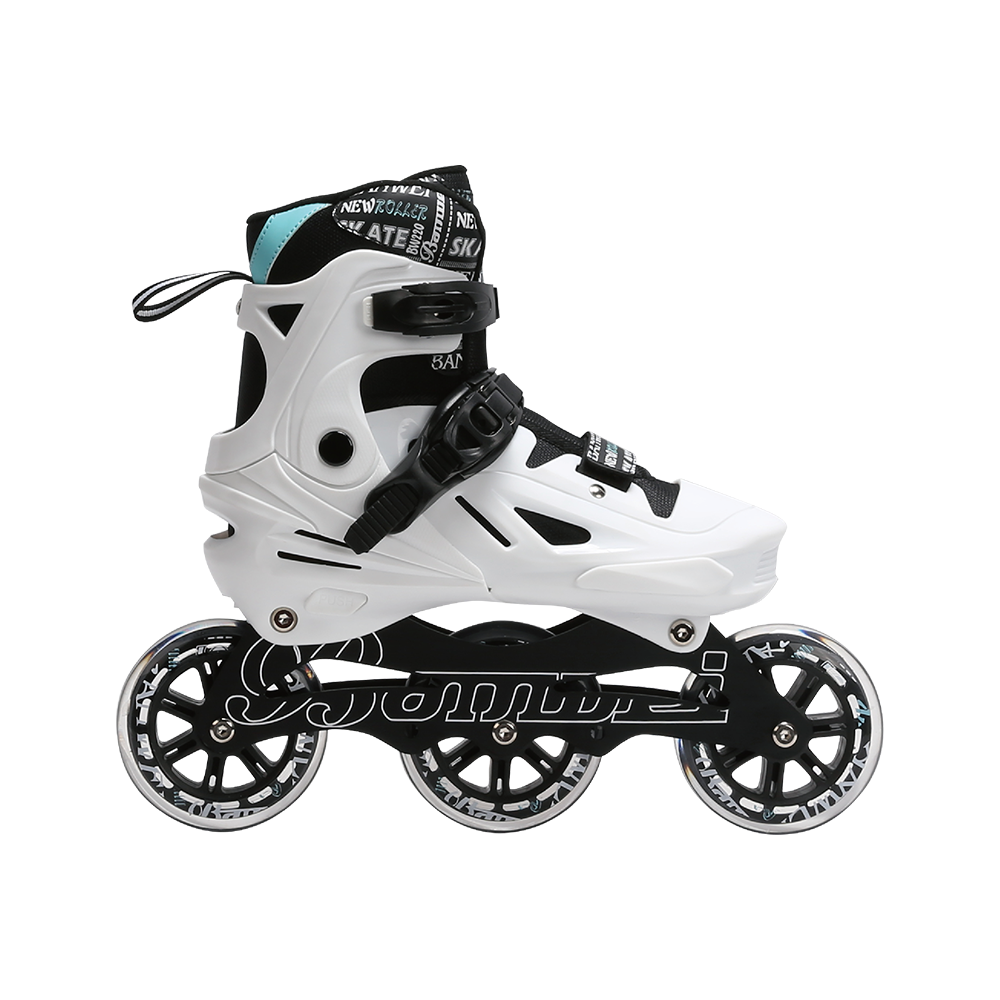
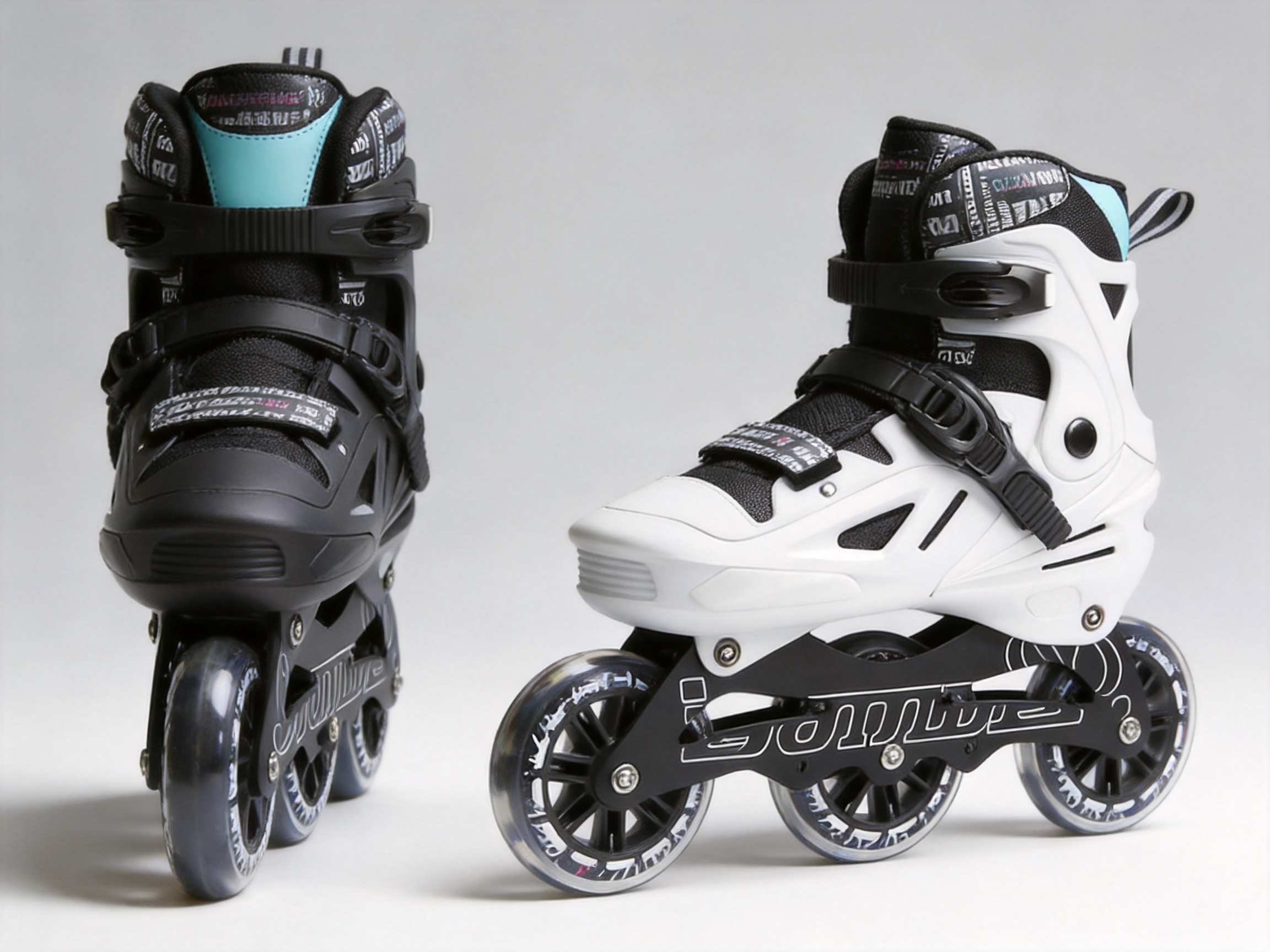
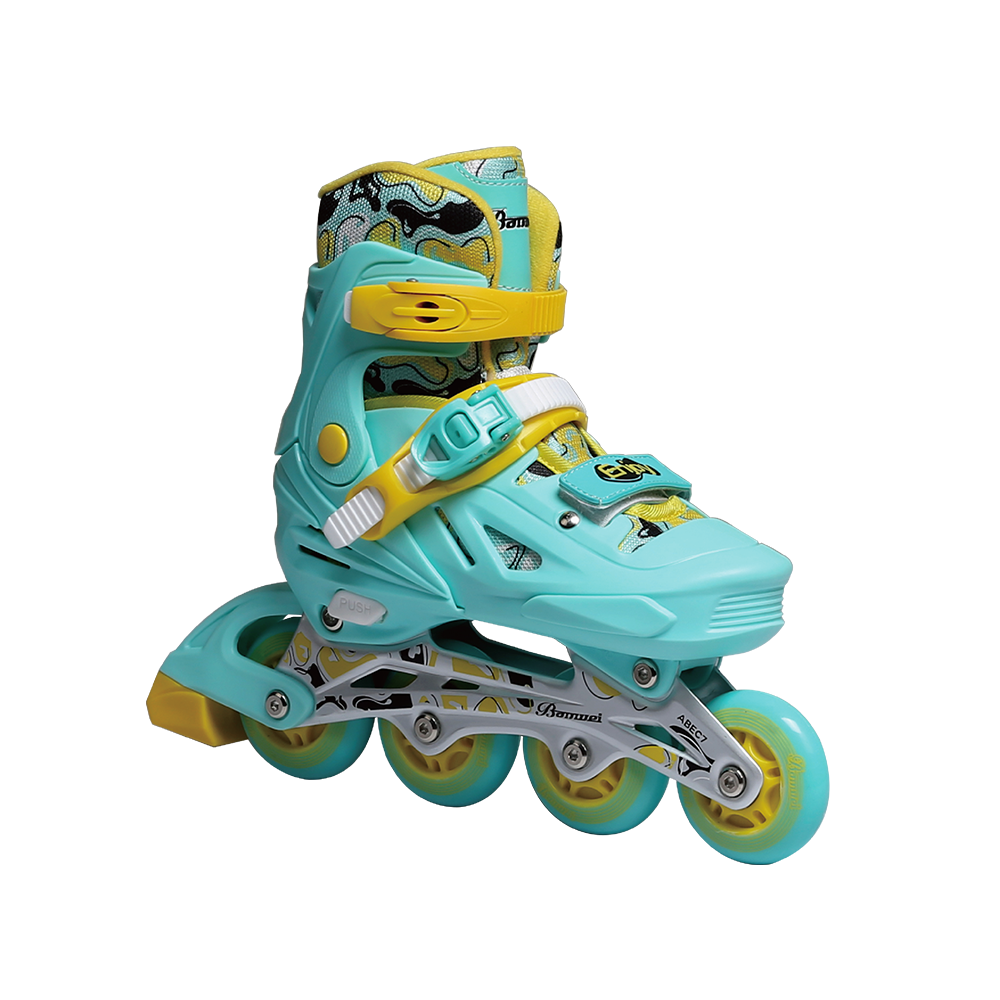
The BW-228 speed inline skate is a three-wheeled, large-wheel inline skate developed for users who want efficient outdoor skating, higher cruising speed, and greater comfort during longer rides. Unlike conventional four-wheeled recreational inline skates, this model uses an oversized three-wheel configuration that reduces rolling resistance and supports rapid acceleration. Its adjustable sizing, reinforced aluminum frame, breathable upper, cushioned lining, and high-speed carbon steel bearings make it suitable for speed skating practice, outdoor fitness, commuting, and long-distance street riding.
The product is available in three size ranges: 35–38, 39–42, and 42–45. This multi-size structure enables one skate to accommodate several foot lengths, helping families, sports clubs, training organizations, and retailers manage inventory more efficiently. It also provides growing users with a longer service life than fixed-size footwear. The adjustable mechanism is designed to make fitting straightforward, allowing the skater to control tension and achieve a more secure connection between the foot and the skate.
For buyers seeking an OEM skating product, the BW-228 also offers a customizable metal frame. A logo can be printed on the frame, creating opportunities for clubs, academies, sports retailers, distributors, and private-label brands to develop a more recognizable product identity. This combination of performance-oriented construction and customization flexibility gives the model value beyond ordinary recreational skates.
The following article examines the design, user benefits, applications, manufacturing strengths, quality systems, customization potential, and purchasing considerations associated with the BW-228 speed inline skate.
BW-228 Speed Inline Skate
Product Positioning and Core Design
The BW-228 belongs to the speed-oriented category of inline skate shoes. Its structure is intended to deliver a more efficient skating experience than basic recreational roller skates. The three-wheel platform uses large racing-style polyurethane wheels, which are particularly suited to outdoor roads and longer-distance movement. Larger wheels can maintain momentum effectively once the skater is moving, while the three-wheel arrangement creates a longer rolling platform that supports speed and directional stability.
Traditional four-wheel inline skates are often selected for casual skating, beginner practice, and maneuverability. They can be easy to control at low speeds, but their smaller wheels may require more frequent pushing when the user wants to travel farther. The BW-228 takes a different approach. It prioritizes rolling efficiency, acceleration, and endurance, making it more appropriate for users who want to cover distance rather than simply practice basic balance indoors.
The model uses a reinforced aluminum metal frame. This frame connects the boot structure to the wheels and plays an important role in stability, power transfer, and durability. A rigid frame helps convert the skater’s movements into forward motion, while the reinforced design helps resist deformation during regular outdoor use. The frame also provides a clear surface for logo printing, supporting both functional performance and visual customization.
The skate’s upper is designed with breathability in mind. Outdoor skating can produce heat and moisture, particularly during training or extended rides. A breathable upper helps improve air circulation around the foot, while the cushioned lining contributes to a softer fit. These features are important because discomfort can quickly affect balance, posture, and skating confidence.
High-speed carbon steel bearings support smooth wheel rotation. Bearings are a critical component in any inline skate because they influence how easily the wheels turn and how consistently the skate maintains speed. The bearing configuration in the BW-228 is intended to provide a stable and smooth ride for training, fitness skating, and outdoor commuting.
Three-Wheel Large-Wheel Configuration
The three-wheel arrangement is one of the defining features of the BW-228. By using three oversized polyurethane wheels instead of four smaller wheels, the skate is positioned for lower rolling drag and improved momentum. The larger diameter allows the wheels to pass over many ordinary outdoor surface irregularities more effectively than small recreational wheels, although users should still choose smooth, safe, and suitable skating surfaces.
A three-wheel setup also reduces the number of contact points and can create a longer wheelbase. This supports forward stability and helps the skate maintain direction at higher speed. For experienced skaters, the design can offer a more efficient stride. For newer users, the longer platform may require a short adjustment period, especially when turning or reducing speed.
The large-wheel design is especially useful for long-distance street riding. When a skater must travel a considerable distance, every push matters. A wheel system that preserves momentum can reduce unnecessary effort and make the ride feel more fluid. This is one of the principal advantages of the BW-228 compared with basic skates designed mainly for low-speed recreation.
Adjustable Multi-Size Structure
The BW-228 is offered in three adjustable size ranges: 35–38, 39–42, and 42–45. This approach allows the skate to fit multiple foot lengths within each size range. For distributors, the adjustable structure can simplify purchasing and reduce the need to carry many fixed-size variations. For families, it can extend the product’s usefulness as a child’s foot grows. For training centers, it can make shared equipment management more practical.
The adjustable frame is described as simple to operate, with tension control that helps users achieve a more precise fit. A properly adjusted skate should hold the foot securely without creating excessive pressure. The user should check the fit before every ride and make sure that the heel and ankle remain stable inside the boot. A secure fit helps improve control and reduces unnecessary movement inside the skate.
Adjustability also benefits organizations that serve users with different foot lengths. A sports club or skating school can use fewer size combinations while still accommodating a wider range of participants. This does not eliminate the need for correct fitting, but it can make equipment planning and replacement more efficient.
Performance Advantages Compared with Conventional Recreational Skates
The BW-228 is not simply a visual variation of a regular roller skate. Its components are selected around a specific use case: faster outdoor gliding over longer distances. Several design choices work together to create this positioning.
Efficient Forward Motion
The combination of large polyurethane wheels, three-wheel geometry, carbon steel bearings, and a rigid aluminum frame is designed to support efficient forward motion. The wheels provide the rolling surface, the bearings help reduce resistance within the wheel assemblies, and the frame transfers the skater’s force into the wheels. When these components work together, the user can maintain speed with fewer repeated pushes than may be required on smaller recreational wheels.
For a commuter or fitness skater, reduced effort can make the difference between a short, tiring outing and a sustainable routine. The BW-228 is suited to users who want to travel along outdoor roads, exercise regularly, or practice the fundamentals of speed skating.
Acceleration and Momentum
Large racing-style polyurethane wheels can support quick acceleration once the skater establishes a stable stance and effective stride. The wheel material must balance grip and rolling performance. Polyurethane is widely used in inline skate wheels because it can provide a useful combination of resilience, traction, and smooth movement on appropriate surfaces.
The BW-228’s design is particularly relevant for riders who want to build speed gradually and maintain it across a longer route. Compared with ordinary small-wheel skates, the model is more clearly oriented toward momentum. This makes it an attractive option for training institutions and active users who have progressed beyond basic recreational skating.
Long-Distance Comfort
Speed is only useful if the skater can remain comfortable throughout the activity. The BW-228 includes a breathable upper and cushioned lining to support longer wear. Cushioning can help reduce pressure points, while ventilation can improve the internal environment of the boot during exercise.
Comfort also depends on proper adjustment, socks, skating technique, surface conditions, and the user’s experience level. The product’s construction provides a foundation for comfort, but users should take time to set the correct tension, warm up before intense skating, and stop if pain or numbness occurs.
Stability at Outdoor Speed
A reinforced aluminum frame can provide a stable base for outdoor movement. A frame that resists unwanted flex helps the skater maintain alignment and direct energy into the stride. This is especially important at higher speeds, where small changes in foot position can affect balance.
The three-wheel platform can also provide a longer rolling footprint, supporting directional stability during straight-line skating. However, users should recognize that speed skates may feel different from short-wheelbase recreational models. New users should begin at low speed in an open area, practice stopping and turning, and increase speed only after they are comfortable with the equipment.
Applications Across Different User Groups
Long-Distance Street Skating
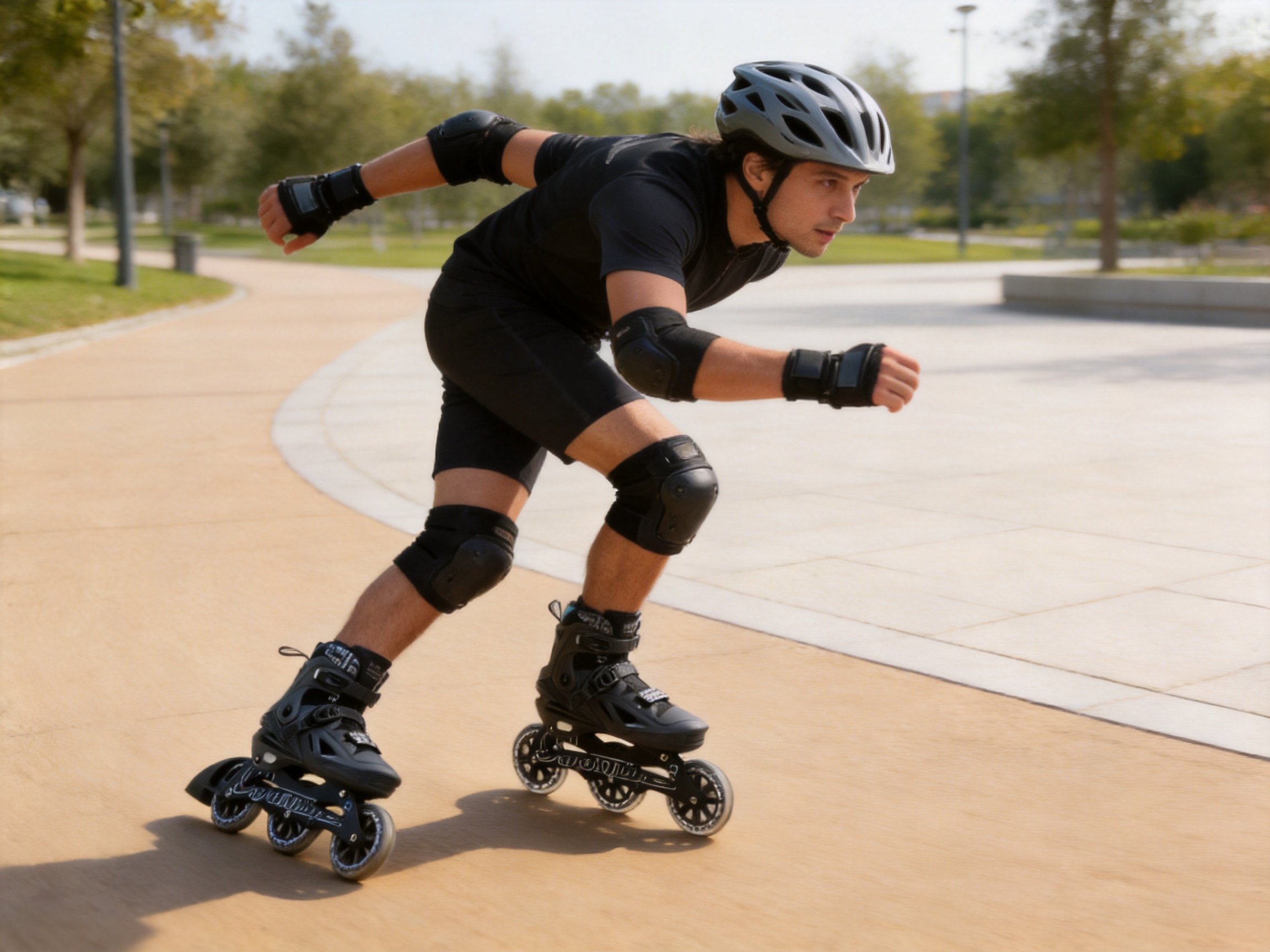
The primary application of the BW-228 is long-distance outdoor skating. Its large wheels and speed-oriented construction are suitable for paved roads, dedicated skating paths, and other appropriate surfaces. Users can select the model for exercise routes, recreational tours, or practical travel over short and medium distances.
Outdoor riders should inspect their routes before skating. Clean, even pavement is preferable, while loose gravel, wet surfaces, deep cracks, heavy traffic, and steep uncontrolled slopes should be avoided. Protective equipment is strongly recommended, particularly for new skaters and children.
Short-Distance Commuting
The model may also be used for short-distance commuting where local conditions permit. The ability to retain momentum can make skating an efficient way to travel between nearby locations. It can be useful for movement within a campus, recreational park, residential area, or other controlled environment.
Commuters should consider local laws, pedestrian traffic, visibility, weather, and the availability of a safe storage area. Inline skates are not a substitute for appropriate road safety practices. The BW-228 is best used in areas where skating is permitted and where the rider can maintain full control.
Speed Skating Practice
The BW-228 is suitable for users who want to improve speed, endurance, and skating rhythm. The large-wheel design encourages a longer, more powerful stride and can support structured training sessions. Beginners may use the adjustable fit to develop confidence, while more experienced skaters can use the product for repeated-distance practice.
Training should begin with balance exercises, controlled gliding, gentle turns, and reliable stopping techniques. The user can then gradually introduce longer intervals and higher speeds. A proper training plan should include warm-up, technique work, recovery periods, and regular inspection of the wheels, bearings, frame, and fasteners.
Daily Leisure and Fitness
The BW-228 can support outdoor recreation and general fitness. Skating activates the legs, hips, and core while also requiring coordination and balance. Regular practice can contribute to an active lifestyle and provide an enjoyable alternative to walking, cycling, or indoor exercise.
Because the model is designed for speed, casual users should not assume that a fast skate is automatically easy to control. The adjustable fit and stable frame can assist the learning process, but skill development remains essential. Users should select a safe practice area and use protective gear suitable for the activity.
Construction Details and Functional Benefits
Reinforced Aluminum Metal Frame
The aluminum frame is a central structural component of the BW-228. Aluminum is valued in skate construction because it can provide a favorable relationship between strength and weight. A reinforced frame helps maintain the alignment of the wheel assemblies and supports consistent energy transfer during each stride.
The frame is also designed to resist deformation during normal use. This is important for outdoor skating because the equipment may experience repeated impacts, vibration, and loading. While no frame is indestructible, a thickened and reinforced construction can contribute to long-term reliability when the skates are used and maintained correctly.
From an OEM perspective, the metal frame creates a useful customization area. Customers can request printed logos or other approved visual treatments, allowing the skate to become part of a club uniform, training program, retail collection, or private-label product line. The frame can therefore perform both a structural and branding function.
Polyurethane Racing Wheels
The oversized polyurethane wheels are intended to provide smooth movement, low drag, and rapid acceleration. Wheel size influences how easily the skate rolls over surface imperfections and how effectively it maintains speed. Larger wheels can be advantageous for experienced riders who prioritize distance and pace.
Wheel performance depends on more than diameter. Hardness, surface quality, bearing condition, rider weight, skating technique, and pavement all affect the final experience. Retailers and buyers should match the product to the intended user group and explain that speed-oriented wheels require appropriate control skills.
Carbon Steel Bearings
The BW-228 uses high-speed carbon steel bearings to support smooth rotation. Bearings should be kept clean and dry because dust, water, and contamination can affect performance. After outdoor use, the wheels and frame should be inspected, and the skates should be stored in a dry, ventilated environment.
Well-maintained bearings can help preserve smooth motion and reduce unnecessary friction. Users should follow appropriate maintenance procedures and replace worn components when required. Retailers may also create after-sales value by offering replacement wheels, bearings, fasteners, and maintenance guidance.
Breathable Upper and Cushioned Lining
The upper and lining influence how the skate feels during extended use. A breathable material structure can help manage heat and moisture, while cushioning supports a more comfortable fit around the foot. These details are especially important for training institutions and active consumers who may wear the skates for longer sessions.
The user should select suitable socks and avoid wearing footwear that creates excessive pressure inside the skate. The adjustable closure should hold the foot firmly while allowing normal circulation. If the skate is shared between users, the interior should be cleaned and dried regularly according to the material requirements.
OEM Customization and Commercial Value
The BW-228 is designed with OEM applications in mind. The customizable metal frame allows logos to be printed for organizations that want a more distinctive appearance. This feature is relevant to sports clubs, skating schools, event organizers, distributors, retailers, and companies developing private-label sporting goods.
Customization can support several commercial objectives. A club may add its identity to equipment used during training. A retailer may create a product collection with a consistent visual style. A training institution may use customized skates as part of its equipment program. A distributor may request a logo arrangement that complements its existing sports product portfolio.
Logo customization should be planned around the available printing area, artwork quality, color requirements, order quantity, packaging, and approval procedures. Buyers should provide clear artwork files and confirm the final position before production. They should also discuss whether the customization is intended for a single project or a repeat program.
In addition to logo printing, OEM customers may evaluate packaging, size labels, instruction materials, color coordination, and product photography. These details can influence shelf presentation and customer understanding. A clear package should communicate the adjustable size range, intended application, safety guidance, and key performance features without overstating the product’s capabilities.
Inventory Efficiency
The three adjustable size ranges can reduce the number of individual size references required in a purchasing program. Instead of stocking a separate fixed size for every foot length, a distributor may organize inventory around the 35–38, 39–42, and 42–45 ranges. This can make warehouse management more efficient and reduce the risk of slow-moving sizes.
For children and teenagers, adjustability may also extend product use as feet grow. However, the skate must always be adjusted within the recommended range. Users should not attempt to force a foot into an unsuitable size category, as a poor fit can reduce comfort and control.
Product Differentiation
Many recreational skates compete mainly on color, price, and basic appearance. The BW-228 offers a more specific product story based on large-wheel speed performance, adjustable sizing, frame customization, and long-distance usability. These characteristics can help a distributor address customers who want something more capable than an entry-level skate.
The model can be positioned as a bridge between casual recreation and structured speed training. It is accessible enough for adjustable-size users while incorporating components associated with higher-speed outdoor skating. This balanced positioning can help retailers serve a broader range of customers without relying only on basic children’s skate designs.
Advanced Manufacturing Capabilities
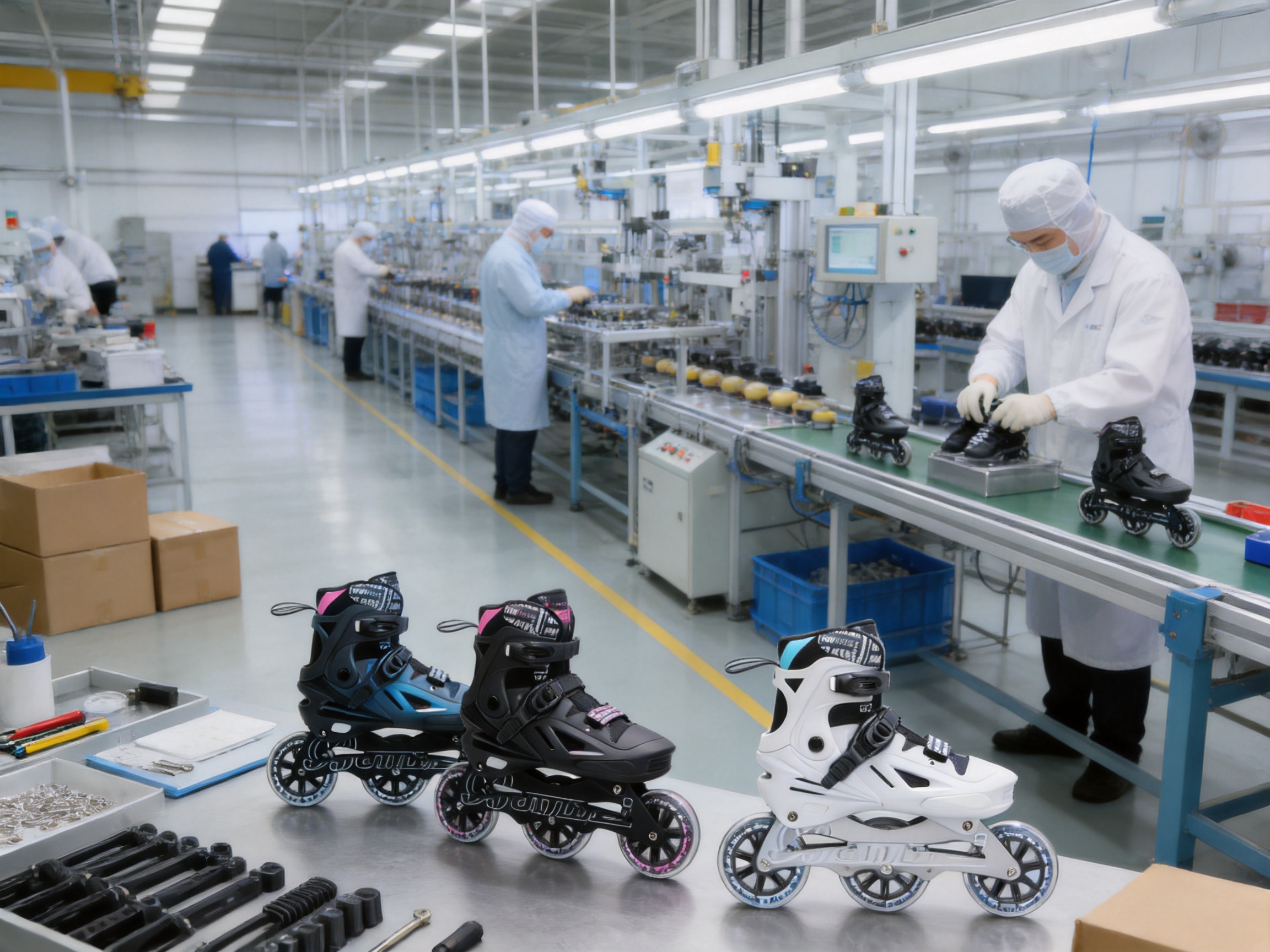
The manufacturer behind the BW-228 is Ningbo Feile Sporting Goods Co., Ltd., a sporting goods producer established in 2010. Its product range includes children’s scooters, inline skates, roller skates, and ice skates. The company’s manufacturing structure is designed to support product development, component production, assembly, customization, and quality management under one organizational system.
The company operates a workshop covering approximately 20,000 square meters and employs more than 200 people. Five automatic production lines support output consistency and production efficiency. A professional research and development engineering team contributes to product improvement and the development of new models.
Its facilities include mold production, injection molding, sewing, and assembly workshops. This combination is valuable for skating products because a finished skate depends on multiple component categories. Mold and injection molding capabilities support plastic parts. Sewing resources support uppers, linings, and related textile components. Assembly operations bring together the boot, frame, wheels, bearings, closures, and other elements into a finished product.
Integrated production resources can improve communication between engineering, manufacturing, quality control, and purchasing departments. They can also help reduce dependence on multiple external suppliers for essential operations. For OEM buyers, this may simplify project coordination and make it easier to discuss design revisions, packaging requirements, production schedules, and quality expectations.
Research, Development, and Product Improvement
A professional R&D engineering team is an important part of a competitive sporting goods manufacturer. Inline skates must balance stability, comfort, appearance, durability, adjustability, and cost. Improving one feature can affect another, so product development requires testing and practical evaluation.
For the BW-228, the development focus is reflected in the combination of three-wheel speed geometry, large polyurethane wheels, reinforced aluminum construction, adjustable sizing, breathable materials, cushioned lining, and high-speed bearings. Each component contributes to a particular user benefit, but the overall product must function as a unified system.
Product improvement may involve refining the frame structure, adjusting the fit mechanism, improving material consistency, reviewing wheel performance, updating color options, or developing new packaging. The company’s ability to launch new products each year indicates an ongoing effort to respond to market requirements and customer preferences.
OEM customers can benefit from an experienced development process when they need adaptations for a specific market. These adaptations may include logo printing, color coordination, packaging changes, instruction updates, or product configurations for different customer groups. Any modification should be evaluated for feasibility, safety, cost, minimum order quantity, and lead time.
Quality Management and Certifications
Quality management is essential for products used in active sports. Inline skates are exposed to repeated motion, load, vibration, and occasional impact. A consistent manufacturing process helps ensure that different production batches meet defined expectations.
The manufacturer has passed ISO9001, BSCI, and Kmart factory certification systems. ISO9001 is associated with quality management processes and documented control. BSCI relates to social compliance and responsible supply-chain practices. Factory certification for a major retail system can indicate that the production site has undergone structured evaluation against required standards.
The company also reports product certifications and compliance credentials including 3C, CE, EN71, EN62115, ASTM, EMC, and EN13843:2009. Buyers should confirm which certification applies to the exact product, market, configuration, and production batch because requirements vary by destination and product category. Compliance documentation should be reviewed before import, retail distribution, or institutional procurement.
For OEM projects, quality control should cover incoming materials, molded parts, sewn components, frame dimensions, wheel installation, bearing rotation, closure function, size adjustment, logo printing, packaging, and final inspection. Sampling plans and acceptance criteria should be agreed upon between the buyer and manufacturer before mass production.
Material and Component Inspection
Material inspection can help identify problems before assembly. Aluminum frames should be checked for dimensions, surface condition, holes, alignment, and deformation. Polyurethane wheels should be reviewed for shape consistency, surface defects, hardness requirements, and correct installation. Textile uppers and linings should be checked for stitching quality, color consistency, and attachment strength.
Bearings and fasteners should also be handled carefully. Incorrect installation may affect wheel rotation or create unwanted movement. A structured inspection process reduces the possibility that component problems will remain hidden until the finished product reaches the customer.
Assembly and Functional Inspection
Assembly inspection should verify that the frame, wheels, bearings, boot, closure system, and adjustable mechanism work together correctly. The skate should be checked for smooth wheel rotation, secure fasteners, stable frame attachment, and consistent adjustment. Logo printing should be inspected for position, clarity, adhesion, and visual consistency according to the approved sample.
Functional inspection is particularly important for adjustable products. The adjustment mechanism should move correctly across the designated size range and should hold the selected position during normal use. Packaging should preserve the product during transportation and provide clear information to the final user.
Recommended Use and Safety Considerations
The BW-228 is designed for skating, but performance depends on responsible use. New users should learn basic balance, forward movement, turning, and stopping before attempting high-speed or long-distance skating. A larger wheel can increase the potential speed of the product, so users should develop control gradually.
Protective gear is recommended for all users and is especially important for children and beginners. A helmet, wrist guards, elbow pads, and knee pads can help reduce injury risk during falls. Protective gear should fit correctly and should be replaced if it has suffered serious impact or shows significant damage.
Skaters should select a smooth, dry, and unobstructed surface. Wet pavement, loose sand, gravel, oil, leaves, deep cracks, and uneven edges can reduce traction and control. Night skating requires visibility equipment and an environment with adequate lighting. Users should remain aware of pedestrians, cyclists, vehicles, and other obstacles.
Before each session, users should check the wheel assemblies, frame, fasteners, closure system, and adjustment mechanism. Loose components should be tightened or serviced before skating. If a wheel does not rotate smoothly, the bearing should be inspected. Damaged frames, cracked components, or unreliable closures should not be used.
After use, the skates should be wiped clean and allowed to dry naturally. They should not be stored in a damp location. Regular maintenance can help preserve the smoothness of the bearings, the appearance of the frame, and the life of the upper and lining.
Purchasing Considerations for Importers and Distributors
Commercial buyers should first define the intended market. A retailer serving beginners may emphasize adjustability, comfort, and ease of use. A speed-skating club may focus on the large-wheel configuration, frame stability, and endurance. A distributor may prioritize OEM customization, packaging, size coverage, and production capacity.
Buyers should request product samples before placing a large order. Sample evaluation should include fit, adjustment, wheel rolling, frame rigidity, comfort, closure security, logo quality, and packaging. Several users with different experience levels can test the product to provide a more balanced evaluation.
Order discussions should address size quantities, colors, logo artwork, packaging, instruction sheets, spare parts, inspection standards, delivery schedule, payment terms, and after-sales support. Buyers should also confirm whether the product is intended for a particular regulatory market and which test reports or declarations are available.
Because the BW-228 is designed for outdoor speed, sales materials should present the product accurately. It is appropriate to highlight large wheels, three-wheel construction, adjustable sizing, and long-distance suitability. It is not appropriate to promise that every user will achieve a particular speed or that the skate is suitable for every road condition.
Why Factory Capability Matters
A capable factory can provide more than a finished product. It can support technical communication, sample revision, production planning, quality inspection, customization, and repeat orders. The manufacturer’s automatic production lines, engineering team, multiple workshops, certifications, and experience in several skate and scooter categories provide a foundation for these services.
Manufacturing scale can also help a buyer plan product continuity. If a model performs well in the market, a stable production system may make repeat purchasing easier. Buyers should still confirm current capacity, component availability, lead time, and quality requirements for each order.
Comparison with Other Product Types
| Product Type | Primary Strength | Typical Limitation | BW-228 Advantage |
|---|---|---|---|
| Basic recreational inline skate | Easy entry and casual use | Often uses smaller wheels and may require more effort over distance | Large three-wheel platform is designed for more efficient outdoor gliding |
| Fixed-size inline skate | Simple fixed construction | Less adaptable as the user’s foot length changes | Adjustable size ranges support multiple foot lengths |
| Compact four-wheel roller skate | Low-speed recreation and familiar balance | Not primarily designed for fast long-distance travel | Speed-focused wheel and frame configuration supports distance riding |
| Entry-level children’s skate | Accessible pricing and basic recreation | May have limited customization and shorter growth usability | Offers OEM logo printing, adjustable fit, and a more performance-oriented structure |
| Specialized high-speed skate | Advanced speed performance | May be less accessible to beginners or shared-use programs | Combines speed-oriented features with adjustable sizing and practical comfort features |
This comparison does not mean that one product type is suitable for every skater. Each design serves a different purpose. The BW-228 is most compelling for buyers who want a balance between speed capability, adjustable usability, outdoor comfort, and OEM flexibility.
Maintenance and Service Life
Regular maintenance can preserve the function and appearance of the BW-228. Wheels should be checked for uneven wear, cuts, flattening, or embedded debris. Uneven wheel wear may affect balance and should be addressed through appropriate rotation or replacement procedures performed by a qualified person.
Bearings should be kept free from excessive moisture and dirt. If the skate becomes wet, it should be dried promptly in a ventilated place. Direct high heat may damage certain materials, adhesives, or textile components, so natural drying is generally preferable unless the manufacturer provides different instructions.
The aluminum frame should be inspected for cracks, bending, or loose attachment points. The adjustment system should be checked to ensure that it locks securely. The upper, lining, straps, buckles, and other closure components should also be reviewed regularly.
Service life depends on the rider’s weight, frequency of use, skating surface, speed, maintenance, storage, and impact exposure. A product intended for long-distance outdoor use should be treated as sporting equipment rather than left unattended in harsh weather or damp storage conditions.
Environmental and Operational Efficiency
The adjustable design can contribute to practical product efficiency by reducing the need for immediate replacement as a user’s foot length changes within the supported size range. It may also help distributors manage stock with fewer size references. These benefits can improve the overall use of materials and warehouse space, although responsible end-of-life handling remains important.
Durable components can also reduce replacement frequency when the skates are used correctly. A reinforced frame, reliable wheel assembly, and maintainable bearings may help extend useful service compared with a product that cannot be serviced or adjusted. Buyers should consider the availability of replacement parts and maintenance support as part of the total product value.
Manufacturing efficiency is supported by automatic production lines and dedicated workshops. Consistent processes can reduce avoidable waste, improve repeatability, and help manage larger OEM orders. The exact environmental performance of a product depends on materials, energy use, packaging, transportation, and end-of-life recycling arrangements, so buyers seeking specific environmental claims should request relevant documentation.
Q&A
What type of skate is the BW-228?
The BW-228 is a three-wheeled, large-wheel speed inline skate designed for outdoor skating, long-distance riding, short-distance commuting, fitness, and speed-skating practice.
What sizes are available?
The model is available in three adjustable ranges: 35–38, 39–42, and 42–45. Users should select the range that corresponds to their foot length and adjust the skate correctly before use.
Why does the skate use three large wheels?
Three large wheels are intended to support efficient rolling, faster acceleration, and better momentum over longer distances. This configuration is more speed-oriented than many conventional recreational skates with smaller wheels.
Is the BW-228 suitable for beginners?
The adjustable structure and comfortable lining can make the model accessible to newer users, but its large-wheel speed design requires careful learning. Beginners should practice balance, stopping, and turning at low speed before attempting longer or faster rides.
Can the frame be customized with a logo?
Yes. The metal frame supports custom logo printing, making the product suitable for clubs, training institutions, distributors, retailers, and private-label programs. Artwork, placement, color, quantity, and production requirements should be confirmed before manufacturing.
What surfaces are appropriate for use?
Smooth, dry, clean, and suitable paved surfaces are recommended. Wet pavement, loose gravel, heavy debris, steep uncontrolled areas, and roads with unsafe traffic conditions should be avoided.
What protective equipment should users wear?
A helmet, wrist guards, elbow pads, and knee pads are recommended, especially for children, beginners, and users practicing at higher speed.
What makes the frame important?
The reinforced aluminum frame supports stability, wheel alignment, and power transfer. It is also the main area available for logo customization.
How should the skates be maintained?
Users should inspect wheels, bearings, fasteners, closures, and the adjustment mechanism before use. The skates should be cleaned, dried, and stored in a dry, ventilated place. Worn or damaged components should be serviced or replaced.
What manufacturing strengths support the product?
The manufacturer has more than 200 employees, a workshop of approximately 20,000 square meters, five automatic production lines, mold and injection molding workshops, sewing and assembly facilities, and a professional R&D engineering team. The company also reports ISO9001, BSCI, and other factory and product certification systems.
Can the product be used for OEM orders?
Yes. The customizable frame and established manufacturing resources make the model appropriate for OEM and private-label sourcing. Buyers should discuss product specifications, artwork, packaging, inspection, order quantity, and delivery requirements with the factory.
Conclusion
The BW-228 speed inline skate is positioned as a practical and customizable solution for users who want more efficient outdoor skating than a basic recreational model can provide. Its three large polyurethane wheels, reinforced aluminum frame, high-speed carbon steel bearings, breathable upper, cushioned lining, and adjustable sizing work together to support speed, momentum, stability, and comfort.
Its strongest competitive advantages are the balance between speed-oriented construction and accessible adjustability. The model can serve individual skaters, growing children, sports clubs, training institutions, fitness users, commuters, and distributors. The three size ranges can simplify fitting and inventory planning, while the customizable metal frame gives OEM buyers a way to develop a more recognizable product identity.
The manufacturing platform adds further value. With automatic production lines, dedicated mold, injection molding, sewing, and assembly workshops, an engineering team, quality systems, certifications, patents, and experience in multiple skating categories, the company is equipped to support both standard products and customized sourcing programs.
For the best results, buyers should evaluate samples, confirm specifications, review applicable compliance documents, establish quality standards, and provide clear customization instructions. Users should receive appropriate fitting guidance and safety education. When matched with the right customer group and used on suitable surfaces, the BW-228 can provide a durable, comfortable, and performance-focused option for long-distance skating, daily fitness, commuting, and speed practice.
References
1. Product specification and technical description for the BW-228 Speed Inline Skate.
2. Manufacturer-provided company profile and production capability information.
3. ISO 9001 quality management system principles for manufacturing organizations.
4. General guidance on inline skate wheel geometry, bearing maintenance, and outdoor skating safety.
5. Manufacturer-reported product and factory certification information, including CE, EN71, EN62115, ASTM, EMC, EN13843:2009, ISO9001, and BSCI-related documentation.
Product: BW-228 Speed Inline Skate

Recommended Articles

Get in Touch
Your email address will not be published. Required fields are marked *
Have a project in mind? Contact with us!
We are happy to answer your questions. Please fill out this form
and one of our professional team will get back to you as soon as possible.

We specialize in producing various types of children's toy cars, children's skateboards, and ice skates.
