
 En
 Español
 русский
 عربى

Why Adjustable Camouflage Inline Skates Are a Smart Choice for Growing Children
Date:Nov 04, 2026
Content
- 1 1. Product Overview and Intended Use
- 2 2. The Value of a Growth-Adjustable Design
- 3 3. Secure Fit and Better Skating Control
- 4 4. Comfort Through Soft and Breathable Materials
- 5 5. Outdoor Durability for Everyday Play
- 6 6. Camouflage Styling and Market Appeal
- 7 7. Easy Operation for Beginners
- 8 8. Contribution to Balance, Coordination, and Athletic Development
- 9 9. Comparison with Conventional Fixed-Size Inline Skates
- 10 10. Manufacturing Capability Behind the Product
- 11 11. Research, Development, and Product Improvement
- 12 12. Quality Management and Factory Certifications
- 13 13. OEM and Sourcing Advantages
- 14 14. Practical Retail Positioning
- 15 15. Packaging, Logistics, and Product Information
- 16 16. Safety and Responsible Use
- 17 17. Care and Maintenance Recommendations
- 18 18. Why the Product Offers a Stronger Value Proposition
- 19 19. Buyer Checklist for Wholesale and OEM Customers
- 20 20. Questions and Answers
- 20.1 Q1: What type of product is the BW-185?
- 20.2 Q2: What sizes are available?
- 20.3 Q3: Why is an adjustable skate useful for children?
- 20.4 Q4: Is the product suitable for professional skating?
- 20.5 Q5: Does the skate provide ventilation?
- 20.6 Q6: Is the upper comfortable for extended recreational use?
- 20.7 Q7: What makes the appearance different?
- 20.8 Q8: Can the product help a child learn balance?
- 20.9 Q9: What protective equipment should children wear?
- 20.10 Q10: What manufacturing resources does Feile have?
- 20.11 Q11: Does the company support OEM cooperation?
- 20.12 Q12: What certifications and systems are associated with the manufacturer?
- 20.13 Q13: Where is the company located?
- 20.14 Q14: What should buyers confirm before placing an order?
- 21 Conclusion
- 22 References
- 23 Product: BW-185 Children's Inline Skate
Choosing inline skates for a child involves more than selecting an attractive color or the lowest available price. Parents and buyers must consider fit, adjustability, comfort, safety, durability, ease of use, and the type of skating the child will perform. A suitable pair should support a child’s early interest in movement while remaining comfortable enough for regular outdoor play. It should also be practical for families, because children’s feet grow quickly and sports equipment can become outdated in a short period of time.
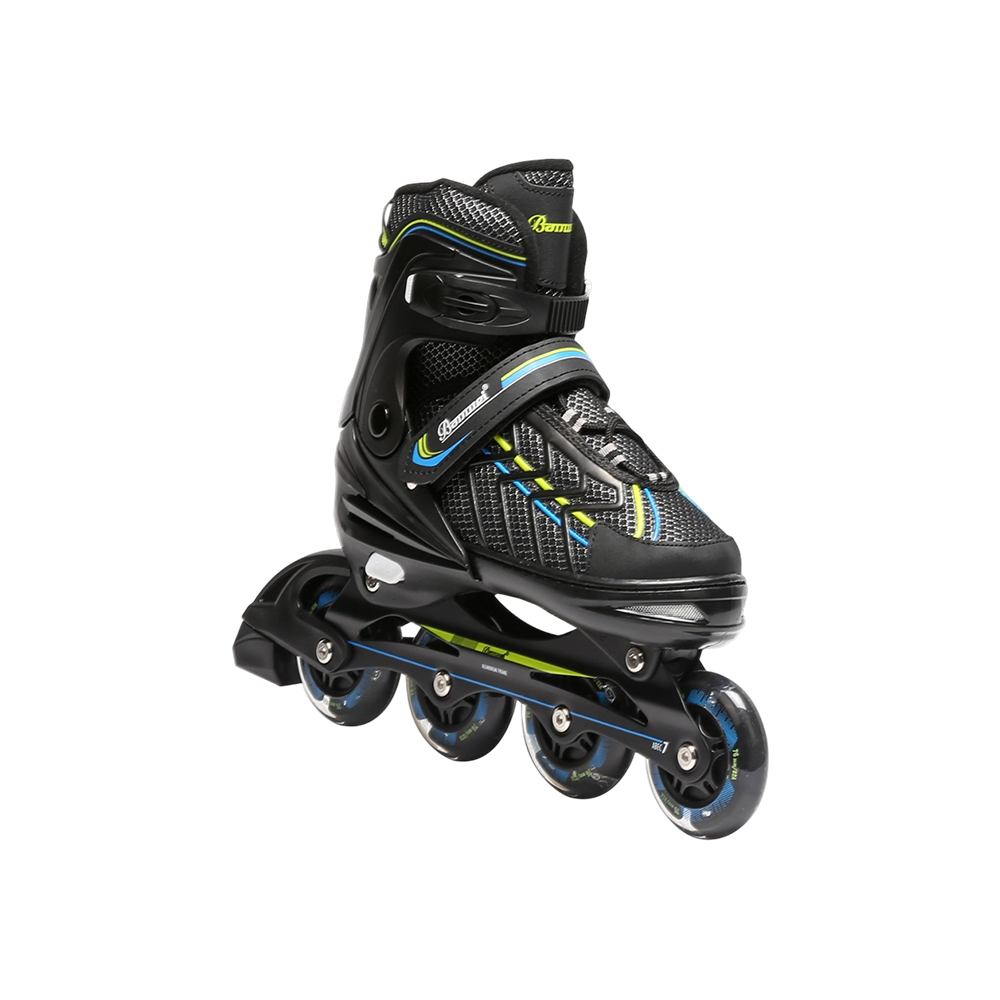
The BW-185 Children’s Inline Skate is designed to address these needs through an adjustable three-size structure, a soft and breathable upper, a secure fit, durable construction, and a camouflage appearance created for modern children. It is intended for leisure skating in outdoor parks, plazas, and other flat surfaces rather than professional high-intensity training. This positioning allows the product to combine accessible operation with the essential functions required for children who are learning, practicing balance, or enjoying casual skating with friends.
Behind the product is Ningbo Feile Sporting Goods Co., Ltd., an experienced Chinese manufacturer specializing in children’s scooters, inline skates, roller skates, and ice skates. The company operates a large production facility with dedicated mold, injection molding, sewing, and assembly workshops. Its manufacturing resources, automatic production lines, engineering team, quality systems, and international certifications provide a foundation for consistent product development and OEM cooperation.
This article examines the product’s design, practical advantages, manufacturing background, quality considerations, buyer value, and potential applications. It also explains why an adjustable children’s inline skate can offer advantages over fixed-size alternatives and why manufacturing capability matters when distributors, importers, retailers, and sporting-goods brands select a long-term supplier.
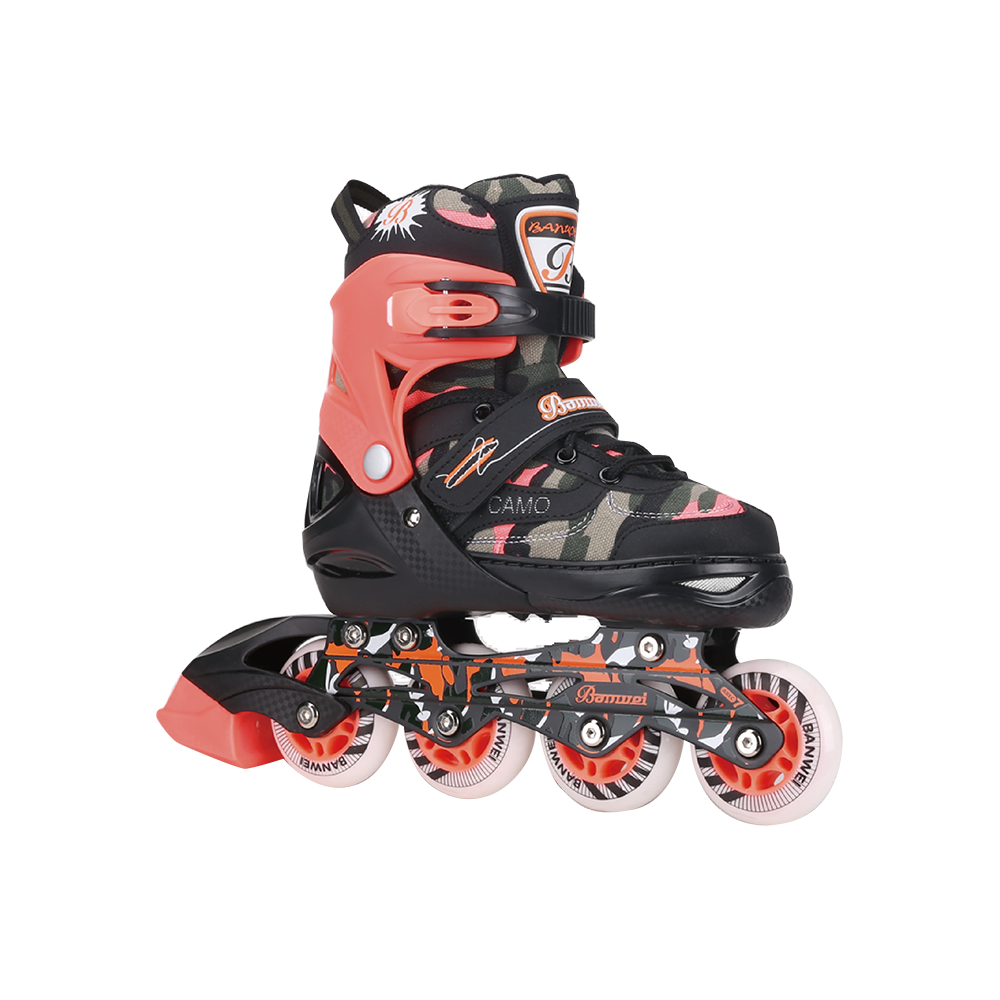
BW-185 Children's Inline Skate
1. Product Overview and Intended Use
The BW-185 is a children’s inline skate with a camouflage-inspired appearance and an adjustable sizing system. It is available in three adjustable size ranges: S, M, and L. The listed size groupings cover approximately 31–34, 35–38, and 39–42. This structure is intended to accommodate children at different stages of foot development and to extend the useful life of the product.
The skate is designed for light outdoor activities. Typical environments include neighborhood parks, public plazas, smooth recreation areas, and other flat outdoor surfaces. It is suitable for casual skating, family recreation, and introductory practice. It is not positioned as specialized equipment for racing, aggressive skating, jumps, or professional training. This clear application makes the product easy to present to parents and retail customers who want a fun and approachable way for children to become more active.
The product combines several features that are especially important in the children’s recreational market:
• Three adjustable size ranges for growing feet.
• A soft, skin-friendly upper that follows the shape of the foot.
• Breathable construction intended to reduce heat and moisture during use.
• A snug fit that helps limit unwanted foot movement inside the skate.
• Durable materials and construction for everyday outdoor play.
• A visually distinctive camouflage design.
• Simple adjustment and operation for children and parents.
• A design that supports balance, coordination, and early skating confidence.
These features are not independent. An adjustable skate is more useful when the internal structure remains supportive across its adjustment range. A comfortable upper is more effective when the heel and foot are held securely. A stylish appearance is more valuable when it is combined with practical durability. The BW-185 is therefore best understood as an integrated recreational product rather than as a skate relying on a single selling point.
2. The Value of a Growth-Adjustable Design
Children’s feet develop continuously, creating a common challenge for families purchasing footwear and sports equipment. A fixed-size inline skate may fit well at the time of purchase but become uncomfortable after a relatively short period. If the next size is purchased too early, the child may skate in equipment that is too large. If the existing skate is used after the foot has outgrown it, the result may be pressure, discomfort, restricted movement, or poor control.
The BW-185 addresses this issue with a growth-adjustable sizing design. Each size range is intended to cover several standard shoe sizes, allowing the skate to be adjusted as the child’s foot grows. This reduces the need for frequent replacement and can improve the overall value of the purchase. For families, the benefit is not simply financial. Fewer replacements also mean less time spent selecting equipment and less unused gear being discarded.
Adjustability can also help retailers and distributors simplify stock planning. A product with multiple adjustment positions may serve a broader customer group than a single fixed-size model. Retailers can present the skate as a practical option for children in different stages of development, while wholesalers can potentially manage inventory more efficiently across size ranges.
| Design consideration | Potential benefit for families | Potential benefit for sellers |
|---|---|---|
| Three adjustable size ranges | Longer usable life as the child grows | Broader customer coverage per product series |
| Simple size adjustment | Easy fitting at home and during use | Clearer product demonstration in stores |
| Secure foot placement | Greater confidence and more controlled movement | Stronger value proposition than basic fixed-size models |
| Durable outdoor construction | Better suitability for frequent recreational use | Reduced concerns about ordinary wear and customer complaints |
Adjustment should always be made carefully. The skate should fit securely without compressing the foot. Parents should confirm that the toes have enough room, the heel is not lifting excessively, and the closure system is fastened correctly. As with all children’s wheeled sports equipment, the skate should be used with suitable protective gear and under appropriate supervision.
3. Secure Fit and Better Skating Control
A child’s ability to control an inline skate depends partly on how well the foot remains positioned inside the boot. If the foot moves excessively from side to side or slides forward and backward, the child may have difficulty maintaining balance. Unwanted movement can also make basic actions such as starting, slowing down, turning, and stopping feel less predictable.
The BW-185 uses a snug, form-fitting construction to help keep the foot firmly in place. The upper follows the shape of the foot and ankle, creating a close fit without relying on a stiff or uncomfortable structure. When correctly adjusted, this design helps reduce foot wobble and shifting inside the skate. The result is a more stable platform for children who are developing their skating rhythm.
This feature creates a practical advantage over loosely fitting recreational skates. A skate that is too loose may appear comfortable at first because it provides extra space, but the child may need to compensate for movement inside the boot. A well-fitted adjustable skate can provide a more direct connection between the child’s foot and the chassis, making basic skating movements easier to understand.
Fit is also important for confidence. Young children may become discouraged if their skates feel unstable or difficult to control. A secure fit gives them a better chance to experience smooth, manageable movement during their first sessions. As confidence improves, they can gradually practice balance, coordination, and direction changes at an appropriate pace.
The product is not intended to replace instruction or supervision. Good equipment supports learning, but children still need suitable skating areas, protective gear, and guidance. Nevertheless, the combination of a secure fit and simple adjustment can reduce avoidable difficulties during casual practice.
4. Comfort Through Soft and Breathable Materials
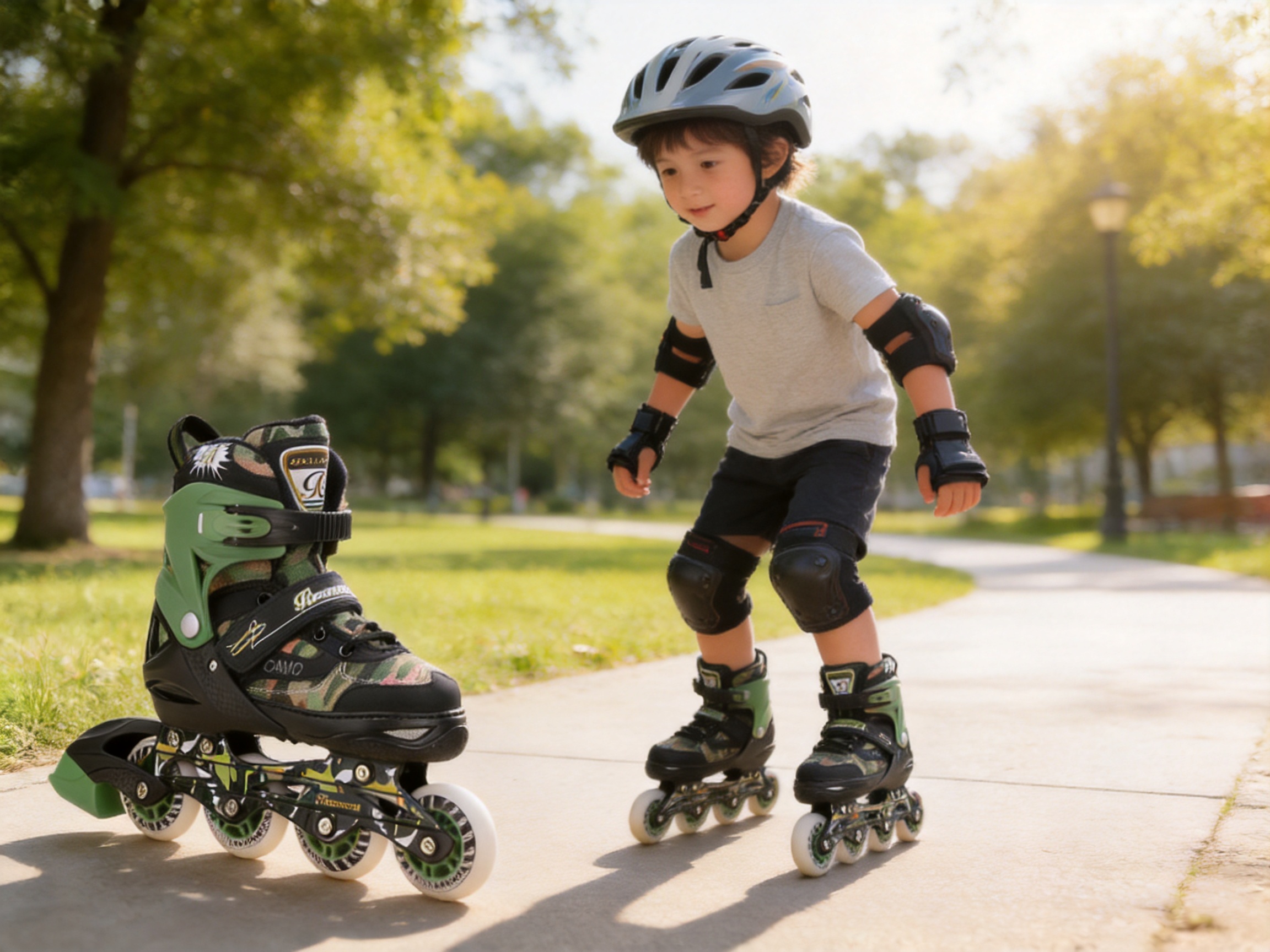
Comfort is essential for children’s sports equipment because discomfort can shorten activity time and reduce a child’s willingness to use the product. The BW-185 features a soft, skin-friendly upper material designed to conform to the foot. Its flexible structure follows the curves of the foot and ankle, helping create a moderate fit without excessive constriction.
The soft upper is particularly useful for recreational skating, where children may wear the skates for extended periods while playing outdoors. A hard or poorly shaped upper can produce pressure points, especially around the ankle and instep. A flexible material can make the initial wearing experience more pleasant and allow the child to move more naturally.
The design also includes an all-around breathable structure. Airflow through the upper is intended to help reduce heat and moisture buildup during use. Children are often active and may perspire quickly, particularly in warm weather. A breathable skate can help maintain a drier, more comfortable internal environment compared with a fully enclosed structure that provides limited ventilation.
Breathability contributes to everyday practicality but does not eliminate the need for appropriate socks and maintenance. Children should wear comfortable sports socks, and the skates should be allowed to dry after use. Regular airing, cleaning, and inspection can help preserve the upper and internal materials.
Compared with basic low-cost models that focus mainly on appearance, the BW-185 presents comfort as a functional part of the design. The soft upper, flexible fit, and ventilation work together to make the product more suitable for repeated casual use. This is important for parents who want sports equipment that children will actually continue using after the excitement of the first day.
5. Outdoor Durability for Everyday Play
Children’s skates are frequently used in environments that are less controlled than indoor sports halls. Outdoor parks and plazas may expose equipment to dust, minor impacts, small surface irregularities, and repeated contact with concrete or other hard flooring. For this reason, ordinary recreational use requires a practical level of wear resistance.
The BW-185 uses robust fabric and durable construction intended to withstand the conditions associated with regular outdoor play. Its design is aimed at reducing concerns about minor bumps and everyday handling. This does not mean the skates are indestructible or suitable for rough stunts. Instead, the product is built around realistic family use, in which children skate, walk short distances, sit down, stand up, and transport the equipment between home and outdoor locations.
Durability benefits both users and commercial buyers. Families receive equipment that is better suited to repeated use, while retailers can offer a product with a clear practical purpose. A durable recreational skate also supports the product’s adjustable value: the longer the skate remains in good condition, the more effectively the growing-size feature can reduce replacement frequency.
Maintenance remains important. Users should inspect the wheels, fasteners, closure components, and visible materials before each session. The skates should not be used on damaged surfaces, in wet conditions, or for activities beyond their intended recreational application unless the manufacturer’s instructions specifically allow it. Good maintenance helps protect the child and extends the service life of the product.
6. Camouflage Styling and Market Appeal
Children’s sports products are often selected partly because of their appearance. A child is more likely to feel enthusiastic about equipment that reflects personal taste and looks different from ordinary products. The BW-185 uses a camouflage design to create a distinctive visual identity.
Many entry-level inline skates rely on simple solid-color styling. While minimalist colors can appeal to some customers, a camouflage pattern offers a more energetic and contemporary alternative. It can attract children who prefer outdoor-inspired, adventurous, or sporty designs. The pattern also helps the skate stand out in retail displays and product photography.
Visual styling is not a substitute for performance, but it can influence purchase interest and product engagement. A child who likes the appearance of the skate may be more willing to put it on, practice regularly, and participate in outdoor activity. In this way, design can support the broader objective of encouraging movement and healthy recreation.
For distributors and private-label customers, the camouflage theme may also provide a useful starting point for market positioning. It can be presented as a casual outdoor product for children who enjoy active play, rather than as a highly technical competition skate. Depending on the target market, buyers may combine the design with coordinated helmets, knee pads, elbow pads, or other protective equipment.
7. Easy Operation for Beginners
Children’s recreational products should not create an unnecessarily complicated learning curve. The BW-185 is designed for straightforward wearing and adjustment, allowing children and parents to prepare the skates without complicated procedures. This simplicity is especially valuable for first-time users who are still becoming familiar with inline skating.
An easy-to-adjust structure helps parents achieve a better fit before the child begins moving. It also allows the size to be modified as the foot develops. When the skate is simple to operate, children can gradually learn how to participate in the preparation process, such as opening the closures, placing the foot correctly, and checking whether the skate feels secure.
The product’s intended skating rhythm is gentle and accessible. It is suitable for light outdoor exercise and everyday leisure rather than high-speed or high-intensity performance. This makes it a practical option for children who are beginning to explore skating or who want to use inline skates as one of several recreational activities.
Beginners still need instruction in basic safety. They should learn how to stand, balance, move slowly, turn carefully, and stop in a controlled area. The product can make the process more approachable, but responsible use requires a suitable environment and adult supervision.
8. Contribution to Balance, Coordination, and Athletic Development
Inline skating involves continuous cooperation between the feet, legs, core, arms, vision, and balance system. Even simple recreational skating encourages children to coordinate movement while maintaining an upright position. The BW-185 is designed to support this type of light physical activity.
As children practice, they may develop greater awareness of weight distribution and body position. They learn to place one foot in front of the other, shift their weight, control speed, and respond to changes in direction. These basic activities can contribute to coordination and general athletic confidence.
The product is especially suitable for families looking for an alternative to sedentary entertainment. A session at a park can combine physical activity with social interaction, allowing children to skate with siblings or friends. Because the skates are intended for leisure and play, they can fit naturally into family outings rather than requiring a formal training schedule.
It is important to maintain realistic expectations. Recreational inline skating does not guarantee a specific athletic outcome, and children develop at different rates. The main benefit is that a comfortable and appealing product can make active play more inviting. When children enjoy an activity, they are more likely to repeat it and gradually improve their skills.
9. Comparison with Conventional Fixed-Size Inline Skates
The most significant functional difference between the BW-185 and conventional fixed-size children’s skates is the adjustable structure. A fixed-size model can offer a stable fit when purchased at the correct size, but its useful period may be limited by the child’s growth. The BW-185 is designed to accommodate several stages within each size range.
Another difference is the balance between comfort and secure positioning. Some basic models use relatively rigid materials or minimal internal shaping. The BW-185 emphasizes a soft, close-fitting upper that follows the foot while helping reduce movement inside the boot. This can be more suitable for children who value comfort during longer recreational sessions.
The camouflage design also distinguishes the product in a crowded category. Instead of competing only through basic function, it adds a recognizable style that may appeal to children and support retail differentiation.
| Feature | BW-185 adjustable inline skate | Typical fixed-size basic skate |
|---|---|---|
| Size approach | Three adjustable size ranges | One fixed size per model or SKU |
| Growth accommodation | Designed to remain useful as the foot develops | May require earlier replacement |
| Upper structure | Soft, flexible, and form-fitting | May vary from basic fabric to rigid construction |
| Ventilation focus | Breathable upper structure | Ventilation depends on model design |
| Appearance | Camouflage pattern with an outdoor-inspired look | Often simple or conventional styling |
| Intended use | Leisure skating and light outdoor exercise | Varies, often general recreational use |
This comparison does not mean every fixed-size skate is inferior. A fixed-size product may be appropriate when the child’s size is known and the product is used infrequently. However, the adjustable design offers clear advantages for families seeking longer usability, easier stock management, and a more flexible fit.
10. Manufacturing Capability Behind the Product
Product performance depends not only on the design concept but also on how consistently the product is manufactured. Ningbo Feile Sporting Goods Co., Ltd. was established in 2010 and specializes in children’s scooters, inline skates, roller skates, and ice skates. Its focus on wheeled and skating products gives it relevant category experience for developing children’s recreational equipment.
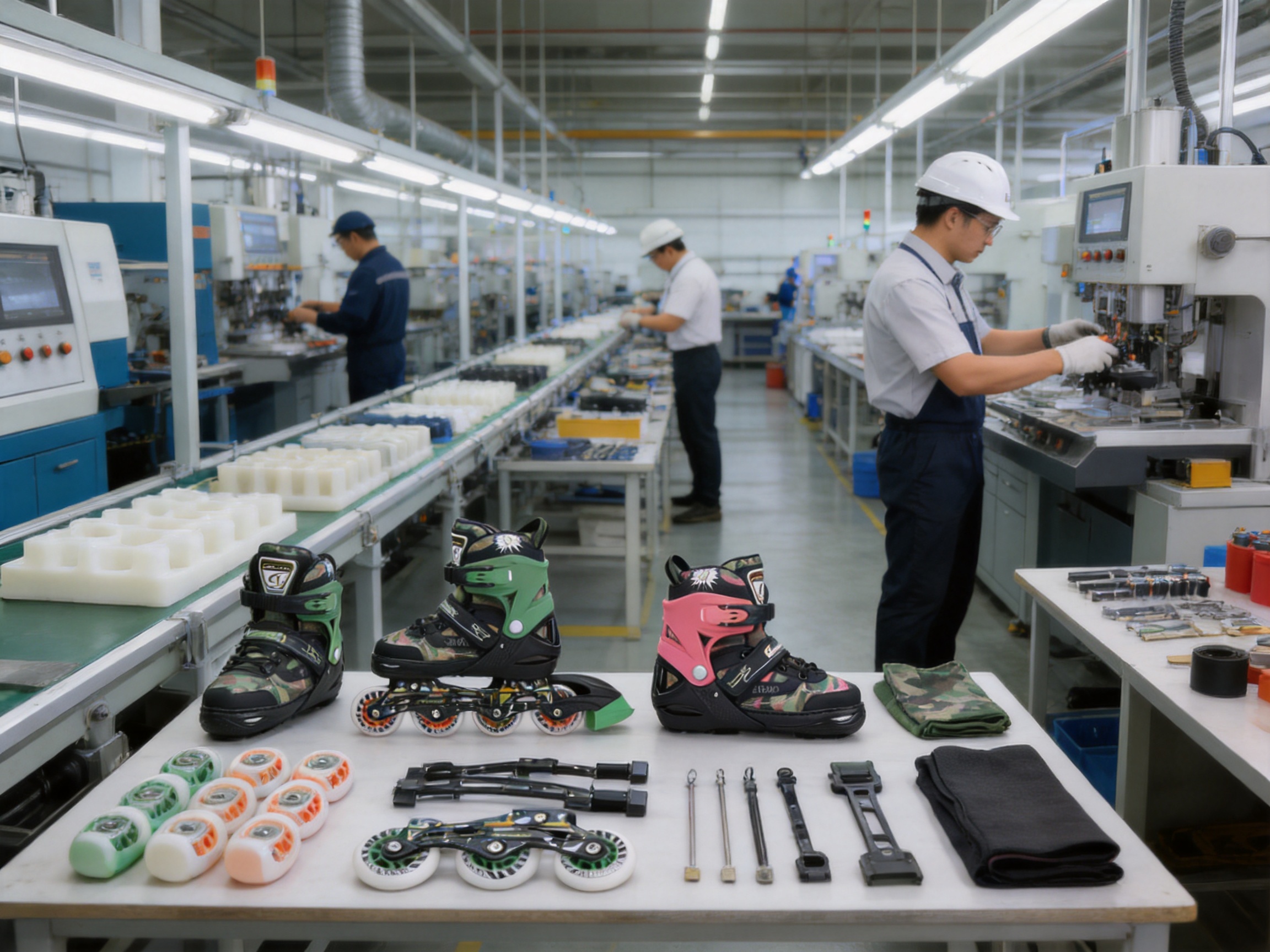
The company operates a workshop of approximately 20,000 square meters and employs more than 200 people. Its production infrastructure includes five advanced automatic production lines, along with dedicated mold, injection molding, sewing, and assembly workshops. This combination of specialized areas allows important manufacturing stages to be coordinated within the same organization.
In-house or closely managed mold capability can support product development by helping engineers refine component shapes and production details. Injection molding is important for producing consistent plastic components used in skating equipment and related products. Sewing workshops support the manufacture of fabric uppers and other soft components, while assembly lines bring individual parts together into finished products.
This integrated structure can offer several advantages to OEM and wholesale customers:
• More direct coordination between product design and production.
• Better control over component compatibility.
• More efficient communication during sampling and revisions.
• Greater capacity to manage different product categories.
• A clearer production path from raw materials to finished goods.
For buyers, manufacturing depth matters because children’s products require consistency. A successful sample is not enough if mass production cannot maintain the same fit, appearance, and assembly quality. A factory with dedicated workshops and production systems is better positioned to translate a design into repeatable output.
11. Research, Development, and Product Improvement
The company maintains a professional R&D engineering team and launches new products each year. This ongoing development approach is important in the sports-equipment market, where customer expectations change and product designs must respond to new preferences.
For a children’s inline skate, R&D can involve many details: adjustable mechanisms, fit across multiple size positions, material selection, ventilation, closure systems, wheel and frame integration, visual styling, packaging, and production efficiency. Even a recreational product requires coordination between comfort, durability, appearance, and cost.
An experienced engineering team can also help identify potential production problems before they become large-scale issues. During development, engineers may evaluate how components fit together, whether adjustment functions operate smoothly, whether fabric panels maintain their shape, and whether assembly steps can be performed consistently.
The company’s record of obtaining multiple national patents indicates ongoing attention to product innovation. Patents alone do not guarantee performance, but they demonstrate that the manufacturer invests in original development rather than relying only on standard market designs. For OEM customers, this may create opportunities to discuss customized features, exclusive appearances, packaging adaptations, or product-line extensions.
12. Quality Management and Factory Certifications
Quality management is especially important for products used by children. Ningbo Feile Sporting Goods Co., Ltd. has passed ISO9001, BSCI, and Kmart factory certification systems, according to the supplied company information. These systems and audits can support structured management, social-compliance review, and more consistent factory operations.
The company also reports product certifications including 3C, CE, EN71, EN62115, ASTM, EMC, and EN13843:2009. The applicable certification requirements may vary according to the destination market, product configuration, age classification, and sales channel. Buyers should confirm current documentation for the exact model and intended market before placing an order or making compliance claims.
For commercial customers, a factory’s certification experience can simplify the sourcing process. Importers and retailers often need technical files, test reports, factory audit records, labeling details, and documentation for customs or marketplace requirements. A manufacturer familiar with international compliance processes can communicate more effectively with buyers and testing agencies.
Quality management should cover the complete product lifecycle. Relevant areas may include incoming material inspection, component dimensions, stitching quality, plastic part consistency, adjustment function, wheel assembly, closure performance, visual inspection, packaging, and final shipment checks. A systematic approach helps reduce variation between batches.
While certifications and audits are valuable indicators, responsible buyers should still conduct their own due diligence. They should request current documents, confirm testing scope, evaluate samples, define acceptance standards, and agree on inspection procedures before mass production.
13. OEM and Sourcing Advantages
The company’s product range covers children’s scooters, inline skates, roller skates, and ice skates. This broad category experience can be useful for distributors seeking a one-stop source for multiple types of skating and scooter equipment.
The supplied SEO positioning describes the company as an OEM skating and scooter equipment manufacturer and sports equipment factory. For buyers, OEM capability may include product selection, design adjustments, color or pattern development, packaging customization, labeling, and coordinated sourcing across related product lines. The exact services, minimum order quantities, lead times, and customization conditions should be confirmed directly with the manufacturer.
A one-stop supplier can reduce the complexity of managing several factories. Buyers may be able to coordinate product calendars, packaging standards, quality expectations, and shipment planning through one experienced manufacturing partner. This can be particularly useful for distributors building a children’s outdoor-sports collection.
International exhibition participation and more than 30 college-educated management staff also suggest an organization accustomed to professional business communication and overseas market development. These resources may help with product presentations, technical discussions, documentation, and order coordination.
The company’s location in Yuyao, Ningbo, Zhejiang Province, provides access to established manufacturing networks and transportation infrastructure. The region is widely associated with plastics and industrial production. The company information also notes convenient access to Ningbo Airport and Shanghai, which can support international logistics planning.
14. Practical Retail Positioning
The BW-185 can be positioned as an accessible children’s outdoor recreation product rather than as an elite performance skate. Its main retail message can focus on growth adjustability, comfort, easy operation, durability, and distinctive appearance.
Potential retail channels include sporting-goods stores, children’s activity retailers, online marketplaces, department stores, outdoor recreation shops, and distributors serving schools or family leisure programs. The product may also complement helmets, knee pads, elbow pads, wrist guards, bags, scooters, and other children’s active-play products.
Product descriptions should communicate the intended use clearly. Terms such as “children’s recreational inline skate,” “adjustable growth-size skate,” and “outdoor leisure skate” can help customers understand the product. Retailers should avoid presenting it as equipment for advanced racing or aggressive skating if that is outside the intended design scope.
Visual merchandising can emphasize the camouflage pattern and the adjustable mechanism. Demonstration images or in-store displays may show how the size range changes. Packaging should provide clear information about the size groups, adjustment process, recommended use, maintenance, and safety equipment.
For online sales, accurate product photography and complete specifications are essential. Buyers should be able to see the upper material, closure system, sole and wheel area, adjustment mechanism, and overall pattern. Clear size guidance can reduce returns and help parents choose the correct range.
15. Packaging, Logistics, and Product Information
The supplied product information includes carton dimensions for three size groupings: approximately 540 × 410 × 290 millimeters for sizes 31–34, 560 × 420 × 305 millimeters for sizes 35–38, and 600 × 430 × 315 millimeters for sizes 39–42. These figures can assist buyers with preliminary warehouse and freight planning.
Actual logistics calculations should be confirmed using the final packaging configuration, carton quantity, gross weight, net weight, and palletization method. Packaging may vary according to the destination market, private-label requirements, protective inserts, manuals, labels, and retail presentation.
For international sourcing, buyers should also confirm:
• Product and carton markings.
• User instructions and safety warnings.
• Language requirements for the destination market.
• Applicable test reports and certificates.
• Shipping carton strength and moisture protection.
• Barcode and retail-label specifications.
• Spare-part or replacement-component availability.
• Inspection procedures before shipment.
Strong product information helps prevent misunderstandings between the factory, distributor, retailer, and end customer. It also supports more accurate online listings and more efficient warehouse operations.
16. Safety and Responsible Use
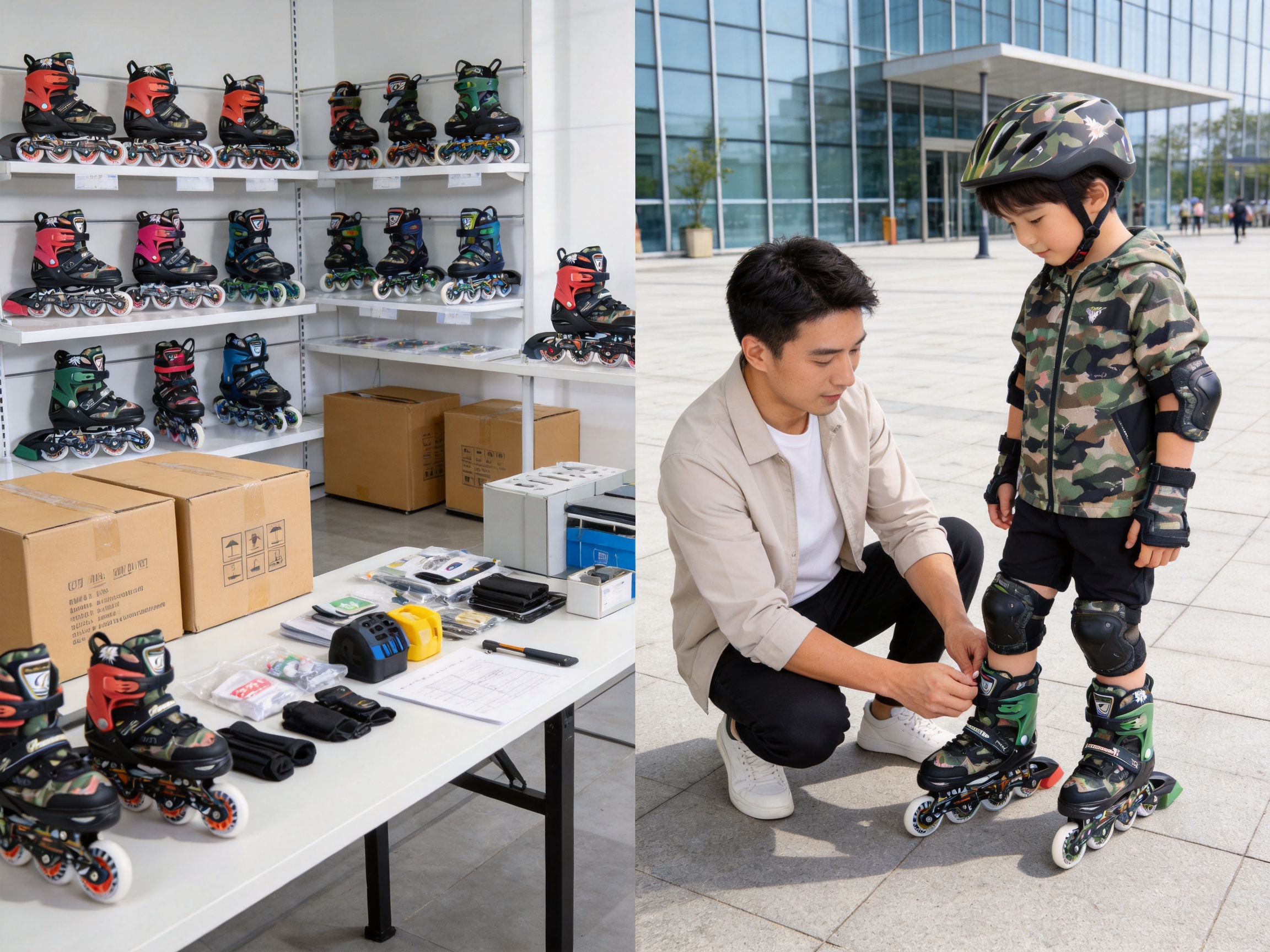
Inline skating involves wheels and movement, so children should use suitable protective gear. A helmet, knee pads, elbow pads, and wrist guards can help reduce the severity of injuries during falls. Children should skate in open, flat, and reasonably smooth areas away from vehicle traffic, stairs, water, and crowded pedestrian paths.
Parents or guardians should inspect the skates before every session. The adjustable mechanism should be locked correctly, the closures should be secure, and visible components should not show damage. Wheels and other moving parts should be checked for looseness or unusual wear. If a component is damaged, the skate should not be used until it has been properly repaired or replaced.
Children should begin slowly and practice basic balance before attempting turns or increased speed. They should learn how to stop safely and understand that outdoor surfaces can change unexpectedly. Wet ground, loose gravel, cracks, and uneven pavement can create additional risks.
The BW-185 is designed for light outdoor recreation. It should not be treated as a stunt, racing, or extreme-sports product unless the manufacturer specifically confirms such use. Following the intended application protects the child, preserves the product, and supports customer satisfaction.
17. Care and Maintenance Recommendations
Proper care can help preserve the comfort and appearance of the BW-185. After use, the skates should be placed in a dry and ventilated area. If the upper becomes dirty, it should be cleaned according to the material’s care instructions rather than being exposed to harsh chemicals or excessive water.
Parents should allow the skates to dry naturally. Direct high heat may affect fabric, adhesives, plastic components, or internal materials. The skates should also be stored away from prolonged sunlight and extreme temperatures.
The fit should be checked periodically as the child grows. A size adjustment may be necessary even if the child has not yet reached the end of the listed range. The skate should feel secure but not painfully tight. If the child’s toes are compressed or the foot cannot move comfortably, a larger adjustment position or a different size range may be required.
Retailers can include maintenance information in product packaging or online listings. Clear after-sales guidance can reduce misuse and help families obtain more value from the product.
18. Why the Product Offers a Stronger Value Proposition
The BW-185’s value comes from the combination of several practical elements rather than from one isolated feature. A child can grow within the adjustable size range, remain more comfortable through the soft breathable upper, and gain better control from the snug fit. The camouflage appearance adds visual appeal, while the durable outdoor construction supports repeated recreational use.
Compared with a basic fixed-size skate, the product may reduce the frequency of replacement. Compared with an uncomfortable or poorly ventilated model, it may encourage longer activity sessions. Compared with a conventional solid-color product, it provides more distinctive shelf appeal. Compared with an overly technical skate, it offers a simpler entry point for children who are only beginning to explore inline skating.
For commercial buyers, the manufacturing background strengthens this value proposition. Feile’s product specialization, R&D team, automatic production lines, dedicated workshops, quality systems, certifications, and international sourcing experience provide a more substantial foundation than a trading-only supply arrangement.
The final purchasing decision should still consider price, order quantity, testing requirements, delivery schedule, target market, packaging, and after-sales support. However, the overall product concept is well aligned with the needs of children’s recreational sports: comfortable, adjustable, attractive, durable, and easy to use.
19. Buyer Checklist for Wholesale and OEM Customers
Distributors and retailers evaluating the BW-185 should review both the product and the supplier. A structured evaluation can help ensure that the skate fits the intended market and that the factory can support the required order program.
| Evaluation area | Questions for buyers |
|---|---|
| Product fit | Do the three size ranges match the target customer group? |
| Intended use | Is the product clearly positioned for leisure skating and light outdoor activity? |
| Comfort | Does the upper provide the softness, fit, and breathability expected by the market? |
| Adjustment | Is the adjustment system easy for parents and children to operate? |
| Quality | Are inspection standards defined for materials, assembly, appearance, and function? |
| Compliance | Are current reports and certificates available for the destination market? |
| Packaging | Can the factory provide required labels, manuals, cartons, and private-label packaging? |
| Production | Can the factory meet the required quantity, schedule, and batch consistency? |
| After-sales | Are replacement parts, warranty conditions, and complaint procedures clearly defined? |
Requesting a production sample, confirming the adjustment range, reviewing current compliance documents, and carrying out pre-shipment inspection are sensible steps. Buyers should also verify whether colors, patterns, packaging, and logos can be customized and whether customization affects minimum order quantities or delivery time.
20. Questions and Answers
Q1: What type of product is the BW-185?
The BW-185 is a children’s adjustable inline skate designed for outdoor leisure, play, and light exercise. It is intended for children who want to practice or enjoy casual skating on suitable flat surfaces.
Q2: What sizes are available?
The product uses three adjustable size ranges: approximately 31–34, 35–38, and 39–42. The adjustment allows the skate to accommodate changes in a child’s foot within the relevant range.
Q3: Why is an adjustable skate useful for children?
Children’s feet grow quickly. An adjustable skate can remain usable for longer than a single fixed-size model, potentially reducing replacement frequency and providing better value for families.
Q4: Is the product suitable for professional skating?
The BW-185 is designed for leisure skating, outdoor play, and light exercise. It is not presented as specialized equipment for racing, aggressive skating, jumps, or professional high-intensity training.
Q5: Does the skate provide ventilation?
Yes. The upper uses a breathable structure intended to promote airflow and help keep the feet more comfortable during outdoor activity.
Q6: Is the upper comfortable for extended recreational use?
The upper is made with a soft, skin-friendly, flexible material designed to follow the shape of the foot and ankle. Proper adjustment and suitable socks remain important for individual comfort.
Q7: What makes the appearance different?
The product uses a camouflage design rather than a conventional plain or solid-color appearance. This gives it a distinctive outdoor-inspired style that may appeal to children.
Q8: Can the product help a child learn balance?
Inline skating naturally involves balance, coordination, and controlled movement. The secure fit and straightforward operation of the product can support early practice, although children still need supervision and appropriate instruction.
Q9: What protective equipment should children wear?
Children should use a helmet, knee pads, elbow pads, and wrist guards when skating. They should also skate in a safe area away from traffic, stairs, wet ground, and dangerous obstacles.
Q10: What manufacturing resources does Feile have?
The company has more than 200 employees, a workshop of approximately 20,000 square meters, five automatic production lines, dedicated mold, injection molding, sewing, and assembly workshops, and a professional R&D engineering team.
Q11: Does the company support OEM cooperation?
The company is positioned as an OEM manufacturer of skating and scooter equipment. Buyers should contact the company directly to confirm customization options, minimum order quantities, packaging services, production schedules, and technical requirements.
Q12: What certifications and systems are associated with the manufacturer?
The supplied company information states that Feile has passed ISO9001, BSCI, and Kmart factory certification systems and has products with certifications including 3C, CE, EN71, EN62115, ASTM, EMC, and EN13843:2009. Buyers should confirm current documentation for the exact product and destination market.
Q13: Where is the company located?
Ningbo Feile Sporting Goods Co., Ltd. is located at No. 27 Maosheng Road, Lianghui Economic District, Yuyao City, Ningbo, Zhejiang Province, China.
Q14: What should buyers confirm before placing an order?
Buyers should confirm product samples, size ranges, materials, packaging, testing documents, order quantity, production lead time, inspection standards, shipping details, customization terms, warranty conditions, and after-sales support.
Conclusion
The BW-185 Children’s Inline Skate is designed around the practical needs of growing children and their families. Its three adjustable size ranges address the challenge of changing foot dimensions, while the snug form-fitting construction helps improve stability and control. The soft, breathable upper supports comfort, and the durable outdoor-oriented construction is suitable for everyday leisure play. Its camouflage styling adds a distinctive visual identity that can help the product stand out in a competitive retail market.
The skate is most appropriate for children’s recreational use on flat outdoor surfaces. It offers an approachable way for children to practice balance, coordination, and movement without requiring professional-level training. When combined with adult supervision, protective equipment, correct fitting, and regular maintenance, it can become a practical part of a child’s active lifestyle.
From a sourcing perspective, Ningbo Feile Sporting Goods Co., Ltd. provides a substantial manufacturing platform. Its experience in children’s wheeled sports products, automatic production lines, specialized workshops, R&D resources, quality systems, certifications, and OEM orientation support the development and supply of skating equipment for international markets.
For retailers, distributors, and private-label buyers seeking children’s skating products, the BW-185 presents a balanced proposition: adjustable, comfortable, visually distinctive, durable, and suitable for accessible outdoor recreation. Its strongest advantage is the way these characteristics work together to create a product that is appealing to children, practical for parents, and commercially relevant for professional buyers.
References
1. Product specification and feature information supplied for the BW-185 Children’s Inline Skate.
2. Manufacturer profile and company information supplied for Ningbo Feile Sporting Goods Co., Ltd.
3. ISO 9001 quality management system principles and general quality-control practices.
4. General guidance concerning children’s inline-skating safety and protective equipment.
5. General principles of product development, inspection, and compliance for children’s sports equipment.
Product: BW-185 Children's Inline Skate

Recommended Articles

Get in Touch
Your email address will not be published. Required fields are marked *
Have a project in mind? Contact with us!
We are happy to answer your questions. Please fill out this form
and one of our professional team will get back to you as soon as possible.

We specialize in producing various types of children's toy cars, children's skateboards, and ice skates.
