
 En
En
 Español
 русский
 عربى
عربى
Why Adjustable Children’s Scooters Are Becoming a Smarter Choice for Growing Families
Date:Aug 30, 2026
Content
- 1 1. The Product Concept: One Scooter for More Stages of Childhood
- 2 2. Key Product Specifications and Functional Overview
- 3 3. Adjustable Height for Better Comfort and Longer Service Use
- 4 4. Balanced Two-Wheel Structure for Beginners
- 5 5. Widened Anti-Slip Deck for Secure Standing
- 6 6. Quiet, Wear-Resistant Wheels for Smooth Everyday Riding
- 7 7. Portability, Storage, and Daily Convenience
- 8 8. Suitable Use Scenarios
- 9 9. Comparison with Common Scooter Alternatives
- 10 10. Manufacturing Strength Behind the Product
- 11 11. Quality Management and Certification Experience
- 12 12. Material and Component Considerations
- 13 13. OEM and Wholesale Advantages
- 14 14. Practical Maintenance Recommendations
- 15 15. Responsible Riding and Protective Equipment
- 16 16. Why the FL-780 Has Strong Market Potential
- 17 17. Frequently Asked Questions
- 17.1 Q1: What is the main feature of the FL-780?
- 17.2 Q2: Is the scooter suitable for beginners?
- 17.3 Q3: Why is an adjustable handle important?
- 17.4 Q4: Does the scooter have a wide standing platform?
- 17.5 Q5: Are the wheels noisy?
- 17.6 Q6: Where can the scooter be used?
- 17.7 Q7: Is the FL-780 easy to carry and store?
- 17.8 Q8: What are the indicative dimensions?
- 17.9 Q9: What company manufactures the product?
- 17.10 Q10: What manufacturing facilities does the company have?
- 17.11 Q11: Can the manufacturer support OEM projects?
- 17.12 Q12: What certifications are associated with the company’s products?
- 17.13 Q13: Does the scooter replace protective equipment?
- 17.14 Q14: How can the scooter be maintained?
- 17.15 Q15: What makes the FL-780 different from a fixed-height scooter?
- 18 18. Conclusion
- 19 References
- 20 Product: FL-780 Adjustable Height Children Scooter
Choosing a scooter for a child is not simply a matter of selecting an attractive color or a low purchase price. A well-designed children’s scooter must support balance development, provide a stable platform for beginners, remain comfortable as the child grows, and withstand frequent use in different environments. For families, schools, retailers, and distributors, the ideal product should also offer practical storage, easy transportation, reliable materials, and consistent manufacturing quality.
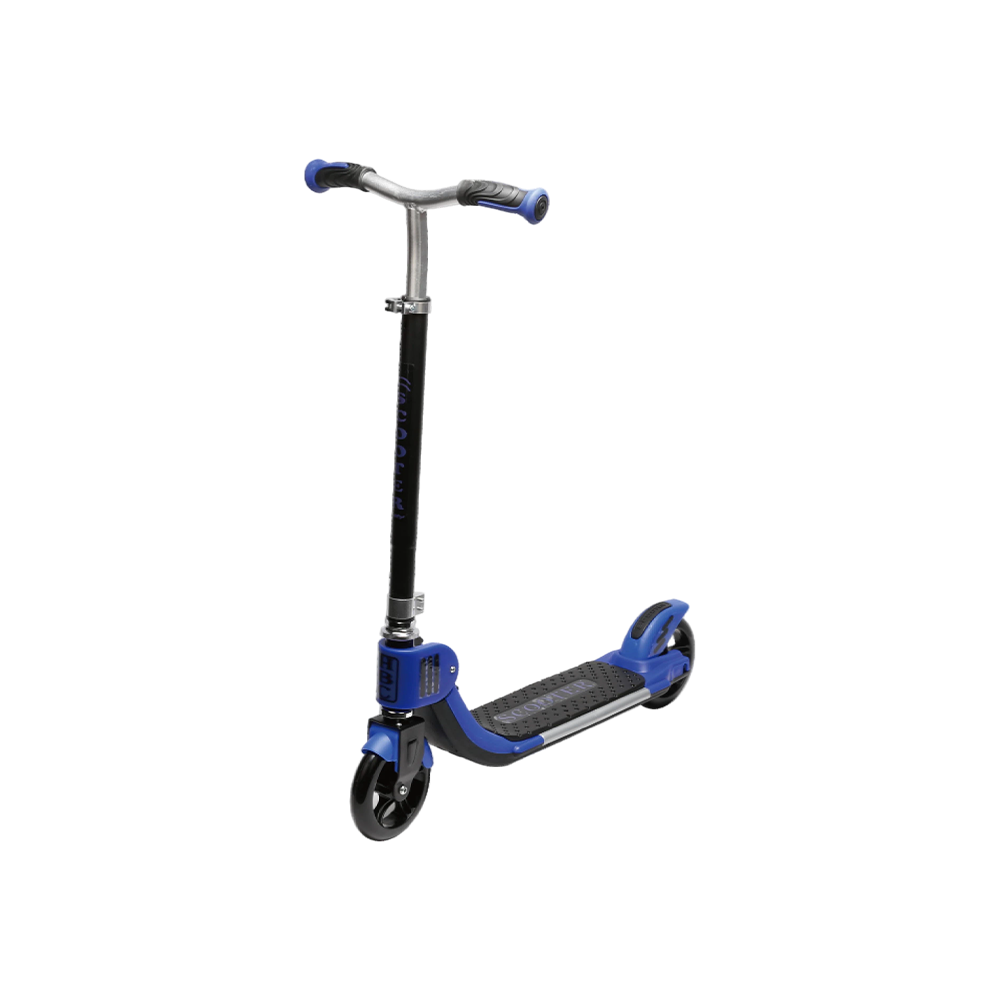
The FL-780 Adjustable Height Children Scooter is designed around these requirements. It combines a wide height-adjustment range, a balanced two-wheel structure, lightweight portability, quiet wheels, a widened anti-slip deck, and a construction intended for regular daily use. Instead of being limited to a short stage of childhood, the scooter is designed to adapt to children of different ages and heights. This can make it a more practical long-term choice than a fixed-height model that may quickly become uncomfortable or unsuitable.
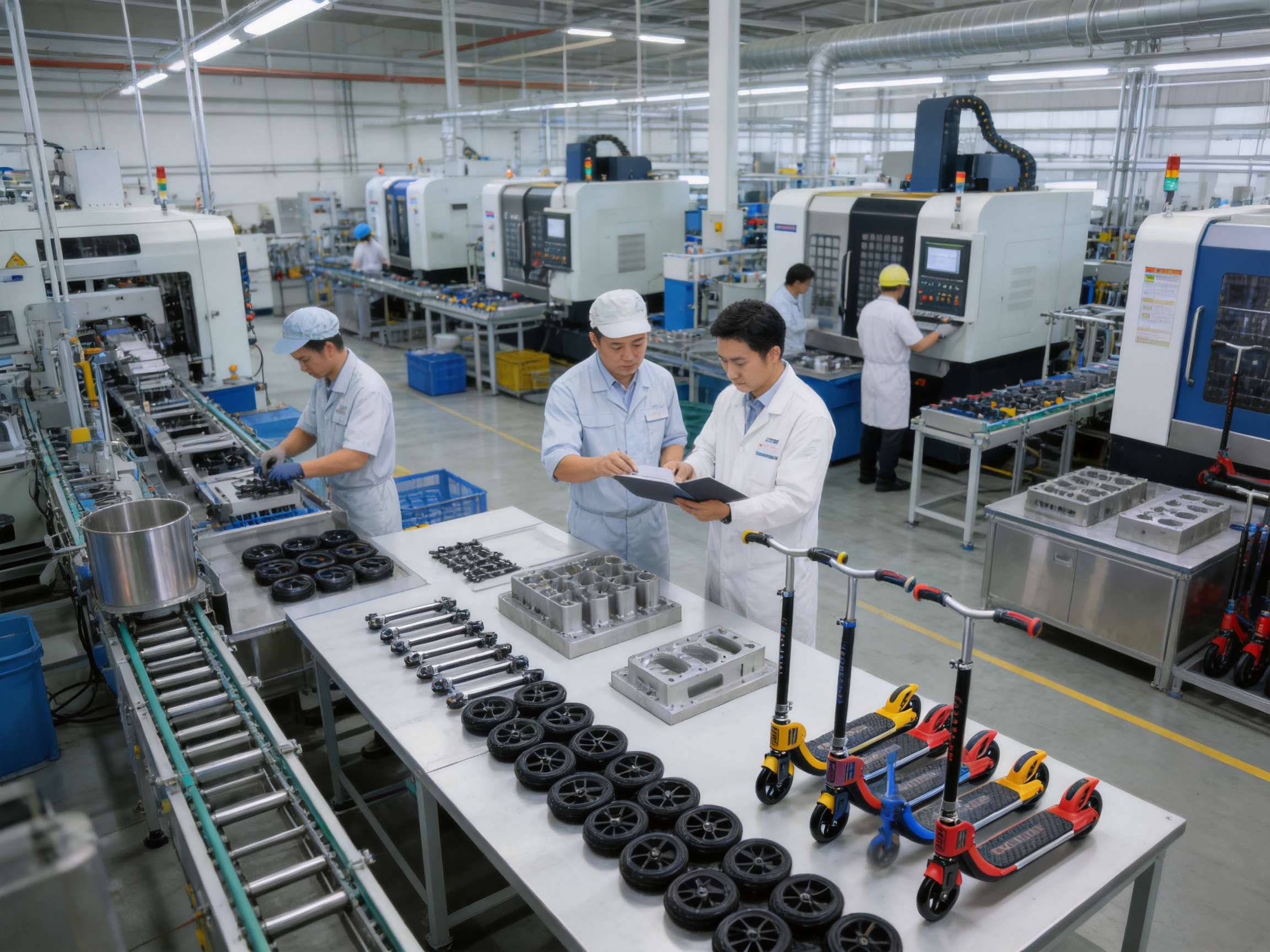
Beyond the product itself, the FL-780 benefits from the manufacturing capabilities of Ningbo Feile Sporting Goods Co., Ltd. The company has specialized in children’s scooters, inline skates, roller skates, and ice skates since 2010. Its facilities include a 20,000-square-meter workshop, five advanced automatic production lines, mold and injection-molding departments, sewing and assembly workshops, and a professional research and development engineering team. These capabilities allow the company to coordinate product design, component production, assembly, inspection, and quality management within one organized manufacturing system.
This article examines the FL-780 in detail, explains the advantages of its design, considers how it compares with common alternatives, and explores the manufacturing strengths that support its suitability for original equipment manufacturing and international distribution.
1. The Product Concept: One Scooter for More Stages of Childhood
Children grow quickly, and equipment that fits perfectly one year may become uncomfortable or impractical the next. A fixed-height scooter can therefore create a recurring replacement cycle. Parents may purchase a beginner model, then replace it with a larger version, and later seek another model with a stronger frame or more comfortable riding position. Each replacement adds cost, creates storage challenges, and requires the child to become familiar with a different product.
The FL-780 addresses this issue through a multi-level adjustable handle. Its handle has a large lifting range, enabling the riding height to be adapted to children with different body sizes. The adjustment system is designed to be simple and smooth, allowing the product to remain useful for a longer period as the child develops.
This approach creates several practical benefits. First, parents can select a comfortable height rather than accepting a fixed position that may force the child to stretch, bend, or hunch. Second, the scooter can be shared among children of different heights within the same household, provided that the product is used according to its intended capacity and instructions. Third, retailers can offer a more versatile product that appeals to a wider customer group instead of stocking multiple fixed-height versions for narrow age ranges.
Adjustability is most useful when it does not compromise stability. The FL-780 combines its height-adjustable handle with a balanced two-wheel gliding structure. The result is intended to give beginners a secure foundation while they learn how to stand, steer, shift weight, and control speed. A product that grows with the child should not merely become taller; it should continue to provide an appropriate and confident riding posture at each setting.
2. Key Product Specifications and Functional Overview
| Item | Product Information |
|---|---|
| Product name | FL-780 Adjustable Height Children Scooter |
| Product category | Children’s Scooters |
| Primary design feature | Multi-level handle height adjustment |
| Riding structure | Balanced two-wheel gliding design |
| Deck design | Widened, thickened, anti-slip standing platform |
| Wheel characteristics | Quiet, wear-resistant wheels for smooth gliding |
| Portability | Lightweight structure for transportation and storage |
| Indicative product dimensions | 705 x 375 x 1000 mm |
| Suggested environments | Community squares, parks, playgrounds, spacious indoor areas, and other flat surfaces |
The dimensions provide a relatively substantial overall format for a children’s scooter while retaining a portable structure. The wider overall size can help provide a more comfortable riding experience for children who need additional standing space. The handle height can be adjusted to support a more natural relationship between the rider’s body and the steering position.
The FL-780 is intended for use on flat surfaces. Suitable environments include community squares, parks, playgrounds, residential outdoor areas, and spacious indoor areas where scooter use is permitted and safe. It can also serve as a convenient short-distance mobility option for children, although it should not be treated as a replacement for proper supervision, traffic awareness, or protective equipment.
Its design is not focused only on visual appeal. The major functions are related to comfort, stability, portability, noise reduction, standing security, and durability. This combination makes the model suitable for both leisure and regular use after school or during family outings.
3. Adjustable Height for Better Comfort and Longer Service Use
Supporting a More Natural Riding Posture
A child’s riding posture affects comfort, steering control, and confidence. If the handle is too low, the rider may need to bend forward or hunch the shoulders. If it is too high, the child may struggle to control the scooter accurately. Neither position is ideal for learning or extended gliding.
The FL-780 uses a multi-level height adjustment handle to help families select a more suitable position. A properly adjusted handle allows the child to maintain a more natural upper-body posture while keeping both hands comfortably positioned. This can reduce unnecessary strain during longer periods of use and may help the child focus on balance and direction rather than discomfort.
The grip is described as comfortable and smooth, supporting a secure hand position without creating excessive hand fatigue. This is important for younger riders, whose hand strength and coordination are still developing. A comfortable grip can also make it easier for a child to maintain control when starting, turning, or slowing down.
Reducing the Need for Annual Replacement
One of the clearest advantages of an adjustable scooter is its potential to remain useful as the child grows. A fixed-height product may be affordable at the time of purchase, but its effective service period can be limited if the handle soon becomes too low. An adjustable model can delay that replacement point by offering additional settings.
For parents, this means better value over the ownership period. For retailers and importers, it means a product with a broader target audience and a stronger long-term value proposition. The FL-780 can be positioned as a practical choice for families who prefer to buy one adaptable product rather than replace a scooter every year.
Adjustability can also simplify product selection. A buyer does not need to identify an exact age-specific model if the handle can be set according to the child’s current height. Age remains relevant for suitability and supervision, but the adjustable structure gives families more flexibility during the purchasing process.
4. Balanced Two-Wheel Structure for Beginners
Learning to ride a scooter requires the child to coordinate several actions at once. The rider must stand securely, push with one foot, guide the handlebar, shift body weight, and monitor direction and speed. A scooter with an unstable or poorly balanced structure may make this learning process unnecessarily difficult.
The FL-780 is designed with a reasonable center of gravity and a stable two-wheel gliding structure. This configuration is intended to help beginners find their balance more easily. The structure supports a predictable riding feel and may reduce the tendency to tip during basic practice on suitable flat surfaces.
Stability does not mean that the scooter can prevent every fall. Children still need instruction, supervision, and appropriate protective gear. However, a stable platform can reduce avoidable difficulties caused by a poorly designed frame or an unsuitable weight distribution. It can help the child gain confidence gradually instead of feeling that the scooter is constantly moving unexpectedly.
Compared with very small or highly specialized beginner products, the FL-780 offers a broader use period through its larger overall size and adjustable handle. Compared with oversized fixed-height models, it offers more flexibility in matching the child’s posture. Its design therefore occupies a useful middle ground: stable enough for beginners, adaptable enough for growing users, and practical enough for routine family use.
Balance, Steering, and Confidence
Balance development is one of the educational benefits of scooter riding. As children propel themselves and steer, they practice body coordination, visual tracking, spatial awareness, and weight transfer. A scooter that provides a stable but responsive platform can support these skills without making the rider feel overwhelmed.
The FL-780’s two-wheel structure allows children to practice ordinary scooter movements while receiving support from a balanced base. The rider can learn to maintain a straight path, make gradual turns, and coordinate pushing with steering. These activities can complement other forms of play and exercise, including cycling, skating, running, and outdoor games.
Parents should introduce the scooter in a controlled environment. A quiet, level area with sufficient space is preferable for first practice. The handle should be adjusted before use, and the child should be shown how to stand on the deck, keep both hands on the grips, and slow down safely. These basic habits are as important as the physical design of the scooter.
FL-780 Adjustable Height Children Scooter
5. Widened Anti-Slip Deck for Secure Standing
The standing deck is the primary contact area between the rider and the scooter. Its width, thickness, surface texture, and overall rigidity can influence comfort and confidence. A narrow or smooth platform may leave little room for the child’s foot, especially when the rider is still learning how to position the body.
The FL-780 features a widened and thickened deck with an anti-slip surface. This design gives the rider a firmer foothold and creates more room for stable foot placement. The anti-slip treatment is intended to help reduce unwanted movement between the shoe and the platform during ordinary riding.
A wider deck is particularly useful for beginners because it gives them more freedom to find a comfortable stance. Children can learn to place the riding foot securely while using the other foot for propulsion. As their confidence improves, they can develop a smoother rhythm and more controlled gliding motion.
The deck also contributes to the scooter’s overall visual and physical impression. A sufficiently thick platform can feel more substantial during use, while a well-finished surface supports a cleaner appearance and easier routine care. Since children’s equipment is often used outdoors, the deck should be checked periodically for dirt, stones, moisture, or visible damage.
Stability Without Excessive Bulk
A common challenge in children’s product design is balancing stability with portability. Adding too much material can make a scooter difficult for a child or parent to move. Making it too light or narrow may reduce the sense of security. The FL-780 is designed as a lightweight yet stable product, aiming to provide a practical balance between these requirements.
The lightweight structure makes it easier for parents to carry the scooter to a park, place it in a vehicle, or store it at home. It can also help older children move the product independently when walking between riding areas. At the same time, the wider deck and balanced frame give the scooter a stable foundation rather than a fragile or overly compact appearance.
This combination is an advantage over some heavy recreational scooters that are difficult to transport and over very small models that children may outgrow quickly. The FL-780 is intended to function as an everyday product rather than equipment that is used only occasionally.
6. Quiet, Wear-Resistant Wheels for Smooth Everyday Riding
Wheel performance affects the way a scooter feels on the ground. Wheels that are too hard, poorly finished, or vulnerable to wear may create excessive noise, vibration, or uneven rolling. For families living in apartments or residential communities, noise can also be an important consideration.
The FL-780 uses quiet and wear-resistant wheels designed for smooth gliding on various flat surfaces. Their low rolling noise makes the scooter more suitable for community areas and, where permitted, spacious indoor locations. Reduced noise can make daily riding more pleasant for children and less disruptive for people nearby.
Wear resistance is equally important. Children may use a scooter repeatedly on playground paths, paved squares, residential walkways, and other ordinary surfaces. Wheels that maintain their shape and rolling performance over time can contribute to better product value and lower maintenance requirements.
No wheel is suitable for every surface. Rough, broken, wet, sandy, or uneven ground can accelerate wear and reduce control. The FL-780 is best used on clean, flat surfaces, and the wheels should be inspected regularly for embedded debris, cracks, looseness, or abnormal wear.
Quiet Operation as a Practical Product Advantage
Many product comparisons focus on size, color, or price, but sound level can influence whether a scooter is used frequently. A child may want to ride indoors during bad weather, or a family may use the scooter in a residential courtyard where excessive rolling noise would be inconvenient. Quieter wheels can expand the number of appropriate situations without changing the core riding experience.
For distributors, low-noise operation is also a useful selling point in markets where families live in dense residential communities. It allows the product to be presented not only as outdoor play equipment but also as a versatile option for appropriate indoor leisure areas and after-school activity.
7. Portability, Storage, and Daily Convenience
Children’s equipment must fit into real family routines. If a scooter is difficult to carry, difficult to store, or difficult to clean, it may remain unused even when the child enjoys riding. The FL-780 uses a simple and lightweight overall structure to support convenient transportation and storage.
Its portability is useful during family outings. Parents can take the scooter to a park, community square, playground, or travel destination without treating it as a major piece of luggage. At home, its straightforward form can be placed in a storage area without taking up excessive space.
Simple construction may also make routine maintenance easier. After outdoor use, the scooter can be checked for dirt and debris, wiped clean, and stored in a dry location. The wheels, deck, handle, and adjustment mechanism should receive particular attention. Regular inspection can help identify loose parts or unusual movement before the next ride.
Compared with large ride-on products or complicated recreational equipment, the FL-780 is easier to integrate into ordinary household use. This is an important advantage because the best children’s product is often the one that families can use conveniently and consistently.
8. Suitable Use Scenarios
Community Squares and Parks
Open community squares and parks provide suitable spaces for children to practice gliding, steering, and balance. The FL-780’s stable structure and quiet wheels make it appropriate for calm recreational riding on flat paved areas. Parents can remain nearby while children develop basic control skills.
Playgrounds and Family Recreation Areas
In playground environments, children often move between different activities. A portable scooter can provide an additional form of exercise and entertainment. The widened deck helps children stand securely, while the adjustable handle enables parents to set the product according to the child’s height.
Short Daily Trips
For short-distance movement in suitable private or pedestrian-friendly areas, the scooter can serve as a convenient alternative to walking. It may be useful for traveling around a residential community, moving between recreational spaces, or accompanying a family outing. Adults should assess the environment carefully and avoid roads, crowded traffic areas, steep slopes, and locations where scooters are prohibited.
Spacious Indoor Areas
When used in an appropriate indoor space, the quiet wheels can help reduce disturbance. Large halls, indoor recreational areas, and other smooth surfaces may provide opportunities for supervised practice. Indoor use should only take place where permission has been granted and where there are no obstacles, fragile objects, slippery surfaces, or other hazards.
After-School Exercise
Children need varied forms of physical activity. Scooter riding can encourage movement after school while helping develop coordination and balance. It can be a more engaging alternative to passive entertainment and can be combined with family walks, outdoor games, or skating activities.
9. Comparison with Common Scooter Alternatives
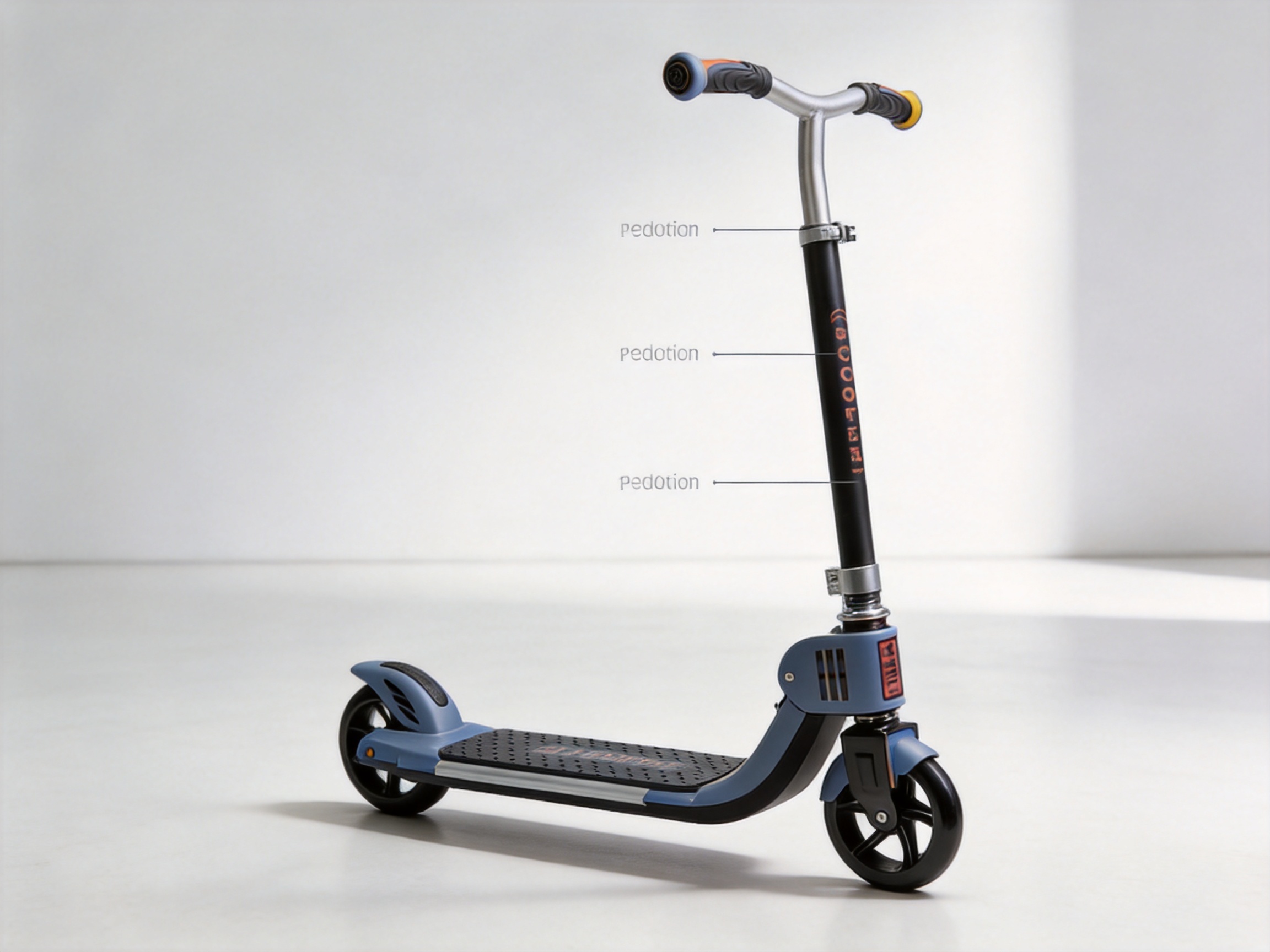
Product advantages are most meaningful when they are understood in relation to common alternatives. The FL-780 is not intended to replace every type of scooter. Instead, it offers a particular combination of adaptability, stability, comfort, portability, and everyday usability.
| Comparison factor | Fixed-height children’s scooter | Very compact beginner scooter | Large fixed-height scooter | FL-780 adjustable scooter |
|---|---|---|---|---|
| Growth adaptability | Limited | Often limited | May suit only taller children | Multi-level height adjustment |
| Riding posture flexibility | Depends on one fixed setting | Usually designed for a narrow size range | May be too high for younger riders | Can be adjusted to the child’s height |
| Beginner stability | Varies by frame design | May offer a smaller support area | Can feel difficult for small riders | Balanced two-wheel structure |
| Standing space | Varies | Often compact | May be wider but heavier | Widened anti-slip deck |
| Portability | Usually convenient | Very convenient | May be less convenient | Lightweight and easy to move |
| Potential ownership period | May be short as the child grows | Often suited to an early stage | Can be longer but not suitable for all children | Designed to accompany growth for longer |
| Noise consideration | Depends on wheel material | Depends on wheel material | Depends on wheel material | Quiet, wear-resistant wheels |
Compared with a fixed-height scooter, the most obvious advantage of the FL-780 is adaptability. The handle can be adjusted as the child grows, helping the family avoid an immediate replacement caused only by an unsuitable height.
Compared with a very compact beginner scooter, the FL-780 provides a larger overall size and a wider height range. This can make it more useful beyond the earliest learning stage. Its widened deck also offers more standing room, while the balanced structure supports continued practice.
Compared with a large fixed-height scooter, the FL-780 offers a more flexible fit. A large model may be physically strong but uncomfortable for a smaller child if the handle is too high. Adjustable height makes it easier to balance physical size with riding comfort.
Compared with products that emphasize appearance but provide limited functional differentiation, the FL-780 has several practical features that can be clearly communicated to buyers: adjustment range, stable structure, anti-slip deck, quiet wheels, portability, and extended usability.
10. Manufacturing Strength Behind the Product
A product’s design is only as reliable as the manufacturing system that produces it. For international buyers, product sourcing involves more than evaluating a sample. Buyers also need to consider production capacity, engineering support, quality systems, certification experience, tooling capability, assembly consistency, and the supplier’s ability to respond to changing market requirements.
Ningbo Feile Sporting Goods Co., Ltd. was established in 2010 and specializes in children’s scooters, inline skates, roller skates, and ice skates. This focused experience gives the company a product-oriented understanding of wheels, frames, plastic parts, soft goods, assembly, and children’s sports equipment requirements.
The company operates from a 20,000-square-meter workshop and has more than 200 employees. Its facilities include five advanced automatic production lines, as well as mold, injection-molding, sewing, and assembly workshops. This structure supports coordinated manufacturing rather than relying entirely on disconnected external suppliers.
Integrated Mold and Injection-Molding Capability
Mold capability is particularly important for scooters because many structural and appearance components depend on accurate tooling. Properly designed molds can help maintain dimensional consistency, surface quality, and repeatability between production batches. In-house or closely managed mold resources also allow engineering teams to improve parts and respond more efficiently to product revisions.
Injection molding is used for many components in children’s sporting goods. Consistent molding can support accurate fit between parts, stable appearance, and reliable assembly. It can also help the manufacturer manage material usage and production efficiency across larger orders.
For an OEM customer, coordinated mold and injection-molding processes may simplify communication. Instead of discussing every plastic component with separate suppliers, the customer can work with a manufacturer that understands how the parts function together within the complete scooter system.
Assembly and Production-Line Coordination
Final assembly affects the user’s first impression and the product’s practical performance. The handle, deck, wheels, fasteners, adjustment parts, and other components must be assembled consistently. A well-organized assembly process can reduce variation and support more reliable inspection.
Five automatic production lines provide a foundation for scalable manufacturing. Production capacity is important for distributors who need regular replenishment, seasonal inventory, or coordinated deliveries across different markets. It also helps the manufacturer manage multiple product categories while maintaining an organized workflow.
Automation does not eliminate the need for human expertise. Skilled production personnel, engineering staff, and quality inspectors remain essential for monitoring equipment, checking components, managing assembly, and handling exceptions. The combination of automation and experienced personnel can support both efficiency and flexibility.
Professional Research and Development
The company has a professional research and development engineering team. This is valuable in a category where customer preferences, safety requirements, materials, and styling trends can change rapidly. Product development involves more than creating a new appearance. Engineers must consider rider posture, balance, component compatibility, production feasibility, durability, packaging, and market regulations.
The FL-780’s combination of height adjustment, balanced structure, widened deck, quiet wheels, and lightweight portability reflects a product-development approach focused on everyday use. Each feature needs to work with the others. A height-adjustment mechanism must integrate with the handle structure. A wider deck must remain practical to transport. Quiet wheels must also provide suitable wear resistance. Product engineering is therefore a system-level process rather than a collection of isolated features.
11. Quality Management and Certification Experience
International buyers often require evidence that a supplier can operate within recognized quality and social responsibility systems. Ningbo Feile Sporting Goods Co., Ltd. has passed ISO9001, BSCI, and Kmart factory certification systems. These credentials indicate experience with structured quality management, factory assessment, and buyer-specific compliance processes.
The company’s products have received certifications including 3C, CE, EN71, EN62115, ASTM, EMC, and EN13843:2009. The exact certification requirements applicable to a product depend on its construction, market, intended use, and destination country. Buyers should always confirm the current documentation and applicable testing scope for the specific order.
Certification experience can nevertheless provide an important sourcing advantage. It shows that the manufacturer is familiar with technical files, testing procedures, factory audits, product documentation, and market-entry expectations. This can help reduce communication barriers when developing products for different regions.
For children’s products, quality management should cover more than final appearance. It may include incoming material inspection, component dimensions, wheel rotation, handle adjustment, deck surface, fastener security, packaging, labeling, and production records. A systematic process allows potential issues to be identified earlier and supports more consistent delivery.
Safety-Oriented Product Development
The FL-780 includes features that support safer everyday use, such as a balanced structure, anti-slip deck, comfortable grip, and stable height adjustment. These features do not remove the need for supervision or protective gear, but they demonstrate an effort to address common concerns in children’s mobility products.
Safe use also depends on correct assembly, appropriate surfaces, proper adjustment, and regular inspection. Manufacturers and distributors should provide clear instructions covering handle adjustment, riding environments, maintenance, protective equipment, and age or user suitability. Good documentation helps families understand how to use the product responsibly.
12. Material and Component Considerations
Children’s scooters require a combination of structural and functional materials. The frame must support ordinary riding loads. The deck must provide a firm standing surface. The wheels must roll smoothly and resist normal wear. The grip must remain comfortable during use. Fasteners and adjustment components must fit securely and operate consistently.
The use of dedicated mold, injection-molding, sewing, and assembly workshops allows a manufacturer to manage different production disciplines within the broader sporting-goods operation. This is helpful when a product includes both rigid components and soft-touch elements. It also supports a more coordinated approach to appearance, fit, and assembly.
Material selection should be evaluated together with intended use. A scooter for children will experience repeated starting, stopping, turning, standing, carrying, and storage. It may also be exposed to dust, minor impacts, temperature changes, and frequent handling. Products intended for international markets should be evaluated according to the relevant standards and test methods for those markets.
For OEM customers, component specification is an important part of project development. Buyers may request particular colors, surface finishes, packaging formats, logos, instruction languages, or accessory combinations. A capable manufacturer should be able to discuss the effect of each change on tooling, lead time, testing, minimum order quantities, and total cost.
13. OEM and Wholesale Advantages
The FL-780 can be attractive to importers, wholesalers, distributors, retailers, and private-label customers seeking a children’s scooter with clear functional differentiation. Its adjustable design allows it to be marketed to a broader group of families, while its stability and portability make it suitable for general recreational use.
A supplier with experience in multiple skating and scooter categories can also help customers build a more complete product portfolio. Ningbo Feile Sporting Goods Co., Ltd. produces children’s scooters, inline skates, roller skates, and ice skates, enabling buyers to explore one-stop sourcing for related sports equipment.
This broader capability may simplify purchasing and product planning. A distributor can coordinate several product lines with one manufacturing partner, potentially reducing communication complexity and improving consistency in packaging, documentation, and quality expectations.
Private Label and Market Adaptation
Different markets may require different colors, graphics, packaging designs, user instructions, warning labels, and sales channels. An experienced OEM manufacturer can discuss how these requirements affect product development and production planning.
The FL-780’s functional concept is suitable for multiple retail positions. It can be presented as a growing-child product, a family-friendly scooter, a beginner-oriented recreational product, or a practical after-school exercise option. The same core model may therefore support different marketing approaches without changing its fundamental structure.
Buyers should define their requirements at the beginning of the project. Important questions include target market, expected age and height range, product colors, logo placement, packaging style, testing documentation, order quantity, delivery schedule, and after-sales support. Early communication helps reduce later modifications and allows the manufacturer to provide a more accurate quotation and production plan.
Supply Continuity and Production Capacity
More than 200 employees, five automatic production lines, and multiple specialized workshops provide a foundation for handling commercial orders. Capacity should always be confirmed for the specific season and quantity, but an established production structure can offer advantages over a small workshop with limited equipment or heavily outsourced processes.
Long-term supply relationships also benefit from consistent communication. Once a product has been approved, buyers need confidence that future batches will maintain the agreed specifications. Documented production standards, controlled components, and organized inspection processes can support this consistency.
14. Practical Maintenance Recommendations
Regular maintenance helps preserve the performance and appearance of the FL-780. Before each use, an adult should check that the handle is securely locked at the selected height. The deck should be free of loose stones, mud, oil, or other substances that could reduce traction. The wheels should rotate normally without unusual noise or visible damage.
After riding outdoors, the scooter can be wiped with a clean, slightly damp cloth. It should be dried before storage, especially if it has been used in a damp environment. Harsh chemicals, excessive water, and unsuitable cleaning tools should be avoided unless specifically approved by the manufacturer.
Fasteners and connection points should be inspected periodically. If any part becomes loose, cracked, bent, or unusually difficult to operate, the scooter should not be used until it has been properly assessed and repaired or replaced. The height-adjustment mechanism should operate smoothly and should never be forced.
Storage is best carried out in a dry location away from excessive heat, direct sunlight, and moisture. Proper storage can reduce unnecessary aging of plastic, rubber, and surface finishes. Families should also prevent children from using the scooter on stairs, near open water, on steep slopes, or in areas with vehicle traffic.
15. Responsible Riding and Protective Equipment
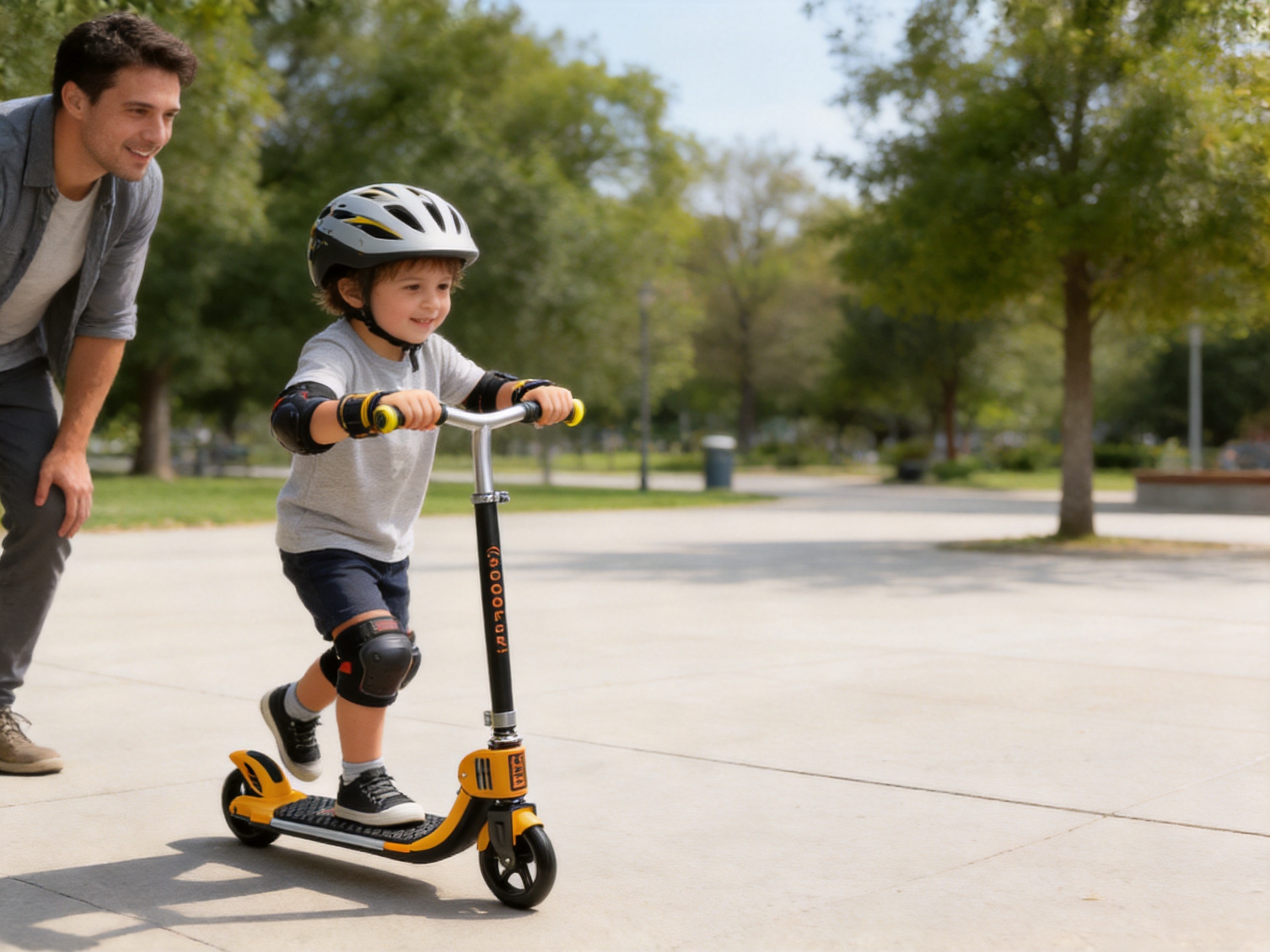
A scooter’s structural design is only one part of riding safety. Children should wear properly fitted protective equipment, including a helmet and suitable wrist, elbow, and knee protection where appropriate. Protective gear should be selected according to the child’s size and the level of activity.
Beginners should practice in open, uncluttered areas away from cars, bicycles, drop-offs, and crowded pedestrian paths. They should learn to start slowly, keep both hands on the handle, maintain a stable stance, and leave enough space to stop. Adults should supervise children according to their age, ability, and surroundings.
Riding surfaces should be dry, smooth, and free from large cracks or obstacles. Wet pavement, loose gravel, sand, grass, steep slopes, and uneven ground can affect wheel traction and steering control. The FL-780 is intended primarily for suitable flat surfaces, and using it outside those conditions may increase risk.
Responsible riding practices protect the child and also help preserve the scooter. Avoiding impacts, excessive loads, and unsuitable terrain can reduce stress on wheels, deck, frame, and adjustment components. A well-maintained scooter is more likely to remain comfortable and reliable over an extended period.
16. Why the FL-780 Has Strong Market Potential
The children’s mobility and sports-equipment market continues to value products that combine entertainment with physical activity. Families increasingly look for products that encourage children to spend time outdoors, improve coordination, and develop balance. At the same time, buyers want products that offer reasonable value and do not need to be replaced as soon as the child grows.
The FL-780 responds to these priorities with a clear product story. Its handle adjusts to different heights, its structure supports beginner stability, its deck provides a secure standing area, and its wheels are designed for quiet and smooth operation. The lightweight format adds convenience for families, while the durable construction supports repeated use.
For retailers, the model has several easy-to-understand selling points. The adjustable handle communicates long-term usability. The wide anti-slip deck communicates stability. The quiet wheels communicate residential friendliness. The portable construction communicates convenience. The balanced two-wheel design communicates beginner suitability.
For international distributors, the product is supported by a manufacturer with experience in children’s sports equipment, a broad factory infrastructure, professional engineering resources, certification experience, and the ability to manage related product categories. These factors can help create a more dependable sourcing program than purchasing from a supplier with limited production scope.
17. Frequently Asked Questions
Q1: What is the main feature of the FL-780?
The main feature is its multi-level adjustable handle. The height can be changed to better match children of different ages and heights, helping the scooter remain useful as the child grows.
Q2: Is the scooter suitable for beginners?
Yes. The FL-780 is designed with a balanced two-wheel structure and a reasonable center of gravity to help beginners find their balance. Children should still practice under adult supervision and use suitable protective equipment.
Q3: Why is an adjustable handle important?
An adjustable handle can support a more natural riding posture. It may reduce the need for children to bend over or hunch and can help families avoid replacing the scooter solely because the original handle height has become unsuitable.
Q4: Does the scooter have a wide standing platform?
Yes. It features a widened and thickened deck with an anti-slip surface. The design provides more standing room and helps the rider maintain a firmer foothold during ordinary riding.
Q5: Are the wheels noisy?
The wheels are designed to be quiet and wear-resistant. Their low rolling noise makes the scooter suitable for many residential and community environments, as well as appropriate spacious indoor locations where scooter use is allowed.
Q6: Where can the scooter be used?
It is intended for flat surfaces in places such as community squares, parks, playgrounds, residential outdoor areas, and spacious indoor areas. It should not be used on roads, steep slopes, wet surfaces, rough terrain, or crowded locations where control may be difficult.
Q7: Is the FL-780 easy to carry and store?
Its lightweight and simple structure makes it convenient to move, transport, and store. Families can take it on outings and place it in a home storage area without requiring excessive space.
Q8: What are the indicative dimensions?
The supplied product information lists the dimensions as approximately 705 x 375 x 1000 millimeters. Buyers should confirm final measurements, packaging dimensions, and shipping specifications with the manufacturer before placing an order.
Q9: What company manufactures the product?
The FL-780 is manufactured by Ningbo Feile Sporting Goods Co., Ltd., a Chinese sporting-goods manufacturer established in 2010. The company specializes in children’s scooters, inline skates, roller skates, and ice skates.
Q10: What manufacturing facilities does the company have?
The company has a 20,000-square-meter workshop, more than 200 employees, five advanced automatic production lines, mold and injection-molding workshops, sewing and assembly workshops, and a professional research and development engineering team.
Q11: Can the manufacturer support OEM projects?
The company’s production experience, engineering resources, specialized workshops, and experience with international certifications provide a foundation for OEM and private-label projects. Specific customization options, order quantities, packaging, colors, testing, and delivery schedules should be discussed directly for each project.
Q12: What certifications are associated with the company’s products?
The supplied company information lists certifications and standards including 3C, CE, EN71, EN62115, ASTM, EMC, and EN13843:2009. The applicable documentation should be confirmed for the specific product configuration and destination market.
Q13: Does the scooter replace protective equipment?
No. Product features such as a stable structure and anti-slip deck do not replace a helmet or other suitable protective equipment. Children should wear appropriate protection and ride under supervision.
Q14: How can the scooter be maintained?
Inspect the handle adjustment, deck, wheels, fasteners, and connection points regularly. Remove dirt and debris, keep the scooter dry, store it away from excessive heat and moisture, and stop using it if any part is cracked, loose, or damaged.
Q15: What makes the FL-780 different from a fixed-height scooter?
The FL-780 can be adjusted as the child grows, offers a wider height range, and combines this adaptability with a widened anti-slip deck, quiet wear-resistant wheels, a balanced structure, and lightweight portability. A fixed-height scooter may be suitable for a narrower period of use.
18. Conclusion
The FL-780 Adjustable Height Children Scooter is designed to solve several common challenges in children’s recreational mobility equipment. Its adjustable handle supports children of different heights, its balanced two-wheel structure helps beginners build confidence, and its widened anti-slip deck provides a stable standing area. Quiet wear-resistant wheels contribute to smooth daily riding, while the lightweight construction makes transportation and storage easier.
Its strongest competitive advantage is the way these features work together. The scooter is not only adjustable; it is also designed for comfort, stability, portability, and repeated use. This gives families a practical product that can accompany a child for longer than many fixed-height alternatives. It also gives retailers and distributors a clear product concept that can be communicated across different markets.
The manufacturing resources behind the model further strengthen its commercial potential. Ningbo Feile Sporting Goods Co., Ltd. has specialized industry experience, a substantial workshop, automatic production lines, mold and injection-molding capabilities, assembly resources, research and development personnel, and experience with international quality and certification requirements.
For buyers seeking OEM skating and scooter equipment, the FL-780 represents a balanced combination of user-oriented design and organized manufacturing support. With correct adjustment, responsible riding, regular maintenance, and proper protective equipment, it can provide children with a comfortable way to exercise, practice coordination, and enjoy active play in suitable environments.
References
1. Product specification and feature information for the FL-780 Adjustable Height Children Scooter, supplied by the manufacturer.
2. Company profile and manufacturing capability information for Ningbo Feile Sporting Goods Co., Ltd., supplied by the manufacturer.
3. ISO 9001 quality management system principles and manufacturing quality-control guidance.
4. General product-safety principles for children’s wheeled recreational equipment.
5. General guidance on protective equipment, supervised riding, and safe use of children’s scooters.
6. International certification references listed for the manufacturer’s product range, including 3C, CE, EN71, EN62115, ASTM, EMC, and EN13843:2009.
Product: FL-780 Adjustable Height Children Scooter

Recommended Articles

Get in Touch
Your email address will not be published. Required fields are marked *
Have a project in mind? Contact with us!
We are happy to answer your questions. Please fill out this form
and one of our professional team will get back to you as soon as possible.

We specialize in producing various types of children's toy cars, children's skateboards, and ice skates.
