
 En
En
 Español
 русский
 عربى
عربى
Why the BW-210 Kids Beginner Inline Skate Is Built for Safer, More Confident First Rides
Date:Aug 04, 2026
Content
- 1 Designed Specifically for Young Beginners
- 2 Reinforced PP One-Piece Hard Shell
- 3 Comfortable Protection for Longer Practice Sessions
- 4 Simple Locking and Closure System
- 5 A Child-Friendly Appearance That Encourages Participation
- 6 Beginner-Oriented Riding Characteristics
- 7 Applications in Family, Educational, and Recreational Settings
- 8 Manufacturing Strength Behind the Product
- 9 Quality Systems and Product Certifications
- 10 Advantages for OEM and Wholesale Buyers
- 11 Comparison with Common Alternative Designs
- 12 Packaging and Size Information
- 13 Responsible Use and Parent Supervision
- 14 How Retailers Can Present the Product
- 15 Why the Manufacturer Is Suitable for Long-Term Cooperation
- 16 Frequently Asked Questions
- 16.1 What type of user is the BW-210 intended for?
- 16.2 What provides the main structural support?
- 16.3 Is the interior comfortable for extended wear?
- 16.4 Can the skates accommodate growing feet?
- 16.5 How are the skates fastened?
- 16.6 Why is a low-speed setup useful for children?
- 16.7 Where can children use the BW-210?
- 16.8 Does the product eliminate the need for protective gear?
- 16.9 What makes the BW-210 different from a soft beginner skate?
- 16.10 What makes it different from an advanced inline skate?
- 16.11 Can the product be purchased for OEM projects?
- 16.12 What product categories can be sourced from the same manufacturer?
- 16.13 What should buyers confirm before placing an order?
- 17 Conclusion
- 18 References
- 19 Product: BW-210 Kids Beginner Inline Skate
Learning to skate is an exciting milestone for children. The first experience on inline skates can influence whether a child develops confidence and enthusiasm or feels uncomfortable and discouraged. For young beginners, the right skate must do more than look attractive. It should provide stability, dependable ankle support, comfortable contact with the foot, simple adjustment, and a forgiving riding experience that allows children to learn step by step.
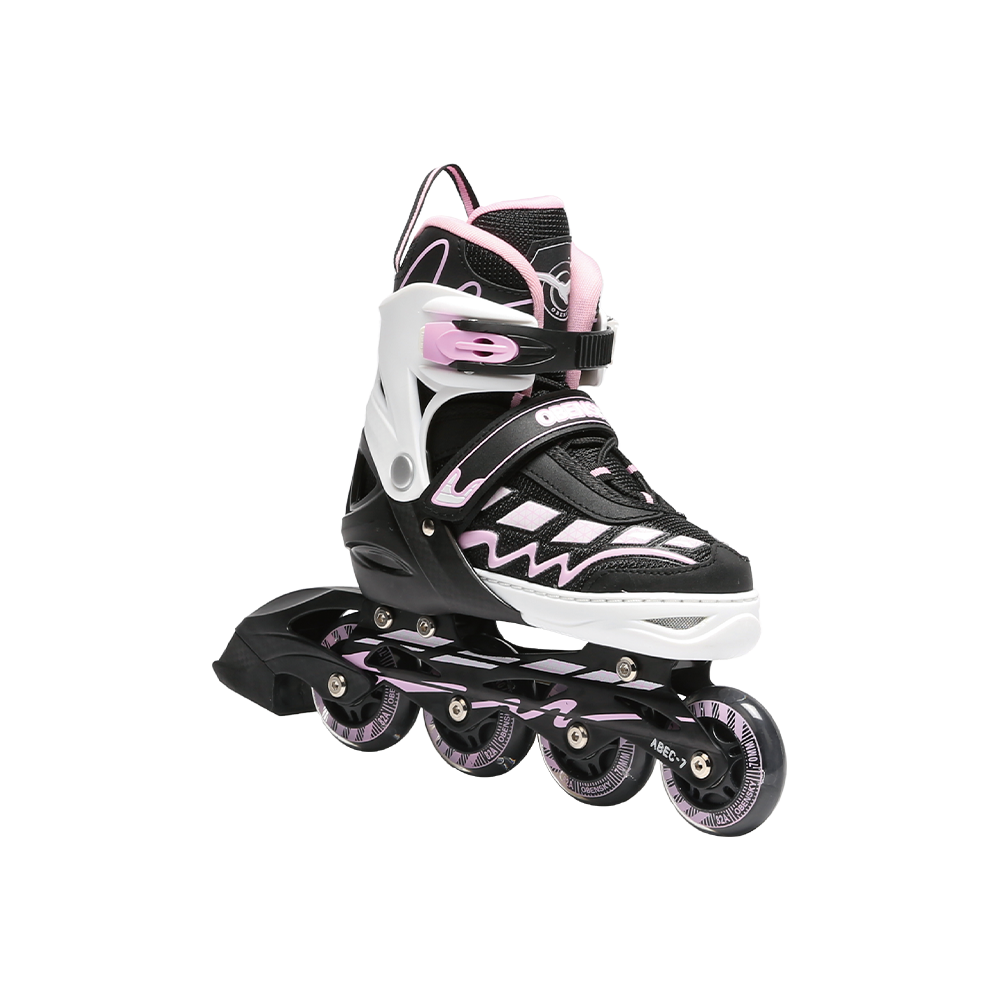
The BW-210 Kids Beginner Inline Skate is designed around these early learning requirements. It combines a reinforced polypropylene one-piece hard shell, a supportive structure, soft inner cushioning, adjustable sizing, easy-to-use closures, and a child-friendly cartoon appearance. Rather than focusing only on speed or advanced performance, the design emphasizes balance, control, protection, and ease of use for smaller children.
Produced by Ningbo Feile Sporting Goods Co., Ltd., the BW-210 reflects the capabilities of an established manufacturer specializing in children’s scooters, inline skates, roller skates, and ice skates. The company operates dedicated mold, injection molding, sewing, and assembly workshops, supported by automatic production lines and a professional research and development team. These resources are important because children’s sporting products require consistent dimensions, reliable assembly, carefully selected materials, and close attention to comfort and safety.
This article examines the BW-210 in detail, explains its advantages in the beginner inline skate category, and explores how its manufacturing background supports product reliability and OEM cooperation.
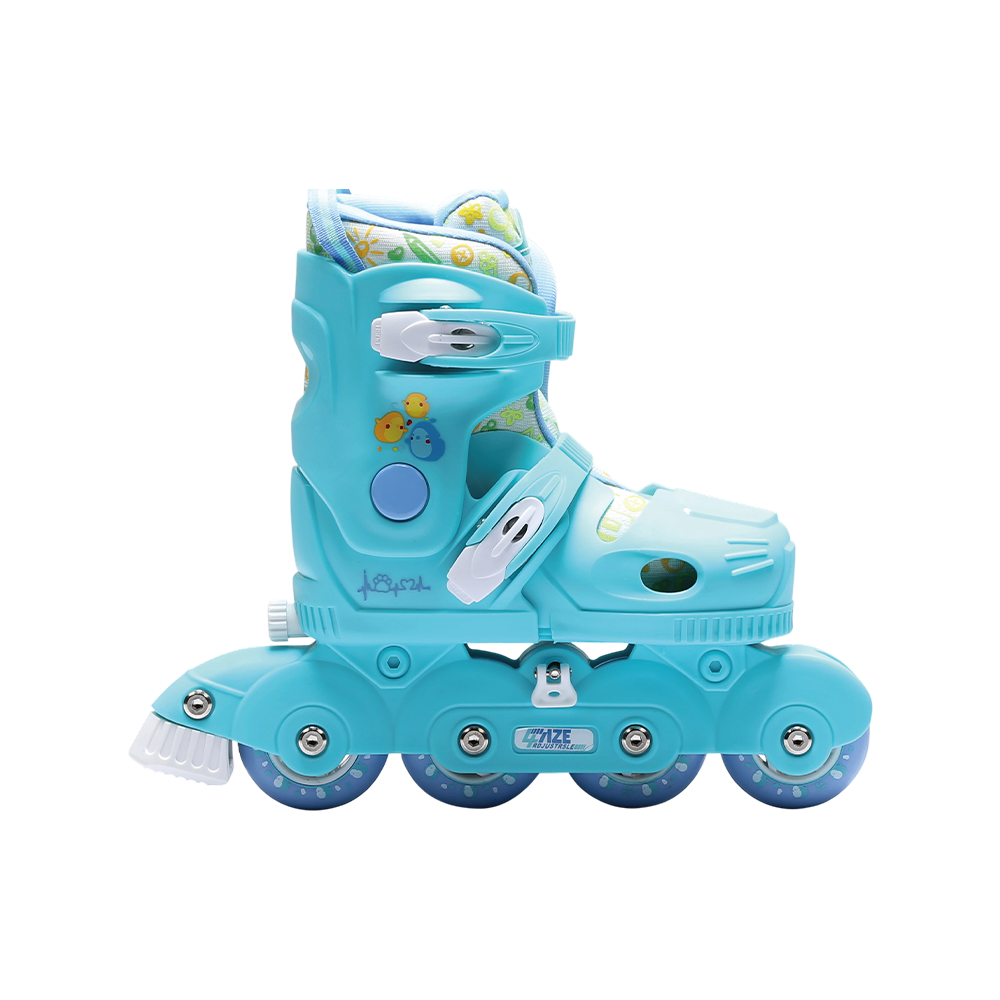
BW-210 Kids Beginner Inline Skate
Designed Specifically for Young Beginners
Many inline skates are designed for general recreational users, older children, or experienced skaters. These products may prioritize speed, aggressive styling, performance wheels, or a more rigid athletic fit. Those characteristics can be useful for advanced users, but they are not always ideal for a toddler or a child who is learning to stand and balance for the first time.
The BW-210 takes a different approach. It is developed for young children who need a stable and understandable skating platform. The skate is intended to help beginners practice standing, balancing, moving in a straight line, and becoming familiar with the basic sensation of rolling. Its low-speed, beginner-oriented setup creates a larger margin for error during the early learning stage.
This focus gives the BW-210 a practical advantage over products that are too fast, too complex, or too demanding for young users. A child who is still developing coordination needs time to understand how body position affects movement. A stable skate can make it easier to keep the feet aligned, maintain an upright posture, and recover from small changes in balance.
The design is also suitable for parents who want to introduce skating as a leisure activity rather than immediately pursue competitive training. Children can use the skates in appropriate residential areas, parks, indoor spaces, kindergarten interest classes, and beginner training environments. The product can support short family skating trips and light daily exercise while helping children build a foundation for future development.
Reinforced PP One-Piece Hard Shell
One of the central features of the BW-210 is its reinforced polypropylene one-piece hard shell. Polypropylene, commonly known as PP, is widely used in sporting products because it offers a useful combination of structural strength, relatively low weight, impact resistance, and resistance to deformation.
For a beginner inline skate, shell structure is especially important around the ankle and lower leg. Young skaters often place their feet unevenly, lean sideways, or lose balance while standing. A supportive shell helps keep the foot and ankle in a more controlled position. It can reduce excessive lateral movement and assist children in developing a more consistent skating posture.
The one-piece construction also reduces the number of major shell sections that must work together. A continuous shell can provide a more unified support structure than a loosely connected or lightly reinforced upper. For children who may fall, bump into objects, or place unusual pressure on the skate during practice, a sturdy shell helps the product resist everyday impact and deformation.
This construction is a significant advantage compared with soft or minimally structured beginner footwear. Flexible recreational shoes may feel comfortable at first, but they may not provide enough lateral support for a child who is still learning how to stand on wheels. The BW-210 uses firmness where support is needed while combining the shell with an inner lining to prevent the overall fit from becoming excessively harsh.
Support for Posture and Ankle Position
Young children are still developing the strength and coordination required to stabilize the ankle. When the ankle tilts inward or outward, the skate can become difficult to control. The thickened PP shell is intended to provide a more secure fit around the ankle and help prevent excessive lateral tilting during beginner practice.
This does not replace active supervision, proper instruction, or protective equipment. However, a supportive skate can make the physical learning process more manageable. When the foot remains better aligned with the boot, children can concentrate on bending their knees, keeping their arms balanced, and making small controlled movements.
Posture support is also useful for building confidence. A child who feels that the skate is stable may be more willing to stand up, take the first steps, and continue practicing after a minor fall. Confidence is a practical part of learning because hesitation and fear can make movement more rigid and unbalanced.
Comfortable Protection for Longer Practice Sessions
Protection and comfort must work together. A rigid skate that causes pressure points may discourage children from wearing it, while a soft skate that lacks support may not provide the control needed for safe learning. The BW-210 addresses this balance with a hard outer shell and a cushioned inner lining.
The inner lining is designed to soften contact between the foot and the hard shell. It helps reduce foot irritation and ankle chafing during extended wear. This is particularly important for children, who may have sensitive skin and may not immediately explain that a skate is causing discomfort.
A comfortable interior also helps maintain a more stable fit. If the child is constantly shifting the foot to avoid pressure, the skate may not perform as intended. Proper cushioning allows the foot to remain in a more natural position, supporting the shell’s role in posture control.
The BW-210 therefore offers a layered construction: the PP shell provides support and impact resistance, while the inner lining provides cushioning and improves the wearing experience. This combination is more suitable for beginner use than a product that relies exclusively on either softness or stiffness.
Adjustable Sizing for Growing Feet
Children’s feet grow quickly, and a fixed-size skate can become unsuitable in a relatively short period. The BW-210 is available in multiple adjustable size ranges, including 26–29, 30–33, and 34–37. The adjustable structure helps accommodate growth and can reduce the need for frequent replacement.
Adjustability offers several practical benefits. Parents can select a range that fits the child’s current foot while allowing room for normal growth. Retailers can also offer a more flexible product that serves a broader age and foot-size group. For families, the ability to use the same pair over a longer development period can improve value and reduce unnecessary product turnover.
However, adjustable sizing should always be used correctly. The skate should be secure without being painfully tight, and the foot should not slide substantially inside the boot. Parents should check the fit regularly as the child grows and confirm that the heel and ankle remain properly supported.
Simple Locking and Closure System
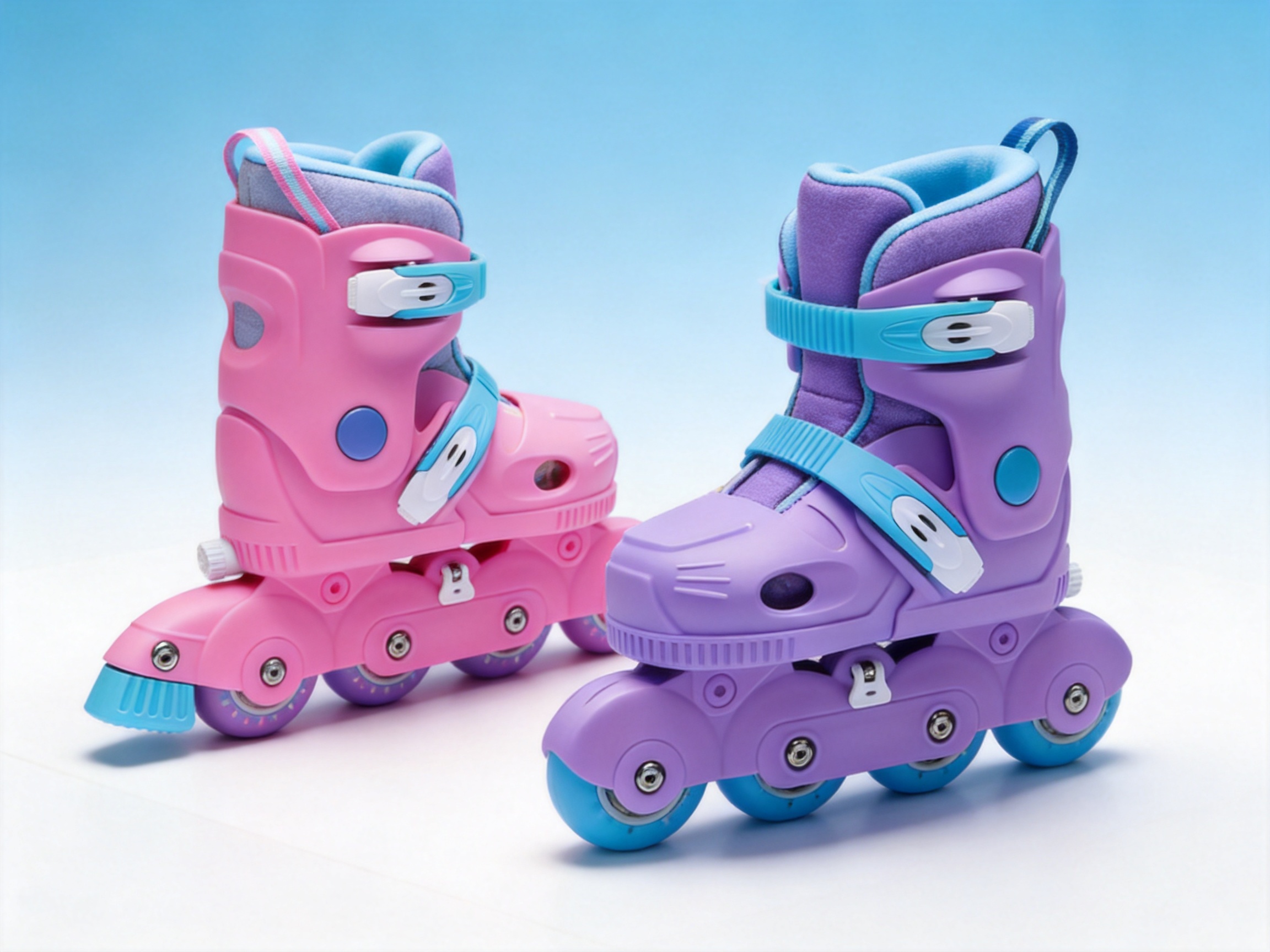
Children’s products should be easy for parents to understand and quick to adjust. Complicated fastening systems may delay use, create inconsistent fitting, or make children less willing to put on their skates. The BW-210 uses Velcro closures together with a simple on-and-off locking mechanism.
Velcro straps are particularly practical for younger children. They can be opened and secured quickly, and parents can visually check whether the fit is firm. The system is also easier to learn than a series of complicated buckles or laces. When parental assistance is needed, the skates can be prepared efficiently before practice begins.
The closure system contributes to consistent wearing. A properly closed skate helps hold the foot in position, supports the ankle shell, and reduces unnecessary movement inside the boot. For beginner skaters, that consistency is valuable because loose or uneven fastening can make balance more difficult.
The simple design also supports use in group settings such as kindergarten activities or children’s skating classes. Instructors and parents can spend less time explaining complicated adjustments and more time helping children learn safe standing and movement techniques.
A Child-Friendly Appearance That Encourages Participation
Children are often attracted to products that reflect their interests and imagination. The BW-210 features a playful cartoon design intended to appeal to young users. Its appearance is not merely decorative; it can help make the first step into skating feel familiar and enjoyable.
A child who likes the look of the skates may be more willing to try them, wear them regularly, and participate in practice. This can be especially helpful for beginners who may initially feel uncertain about standing on wheels. A visually engaging design can turn protective equipment into something the child views as part of the fun.
The cartoon styling also helps distinguish the product from more technical or adult-oriented inline skates. Many competing designs use performance-focused colors and shapes that may appeal to older users but feel less relevant to toddlers. The BW-210 is visually tailored to children while retaining the protective structure expected from a beginner skate.
For retailers and distributors, a recognizable children’s appearance can also support product presentation. A clear cartoon theme may be useful in physical stores, online listings, children’s sports catalogs, and seasonal promotional campaigns.
Beginner-Oriented Riding Characteristics
The BW-210 is tuned for stability and low-speed learning rather than high-speed performance. This distinction is essential when comparing beginner products with models designed for experienced skaters. A fast skate may offer excitement, but speed can increase the consequences of small balance errors. Young children generally benefit from a controlled riding experience that gives them time to react.
A stable, low-speed setup allows beginners to practice fundamental movements. These include standing with feet apart, bending the knees, shifting weight gradually, keeping the upper body relaxed, and moving forward in a straight line. Once these actions become familiar, the child can begin learning basic turns and controlled stopping under supervision.
The high margin for error is one of the product’s main category advantages. Instead of demanding precise technique from the beginning, the BW-210 is designed to support gradual skill development. This can reduce frustration and make practice sessions more productive.
Parents should still choose an appropriate practice surface. Smooth, clean, level areas are preferable, and children should avoid traffic, steep slopes, wet ground, gravel, and crowded locations. The product is intended to support beginner recreation, not eliminate the need for responsible supervision.
Suitable Learning Progression
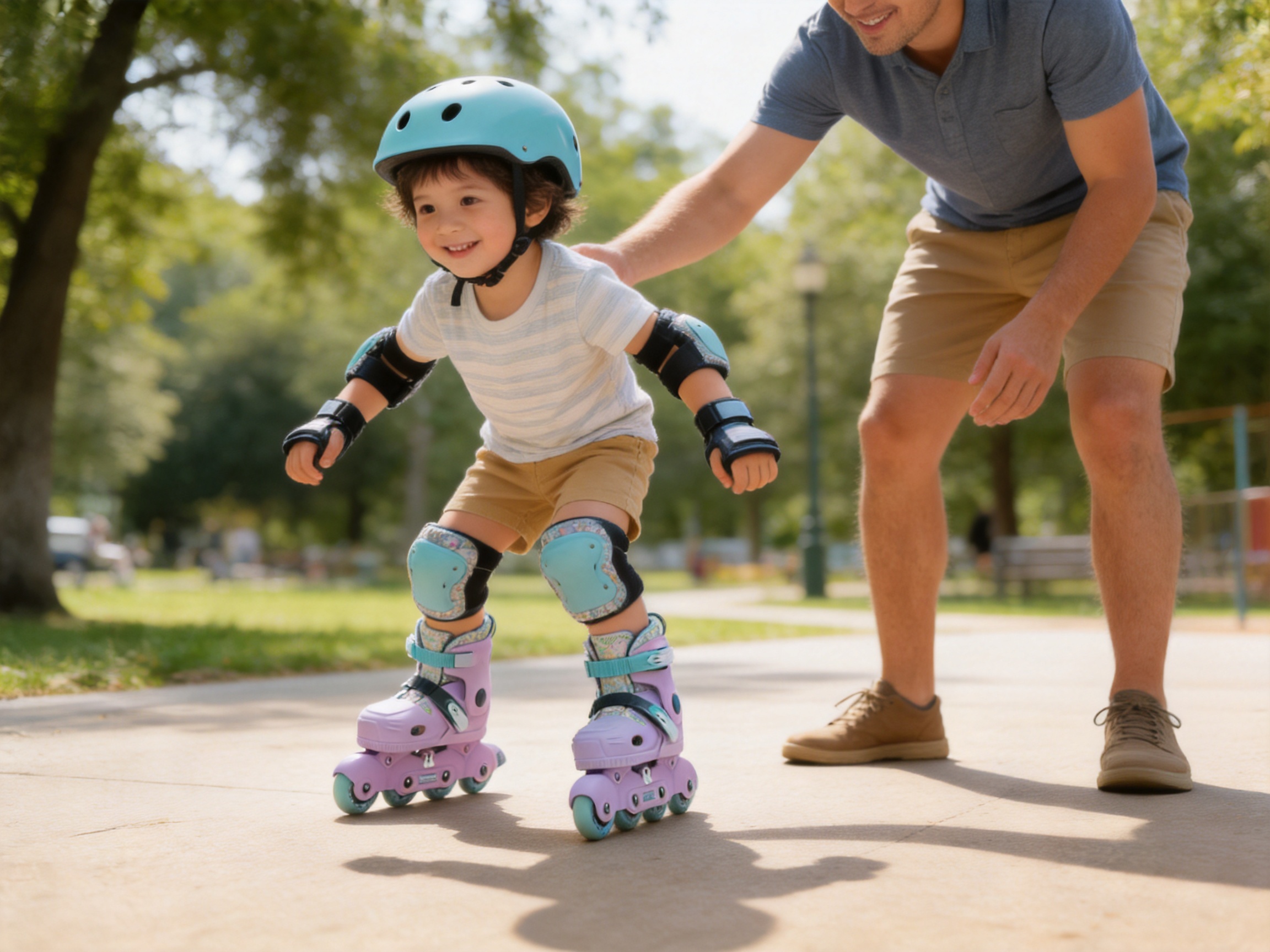
A sensible learning progression begins with equipment fitting and protective preparation. Parents should confirm the correct size, secure the closures, and provide a helmet, knee pads, elbow pads, and wrist protection. The child can then practice standing while holding a stable support or receiving assistance from an adult.
After standing becomes comfortable, the child can practice small steps and short gliding movements. The focus should remain on balance and posture rather than distance or speed. The reinforced shell and beginner-friendly riding characteristics of the BW-210 are well matched to this gradual approach.
Children can then practice straight-line movement in a clear area. At every stage, the adult should monitor fatigue, discomfort, and confidence. Young learners may need short sessions with frequent breaks. A comfortable product helps, but children should not be expected to continue when they are tired or frustrated.
Applications in Family, Educational, and Recreational Settings
The BW-210 is suitable for several common use scenarios. At home or in a residential community, it can be used for supervised leisure play and light exercise. In parks, it can accompany family recreation when a smooth and appropriate area is available. Indoor sports areas may also be suitable when skating is permitted and the floor is clean and unobstructed.
The product is also appropriate for kindergarten interest classes and children’s beginner roller skating programs. In these environments, easy adjustment and a stable structure are especially useful because multiple children may be learning at different speeds. Instructors can introduce standing, balance, and basic movement without immediately placing children on performance-oriented equipment.
For families, the BW-210 can support short outdoor skating trips. It provides an opportunity for parents and children to exercise together, develop a shared activity, and create positive early experiences with sport. Since the size can accommodate growing feet, the skate may remain useful across multiple stages of a child’s beginner development.
These applications make the product suitable for retailers serving family sports markets, educational programs, children’s activity centers, and distributors seeking practical entry-level skating equipment.
Manufacturing Strength Behind the Product
Product design is only one part of quality. The manufacturing process determines whether the design can be reproduced consistently across production batches. Ningbo Feile Sporting Goods Co., Ltd. has specialized in children’s scooters, inline skates, roller skates, and ice skates since 2010. This focused experience gives the company a practical understanding of children’s sporting products and their production requirements.
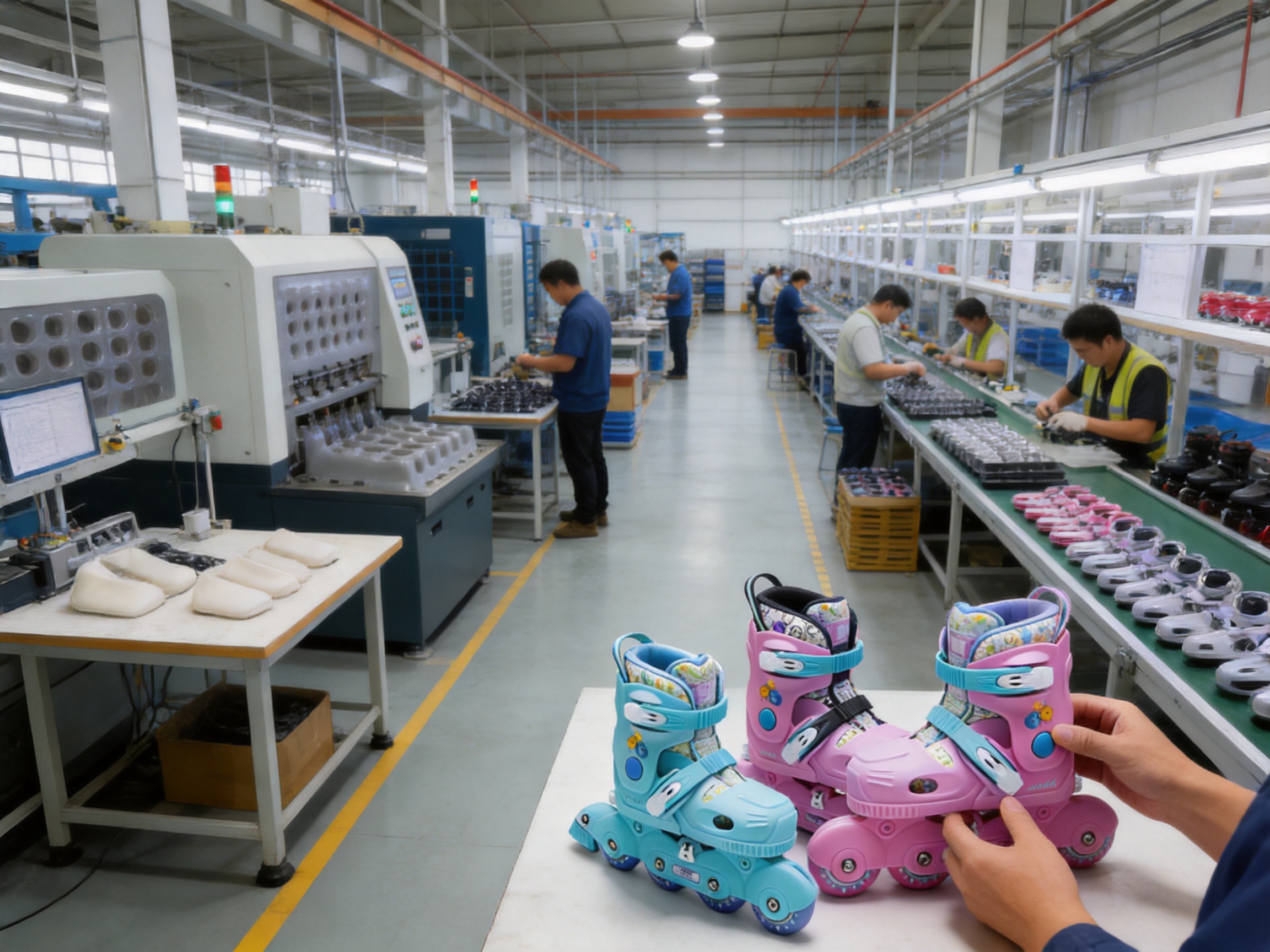
The company operates a workshop of approximately 20,000 square meters and employs more than 200 people. Its facilities include mold development, injection molding, sewing, and assembly workshops. These capabilities allow key manufacturing stages to be coordinated within an integrated production environment.
For a product such as the BW-210, mold and injection molding capabilities are particularly relevant. The PP shell requires accurate tooling and stable molding conditions to maintain shape, dimensions, surface quality, and structural consistency. In-house or closely managed mold production can help shorten communication cycles between product development and manufacturing.
The sewing workshop supports the production of soft components such as linings and related textile parts. These components must fit the shell correctly and provide a comfortable interface with the child’s foot. The assembly workshop then brings together the shell, lining, closures, frame, wheels, and other components into a finished product.
Automatic Production Lines and Process Control
The company has five advanced automatic production lines. Automation can improve repeatability in high-volume manufacturing by reducing variation in selected production steps. It may also help maintain consistent positioning, processing times, and assembly sequences when combined with appropriate inspection procedures.
Automation does not replace engineering judgment or quality management. Instead, it provides a stable foundation for repeatable production. A professional manufacturing system typically combines equipment, trained operators, process instructions, inspection checkpoints, and corrective action procedures. This combination is important for children’s products, where inconsistent shell dimensions or closure installation could affect fit and usability.
The presence of dedicated mold, injection molding, sewing, and assembly areas also supports better coordination. Product improvements can be evaluated across multiple stages rather than treated as isolated changes. For example, an adjustment to shell thickness may affect lining fit, assembly tolerances, packaging, and final product inspection. An integrated production structure makes it easier to consider these relationships.
Research and Development Capability
The company maintains a professional research and development engineering team and launches new products each year. Continuous product development is important in the children’s sporting goods industry because market expectations change quickly. Buyers increasingly look for products that combine safety, comfort, attractive styling, adjustability, and competitive pricing.
For the BW-210, research and development can support the balance between rigid support and comfortable wear. Engineers must consider shell geometry, ankle coverage, closure placement, size adjustment, interior cushioning, wheel configuration, and visual design. Each element affects the final user experience.
The company also has more than 30 college-educated management staff and has obtained multiple national patents. These resources indicate an organizational emphasis on technical management, product development, and structured operations. For OEM customers, such capabilities are valuable because they can support new product projects, design modifications, packaging requirements, and market-specific development.
Quality Systems and Product Certifications
Children’s sporting products must be developed and manufactured with attention to applicable quality and safety expectations. The company has passed ISO9001, BSCI, and Kmart factory certification systems. These systems and assessments relate to quality management, social responsibility, and factory compliance.
The company’s products have received certifications including 3C, CE, EN71, EN62115, ASTM, EMC, and EN13843:2009. The relevance of a specific certification depends on the product, market, configuration, and applicable regulatory requirements. Buyers should confirm the current documentation for the exact model and destination market before placing an order or making compliance claims.
Certification experience can nevertheless provide an important advantage over manufacturers that lack familiarity with international requirements. Export customers often need documentation, traceability, testing coordination, and consistent production records. A supplier accustomed to these expectations can help make the sourcing process more organized.
Quality management is particularly important for the BW-210 because the product is intended for children. Shell strength, wheel and frame assembly, closure performance, lining attachment, dimensional consistency, and packaging protection all contribute to the finished product’s reliability. A systematic production environment helps reduce avoidable variation and supports more dependable delivery.
Advantages for OEM and Wholesale Buyers
The BW-210 is not only a consumer product; it can also be a practical option for distributors, importers, retailers, educational programs, and sporting goods brands seeking children’s inline skates. The manufacturer offers experience across several related product categories, which can support broader sourcing programs.
Customers may be able to combine inline skates with children’s scooters, roller skates, ice skates, or protective gear through one supplier relationship. This one-stop sourcing potential can simplify communication, reduce the number of supplier audits, and support a more coordinated product range.
The company’s production scale is another advantage. More than 200 employees, a 20,000-square-meter workshop, and five automatic production lines indicate the ability to support organized production programs rather than only small irregular orders. Actual capacity, minimum order quantities, lead times, and customization options should be confirmed for each project.
OEM buyers may also benefit from the company’s mold and engineering capabilities. Product requirements can include color changes, logo application, packaging design, size-range adjustments, instruction materials, or modifications for specific markets. The feasibility of any change depends on technical review, order volume, tooling needs, compliance requirements, and production scheduling.
For retailers, the BW-210 offers a clear market position: a colorful, adjustable, protective, and beginner-oriented inline skate for young children. It is easier to communicate than a product with an unclear target user. Retail sales teams can explain its purpose in straightforward terms: first skating experiences, stable learning, supportive fit, child-friendly appearance, and room for growth.
Comparison with Common Alternative Designs
Different inline skate designs serve different users. The following comparison explains how the BW-210 is positioned within the beginner market.
| Product Design Type | Typical Strength | Possible Limitation for Young Beginners | BW-210 Position |
|---|---|---|---|
| Soft recreational skate | Light feel and flexible comfort | May provide less ankle support and lateral stability | Uses a reinforced hard shell with cushioned lining |
| Performance-oriented inline skate | Speed, responsiveness, and advanced handling | May be too demanding or fast for toddlers | Prioritizes stable, low-speed learning |
| Fixed-size children’s skate | Simple basic construction | Can become too small as the child grows | Offers multiple adjustable size ranges |
| Complex buckle or lace system | Potentially precise adjustment for experienced users | May be difficult for children and time-consuming for parents | Uses Velcro closures and a simple locking mechanism |
| Adult-style visual design | Technical or athletic appearance | May not attract very young children | Uses a playful cartoon design |
This comparison does not mean that every alternative is unsuitable. Advanced skates, soft skates, and fixed-size models may be appropriate in other situations. The BW-210’s advantage is that its features are coordinated around one clear purpose: helping young children begin skating with support, comfort, simple adjustment, and manageable movement.
Packaging and Size Information
The supplied product information lists three size groups: 26–29, 30–33, and 34–37. This range structure allows the product to serve several stages of childhood growth. Buyers should use the manufacturer’s current fitting guidance and confirm whether the listed dimensions refer to carton, packaging, or shipping measurements.
| Size Range | Listed Measurement |
|---|---|
| 26–29 | 685 × 320 × 395 mm |
| 30–33 | 710 × 345 × 400 mm |
| 34–37 | 775 × 350 × 430 mm |
Accurate packaging information is useful for importers and distributors. It supports warehouse planning, container loading calculations, shipping quotations, carton labeling, and retail inventory management. Before final production, buyers should confirm carton quantity, net weight, gross weight, packaging materials, pallet requirements, and shipping marks.
Responsible Use and Parent Supervision
The BW-210 is designed to make beginner skating more manageable, but no skate can remove all risks associated with rolling sports. Children should always skate under suitable adult supervision, especially during their first sessions. Parents should inspect the product before use and confirm that the shell, closures, frame, wheels, and other visible parts are properly secured.
Protective gear should be used together with the skates. A properly fitted helmet, knee pads, elbow pads, and wrist guards can help reduce injury risk during falls. Children should practice on smooth, level, dry surfaces away from vehicles, stairs, water, steep slopes, and obstacles.
Parents should also check that the skate is the correct size and that the adjustable mechanism is locked securely. The foot should feel supported, the heel should remain stable, and the child should not experience excessive pressure or rubbing. If discomfort occurs, the session should stop so the fit can be reassessed.
Regular inspection is a simple but important habit. Wheels, axles, closures, and shell components should be checked for looseness, cracks, unusual wear, or damage. Products used frequently or exposed to rough surfaces may require more frequent inspection and maintenance.
How Retailers Can Present the Product
Retail communication should focus on the needs of the child and parent rather than relying only on technical specifications. The product can be presented as an entry-level inline skate for young children who are learning balance and basic movement.
Key selling points include the reinforced PP hard shell, ankle support, cushioned lining, adjustable sizing, Velcro fastening, simple locking structure, cartoon appearance, and beginner-oriented low-speed stability. These features can be organized into clear product messages for packaging, online listings, brochures, and sales training.
Retailers can also position the BW-210 as part of a complete beginner skating solution. A product display may include helmets, knee pads, elbow pads, wrist guards, and other protective gear. Since the manufacturer also specializes in children’s scooters and related sports equipment, buyers may develop coordinated product collections instead of presenting the inline skate as an isolated item.
Visual merchandising should show the product in a safe, family-oriented context. Colorful presentation, size guidance, fitting instructions, and beginner learning advice can help parents make informed decisions. Clear explanations are especially important when selling children’s sports products because buyers want to understand how the equipment supports comfort and safety.
Why the Manufacturer Is Suitable for Long-Term Cooperation
Long-term sourcing requires more than a single attractive product. Buyers need a supplier with manufacturing experience, development capability, quality systems, production infrastructure, and the ability to communicate about market requirements.
Ningbo Feile Sporting Goods Co., Ltd. has operated since 2010 and focuses on children’s wheeled and skating products. Its manufacturing facilities cover mold production, injection molding, sewing, and assembly. Its automatic production lines support organized output, while its engineering team supports product development and improvement.
The company’s certifications and international product testing experience are also relevant to global customers. Its participation in international exhibitions indicates familiarity with overseas markets and buyer communication. The company’s location in Yuyao, Zhejiang Province, provides access to the broader manufacturing and logistics network of the Ningbo region, as well as convenient connections to Ningbo Airport and Shanghai.
For an OEM customer, these strengths may support a more efficient path from concept to finished product. A buyer can discuss target age, size range, color, styling, packaging, compliance, and order volume with a supplier that understands the complete manufacturing chain. This can reduce the coordination burden associated with managing separate mold, component, assembly, and inspection vendors.
Frequently Asked Questions
What type of user is the BW-210 intended for?
The BW-210 is intended for young children and beginners who are learning to stand, balance, and skate in a straight line. It is designed for introductory recreational use rather than advanced speed skating or competitive performance.
What provides the main structural support?
The main structural support comes from the reinforced PP one-piece hard shell. The shell helps support the ankle and lower leg, assists with posture correction, and helps reduce excessive lateral tilting during beginner practice.
Is the interior comfortable for extended wear?
The skate includes a hard-shell inner lining with soft cushioning. This construction is intended to balance support and comfort while helping reduce foot irritation and ankle chafing during longer practice sessions.
Can the skates accommodate growing feet?
Yes. The BW-210 is offered in adjustable size groups of 26–29, 30–33, and 34–37. Adjustable sizing can help extend the useful life of the product as a child grows, although the fit should be checked regularly.
How are the skates fastened?
The product uses Velcro closures together with a simple on-and-off locking mechanism. This arrangement is designed to be easy for parents to understand and quick to secure before skating.
Why is a low-speed setup useful for children?
A low-speed setup gives young beginners more time to react to changes in balance. It can make it easier for them to practice posture, controlled movement, and straight-line skating without the demands of a faster performance-oriented skate.
Where can children use the BW-210?
Suitable locations may include smooth residential areas, parks, indoor spaces where skating is permitted, kindergarten interest classes, children’s training classes, and supervised family skating areas. Wet, uneven, steep, crowded, or traffic-exposed locations should be avoided.
Does the product eliminate the need for protective gear?
No. Children should use a properly fitted helmet, knee pads, elbow pads, and wrist protection. The skate provides structural support, but protective equipment and adult supervision remain essential.
What makes the BW-210 different from a soft beginner skate?
The BW-210 uses a reinforced hard shell to provide stronger ankle and lateral support. It also includes interior cushioning, so the design aims to combine firm structural support with a more comfortable wearing experience.
What makes it different from an advanced inline skate?
The BW-210 is focused on stability, manageable speed, simple adjustment, and early learning. Advanced inline skates may prioritize speed, responsiveness, and technical handling, which may not be appropriate for a toddler or first-time skater.
Can the product be purchased for OEM projects?
The manufacturer specializes in OEM sporting goods production and has mold, injection molding, sewing, assembly, engineering, and quality management resources. Buyers should discuss specific customization, order quantities, packaging, testing, and delivery requirements with the manufacturer.
What product categories can be sourced from the same manufacturer?
The company specializes in children’s scooters, inline skates, roller skates, ice skates, and sports protective gear. This may allow buyers to develop a broader children’s sports product line through one supplier.
What should buyers confirm before placing an order?
Buyers should confirm the current product specification, size chart, color options, packaging details, carton quantity, net and gross weights, minimum order quantity, production lead time, customization options, testing documents, destination-market requirements, and after-sales procedures.
Conclusion
The BW-210 Kids Beginner Inline Skate is designed around the real needs of young first-time skaters. Its reinforced PP one-piece hard shell provides support and resistance to deformation, while the cushioned interior helps improve comfort. Adjustable sizing accommodates growing feet, and the Velcro closure system makes fitting simple for parents. The cartoon design encourages children to participate, while the stable low-speed setup gives beginners a more forgiving learning experience.
Compared with flexible recreational designs, the BW-210 offers stronger ankle and lateral support. Compared with advanced performance skates, it provides a more accessible entry point for toddlers and young children. Compared with fixed-size products, its adjustable ranges can offer greater practical value as children grow.
The manufacturing foundation behind the product further strengthens its market position. Ningbo Feile Sporting Goods Co., Ltd. combines industry experience since 2010 with a 20,000-square-meter workshop, more than 200 employees, five automatic production lines, dedicated mold and injection molding facilities, sewing and assembly workshops, engineering resources, international certification experience, and OEM development capability.
For families, the BW-210 offers a comfortable and approachable way to begin skating. For retailers, it provides a clearly defined children’s beginner product. For importers and OEM buyers, it represents an opportunity to source a well-positioned inline skate from a manufacturer with integrated production capabilities and experience across the wider skating and scooter equipment market.
When combined with correct fitting, protective gear, suitable practice surfaces, and adult supervision, the BW-210 can help children take their first steps on wheels with greater stability, comfort, and confidence.
References
1. Product specification and feature information supplied for the BW-210 Kids Beginner Inline Skate.
2. Company profile and manufacturing information supplied by Ningbo Feile Sporting Goods Co., Ltd.
3. ISO 9001 Quality Management Systems, general quality management principles.
4. ASTM standards relating to consumer sporting goods and protective equipment, as applicable to the relevant product category.
5. European product safety and conformity principles associated with CE-marked consumer products.
6. EN 71, Safety of Toys, general reference for applicable children’s product safety considerations.
7. EN 13843:2009, Personal equipment for roller sports, general reference for relevant roller sports equipment requirements.
8. General guidance for supervised children’s skating, fitting, protective equipment, and safe recreational practice.
Product: BW-210 Kids Beginner Inline Skate
Recommended Articles
-
BW-182 Kids Inline Skate05/09

Get in Touch
Your email address will not be published. Required fields are marked *
Have a project in mind? Contact with us!
We are happy to answer your questions. Please fill out this form
and one of our professional team will get back to you as soon as possible.

We specialize in producing various types of children's toy cars, children's skateboards, and ice skates.
