
 En
 Español
 русский
 عربى

A Practical Guide to Stable, Adjustable Inline Skates for Growing Beginners
Date:Nov 02, 2026
Content
- 1 Product Overview and Intended Use
- 2 Key Specifications
- 3 Why an Aluminum Chassis Matters
- 4 Adjustable Sizing for Growing Users
- 5 Comfort-Focused Boot Construction
- 6 Beginner-Friendly Handling
- 7 Competitive Advantages Over Basic Entry-Level Designs
- 8 Manufacturing Capabilities Behind the Product
- 9 Quality Management and Compliance Strengths
- 10 OEM and One-Stop Sourcing Potential
- 11 Recommended Applications
- 12 Safety and Maintenance Guidance
- 13 Guidance for Retailers and Distributors
- 14 Packaging and Logistics Considerations
- 15 How the Product Supports Sustainable Product Value
- 16 Frequently Asked Questions
- 16.1 What type of user is this inline skate designed for?
- 16.2 What sizes are available?
- 16.3 How does the size adjustment work?
- 16.4 What is the advantage of the aluminum chassis?
- 16.5 Is the skate suitable for professional racing?
- 16.6 Does the product include a storage bag?
- 16.7 Can children use the skates without protective equipment?
- 16.8 Where can the skates be used?
- 16.9 What comfort features does the skate offer?
- 16.10 Can the product be used for OEM projects?
- 16.11 What manufacturing certifications and product standards are associated with the supplier?
- 16.12 How should the skates be maintained?
- 17 Conclusion
- 18 References
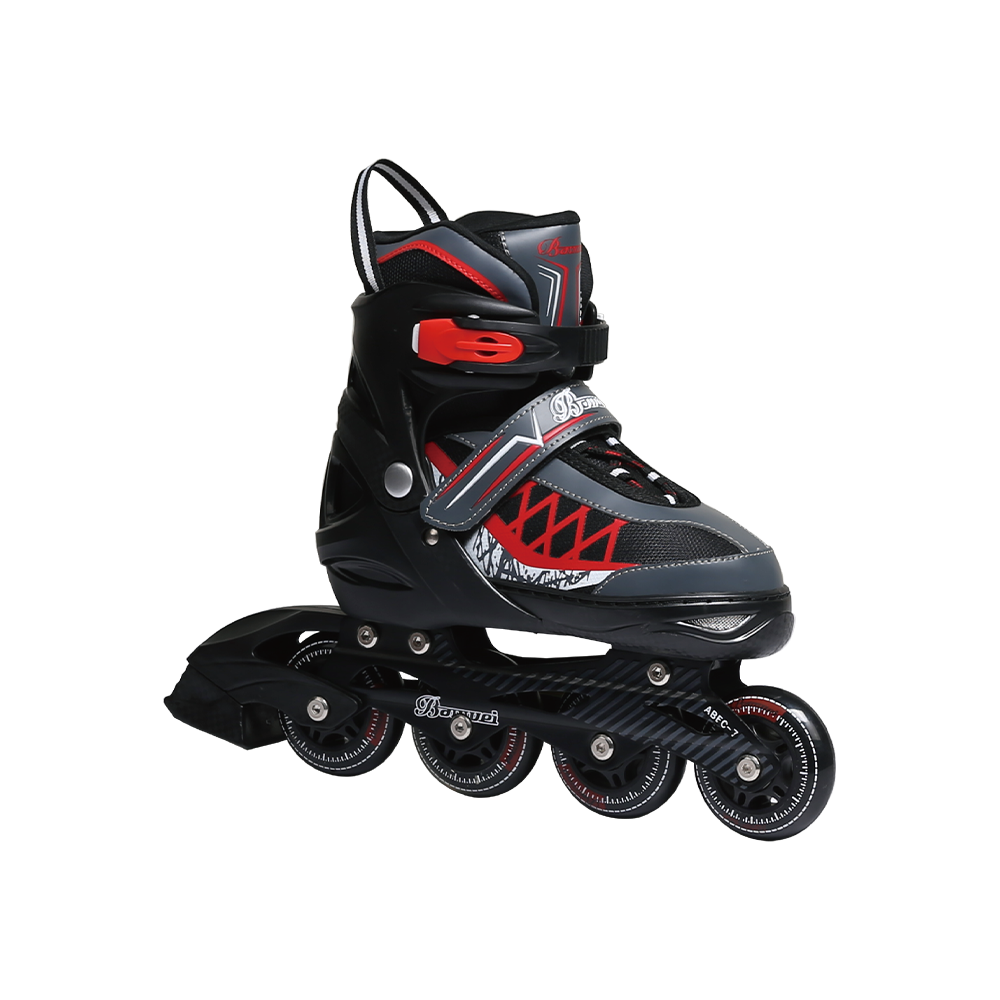
- 19 Product: BW-230-1 ALUM chassis inline skate
Inline skating is an enjoyable way for children and teenagers to develop balance, coordination, confidence, and an active lifestyle. However, selecting suitable skates is important, especially for beginners who are still learning how to stand, glide, turn, and stop. A well-designed skate should provide dependable support without feeling unnecessarily heavy, offer a comfortable fit that can accommodate growth, and make basic movements easy to control. It should also be durable enough to withstand repeated practice, storage, transportation, and the minor impacts that naturally occur during recreational use.
The BW-230-1 ALUM chassis inline skate is designed around these practical requirements. Its aluminum alloy chassis provides a firm and stable platform, while its adjustable sizing system allows one pair of skates to accommodate several foot lengths. The breathable upper, cushioned interior, original carrying bag, and beginner-friendly structure add convenience for families looking for a reliable entry-level skating product. At the same time, its construction reflects the capabilities of an experienced sports equipment manufacturer that combines product development, tooling, injection molding, sewing, assembly, quality management, and export-oriented production.
This article examines the product’s structure, user benefits, manufacturing advantages, potential applications, and competitive strengths. It also explains how the skate can support retailers, importers, distributors, and private-label buyers seeking a practical inline skating product for children and young users.
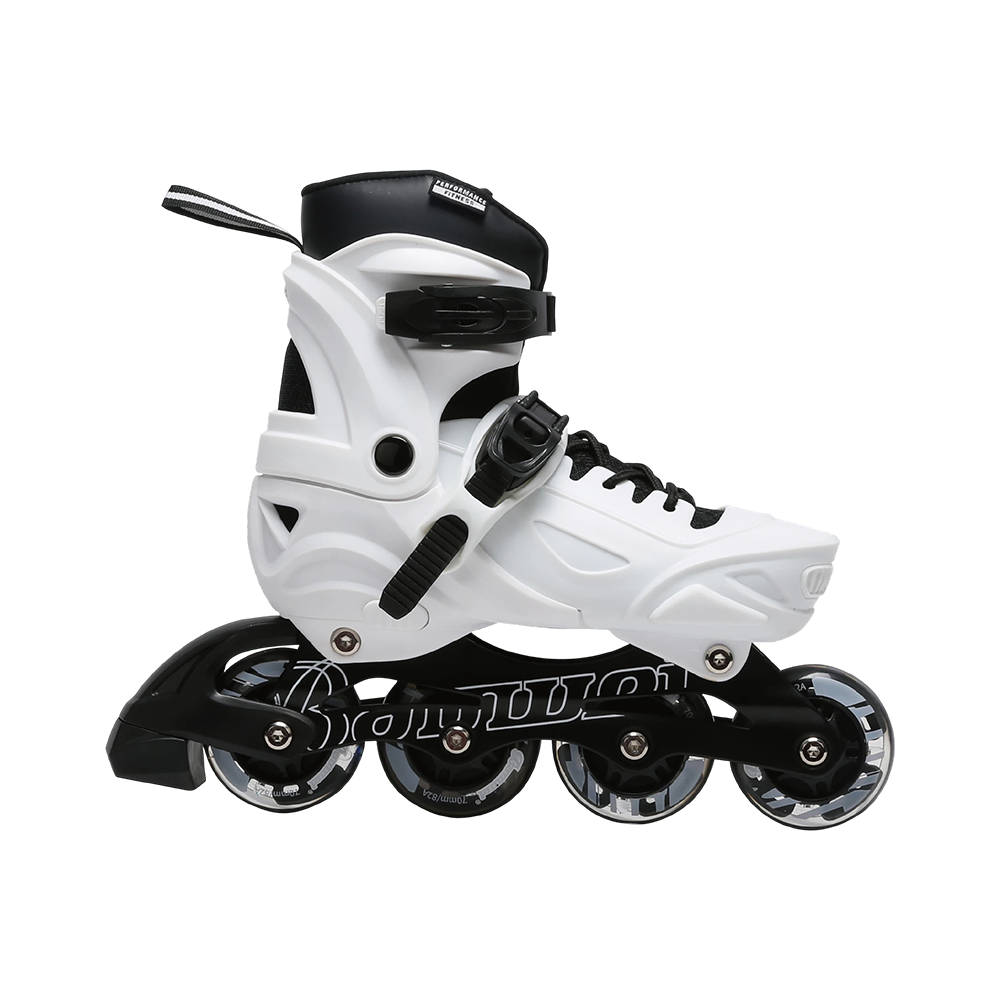
BW-230-1 ALUM chassis inline skate
Product Overview and Intended Use
The BW-230-1 ALUM chassis inline skate is an adjustable inline skate intended for children, beginners, and older teenagers. It is supplied in three adjustable size ranges: S, M, and L. The listed foot-length ranges cover approximately sizes 31–34, 35–38, and 39–42. This broad adjustment concept allows the same product family to serve users at different stages of growth rather than requiring a new pair of skates every time a child’s feet become longer.
The central structural feature is the professional aluminum alloy chassis. The chassis is the component that supports the wheels and connects the rolling system to the boot. In practical terms, a rigid chassis helps maintain a more consistent relationship between the user’s foot, the boot, and the wheels. This can contribute to a steadier skating sensation, especially when a beginner is learning to distribute weight and control direction.
The product is positioned as an entry-level skate with features that are often associated with more advanced designs. Rather than relying on a basic frame that may twist more easily under pressure, the aluminum construction is intended to offer greater rigidity and resistance to deformation. This combination gives the product a stable foundation while maintaining an accessible price positioning.
The skate is suitable for introductory training, recreational skating, light daily exercise, and outdoor family activities. Recommended locations include smooth community paths, parks, plazas, indoor flat surfaces, and other areas appropriate for recreational skating. It is not intended to replace specialized racing skates, aggressive skates, or professional performance equipment. Its strength lies in offering a comfortable and dependable starting point for everyday users.
Key Specifications
| Feature | Product Information | User Benefit |
|---|---|---|
| Product type | Adjustable inline skate | Suitable for growing children and beginners |
| Chassis | Aluminum alloy construction | Improved rigidity, support, and stability |
| Size ranges | 31–34, 35–38, and 39–42 | One product family serves multiple age and foot-length groups |
| Fit adjustment | One-button multi-size adjustment | Quick fitting without complicated procedures |
| Upper | Breathable and skin-friendly fabric construction | Helps maintain comfort during longer sessions |
| Interior | Cushioned lining with arch-conforming support | Helps reduce pressure, rubbing, and discomfort |
| Included accessory | Original carrying bag | Convenient transport and organized storage |
| Primary users | Children, beginners, and older teenagers | Supports learning and recreational use |
| Recommended environments | Flat indoor and outdoor surfaces | Practical for parks, paths, squares, and family activities |
Why an Aluminum Chassis Matters
For a beginner, stability is one of the most important qualities in a skate. New users often make small, uneven movements while trying to stand upright. If the frame bends or twists noticeably under changing pressure, the wheels may not remain aligned with the user’s intended direction. This can make basic gliding feel less predictable and may slow the learning process.
An aluminum alloy chassis provides a more rigid support structure than many simple conventional frame designs. Its resistance to twisting and bending helps maintain a stable base when the user shifts weight from one side to another. This is valuable during starting, turning, stopping, and recovering from a minor imbalance. A rigid chassis does not eliminate the need for instruction or protective equipment, but it can make the skate feel more controlled and consistent.
The aluminum frame also offers practical durability advantages. During everyday use, skates may encounter small bumps, minor friction, imperfect pavement, and occasional contact with other objects. A robust chassis is better equipped to tolerate ordinary recreational wear than a delicate or poorly supported structure. This contributes to a longer usable life when the skates are used, maintained, and stored appropriately.
Another benefit is the stable relationship between the boot and rolling assembly. When the frame remains firm, the user’s movements can transfer more directly to the wheels. This helps beginners understand how body position affects speed and direction. Turning, shifting weight, and stopping become easier to practice because the equipment responds in a more predictable way.
For retailers and buyers, aluminum construction can also provide a clear product differentiation point. Many entry-level products compete mainly on price and basic appearance. A skate with an aluminum chassis offers a stronger technical story: it combines an accessible price with a material and structural feature that communicates durability, support, and long-term value.
Adjustable Sizing for Growing Users
Children’s feet grow quickly, and this creates a common challenge for parents. A pair of fixed-size skates may become too small before it experiences significant wear. Replacing skates frequently increases the total cost of participation and may discourage families from continuing with the activity. Adjustable sizing addresses this issue by allowing the shell or internal foot position to change across a defined range.
The BW-230-1 uses a one-button adjustment design. This makes it possible to modify the size without complicated tools or lengthy procedures. The three size groups cover sizes 31–34, 35–38, and 39–42, allowing the product line to support younger children, larger children, and teenagers. The adjustment mechanism is especially useful for families with more than one child, because the same product format can be offered across several stages of development.
A correct fit is essential for control. If a skate is too loose, the foot may move inside the boot, making it difficult to transfer pressure accurately to the wheels. If it is too tight, the user may experience toe pressure, discomfort, or premature fatigue. The adjustment system is intended to provide a snug fit while allowing room for natural growth within the specified range.
From a business perspective, adjustable sizing simplifies product selection and inventory planning. Retailers can stock three main size groups instead of a large number of fixed-size variations. Distributors can present the product as a growth-friendly solution, and online sellers can explain the size ranges clearly to reduce confusion during purchasing. The result is a product with practical value for both end users and supply chain partners.
Although adjustable skates offer greater flexibility, users should still measure foot length and follow the recommended size range. A child should not use a size that is significantly larger than the specified adjustment range. Parents should also inspect the fit regularly as the child grows and confirm that the adjustment mechanism is locked securely before each session.
Comfort-Focused Boot Construction
Technical stability is only useful when the skate is comfortable enough to wear. Beginners may practice for extended periods as they repeat the same movements, and discomfort can quickly reduce their confidence. The BW-230-1 features a breathable, skin-friendly upper designed to support everyday comfort.
The fabric construction is flexible and durable, allowing the upper to accommodate normal foot movement without feeling excessively rigid. Ventilation is another important consideration. Feet can become warm during physical activity, particularly when a user is practicing indoors or during warmer weather. A breathable upper helps promote air circulation and can help keep the foot feeling drier and cooler.
The inner cushioning layer is designed to conform more closely to the shape of the foot, including the arch area. This support helps distribute pressure across a larger area instead of concentrating it at a few contact points. Proper cushioning may also reduce the likelihood of rubbing and irritation during longer recreational sessions.
Comfort is particularly important for children who are still developing their skating habits. A comfortable skate encourages users to spend more time practicing balance, controlled gliding, turning, and stopping. It also makes it easier for parents and instructors to maintain a positive learning environment.
As with any footwear, comfort depends on correct socks, appropriate sizing, and proper fastening. Users should wear suitable sports socks, avoid excessive layering, and ensure that the foot is held securely without over-tightening. The skate should be checked for pressure points before the user begins moving at higher speeds.
Beginner-Friendly Handling
Learning to inline skate involves several connected skills. The user must first learn to stand with the knees slightly bent, keep the body centered, shift weight gradually, and maintain control of the rolling movement. Once these fundamentals are established, the user can practice forward gliding, gentle turns, speed management, and stopping.
The BW-230-1 is designed to support this learning sequence through a stable center of gravity and a firm chassis. When the skate responds consistently, beginners can focus on their posture and movement rather than compensating for excessive frame flex. A predictable ride is especially helpful when learning to transfer weight from one foot to the other.
Turning requires controlled pressure on the edges of the wheels and a coordinated movement of the ankles, knees, hips, and upper body. A stable chassis can help the user feel how small movements affect direction. Stopping also becomes easier to understand when the skate remains firmly connected to the foot. These advantages do not replace coaching, but they can make practice more approachable.
The product is intended for basic and recreational skating rather than high-speed technical performance. This positioning is beneficial because it keeps the design focused on stability, comfort, adjustability, and ease of use. For many families, the most important objective is not maximum speed but a positive first experience that encourages continued physical activity.
Competitive Advantages Over Basic Entry-Level Designs
Stronger Structural Support
One of the clearest advantages is the aluminum alloy chassis. Compared with a conventional frame that may be more susceptible to twisting under pressure, the aluminum chassis offers a robust support structure. This helps maintain alignment and provides a more solid feeling during normal use.
Longer-Term Product Value
Because the product is adjustable across multiple foot lengths, families may use it for a longer period than a fixed-size skate. The durable chassis and impact-resistant construction further support long-term value. While all sports equipment requires care, a product that combines adjustability and durability can reduce the need for frequent replacement.
Accessible Technical Features
The product brings an aluminum frame, adjustable sizing, breathable materials, cushioning, and a carrying bag into an entry-level product category. This creates a balance between specification and affordability. Buyers do not need to choose between a very basic skate and a high-priced professional model when their main requirement is stable recreational use.
Convenient Storage and Transport
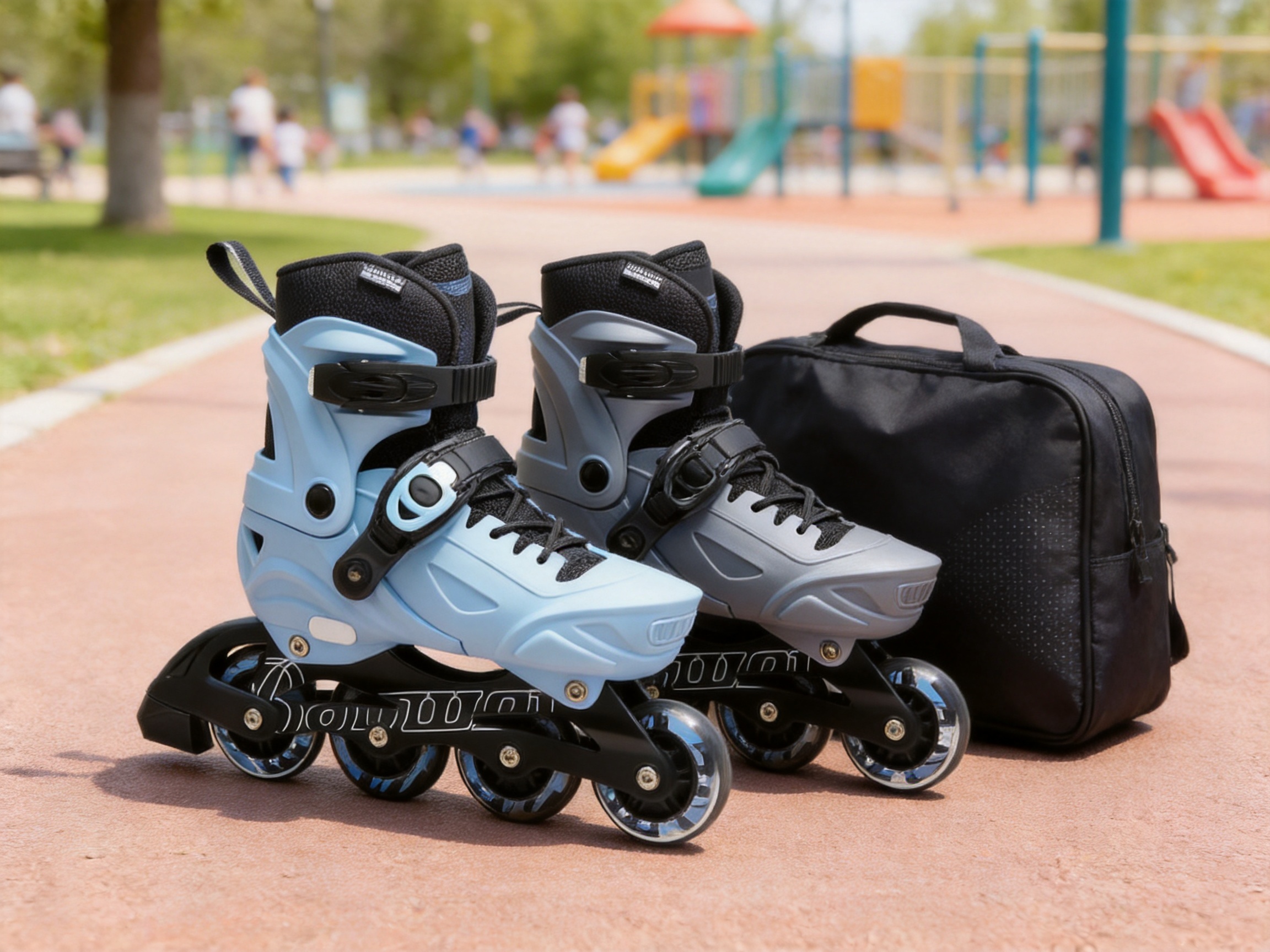
The included carrying case is a practical advantage for families. Inline skates can be awkward to transport when carried individually, and storing them loosely may lead to misplaced accessories or unnecessary contact with other items. The bag keeps the pair together and makes it easier to take the skates to parks, community paths, indoor facilities, or family outings.
Broad Market Suitability
The three size groups allow retailers and distributors to serve a broad customer base with a coherent product range. The product can be marketed through sporting goods stores, children’s activity retailers, online shops, school recreation programs, seasonal promotions, and family-oriented outdoor product channels.
Manufacturing Capabilities Behind the Product
The quality and consistency of a sports product depend not only on its visible design but also on the manufacturing system supporting it. The manufacturer of the BW-230-1 has operated since 2010 and specializes in children’s scooters, inline skates, roller skates, and ice skates. This focused experience gives the company an established understanding of rolling sports products, children’s product requirements, and the needs of international buyers.
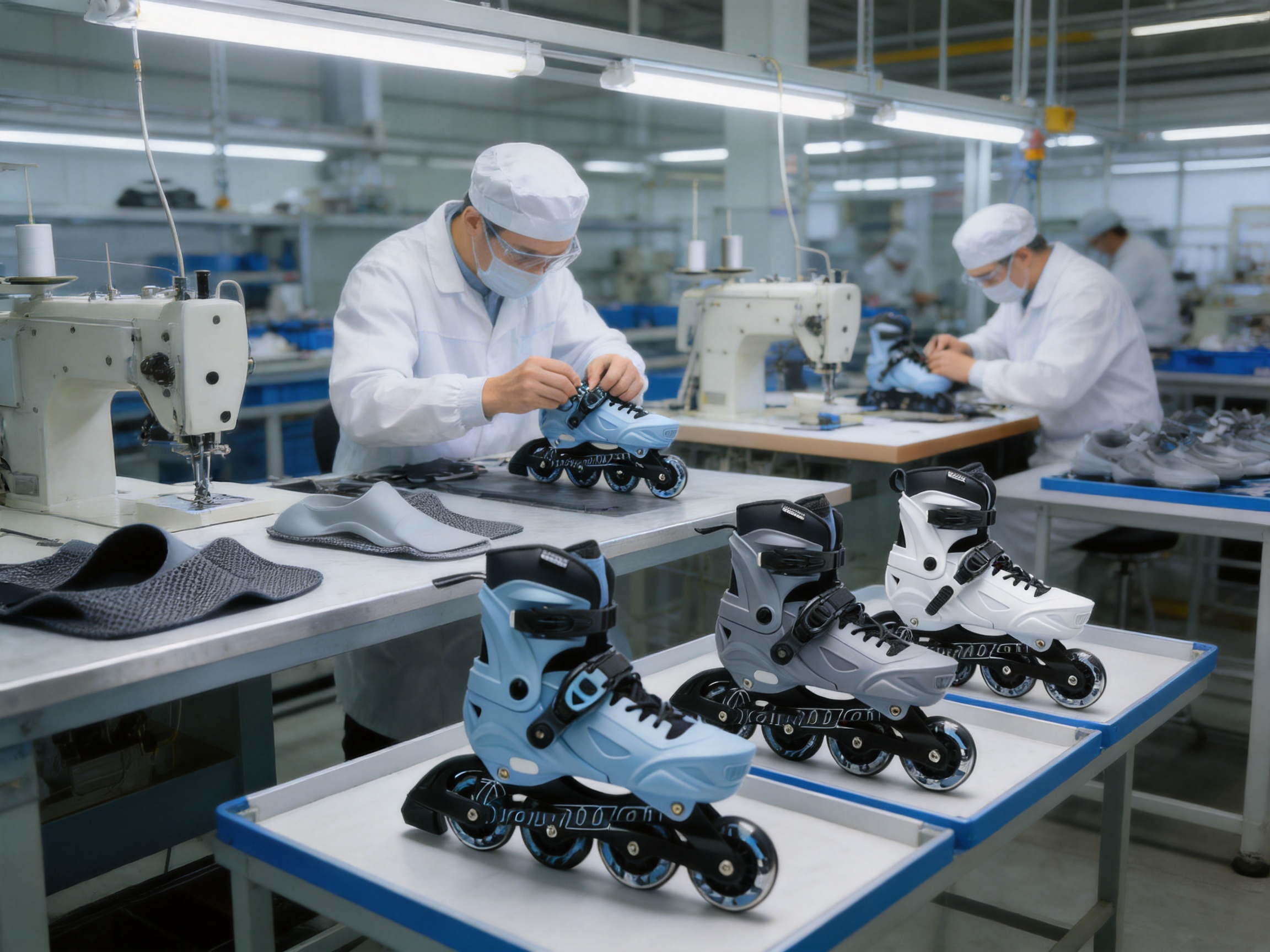
The company operates a workshop of approximately 20,000 square meters and employs more than 200 people. Its production structure includes five advanced automatic production lines, along with dedicated mold, injection molding, sewing, and assembly workshops. This level of internal capability supports closer coordination between product development and manufacturing.
In-house mold and injection molding resources are especially important for products containing shaped plastic components. Tooling accuracy affects fit, appearance, dimensional consistency, and assembly compatibility. Internal control of these processes can help reduce communication delays and improve the ability to make design adjustments during product development.
The sewing workshop supports the production of fabric uppers, liners, carrying bags, and related textile components. These parts require consistency in cutting, stitching, padding placement, and finishing. Coordinating textile production with boot assembly can help maintain a more uniform product specification.
Assembly is another critical stage. An inline skate contains multiple interacting components, including the boot, chassis, wheels, fastening system, adjustment mechanism, and interior padding. Proper assembly ensures that parts are fitted securely and that the finished product meets the intended functional requirements. A dedicated assembly process also supports repeatability for larger orders.
The company maintains a professional research and development engineering team and launches new products each year. Continuous development enables the manufacturer to respond to changes in customer preferences, market trends, materials, safety expectations, and design requirements. For OEM and private-label customers, an experienced engineering team can also support product adaptation and new project discussions.
Quality Management and Compliance Strengths
The manufacturer has passed ISO9001, BSCI, and Kmart factory certification systems. These credentials indicate attention to quality management, social responsibility, and factory assessment requirements. Although certification does not eliminate the need for product-specific inspection, it provides buyers with a stronger foundation for evaluating the supplier’s management systems.
The company also reports product certifications and testing credentials including 3C, CE, EN71, EN62115, ASTM, EMC, and EN13843:2009. The applicable standard depends on the product type, target market, configuration, and intended use. Importers should confirm the exact documentation required for the specific model and destination country before placing an order or selling the product.
For international buyers, documented compliance can support customs preparation, retailer onboarding, product listings, and internal quality review. It is important that certificates, test reports, labeling, packaging, and production samples correspond to the actual product configuration. Buyers should also clarify whether testing covers the exact size range, materials, accessories, and revisions included in the purchase order.
Quality management is most effective when it is applied throughout the production cycle rather than only at the final inspection stage. Material control, mold inspection, component checking, assembly verification, functional testing, packaging review, and shipment inspection all contribute to product reliability. A manufacturer with multiple internal production departments is better positioned to coordinate these activities systematically.
OEM and One-Stop Sourcing Potential
For importers and brand owners, a supplier’s value extends beyond one finished product. The manufacturer’s product scope includes children’s scooters, inline skates, roller skates, ice skates, and sports protective gear. This creates opportunities for one-stop sourcing and coordinated product collections.
A retailer could combine adjustable inline skates with helmets, knee pads, elbow pads, wrist guards, scooters, and related accessories. Offering complementary products helps create a complete sports category rather than a single isolated item. It may also simplify communication, sampling, packaging coordination, and shipment management.
The manufacturer’s engineering, mold, injection molding, sewing, and assembly capabilities may support OEM development and private-label programs. Depending on the project, buyers may discuss colors, logos, packaging, size-range presentation, material details, accessories, instruction manuals, and market-specific labeling. Exact customization options, minimum order quantities, lead times, and tooling costs should be confirmed directly for each project.
A factory with experience in international exhibitions and overseas markets may also understand the importance of product presentation. Retail packaging must communicate size adjustment, intended use, safety information, and key features clearly. Professional product photography, accurate technical data, and consistent carton marking can help distributors introduce the product more efficiently.
For businesses comparing suppliers, manufacturing depth is an important competitive factor. A trading company may be able to offer a product, but a factory with internal production departments can potentially provide better control over engineering changes, production coordination, quality feedback, and product development. Buyers should still conduct due diligence, request samples, verify documentation, and establish clear inspection requirements.
Recommended Applications
Beginner Training
The skate is suitable for children taking their first steps in inline skating. Training should begin on a flat, smooth, and low-traffic surface. Users should first practice standing, knee flexion, balance, and short controlled movements before attempting longer glides or turns.
Family Recreation
Families can use the skates for relaxed outdoor activities in parks, community paths, and open paved areas. Parent-child skating can encourage physical activity and create opportunities to practice together. Adult supervision remains important, particularly for younger children and new users.
Light Daily Exercise
Inline skating engages the legs and core while requiring balance and coordination. Regular low-intensity practice can contribute to an active routine. Users should choose a pace that matches their skill level, take breaks, and avoid surfaces that are wet, uneven, heavily cracked, or obstructed.
Indoor Recreational Use
On a suitable flat indoor surface, the skate can be used for basic practice and controlled recreational movement. The facility should permit inline skating and provide adequate space. Users should avoid areas with fragile flooring, obstacles, stairs, or other hazards.
Safety and Maintenance Guidance
Inline skating should always be accompanied by appropriate protective equipment. A properly fitted helmet is essential, while knee pads, elbow pads, and wrist guards provide additional protection during falls. Children should skate under appropriate adult supervision and follow local rules for public spaces.
Users should inspect the skates before each session. Check that the chassis is firmly attached, the wheels are secure, the adjustment mechanism is locked, and the fastening system holds the foot comfortably. Any loose, cracked, severely worn, or damaged component should be repaired or replaced before use.
Skating should take place on suitable surfaces. Wet pavement can reduce traction, while sand, gravel, leaves, and loose debris may interfere with wheel movement. Roads, steep slopes, crowded walkways, and areas near traffic should be avoided unless a controlled and authorized environment is provided.
After use, remove visible dirt and allow the skates to dry naturally in a ventilated area. Avoid placing them directly beside strong heat sources, which may affect certain materials. The carrying bag should also be kept dry and clean. Regular care helps protect both the appearance and function of the product.
Wheels and other wear components should be monitored over time. The replacement schedule depends on frequency of use, skating surface, user weight, skating style, and maintenance habits. If wear becomes uneven, the wheels may require rotation or replacement by a qualified person familiar with inline skate maintenance.

Guidance for Retailers and Distributors
Retailers should present the size ranges clearly and explain that the product is adjustable within three specified groups. Customers should be encouraged to measure foot length and select the appropriate range rather than choosing solely by age. Clear fitting instructions can reduce returns and improve customer satisfaction.
The aluminum chassis should be featured prominently in product communication, but claims should remain accurate and balanced. It is appropriate to describe the frame as rigid, supportive, durable, and suitable for stable recreational skating. Marketing materials should avoid implying that the product makes skating risk-free or replaces protective equipment.
Images and packaging should show the adjustment location, carrying bag, boot construction, and chassis design. Demonstrating how the one-button adjustment works can be especially useful for online buyers. Product pages should also state the recommended user group, suitable surfaces, maintenance instructions, and safety requirements.
Stock planning can be simplified by organizing inventory into the three size ranges. Retailers may also create bundles with protective gear and storage accessories. Seasonal promotions around school holidays, summer activities, family fitness campaigns, and outdoor recreation periods can help position the product effectively.
For wholesale buyers, carton measurements are available for the listed size groups. The recorded carton dimensions are approximately 540 × 410 × 290 millimeters for sizes 31–34, 560 × 420 × 305 millimeters for sizes 35–38, and 600 × 430 × 315 millimeters for sizes 39–42. Buyers should confirm packing quantity, gross weight, net weight, and final carton specifications before shipment planning.
Packaging and Logistics Considerations
The included carrying bag adds value at the consumer level, while appropriate outer packaging protects the product during storage and transportation. Buyers should review the packaging design to ensure that the skate, bag, accessories, and printed materials remain secure within the carton.
Because the product is supplied in multiple size groups, purchase orders should identify each size clearly. Mixed-size cartons may be possible depending on the supplier’s packaging plan, but this should be confirmed in advance. Proper carton labels support warehouse receiving, inventory counting, and retail distribution.
International buyers should also consider destination-market requirements for language, warnings, importer information, age grading, care instructions, and recycling marks. These requirements differ between countries and sales channels. The manufacturer can provide available documentation, while the buyer remains responsible for confirming the legal requirements applicable to its market.
Sampling before mass production is recommended. A sample review should cover fit, adjustment operation, chassis attachment, stitching, padding, wheel movement, carrying bag quality, color, logo placement, packaging, and printed information. Once approved, the sample should be used as the reference standard for production inspection.
How the Product Supports Sustainable Product Value
Product longevity is one practical aspect of responsible consumption. An adjustable skate that accommodates growing feet may remain useful for longer than a fixed-size product, reducing the frequency of replacement. A durable aluminum chassis can further support extended use when the product is maintained properly.
Longer service life does not mean that worn components should be used indefinitely. Wheels, fasteners, and other replaceable parts should be evaluated regularly. Responsible maintenance helps users obtain the intended value from the product while reducing unnecessary disposal.
From a supply perspective, a concentrated size range can also simplify inventory management. Retailers may reduce the number of separate fixed-size items they need to stock, while consumers can select a product family that remains relevant as a child grows. These benefits support a more practical approach to product ownership.
Frequently Asked Questions
What type of user is this inline skate designed for?
The skate is designed mainly for children, beginners, and older teenagers who want to learn basic inline skating or enjoy light recreational use. It is suitable for introductory practice, family activities, and everyday gliding on appropriate flat surfaces.
What sizes are available?
The product is offered in three adjustable ranges: 31–34, 35–38, and 39–42. Users should measure foot length and select the range that corresponds to their actual foot size.
How does the size adjustment work?
The product uses a one-button adjustment design. This allows the user to change the skate size within the specified range without complicated procedures. The adjustment should be checked and locked securely before skating.
What is the advantage of the aluminum chassis?
The aluminum chassis provides a firm and rigid support structure. It is designed to resist twisting, bending, and deformation during normal recreational use, helping provide a stable platform for balance, turning, and controlled gliding.
Is the skate suitable for professional racing?
The product is positioned as an entry-level and recreational inline skate. It is suitable for beginner practice and daily leisure use rather than specialized racing, aggressive skating, or advanced competition.
Does the product include a storage bag?
Yes. The product comes with an original carrying bag for convenient transportation and storage. Buyers should confirm the final packaging configuration for their specific order.
Can children use the skates without protective equipment?
No. Protective equipment should be used, including a properly fitted helmet and suitable knee, elbow, and wrist protection. Adult supervision and an appropriate skating environment are also important.
Where can the skates be used?
They are suitable for smooth, flat indoor surfaces and appropriate outdoor locations such as parks, community trails, and plazas. Wet, rough, sandy, steep, crowded, or traffic-exposed areas should be avoided.
What comfort features does the skate offer?
The skate includes a breathable and skin-friendly upper, a flexible fabric construction, and an inner cushioning layer designed to support the foot and reduce pressure during extended recreational use.
Can the product be used for OEM projects?
The manufacturer specializes in sports products and has engineering, mold, injection molding, sewing, and assembly capabilities. OEM and private-label possibilities should be discussed directly, including customization, minimum order quantities, packaging, testing, and production schedules.
What manufacturing certifications and product standards are associated with the supplier?
The company reports ISO9001, BSCI, and Kmart factory certification systems, as well as product certifications and testing credentials including 3C, CE, EN71, EN62115, ASTM, EMC, and EN13843:2009. Buyers should request current documentation applicable to the exact product and destination market.
How should the skates be maintained?
Users should clean visible dirt, dry the skates in a ventilated area, inspect the chassis and fasteners, check the adjustment mechanism, and monitor wheel wear. Damaged or excessively worn components should be repaired or replaced before use.
Conclusion
The BW-230-1 ALUM chassis inline skate combines the qualities that matter most in a growing beginner’s product: stable support, adjustable sizing, comfort, convenient storage, and accessible pricing. Its aluminum alloy chassis provides a stronger structural foundation than many basic frame designs, while the multi-size adjustment system helps the product remain useful as children grow.
The breathable upper and cushioned interior support comfortable practice, and the carrying bag adds everyday convenience for families. The product is well suited to introductory training, family recreation, light exercise, and controlled skating on suitable flat surfaces. Its design focuses on predictable handling rather than extreme performance, making it an appropriate option for users who are building fundamental skating skills.
For distributors, retailers, and OEM buyers, the product is supported by a manufacturer with extensive experience in children’s wheeled sports equipment. Internal mold, injection molding, sewing, assembly, research and development, and automatic production capabilities provide a solid foundation for consistent manufacturing and future product development. Quality management systems, factory certifications, product testing experience, and a broad product portfolio further strengthen its supply potential.
As with all skating equipment, correct sizing, protective gear, responsible supervision, appropriate surfaces, and regular maintenance are essential. When these practices are followed, the product can provide a practical and enjoyable introduction to inline skating while offering retailers a strong balance of functionality, durability, and market versatility.
References
1. Product specification and feature information supplied for the BW-230-1 ALUM chassis inline skate.
2. Manufacturer profile and production capability information supplied for Ningbo Feile Sporting Goods Co., Ltd.
3. General principles of inline skate fitting, beginner instruction, equipment inspection, and recreational skating safety.
4. General guidance concerning quality management systems, factory audits, product testing, and international sports equipment sourcing.
5. General retail and distribution practices for adjustable children’s sporting goods and protective equipment.
Product: BW-230-1 ALUM chassis inline skate

Recommended Articles

Get in Touch
Your email address will not be published. Required fields are marked *
Have a project in mind? Contact with us!
We are happy to answer your questions. Please fill out this form
and one of our professional team will get back to you as soon as possible.

We specialize in producing various types of children's toy cars, children's skateboards, and ice skates.
