
 En
En
 Español
 русский
 عربى
عربى
Adjustable Inline Skates for Growing Beginners: Product Design, Manufacturing Strength, and Sourcing Value
Date:Aug 28, 2026
Content
- 1 Introduction
- 2 Product Overview
- 3 Designed Around Beginner Needs
- 4 Adjustable Sizing as a Long-Term Advantage
- 5 Construction and Functional Design
- 6 Advantages in Comparison with Conventional Fixed-Size Beginner Skates
- 7 Recommended Applications
- 8 Safety and Maintenance Guidance
- 9 Manufacturing Strengths
- 10 Product Certifications and Market Readiness
- 11 OEM and One-Stop Sourcing Value
- 12 Packaging and Logistics Considerations
- 13 How Retailers Can Position the Product
- 14 Buyer Evaluation Checklist
- 15 Q&A
- 15.1 Who is this adjustable inline skate designed for?
- 15.2 What sizes are available?
- 15.3 Can the skate grow with a child?
- 15.4 Is it suitable for complete beginners?
- 15.5 Can teenagers use the product?
- 15.6 Can it be used outdoors?
- 15.7 Is protective equipment necessary?
- 15.8 Is this a racing or aggressive skating model?
- 15.9 What makes the product commercially attractive?
- 15.10 What manufacturing capabilities support the product?
- 15.11 Does the manufacturer support OEM projects?
- 15.12 What should buyers request before ordering?
- 16 Conclusion
- 17 References
- 18 Product: BW-187 Adjustable Kids Inline Skate
Introduction
Inline skating is one of the most accessible ways for children and teenagers to develop balance, coordination, lower-body strength, and confidence through active recreation. However, beginners need equipment that is stable, comfortable, easy to adjust, and durable enough to withstand repeated practice. A skate that is too complicated, too rigid, or poorly fitted can discourage new users before they have the opportunity to enjoy the sport.
The BW-187 Adjustable Kids Inline Skate is designed to address these practical concerns. It is a beginner-oriented inline skate for children, teenagers, and young users who are developing basic skating skills. Its adjustable size structure allows one pair to accommodate several foot lengths, while its straightforward construction focuses on fit, balance, support, and everyday usability rather than unnecessary decoration.
Available in three size ranges—31–34, 35–38, and 39–42—the skate can serve children as their feet grow and can also accommodate older teenagers. This range makes the product suitable for family purchasing, sporting-goods retailers, school recreation programs, and distributors seeking a practical entry-level skate with broad market appeal.
Behind the product is Ningbo Feile Sporting Goods Co., Ltd., a manufacturer specializing in children’s scooters, inline skates, roller skates, and ice skates. The company combines product development, mold production, injection molding, sewing, assembly, quality management, and export-oriented production in one organized manufacturing system. This integrated approach helps support consistent product quality, efficient customization, and one-stop sourcing for skating and scooter equipment.
This article examines the product’s design advantages, its suitability for beginners, its competitive value, and the manufacturing capabilities that support it. It also provides a practical buying guide, a comparison table, answers to frequently asked questions, and references for buyers researching children’s inline skating products.
Product Overview
The BW-187 is an adjustable inline skate designed specifically for children and teenagers who are new to inline skating or who require a reliable skate for regular basic practice. The overall product concept is simple: provide an easy-to-wear skate with an adjustable fit, stable rolling performance, comfortable support, and durable construction.
Unlike advanced performance skates that may emphasize speed, aggressive skating, racing, or specialized maneuverability, this model is intended to make the first stage of skating easier. Beginners generally need to learn how to stand, distribute body weight, bend the knees, maintain posture, control movement, and stop safely. Equipment that is stable and predictable can help them focus on these essential skills.
The skate is offered in three standard size groups:
- Size S: 31–34
- Size M: 35–38
- Size L: 39–42
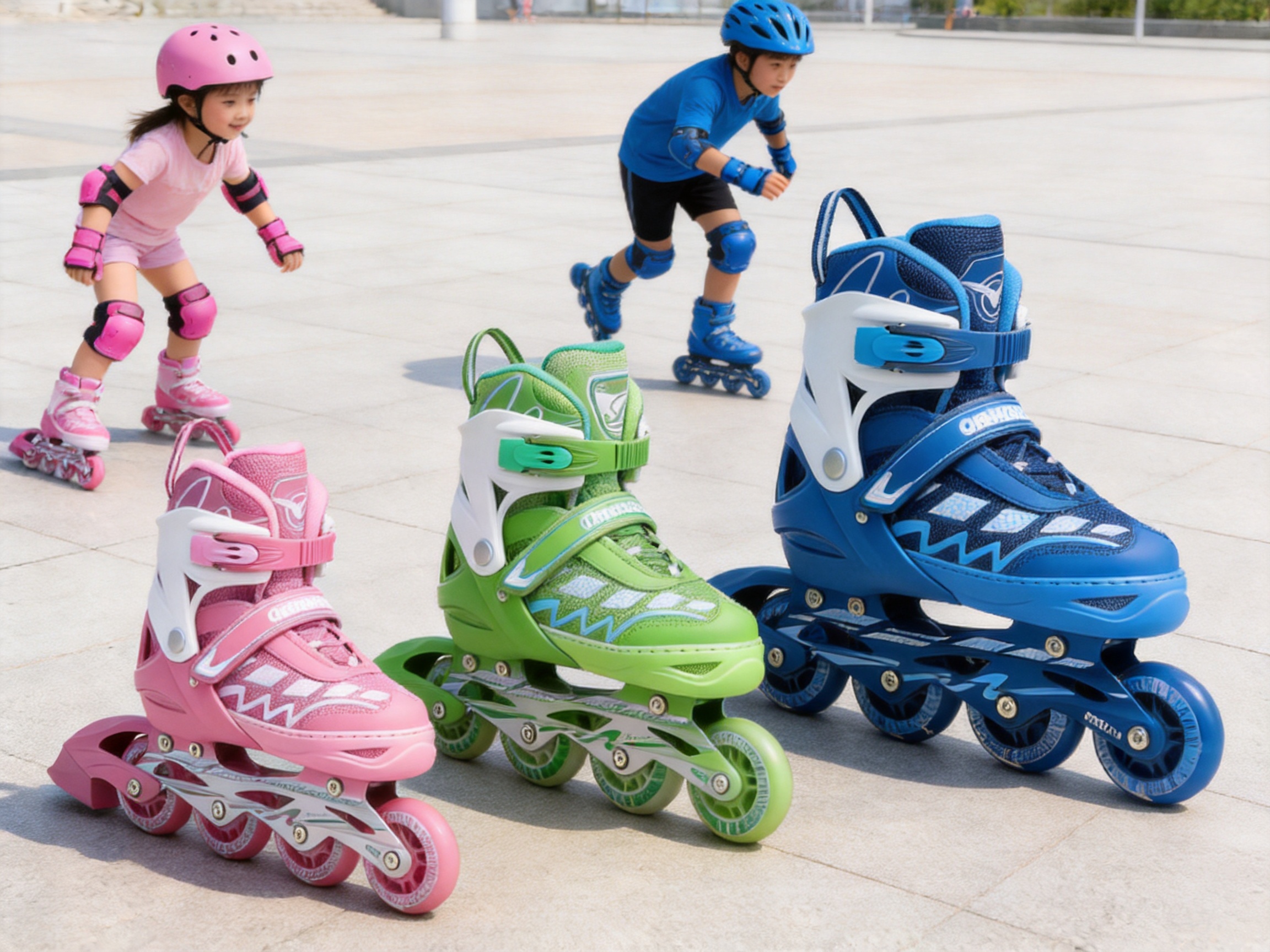
The multi-size structure is particularly useful for growing children. Instead of replacing the skates every time the user moves into a larger shoe size, parents can adjust the skate to provide a longer usable period. This may reduce household replacement costs and make the product more attractive to consumers who value practical, long-term use.
The product is appropriate for indoor flat surfaces and outdoor recreational areas such as plazas, residential paths, and other suitable smooth venues. It is intended for basic recreation and learning rather than professional competition. As with all skating equipment, users should select safe, legal, and well-maintained surfaces and wear appropriate protective equipment.
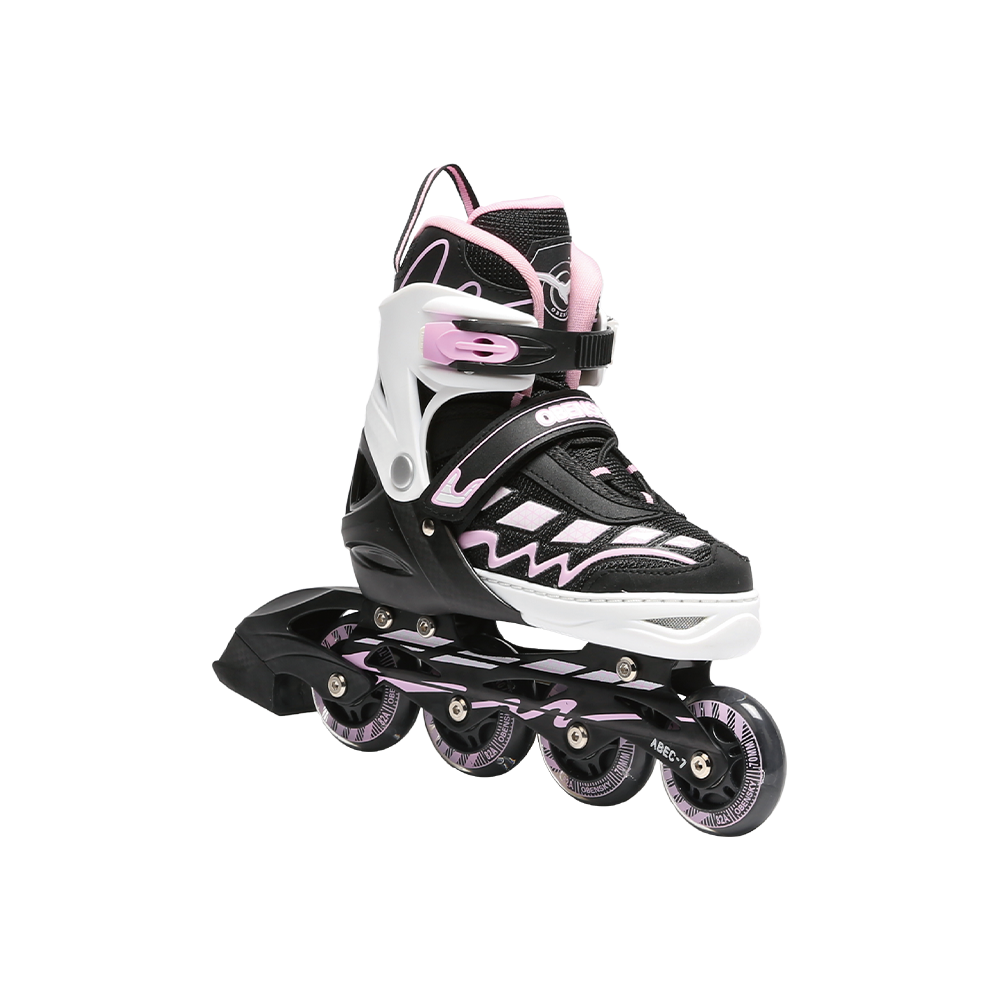
BW-187 Adjustable Kids Inline Skate
Designed Around Beginner Needs
Simple Learning Experience
Beginners often experience difficulty because they are learning several physical skills simultaneously. They must balance on narrow wheels, control the direction of the feet, coordinate arm and leg movement, and respond to changes in speed. A skate that feels unpredictable can increase anxiety and make basic training more difficult.
The BW-187 is designed with a simple and practical structure that supports gradual learning. Its stable wheelset gives new users a controlled rolling sensation, helping them become familiar with movement before attempting more advanced techniques. The design does not depend on complicated adjustments or highly specialized settings, so beginners can concentrate on posture and balance.
For children and teenagers, ease of use is especially important. If putting on or adjusting a skate requires too many steps, young users may rely heavily on adults or lose interest. A straightforward design makes the product more approachable for after-school practice, family recreation, and introductory sports programs.
Balance and Control
Balance is the foundation of inline skating. A beginner needs a stable platform that does not feel excessively aggressive or difficult to control. The BW-187’s basic wheel arrangement is intended to provide a smooth and steady skating feel suitable for fundamental practice.
Stable rolling does not mean that the product eliminates every risk. Skating remains a physical activity, and users can fall if they move too quickly, skate on unsuitable surfaces, or fail to wear protection. However, a predictable skate can help reduce unnecessary equipment-related difficulty. When the wheels roll smoothly and the boot provides a secure fit, the learner can develop better control over body position and speed.
The skate is suitable for practicing basic movements such as standing, marching on skates, gliding, turning, stopping, and maintaining a stable posture. These movements form the foundation for more advanced skills. The product’s beginner-focused configuration makes it more appropriate for entry-level users than a skate designed primarily for high-speed or specialized performance.
Comfort for Longer Practice Sessions
Comfort directly influences how long a child can practice and whether the child enjoys the activity. Pressure points, rubbing, excessive tightness, or poor support can cause discomfort and reduce confidence. The BW-187 is designed to provide a snug fit while distributing pressure more evenly around the foot.
The adjustable structure helps users achieve a closer fit as their foot length changes. A properly adjusted skate should hold the foot securely without creating excessive compression. This is important because a loose skate can reduce control, while an overly tight skate can cause discomfort during extended use.
The lightweight upper is intended to avoid an unnecessarily heavy feeling. Children may tire more quickly when equipment adds excessive weight to the feet. By keeping the design practical and relatively easy to wear, the skate can support everyday recreation and routine practice without making the user feel overly restricted.
Comfort also depends on correct sizing, sock selection, fastening, and the condition of the interior padding. Buyers and parents should follow the product’s fitting instructions and inspect the skate regularly to ensure that the user’s foot remains properly supported.
Adjustable Sizing as a Long-Term Advantage
Children’s feet grow quickly, and this creates a common challenge for parents purchasing sports equipment. A pair that fits perfectly at the time of purchase may become too small after a relatively short period. Replacing skates repeatedly can make children’s skating more expensive and less convenient than expected.
The adjustable size design of the BW-187 provides a practical solution. Each size range covers several conventional shoe sizes, allowing the length to be adapted as the child grows. This feature can extend the usable life of the product and help families receive greater value from one purchase.
| Size Range | Recommended Foot-Size Group | Carton Dimensions | Typical User Profile |
|---|---|---|---|
| S | 31–34 | 540 × 410 × 290 mm | Children beginning recreational skating |
| M | 35–38 | 560 × 420 × 305 mm | Older children and younger teenagers |
| L | 39–42 | 600 × 430 × 315 mm | Teenagers and users with larger feet |
Retailers can also benefit from adjustable sizing because a smaller number of stock-keeping units may cover a wider customer base. Instead of carrying many individual shoe sizes, a retailer can offer three broad size groups. This can simplify inventory planning, product display, and replenishment.
For distributors, size adjustability may also support more flexible sales strategies. The product can be marketed to families with growing children, beginner training programs, recreational clubs, and gift buyers who may not know the exact future shoe size of the recipient.
How to Use the Adjustment Feature Correctly
The skate should be adjusted while the user is wearing the socks intended for skating. The foot should be placed fully inside the boot, with the heel positioned securely toward the rear. The length should then be set so that the toes are not compressed and the foot does not slide excessively inside the shell.
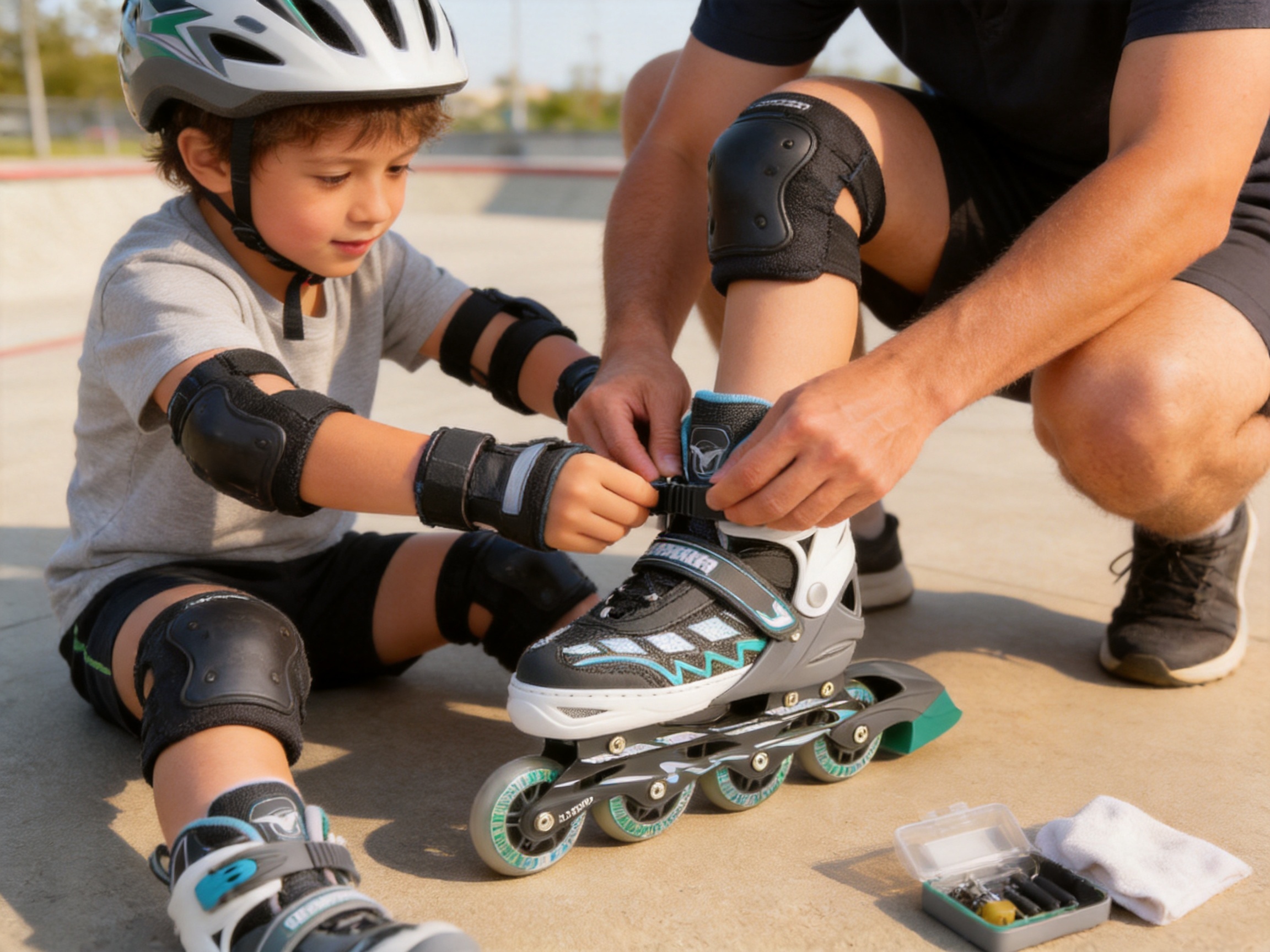
After adjustment, the user should stand and gently bend the knees. The foot should remain supported without painful pressure. Parents should check the fit before every session, especially when the skates have been shared, stored for a long period, or adjusted to accommodate growth.
A multi-size skate is not a substitute for proper fitting. The adjustment must remain within the recommended size range, and users should not force the skate beyond its intended configuration. Correct fitting contributes to comfort, balance, and safer control.
Construction and Functional Design
Practical Upper Structure
The upper is designed to provide a secure and supportive connection between the foot and the skate. For beginners, this connection is important because the user is still learning how to transfer body weight and maintain ankle alignment. A stable upper can help reduce unnecessary movement inside the boot.
The simple appearance is also commercially useful. Rather than relying on highly specialized visual styling, the product uses a practical design that can appeal to a broad range of children and teenagers. Retailers can position it as an everyday beginner skate for exercise, recreation, and basic skill development.
Support for Everyday Practice
Repeated practice places demands on the boot, fastening system, wheel assembly, and connection points. A beginner may use the skates frequently while learning, and the product must tolerate ordinary wear associated with starting and stopping, walking short distances, and practicing balance.
The BW-187 is described as having a sturdy structure intended for daily practice. This makes it suitable for families looking for a product that can be used more than occasionally. It can support routine after-school activity, weekend recreation, and introductory training sessions.
Durability should always be understood in relation to use conditions. Skates should not be dragged unnecessarily over rough surfaces, exposed to standing water, or stored while damp. Regular inspection can help identify loose fasteners, worn wheels, damaged closures, or other conditions that require maintenance.
Stable Wheelset
The wheelset provides the contact between the skater and the surface, so its performance affects rolling smoothness, speed control, and confidence. The product uses a basic, smooth, and stable wheel configuration intended for beginner-level skating.
For an entry-level user, moderate and predictable rolling is often more useful than maximum speed. Excessive speed can make stopping and turning difficult for someone who has not yet learned proper technique. A balanced setup allows the learner to become familiar with movement gradually and develop better control.
The wheel area should be kept clean and checked regularly. Dust, hair, small stones, and other debris can affect rotation. Parents, retailers, and training organizations should also follow maintenance recommendations and replace worn components when necessary.
Advantages in Comparison with Conventional Fixed-Size Beginner Skates
The most direct advantage of an adjustable model is its ability to accommodate growth. A fixed-size skate may offer a precise fit at one moment, but it can become unsuitable as the child’s foot length changes. The BW-187 provides a broader size range within each product unit, giving families more time to use the skate.
A second advantage is purchasing convenience. Parents do not need to identify an exact future shoe size when selecting the product. They only need to choose the correct adjustable range and set the current fit appropriately. This can make online and in-store purchasing easier.
A third advantage is value over the product lifecycle. Although actual savings depend on the purchase price, frequency of use, and rate of growth, one adjustable skate may reduce the need for early replacement. For retailers, this value proposition can distinguish the product from basic fixed-size alternatives.
A fourth advantage is the balance between simplicity and functionality. Some beginner products focus heavily on decorative styling, while others use complex performance features that are unnecessary for first-time users. This model concentrates on the essentials: adjustment, support, comfort, stability, and everyday durability.
Advantages Compared with Highly Specialized Performance Skates
High-performance racing, aggressive, or freestyle skates are designed for users with specific goals and established technique. They may prioritize speed, responsiveness, specialized frames, or advanced maneuverability. Those features can be valuable for experienced skaters but may be less suitable for children who are still learning to stand and glide.
The BW-187 is positioned at a different point in the market. It is intended to be approachable rather than highly specialized. The user can learn basic skating techniques without needing to understand advanced equipment settings. This makes the product suitable for introductory use, family recreation, and general sports retail.
Its broad size coverage also gives it an advantage for growing users who may not yet know whether they will continue into advanced skating disciplines. Families can begin with a practical model and later decide whether a specialized product is necessary.
Recommended Applications
Beginner Training
The primary application is beginner training. Children and teenagers can use the skates to practice balance, posture, knee bending, controlled gliding, basic turns, and stopping. Training should progress gradually, beginning on a flat and open surface free from traffic, obstacles, and excessive slope.
Parents or instructors should demonstrate how to stand safely, how to fall in a controlled manner, and how to stop before allowing the learner to skate independently. The product supports learning, but instruction and supervision remain essential.
Family Recreation
Inline skating can be a convenient family activity because it requires relatively little equipment beyond skates, protective gear, and a suitable location. Families can use the product during weekends, holidays, or outdoor leisure time. The adjustable design is especially suitable when parents want a product that can remain useful as a child grows.
After-School Exercise
Many children and teenagers spend long periods sitting at school or using electronic devices. Regular skating provides an engaging way to encourage lower-limb movement and improve coordination. Short, consistent sessions can help develop balance and physical confidence without requiring access to a formal sports facility.
Retail and Distribution Programs
The product may be suitable for sporting-goods stores, children’s activity retailers, school sports suppliers, recreational clubs, and distributors serving family-oriented markets. Its broad sizing, beginner positioning, and simple product explanation make it relatively easy to present to consumers.
For business buyers, the skate can be combined with helmets, knee pads, elbow pads, wrist guards, replacement wheels, and other related equipment. This creates opportunities for product bundles and complete beginner packages.
Safety and Maintenance Guidance
Safety equipment should be treated as an essential part of beginner skating. Users should wear a properly fitted helmet, wrist guards, elbow pads, and knee pads. Protective gear is particularly important for children who are still learning how to balance and stop.
Skating should take place on smooth, stable surfaces that are appropriate for inline skates. Wet ground, loose gravel, broken pavement, steep slopes, heavy pedestrian traffic, and roads with vehicles are unsuitable for beginner practice. Users should maintain a speed that matches their skill level and leave enough space to stop safely.
Before each use, inspect the fastening system, adjustable mechanism, boot, frame, wheels, and brake components where applicable. Check that the skate is adjusted correctly and that no part is visibly cracked, loose, or severely worn. Any damaged product should be removed from use until it has been properly repaired or replaced.
After skating, wipe away dirt and moisture. Store the skates in a dry, ventilated place away from direct heat and prolonged sunlight. Do not store them while wet or tightly enclosed in a way that prevents drying. Proper care can help preserve comfort, appearance, and component performance.
Parents should supervise young users, particularly during the first several sessions. Children should not skate beyond their ability simply because the product can accommodate larger sizes. Adjustable length improves product life, but training should still be based on gradual skill development.
Manufacturing Strengths
Established Industry Experience
Ningbo Feile Sporting Goods Co., Ltd. was established in 2010 and specializes in children’s scooters, inline skates, roller skates, and ice skates. This product focus gives the company experience across several related categories within the sporting-goods industry.
Specialization can support better understanding of product structures, user expectations, material selection, tooling requirements, and assembly processes. It also enables the manufacturer to develop related products and coordinate sourcing for customers seeking more than one category.
Integrated Production Facilities
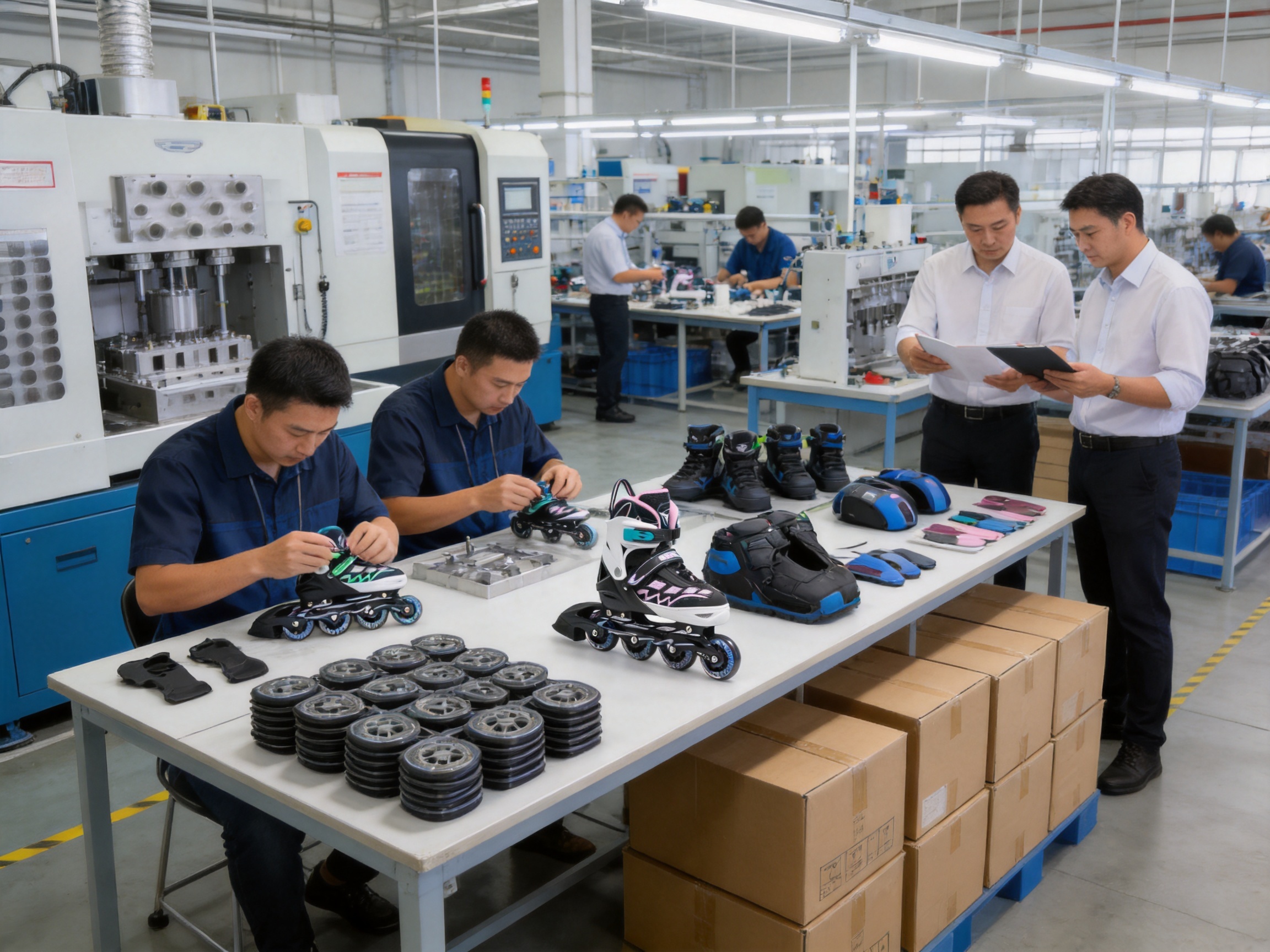
The company operates a workshop of approximately 20,000 square meters and has more than 200 employees. Its facilities include mold production, injection molding, sewing, and assembly workshops. Bringing these functions into an integrated manufacturing system can improve coordination between design, tooling, component production, and final assembly.
Mold capability is particularly important for products with shaped plastic shells, structural components, housings, and adjustable mechanisms. Internal mold resources can support product development, dimensional refinement, and production changes more efficiently than a system that depends entirely on outside tooling suppliers.
Injection molding supports the production of repeatable plastic components. Consistent molding is important for fit, appearance, structural connection, and assembly accuracy. Sewing capability can support soft goods and padded components, while assembly operations bring together the boot, adjustment structure, wheel system, fastening parts, and packaging.
Automatic Production Lines
Feile has five advanced automatic production lines. Automated or semi-automated production can improve process consistency, production efficiency, and repeatability when properly managed. It can also support larger-volume orders and more predictable delivery planning.
Automation does not eliminate the need for skilled workers or quality inspection. Instead, it works together with engineering, production management, and quality-control procedures. A well-organized production line helps ensure that components move through defined stages and that manufacturing requirements are applied consistently.
Professional R&D Engineering Team
The company maintains a professional R&D engineering team and develops new products each year. Continuous product development is valuable in a competitive sporting-goods market because consumer preferences, safety expectations, materials, and retail requirements continue to change.
Engineering resources can support improvements in fit, adjustment systems, comfort, structure, appearance, packaging, and manufacturability. They can also help adapt products for different market requirements and customer specifications.
For OEM and private-label buyers, engineering support is an important advantage. It may allow the manufacturer to work with customers on colors, graphics, packaging, component selections, product combinations, and other project details, subject to technical feasibility and order requirements.
Quality and Management Systems
Feile has passed ISO9001 and BSCI-related factory certification systems, as well as Kmart factory certification requirements. These systems and assessments indicate an emphasis on quality management, social responsibility, and manufacturing compliance.
The company also reports participation in international exhibitions and maintains more than 30 college-educated management staff. A structured management team can support communication between sales, engineering, production, quality control, purchasing, and logistics departments.
Business buyers should still confirm the specific documentation, testing reports, product standards, and audit records required for their destination market and product application. Certification requirements may differ by country, sales channel, age group, and product configuration.
Product Certifications and Market Readiness
The company’s products have received certifications and testing related to standards including 3C, CE, EN71, EN62115, ASTM, EMC, and EN13843:2009. These references cover different areas of product safety, electrical or electromagnetic requirements where applicable, toys and children’s products, and roller-sports equipment.
Not every standard applies identically to every model. Buyers should request model-specific documentation and verify that the tested configuration matches the actual product, materials, packaging, and target market. This is especially important for products intended for children.
For importers and distributors, compliance documentation can help support customs procedures, retailer onboarding, product registration, and consumer confidence. A manufacturer familiar with multiple international standards may be better positioned to explain testing needs and prepare export documentation.
OEM and One-Stop Sourcing Value
A manufacturer that produces several related sports categories can offer advantages beyond a single product order. Customers may be able to source inline skates, roller skates, ice skates, children’s scooters, helmets, protective gear, and complementary accessories through one supplier relationship.
One-stop sourcing can simplify communication, product development, quality coordination, packaging planning, and shipment consolidation. It may also help retailers create coordinated collections with consistent colors, graphics, packaging styles, and target age groups.
For private-label programs, the manufacturer’s mold, injection molding, sewing, assembly, and engineering resources may support a more complete development process. Buyers can discuss product positioning, target price, market requirements, packaging preferences, and order volumes at the beginning of the project.
OEM customers should provide clear technical specifications, including size ranges, color requirements, logo artwork, packaging language, barcode information, testing expectations, carton marks, delivery schedule, and destination-market regulations. Detailed communication at the development stage reduces misunderstandings during sampling and mass production.
Suitable Buyer Profiles
- Importers specializing in children’s sporting goods
- Retailers selling beginner skating equipment
- Online sellers seeking adjustable children’s products
- School and community recreation programs
- Sports clubs offering introductory inline skating
- Distributors sourcing coordinated skates and protective gear
- Private-label brands developing family-oriented sports collections
The adjustable size structure is particularly attractive to buyers who want products with a clear consumer benefit. It gives sales teams an easy explanation: one pair is designed to adapt across several sizes, making it suitable for growing children and teenagers.
Packaging and Logistics Considerations
The listed carton dimensions are 540 × 410 × 290 mm for size 31–34, 560 × 420 × 305 mm for size 35–38, and 600 × 430 × 315 mm for size 39–42. These measurements are useful for importers planning warehouse storage, container loading, transport costing, and retail packaging arrangements.
Because larger sizes require more carton space, buyers should calculate logistics by size mix rather than using one average measurement for the entire order. A shipment containing a high proportion of size L products may have different volume efficiency from a shipment concentrated in size S.
Retail packaging should clearly communicate the adjustable size range, beginner positioning, recommended protective gear, and basic care instructions. Packaging language should be adapted to the target market. Images, diagrams, and concise fitting instructions can help reduce customer confusion, especially for online purchases.
For e-commerce sellers, product listings should explain that the size range refers to the adjustable skate range and that users must still select the appropriate group based on current foot length. Sellers should avoid suggesting that one model fits every child or that adjustment eliminates the need for measurement.
How Retailers Can Position the Product
The product can be positioned as a practical first pair of inline skates for children and teenagers. Its main sales messages may include adjustable growth accommodation, beginner-friendly stability, comfortable support, everyday durability, and suitability for indoor and outdoor recreational use.
Retailers can present the product in several ways. A family recreation display can place it alongside helmets and protective pads. A back-to-school or after-school sports collection can emphasize regular exercise and outdoor activity. A beginner bundle can combine the skates with a full set of protective equipment and basic instruction materials.
Sales staff should explain the difference between adjustable sizing and loose sizing. The skate must be adjusted to hold the foot securely. Customers should also understand that beginners should practice at controlled speeds and use suitable surfaces.
Online sellers can improve conversion by showing the size ranges in a clear table, describing the adjustment process, listing recommended safety gear, and explaining the intended user profile. Since children’s footwear decisions are often made by parents, practical information may be more persuasive than highly technical performance claims.
Buyer Evaluation Checklist
Before placing a bulk order, buyers should review the following points:
- Confirm the available size ranges and adjustment mechanism.
- Request samples for fit, comfort, appearance, and rolling evaluation.
- Verify product-specific testing and certification documents.
- Review material specifications and component details.
- Confirm packaging dimensions and carton marks.
- Discuss available colors, logos, graphics, and private-label options.
- Clarify minimum order quantities and production lead times.
- Confirm inspection procedures before shipment.
- Review replacement-part availability and after-sales support.
- Check destination-market labeling and compliance requirements.
Sampling is especially important for children’s skates. Buyers should evaluate whether the adjustment is easy to operate, whether the boot provides suitable support, whether the wheels roll consistently, and whether the fastening system is understandable for the intended age group.
Q&A
Who is this adjustable inline skate designed for?
The product is designed for children, teenagers, and beginners who are learning basic inline skating skills. It is suitable for users with little or no previous skating experience and for those who want a practical skate for regular recreational practice.
What sizes are available?
The product is available in three adjustable ranges: 31–34, 35–38, and 39–42. Users should select the range that includes their current foot size and adjust the skate for a secure, comfortable fit.
Can the skate grow with a child?
Yes. The adjustable structure is designed to accommodate several sizes within each range. This allows the skate to remain useful as a child’s feet grow, although the product should always be adjusted within its specified range.
Is it suitable for complete beginners?
Yes. The simple structure, stable wheelset, supportive upper, and practical fit are intended to help beginners learn balance, posture, gliding, turning, and other basic techniques.
Can teenagers use the product?
Yes. The size L range extends to 39–42, making the product suitable for many teenagers and users with larger feet. Suitability depends on the individual’s foot size, weight, comfort requirements, and intended skating activity.
Can it be used outdoors?
It can be used for casual skating on suitable outdoor surfaces such as smooth plazas, residential areas, and other flat recreational paths. Wet, rough, steep, broken, or traffic-exposed surfaces should be avoided.
Is protective equipment necessary?
Yes. Users should wear a helmet, wrist guards, elbow pads, and knee pads, especially during beginner training. Protective gear should fit correctly and be inspected regularly.
Is this a racing or aggressive skating model?
No. It is primarily a beginner and recreational model. It focuses on comfort, stability, adjustment, and basic control rather than specialized racing, aggressive, or advanced freestyle performance.
What makes the product commercially attractive?
The main commercial advantages are its adjustable size ranges, broad age suitability, beginner-friendly positioning, practical construction, and potential for use in family, school, recreational, and sporting-goods channels.
What manufacturing capabilities support the product?
The manufacturer has mold, injection molding, sewing, and assembly workshops, five automatic production lines, an R&D engineering team, more than 200 employees, and a workshop of approximately 20,000 square meters. These resources support product development and integrated production.
Does the manufacturer support OEM projects?
The company provides OEM-oriented manufacturing and one-stop sourcing for skating, scooter, and sports equipment categories. Buyers should discuss product customization, packaging, order quantities, testing, and delivery requirements directly during project development.
What should buyers request before ordering?
Buyers should request product samples, model-specific certifications, material and component information, packaging specifications, quality-control procedures, order terms, and details about customization and after-sales support.
Conclusion
The BW-187 Adjustable Kids Inline Skate is built around the practical requirements of beginner users. Its adjustable size structure helps accommodate growing feet, while its simple upper, supportive fit, stable wheelset, and durable construction make it suitable for regular practice and casual recreation.
Compared with conventional fixed-size beginner skates, it offers a longer adaptation period and may provide greater value for families. Compared with highly specialized performance skates, it offers a more approachable learning experience for children and teenagers who are still developing balance, posture, and control.
For retailers and distributors, the product offers broad market coverage across three size groups and several sales applications. It can be sold as a first pair of skates, a family recreation product, an after-school exercise item, or part of a complete beginner safety package.
The manufacturing capabilities behind the product further strengthen its sourcing potential. Ningbo Feile Sporting Goods Co., Ltd. combines industry experience, integrated workshops, automatic production lines, engineering resources, quality-management systems, and international certification experience. These strengths can support OEM development, coordinated product sourcing, and reliable production for customers in different markets.
With proper fitting, supervision, protective equipment, and maintenance, adjustable inline skates can help children and teenagers begin skating with greater comfort and confidence. For buyers seeking practical skating and scooter equipment from an experienced factory, this product represents a balanced combination of usability, adaptability, and manufacturing support.
References
1. Product specification and descriptive materials for the adjustable children’s inline skate, including size ranges, applications, features, and carton dimensions.
2. Manufacturer profile and company information for Ningbo Feile Sporting Goods Co., Ltd., including factory facilities, workforce, production lines, engineering resources, and product categories.
3. General principles of children’s inline skating instruction, including beginner balance, posture, speed control, stopping, supervision, and protective-equipment use.
4. General sporting-goods retail practices for adjustable footwear, product sizing, packaging communication, inventory planning, and customer guidance.
5. International product-safety and quality-management references associated with children’s products, roller sports equipment, factory audits, and export manufacturing.
Product: BW-187 Adjustable Kids Inline Skate

Recommended Articles

Get in Touch
Your email address will not be published. Required fields are marked *
Have a project in mind? Contact with us!
We are happy to answer your questions. Please fill out this form
and one of our professional team will get back to you as soon as possible.

We specialize in producing various types of children's toy cars, children's skateboards, and ice skates.
