
 En
En
 Español
 русский
 عربى
عربى
How Three-Wheel Inline Skates Improve Agility, Stability, and Everyday Mobility
Date:Jul 21, 2026
Content
- 1 Understanding the Three-Wheel Inline Skate Design
- 2 Key Product Advantages
- 3 Comparison with Common Inline Skate Alternatives
- 4 Applications for Different User Groups
- 5 Fit, Sizing, and User Comfort
- 6 Safety and Responsible Use
- 7 Maintenance and Service Life
- 8 Manufacturing Strengths Behind the Product
- 9 Quality Systems and Market Certifications
- 10 OEM and Global Supply Potential
- 11 Product Presentation for Retailers
- 12 Competitive Positioning
- 13 Frequently Asked Questions
- 13.1 What type of skate is the BW-227?
- 13.2 What sizes are available?
- 13.3 Is the BW-227 suitable for beginners?
- 13.4 What are the main benefits of three wheels?
- 13.5 Does the skate include a brake?
- 13.6 What wheel material is used?
- 13.7 What type of frame does it have?
- 13.8 What bearings are included?
- 13.9 Where can the skate be used?
- 13.10 Is the product suitable for OEM orders?
- 13.11 What protective equipment should users wear?
- 13.12 How should the skates be maintained?
- 13.13 What manufacturing resources support the product?
- 13.14 Which certifications are associated with the manufacturer?
- 14 Conclusion
- 15 References
- 16 Product: BW-227 Three Wheels Inline Skate
Three-wheel inline skates have become an increasingly practical option for recreational skating, urban movement, fitness, and skill development. By replacing the traditional four-wheel arrangement with three wheels positioned in a longer inline frame, this design changes how the skate accelerates, turns, distributes weight, and responds to the skater’s movements. The BW-227 Three Wheels Inline Skate is developed around these characteristics, combining agile handling with a supportive boot, durable PU wheels, a reinforced aluminum alloy frame, carbon steel bearings, and a rear-mounted brake.
Designed for adults in sizes M, covering approximately EU 35–38, and L, covering approximately EU 39–42, the BW-227 is intended for both men and women. Its application range includes outdoor street skating, daily short-distance commuting, recreational fitness, cruising, turning practice, and slalom-oriented skill development. Rather than focusing only on speed, the design aims to provide a balanced experience in which maneuverability, comfort, stability, and braking control work together.
For buyers comparing inline skates from different suppliers, product structure is only one part of the decision. Manufacturing capability, material selection, quality management, certification experience, production capacity, and product development resources also influence long-term value. The manufacturer behind this model operates dedicated mold, injection molding, sewing, and assembly workshops, supported by multiple automatic production lines and a professional research and development team. These capabilities allow the product to be developed and produced through a coordinated process instead of relying only on outsourced assembly.
This article examines the BW-227 in detail, explains the benefits of its three-wheel configuration, compares its design advantages with common alternatives, and reviews the manufacturing strengths that support its use in international sports equipment markets.
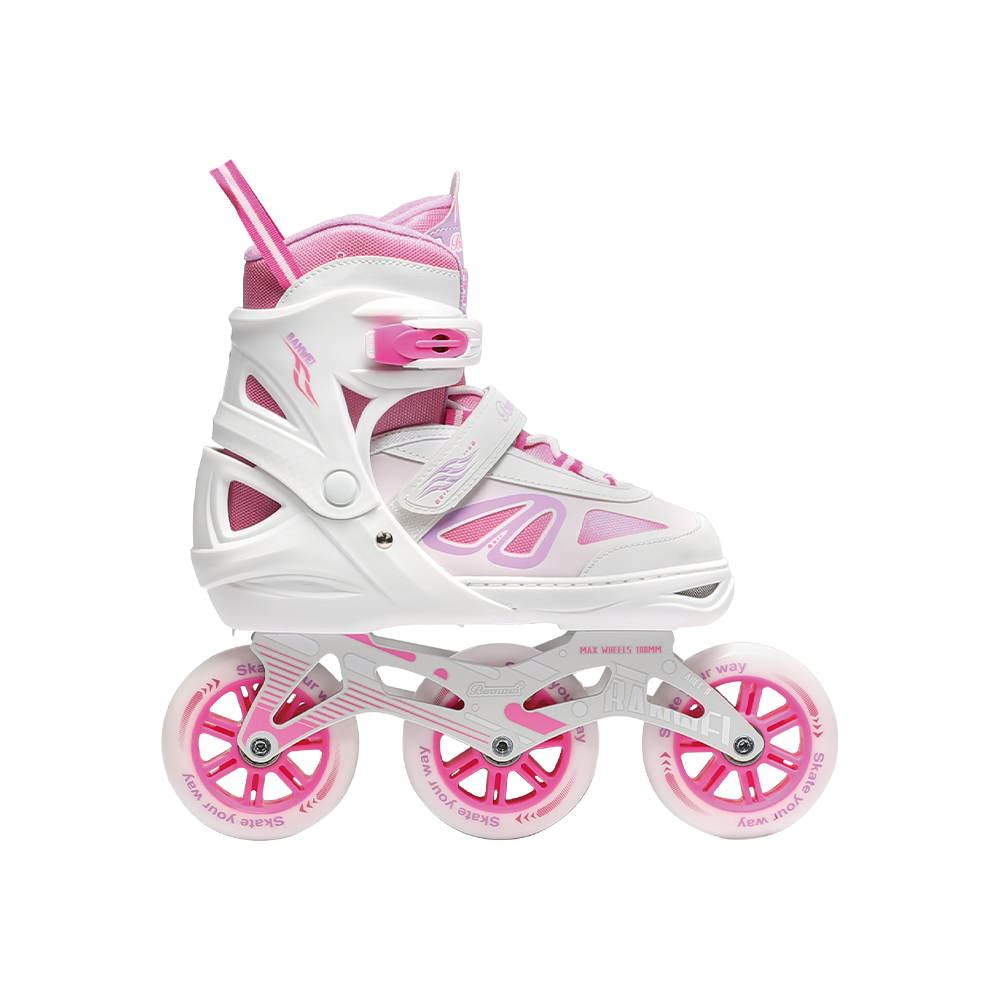
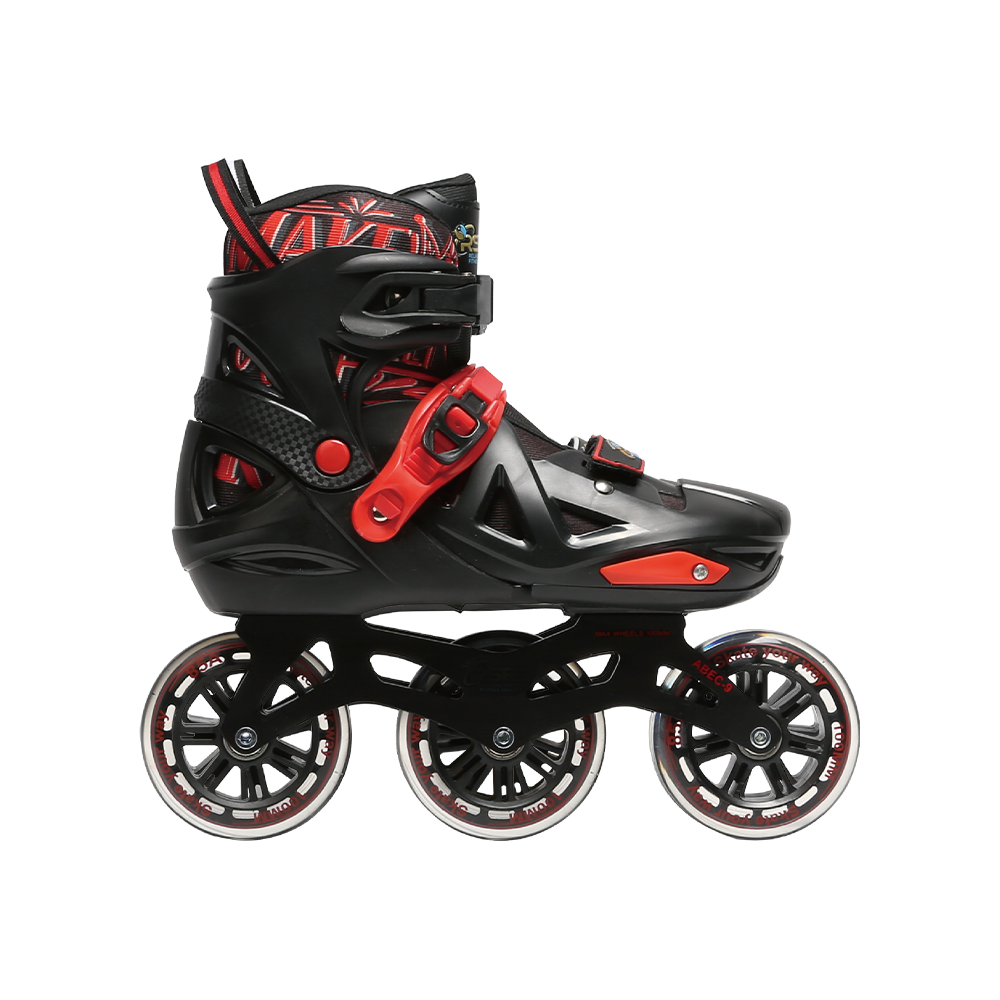
BW-227 Three Wheels Inline Skate
Understanding the Three-Wheel Inline Skate Design
Inline skates traditionally use two, three, four, or even five wheels. Each configuration produces a different balance between stability, maneuverability, acceleration, and rolling efficiency. A three-wheel skate generally offers a useful middle ground. It can provide a longer effective wheelbase than a compact four-wheel recreational skate while maintaining a lighter and more responsive structure than many larger four- or five-wheel speed-oriented models.
The three wheels of the BW-227 are arranged in a straight line beneath the boot. This arrangement supports direct transfer of movement from the skater’s ankle and foot to the frame. When the skater leans into a turn, the frame responds quickly, allowing the skate to change direction with relatively little effort. The smaller turning radius is especially helpful when navigating sidewalks, winding paths, narrow spaces, or crowded urban environments.
Compared with a conventional four-wheel recreational skate, the three-wheel layout can reduce the amount of wheel contact and rolling resistance experienced during certain movements. The result is a lighter-feeling glide and a more responsive reaction when the skater pushes, turns, or changes lanes. For beginners, this responsiveness can make basic steering exercises easier to understand. For more experienced users, it can provide a practical platform for controlled turns and slalom techniques.
The design is not intended to eliminate the need for balance or proper skating technique. All inline skates require the user to maintain an appropriate body position, bend the knees, control speed, and select suitable surfaces. However, the BW-227’s structure is designed to make small-range maneuvers more manageable. This is important for users who want a skate for both movement and skill development rather than only straight-line recreation.
Responsive Acceleration
A three-wheel frame can feel lively during the first part of a skating stroke. The skater’s push is transferred through a relatively direct wheel arrangement, and the reduced number of wheels can contribute to a lighter and less cluttered sensation beneath the foot. This is beneficial when starting from rest, accelerating after a turn, or maintaining momentum on smooth outdoor surfaces.
Responsive acceleration is particularly useful during urban skating. A commuter may need to slow down near a pedestrian crossing, navigate around a corner, and then regain speed. A recreational user may alternate between gentle cruising and short bursts of faster movement. In both situations, a skate that reacts promptly to deliberate pressure can feel more natural than a design that requires broader or slower movements.
Smaller Turning Radius
The BW-227 is designed for agile turning and lane changes. Its three-wheel layout helps the skater make compact directional adjustments without requiring excessive foot movement. This supports practical activities such as avoiding obstacles, following a winding path, or practicing controlled slalom patterns.
A smaller turning radius is also useful for beginners who are learning how to transfer weight from one side to the other. The skater can practice gradual turns in a controlled space and develop confidence before attempting larger curves or higher speeds. More advanced users may appreciate the ability to connect turns smoothly during recreational training.
Stable Movement Through Balanced Construction
Agility alone is not enough for a useful inline skate. A skate that turns easily but feels unstable can be difficult to control and tiring to use. The BW-227 addresses this concern through a combination of frame design, weight distribution, supportive padding, and a secure upper. These features are intended to create a stable contact between the foot and the skate while preserving the responsiveness expected from a three-wheel model.
The thickened aluminum alloy frame contributes to structural support under the boot. A strong frame helps distribute force from the foot across the wheel assembly rather than allowing excessive flex or uneven loading. This can improve the feeling of balance during gliding, turning, and braking. The frame also provides a foundation for the precision carbon steel bearings and PU wheels.
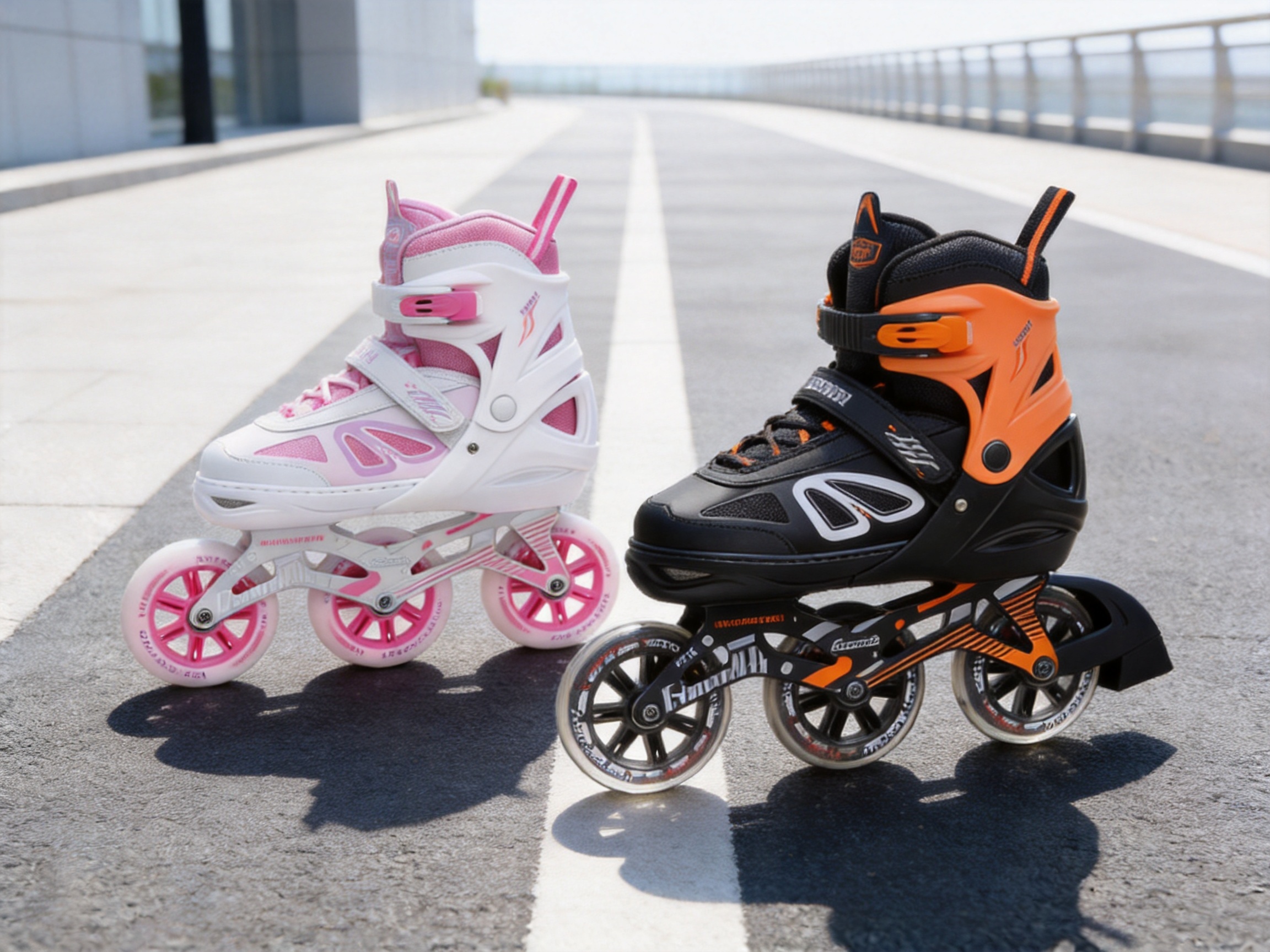
Key Product Advantages
Flexible and Easy to Control
The most recognizable advantage of the BW-227 is its maneuverability. The three-wheel arrangement is designed to respond quickly to changes in direction, allowing the user to steer, turn, and change lanes with comparatively little effort. This flexibility is useful on smooth outdoor paths, in open recreational areas, and during short-distance urban travel.
For a novice, a responsive skate can make the relationship between body movement and direction easier to understand. The user can practice leaning, weight transfer, and controlled steering without needing exaggerated movements. The skate is still a sports product that requires practice, but its configuration is intended to support a smooth learning process.
For an experienced skater, maneuverability can improve the enjoyment of turning drills and slalom exercises. The skater can work on directional changes, edge control, and rhythm while benefiting from a frame that is designed for compact movement. This gives the model a broader use range than a skate intended only for slow recreational laps.
Stable Support and Reduced Ankle Stress
Inline skating places repeated demands on the ankles. If a skate fits poorly, distributes weight unevenly, or lacks adequate support, the user may experience instability and premature fatigue. The BW-227 uses a moderately soft upper and thickened cushioned lining to create a supportive enclosure around the foot.
The upper is designed to conform to the foot shape without creating unnecessary pressure. The cushioned interior helps reduce contact discomfort during extended use, while the overall construction helps the user maintain a more consistent foot position. A stable fit is important because loose movement inside the boot can reduce control, while excessive tightness can cause discomfort.
The product information describes the overall weight distribution as balanced and intended to reduce the likelihood of ankle sprains. This should be understood as a design objective rather than a guarantee of injury prevention. Proper sizing, gradual training, safe speeds, protective equipment, and suitable skating surfaces remain essential. Nevertheless, a stable frame and supportive upper can help users maintain better control during ordinary skating movements.
Comfort for Longer Sessions
Many entry-level skates are used for only short periods because hard interiors, insufficient padding, or poor fit can cause pressure points. The BW-227 includes a thickened, soft, cushioned lining intended to wrap the foot comfortably. This feature supports longer recreational sessions, commuting use, and daily fitness routines.
Comfort also affects technique. When a skater is distracted by pressure or rubbing, posture and balance may deteriorate. A more comfortable boot allows the user to focus on steering, braking, and body position. For wholesalers and retailers, comfort is an important selling point because it appeals to both new users and experienced skaters seeking an everyday model.
Durable PU Wheels
The BW-227 uses high-quality PU wheels designed for durability and wear resistance. Polyurethane wheels are commonly used in inline skates because they offer a practical combination of grip, rebound, rolling performance, and resistance to ordinary surface wear. They are suitable for smooth outdoor surfaces such as paved paths, sidewalks, and recreational skating areas.
Wheel durability is important for products used regularly. A wheel that wears quickly can change the handling characteristics of the skate, reduce rolling comfort, and increase replacement costs. Wear-resistant PU construction helps the wheels retain their intended performance over a longer period when used on appropriate surfaces.
As with all skating wheels, service life depends on user weight, skating frequency, surface roughness, braking habits, storage conditions, and maintenance. Rough concrete, gravel, damaged pavement, and sharp debris can accelerate wear. Users should inspect the wheels regularly and replace components when visible damage or significant uneven wear appears.
Reinforced Aluminum Alloy Frame
The thickened aluminum alloy frame is designed to provide a strong and stable base for the wheel system. Aluminum alloy is valued in skate construction for its combination of strength, relatively low weight, and resistance to ordinary environmental conditions. A reinforced frame can help distribute loading evenly while supporting a stable ride.
Frame stiffness influences how directly a skate responds to the user. Excessive flex can make steering feel vague, while an appropriately rigid frame can help maintain alignment between the boot and wheels. The BW-227’s frame is intended to support balanced skating, stable turns, and smooth force transfer during everyday use.
Carbon Steel Bearings
High-precision carbon steel bearings are used to support wheel rotation. Bearings affect how smoothly the wheels roll and how efficiently the skater can maintain momentum. Properly manufactured and installed bearings can reduce unnecessary friction and contribute to a more fluid skating experience.
Bearings require basic care. Users should avoid prolonged exposure to water, dry the skates after use in damp conditions, and keep the bearing area free from excessive dirt. Routine inspection can help identify unusual noise, resistance, or rough rotation before these issues affect the skating experience.
Rear-Mounted Anti-Slip Brake
Stopping control is an essential part of inline skating, especially for beginners and urban users. The BW-227 includes a rear-mounted anti-slip brake designed to provide a responsive stopping action. Its location allows the user to apply the brake through a controlled shift of body position and foot angle.
A rear brake is particularly valuable for short-distance commuting and recreational skating because it gives users an accessible way to reduce speed or stop. It can also support the learning process while users develop alternative braking techniques. Braking should always be practiced in an open, obstacle-free area before the skater enters a busy path or public space.
The brake is a replaceable wear component in normal use. Users should inspect it regularly for material loss, cracking, or reduced effectiveness. Retailers and distributors may also consider offering replacement brake components and basic maintenance guidance as part of an after-sales service program.
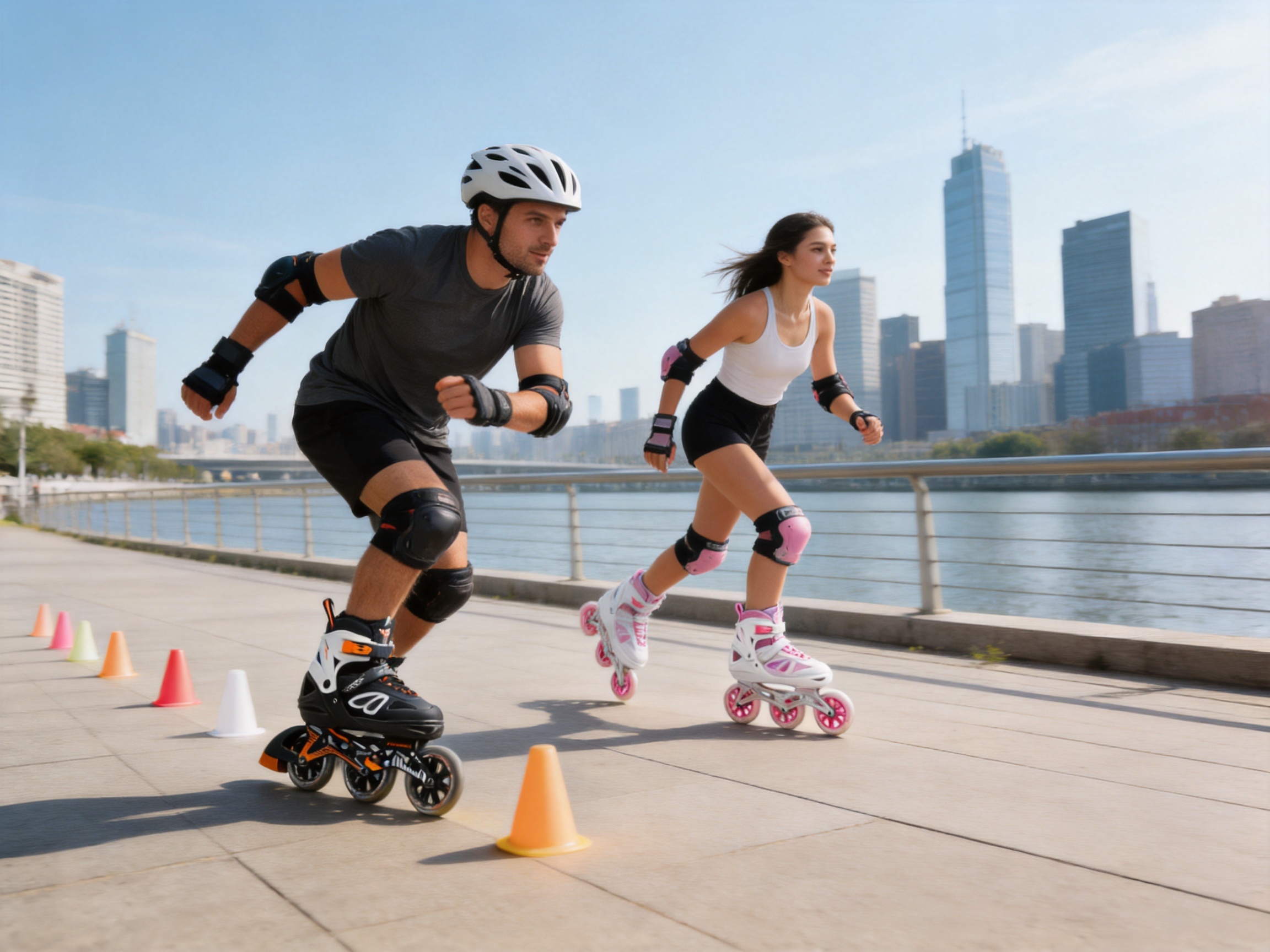
Comparison with Common Inline Skate Alternatives
Product comparison should consider the intended use rather than assuming that one wheel configuration is best for every skater. Four-wheel skates, three-wheel fitness skates, and specialized speed skates each have their own strengths. The BW-227 is positioned as a flexible, agile model for commuting, fitness, cruising, and turning practice.
| Feature | BW-227 Three-Wheel Inline Skate | Typical Four-Wheel Recreational Skate | Specialized Speed-Oriented Skate |
|---|---|---|---|
| Wheel configuration | Three wheels in an inline arrangement | Usually four wheels in an inline arrangement | Often three or four larger wheels, depending on discipline |
| Turning response | Quick and suitable for compact turns | Generally predictable, with a more conventional feel | Responsive but often optimized for trained skaters |
| Urban maneuverability | Well suited to lane changes, winding paths, and short movements | Suitable for open recreational areas and ordinary cruising | May require greater technique and space |
| Comfort emphasis | Cushioned lining and supportive upper | Varies widely by model | Often prioritizes performance and reduced weight |
| Braking | Rear-mounted anti-slip brake | Commonly available, depending on model | May require advanced braking techniques |
| Primary use | Commuting, fitness, cruising, and turning practice | Beginner recreation and casual skating | Speed training, racing, or advanced fitness |
| Size range in this model | M: 35–38; L: 39–42 | Varies by product | Varies by product and discipline |
Compared with Four-Wheel Recreational Skates
Four-wheel inline skates are often chosen by beginners because the additional wheel can create a familiar feeling of support and predictable rolling. They may be appropriate for users who primarily skate in open areas and prefer a traditional recreational design. However, four-wheel models can feel less agile during compact turns, depending on their frame length and wheel arrangement.
The BW-227’s three-wheel configuration offers a different balance. It is intended to feel more responsive when the user changes direction, shifts lanes, or navigates a winding path. This can be an advantage for urban users and skaters who want to practice turning skills. The choice depends on personal preference, experience, and the environments in which the skate will be used.
Compared with Lightweight Speed Skates
Speed-oriented skates are usually built for users who already have strong skating technique. They may use larger wheels, a lower cuff, reduced padding, or a specialized frame to maximize speed and stride efficiency. These characteristics can benefit trained skaters but may feel demanding for casual users or beginners.
The BW-227 takes a more versatile approach. Its cushioned lining, supportive upper, rear brake, and balanced frame make it suitable for everyday use rather than only high-speed training. The product can therefore appeal to buyers who want one pair of skates for commuting, fitness, recreational cruising, and basic technical practice.
Compared with Basic Entry-Level Models
Some basic inline skates focus on low purchase cost and simplified construction. While such products can introduce new users to skating, they may have limited adjustment options, less substantial frames, weaker cushioning, or less durable wheel and bearing components. Buyers seeking a product for repeated use may prefer a model with a more complete combination of performance and comfort features.
The BW-227 offers several elements that support regular use: PU wheels, carbon steel bearings, an aluminum alloy frame, cushioned lining, a rear brake, and a design intended for both agility and stability. These features can make the model more attractive to retailers and distributors looking for a product with a broader value proposition than a disposable or occasional-use skate.
Applications for Different User Groups
Urban Commuting
The BW-227 is suitable for short-distance commuting on smooth sidewalks, paved paths, and other appropriate surfaces. Its compact turning response can help the user manage corners and route changes, while the rear brake supports speed control near crossings and pedestrian areas.
Urban users should plan routes carefully. A smooth, dry, unobstructed surface is preferable. Skaters should slow down near pedestrians, driveways, intersections, ramps, and areas with limited visibility. The product can replace walking for some short trips, but it should be used responsibly and in compliance with local transportation rules.
Daily Fitness
Inline skating can combine cardiovascular activity with balance and coordination training. The user engages the legs, hips, core, and stabilizing muscles while maintaining a controlled glide. Because the BW-227 is designed for everyday skating and cruising, it can be incorporated into a regular fitness routine.
Beginners should start with short sessions at moderate speeds. A gradual increase in distance and duration helps the body adapt. Users should warm up before skating, maintain a controlled posture, and stop when fatigue affects balance or technique.
Recreational Cruising
For recreational users, the BW-227 offers a practical balance between movement and comfort. The responsive three-wheel frame can make ordinary gliding more engaging, while the cushioned boot supports longer sessions. Families, friends, and individual users can enjoy the skate on suitable trails, dedicated skating areas, and smooth outdoor surfaces.
Turning and Slalom Practice
The product is also suitable for users who want to practice turning, direction changes, and slalom techniques. Its compact maneuverability allows the skater to work on controlled movements without requiring a large practice area. Training should begin slowly, with emphasis on body alignment, knee flexion, edge control, and consistent weight transfer.
As skill improves, users can combine turns into flowing sequences. The skate’s agile response can support progression from basic steering to more precise recreational techniques. Advanced tricks should only be attempted by users with suitable experience and protective equipment.
Fit, Sizing, and User Comfort
Correct sizing is essential for both safety and performance. The BW-227 is available in M, approximately EU sizes 35–38, and L, approximately EU sizes 39–42. Buyers should consult the seller’s size chart and measure foot length when possible. Foot shape, sock thickness, and personal fit preference can affect the final selection.
A skate that is too large may allow the heel to lift, reducing control and causing friction. A skate that is too small may create pressure at the toes or instep. The ideal fit should hold the heel and midfoot securely while allowing the toes to remain comfortable. Laces, straps, and other closure elements should be adjusted evenly rather than pulled excessively tight in one area.
The moderate softness of the upper is intended to provide a balance between support and comfort. The padded lining helps cushion the foot, but users should still wear appropriate skating socks and check for pressure points during the first few sessions. New skates may require a short adjustment period as the lining conforms to the user’s foot.
Distributors can improve customer satisfaction by providing clear sizing instructions, foot-measurement guidance, and information about suitable socks and protective equipment. These details reduce returns and help users obtain better performance from the product.
Safety and Responsible Use
Inline skating is an active sport, and protective equipment is recommended. A helmet, wrist guards, knee pads, and elbow pads can help reduce the consequences of falls. Protective gear is especially important for beginners, children, users practicing turns, and anyone skating in an unfamiliar environment.
The rear-mounted brake should be checked before every extended session. Users should practice applying it gradually and maintain a balanced posture while stopping. Sudden movements, leaning too far backward, or braking on a rough surface can reduce control. Skaters should learn to slow down before reaching crowded areas or changes in terrain.
The BW-227 is intended for smooth outdoor surfaces. It should not be used on loose gravel, deeply cracked pavement, wet floors, oily surfaces, or areas with sharp debris. Water can affect traction and may enter the bearing area. If the skates become wet, they should be dried thoroughly before storage.
Children should use products appropriate to their size and ability and should be supervised by a responsible adult. Although the BW-227 size range is described as suitable for adult men and women, all users should confirm fit and safety requirements before use. Product selection should never be based on size alone.
Maintenance and Service Life
Regular maintenance helps preserve the performance of the wheels, bearings, frame, boot, and brake. After each session, users can remove dirt from the boot and frame with a dry or slightly damp cloth. The skates should then be allowed to air-dry in a ventilated area away from direct heat.
Wheel rotation can help promote more even wear. Because skating style and braking habits may load the wheels differently, one side may wear faster than the other. Users should inspect wheel alignment and surface condition regularly. Wheels with deep cuts, severe flat spots, or major loss of material should be replaced.
Bearings should rotate smoothly without excessive noise or grinding. If the bearings become contaminated, maintenance should follow the supplier’s recommended procedure. The use of unsuitable lubricants or excessive oil can attract dirt and reduce performance.
The aluminum alloy frame and mounting hardware should be checked for looseness or visible damage. Screws and fasteners should be tightened appropriately, but overtightening can damage components. The brake should be replaced when it becomes excessively worn or loses effective contact with the skating surface.
For commercial buyers, a clear replacement-parts strategy can add value to the product. Replacement brakes, wheels, bearings, and other common service components can support customer retention and extend the useful life of the skate.
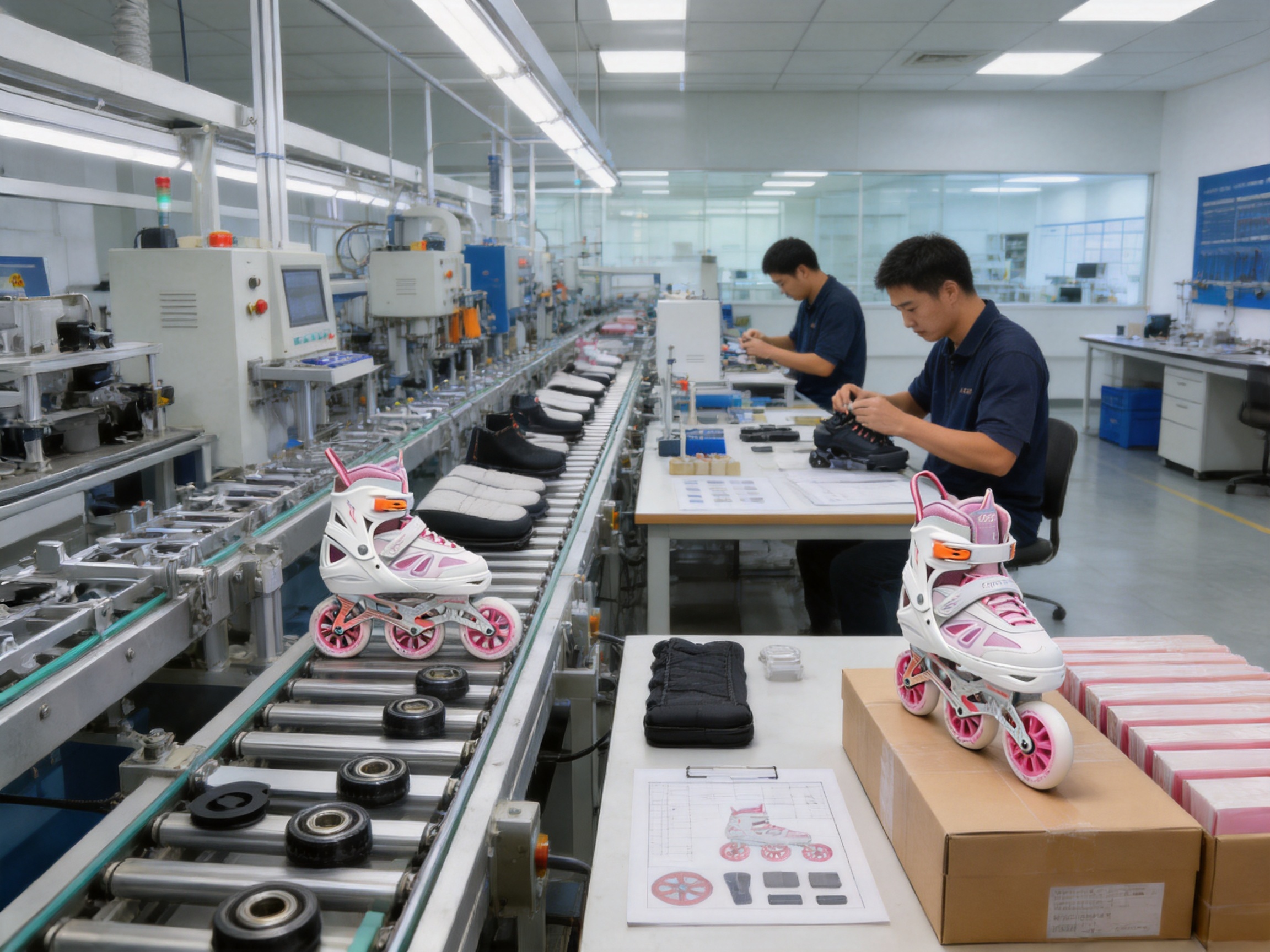
Manufacturing Strengths Behind the Product
A reliable skate depends on more than its published specifications. Manufacturing consistency affects fit, wheel alignment, frame attachment, stitching, padding, braking response, and overall durability. The manufacturer of the BW-227 has developed an integrated production structure that includes mold development, injection molding, sewing, assembly, and product research and development.
Established Production Experience
The company was established in 2010 and specializes in children’s scooters, inline skates, roller skates, and ice skates. This product focus gives the organization experience across several related categories within the sports equipment industry. Knowledge of wheel systems, plastic components, soft goods, frames, closures, and assembly procedures can support more coordinated product development.
Long-term specialization also helps a manufacturer understand the practical needs of international customers. Different markets may require different packaging, labeling, sizing, certifications, color options, and performance expectations. An experienced supplier is better positioned to discuss these requirements during product development and order preparation.
Integrated Mold and Injection Molding Workshops
The company operates mold and injection molding workshops. In-house or closely controlled mold capability can support faster product adjustments, better management of component dimensions, and more direct coordination between design and production. For skating products, molded parts may include structural shells, protective components, wheel-related elements, and other plastic assemblies.
Injection molding consistency is important because small variations can affect fit, alignment, surface finish, and assembly. A controlled molding process can help maintain repeatability across production batches. It also supports the development of customized components for original equipment manufacturing and private-label projects.
Sewing and Soft-Goods Production
The upper and lining of an inline skate require different production skills from the frame and wheel system. Sewing workshops support the manufacture of fabric, synthetic leather, padded, and other soft components. Stitching quality, edge finishing, padding placement, and upper shaping all influence comfort and durability.
The BW-227’s moderately soft upper and thickened cushioned lining require coordination between material selection, pattern design, sewing, and final assembly. A manufacturer with dedicated sewing capability can manage these stages more effectively than a supplier that only purchases finished uppers from unrelated sources.
Assembly and Quality Coordination
Final assembly brings together the boot, frame, wheels, bearings, brake, fasteners, and other components. Correct assembly is essential for wheel rotation, frame alignment, braking response, and overall stability. A well-organized assembly process should include checks for appearance, component fit, hardware installation, and functional movement.
The company operates five advanced automatic production lines and has a workshop area of approximately 20,000 square meters. This scale provides the capacity to coordinate larger orders while maintaining dedicated production stages. More than 200 employees support the company’s operations, including management, production, quality, engineering, and related functions.
Research and Development Capability
A professional research and development engineering team supports the company’s product work. This capability is valuable for buyers seeking more than a fixed catalog product. OEM customers may require modifications to colors, packaging, materials, component combinations, branding applications, or market-specific details.
Product development for skates requires attention to user comfort, balance, wheel performance, safety, appearance, and production feasibility. Engineering teams can help translate a market concept into a manufacturable design. They can also assist in refining components when customers provide feedback from retailers, athletes, or end users.
Management and Technical Resources
The company has more than 30 college-educated management staff. A structured management team can support communication between product development, purchasing, production, quality control, and export operations. This is particularly important for overseas customers who need clear order updates, documentation, packaging coordination, and quality follow-up.
Organizational depth can also help maintain continuity when handling multiple product categories and seasonal demand. Sports equipment orders often follow retail calendars, school seasons, holiday promotions, and weather patterns. A supplier with established teams and production planning systems may be better prepared to coordinate these changing requirements.
Quality Systems and Market Certifications
The company has passed ISO9001, BSCI, and Kmart factory certification systems, according to the supplied company information. These credentials indicate experience with quality management, social compliance, and customer-specific factory evaluation requirements. Certification status should always be verified for the specific order, product, market, and current validity period.
The company also reports product certifications including 3C, CE, EN71, EN62115, ASTM, EMC, and EN13843:2009. Different standards address different product categories, markets, or safety considerations. Buyers should confirm which certificates apply specifically to the BW-227, its intended sales region, and the final product configuration.
For importers, certification documentation is an important part of supplier evaluation. It can support customs preparation, retailer approval, marketplace documentation, and product compliance reviews. Responsible buyers should request current test reports, declarations, factory audit documents, labeling information, and any required technical files before placing a commercial order.
Compliance should be treated as an ongoing process rather than a one-time marketing statement. Changes to materials, wheels, brakes, packaging, production sites, or product construction may affect documentation requirements. Close communication between the manufacturer and buyer helps ensure that the delivered product remains consistent with the approved sample and compliance file.
OEM and Global Supply Potential
The manufacturer’s production scope makes the BW-227 relevant to importers, distributors, sporting goods retailers, private-label brands, and promotional product buyers. An OEM supplier can help customers source related categories from one production partner, including children’s scooters, inline skates, roller skates, ice skates, and protective gear.
One-stop sourcing can simplify product development and purchasing. Instead of coordinating separate suppliers for every category, a buyer may be able to consolidate discussions about materials, packaging, quality requirements, shipping schedules, and compliance documentation. This can reduce administrative complexity and support a more consistent product range.
OEM cooperation still requires clear specifications. Buyers should define target users, size ranges, color requirements, packaging format, logo placement, carton markings, labeling language, component standards, inspection procedures, and expected order quantities. A detailed technical brief helps prevent misunderstandings and makes sample approval more efficient.
The company participates in international exhibitions each year, which supports contact with overseas distributors and sports equipment buyers. Exhibition participation can also help the manufacturer monitor market trends, observe competing designs, collect customer feedback, and identify opportunities for new product development.
Product Presentation for Retailers
Retailers can position the BW-227 as a versatile three-wheel skate for users who want agility without moving immediately into specialized racing equipment. Its key selling points include compact turning, responsive handling, cushioned comfort, PU wheel durability, a strong aluminum alloy frame, carbon steel bearings, and a rear brake.
Product descriptions should communicate both the benefits and the intended conditions of use. Customers should understand that the model is designed for smooth outdoor surfaces, short commutes, recreational fitness, and turning practice. Clear information about sizing and protective equipment can help establish realistic expectations and reduce misuse.
Visual merchandising can emphasize the three-wheel layout, frame construction, cushioned interior, wheel material, and brake position. Retail staff should be able to explain how three-wheel skates differ from four-wheel models and why a buyer might choose one for city maneuverability or skill practice.
For online retailers, useful product content includes a size chart, foot-measurement instructions, care recommendations, safety advice, application examples, and a list of included components. Buyers often compare products through small details, so accurate technical information can be a meaningful competitive advantage.
Competitive Positioning
The BW-227 competes through a combination of design versatility and manufacturing depth. Its three-wheel structure creates a clear point of difference from standard four-wheel recreational skates. The inclusion of a rear brake makes the model more accessible to everyday users, while the cushioned upper and lining support comfort during longer sessions.
Its frame and bearing construction also provide a stronger technical story than products that focus only on appearance. A thickened aluminum alloy frame, high-precision carbon steel bearings, and wear-resistant PU wheels address the main mechanical elements that influence riding feel and service life.
Another advantage is the relationship between the product and the supplier’s broader manufacturing platform. Buyers can evaluate not only a single skate but also a company with experience in molds, plastics, sewing, assembly, engineering, certifications, and international supply. This can be valuable when a customer wants to expand from one inline skate model into a complete skating and scooter equipment program.
Compared with highly specialized performance skates, the BW-227 is more oriented toward accessibility and everyday versatility. Compared with basic entry-level products, it offers a more developed combination of support, maneuverability, braking, and component construction. This positioning can make it suitable for mid-range retail, general sporting goods distribution, and private-label programs.
Frequently Asked Questions
What type of skate is the BW-227?
The BW-227 is a three-wheel inline skate designed for agile skating, outdoor cruising, short-distance commuting, daily fitness, and turning practice. It uses three inline wheels beneath each boot rather than a conventional four-wheel arrangement.
What sizes are available?
The available sizes are M, approximately EU 35–38, and L, approximately EU 39–42. Customers should check the supplier’s size chart and measure foot length before ordering because fit preferences and foot shape can vary.
Is the BW-227 suitable for beginners?
Its responsive steering, supportive upper, cushioned lining, and rear brake can make it suitable for beginners who want to learn controlled gliding and turning. Beginners should start at low speed, use protective equipment, and practice braking in a safe open area.
What are the main benefits of three wheels?
The three-wheel arrangement is designed to provide responsive acceleration, agile steering, a smaller turning radius, and smooth lane changes. It can be especially useful for urban routes, winding paths, and turning exercises.
Does the skate include a brake?
Yes. The product is equipped with a rear-mounted anti-slip brake designed to provide responsive stopping control. The brake is a wear component and should be inspected regularly.
What wheel material is used?
The skate uses PU wheels. They are designed to provide durability and wear resistance on suitable smooth outdoor surfaces.
What type of frame does it have?
The BW-227 uses a thickened aluminum alloy frame. The frame is intended to distribute force evenly, support wheel alignment, and provide a stable foundation for skating.
What bearings are included?
The product uses high-precision carbon steel bearings to support smooth wheel rotation and efficient gliding.
Where can the skate be used?
It is designed for smooth outdoor surfaces, city streets and sidewalks, recreational paths, short commutes, fitness skating, and turning practice. Rough, wet, oily, loose, or heavily damaged surfaces should be avoided.
Is the product suitable for OEM orders?
The manufacturer specializes in skating and scooter equipment and has mold, injection molding, sewing, assembly, and engineering capabilities. Buyers should discuss OEM specifications, packaging, branding, order quantities, testing, and delivery requirements directly with the supplier.
What protective equipment should users wear?
A helmet, wrist guards, knee pads, and elbow pads are recommended. Protective equipment is especially important for beginners, children, users practicing turns, and anyone skating in unfamiliar areas.
How should the skates be maintained?
Users should clean dirt from the boot and frame, keep the skates dry, inspect the wheels and brake, check frame hardware, and monitor bearing rotation. Wheels and brakes should be replaced when they show significant wear or damage.
What manufacturing resources support the product?
The company operates a 20,000-square-meter workshop, five advanced automatic production lines, mold, injection molding, sewing, and assembly workshops, and a professional R&D engineering team. It has more than 200 employees and experience producing several categories of skating and scooter products.
Which certifications are associated with the manufacturer?
The supplied company information lists ISO9001, BSCI, and Kmart factory certification systems, along with product certifications including 3C, CE, EN71, EN62115, ASTM, EMC, and EN13843:2009. Buyers should request current documentation applicable to the exact model and target market.
Conclusion
The BW-227 Three Wheels Inline Skate is designed to combine agile movement with stability, comfort, and practical stopping control. Its three-wheel layout supports responsive acceleration, compact turns, and smooth direction changes, making it suitable for city skating, short commutes, recreational cruising, fitness, and turning practice. The supportive upper and cushioned lining address comfort, while PU wheels, a thickened aluminum alloy frame, and carbon steel bearings support durability and consistent handling.
Its competitive value comes from the way these features work together. The skate offers more maneuverability than many conventional recreational designs while remaining more accessible and comfort-oriented than specialized speed equipment. The rear brake further broadens its appeal to beginners and everyday users.
For commercial buyers, the product is supported by a manufacturer with experience in skating and scooter equipment, integrated production workshops, automatic production lines, engineering resources, international exhibition participation, and reported quality and product certification experience. These strengths can support OEM development, private-label programs, wholesale distribution, and one-stop sourcing across multiple sports equipment categories.
As with any sports product, the best results depend on correct sizing, safe operating conditions, regular maintenance, and appropriate protective equipment. When properly matched to the user and application, the BW-227 provides a practical platform for developing balance, coordination, mobility, and enjoyment on wheels.
References
1. Product specification and technical information supplied for the BW-227 Three Wheels Inline Skate.
2. Manufacturer profile and company capability information supplied for Ningbo Feile Sporting Goods Co., Ltd.
3. General principles of inline skate frame geometry, wheel configuration, balance, and maneuverability.
4. General guidance on polyurethane wheel performance, bearing care, braking systems, and inline skate maintenance.
5. General consumer safety principles for recreational skating, protective equipment, route selection, and beginner training.
6. General quality management, factory audit, OEM production, and product compliance practices for international sporting goods supply.
Product: BW-227 Three Wheels Inline Skate
Recommended Articles

Get in Touch
Your email address will not be published. Required fields are marked *
Have a project in mind? Contact with us!
We are happy to answer your questions. Please fill out this form
and one of our professional team will get back to you as soon as possible.

We specialize in producing various types of children's toy cars, children's skateboards, and ice skates.
