
 En
En
 Español
 русский
 عربى
عربى
Why Full-Face Impact Protection Matters in Modern Action Sports
Date:Jul 31, 2026
Content
- 1 Understanding the BW-013 Full-Face Safety Concept
- 2 Three Protective Layers for More Reliable Performance
- 3 High-Impact Protection for Demanding Activities
- 4 Clear Vision in Changing Weather
- 5 Comfort Designed for Longer Wear
- 6 Applications Across Several Market Segments
- 7 Advantages Over Basic and Narrowly Designed Competitor Products
- 8 Manufacturing Strengths Behind the Product
- 9 Quality Systems, Certifications, and OEM Support
- 10 OEM and Private-Label Opportunities
- 11 How Distributors Can Present the Product
- 12 Recommended Inspection and Care Routine
- 13 Buyer Checklist for Commercial Sourcing
- 14 Q&A
- 14.1 What is the BW-013 High Impact Resistant Helmet designed for?
- 14.2 What makes the helmet different from a standard open-face sports helmet?
- 14.3 What materials are used in the helmet?
- 14.4 Are the goggles anti-fog?
- 14.5 Can the interior be cleaned?
- 14.6 Is the helmet suitable for wet environments?
- 14.7 Is the helmet lightweight?
- 14.8 Can the product be customized for an OEM project?
- 14.9 What should buyers verify before importing the helmet?
- 14.10 When should the helmet be replaced?
- 15 Conclusion
- 16 References
- 17 Product: BW-013 High Impact Resistant Helmet
Protective equipment has become an essential part of skating, scootering, cycling, motorcycling, water sports, and many other active pursuits. As participation in these activities grows, users are looking for helmets that do more than satisfy a basic appearance requirement. They want a product that offers dependable impact protection, comfortable wear, clear vision, ventilation, easy maintenance, and long-term durability. The BW-013 High Impact Resistant Helmet is designed around these practical expectations.
The BW-013 is a full-face safety helmet developed for demanding environments. Its intended applications include extreme sports, motorcycle riding, BMX, skateboarding, whitewater rafting, and other activities where accidental collisions, falls, rollovers, flying debris, or hard-surface impacts may occur. Instead of protecting only the top and sides of the head, its enclosed configuration extends protection toward the face and front of the head while integrating a transparent goggle system.
This design gives the helmet a broader protective role than a conventional open-face sports helmet. It combines an ABS engineering-plastic outer shell, a cushioning middle layer, a PVC and high-density EPS inner lining, sweat-absorbing mesh fabric, removable earpieces, and high-transmittance polycarbonate goggles. Together, these elements form a multi-layer system intended to balance impact resistance, comfort, visibility, and practical usability.
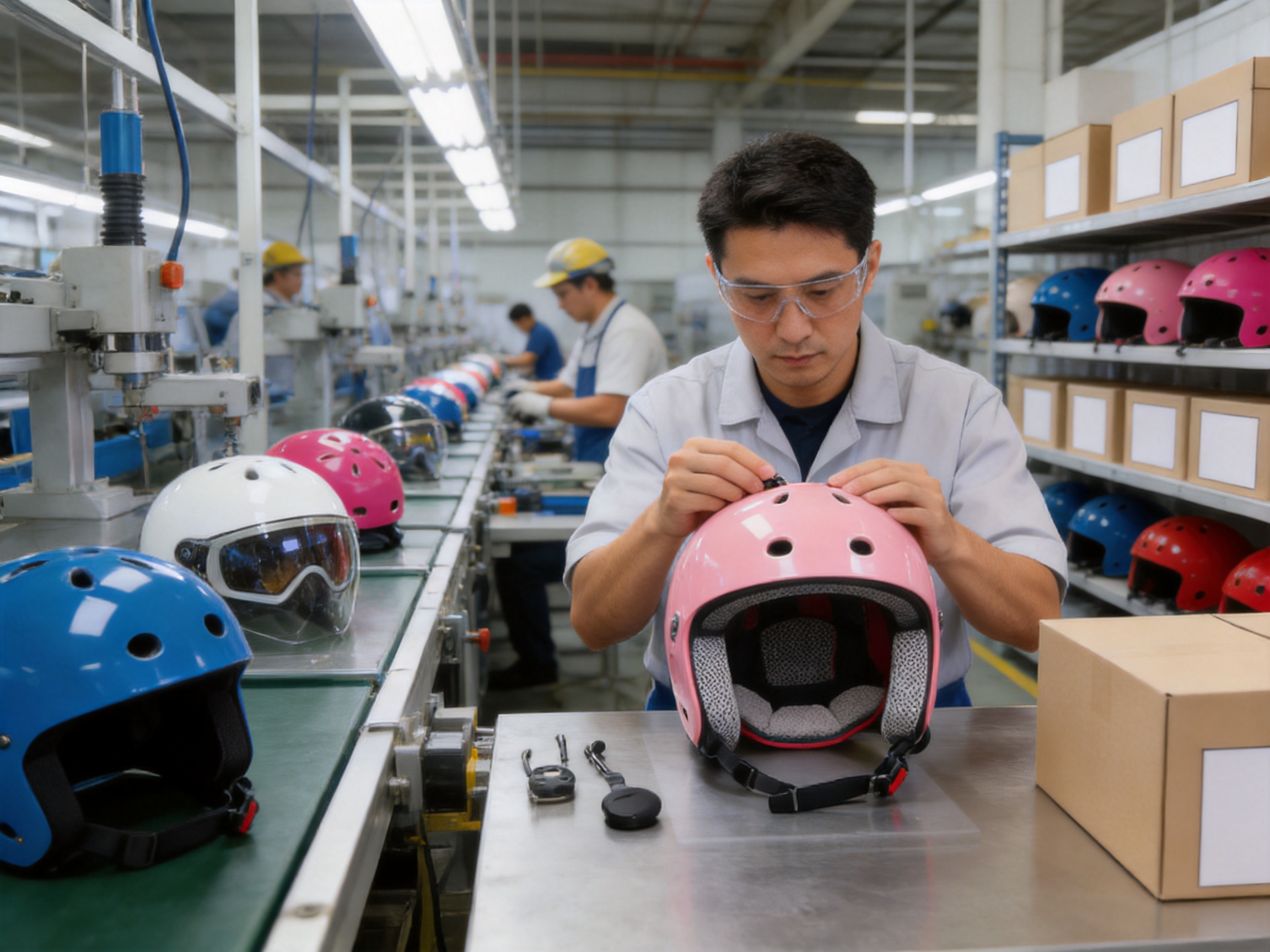
For buyers, importers, distributors, and sports-equipment brands, the product also represents a useful OEM opportunity. It comes from Ningbo Feile Sporting Goods Co., Ltd., a manufacturer with experience in children’s scooters, inline skates, roller skates, ice skates, and protective equipment. Its production resources include automatic production lines, mold development, injection molding, sewing, assembly, quality management, and an in-house engineering team. These capabilities support consistent production and coordinated product development.
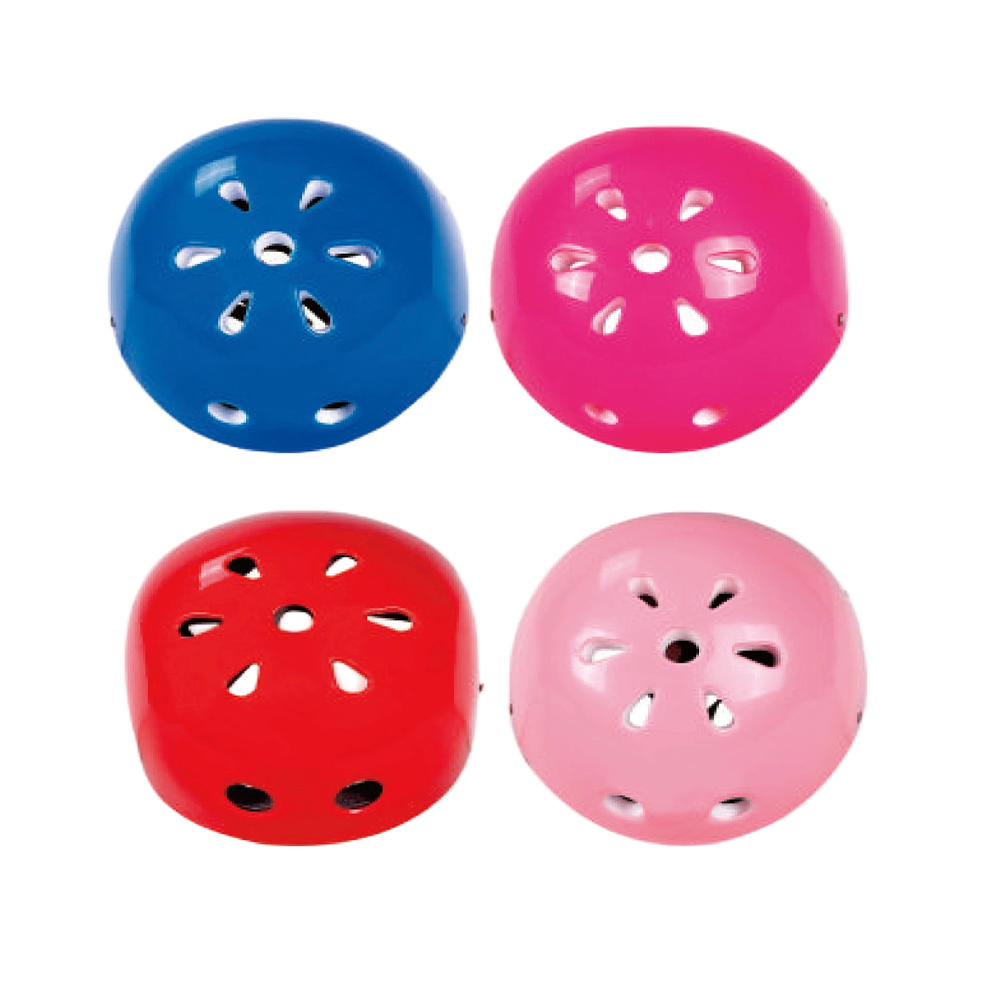
BW-013 High Impact Resistant Helmet
Understanding the BW-013 Full-Face Safety Concept
The central feature of the BW-013 is its full-face construction. Traditional open helmets can provide useful protection to the crown, rear, and sides of the head, but they may leave the face, cheeks, and front of the head more exposed. In high-risk activities, the user can fall forward, slide into an obstacle, or encounter dust, rain, stones, branches, and other external debris. A full-face design helps reduce these exposure points.
The enclosed structure is especially valuable in activities involving speed, uneven ground, water movement, or unpredictable contact. Motorcycle riders may encounter road debris and accidental falls. BMX riders and skateboarders may lose balance during jumps or technical maneuvers. Whitewater rafters may collide with rocks, equipment, or other participants. In each case, the helmet must be more than a lightweight shell placed on the head; it must function as part of a complete protective system.
The BW-013 combines facial coverage with a transparent goggle assembly rather than treating eye protection as a separate accessory. This integrated approach helps simplify equipment selection and creates a unified appearance. It can also reduce the possibility that users will forget to wear eye protection after putting on a helmet.
Full-face protection should always be selected according to the activity, local regulations, and applicable safety requirements. No helmet can prevent every injury, and users must select the correct size, fasten the helmet properly, inspect it regularly, and replace it after a serious impact. Nevertheless, the BW-013’s design provides a strong foundation for users who require more coverage than a standard open sports helmet can provide.
Three Protective Layers for More Reliable Performance
The BW-013 uses a multi-layered composite protective structure. Each layer has a different role, and the combined arrangement is more effective than relying on one material alone.
ABS Engineering-Plastic Outer Shell
The exterior shell is made from ABS engineering plastic. ABS is widely used in products that require a combination of rigidity, impact resistance, surface quality, and manufacturing flexibility. In this helmet, the outer shell serves as the first line of defense against external contact. It helps distribute impact forces across a broader area and protects the inner components from abrasion, moisture, and everyday handling.
The shell is also important for maintaining the helmet’s overall shape. A well-formed outer structure can help preserve the position of the inner protective elements, support the face shield or goggle assembly, and provide a durable surface that is suitable for repeated use. Its uniform construction contributes to a balance between strength and weight, making the helmet practical for extended wear.
Middle Cushioning Layer
The middle layer provides a transition between the hard outer shell and the softer interior. Its purpose is to help absorb and manage impact energy before that energy reaches the wearer’s head. The cushioning structure also supports the internal fit and contributes to the helmet’s three-dimensional shape.
In a protective helmet, the middle layer must be positioned correctly and maintained in good condition. It should not be removed, compressed unnecessarily, or modified by the user. The effectiveness of any cushioning layer depends on the overall construction, proper sizing, and correct use of the complete helmet.
PVC and High-Density EPS Inner Lining
The product information identifies PVC and high-density EPS as part of the inner lining system. High-density EPS is commonly used in helmets because it is lightweight and capable of helping absorb impact energy. PVC components can contribute to structure, comfort, and internal support, depending on how they are integrated into the design.
The inner lining is designed to sit comfortably against the user’s head while maintaining the intended protective spacing between the head and the exterior shell. A close but comfortable fit is essential. A helmet that is too loose may move during an accident, while a helmet that is too tight may create pressure points and discourage consistent use.
Sweat-Absorbing Mesh Interior
The innermost contact surface uses mesh material designed to improve softness, sweat absorption, and comfort. This is particularly useful in warm climates, during high-intensity sports, and during long motorcycle rides. The mesh surface helps reduce the unpleasant feeling of a wet or sticky interior and supports better daily hygiene.
The removable and washable earpieces provide an additional maintenance benefit. Sweat, dust, and skin oils can accumulate inside a helmet over time. Allowing selected interior components to be removed and cleaned helps the user maintain a fresher, more hygienic product without replacing the entire helmet.
| Component | Primary Function | Practical User Benefit |
|---|---|---|
| ABS outer shell | Provides a rigid, impact-resistant exterior structure | Durability, shape retention, and broad external protection |
| Middle cushioning layer | Helps manage impact energy between shell and liner | Additional protection during accidental impacts |
| PVC and high-density EPS lining | Supports internal cushioning and head fit | Lightweight comfort and controlled internal spacing |
| Mesh interior | Absorbs sweat and softens contact points | Improved comfort during extended use |
| Polycarbonate goggles | Provides a clear protective barrier for the eyes and face | High-transmittance vision with resistance to cracking and fogging |
| Removable earpieces | Allows selected internal parts to be detached | Easier cleaning and improved hygiene |
High-Impact Protection for Demanding Activities
The most important advantage of the BW-013 is its emphasis on impact resistance. The helmet is designed for environments in which the possibility of a hard impact is higher than in ordinary recreational use. This includes high-speed riding, off-road movement, technical tricks, water-based activities, and work situations where falling objects or collisions may occur.
The ABS shell gives the product a robust exterior, while the cushioning and EPS components provide internal energy-management support. This layered approach is preferable to a single-material design because different materials can address different stages of an impact. The shell resists penetration and spreads contact, while the cushioning components help reduce the transfer of force toward the head.
Competitors may offer helmets with only partial head coverage, limited face protection, or simple decorative visors. The BW-013 is differentiated by combining a full-face structure with a protective goggle system and a multi-layer interior. This makes it suitable for users who place a higher priority on coverage and environmental protection than on the minimum possible helmet size.
The helmet’s protective value also comes from its ability to stay functional in challenging conditions. The product description emphasizes low water absorption and resistance to deformation. These characteristics are useful for outdoor sports, wet weather, water rafting, and other situations in which equipment may be exposed to rain or splashing water. Although the helmet should still be dried and stored properly, materials that do not readily absorb water can support more consistent long-term performance.
Users should understand that impact resistance does not mean unlimited impact protection. The helmet must be replaced if it experiences a serious collision, even when no visible damage is present. Regular inspection should include the outer shell, goggle assembly, inner cushioning, fastening system, and all attachment points.
Clear Vision in Changing Weather
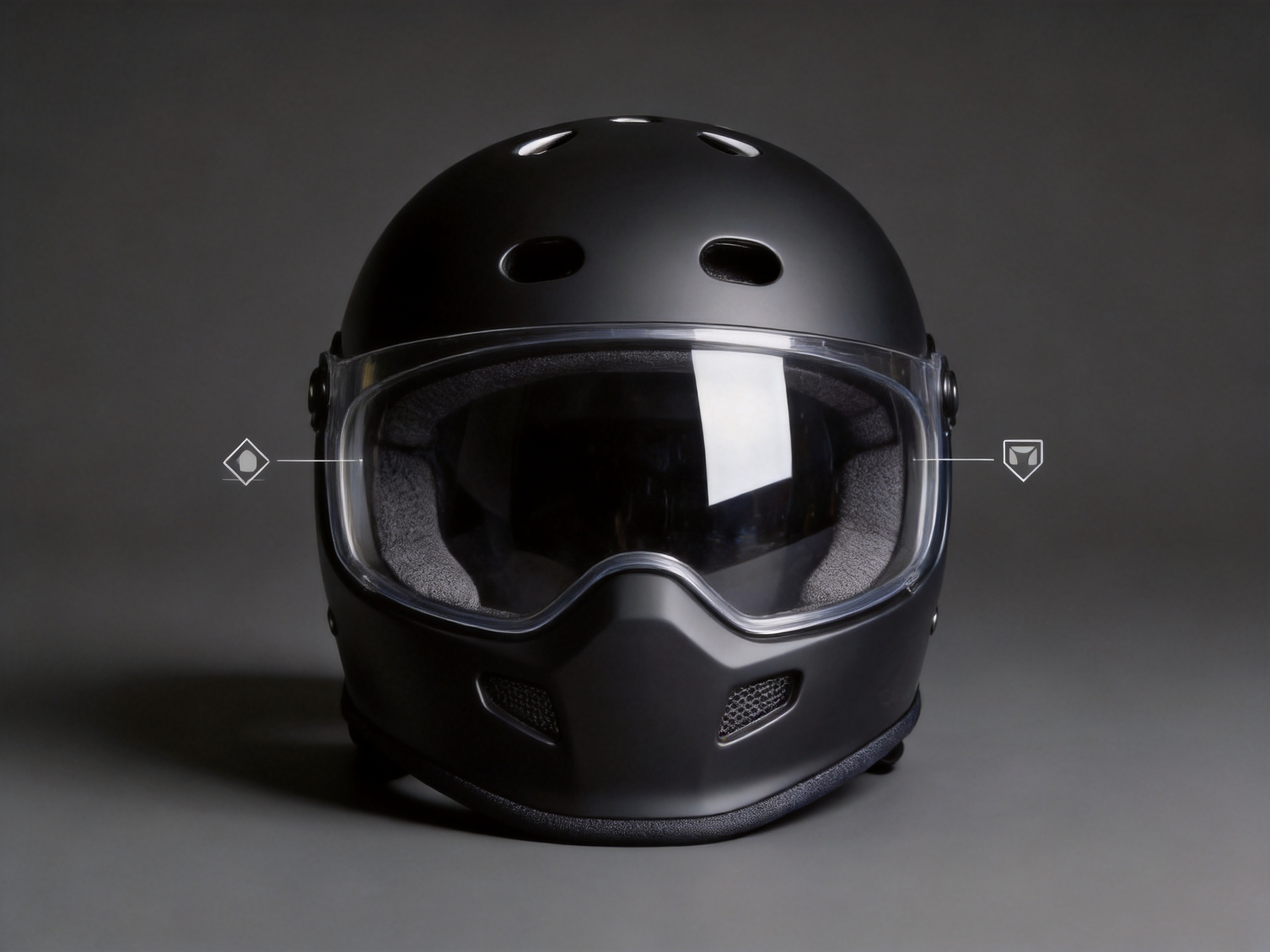
Vision is a fundamental part of safe riding and sports participation. A helmet that protects the head but restricts visibility may create another safety risk. The BW-013 addresses this concern with high-transmittance polycarbonate goggles designed to maintain a clear field of view while helping shield the eyes from wind, dust, rain, splashing water, and small particles.
Polycarbonate is valued for its toughness and resistance to shattering compared with many ordinary transparent plastics. The goggle material is intended to withstand everyday use and resist cracking under normal handling. Its high light transmission helps users observe road surfaces, obstacles, turns, other participants, and changes in terrain without unnecessary visual obstruction.
The anti-fog design is another important feature. Fogging can occur when warm moisture from the face meets a cooler lens surface. It is especially common during rain, high humidity, cold-weather riding, intense exercise, and sudden changes in temperature. A fogged lens can force the user to lift the goggles or remove the helmet, creating an avoidable hazard.
By incorporating anti-fog functionality into the goggle system, the BW-013 is designed to support more reliable visibility in difficult conditions. No anti-fog system is immune to every environmental situation, so users should still keep the lens clean, avoid touching the inner surface with dirty hands, and follow appropriate care instructions. However, the integrated design gives the helmet an advantage over basic helmets that require a separate pair of goggles with no coordinated fit.
Why Integrated Goggles Can Be Better Than Separate Eye Protection
Separate goggles can shift, leave gaps, or become incompatible with a helmet’s shape. They may also create pressure around the temples and ears. An integrated goggle structure is designed as part of the helmet, allowing the shell, lens, and face opening to work together. This can support a more cohesive fit and reduce the number of separate components users must purchase and manage.
For distributors, an integrated eye-protection feature can make the product easier to position in the market. Instead of selling a basic helmet and optional goggles as unrelated products, the BW-013 can be presented as a complete full-face protective solution. This is valuable for retailers serving beginners, families, action-sports participants, motorcycle users, and outdoor workers.
Comfort Designed for Longer Wear
Protection is only effective when users are willing to wear the product consistently. A helmet that feels heavy, hot, abrasive, or difficult to clean may be left at home. The BW-013 therefore places emphasis on comfort as well as impact protection.
The internal mesh material provides a softer contact surface and helps manage perspiration. Breathable fabric can make a noticeable difference during long rides or strenuous activity, particularly when the helmet is used in warm weather. The removable earpieces add flexibility by allowing users to clean areas that are likely to collect sweat and dirt.
The product is described as lightweight despite its high-impact construction. A lower-weight helmet can reduce pressure on the neck and shoulders, making it more suitable for extended use. At the same time, the shell is designed to remain durable and resistant to deformation. This combination is important because excessive weight can reduce comfort, while insufficient structural strength can compromise confidence and service life.
Comfort also depends on correct sizing and adjustment. Buyers should confirm the available size range before ordering and should ensure that the helmet sits level on the head. The front edge should not obstruct vision, and the helmet should not move excessively when the user turns or bends forward. The chin or retention system should be fastened securely without causing painful pressure.
Maintenance and Hygiene Advantages
Removable, washable earpieces help address one of the common weaknesses of protective headgear: difficult cleaning. Many helmets accumulate sweat and odor inside the ear area and around the facial opening. If these parts cannot be removed, regular maintenance becomes inconvenient. The BW-013’s washable components can help extend the comfortable service period of the helmet.
Cleaning should be performed with mild methods that do not damage the shell, liner, mesh, or goggle coating. Harsh solvents, abrasive brushes, excessive heat, and unapproved chemicals may weaken materials or affect optical clarity. After washing, removable fabric parts should be fully dried before reinstallation. The helmet should be stored in a dry, ventilated place away from direct sunlight and extreme heat.
Applications Across Several Market Segments
Motorcycle Riding
The BW-013 is suitable for positioning in motorcycle-related markets, including road riding, off-road riding, and urban commuting. Motorcycle users often need protection from wind, dust, insects, rain, and road debris in addition to impact protection. The full-face structure and integrated goggles help address several of these requirements in one product.
For off-road riders, the helmet’s enclosed design can be useful in environments with loose soil, gravel, branches, and changing weather. For urban commuters, its face coverage can help improve comfort during daily travel. Importers should verify the product’s suitability for the legal helmet requirements of the intended market before making regulatory claims or promoting it for road use.
Extreme Sports
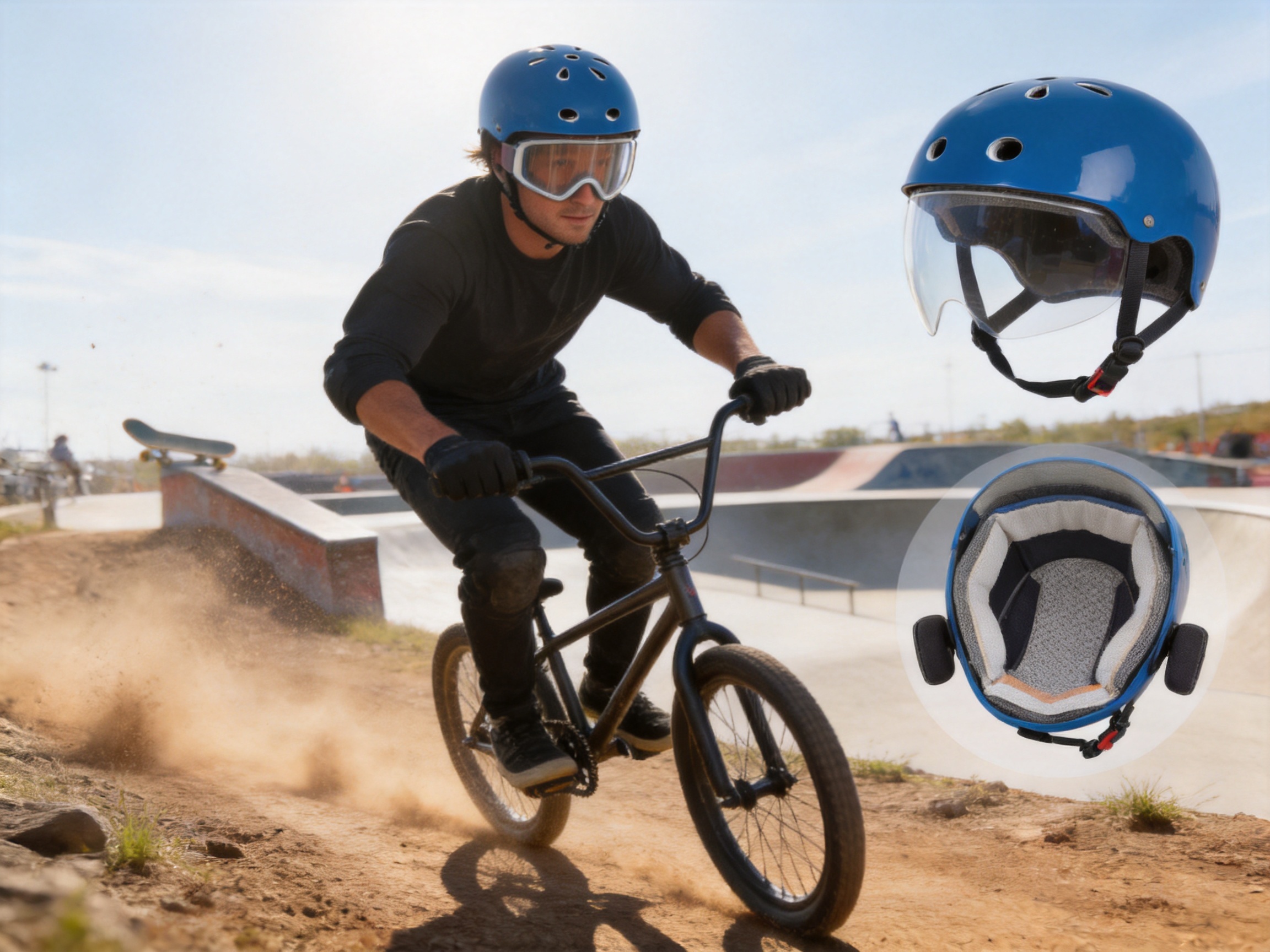
BMX riders, skateboarders, and participants in other action sports face unpredictable falls and frequent changes in body position. A rider may land forward, slide sideways, or strike a rail, ramp, wall, or other hard object. The BW-013’s full-face configuration gives these users broader coverage than many lightweight open helmets.
The helmet can also serve as a protective option for training centers, sports clubs, rental programs, and youth activity providers. In these settings, durability, cleanability, and simple product positioning are especially important. Removable earpieces and a robust shell may reduce maintenance difficulties when a helmet is shared or used frequently.
Water Rafting and Water Sports
Water rafting and related activities combine movement, impact risk, and wet conditions. Participants may encounter rocks, boats, paddles, equipment, or other people. The BW-013 is designed to provide head coverage in these circumstances while using materials described as resistant to water absorption and deformation.
After use in water, the helmet should be rinsed according to the care instructions, dried completely, and inspected for damage. Water exposure does not eliminate the need for maintenance. Fasteners, interior fabrics, and goggle surfaces should be checked before the next activity.
Industrial and Outdoor Work
The helmet may also be considered for selected industrial or outdoor work environments where head protection is needed. Examples can include work around equipment, outdoor maintenance, recreational facility operations, and other tasks involving possible contact with hard objects. Employers must evaluate the specific hazards and confirm that the product meets all required workplace regulations before adoption.
This broader application range gives distributors more opportunities to serve different customer groups. Rather than limiting the product to one sport, buyers can present it as a versatile full-face protective helmet for high-risk recreation and selected outdoor activities.
Advantages Over Basic and Narrowly Designed Competitor Products
The protective-equipment market includes many helmets designed for a single activity or a single price point. Some models focus primarily on low weight and ventilation. Others provide only a hard outer shell, while some rely on detachable goggles that may not fit securely. The BW-013 competes by combining several functions in one coordinated structure.
Broader Coverage
Compared with a typical open-face skating helmet, the BW-013 covers more of the face and front of the head. This makes it a stronger option for users who are concerned about forward impacts, debris, wind, rain, and water spray.
Integrated Eye Protection
The built-in polycarbonate goggle system reduces the need to source separate eye protection. It is designed for high light transmission, toughness, anti-fog performance, and resistance to puncture. This combination supports visibility and convenience in one product.
Layered Material Construction
Rather than relying on a single rigid shell, the helmet uses a shell, cushioning layer, and comfort liner. This layered approach allows the product to address structural protection, impact management, and user comfort simultaneously.
Improved Maintenance
Removable and washable earpieces give the helmet a practical advantage over products with permanently fixed interior components. Easier cleaning can be especially attractive to families, sports clubs, rental operators, and high-frequency users.
Multi-Activity Positioning
Because the design is suitable for motorcycle riding, extreme sports, water activities, and selected outdoor work, it can serve several market segments. A versatile product may reduce the need for distributors to maintain multiple narrowly specialized helmet lines.
Balance Between Durability and Wearability
The product is intended to combine high impact resistance with a lightweight construction. This balance is important because a helmet that is strong but uncomfortable may not be used consistently, while a helmet that is comfortable but fragile may not inspire confidence in demanding environments.
Manufacturing Strengths Behind the Product
A protective helmet’s final quality depends not only on its material specifications but also on the manufacturing system used to create it. Ningbo Feile Sporting Goods Co., Ltd. was established in 2010 and specializes in children’s scooters, inline skates, roller skates, ice skates, and related protective products. This product background gives the company experience in equipment that must combine safety, fit, durability, appearance, and user comfort.
The company operates a workshop of approximately 20,000 square meters and employs more than 200 people. Its facilities include five advanced automatic production lines, as well as mold, injection molding, sewing, and assembly workshops. These capabilities are relevant to the BW-013 because the helmet requires coordinated work across several manufacturing stages.
Mold Development and Engineering Control
Mold quality influences shell accuracy, wall consistency, surface finish, dimensional stability, and repeatability from one production batch to another. A professional mold workshop allows the manufacturer to manage product geometry more closely and respond to design adjustments with greater efficiency.
The company also has a professional research and development engineering team. This supports the development of new shapes, internal structures, goggle integration, comfort components, and product variations. For OEM buyers, engineering support can be valuable when adapting colors, packaging, trims, labels, or market-specific configurations.
Injection Molding Capabilities
Injection molding is central to the production of ABS helmet shells and many plastic components. Consistent control of material preparation, mold temperature, injection pressure, cooling, and cycle time helps maintain stable product quality. Automated production lines can improve repeatability and production efficiency, particularly for larger orders.
Quality management at this stage may include visual inspection, dimensional checks, surface evaluation, and verification of assembled interfaces. Consistent shell geometry is important for fit, goggle alignment, retention-system installation, and overall appearance.
Sewing and Interior Component Production
The helmet’s mesh interior and removable earpieces require textile processing and sewing expertise. The company’s sewing workshop supports the production of fabric components that must be comfortable, durable, and correctly positioned inside the shell. Stitching quality, edge finishing, material selection, and attachment strength all affect the user experience.
Interior components also need to be compatible with cleaning and repeated handling. Well-finished fabric parts are less likely to fray, detach, or create uncomfortable pressure points. Coordinating the sewing workshop with the molding and assembly departments can help ensure that textile parts match the helmet structure correctly.
Assembly and Final Inspection
Assembly brings together the shell, cushioning components, inner lining, goggles, earpieces, fasteners, and other parts. A reliable assembly process is essential because even high-quality individual components can perform poorly if they are installed incorrectly.
Final inspection can include checking the shell surface, goggle clarity, anti-fog treatment, fastening operation, interior attachment, cleanliness, labeling, and packaging. The company’s experience with multiple categories of sports equipment provides a foundation for managing these details at scale.
Quality Systems, Certifications, and OEM Support
Ningbo Feile Sporting Goods Co., Ltd. reports that it has passed ISO9001, BSCI, and Kmart factory certification systems, and that it has obtained multiple national patents. Its product portfolio has received certifications including 3C, CE, EN71, EN62115, ASTM, EMC, and EN13843:2009 across relevant product categories.
Certification requirements vary by product type, destination market, and application. Buyers should request current documentation for the specific BW-013 configuration and confirm whether additional helmet-specific testing is required in the destination country. Responsible sourcing includes checking test reports, technical files, labeling requirements, user instructions, packaging information, and quality-control records before placing a commercial order.
ISO9001-based quality management can support consistent procedures for purchasing, production, inspection, corrective action, documentation, and customer service. BSCI-related factory assessment can provide information about social-compliance practices. Together with engineering and production resources, these systems can strengthen the reliability of OEM cooperation.
For international customers, the company offers a one-stop sourcing foundation across skating, scooter, and protective equipment categories. A buyer may be able to coordinate helmets with inline skates, roller skates, children’s scooters, and other safety gear through one manufacturing partner. This can simplify communication, product planning, packaging coordination, and shipment management.
OEM and Private-Label Opportunities
The BW-013 can be considered for retailers, wholesalers, sporting-goods brands, outdoor-equipment distributors, motorcycle-accessory companies, and activity centers. OEM and private-label projects may include customized colors, logo placement, packaging design, instruction manuals, carton markings, and product assortment planning, subject to technical and minimum-order requirements.
A manufacturer with in-house mold, injection molding, sewing, and assembly capabilities can often coordinate changes more efficiently than a trading structure that depends entirely on unrelated subcontractors. This may help reduce communication gaps between product design and production. It can also make it easier to manage revisions when a buyer needs a different goggle tint, interior color, trim detail, or packaging format.
When evaluating an OEM project, buyers should discuss target market regulations, intended use, available sizes, color standards, logo durability, sample approval procedures, carton quantity, lead time, spare parts, inspection standards, and after-sales requirements. It is also advisable to establish a written quality agreement covering acceptable tolerances, appearance standards, functional checks, and defect classification.
Packaging is another important consideration. A full-face helmet with integrated goggles requires protection from scratches, compression, moisture, and handling damage during transportation. Appropriate individual packaging and export cartons can help preserve the shell and lens condition from the factory to the final customer.
How Distributors Can Present the Product
The most effective product presentation should focus on practical benefits rather than unsupported claims. Retailers can explain that the BW-013 offers full-face coverage, a layered protective structure, integrated anti-fog goggles, a sweat-absorbing interior, and removable earpieces. These features are easy for customers to understand and connect directly with real use situations.
Product education should also include correct fitting, cleaning, storage, and replacement guidance. Customers should know that a helmet must be worn securely, should not be altered, and should be replaced after a significant impact. Clear instructions help build trust and reduce misuse.
For families and youth-sports organizations, comfort and hygiene may be especially persuasive. For motorcycle and outdoor users, full-face coverage, clear vision, and resistance to wet conditions may be more important. For sports clubs and rental businesses, durability and washable interior components can support easier fleet management.
Recommended Inspection and Care Routine
Before every use, the wearer should inspect the outer shell for cracks, deep scratches, deformation, or loose parts. The goggle lens should be checked for clouding, cracks, deep abrasion, or separation from its frame. The inner liner, mesh fabric, earpieces, and retention system should also be examined.
The helmet should fit firmly without causing severe discomfort. When fastened, it should remain stable during normal head movement. If the product rocks significantly from side to side or slides backward, the fit may be incorrect. Users should consult the sizing information and avoid wearing thick headwear that changes the intended fit.
After use, the helmet should be wiped with a soft cloth and allowed to dry naturally. Removable earpieces may be washed using a mild cleaning method, then dried fully before installation. The lens should be cleaned with materials suitable for polycarbonate surfaces. Abrasive cloths and harsh chemicals may damage optical clarity.
The product should be stored away from direct sunlight, heaters, vehicle dashboards, and high-temperature areas. Prolonged heat can affect plastics, adhesives, foam, and textile components. The helmet should not be placed under heavy objects, as compression may affect its shape and comfort.
Buyer Checklist for Commercial Sourcing
| Evaluation Area | Questions for Buyers |
|---|---|
| Application | Which sports, riding conditions, or work environments will the helmet serve? |
| Regulatory compliance | What helmet-specific standards and documents are required in the target market? |
| Fit and sizing | What head-size range, adjustment method, and size assortment are available? |
| Materials | Are the ABS shell, EPS lining, PVC components, mesh, and goggles suitable for the intended climate? |
| Visibility | What lens options, anti-fog features, and optical specifications are available? |
| Customization | Can the buyer customize colors, logos, packaging, labels, and manuals? |
| Quality control | What inspections, tolerances, sample approvals, and shipment checks are included? |
| After-sales support | Are replacement earpieces, goggles, or other service components available? |
| Logistics | What are the order quantity, production lead time, carton dimensions, and shipping terms? |
Q&A
What is the BW-013 High Impact Resistant Helmet designed for?
The helmet is designed for high-risk activities such as motorcycle riding, BMX, skateboarding, extreme sports, whitewater rafting, and selected outdoor or industrial work environments. Buyers should confirm that the product meets the legal and technical requirements of the specific intended application.
What makes the helmet different from a standard open-face sports helmet?
The BW-013 uses a full-face structure that provides broader coverage around the front of the head and face. It also integrates protective polycarbonate goggles, helping shield the eyes from debris, wind, rain, and water spray while maintaining clear vision.
What materials are used in the helmet?
The outer shell is made from ABS engineering plastic. The internal system includes a middle cushioning layer, PVC and high-density EPS components, and sweat-absorbing mesh fabric. The goggles use polycarbonate material.
Are the goggles anti-fog?
The product is described as having an anti-fog goggle design. Anti-fog performance can vary according to humidity, temperature, ventilation, cleaning, and use conditions, so the lens should be maintained carefully.
Can the interior be cleaned?
The earpieces are removable and washable. This makes it easier to maintain hygiene and reduce the buildup of sweat and odor. Users should follow suitable cleaning procedures and allow components to dry completely before reassembly.
Is the helmet suitable for wet environments?
The product information emphasizes low water absorption and resistance to deformation, making it suitable for consideration in wet outdoor conditions and water sports. It should still be dried and stored properly after exposure to water.
Is the helmet lightweight?
The helmet is designed to combine high impact resistance with a lightweight construction. The actual wearing experience will depend on size, fit, accessories, and individual preference, so buyers may wish to evaluate samples before large-scale purchasing.
Can the product be customized for an OEM project?
Ningbo Feile Sporting Goods Co., Ltd. has mold, injection molding, sewing, assembly, and engineering capabilities that support OEM development. Possible customization areas may include colors, logos, packaging, labels, and product presentation, subject to technical review and order requirements.
What should buyers verify before importing the helmet?
Buyers should verify the intended application, destination-market regulations, current test documents, size range, packaging, labeling, inspection procedures, and after-sales requirements. Helmet standards differ between countries and between activities, so product-specific compliance should be confirmed before commercial distribution.
When should the helmet be replaced?
The helmet should be replaced after a serious impact, even if no damage is visible. It should also be replaced if the shell, liner, goggles, retention system, or other structural components show damage, excessive wear, deformation, or deterioration.
Conclusion
The BW-013 High Impact Resistant Helmet is designed for users who need more than basic head coverage. Its full-face structure, ABS outer shell, multi-layer cushioning system, PVC and high-density EPS lining, sweat-absorbing mesh interior, removable earpieces, and integrated anti-fog polycarbonate goggles create a comprehensive protective concept for demanding activities.
Its main advantages over simpler competing products are broader facial coverage, integrated eye protection, layered construction, improved maintenance, and suitability for multiple application categories. These features make it relevant to motorcycle riders, action-sports participants, water-sports users, sports clubs, outdoor workers, retailers, and international distributors.
The product is further supported by the manufacturing resources of Ningbo Feile Sporting Goods Co., Ltd. The company’s experience in skating and scooter equipment, 20,000-square-meter workshop, more than 200 employees, five automatic production lines, mold and injection-molding facilities, sewing and assembly workshops, and professional R&D team provide a strong foundation for quality-focused production and OEM cooperation.
For commercial buyers, the best sourcing decision combines product features with responsible verification. Current compliance documents, samples, sizing, packaging, testing, inspection standards, and market-specific requirements should all be reviewed before an order is finalized. With appropriate selection, fitting, care, and regulatory confirmation, the BW-013 can serve as a versatile full-face protective solution for modern sports and outdoor-equipment markets.
References
1. Product specification materials for the BW-013 High Impact Resistant Helmet, including shell construction, inner lining, goggle features, applications, and maintenance-related information.
2. Ningbo Feile Sporting Goods Co., Ltd. company profile and manufacturing information, including production facilities, workforce, engineering resources, quality systems, and product categories.
3. General technical literature on ABS engineering plastics and their use in impact-resistant consumer products.
4. General technical literature on high-density expanded polystyrene and energy-absorbing helmet liners.
5. General technical literature on polycarbonate optical components, impact resistance, and transparent protective lenses.
6. General guidance on sports-helmet fitting, inspection, replacement after impact, cleaning, and storage.
7. General guidance on product compliance assessment for protective equipment in international markets.
Product: BW-013 High Impact Resistant Helmet
Recommended Articles
-
BW-130 MESH Inline Skate05/09
-
BW-137 Boys Inline Skate05/09

Get in Touch
Your email address will not be published. Required fields are marked *
Have a project in mind? Contact with us!
We are happy to answer your questions. Please fill out this form
and one of our professional team will get back to you as soon as possible.

We specialize in producing various types of children's toy cars, children's skateboards, and ice skates.
