
 En
En
 Español
 русский
 عربى
عربى
Why Adjustable Three-Wheel Inline Skates Are Changing Urban Commuting
Date:Jul 25, 2026
Content
- 1 Urban Mobility Needs a More Flexible Solution
- 2 Three-Wheel Architecture for Efficient Gliding
- 3 Wear-Resistant PU Wheels for Outdoor Routes
- 4 Adjustable Sizing for Families and Growing Users
- 5 Comfort for Longer Commuting Sessions
- 6 Aluminum Frame and Low-Resistance Bearings
- 7 Advantages Over Conventional Recreational Skates
- 8 Advantages Over Small-Wheeled or Less Specialized Models
- 9 Suitable Applications in Daily Life
- 10 Safety and Responsible Urban Use
- 11 Manufacturing Strength Behind the Product
- 12 Research, Development, and Engineering Capability
- 13 Quality Management and International Compliance
- 14 Integrated Production for OEM and Sourcing Programs
- 15 Product Specifications and Packaging Considerations
- 16 Maintenance for Consistent Performance
- 17 Commercial Value for Retailers and Distributors
- 18 Choosing the Right User and Route
- 19 Q&A About the Adjustable Three-Wheel Inline Skate
- 19.1 What is the primary purpose of the BW-228-1 Cityrun Inline Skate?
- 19.2 How is this model different from a conventional four-wheel roller skate?
- 19.3 Which sizes are available?
- 19.4 Is the skate suitable for children?
- 19.5 Can adults use the product?
- 19.6 What type of wheels does the skate use?
- 19.7 Does the product require charging?
- 19.8 What makes the upper suitable for commuting?
- 19.9 What frame material is used?
- 19.10 What type of bearings are included?
- 19.11 Can the skate be used on every outdoor surface?
- 19.12 Is protective gear necessary?
- 19.13 How should the skates be maintained?
- 19.14 What manufacturing capabilities support this product?
- 19.15 Can the manufacturer support OEM projects?
- 19.16 What quality and certification information is available?
- 20 Conclusion
- 21 References
- 22 Product: BW-228-1 Cityrun Inline Skate
Urban transportation is changing quickly. As cities become more crowded, commuters are looking for practical ways to travel short and medium distances without depending entirely on cars, buses, or motorcycles. Walking remains reliable, but it can be slow when several kilometers separate a home, office, school, station, or shopping area. Bicycles and electric scooters can cover longer distances, yet they may require more storage space and can be inconvenient in busy pedestrian environments. Inline skates offer another possibility: a compact, lightweight, and active form of transportation that combines mobility, exercise, and personal convenience.
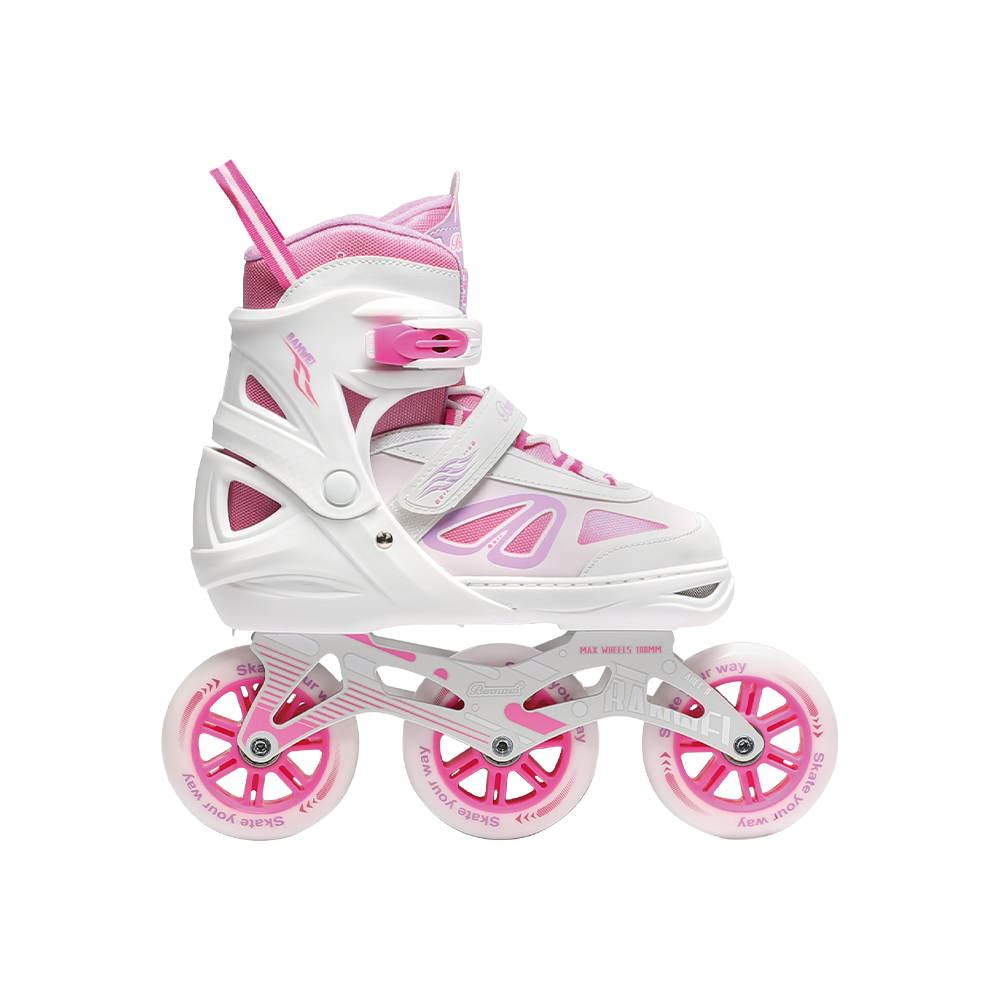
The BW-228-1 Cityrun Inline Skate is designed around this urban need. Its large three-wheeled configuration is intended to support efficient gliding on city roads, community paths, squares, greenways, and riverside routes. Unlike traditional four-wheel roller skates, the three-wheel layout is focused on smooth forward movement and longer rolling efficiency. The adjustable design also allows a single pair to accommodate different foot sizes, making it suitable for adults, growing children, and family use.
This product is more than a recreational skate intended for occasional play. It is positioned as an urban commuting tool for short trips, neighborhood travel, leisure gliding, and light daily exercise. Its combination of an adjustable upper, breathable cushioning, wear-resistant PU wheels, aluminum frame, and high-smooth carbon steel bearings creates a practical platform for users who want a comfortable and stable skating experience.
At the same time, the product reflects the manufacturing capabilities of Ningbo Feile Sporting Goods Co., Ltd., a specialized Chinese producer of children’s scooters, inline skates, roller skates, and ice skates. The company’s experience, production infrastructure, engineering resources, quality systems, and certification knowledge provide an important foundation for developing and manufacturing sports equipment for international markets.
Urban Mobility Needs a More Flexible Solution
Many urban journeys are too short to justify driving but too long to complete comfortably on foot. A trip from a residential community to a train station, from a parking area to an office, or from a school to a nearby shopping district may take only ten to thirty minutes by skate. In these situations, a pair of inline skates can provide a flexible alternative that does not require fuel, charging, parking, or a large storage area.
However, not every inline skate is equally appropriate for commuting. Some models are designed mainly for speed and athletic performance. Others focus on children’s recreational use. Certain traditional configurations can be less convenient on uneven outdoor pavement, while overly narrow wheels may feel less forgiving to new users. Urban commuters generally need a balance of rolling efficiency, stability, comfort, adjustability, durability, and ease of use.
The BW-228-1 Cityrun Inline Skate addresses these requirements through a large three-wheel structure. The layout provides a long contact arrangement beneath the foot, helping create a stable base while allowing the skate to roll efficiently. The larger wheel format is intended to make outdoor gliding more practical than small recreational wheels, especially when traveling along paved streets, community paths, squares, and other relatively smooth municipal surfaces.
Urban commuting also requires convenience before and after the ride. A skate that takes a long time to adjust or that fits only one precise foot size is less useful for shared family ownership. The one-button adjustment design of the BW-228-1 allows the user to modify the fit quickly. Multiple size ranges reduce the need to purchase a new pair as a child grows and make it easier for families to select suitable configurations for different users.
The result is a product category that sits between recreational equipment and personal transportation. It can be used for a short commute in the morning, a relaxed ride on a greenway in the afternoon, or light exercise in the evening. This versatility is one of the product’s most important advantages in comparison with equipment designed for only one purpose.
Three-Wheel Architecture for Efficient Gliding
The central design feature of the BW-228-1 is its three-wheel configuration. Traditional four-wheel roller skates often prioritize a familiar, stable platform with two wheels at the front and two at the rear. That arrangement can be approachable for certain beginners and is widely associated with recreational skating. Nevertheless, urban commuting places a stronger emphasis on forward rolling efficiency, stride development, and reduced resistance over longer distances.
A three-wheel layout supports a more streamlined structure. By using three wheels in a linear arrangement, the skate can provide a longer rolling footprint without requiring four separate wheel positions. This format is commonly associated with urban and fitness-oriented inline skating because it can help the user maintain momentum after each push. The design is particularly appropriate for riders who want to travel farther without making every trip feel like a high-intensity athletic session.
The three-wheel structure also complements the product’s intended use on city asphalt and municipal paths. When the pavement is reasonably smooth, larger wheels can help the skate pass over minor surface variations more comfortably than smaller wheels. The rider can maintain a steady rhythm instead of repeatedly correcting speed and balance over every small imperfection.
Compared with conventional four-wheel recreational skates, the BW-228-1 offers a different balance between stability and movement. Its layout is designed for forward travel rather than stationary maneuvering. This makes it particularly suitable for commuting, neighborhood gliding, greenway travel, and riverside routes where the primary objective is to move efficiently from one point to another.
The design should not be understood as a replacement for protective equipment or responsible skating technique. Users still need to learn braking, turning, posture, and surface awareness. Nevertheless, the product’s architecture gives experienced skaters a practical platform for efficient travel and gives beginners a clear path toward developing urban skating skills.
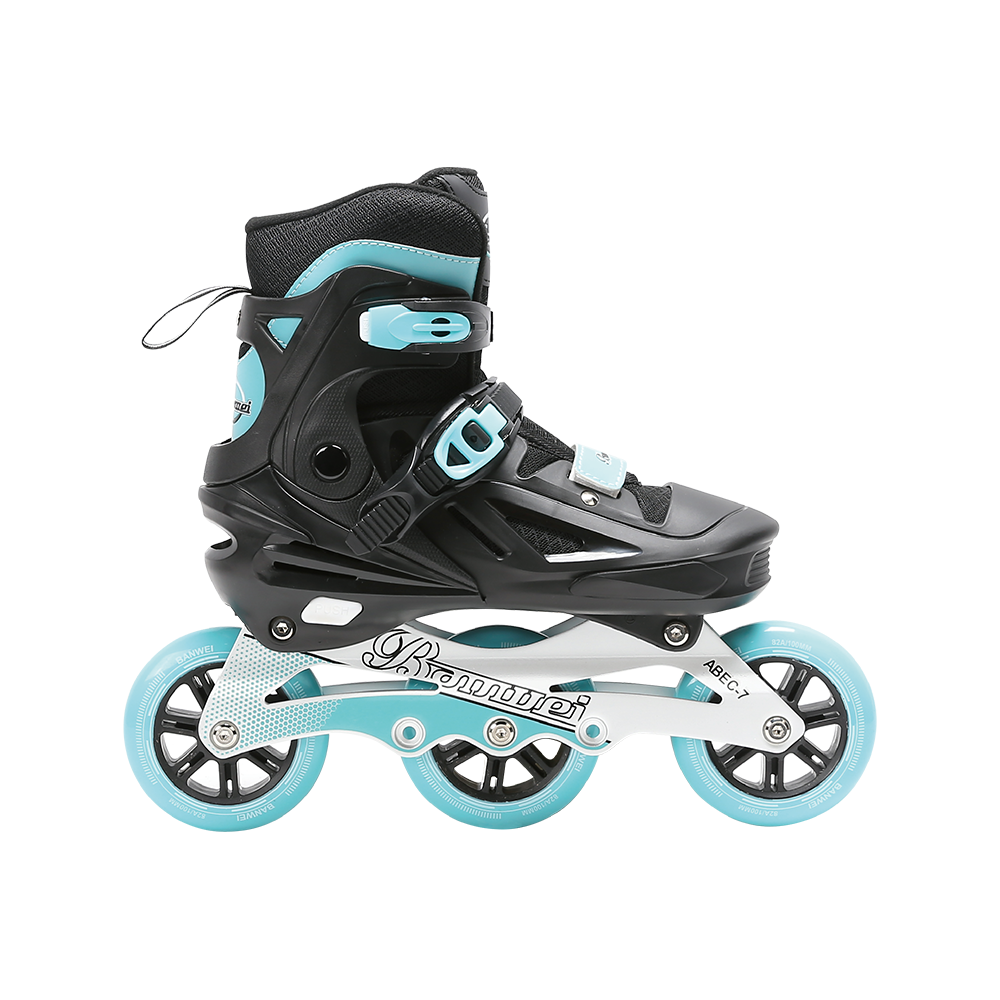
BW-228-1 Cityrun Inline Skate
Wear-Resistant PU Wheels for Outdoor Routes
Wheels are among the most important components in any inline skate because they directly influence speed, comfort, grip, durability, and surface compatibility. The BW-228-1 uses high-quality, wear-resistant polyurethane wheels. PU is widely used in skating equipment because it can combine resilience, smooth rolling characteristics, and reasonable resistance to repeated contact with pavement.
Outdoor commuting can expose wheels to a variety of surfaces. A rider may travel over city roads, community pathways, public squares, paved courtyards, greenways, and riverside routes during the same week. These environments can differ in texture, cleanliness, and maintenance quality. Wear-resistant wheels help the skate remain dependable during regular use, while their slip-resistant characteristics support more controlled movement on suitable dry outdoor surfaces.
The large wheel arrangement is also helpful for maintaining momentum. A larger rolling diameter generally allows a wheel to pass over small surface irregularities with less abrupt interruption than a smaller wheel. This can make the riding experience feel smoother and reduce the need for constant high-frequency pushing. For commuters, that translates into a more relaxed rhythm and potentially lower perceived effort on longer routes.
Wheel selection also affects the product’s suitability for users with different experience levels. Very fast or highly specialized wheels may be intimidating for beginners, while low-performance wheels may frustrate experienced riders. The BW-228-1 is designed to offer a practical compromise: enough rolling efficiency for commuting and leisure distance, while retaining a stable structure for everyday use.
As with all outdoor skating equipment, wheel performance depends on the condition of the riding surface, rider weight, skating technique, weather, and maintenance. The product is intended for suitable paved surfaces rather than loose gravel, deep cracks, wet pavement, or heavily damaged roads. Regular inspection of wheel wear, axle tightness, and bearing condition will help preserve its intended performance.
Adjustable Sizing for Families and Growing Users
A fixed-size skate can become inconvenient when the user’s feet grow or when family members need different sizes. This issue is particularly important for children and teenagers, whose foot dimensions may change significantly over a relatively short period. The BW-228-1 addresses this challenge with an adjustable design and multiple size options.
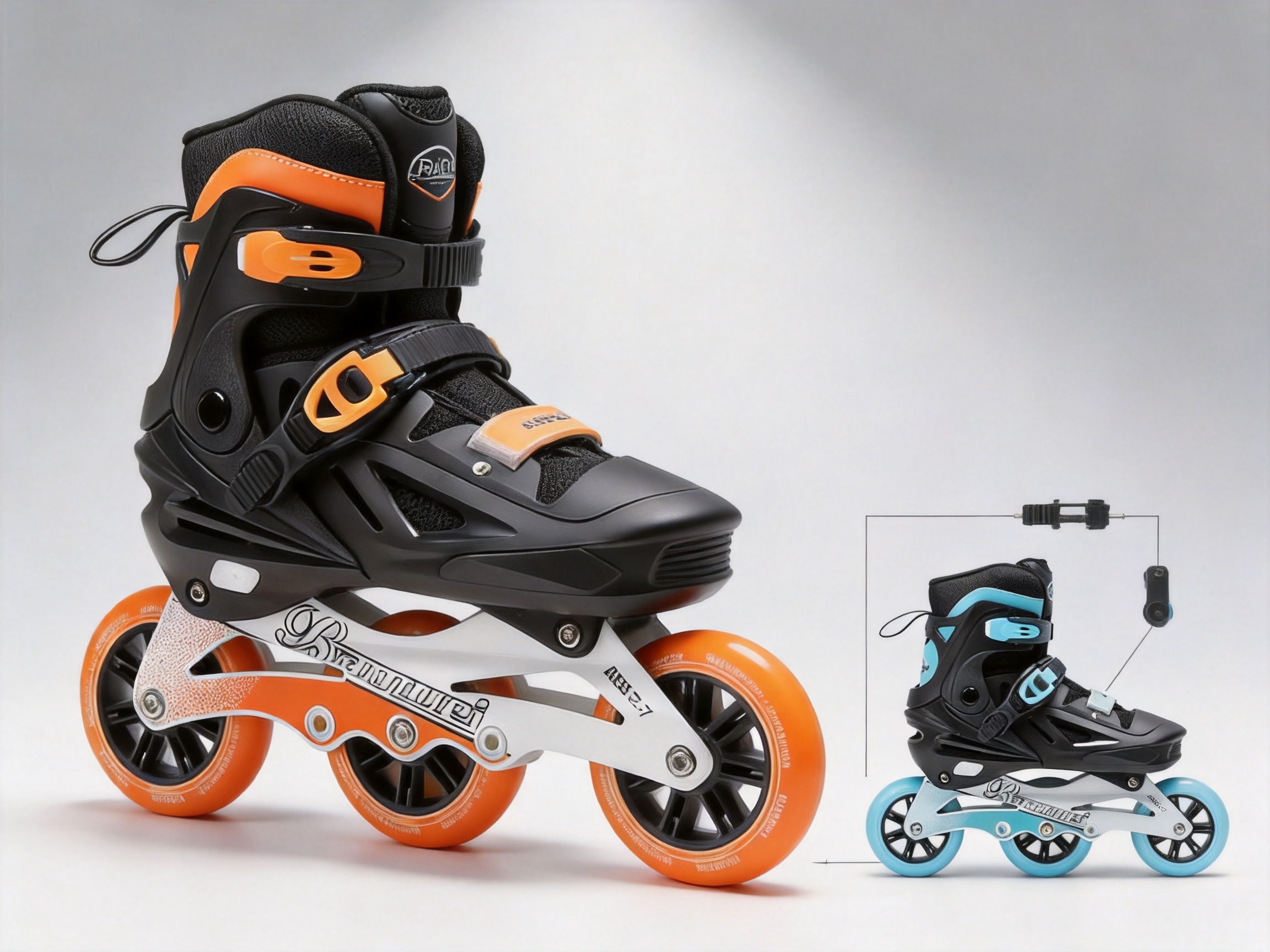
The product is offered in M, L, and XL configurations. The supplied size groupings include 35–38, 39–42, and 42–45. These ranges are intended to provide flexibility for different foot shapes and user profiles. Buyers should confirm the appropriate size range and fitting instructions before purchase, especially because foot width, sock thickness, and personal preference can influence comfort.
One-button adjustment makes the fitting process quicker and more convenient. Instead of replacing the entire skate or relying on complicated manual modifications, the user can adjust the shell or internal fitting position within the designated range. This is beneficial when several people in a household share the product or when a child is still growing.
Adjustability also improves purchasing efficiency. Parents do not necessarily need to buy a new pair every season merely because a child’s foot has changed slightly. Retailers and distributors can present the product as a longer-use option, which may appeal to customers who consider total ownership value rather than only the initial purchase price.
For adult users, adjustability can help accommodate differences in foot shape and daily wearing conditions. A commuter may use thin socks in warm weather and thicker socks in cooler conditions. A flexible fitting system can make it easier to maintain a secure yet comfortable fit throughout the year.
A proper fit remains essential. The skate should hold the foot securely without creating excessive pressure at the toes, instep, or ankle. Users should test the adjustment while wearing the type of socks they expect to use. Any unusual numbness, persistent rubbing, or instability should be addressed before undertaking a longer ride.
Comfort for Longer Commuting Sessions
Commuting skates must do more than roll efficiently. They must also support the feet during repeated pushes and extended periods of standing. The BW-228-1 uses a breathable commuter upper designed to balance support and ventilation. This is important because urban rides can create heat and moisture inside the skate, particularly during warm weather or longer journeys.
The upper is intended to provide structure around the foot while allowing a degree of airflow. Adequate support helps the rider maintain control during turns, acceleration, and braking. Breathability helps reduce the uncomfortable feeling that can develop when the foot remains enclosed for a long period.
The interior includes a thickened, soft, and cushioned lining. This lining is designed to conform more comfortably to the foot and help reduce pressure points. During a commute, small areas of friction can become painful if they are repeated for several kilometers. Cushioning and appropriate fit can help lower the risk of chafing and foot fatigue.
Comfort is especially important for users who intend to combine transportation with exercise. A short commute may be followed by a full day at work or school, so excessive foot discomfort can undermine the practical benefits of skating. A supportive, cushioned upper helps make the product more suitable for regular use rather than occasional sessions only.
The upper also contributes to confidence. Beginners often spend considerable attention on balance and movement technique. If the skate feels unstable or uncomfortable, learning can become unnecessarily difficult. A secure and cushioned fit allows the rider to focus on posture, stride, stopping, and awareness of surrounding pedestrians and vehicles.
Of course, comfort is personal. The most suitable adjustment depends on foot shape and individual preference. The product’s multiple size options and adjustable construction provide a foundation for customization, but users should still follow proper fitting and break-in practices before attempting a long route.
Aluminum Frame and Low-Resistance Bearings
The frame is the structural foundation of an inline skate. It connects the boot to the wheels and must maintain alignment while carrying the forces created by pushing, turning, braking, and uneven contact with the ground. The BW-228-1 uses a high-strength aluminum frame with a balanced structure.
Aluminum is commonly selected for performance-oriented skating equipment because it can provide a useful combination of strength, rigidity, and relatively low weight. A rigid frame helps transfer the rider’s movements to the wheels more directly. It can also support stable wheel alignment during forward gliding and directional changes.
A balanced frame is particularly important in a three-wheel design. The rider’s weight must be distributed consistently along the wheel line to maintain control. A properly designed frame can help reduce unwanted flex and create a more predictable response during each stride.
The skate also uses high-smooth carbon steel bearings. Bearings influence how freely the wheels rotate and how smoothly the skate accelerates and maintains speed. Low rolling resistance allows the user to preserve momentum with less repeated pushing, which is valuable for short commutes and longer leisure rides alike.
Bearings require reasonable care. Dust, moisture, and debris can affect their performance over time. Riders should avoid deliberately skating through water or muddy areas and should clean the equipment according to appropriate maintenance procedures. If the wheels begin to sound rough or rotate unevenly, the bearings and axles should be inspected.
The combination of a strong aluminum frame and smooth bearings supports the product’s positioning as a commuter skate rather than a basic novelty item. It is intended to offer a consistent connection between the rider and the pavement, helping users enjoy a stable and efficient skating experience on suitable outdoor routes.
Advantages Over Conventional Recreational Skates
The BW-228-1 has several characteristics that distinguish it from conventional recreational skates. The first is its focus on urban forward travel. Many recreational models are designed for short play sessions, indoor skating, or casual use in small spaces. The Cityrun concept instead emphasizes commuting, longer rolling distances, and outdoor routes.
The second distinction is the three-wheel arrangement. A four-wheel skate may feel familiar, but its wheel layout is not necessarily optimized for efficient urban gliding. The linear three-wheel configuration provides a longer rolling path and can support a smooth forward stride. This may reduce the effort required to sustain movement during a commute.
The third advantage is adjustability. Fixed-size recreational skates may have a shorter practical lifespan when used by growing children. The adjustable structure of the BW-228-1 can provide greater flexibility within each size range and may support family sharing.
The fourth advantage is component selection. Wear-resistant PU wheels, an aluminum frame, smooth carbon steel bearings, and cushioned breathable lining are features associated with repeated outdoor use. Together, they are intended to improve durability, comfort, and ride quality compared with simpler entry-level products.
The fifth advantage is versatility. The same product can serve several purposes: transportation over short urban distances, leisure gliding on greenways, neighborhood recreation, and light outdoor exercise. This multifunctional role can provide better practical value than equipment limited to a single type of activity.
These advantages do not mean that one skate is universally superior for every rider. Competitive speed skaters may prefer specialized racing equipment. Artistic skaters may require a different wheelbase and boot design. Very young beginners may prefer a wider, lower recreational platform. The BW-228-1 is specifically strongest in the category of adjustable urban and fitness-oriented inline skating.
Advantages Over Small-Wheeled or Less Specialized Models
Small-wheeled skates can be easy to maneuver at low speeds, but they may feel less efficient when used on longer outdoor routes. Smaller wheels can lose momentum more quickly and may react more noticeably to cracks or minor surface variations. For a commuter who wants to travel beyond a small playground or indoor rink, this can create unnecessary effort.
The large three-wheel design of the BW-228-1 is intended to support a more efficient rolling experience. Larger wheels can help smooth the transition over minor pavement irregularities and maintain momentum between pushes. This does not remove the need for careful surface selection, but it can make appropriate urban routes more comfortable.
Some basic skates also use simpler materials or less supportive uppers. These models may be adequate for occasional use but can become uncomfortable during a longer ride. The cushioned, breathable commuter upper of the BW-228-1 is designed with extended wear in mind.
Another difference is the intended user journey. A basic recreational skate may be purchased for a child to use briefly in a park. The Cityrun model is designed for a rider who may want to develop a regular habit of skating to nearby destinations. This requires a product that feels dependable, adjustable, and suitable for repeated use.
From a product development perspective, this distinction is important for distributors and retailers. Customers increasingly seek sports equipment that supports health, mobility, and lifestyle convenience at the same time. A commuting-oriented skate can therefore occupy a meaningful position between children’s recreation products and specialized athletic gear.
Suitable Applications in Daily Life
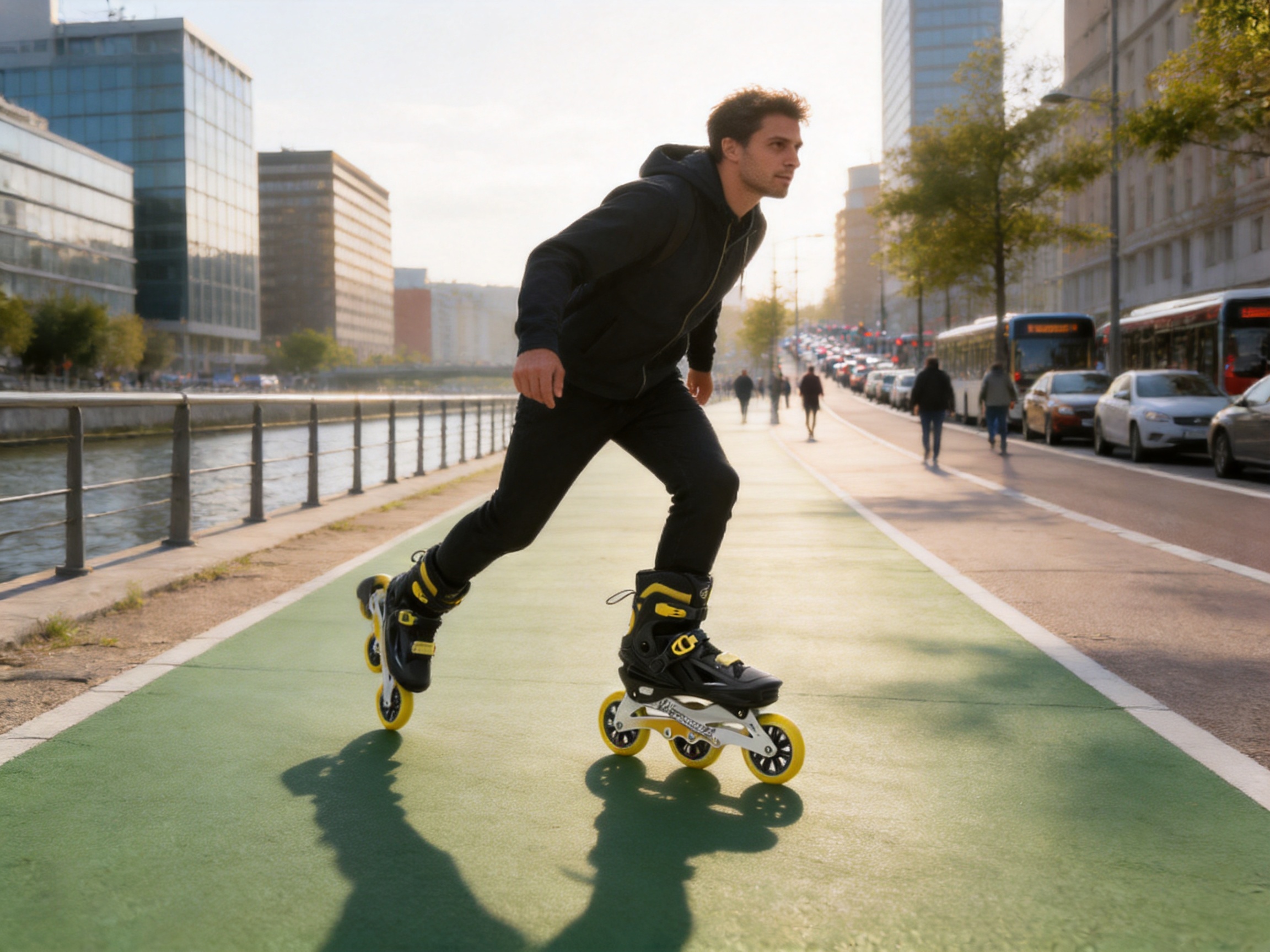
The BW-228-1 is suitable for short urban commutes. A rider may use it to travel from a home to a nearby office, from a residential area to a public transportation station, or between locations within a campus or commercial district. The product is most appropriate where the route includes suitable paved surfaces and where local regulations permit skating.
It can also be used for neighborhood trips. Visiting a local store, meeting friends at a community space, or traveling through a residential path may be faster and more engaging on skates than on foot. Because the equipment is compact compared with a bicycle or scooter, it can be easier to carry into a building or store temporarily.
Greenways and riverside paths offer another suitable application. These routes often provide relatively smooth, continuous surfaces where the rider can enjoy a longer uninterrupted glide. The three-wheel design and low-resistance bearing system are well matched to relaxed distance skating in these environments.
The product can support light daily exercise as well. Skating activates the lower limbs and requires coordination, balance, and controlled movement. A moderate session can be a practical way to add outdoor activity to a busy schedule. For people who sit for extended periods, recreational skating may help introduce movement during leisure time.
Skating should be approached progressively. New users should begin on flat, open, low-traffic areas and practice stopping before attempting a commute. Experienced users should remain alert to pedestrians, bicycles, vehicles, road markings, drainage grates, surface debris, and sudden changes in pavement quality.
Safety and Responsible Urban Use
Protective equipment is an essential part of the skating experience. Users should consider wearing a properly fitted helmet, wrist guards, elbow pads, and knee pads, particularly when learning or traveling outdoors. Protective gear can reduce the severity of injuries in the event of a fall, although no equipment can eliminate all risk.
Visibility is also important for urban commuting. Bright clothing, reflective details, or lights may help other road users notice the skater in low-light conditions. Riders should select routes that match their skill level and avoid high-speed traffic areas unless local laws and infrastructure clearly permit skating.
Stopping technique should be learned before speed increases. A rider must understand how to slow down, stop, turn, and move around obstacles. The product’s stable frame and efficient rolling components support controlled movement, but safe performance still depends on training and judgment.
Weather conditions deserve attention. Wet pavement can reduce traction and increase stopping distance. Leaves, sand, oil, loose gravel, and other debris can affect wheel contact. The product is intended for suitable outdoor surfaces and should not be treated as a solution for every road condition.
Parents and guardians should supervise children during initial use. They should confirm that the size adjustment is secure, the fasteners are properly closed, and all protective equipment fits correctly. Children should practice in an open area away from vehicles and crowded pedestrian traffic.
Manufacturing Strength Behind the Product
The performance of a sports product depends not only on its visible design but also on the manufacturing system behind it. Ningbo Feile Sporting Goods Co., Ltd. was established in 2010 and specializes in children’s scooters, inline skates, roller skates, and ice skates. This focused product experience provides a strong foundation for developing equipment that must combine safety, comfort, durability, and attractive design.
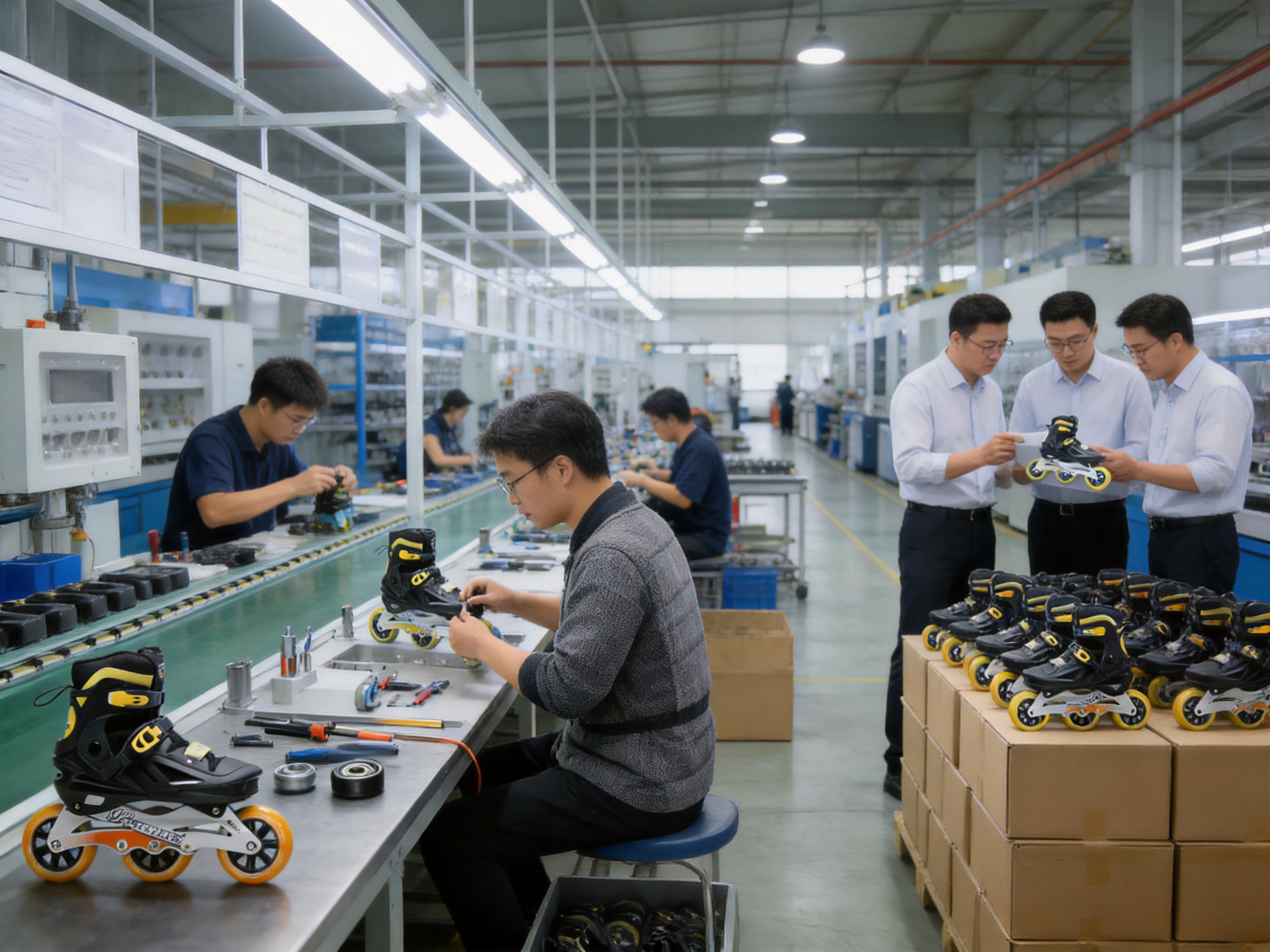
The company operates a workshop of approximately 20,000 square meters and employs more than 200 people. Its production capabilities include five advanced automatic production lines, as well as dedicated mold, injection molding, sewing, and assembly workshops. These facilities allow multiple stages of product development and manufacturing to be managed within an integrated industrial structure.
In-house or closely coordinated mold and injection molding capabilities can help improve design consistency. For products with adjustable shells, structural components, buckles, and housing parts, dimensional accuracy is important. Consistent molding supports reliable assembly and helps ensure that components fit together as intended.
The sewing workshop is also relevant to skate quality. The upper and lining must be assembled with attention to shape, reinforcement, comfort, and durability. A specialized sewing process can help create a more consistent upper, particularly when the design requires breathable materials, cushioning, support zones, and repeated stitching.
Assembly is the stage where individual parts become a complete skate. The frame, wheels, bearings, axles, boot, adjustment mechanism, closures, and lining must work together as one system. Experienced assembly personnel and standardized processes help reduce variation between units and support dependable product performance.
Research, Development, and Engineering Capability
A modern sporting goods manufacturer must respond to changing consumer expectations. Users want products that are safer, lighter, more comfortable, easier to adjust, and suitable for more than one activity. Feile maintains a professional research and development engineering team to address these requirements.
Product development for inline skates involves many technical decisions. Engineers must consider wheel diameter, wheel alignment, frame strength, boot support, adjustment range, fastening systems, ventilation, cushioning, balance, and production feasibility. Each decision affects the user experience and the manufacturing cost.
The development process also requires attention to the relationship between components. A comfortable upper is not sufficient if the frame is unstable. A strong frame is not sufficient if the adjustment mechanism is difficult to operate. Smooth bearings are not sufficient if the wheel alignment is inconsistent. Successful product design depends on coordinating all of these details.
The BW-228-1 demonstrates this integrated approach. Its urban purpose is reflected in the three-wheel structure, the larger outdoor-oriented wheels, the adjustable fitting system, the commuter upper, and the low-resistance support components. These features are not isolated additions; they work together to create a product for practical daily movement.
The company also obtains national patents and develops new products each year. Continuous development helps a manufacturer remain responsive to international market trends, retailer requirements, and changes in consumer preferences. It also creates opportunities to improve materials, simplify assembly, enhance safety, and develop new product categories.
Quality Management and International Compliance
International buyers require more than attractive product photographs. They need confidence in manufacturing consistency, documentation, quality management, and regulatory awareness. Feile has passed ISO9001, BSCI, and Kmart factory certification systems, according to the supplied company information.
ISO9001 reflects a structured approach to quality management. In practical terms, a quality system can help define procedures, responsibilities, inspection points, corrective actions, and continuous improvement activities. For sports equipment, this type of system is valuable because performance depends on repeated consistency across materials, components, and assembly operations.
BSCI-related factory assessment reflects attention to social compliance and responsible working conditions. International buyers increasingly evaluate suppliers not only by price and production capacity but also by labor practices, workplace management, and ethical sourcing expectations.
The company’s listed product certifications include 3C, CE, EN71, EN62115, ASTM, EMC, and EN13843:2009. The relevance of each certification depends on the specific product, target market, and applicable version of the standard. Buyers should always request current technical files, test reports, declarations, and certification scope for the exact model under consideration.
Certification should not be viewed as a substitute for responsible product use. A compliant product still requires correct fitting, regular maintenance, suitable surfaces, and protective equipment. However, appropriate testing and documentation provide important assurance for importers, distributors, retailers, and consumers.
Integrated Production for OEM and Sourcing Programs
Feile’s production structure is suitable for customers seeking a one-stop sourcing partner for skates, scooters, and protective gear. The ability to coordinate molding, sewing, assembly, engineering, and quality management under one manufacturing organization can simplify communication and reduce the number of external suppliers involved in a project.
For OEM customers, integrated production can support adjustments to colors, graphics, packaging, materials, size configurations, and market positioning. A retailer may want an urban commuting skate for adults, while another buyer may prefer a family-oriented version with a different visual identity. A manufacturer with engineering and production resources can evaluate these requirements more efficiently.
Integrated facilities may also improve development speed. When mold changes, material decisions, sewing patterns, and assembly details are managed through connected teams, feedback can move more quickly between design and production. This is particularly valuable when a product must be prepared for seasonal sales, exhibitions, or changing market demand.
Quality communication is another benefit. If a buyer encounters an issue with a component, the supplier can investigate across multiple production stages rather than passing the matter between unrelated companies. This can make corrective action more direct and support better long-term cooperation.
For distributors, the company’s broader product range can create category synergy. Inline skates can be offered alongside children’s scooters, roller skates, ice skates, and protective equipment. This allows buyers to develop a more complete sports and mobility assortment instead of sourcing every category separately.
Product Specifications and Packaging Considerations
The BW-228-1 Cityrun Inline Skate is supplied in three primary size groupings: 35–38, 39–42, and 42–45. The listed package dimensions are approximately 830 × 430 × 330 millimeters for the 35–38 range, 860 × 440 × 340 millimeters for the 39–42 range, and 890 × 440 × 340 millimeters for the 42–45 range.
These dimensions are useful for import planning, warehouse allocation, carton optimization, and freight quotation. Buyers should verify whether the dimensions refer to an individual package, an inner carton, or another packaging configuration before finalizing logistics arrangements.
Packaging should protect the wheels, frame, upper, adjustment mechanism, and closure components during handling and transportation. Clear size identification is especially important for adjustable products, because customers need to understand both the nominal range and the fitting procedure.
Retail packaging can also communicate the product’s core advantages. Information may include the three-wheel urban design, adjustable sizing, outdoor commuting purpose, recommended surfaces, safety reminders, and maintenance guidance. Clear communication helps customers distinguish the product from conventional recreational roller skates.
For OEM projects, packaging can be adapted to the buyer’s brand requirements and target market. Buyers may request multilingual instructions, customized carton markings, barcode integration, color coding by size, or retail display solutions. These details can affect the overall customer experience and should be discussed early in the development process.
Maintenance for Consistent Performance
Regular maintenance helps preserve the intended performance of the BW-228-1. After use, riders should remove visible dust and debris from the wheels, frame, and upper. The skates should be stored in a dry, ventilated location away from excessive heat, moisture, and direct sunlight.
Wheel condition should be checked periodically. Uneven wear may indicate that the rider’s stride, turning habits, or wheel alignment require attention. Wheels should be rotated or replaced according to their condition and the manufacturer’s recommendations. Severely worn or damaged wheels can affect control and should not be used.
Bearings should also be inspected. Smooth rotation is important for efficient gliding. If a bearing becomes noisy, rough, or resistant, it may need cleaning or replacement. Users should follow suitable bearing-care procedures and avoid applying unsuitable substances that could attract dirt or damage internal components.
Fasteners and axles should remain secure. A loose axle or frame component can compromise stability. Riders should inspect the adjustment mechanism and closures before every important ride, particularly when the skates are shared among family members.
The upper and lining should be allowed to dry naturally after use. Strong heat sources may deform synthetic materials or affect adhesives. Gentle cleaning can help preserve appearance and comfort. Proper care is especially valuable for commuting products because frequent use exposes them to more wear than occasional recreational equipment.
Commercial Value for Retailers and Distributors
The BW-228-1 offers retailers a clear product story. It is not simply another pair of inline skates; it is an adjustable urban commuting model with a three-wheel design, outdoor-oriented wheels, comfort features, and family-friendly sizing. These characteristics provide several points for product pages, showroom displays, sales training, and promotional campaigns.
Retailers can position the skate for several customer groups. Adults may be interested in short-distance transportation and fitness. Teenagers may appreciate the longer-distance gliding experience. Parents may value the adjustable design and the ability to use the product during a child’s growth period. Recreational skaters may seek a stable and efficient model for greenways and neighborhood routes.
The product also fits broader trends in healthy mobility. Consumers increasingly want equipment that makes exercise convenient and enjoyable. A commuting skate can turn an ordinary short trip into an opportunity for movement, while its compact form makes it easier to store than larger personal transportation products.
For distributors, the manufacturer’s product range can support a complete category strategy. Skates can be combined with helmets, knee pads, elbow pads, wrist guards, scooters, replacement wheels, and related accessories. This can increase cross-selling opportunities and help retailers build a more comprehensive sports equipment section.
OEM buyers may also benefit from the product’s adaptable platform. Branding, colorways, packaging, and market-specific instructions can be explored through cooperation with the manufacturer’s engineering and production teams. The company’s experience in international exhibitions and multiple certification systems can further support export-oriented projects.
Choosing the Right User and Route
The best user for the BW-228-1 is someone who wants a balance between mobility, exercise, and convenience. The product is suitable for riders who expect to skate on relatively smooth outdoor surfaces and who appreciate the efficiency of a three-wheel design. It is especially relevant to users traveling short distances in urban or suburban environments.
Route selection should be based on skill and safety rather than distance alone. A short route with heavy traffic, steep slopes, poor pavement, or crowded pedestrian areas may be more difficult than a longer route on a smooth greenway. Beginners should start with flat, open spaces and gradually increase distance as their control improves.
The product can be used by families, but each rider must receive an individual fitting check. The adjustment should be secure, and the foot should not slide excessively inside the boot. Shared equipment should be cleaned and inspected between users.
Riders should also understand local laws. Some cities regulate where inline skates may be used, particularly on roads, sidewalks, bicycle lanes, or public transportation facilities. Responsible use protects the rider and helps promote a positive image of skating as a practical urban activity.
Q&A About the Adjustable Three-Wheel Inline Skate
What is the primary purpose of the BW-228-1 Cityrun Inline Skate?
The product is designed primarily for urban commuting, neighborhood travel, leisure gliding, and light outdoor exercise. Its three-wheel configuration and outdoor-oriented components are intended to support efficient movement over suitable paved surfaces.
How is this model different from a conventional four-wheel roller skate?
The BW-228-1 uses three wheels arranged in a linear urban skating configuration. This design emphasizes forward rolling efficiency and longer-distance gliding, while many conventional four-wheel skates are more focused on recreational stability and short sessions.
Which sizes are available?
The listed size groupings are 35–38, 39–42, and 42–45. The product is described as available in M, L, and XL options. Buyers should verify the specific size chart and fitting instructions before ordering.
Is the skate suitable for children?
It can be suitable for growing children when the correct size range, adjustment, and protective equipment are used. Children should be supervised and should learn on flat, open surfaces away from traffic before attempting longer trips.
Can adults use the product?
Yes. The size ranges extend into adult foot sizes, and the urban commuting design is intended for users who want to travel short distances or enjoy longer leisure rides on appropriate outdoor routes.
What type of wheels does the skate use?
The model uses wear-resistant PU wheels designed for outdoor use on suitable paved surfaces such as city roads, community paths, squares, greenways, and riverside routes.
Does the product require charging?
No. This is a manually propelled inline skate, not an electric mobility device. Its commuting efficiency comes from the three-wheel structure, rolling components, and rider’s skating motion.
What makes the upper suitable for commuting?
The upper combines support and breathability, while the thickened, soft, cushioned lining is designed to improve comfort and help reduce foot fatigue and chafing during longer use.
What frame material is used?
The standard configuration includes a high-strength aluminum frame. The frame is designed to provide a balanced and stable connection between the boot and the wheels.
What type of bearings are included?
The product uses high-smooth carbon steel bearings intended to support low rolling resistance and smooth movement. Bearings should be kept clean and dry for consistent performance.
Can the skate be used on every outdoor surface?
No. It is intended for suitable paved surfaces. Loose gravel, deep cracks, wet pavement, oil, sand, heavy debris, and severely damaged roads can reduce traction and control. Riders should inspect the route before skating.
Is protective gear necessary?
Protective gear is strongly recommended. A helmet, wrist guards, elbow pads, and knee pads can help reduce injury severity, especially for beginners, children, and riders traveling outdoors.
How should the skates be maintained?
Users should remove dust and debris, inspect the wheels and axles, check the adjustment mechanism, keep the bearings clean and dry, and store the skates in a ventilated location. Damaged or excessively worn components should be replaced.
What manufacturing capabilities support this product?
The manufacturer has more than 200 employees, a 20,000-square-meter workshop, five automatic production lines, mold and injection molding facilities, sewing and assembly workshops, and a professional R&D engineering team.
Can the manufacturer support OEM projects?
The company is positioned as an OEM supplier of skating and scooter equipment. Buyers can discuss product customization, packaging, colors, specifications, and related sourcing requirements with the manufacturer.
What quality and certification information is available?
The supplied company information states that the manufacturer has passed ISO9001, BSCI, and Kmart factory certification systems. Listed product certifications include 3C, CE, EN71, EN62115, ASTM, EMC, and EN13843:2009. Buyers should request current documentation for the exact model and destination market.
Conclusion
The BW-228-1 Cityrun Inline Skate is designed for a modern type of mobility: compact, active, adjustable, and practical for everyday urban life. Its large three-wheel structure supports efficient forward gliding, while wear-resistant PU wheels are intended for suitable outdoor surfaces. The one-button adjustment system provides flexibility for different foot sizes and growing users, and the breathable cushioned upper supports comfort during commuting and leisure rides.
The aluminum frame and smooth carbon steel bearings contribute to a stable, low-resistance skating experience. Together with the adjustable sizing and versatile applications, these features distinguish the product from basic recreational skates and make it a strong option for short commutes, neighborhood travel, greenway rides, and light exercise.
The product is also supported by a manufacturer with specialized experience in skates and scooters. Feile’s automatic production lines, mold and injection molding workshops, sewing and assembly facilities, engineering team, quality systems, certifications, patents, and international sourcing experience provide a substantial foundation for OEM and wholesale cooperation.
For consumers, the most important considerations are correct sizing, responsible route selection, protective equipment, and regular maintenance. For retailers and international buyers, the product offers a clear market proposition: an urban inline skate that combines convenience, family-friendly adjustability, outdoor performance, and manufacturing support from an experienced sports equipment factory.
References
1. Product information supplied for the BW-228-1 Cityrun Inline Skate, including size ranges, component descriptions, intended applications, and packaging dimensions.
2. Company information supplied by Ningbo Feile Sporting Goods Co., Ltd., including manufacturing facilities, workforce, product categories, engineering resources, and quality management systems.
3. General principles of inline skate design, including wheel arrangement, frame stability, bearing function, and outdoor skating performance.
4. General guidance on protective equipment, route selection, maintenance, and responsible use of recreational and commuting skates.
5. General quality management and product compliance considerations for international sports equipment sourcing.
Product: BW-228-1 Cityrun Inline Skate
Recommended Articles

Get in Touch
Your email address will not be published. Required fields are marked *
Have a project in mind? Contact with us!
We are happy to answer your questions. Please fill out this form
and one of our professional team will get back to you as soon as possible.

We specialize in producing various types of children's toy cars, children's skateboards, and ice skates.
