
 En
En
 Español
 русский
 عربى
عربى
High-Impact Full-Face Helmet for Demanding Sports and Outdoor Protection
Date:Aug 14, 2026
Content
- 1 Why Full-Face Protection Matters
- 2 Advanced Multi-Layer Protective Structure
- 3 High-Transmittance Anti-Fog Goggles
- 4 Full-Face Design for Broad Coverage
- 5 Lightweight and Durable for Repeated Use
- 6 Advantages Compared with Basic Competitor Designs
- 7 Manufacturing Strengths Behind the Product
- 8 Quality Systems and International Market Readiness
- 9 OEM and Wholesale Value
- 10 Application Guide
- 11 Care, Cleaning, and Product Longevity
- 12 How to Select the Right Product for a Market
- 13 Q&A
- 13.1 What is the BW-013 High Impact Resistant Helmet?
- 13.2 What makes the helmet different from a basic open-face model?
- 13.3 What material is used for the outer shell?
- 13.4 Does the helmet include an impact-absorbing interior?
- 13.5 Are the goggles suitable for rainy or humid conditions?
- 13.6 Can the interior be cleaned?
- 13.7 Is the helmet suitable for motorcycle use?
- 13.8 Can it be used for children’s scooters or skating?
- 13.9 Is it appropriate for whitewater rafting?
- 13.10 What manufacturing resources support this product?
- 13.11 Can the product be customized for OEM orders?
- 13.12 What should users do after a serious impact?
- 13.13 Does the product replace other protective equipment?
- 14 Conclusion
- 15 References
- 16 Product: BW-013 High Impact Resistant Helmet
Choosing the right protective helmet is one of the most important decisions for anyone involved in skating, scootering, cycling-style action sports, motorcycling, water rafting, or other activities where a fall or collision may occur. A suitable helmet must do more than cover the head. It should help absorb and distribute impact energy, maintain a clear field of vision, remain comfortable during extended use, resist moisture and deformation, and provide reliable coverage in changing environments.
The BW-013 High Impact Resistant Helmet is designed as a full-face protective helmet for high-risk activities. Its construction combines an ABS engineering plastic outer shell, a cushioning middle layer, a PVC and high-density EPS inner lining, sweat-absorbing mesh fabric, and high-transmittance polycarbonate goggles. This multi-layer arrangement is intended to provide comprehensive protection while preserving ventilation, visibility, comfort, and practical durability.
Unlike basic open-face helmets that primarily protect the crown and sides of the head, the BW-013 uses a fully enclosed structure. This design helps shield the forehead, cheeks, ears, and face from external debris, accidental contact, and impact-related hazards. The integrated goggles further improve protection by helping prevent wind, rain, dust, splashes, and small particles from interfering with the rider’s vision.
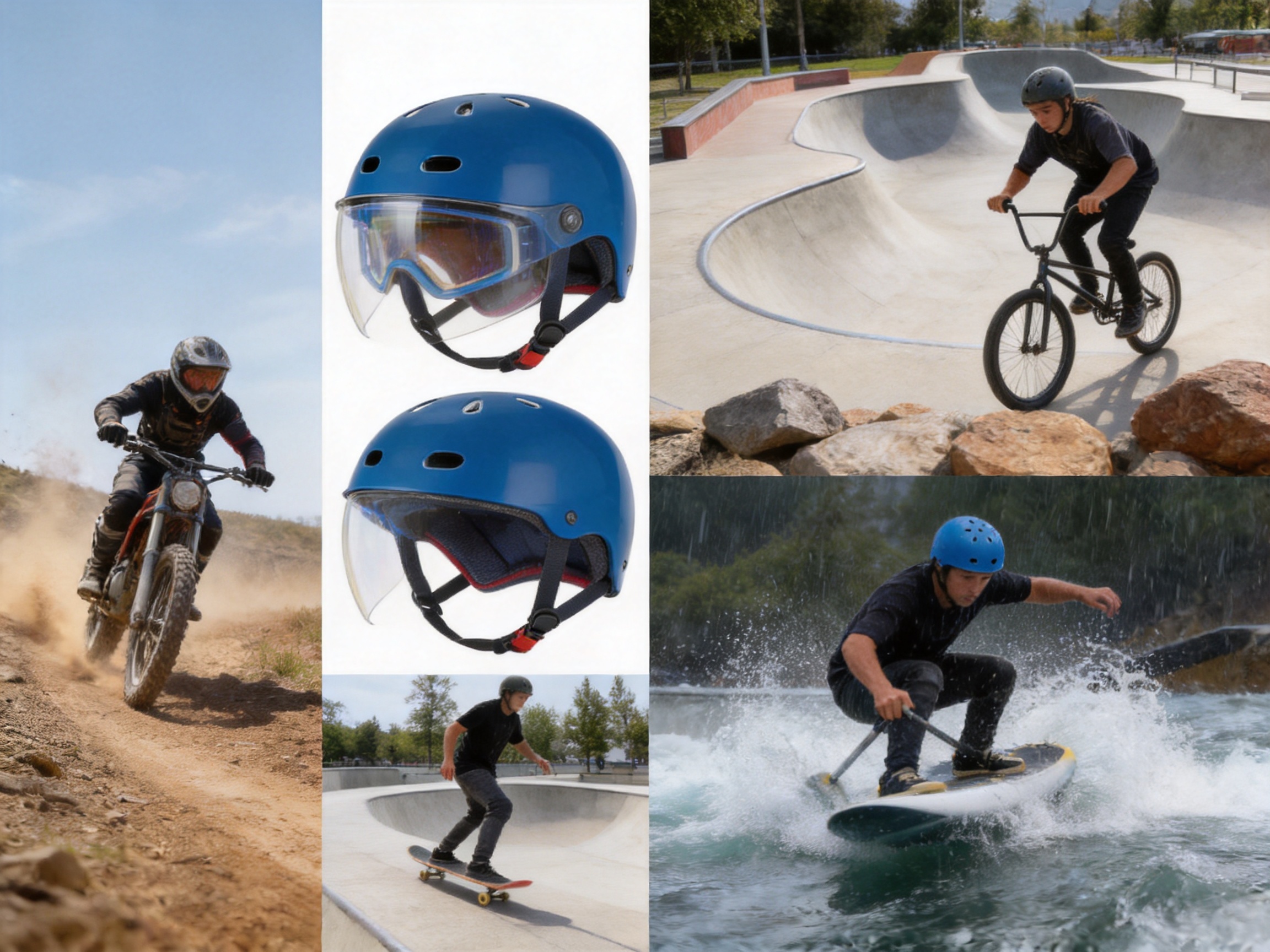
For buyers, distributors, retailers, and original equipment manufacturing customers, the helmet represents a versatile protective product that can serve multiple outdoor and sporting markets. It is suitable for motorcycle riding, BMX, skateboarding, selected extreme sports, whitewater rafting, and certain industrial or outdoor work environments requiring additional head coverage. Its broad application range allows businesses to develop a more flexible product portfolio instead of relying on a helmet designed for only one activity.
Why Full-Face Protection Matters
Many recreational users begin with a simple open helmet because it is lightweight and familiar. However, open designs may leave the face, jawline, ears, and portions of the back of the head more exposed. In activities involving speed, uneven terrain, obstacles, water, or unpredictable falls, these uncovered areas can be vulnerable to impact and environmental hazards.
A full-face helmet addresses this limitation by creating a more complete protective enclosure around the head. The BW-013 is designed to reduce exposure to external debris and offer all-around coverage during accidental rollovers or forward falls. Its enclosed configuration is particularly relevant to activities where the rider may not be able to predict the direction of a collision.
Full-face protection can also improve confidence. Riders often perform better when they are not distracted by concerns about dust, branches, splashing water, cold air, or accidental contact around the face. Confidence does not replace safe behavior, appropriate training, or compliance with local regulations, but a well-designed helmet can support safer participation by reducing unnecessary exposure and distraction.
The BW-013 is not presented as a substitute for activity-specific safety standards or professional risk assessment. Instead, it is a protective equipment platform designed to offer broad coverage and practical features for demanding applications. Users should select the correct size, follow the instructions supplied with the product, inspect the helmet regularly, and confirm that the model is appropriate for the intended activity and jurisdiction.
Advanced Multi-Layer Protective Structure
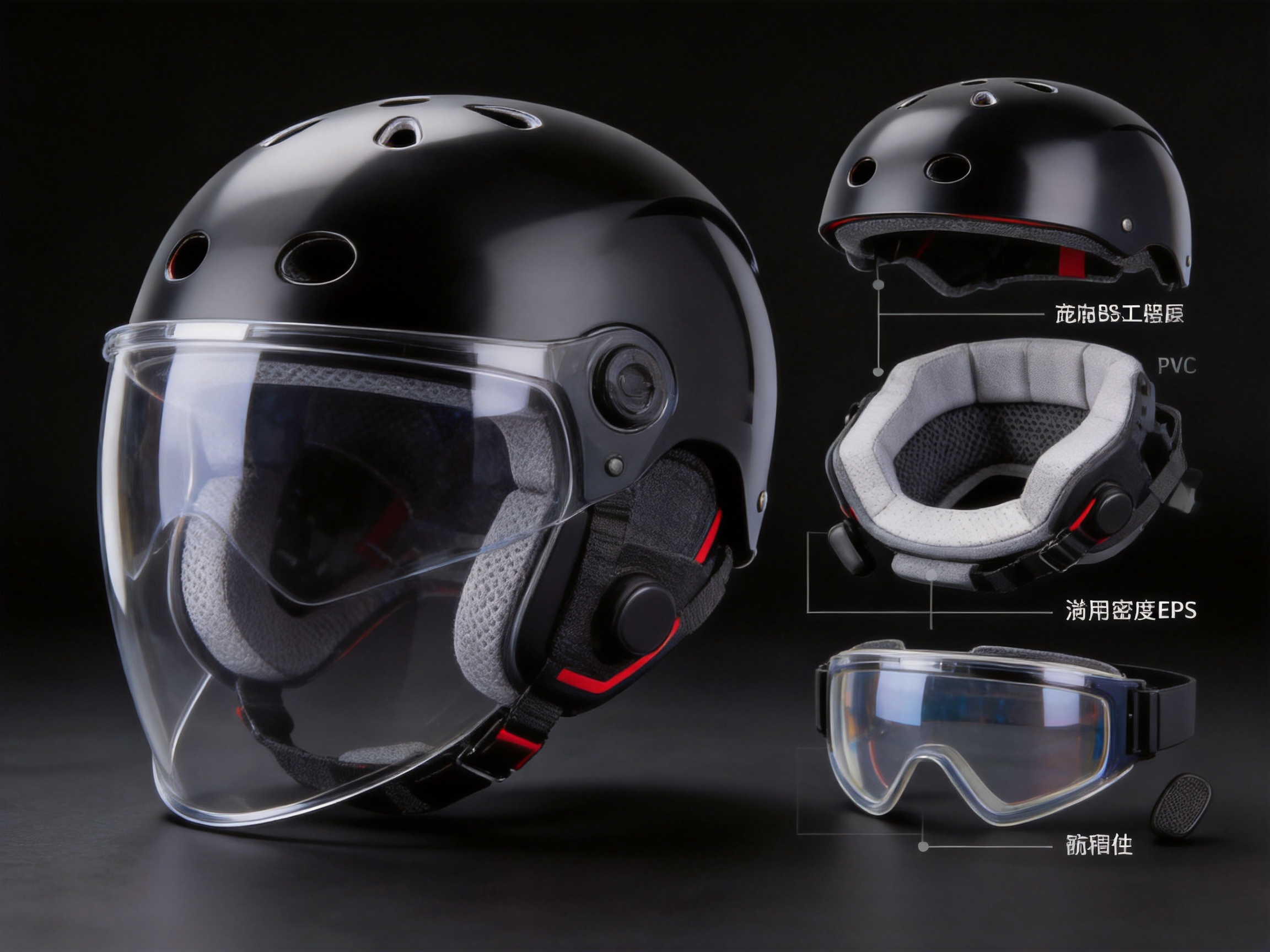
The key strength of the BW-013 is its layered construction. Each component has a different function, and the components work together as a system rather than as isolated parts. The outer shell helps resist penetration and direct contact. The middle cushioning layer helps manage impact energy. The inner lining improves fit, comfort, and contact with the user’s head. The face shield supports visual clarity and protects the front of the face from environmental interference.
| Component | Primary Function | Benefit to the User |
|---|---|---|
| ABS engineering plastic shell | Provides a strong external protective surface | High impact resistance, structural durability, and protection from hard-object contact |
| Middle cushioning layer | Helps absorb and distribute impact energy | Supports safer impact management and reduces concentrated force |
| PVC and high-density EPS inner lining | Creates a protective and supportive interior | Improves cushioning, fit, and wearing comfort |
| Sweat-absorbing mesh fabric | Contacts the user’s head and manages moisture | Provides softness, breathability, and a cleaner wearing experience |
| PC anti-fog goggles | Protects the eyes and maintains forward visibility | High toughness, improved clarity, and reduced fogging in difficult conditions |
| Removable earpieces | Support cleaning and maintenance | Improves hygiene and extends practical serviceability |
This layered approach gives the helmet advantages over products that rely on a single rigid shell with limited interior engineering. A shell alone may provide a strong external barrier, but it does not automatically deliver good comfort, moisture management, impact cushioning, or visibility. The BW-013 considers these factors together, creating a more complete product proposition for professional buyers and end users.
ABS Engineering Plastic Outer Shell
The outer shell is made from ABS engineering plastic. ABS is widely used in protective products because it can offer a useful balance of rigidity, toughness, formability, and weight. In the BW-013, the shell is designed to resist impacts from hard objects and provide a durable external barrier around the head.
High impact resistance is especially important in activities where contact with the ground, equipment, rocks, barriers, or other objects may occur. A strong shell can help prevent the protective structure from being easily penetrated or severely deformed during normal use. The shell also contributes to the helmet’s overall shape and supports the full-face configuration.
Compared with heavier protective products made from less balanced materials, ABS can help manufacturers achieve a practical combination of strength and manageable weight. This matters because excessive weight may create discomfort, neck fatigue, or reluctance to wear the helmet. A helmet that is protective but uncomfortable may be removed or used incorrectly, so weight management is a central part of functional design.
High-Density EPS and PVC Inner Lining
The internal structure includes PVC and high-density EPS lining. High-density EPS is commonly used in impact management because its cellular structure can help absorb and dissipate energy during a sudden impact. The PVC component supports the interior structure and contributes to cushioning, fit, and durability.
The inner lining is positioned between the user and the hard external shell. This separation is essential for comfort and for helping manage the forces transmitted through the helmet. The lining also helps the helmet maintain a stable position on the head, which is important because a loose or poorly positioned helmet may not offer its intended coverage.
The use of a dedicated inner system distinguishes the BW-013 from low-cost products that may use thin, poorly fitted, or inconsistent padding. A well-planned interior can improve the user’s experience during longer sessions, particularly when the helmet is worn for commuting, off-road riding, training, or outdoor work.
Comfortable Sweat-Absorbing Mesh
Protective equipment must be worn consistently to be effective in practical use. For this reason, comfort is not merely a luxury feature. The BW-013 uses mesh material on the inner surface to provide softness, sweat absorption, and breathability. This helps reduce the unpleasant feeling of heat and moisture accumulating inside the helmet.
Breathable interior materials are particularly valuable in warm climates, during intense exercise, and in activities that require continuous physical effort. Sweat absorption can also help reduce direct moisture contact with the skin. By making the interior more comfortable, the helmet is better suited to longer periods of use.
The earpieces are removable and washable. This detail provides a practical maintenance advantage. Repeated use can cause sweat, dust, and environmental particles to collect inside a helmet. Removable components allow users or distributors to clean the interior more thoroughly than they could with permanently fixed padding. Cleanable parts can also support better hygiene across repeated use, rental operations, family use, and shared sporting equipment programs.
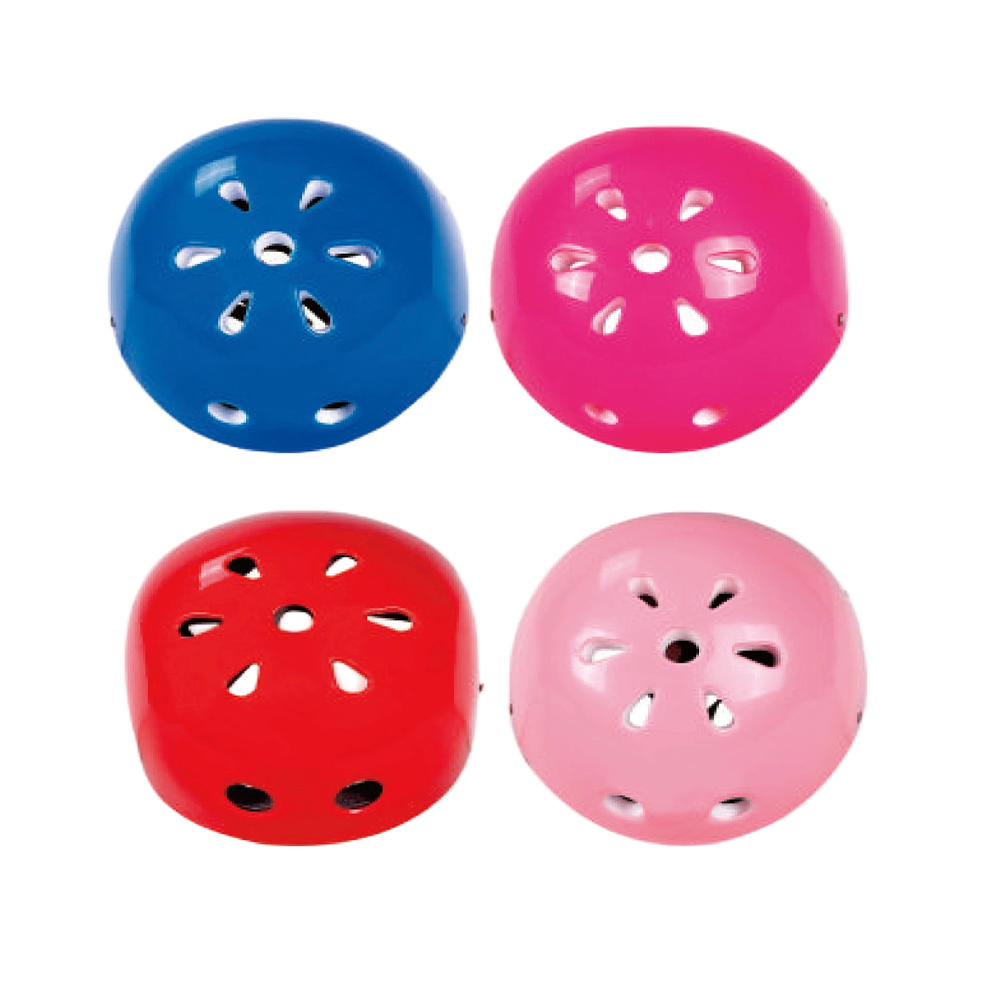
BW-013 High Impact Resistant Helmet
High-Transmittance Anti-Fog Goggles
Clear vision is essential whenever a helmet is used for movement at speed or in changing outdoor conditions. The BW-013 is equipped with PC polycarbonate goggles designed to provide high transmittance, toughness, anti-fog performance, and puncture resistance. These goggles form an important part of the helmet rather than functioning as a decorative accessory.
Polycarbonate is valued for its combination of optical clarity and impact resistance. Compared with ordinary brittle transparent materials, PC is less likely to break suddenly under normal impact conditions. This makes it suitable for protective eyewear applications where the user needs a transparent barrier in front of the eyes.
The high-transmittance design helps maintain a bright and clear view. Good visibility supports obstacle recognition, route selection, balance, and reaction time. It is particularly useful when the user moves between shaded and bright areas or when the surrounding environment contains dust, spray, or reflected light.
Anti-Fog Performance in Difficult Conditions
Fogging is a common problem for enclosed helmets. When warm, humid air from the user’s face meets a cooler lens surface, condensation can form and reduce visibility. This problem may become more serious during rainy weather, high-temperature activity, or intense exertion.
The BW-013 incorporates an anti-fog goggle design intended to help maintain visibility in humid and warm environments. By reducing the likelihood that fog will obstruct the user’s view, the goggles support safer and more comfortable use. Clear vision also reduces the temptation to lift or remove eye protection while moving, which can expose the user to additional risks.
Anti-fog performance can be influenced by ventilation, temperature, humidity, activity intensity, cleaning methods, and storage conditions. Users should keep the goggles clean and follow the applicable care instructions. No anti-fog system can guarantee perfect clarity in every environmental condition, but the integrated design provides an important advantage over basic transparent shields without fog-management features.
Protection Against External Interference
In outdoor sports, vision may be disrupted by rain, wind, dust, splashing water, insects, and loose particles. The full-face structure and integrated goggles help create a more controlled visual environment. For motorcycle riders, the design can reduce the direct effect of wind and road debris. For water sports, it can help limit exposure to spray and accidental splashing. For BMX and skateboarding applications, it can provide additional facial coverage when riding near ramps, rails, or rough surfaces.
The goggles are described as puncture resistant and highly tough, which supports their role as a protective front barrier. They should still be inspected for scratches, cracks, looseness, or other damage before use. Damaged eye protection may reduce visibility or fail to provide the expected performance.
Full-Face Design for Broad Coverage
The BW-013 uses a fully enclosed helmet design. This configuration covers more of the head and face than a conventional open helmet, making it suitable for activities where a fall can happen in multiple directions. The structure is intended to help prevent external debris from entering around the face and to provide broader protection during accidental rollover situations.
For motorcycle users, the full-face format can offer coverage during road riding, off-road riding, and urban commuting. In these settings, the rider may encounter vehicle traffic, road debris, low branches, uneven surfaces, or sudden braking situations. Full-face coverage provides a more comprehensive barrier than a simple half-shell design.
For extreme sports, the design is relevant to BMX, skateboarding, and similar activities where users may fall forward, sideways, or backward. Although the specific protective requirements vary between sports, the additional face and ear coverage can be valuable when the activity involves ramps, jumps, speed, or hard surfaces.
For water sports such as whitewater rafting, the helmet can help protect against accidental contact with rocks, equipment, or other obstacles. The lightweight and low-water-absorption characteristics described for the materials are practical advantages in wet environments. A helmet that does not easily absorb water can remain more comfortable and less burdened during use.
The enclosed form may also be useful in selected industrial or outdoor work environments. Workers may require protection from falling objects, projections, branches, or other hazards. The employer or safety officer should always verify whether the product is suitable for the specific workplace and whether additional certified equipment is required.
Lightweight and Durable for Repeated Use
A major challenge in helmet design is achieving strong protection without creating unnecessary weight. The BW-013 is designed to be lightweight while maintaining a durable structure. Its uniform density, high strength, and low water absorption contribute to practical reliability in both dry and wet environments.
Lightweight construction can improve user acceptance. Riders are more likely to wear a helmet regularly when it does not create excessive pressure or neck fatigue. This is particularly important for children and younger users, although the correct size and fit must always be confirmed. A helmet should never be selected solely because it is light; it must also provide appropriate coverage, stability, and construction quality.
Durability is equally important for commercial buyers. Retailers and distributors need products that can withstand transportation, storage, repeated fitting, and normal use without rapidly losing their shape or function. The BW-013’s ABS shell and moisture-resistant material characteristics help support a longer practical service life when the helmet is properly maintained.
Low water absorption is valuable for rafting, rainy-weather riding, coastal activities, and humid storage conditions. Materials that absorb substantial moisture may become heavier, retain unpleasant odors, or dry slowly. A more water-resistant structure is easier to manage between uses and may reduce maintenance demands.
Nevertheless, every helmet should be replaced after a serious impact, even if visible damage is not obvious. Protective materials may absorb energy and become compromised internally. Regular inspection is also necessary after long storage, heavy use, chemical exposure, or accidental drops.
Advantages Compared with Basic Competitor Designs
The protective equipment market includes many types of helmets, from simple open-face products to advanced full-face models. The BW-013 is differentiated by combining several features that are often separated across different product categories.
More Complete Coverage Than Open Helmets
Basic open helmets may be suitable for low-risk recreational use, but they leave parts of the face and ears exposed. The BW-013’s full-face structure offers a broader protective envelope, which is a significant advantage for high-risk sports, off-road riding, and environments with airborne debris.
Integrated Eye Protection
Some helmets require users to purchase separate goggles. Separate equipment can increase cost, complicate fitting, and create compatibility problems. The BW-013 integrates PC goggles into the overall design, offering a more unified product. This can simplify purchasing for consumers and reduce the number of separate components that retailers need to manage.
Anti-Fog Functionality
Transparent shields without fog-management features may become difficult to use in rainy, humid, or high-temperature situations. The BW-013’s anti-fog design addresses a common weakness of basic protective helmets. Improved visual consistency can enhance confidence and reduce interruptions during activity.
Washable Interior Components
Low-priced helmets may use fixed interior padding that is difficult to clean. The BW-013’s removable and washable earpieces provide an advantage for hygiene and long-term use. This feature is especially useful for families, training centers, rental services, retailers offering demonstration units, and users who wear the helmet frequently.
Balanced Material Performance
The combination of ABS, EPS, PVC, mesh, and polycarbonate creates a balance between external strength, energy management, comfort, moisture control, and visibility. Competitor products that focus on only one characteristic may be strong but uncomfortable, lightweight but poorly ventilated, or visually clear but less protective around the face.
Broader Market Applications
The BW-013 can be positioned across several product categories, including inline skating equipment, children’s scooters, sports protective gear, motorcycle accessories, extreme sports equipment, and selected water sports products. This versatility can help OEM buyers and wholesalers reach multiple customer segments with a single core product.
Manufacturing Strengths Behind the Product
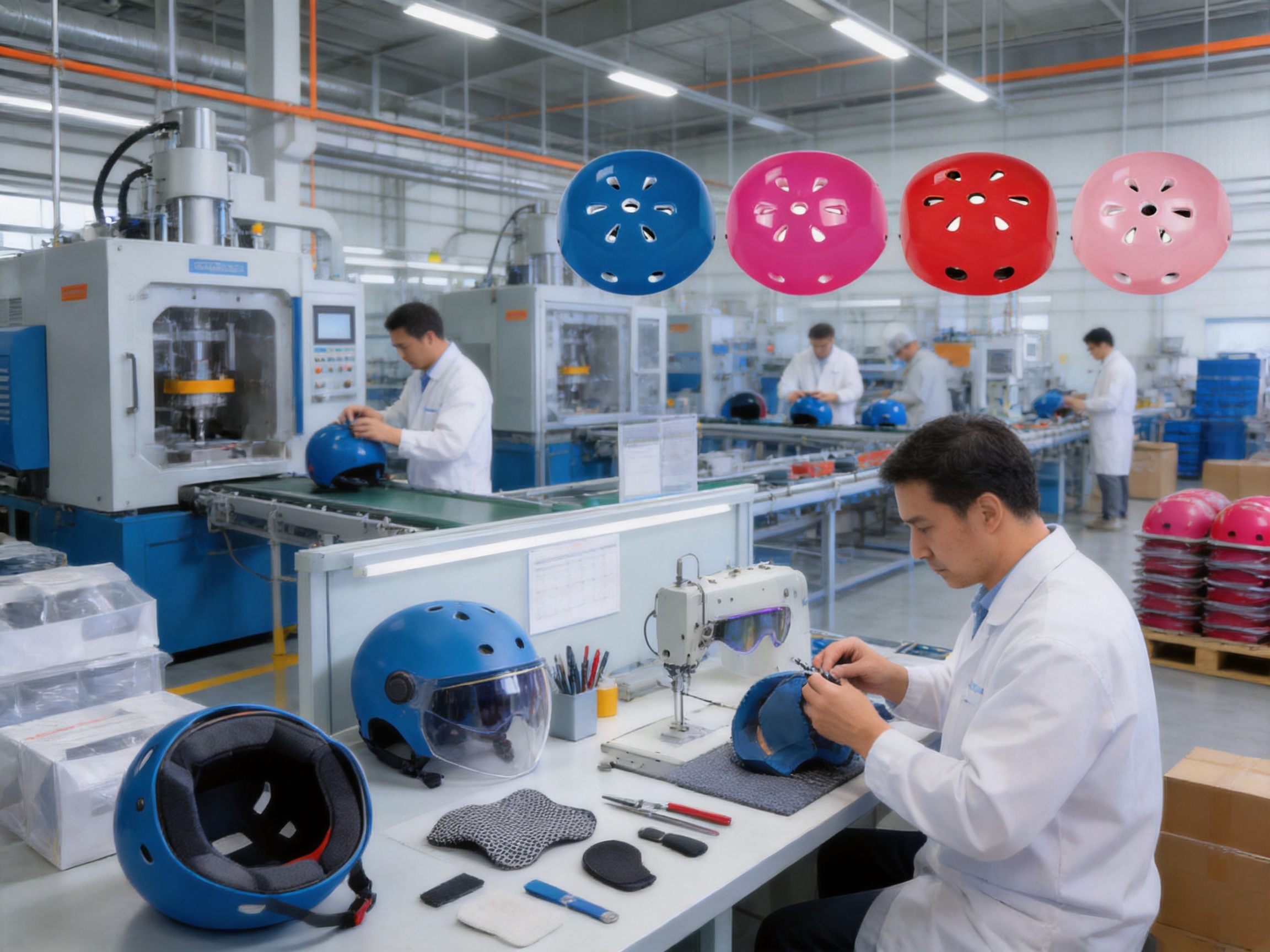
The performance of a protective helmet depends not only on the product concept but also on the manufacturing system used to produce it. Ningbo Feile Sporting Goods Co., Ltd. was established in 2010 and specializes in children’s scooters, inline skates, roller skates, ice skates, and protective gear. Its experience across these product categories provides a useful foundation for developing equipment that combines molded plastics, textiles, cushioning materials, assembly processes, and user-focused design.
The company operates a 20,000-square-meter workshop with more than 200 employees and five advanced automatic production lines. These resources support organized production, repeatable assembly, and scalable output. For international buyers, manufacturing capacity is important because product availability, delivery consistency, and production continuity can be as important as the initial design.
Integrated Mold and Injection Molding Capabilities
Protective helmets require accurate shell geometry and consistent molding quality. The company’s mold and injection molding workshops support control over critical plastic components. In-house or closely coordinated mold capability can improve communication between product development and production, allowing design details to be refined more efficiently.
Injection molding also supports repeatable production of complex shapes. Consistent shell dimensions are important for maintaining fit, appearance, component compatibility, and assembly stability. When the shell, goggle frame, vents, fasteners, and interior components are designed to work together, dimensional accuracy becomes a key factor in final product quality.
Automated production lines can help reduce variation in repetitive operations. Automation does not eliminate the need for skilled workers or inspection, but it can improve process consistency and production efficiency. For OEM customers, this may support more predictable quality across larger orders.
Sewing and Assembly Workshops
The BW-013 includes mesh interior materials and removable earpieces, which require more than plastic molding alone. Sewing capability allows the company to produce and finish textile components used in protective equipment. Proper sewing, trimming, attachment, and inspection contribute to comfort, appearance, and durability.
Assembly workshops bring the helmet’s separate components together. The shell, cushioning layer, lining, goggles, earpieces, and fastening elements must be installed correctly to create a stable finished product. A dedicated assembly process supports systematic checking of alignment, attachment, movement, and finish.
The combination of mold, injection molding, sewing, and assembly facilities gives the manufacturer a more complete production chain. This is an advantage compared with trading companies or factories that outsource every stage to unrelated suppliers. A more integrated structure can simplify communication, improve traceability, and make customization discussions more practical.
Professional R&D Engineering Team
Feile maintains a professional research and development engineering team and introduces new products each year. Protective equipment must respond to changing consumer expectations, material developments, sport trends, and market requirements. R&D capability helps the manufacturer refine product structure, improve comfort, update appearance, and explore new applications.
Engineering experience across scooters and skates is particularly relevant because these products are often used by active consumers who value safety, comfort, appearance, and ease of use. The company’s product development approach focuses on reliable quality, reasonable pricing, safety, comfort, and innovation. These principles are reflected in the BW-013’s combination of full-face protection, anti-fog goggles, washable interior components, and lightweight materials.
OEM customers may also benefit from a manufacturer that understands product positioning. A helmet is not only a technical object; it is also part of a sporting goods collection. Color matching, packaging, branding, user instructions, accessory coordination, and market-specific presentation can all influence commercial success.
Quality Systems and International Market Readiness
Ningbo Feile Sporting Goods Co., Ltd. has passed ISO9001, BSCI, and Kmart factory certification systems, according to the company information provided. These systems indicate attention to quality management, social responsibility, and factory evaluation requirements. The company also participates in international exhibitions, giving it regular exposure to overseas market expectations and buyer feedback.
The company reports certifications and compliance experience involving 3C, CE, EN71, EN62115, ASTM, EMC, and EN13843:2009 across its product portfolio. These standards and certifications relate to different product types and regulatory areas. Buyers should confirm the exact certification status applicable to the BW-013 model, intended market, and specific use before placing an order or making compliance claims.
A structured quality system can support document control, process monitoring, corrective action, supplier coordination, and continuous improvement. For protective equipment, these practices are important because quality cannot be judged solely by appearance. Material density, shell consistency, goggle attachment, stitching, padding placement, and final assembly all require appropriate inspection.
The company’s more than 30 college-educated management staff provide additional organizational support for production planning, engineering communication, quality control, purchasing, export coordination, and customer service. This management structure can be valuable for international OEM projects that require clear communication across design, sampling, production, and shipment stages.
OEM and Wholesale Value
The BW-013 is suitable for companies seeking a protective helmet that can complement an existing range of inline skates, scooters, roller skates, and sports accessories. Because the product can serve multiple high-risk activities, it may help distributors build a broader safety equipment category without adding numerous unrelated models.
For an OEM buyer, the product can be evaluated in several ways. The first is technical suitability: shell construction, lining structure, goggle performance, full-face coverage, and user comfort. The second is market fit: whether the design matches the expectations of motorcycle, extreme sports, skating, scooter, or water sports customers. The third is manufacturing practicality: production capacity, sampling, packaging, delivery schedules, and quality documentation.
The manufacturer’s integrated production resources can support conversations about product modifications. Depending on order volume and engineering feasibility, buyers may discuss color options, logo placement, packaging design, interior materials, accessory configuration, or market-specific presentation. Any such customization should be confirmed through formal technical drawings, samples, and written specifications.
Wholesalers can also benefit from the helmet’s application flexibility. A single full-face model can be introduced to specialty sports stores, motorcycle accessory retailers, outdoor equipment distributors, and protective gear suppliers. Its strong visual appearance and visible goggle system may make it easier to explain to customers than a product with hidden or highly technical features.
Retailers should provide clear guidance about intended use, sizing, fitting, cleaning, inspection, and replacement. A protective helmet should be marketed responsibly. Claims should be based on available test reports and verified product specifications rather than general statements that imply universal protection.
Application Guide
Motorcycle Riding
The BW-013 is designed for road riding, off-road riding, and urban commuting applications. Its full-face structure helps provide broader head and facial coverage, while the PC goggles help shield the eyes from wind, dust, rain, and small particles. The ABS shell offers a strong external barrier, and the interior materials support comfort during longer rides.
Motorcycle users should confirm whether the helmet meets the legal and technical requirements of their location. Requirements may differ between countries, vehicle types, road use, racing, and recreational riding. The helmet must be correctly fitted and securely fastened before each ride.
Extreme Sports
BMX, skateboarding, and related activities can involve jumps, ramps, hard surfaces, and unpredictable falls. The BW-013’s full-face design may be appropriate for users seeking more coverage than a standard skate helmet. The anti-fog goggles can also help maintain clear vision during intense activity or changing weather.
Users should select equipment according to the specific discipline. A helmet suitable for one activity may not automatically satisfy the requirements of another. Professional riders, coaches, and facility operators should evaluate the product against the activity’s recognized safety practices.
Water Sports
Whitewater rafting and similar activities can expose participants to rocks, equipment, water pressure, and accidental collisions. The helmet’s low-water-absorption characteristics and full-face configuration are practical advantages for wet environments. The goggles can help reduce splashing and preserve forward visibility.
Water sports users should also consider buoyancy, drainage, secure fit, and compatibility with other required equipment. Helmets should never interfere with the operation of life jackets, communication devices, or other safety systems.
Outdoor and Industrial Work
The product may be considered for selected outdoor or high-risk work environments where additional head and face protection is needed. Examples may include certain construction support activities, forestry-related tasks, maintenance work, or outdoor operations involving debris and impact hazards.
Workplace buyers must carefully assess regulatory requirements. Industrial environments may require helmets with specific electrical, penetration, chin-strap, face-shield, or impact certifications. The BW-013 should only be used in a workplace when its verified specifications match the employer’s hazard assessment and applicable regulations.
Care, Cleaning, and Product Longevity
Proper care helps preserve the function and appearance of protective equipment. After use, the helmet should be inspected for cracks, deep scratches, loose components, damaged padding, distorted shell areas, or problems with the goggles. Any serious impact should be treated as a reason for professional evaluation or replacement.
The removable earpieces can be washed according to the manufacturer’s care instructions. Mild cleaning methods are generally preferable to harsh solvents or abrasive materials. Chemical exposure may weaken plastics, coatings, adhesives, or textile components. Users should avoid modifying the shell, drilling holes, applying unapproved adhesives, or removing structural parts.
The goggles should be cleaned with suitable materials that do not scratch the surface. Scratched or cloudy lenses can reduce visibility, especially in bright light or wet conditions. Anti-fog surfaces may be affected by aggressive cleaning products, so users should follow the supplied instructions and avoid treating the lens with unverified chemicals.
Storage is also important. The helmet should be kept in a cool, dry place away from direct sunlight, excessive heat, fuels, oils, and corrosive substances. Heavy objects should not be placed on top of it. If the helmet becomes wet, it should be allowed to dry naturally before storage rather than being exposed to intense artificial heat.
Retailers and distributors can add value by providing care guidance with each purchase. Clear maintenance instructions reduce misuse, improve customer satisfaction, and help users understand when replacement is necessary.
How to Select the Right Product for a Market
Different markets prioritize different product features. Motorcycle customers may focus on coverage, wind protection, visual clarity, and durability. Extreme sports customers may prioritize weight, movement, style, and ventilation. Water sports users may be more concerned with water exposure, secure fit, and resistance to environmental conditions. Families may focus on comfort, adjustability, cleanability, and appearance.
The BW-013’s broad combination of features allows it to be positioned differently without changing its fundamental structure. A distributor may promote it as a full-face sports helmet, while a motorcycle accessory retailer may emphasize road and off-road coverage. An outdoor equipment supplier may focus on its goggles, moisture resistance, and enclosed design.
Before importing or distributing the helmet, buyers should review the product specifications, size range, available colors, packaging details, labeling requirements, testing documentation, and minimum order conditions. Product descriptions should accurately reflect verified capabilities. If a market requires specific standards, the buyer should request current reports and confirm that they apply to the exact model and configuration.
Q&A
What is the BW-013 High Impact Resistant Helmet?
The BW-013 is a full-face protective helmet designed for high-risk activities such as motorcycle riding, BMX, skateboarding, whitewater rafting, and selected outdoor or industrial applications. It combines an ABS outer shell, cushioning layers, a sweat-absorbing mesh interior, removable earpieces, and PC anti-fog goggles.
What makes the helmet different from a basic open-face model?
The full-face structure provides broader coverage around the forehead, cheeks, ears, and face. It also helps reduce exposure to external debris and includes integrated goggles for eye protection and improved visual control.
What material is used for the outer shell?
The outer shell is made from ABS engineering plastic. The material is selected for its combination of impact resistance, strength, durability, and practical weight.
Does the helmet include an impact-absorbing interior?
Yes. The helmet includes a PVC and high-density EPS inner lining, together with a middle cushioning layer. These components form part of the multi-layer protective structure and are intended to help manage impact energy while improving comfort.
Are the goggles suitable for rainy or humid conditions?
The PC goggles feature an anti-fog design intended to help maintain clear vision in rainy, humid, or high-temperature environments. Actual performance depends on weather, activity intensity, ventilation, cleaning, and maintenance.
Can the interior be cleaned?
The earpieces are removable and washable. Users should follow the care instructions supplied with the product and avoid harsh chemicals that may damage the shell, goggles, padding, or textile materials.
Is the helmet suitable for motorcycle use?
The helmet is designed for motorcycle applications including road riding, off-road riding, and urban commuting. Buyers and users must verify that the model meets the safety and legal requirements of the intended country, road, vehicle, and riding environment.
Can it be used for children’s scooters or skating?
The helmet is relevant to the broader skating, scooter, and sports protective equipment market. However, the correct size, fit, weight, and applicable safety requirements must be confirmed for each child and activity. Parents and guardians should follow professional guidance and local regulations.
Is it appropriate for whitewater rafting?
The helmet is designed for water sports such as whitewater rafting and includes materials described as having low water absorption. Users should also verify secure fit, drainage, buoyancy considerations, and compatibility with other required water safety equipment.
What manufacturing resources support this product?
Ningbo Feile Sporting Goods Co., Ltd. has a 20,000-square-meter workshop, more than 200 employees, five automatic production lines, mold and injection molding workshops, sewing and assembly facilities, and a professional R&D engineering team.
Can the product be customized for OEM orders?
The manufacturer specializes in OEM sporting goods production and can discuss customization possibilities such as colors, branding, packaging, and related product presentation. Final options depend on order quantity, engineering feasibility, approved samples, and written specifications.
What should users do after a serious impact?
The helmet should be removed from service and replaced or professionally evaluated after a serious impact. Damage may not always be visible, and continued use of a compromised helmet may reduce protection.
Does the product replace other protective equipment?
No. A helmet is only one part of a complete safety system. Depending on the activity, users may also need gloves, knee pads, elbow pads, life jackets, protective clothing, suitable footwear, and other equipment.
Conclusion
The BW-013 High Impact Resistant Helmet is designed to answer several common weaknesses found in basic protective headgear. Its full-face construction provides broader coverage, while the ABS engineering plastic shell creates a durable outer barrier. The PVC and high-density EPS interior supports cushioning and fit, and the sweat-absorbing mesh improves breathability and comfort. Removable earpieces make cleaning easier, while high-transmittance PC goggles provide a clear, tough, and anti-fog visual shield.
These features make the helmet suitable for a broad selection of demanding applications, including motorcycle riding, BMX, skateboarding, whitewater rafting, and selected outdoor work environments. Its lightweight and low-water-absorption characteristics further support use in wet or changing conditions.
For commercial buyers, the product is supported by Ningbo Feile Sporting Goods Co., Ltd.’s experience in skating, scooter, and protective equipment manufacturing. The company’s automatic production lines, mold and injection molding capabilities, sewing and assembly workshops, R&D engineering team, quality systems, and international market experience create a strong foundation for OEM and wholesale cooperation.
The most important advantage of the BW-013 is its balanced product strategy. It does not focus only on shell strength or visual appearance. Instead, it combines protection, face coverage, eye visibility, comfort, cleanability, material durability, and application flexibility. This balance can help distributors, retailers, and sporting goods brands offer a more complete protective solution to customers who participate in high-risk activities.
As with all protective equipment, correct sizing, proper fitting, responsible use, regular inspection, and compliance with applicable standards remain essential. When these requirements are observed, the BW-013 can serve as a practical and versatile addition to modern skating, scooter, motorcycle, extreme sports, water sports, and outdoor protective equipment programs.
References
1. Product information supplied for the BW-013 High Impact Resistant Helmet, including material construction, application guidance, goggle features, and interior design.
2. Ningbo Feile Sporting Goods Co., Ltd. company profile, including manufacturing facilities, employee structure, product categories, R&D capabilities, and quality management information.
3. General technical references on ABS engineering plastics and their use in impact-resistant molded products.
4. General technical references on expanded polystyrene energy-absorbing liners used in protective helmet construction.
5. General technical references on polycarbonate materials for protective eyewear and transparent impact-resistant components.
6. General guidance on helmet inspection, replacement after impact, fit, cleaning, storage, and responsible use of personal protective equipment.
Product: BW-013 High Impact Resistant Helmet
Recommended Articles

Get in Touch
Your email address will not be published. Required fields are marked *
Have a project in mind? Contact with us!
We are happy to answer your questions. Please fill out this form
and one of our professional team will get back to you as soon as possible.

We specialize in producing various types of children's toy cars, children's skateboards, and ice skates.
