
 En
 Español
 русский
 عربى

Why a 4-in-1 Roller Skate System Is a Smart Choice for Growing Children
Date:Oct 11, 2026
Content
- 1 A Multi-Mode Product Built Around One Shoe Body
- 2 Advantages Over Single-Purpose Children’s Skates
- 3 Designed for Indoor and Outdoor Recreation
- 4 Technical and Functional Design Priorities
- 5 Manufacturing Strengths Behind the Product
- 6 Research, Development, and Product Improvement
- 7 Certifications and Compliance Considerations
- 8 OEM and One-Stop Sourcing Potential
- 9 Packaging, Logistics, and Commercial Planning
- 10 Safety, Care, and Responsible Use
- 11 Why the Product Has Strong Market Potential
- 12 Comparison with Common Alternatives
- 13 Recommended Buyer Profile
- 14 Q&A: Understanding the 4-in-1 Roller Skate
- 14.1 What does 4-in-1 mean in this product?
- 14.2 Is the product suitable for beginners?
- 14.3 Can the base be changed without specialized tools?
- 14.4 What sizes are available?
- 14.5 Can the product be used outdoors?
- 14.6 Is protective gear necessary?
- 14.7 What makes the product different from ordinary roller skates?
- 14.8 Who manufactures the product?
- 14.9 What production capabilities does the manufacturer have?
- 14.10 Can the product be customized for OEM orders?
- 14.11 What certifications does the company report?
- 14.12 How should the skates be stored?
- 15 Conclusion
- 16 References
- 17 Product: BW-125-A 4 In 1 Roller Skate
Children often move quickly from one interest to another. One week they may want to learn inline skating, and the next they may be fascinated by traditional four-wheel roller skates or ice skating. For parents, this enthusiasm can create a practical challenge: purchasing separate equipment for every activity can be expensive, difficult to store, and inconvenient as children grow. The BW-125-A 4 In 1 Roller Skate addresses this challenge with a multifunctional design that allows one shoe body to work with interchangeable skating bases.
Designed for girls and beginner skaters, this product combines adaptable performance, attractive styling, easy base replacement, and practical value. Rather than requiring several complete pairs of skates, the system is intended to support different skating experiences through one footwear platform. Depending on the selected base and intended application, children can enjoy inline skating, quad skating, or ice-skating activities while using the same shoe body.
This approach gives the BW-125-A a clear advantage in the children’s skating equipment market. Its value is not limited to the appearance of the skate or the number of wheels. The more important benefit is the way the product is organized as a flexible equipment system. The shoe, fastening structure, replaceable base, and manufacturing process work together to offer a convenient solution for households, retailers, gift buyers, sports clubs, and distributors seeking versatile children’s sports products.
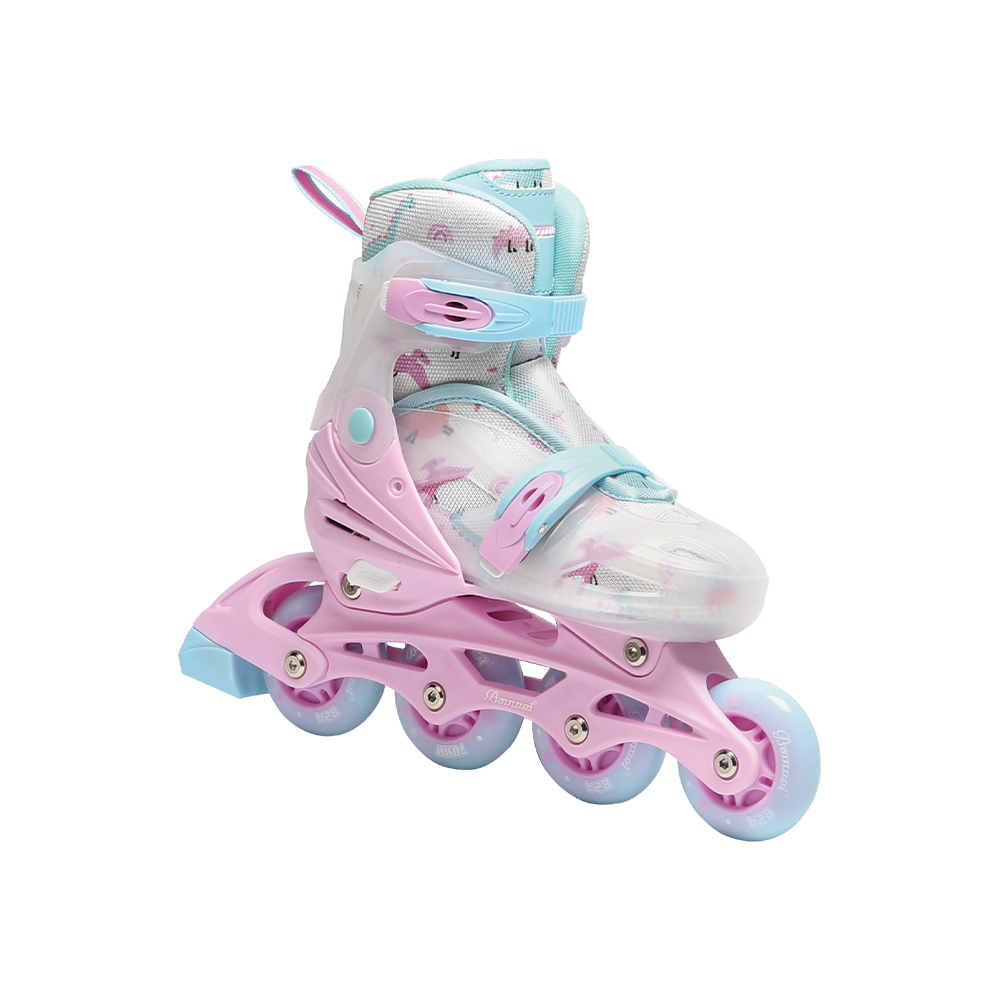
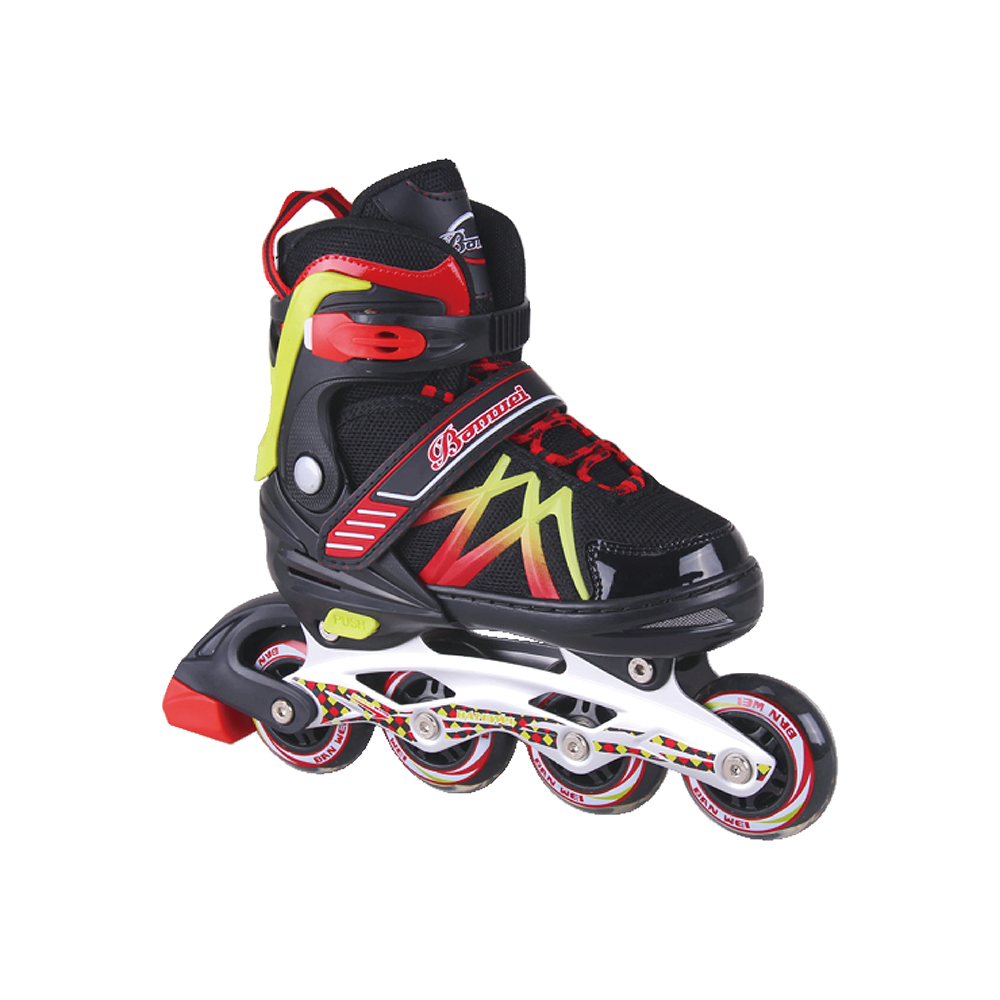
BW-125-A 4 In 1 Roller Skate
A Multi-Mode Product Built Around One Shoe Body
The central idea behind the BW-125-A is simple: one shoe body can be used with different skating bases. In a conventional product lineup, inline skates, quad roller skates, and ice skates are usually purchased as separate products. Each pair takes up storage space and requires its own fitting, maintenance, and replacement decisions. A 4-in-1 design reduces this duplication by allowing the user to change the base when the activity or venue changes.
For children who are still discovering their preferred skating style, this flexibility can be especially useful. Inline skating may be suitable for outdoor paths, plazas, and training areas. Quad skating can offer a different balance experience and may be preferred for recreational indoor use or beginner practice. An ice-skating base allows the same general footwear platform to be used for suitable recreational ice activities. The result is a product that can accompany a child across several stages of learning and entertainment.
The system also makes sense for families who want to introduce children to multiple sports without making a large initial investment. Instead of purchasing separate shoes in different styles, parents can select the appropriate base for the activity. This does not remove the need for safe instruction, proper protective equipment, and suitable supervision, but it can make the overall equipment plan more economical and organized.
Retailers can also benefit from the product’s multifunctional positioning. A single product can be presented as a solution for several related categories, including roller skates, inline skates, beginner skating equipment, children’s recreational sports gear, and seasonal activity products. This can help distributors create more efficient product assortments and give customers a stronger reason to choose a versatile product rather than a single-purpose alternative.
One Platform for Several Skating Experiences
The interchangeable-base structure gives the product a broader use profile than a conventional single-mode skate. A fixed inline skate is designed around one wheel arrangement, while a traditional quad skate is built around two front wheels and two rear wheels. An ice skate replaces rolling wheels with a blade-based structure. By using a detachable base system, the BW-125-A is intended to bridge these different recreational formats through a common upper shoe.
This platform approach can simplify product selection for first-time buyers. Parents do not necessarily need to understand every technical difference between skating categories before making a purchase. They can begin with the child’s current activity and later explore another mode as interest develops. For retailers, the same product can be marketed for home recreation, beginner training, family activities, holiday gifts, and performance-related use.
It is important to note that every skating mode should be used with the correct base, in an appropriate environment, and according to the manufacturer’s instructions. A product designed for versatility still requires responsible setup and inspection. The user should confirm that the selected base is fully attached and that all connection points are secure before skating.
Advantages Over Single-Purpose Children’s Skates
The most obvious advantage of the BW-125-A is its multifunctional construction. However, its competitive value extends beyond the simple claim that it supports several modes. The product is designed around convenience, appearance, beginner accessibility, and long-term household usefulness.
Reduced Equipment Duplication
Purchasing separate inline skates, quad skates, and ice skates can create a substantial combined cost. It can also mean buying multiple pairs of shoes in different sizes as children grow. The BW-125-A offers a more consolidated approach by using one shoe body with replaceable bases. For families comparing the total cost of several types of equipment, this can be a more economical option.
The product is particularly suitable for homes where storage space is limited. Multiple pairs of skates can occupy considerable room, especially when each pair requires protective packaging and a separate storage location. A modular system can help reduce clutter and make it easier to organize the child’s sporting equipment. This practical benefit is important for urban homes, apartments, schools, and activity centers.
More Variety for Beginners
Children who are new to skating may not immediately know which format they prefer. Some may enjoy the responsive movement of inline skates, while others may feel more comfortable with the traditional stance of quad skates. Some may be attracted to seasonal ice skating. The BW-125-A allows children to experience different modes without requiring a complete new purchase each time their interests change.
Exposure to different skating formats can also support broader coordination development. Each mode requires the child to manage balance, body position, weight transfer, stopping techniques, and directional control. These skills should always be taught progressively, but a versatile product can provide additional opportunities for supervised practice.
Easy Replacement and Practical Handling
The product uses a snap-fit replacement concept designed to make installation and removal straightforward. When the correct base is aligned with the shoe body and securely attached, the connection is intended to remain stable during use. This is a meaningful advantage for parents because complicated conversion systems can discourage frequent mode changes.
A simple replacement procedure can also improve the product’s retail appeal. Customers are more likely to appreciate multifunctional equipment when changing modes does not require specialized tools or extensive technical knowledge. For distributors, an intuitive design can reduce questions related to setup and help sales staff demonstrate the product more effectively.
Even with a user-friendly connection system, every attachment should be checked before use. Parents or responsible adults should inspect the snap-fit area, confirm that the base is not loose, and ensure that the shoe is properly fastened around the child’s foot. Easy installation should support safe use, not replace basic inspection habits.
Appealing Styling for Girls
The BW-125-A is developed with a girls’ exclusive styling direction. Its appearance is described as exquisite, simple, and elegant, with soft lines intended to look attractive during everyday use. This visual positioning can be important in children’s products because color, shape, and overall presentation influence a child’s willingness to use sports equipment regularly.
The design is suitable for more than training sessions. It can be used for casual outdoor play, family activities, holiday-themed events, photographs, and stage performances where appropriate. A product that combines sports function with an attractive appearance may have stronger appeal as a gift item, especially for birthdays, holidays, and seasonal celebrations.
At the same time, appearance is supported by practical construction. The product’s value does not depend only on decorative details. The interchangeable base, secure attachment concept, and adaptable use cases make the styling part of a broader product strategy: equipment that children enjoy wearing and parents can use in multiple settings.
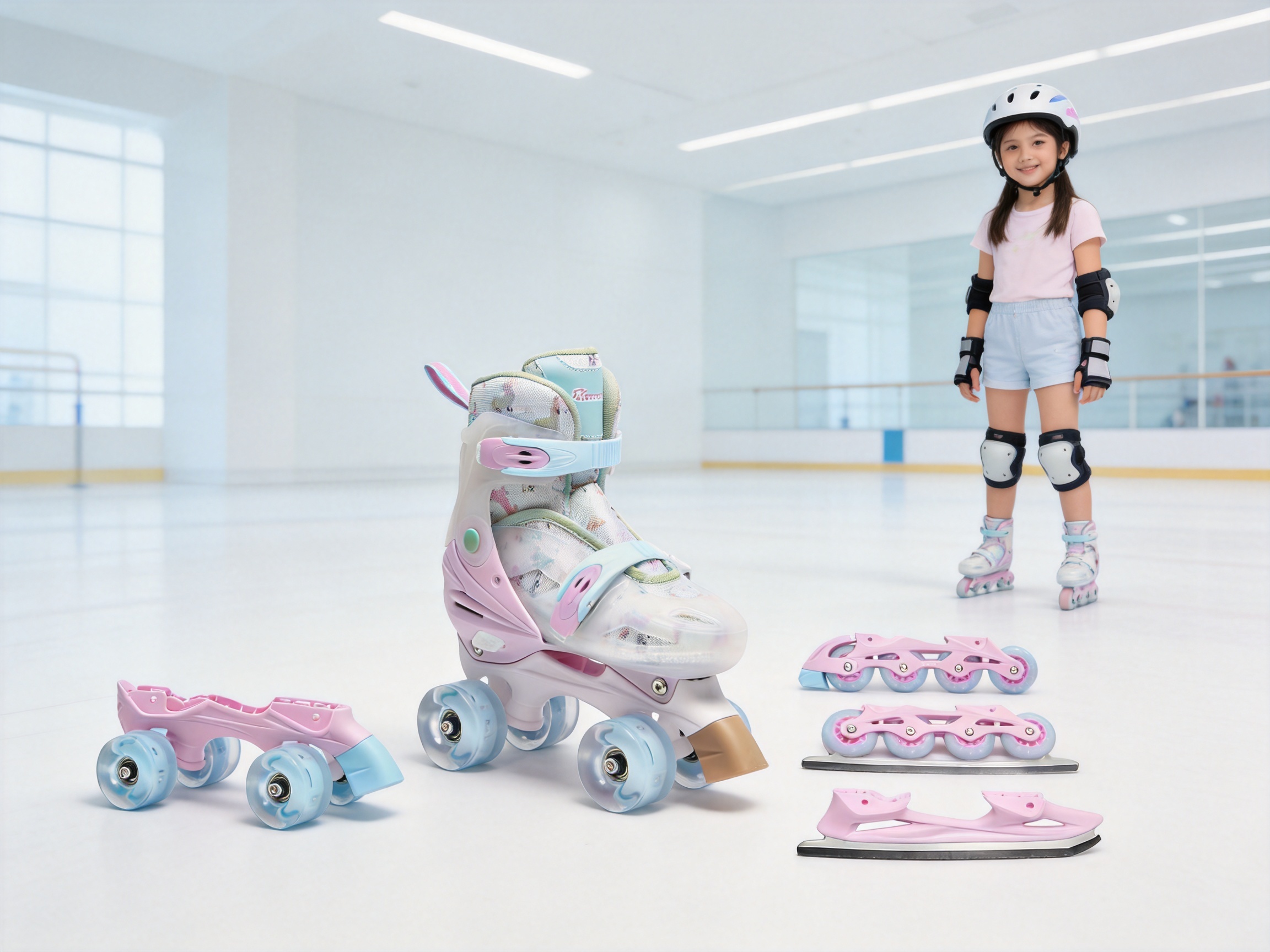
Designed for Indoor and Outdoor Recreation
The BW-125-A is positioned for a wide range of recreational scenarios. For indoor use, it can support activities such as recreational skating at suitable venues, beginner balance practice, and parent-child entertainment. For outdoor use, it can be used in appropriate plazas, smooth recreational areas, and other locations that are suitable for the selected skating mode.
The product can also be considered for coordination exercises and general fitness activities. Skating encourages children to practice posture, controlled movement, balance, and spatial awareness. It can become an enjoyable alternative to sedentary entertainment when children have access to a safe skating environment and appropriate adult guidance.
Families may also use the product for themed parties, performances, photography sessions, and special events. Its flexible appearance and multiple base options make it more adaptable than a skate designed for a single recreational purpose. For schools, clubs, and activity organizers, this adaptability may allow one equipment category to serve different kinds of beginner programs.
Indoor Use Considerations
For indoor skating, the surface should be clean, smooth, and appropriate for the selected base. The user should follow the rules of the venue and confirm whether the equipment is permitted. An ice-skating base should only be used at a suitable ice rink or another properly maintained ice surface. Rolling bases should not be used on ice, and an ice blade should not be used on ordinary flooring.
Indoor environments may appear safer than outdoor areas, but falls can still occur. Children should wear properly fitted protective gear, including a helmet and suitable protection for the wrists, elbows, and knees. Beginners should start with basic standing, marching, gliding, turning, and stopping exercises before attempting higher speeds or more complex movements.
Outdoor Use Considerations
Outdoor skating requires particular attention to surface quality. Cracks, stones, sand, wet areas, steep slopes, and uneven paving can reduce control and increase the risk of falls. Children should use the product only in areas appropriate for skating and should avoid roads, vehicle lanes, crowded pedestrian zones, and locations without sufficient visibility.
Weather also affects performance. Wet conditions can reduce traction and may damage components over time. Extreme heat, cold, or direct sunlight may affect storage materials. After outdoor use, the skates should be inspected and cleaned according to the care instructions applicable to the selected base.
Technical and Functional Design Priorities
A children’s skate must balance several design priorities. It should be attractive enough to encourage use, stable enough to support learning, simple enough for parents to manage, and durable enough for regular recreational activity. The BW-125-A responds to these priorities through a modular construction centered on the shoe body and detachable base.
Secure Base Connection
The snap-fit design is intended to create a stable connection between the upper shoe and the selected base. A secure interface is essential because movement forces are transferred through this area while the child is skating. If a base is not completely engaged, the equipment may feel unstable or produce unwanted movement.
For that reason, the connection should be checked every time the base is installed or removed. The user should look for visible gaps, uneven alignment, loose sections, or unusual movement. If any problem is found, the skate should not be used until the base has been correctly fitted or inspected by a qualified person.
Beginner-Oriented Use
The product is especially suited to beginners and home users. This positioning reflects the needs of children who are still developing confidence and basic balance. A beginner product should encourage gradual learning rather than emphasize speed or advanced performance. The multi-mode format allows families to select the activity that best matches the child’s current ability and the available practice environment.
Parents can begin with short sessions and simple exercises. Children may first practice standing while holding a stable support, then progress to controlled movement with an adult nearby. Stopping skills are particularly important and should be learned before the child attempts longer distances or faster speeds.
Size Range
The listed size groupings are 31–34, 35–38, and 39–42. These ranges cover several common children’s and youth footwear sizes, although exact fit should always be confirmed using the supplier’s measurement guidance and the child’s actual foot dimensions.
A correct fit should feel secure without creating painful pressure. The heel should remain properly positioned, the foot should not slide excessively inside the shoe, and the child should be able to move the toes comfortably. Because children’s feet grow, parents should monitor fit regularly rather than assuming that a previously suitable size remains appropriate indefinitely.
| Size Group | Listed Size Range | Reference Carton Dimensions | Recommended Application |
|---|---|---|---|
| Small Group | 31–34 | 470 × 390 × 345 mm | Children’s beginner and recreational use |
| Medium Group | 35–38 | 500 × 420 × 345 mm | Growing children and youth recreational use |
| Large Group | 39–42 | 545 × 430 × 350 mm | Larger children and youth applications |
The dimensions shown above are provided as reference packaging or product grouping information. Buyers should confirm the final packing specification, gross weight, net weight, inner-box quantity, and shipping carton details with the manufacturer before placing a commercial order.
Manufacturing Strengths Behind the Product
A versatile product requires more than a creative concept. It depends on reliable control of materials, molds, components, assembly, inspection, and packaging. Ningbo Feile Sporting Goods Co., Ltd. has specialized in children’s scooters, inline skates, roller skates, and ice skates since 2010. This product focus gives the company relevant experience in developing equipment for children’s sports and recreational use.
The company operates from Yuyao, Ningbo, Zhejiang Province, an area widely associated with plastics manufacturing and industrial supply chains. Its location provides access to component suppliers, production resources, transportation networks, Ningbo Airport, and connections with the wider Shanghai and Yangtze River Delta manufacturing region.
The reported facilities include a 20,000-square-meter workshop, more than 200 employees, five advanced automatic production lines, and a professional research and development engineering team. The company also maintains specialized mold, injection molding, sewing, and assembly workshops. These capabilities are relevant to a multifunctional skate because the final product depends on the coordination of molded parts, soft goods, structural components, and mechanical interfaces.
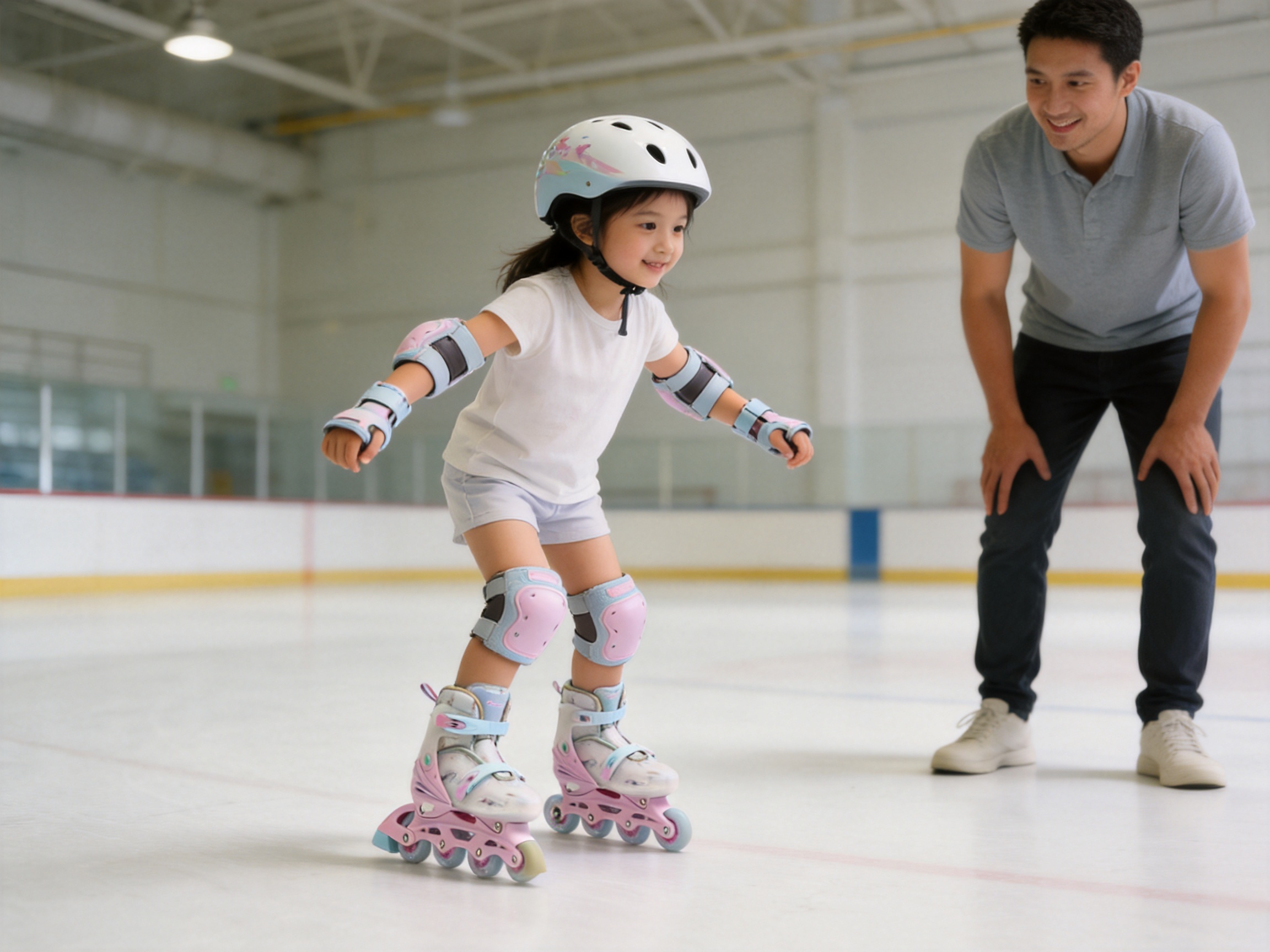
Mold Development and Injection Molding
Mold capability is important for children’s sporting goods because the shape and consistency of plastic components affect both appearance and function. Components such as base housings, connection structures, wheel supports, buckles, and protective shells may require accurate molding and repeatable dimensions.
In-house or closely managed mold and injection molding resources can help a manufacturer control the development cycle. Engineers can modify part geometry, improve fit between components, and address production issues more efficiently. Consistent molding can also support better assembly, cleaner visual lines, and more stable performance across production batches.
For an interchangeable-base skate, dimensional consistency is particularly important. The shoe body and each base must align correctly. A small variation in a connection feature may influence ease of installation or the stability of the final assembly. A disciplined molding process therefore supports the product’s central selling point: reliable switching between modes.
Sewing and Soft-Goods Production
The shoe body includes soft and semi-soft elements that must be assembled with care. Sewing operations can influence comfort, appearance, durability, and the way the upper retains the foot. A dedicated sewing workshop gives the manufacturer the ability to manage these processes as part of an integrated production system.
Children’s products benefit from attention to finished edges, seam quality, padding, lining, and attachment points. These details contribute to the overall wearing experience and can affect how confidently a child uses the equipment. The company’s combination of sewing and assembly resources supports the development of a skate that is not only functional but also visually refined.
Assembly and Quality Control
Assembly is where the shoe body, base, fasteners, wheels or blade components, and decorative details become a finished product. A consistent assembly procedure helps ensure that parts are correctly positioned and that the multifunctional connection system operates as intended.
Quality control may include checks for appearance, component alignment, fastening performance, base attachment, rolling or blade-related functionality, and packaging accuracy. The exact inspection plan depends on the customer’s specifications and the target market. Buyers seeking private-label or OEM production should discuss inspection standards, sampling levels, testing requirements, and documentation before production begins.
Research, Development, and Product Improvement
The company maintains a professional R&D engineering team and launches new products to address market and customer needs. This development capability is valuable in a category where children’s preferences, safety expectations, materials, and retail trends continue to change.
Product development for a 4-in-1 skate may involve more than changing colors or graphics. Engineers need to consider the geometry of each base, the interface between the shoe and base, weight distribution, ease of switching, user comfort, packaging efficiency, and compatibility with applicable testing requirements. A strong development process can help balance these requirements before a product reaches mass production.
The company also reports multiple national patents. Patent ownership does not automatically guarantee product performance, but it indicates an effort to develop and protect original design or technical solutions. For OEM customers, this can provide a foundation for discussing customized appearance, packaging, color schemes, configuration options, or market-specific product adaptations.
Customization is often important in children’s sporting goods. Importers may need colors that match a retail program, packaging in a particular language, logo placement, barcode formats, instruction manuals, or combinations of accessories. A manufacturer with engineering, mold, production, and assembly resources is generally better positioned to manage these requests than a trading company that depends entirely on external factories.
Certifications and Compliance Considerations
The company reports certification and testing experience associated with 3C, CE, EN71, EN62115, ASTM, EMC, and EN13843:2009, as well as ISO9001 and BSCI-related systems. These standards and systems cover different areas, and their applicability depends on the product configuration, destination market, age grading, electrical content, and customer requirements.
For buyers, certifications should be reviewed as part of a complete compliance process. The relevant documents should correspond to the actual product model, materials, components, factory, and intended sales region. A certificate for one product should not automatically be assumed to cover every product or every configuration.
EN71 is commonly associated with the safety of toys in applicable markets, while ASTM requirements may be relevant to particular products or markets in the United States. CE marking relates to applicable European Union legislation, but the exact directives and testing obligations depend on the product. EN13843:2009 is associated with roller sports equipment requirements in relevant contexts. EN62115 and EMC standards generally relate to electrical toys or electromagnetic compatibility and may only apply when the product includes applicable electrical features.
Importers should request current test reports, declarations, bills of materials, labeling information, and packaging requirements before shipment. They should also determine whether the complete 4-in-1 set, each individual base, or specific accessories require separate evaluation. This careful approach protects consumers and reduces the risk of customs or retail compliance problems.
OEM and One-Stop Sourcing Potential
Ningbo Feile Sporting Goods Co., Ltd. presents itself as a one-stop source for skating and scooter equipment. Its product categories include children’s scooters, inline skates, roller skates, ice skates, and sports protective gear. This range can be useful for distributors that want to build a coordinated children’s sports assortment from one manufacturing partner.
A buyer sourcing the BW-125-A may also be interested in helmets, wrist guards, elbow pads, knee pads, scooters, or other skating-related products. Consolidating related products can simplify communication, product planning, sample management, and shipment coordination. It may also help retailers create complete beginner packages rather than selling skates as an isolated item.
OEM production may include product colors, printed logos, packaging, instruction materials, carton markings, accessory combinations, and market-specific documentation. The feasibility of each customization depends on order quantity, tooling requirements, material availability, production scheduling, and testing obligations. These details should be confirmed during the quotation and sample approval process.
For international customers, supplier evaluation should include factory communication, sample quality, production capacity, lead time, quality-control procedures, payment terms, packaging specifications, shipping arrangements, and after-sales support. The manufacturer’s reported scale and integrated facilities can support this process, but each buyer should still complete its own due diligence.
Packaging, Logistics, and Commercial Planning
Multifunctional products require thoughtful packaging because the shoe body and multiple bases must be protected, organized, and clearly identified. Packaging should prevent movement during transportation, reduce scratching, and make it easy for the customer to understand which component belongs to each skating mode.
The listed carton dimensions provide an initial reference for logistics planning. The 31–34 size group is associated with a reference dimension of 470 × 390 × 345 millimeters. The 35–38 group is associated with 500 × 420 × 345 millimeters, while the 39–42 group is associated with 545 × 430 × 350 millimeters. Final carton measurements should be verified after the packaging design and product configuration are confirmed.
Buyers should also request information about cartons per pallet, loading quantities, gross and net weights, packaging materials, inner-box configuration, and container utilization. These figures affect landed cost and may influence the product’s competitiveness in different markets.
Clear packaging communication is especially important for a product that offers several modes. The outer carton and instruction materials should explain the available configurations, installation process, basic safety guidance, size information, and care recommendations. Visual instructions can be helpful for families and retail staff.
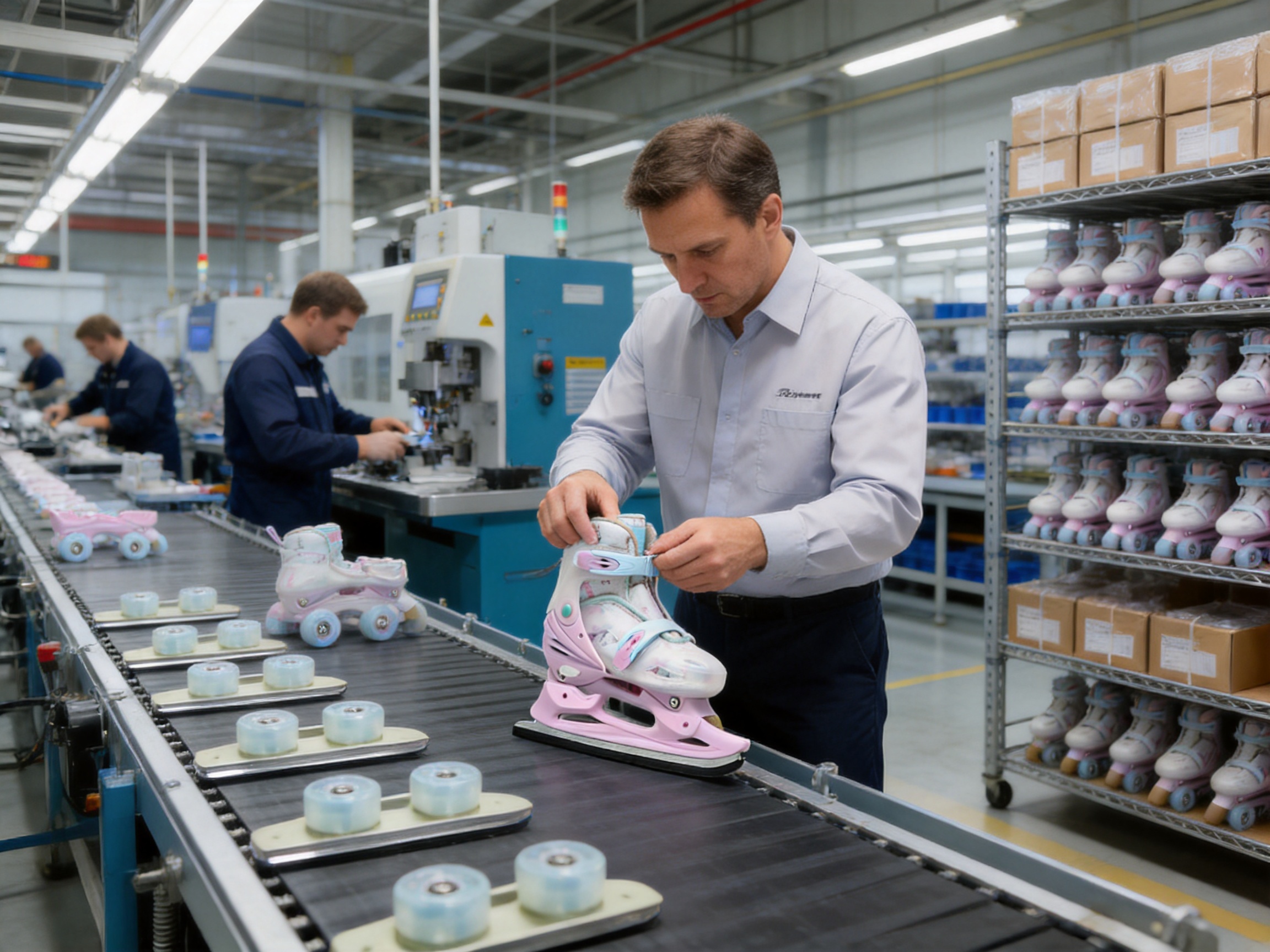
Safety, Care, and Responsible Use
No children’s skate can eliminate the risk of falls. The BW-125-A should be used under adult supervision, particularly during the learning stage. Children should wear a properly fitted helmet and suitable protective equipment for the wrists, elbows, and knees. Protective gear should be inspected regularly and replaced if it is cracked, damaged, or no longer fits correctly.
Before every session, an adult should check the shoe closure, base connection, wheels or blade assembly, visible fasteners, and general condition of the product. The correct base must be used for the intended surface. A loose, damaged, or incorrectly installed component should be repaired or replaced before the child skates.
Children should learn in a controlled area away from traffic, stairs, water, sharp edges, and crowded pedestrian movement. Beginners should practice with an adult and progress gradually. Speed, ramps, jumps, and advanced maneuvers should not be attempted until the child has developed suitable control and has received appropriate instruction.
After use, the product should be stored in a dry, ventilated location away from excessive heat and prolonged direct sunlight. Dirt and moisture should be removed using care methods suitable for the materials. Ice-related components may require additional drying and maintenance to reduce corrosion or deterioration. The supplier’s care instructions should always take priority.
Why the Product Has Strong Market Potential
The children’s recreational sports market is increasingly influenced by convenience, value, design, safety, and product versatility. Families want products that provide meaningful use rather than being quickly outgrown or abandoned after a short period. Retailers want products with a clear selling story and broad customer appeal. The BW-125-A responds to these expectations through its 4-in-1 structure.
Its strongest market proposition is the combination of multiple skating modes and a single shoe body. This makes the product easy to explain: one purchase can support several related activities. That message is attractive for gift buyers, parents comparing alternatives, and retailers looking for products that stand out from ordinary single-purpose skates.
The product also benefits from its girls’ styling direction. A refined appearance can make it more appealing as a lifestyle and gift product while retaining its sports function. The ability to use the skates for recreational activities, photographs, parties, and performances expands the occasions in which the product may be considered.
From a sourcing perspective, the manufacturer’s experience in skates and scooters, integrated production resources, reported quality systems, and engineering capability create a strong foundation for international business. The product can be positioned for sporting-goods retailers, children’s specialty stores, online marketplaces, distributors, gift channels, and seasonal promotional programs.
Comparison with Common Alternatives
Compared with a standard inline skate, the BW-125-A offers more configuration flexibility. A standard inline skate may deliver a focused experience for users who already know they prefer inline skating, but it cannot normally be converted into a quad or ice-skating format. The 4-in-1 system is therefore more suitable for households seeking variety.
Compared with a traditional quad skate, the BW-125-A offers a broader development path. Quad skates can be attractive for beginners and recreational use, but a child may later want to try inline skating or ice skating. The interchangeable design can reduce the need to purchase a separate shoe body for each transition.
Compared with purchasing three separate products, the 4-in-1 system may reduce total equipment duplication and storage requirements. It also allows the child to maintain a familiar shoe body while exploring different bases. The actual financial advantage depends on the package contents, replacement-base availability, local prices, and the child’s frequency of use.
Compared with low-cost novelty skates, a product supported by an established sports-equipment manufacturer may offer stronger opportunities for quality control, documentation, customization, and long-term sourcing. Buyers should still evaluate samples carefully, but manufacturing depth is an important consideration when selecting children’s sports products.
Recommended Buyer Profile
The BW-125-A is a suitable consideration for parents who want a versatile beginner product, families with limited storage space, and children interested in more than one skating style. It may also suit buyers who want a visually attractive gift that combines sports activity and entertainment.
For retailers, the product is appropriate for stores that serve children, families, sporting-goods customers, and seasonal gift shoppers. Its multifunctional design can support shelf messaging focused on value, variety, growth, and family recreation.
For wholesalers and importers, the product may fit a wider assortment that includes scooters, protective gear, inline skates, roller skates, and ice-skating products. A coordinated catalog can help establish the supplier as a complete source for children’s wheeled and skating equipment.
For schools, clubs, and activity centers, the product may be considered for supervised introductory programs, provided that the selected base, venue, insurance requirements, safety procedures, and local regulations are appropriate. Commercial users should request detailed durability, maintenance, and replacement-part information before purchasing in quantity.
Q&A: Understanding the 4-in-1 Roller Skate
What does 4-in-1 mean in this product?
It refers to a single shoe body designed to work with interchangeable skating bases. The available configurations are intended to support different skating experiences, including inline skating, quad skating, and ice skating. Buyers should confirm the exact bases and accessories included in the selected package.
Is the product suitable for beginners?
Yes. The product is positioned for beginners and home recreational use. Children should begin slowly, practice basic balance and stopping skills, and use adult supervision and appropriate protective equipment.
Can the base be changed without specialized tools?
The product uses a snap-fit design intended to simplify installation and removal. The user should follow the supplied instructions and confirm that the replacement base is fully engaged before skating.
What sizes are available?
The listed size groups are 31–34, 35–38, and 39–42. Final selection should be based on the child’s foot measurements and the supplier’s fitting chart rather than age alone.
Can the product be used outdoors?
Rolling configurations may be used outdoors on suitable, smooth, dry surfaces. Users should avoid traffic areas, rough pavement, steep slopes, wet ground, and locations with obstacles. The ice-skating configuration must only be used on a suitable ice surface.
Is protective gear necessary?
Yes. A helmet, wrist protection, elbow protection, and knee protection are strongly recommended, especially for beginners. Protective gear should fit correctly and be checked for damage.
What makes the product different from ordinary roller skates?
Ordinary roller skates generally provide one fixed configuration. The BW-125-A is designed around a replaceable-base system, allowing one shoe body to support several skating modes. This offers greater flexibility and may reduce the need to purchase multiple pairs.
Who manufactures the product?
The product is manufactured by Ningbo Feile Sporting Goods Co., Ltd., a Chinese sporting-goods manufacturer established in 2010. The company specializes in children’s scooters, inline skates, roller skates, and ice skates.
What production capabilities does the manufacturer have?
The company reports more than 200 employees, a 20,000-square-meter workshop, five automatic production lines, mold and injection molding workshops, sewing and assembly workshops, and a professional R&D engineering team.
Can the product be customized for OEM orders?
Potential OEM options may include colors, logos, packaging, printed materials, and accessory configurations. The available options, minimum order quantities, tooling costs, and testing requirements should be confirmed directly with the manufacturer.
What certifications does the company report?
The company reports certification or testing associated with 3C, CE, EN71, EN62115, ASTM, EMC, and EN13843:2009, as well as ISO9001 and BSCI-related systems. Buyers should request current documents applicable to the exact model and destination market.
How should the skates be stored?
They should be stored in a dry, ventilated place away from excessive heat, moisture, and prolonged direct sunlight. After use, the product should be cleaned and dried according to the care instructions for the specific base.
Conclusion
The BW-125-A 4 In 1 Roller Skate provides a practical answer to the limitations of single-purpose children’s skating equipment. Its interchangeable-base design allows one shoe body to support multiple skating experiences, helping families reduce equipment duplication while giving children more opportunities to explore different activities.
Its advantages include flexible use, beginner-friendly positioning, easy base replacement, attractive girls’ styling, broad recreational applications, and potential value for home use. These benefits are reinforced by the manufacturer’s experience in skating and scooter products, integrated mold, injection molding, sewing, and assembly capabilities, dedicated R&D resources, reported quality systems, and international certification experience.
For parents, the product offers variety and convenience. For retailers, it provides a clear and distinctive selling proposition. For importers and OEM customers, it represents a versatile product supported by a manufacturer with relevant industry specialization and production infrastructure.
As with all children’s skating equipment, responsible use remains essential. Proper fitting, correct base installation, protective gear, adult supervision, suitable surfaces, and regular inspection should be part of every purchase and every skating session. When these requirements are followed, the BW-125-A can become a useful, engaging, and adaptable part of a child’s active lifestyle.
References
1. Product information supplied for the BW-125-A 4 In 1 Roller Skate, including product features, applications, sizes, and packaging references.
2. Ningbo Feile Sporting Goods Co., Ltd. company profile and manufacturing capability information supplied for this article.
3. General principles of children’s recreational skating safety, including the use of helmets, wrist guards, elbow pads, knee pads, supervision, and suitable skating surfaces.
4. ISO 9001 quality management system principles and their application to manufacturing process control.
5. BSCI-related social compliance principles for responsible supply-chain and factory management.
6. EN 71, Safety of Toys, where applicable to relevant product classifications and destination markets.
7. ASTM requirements applicable to children’s skating and recreational sports products in relevant markets.
8. EN 13843:2009, safety requirements and test methods associated with roller sports equipment in applicable contexts.
9. General product-compliance guidance for CE marking, technical documentation, labeling, and market-specific testing.
Product: BW-125-A 4 In 1 Roller Skate

Recommended Articles

Get in Touch
Your email address will not be published. Required fields are marked *
Have a project in mind? Contact with us!
We are happy to answer your questions. Please fill out this form
and one of our professional team will get back to you as soon as possible.

We specialize in producing various types of children's toy cars, children's skateboards, and ice skates.
