
 En
 Español
 русский
 عربى

Why Adjustable Pink Inline Skates Are a Smart Choice for Young Beginners
Date:Sep 27, 2026
Content
- 1 Product Overview and Intended User
- 2 Design That Encourages Participation
- 3 Comfortable Upper Construction
- 4 Breathability for Extended Outdoor Activities
- 5 Adjustable Sizing for Growing Children
- 6 Beginner-Friendly Skating Performance
- 7 Durability for Everyday Recreational Use
- 8 Advantages Compared with Common Competitor Designs
- 9 Integrated Manufacturing Capabilities
- 10 Quality Management and Compliance Experience
- 11 Research, Development, and Customization Potential
- 12 Packaging and Logistics Information
- 13 Retail Positioning and Market Applications
- 14 Safety and Responsible Use
- 15 Care and Maintenance Recommendations
- 16 Why Manufacturing Strength Matters to Buyers
- 17 Commercial Value of the Product
- 18 Q&A
- 18.1 What type of user is the BW-230-6 designed for?
- 18.2 What makes the product visually distinctive?
- 18.3 Does the skate accommodate growing feet?
- 18.4 Is the product suitable for beginners?
- 18.5 How does the product support comfort?
- 18.6 Does the upper provide ventilation?
- 18.7 Where can children use these inline skates?
- 18.8 What safety equipment should be worn?
- 18.9 What manufacturing resources support this product?
- 18.10 Can buyers request OEM or private-label services?
- 18.11 Which certifications and standards are associated with the manufacturer?
- 18.12 What should buyers confirm before placing an order?
- 19 Conclusion
- 20 References
- 21 Product: BW-230-6 Pink Inline Skate
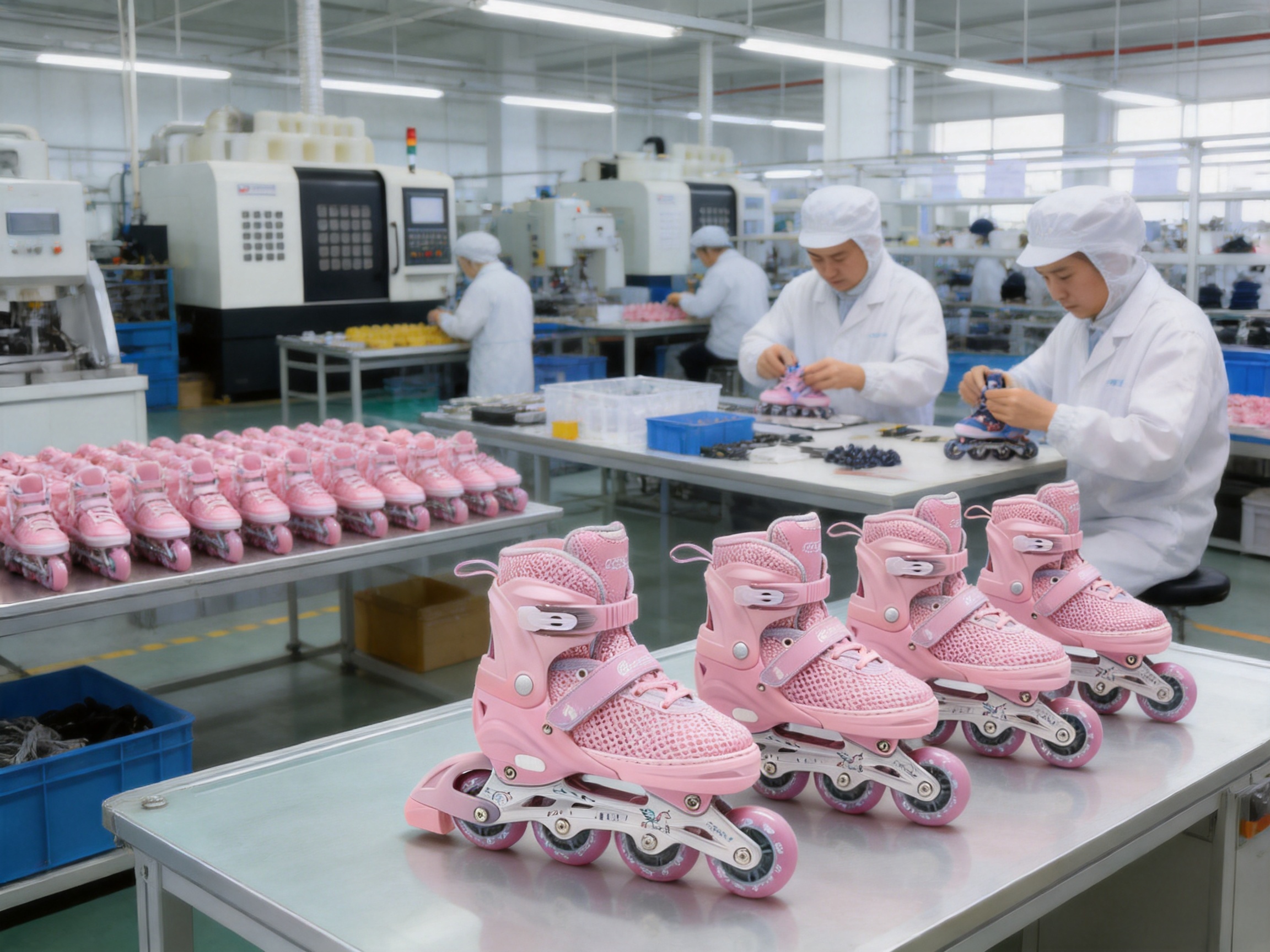
Choosing the right pair of inline skates for a child involves more than selecting an attractive color. Young skaters need equipment that combines comfort, balance, stability, adjustability, durability, ventilation, and visual appeal. A pair that looks good but causes pressure points may quickly discourage a child from practicing. Conversely, a technically supportive skate that feels too rigid or complicated may make the first skating experience frustrating. The BW-230-6 Pink Inline Skate is designed to bring these important elements together in one child-focused product.
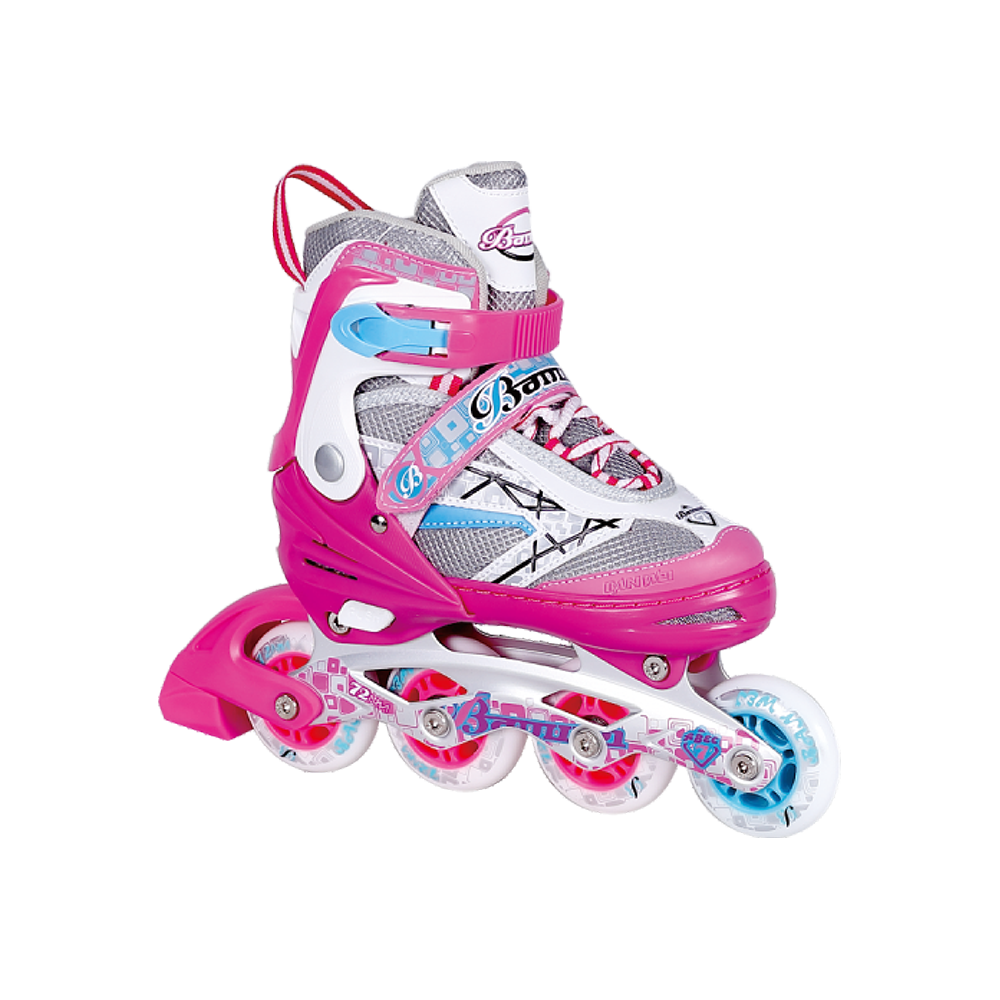
With its soft pastel pink color scheme, cartoon graphics, adjustable sizing, breathable construction, and balanced support, the BW-230-6 is intended for girls who are learning to skate or enjoying casual outdoor activities. Its design responds to the practical needs of children while also addressing the expectations of parents, retailers, distributors, and sourcing professionals. The result is an inline skate that combines a friendly appearance with a useful performance foundation for parks, community squares, school activities, weekend outings, and parent-child recreation.
This article examines the product in detail, including its construction concept, comfort features, beginner-friendly handling, durability, manufacturing background, quality systems, customization potential, and competitive advantages. It also explains why an experienced OEM manufacturer can provide greater value than a supplier focused only on appearance or low initial cost.
Product Overview and Intended User
The BW-230-6 Pink Inline Skate is an inline skate shoe developed for children, particularly girls who appreciate soft colors and cartoon-inspired styling. The sweet pink base creates a cheerful and energetic appearance, while the printed cartoon details give the product a distinctive personality. This visual approach is especially important in the children’s sports market because a product’s appearance can influence whether a child wants to wear it, practice with it, and continue participating in the activity.
The product is positioned as a recreational and beginner-oriented inline skate rather than specialized professional racing equipment. Its design priorities are comfort, easy control, smooth skating rhythm, everyday resilience, and a simple learning experience. These characteristics make it appropriate for children who are developing basic balance, turning, stopping, and coordination skills.
The product is also suitable for everyday outdoor play. Children may use it in parks, residential community squares, paved recreation areas, school events, and family outings. Because these environments may involve repeated use, minor contact with surrounding surfaces, and changing weather conditions, the skate needs to provide more than decorative value. Its upper, support structure, ventilation, and adjustable sizing are intended to help it remain practical during regular use.
The adjustable multi-size structure is particularly valuable for growing children. Children’s feet change quickly, and a fixed-size product can become uncomfortable or unusable within a relatively short period. The BW-230-6 is offered in size ranges designed to accommodate changing foot shapes across different stages of childhood. This creates a longer useful life and can improve the overall value of the purchase for families.
Design That Encourages Participation
Children often form an immediate opinion about sports equipment based on its appearance. A visually appealing product can help transform an unfamiliar activity into something exciting and approachable. The BW-230-6 uses a pastel pink color scheme and cartoon prints to create a friendly image that is especially attractive to young girls. This is not simply a decorative choice. It is a participation-oriented design strategy.
When a child likes the appearance of a skate, she may be more willing to put it on, practice repeatedly, and use it during family or school activities. Repetition is essential when developing balance and movement control. The cheerful appearance therefore supports the learning process indirectly by encouraging regular use.
The cartoon styling also helps differentiate the skate from plain black, gray, or heavily technical designs. Many competing recreational skates emphasize a generic sporty appearance. While that style may appeal to some users, children often respond more positively to products that reflect their interests and personality. The pink-and-cartoon combination gives retailers a clear visual selling point and helps the product stand out in store displays and online catalogs.
Despite its playful appearance, the product is not limited to novelty use. The design is combined with functional features such as a soft upper, breathable mesh, adjustable sizing, and supportive skating performance. This balance between appearance and utility is one of the product’s main strengths. It gives children a product they enjoy wearing while giving parents practical reasons to consider it.
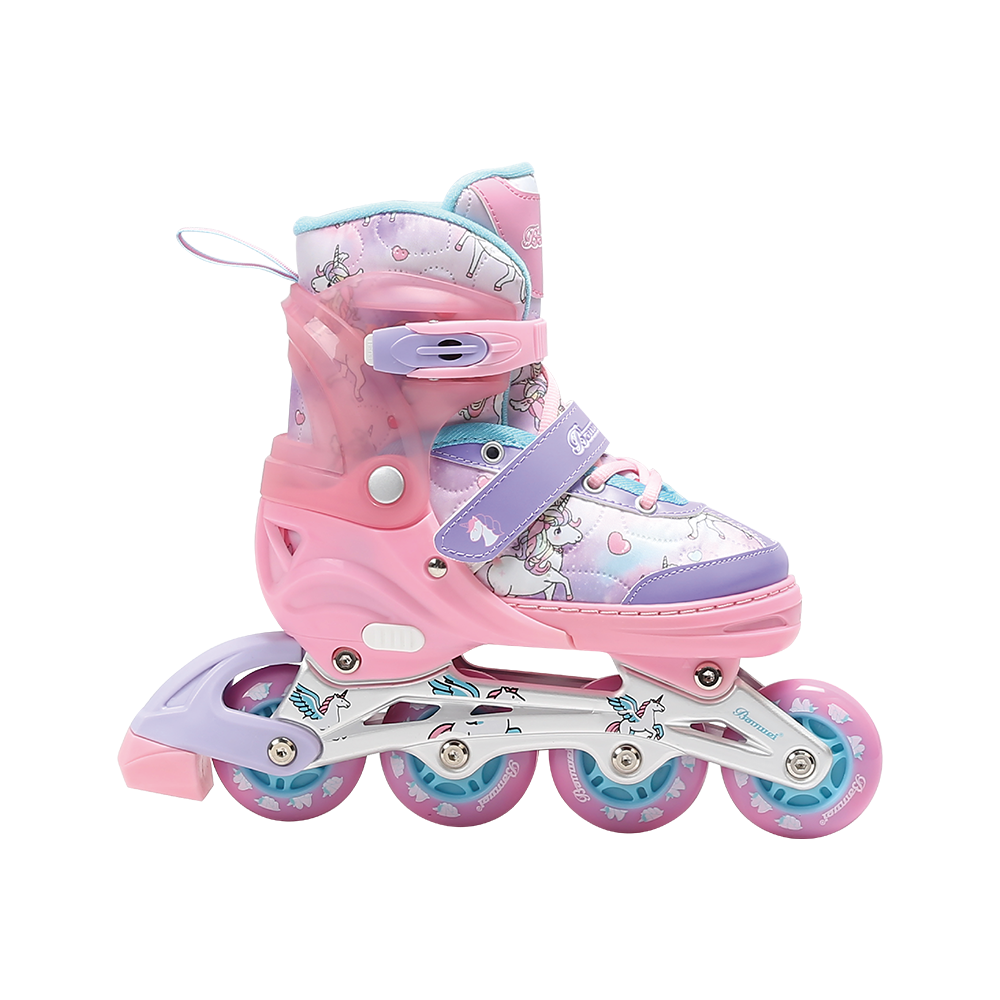
BW-230-6 Pink Inline Skate
Comfortable Upper Construction
Comfort is one of the most important factors in children’s inline skates. Beginners often spend more time standing, balancing, and moving slowly than experienced skaters. During this learning period, pressure may be concentrated around the heel, ankle, instep, or toes. If the upper is too stiff or poorly shaped, discomfort can interrupt practice and reduce a child’s interest in skating.
The BW-230-6 uses a selected soft, skin-friendly upper material intended to provide a delicate and non-stiff feel. The softer contact surface helps the skate conform to the contours of the foot and reduces the harsh sensation that can occur with overly rigid materials. This is particularly helpful for young users, whose feet may be more sensitive to friction and pressure.
The product is designed with a balanced soft-to-hard ratio. A completely soft shoe may feel comfortable at first but fail to provide adequate support during skating. A completely rigid boot may provide structure but create pressure and restrict natural movement. The BW-230-6 aims to combine a comfortable inner feel with enough external support for ordinary recreational use.
This balance can be advantageous compared with entry-level products that focus on one characteristic at the expense of another. Some low-cost skates use very soft materials that lose shape quickly. Others use stiff plastic components with minimal attention to the contact area around the foot. A carefully balanced structure can provide a more pleasant experience while preserving the support needed for balance and control.
Comfort also affects safety. When a child experiences rubbing or pressure, she may adjust her foot position repeatedly, loosen the fastening system, or skate with an unstable posture. A better-fitting and more comfortable skate can help the child maintain a more natural position. The product’s soft upper and supportive construction are therefore relevant not only to comfort but also to confidence and control.
Breathability for Extended Outdoor Activities
Children may spend considerable time outdoors when skating. Even moderate activity can create heat and moisture inside the shoe, especially during warm weather or extended play. Excess moisture can make the foot feel sticky, reduce comfort, and increase the chance of friction. The BW-230-6 incorporates breathable mesh construction to support ventilation and moisture wicking.
The mesh sections help air circulate around the foot, allowing heat to escape more effectively than a completely closed and non-breathable upper. This feature is useful for after-school practice, weekend outings, family recreation, and longer periods in parks or community spaces. A cooler and drier interior can make the skate feel more comfortable throughout the activity.
Breathability is also a practical product differentiator. Some competing children’s skates emphasize decorative surfaces while giving limited attention to airflow. A product that combines cartoon styling with functional ventilation can appeal to both children and parents. The child sees an attractive design, while the parent can recognize a feature that contributes to daily wearability.
It is important to understand that breathable mesh does not replace proper care. After skating, the skates should be placed in a ventilated area and allowed to dry naturally. They should not be stored while damp or exposed to excessive heat. Proper maintenance helps preserve the materials and keeps the interior more pleasant over time.
Adjustable Sizing for Growing Children
Children’s feet grow quickly, making adjustability one of the most valuable features in children’s skating equipment. The BW-230-6 is designed with a multi-size adjustable structure that can accommodate changes in foot length and shape. This allows one pair of skates to remain useful through more than one stage of growth.
The available size groupings include 31–34, 35–38, and 39–42. These ranges give distributors and retailers a practical way to organize stock for different age and foot-size groups. They also simplify product selection for families, since the adjustable format provides some flexibility within each size range.
Compared with fixed-size children’s skates, an adjustable product may offer improved purchasing value. Parents do not need to replace the entire product as soon as a child moves to the next size. Retailers can also present the skates as a longer-use option, which may be attractive in markets where families closely evaluate product durability and ownership cost.
Adjustability must be combined with appropriate support. A skate that is adjusted too loosely may allow the foot to move excessively, while one adjusted too tightly may create pressure. Adults should check the fit regularly, especially as the child grows. The heel should remain reasonably stable, the toes should not be compressed, and the child should be able to maintain a natural standing position.
The adjustable concept also supports broader market coverage. One product family can serve several child-size segments instead of requiring a completely separate construction for every individual size. This can help OEM buyers manage inventory, reduce complexity, and develop coordinated retail presentations.
Beginner-Friendly Skating Performance
For a young beginner, the most important performance quality is often predictability. Children need to understand how their movements affect the skates. If the response is too sudden or unstable, the learning process becomes difficult. The BW-230-6 is designed to provide a smooth and stable skating rhythm with controls that are simple to understand.
The product is intended to help beginners develop fundamental skills such as standing, shifting weight, moving forward, maintaining direction, and gradually improving balance. A stable platform can give a child greater confidence during the first stages of practice. As confidence improves, the child may be more willing to repeat movements and learn basic turning or stopping techniques.
Compared with highly specialized performance skates, a beginner-oriented recreational model can be more appropriate for children who are still discovering whether they enjoy skating. It does not overwhelm the user with a race-focused configuration or a demanding performance profile. Instead, it focuses on a manageable experience that supports learning and casual use.
The product’s value is therefore measured not only by speed or advanced maneuverability. For the intended user, a smooth skating rhythm, accessible control, comfortable fit, and stable feel may be more important. These qualities help create a positive first experience and may encourage continued participation in outdoor sports.
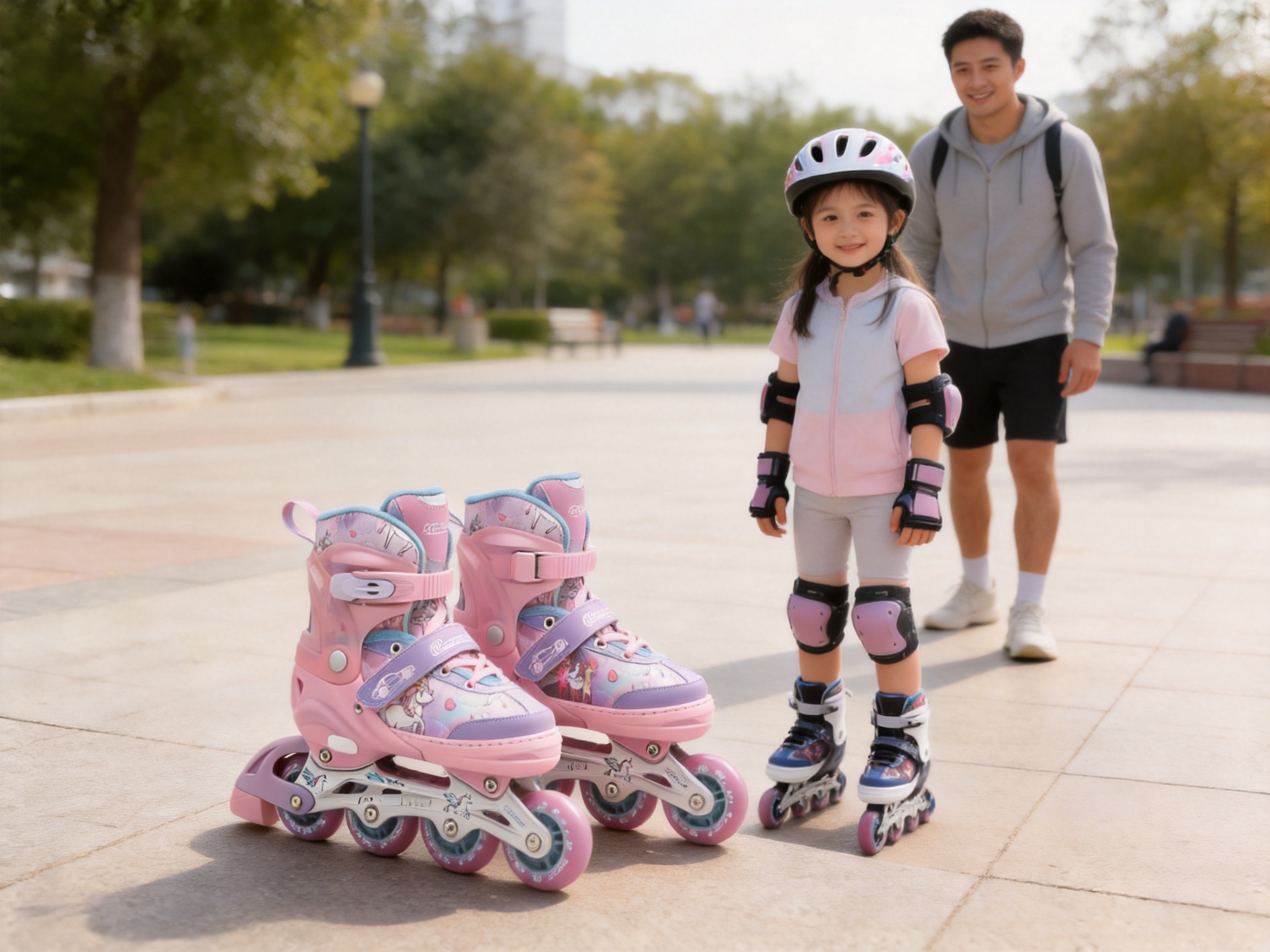
Parents should still provide supervision and appropriate safety equipment. Beginners should practice on clean, level, and traffic-free surfaces. They should learn how to stop, slow down, and fall safely before skating in busier areas. The skates support the learning process, but proper instruction and responsible use remain essential.
Durability for Everyday Recreational Use
Children’s sports products must withstand more than ideal conditions. Skates used by children may be placed on the ground, carried by one wheel frame, exposed to minor bumps, or used on different paved surfaces. The BW-230-6 is designed to resist the everyday bumps and scratches associated with parks, plazas, neighborhoods, school activities, and community spaces.
Durability begins with material selection and continues through component integration. The upper needs to retain its shape, the support structure needs to remain secure, and the overall assembly needs to tolerate repeated fastening and adjustment. A product that looks attractive when new but deteriorates quickly can create dissatisfaction for families and retailers. The BW-230-6 addresses this concern by combining a sturdy construction concept with materials selected for routine use.
The product is not described as industrial or professional protective equipment, and reasonable care is still necessary. Users should avoid rough terrain, standing water, excessive impact, and storage in direct sunlight. However, for its intended recreational environment, its sturdy construction provides a practical advantage over fragile fashion-oriented alternatives.
Durability can also influence sustainability at the consumer level. When a product remains usable for longer, the need for early replacement may be reduced. Adjustable sizing strengthens this benefit by allowing the skates to serve the child across a broader growth period. Together, durability and adjustability support a more economical and resource-conscious ownership experience.
Advantages Compared with Common Competitor Designs
The children’s inline skate market includes many products with similar basic functions. Competitive differentiation therefore depends on how well a product combines appearance, comfort, usability, and manufacturing reliability. The BW-230-6 has several advantages over common entry-level alternatives.
First, it combines a distinctive girl-oriented appearance with functional construction. Some products are visually attractive but lack breathability or supportive comfort. Others provide technical components but use a plain design that does not appeal strongly to children. The BW-230-6 addresses both sides of the purchase decision by offering cartoon styling, pastel pink color, soft materials, mesh ventilation, and stable handling.
Second, the adjustable size structure can provide greater practical value than a fixed-size product. A fixed skate may fit well for a limited period, but children quickly outgrow it. Adjustable sizing gives families more flexibility and can make the product more attractive to retailers seeking products with a clear value proposition.
Third, the balanced soft-to-hard ratio helps avoid two common problems: insufficient support and excessive stiffness. Very soft designs may feel comfortable but lack stability. Very hard designs may feel secure but cause rubbing or fatigue. A balanced construction is better aligned with the needs of beginners who require support without sacrificing comfort.
Fourth, the product is suitable for multiple use scenarios. It can be marketed for everyday recreation, beginner practice, family outings, school activities, and weekend play. This broad positioning can help retailers appeal to more than one customer need instead of selling the skate only as a novelty item.
Fifth, the product comes from a manufacturer with integrated production capabilities. A supplier that maintains mold, injection molding, sewing, and assembly workshops can exercise closer control over important stages of production. This may reduce coordination problems that occur when components are sourced from unrelated factories.
Finally, the product benefits from an established quality and certification background. The manufacturer reports systems and certifications including ISO9001, BSCI, 3C, CE, EN71, EN62115, ASTM, EMC, and EN13843:2009. Certification requirements vary by market and product configuration, so buyers should confirm the applicable documentation for their destination country. Nevertheless, experience with recognized standards is a meaningful advantage when compared with suppliers that cannot provide clear compliance support.
Integrated Manufacturing Capabilities
The company behind the BW-230-6 is Ningbo Feile Sporting Goods Co., Ltd., a Chinese manufacturer established in 2010. It specializes in children’s scooters, inline skates, roller skates, and ice skates. This product focus gives the manufacturer experience in categories that require a combination of plastics, textiles, footwear components, wheels, support structures, and safety-related assembly.
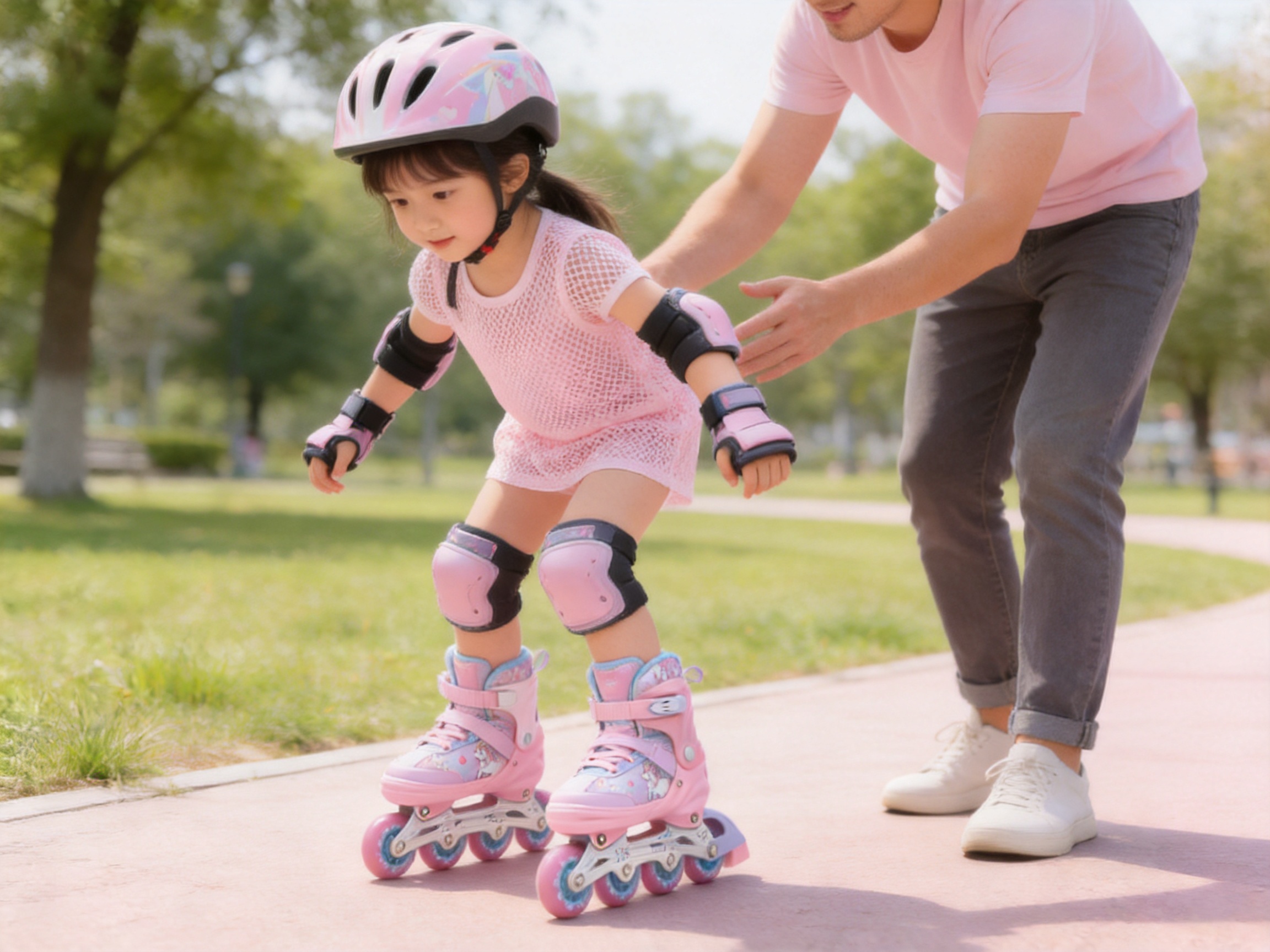
The company operates a workshop covering approximately 20,000 square meters and has more than 200 employees. It maintains five advanced automatic production lines and employs a professional research and development engineering team. These resources are important because children’s skating products are assembled from multiple parts that must work together accurately.
The manufacturing facilities include mold, injection molding, sewing, and assembly workshops. In-house mold capability can help improve control over product geometry and support faster development of revisions. Injection molding expertise is useful for producing consistent plastic components and structural parts. Sewing capacity supports the production of textile uppers, linings, and related components. Assembly operations bring these elements together into a finished product.
When these processes are coordinated under one manufacturing organization, engineering teams can evaluate the product as a complete system rather than treating every component separately. For example, an adjustment mechanism must work with the upper, support structure, footbed, and overall fit. The manufacturing process needs to account for these relationships from design through final assembly.
Integrated facilities can also support more consistent quality control. If a component is produced by a separate supplier, any dimensional variation may create problems during final assembly. In-house or closely managed production allows the manufacturer to review potential issues earlier and make process adjustments before large-scale output.
The company’s R&D engineering team also supports ongoing product development. Children’s sporting goods markets change quickly, with buyers seeking new colors, graphics, structures, and functions each year. The company states that it launches new products annually to meet market and customer needs. This development capability can be valuable for importers and private-label buyers looking for refreshed product lines.
Quality Management and Compliance Experience
Quality management is especially important in children’s products. Buyers need confidence that the manufacturing process is organized, repeatable, and capable of identifying defects. The company reports ISO9001 and BSCI-related factory certifications, along with experience connected to Kmart factory certification systems. These credentials indicate attention to quality processes, social compliance, and customer audit expectations.
The manufacturer also reports product certifications and testing experience including 3C, CE, EN71, EN62115, ASTM, EMC, and EN13843:2009. The exact applicability of each standard depends on the product type, market, electrical content, and regulatory requirements. Inline skates, scooters, and related products may be subject to different requirements in different countries. Importers should request current test reports, declarations, and technical files relevant to the specific order.
Even when a product is mechanically simple, quality assurance involves multiple considerations. Materials need to be consistent, stitching needs to be secure, adjustment components need to operate correctly, and wheels or supporting parts need to be assembled accurately. Packaging must also protect the product during transport and provide appropriate user information.
A structured quality system can help manufacturers define incoming material checks, in-process inspections, assembly checks, and final product inspections. It can also support corrective action if a recurring problem is discovered. For OEM customers, these processes are valuable because they create a more reliable foundation for repeat orders and long-term cooperation.
Compliance experience is also helpful when entering new markets. Retailers and distributors may require documentation before accepting a product. A factory familiar with international standards can generally communicate more efficiently about test requirements, labeling, packaging, and technical information. This does not eliminate the buyer’s responsibility to verify compliance, but it can simplify the sourcing process.
Research, Development, and Customization Potential
Product development in the children’s sports sector involves more than changing the color of an existing item. Buyers may request new graphics, private labels, packaging revisions, size combinations, material changes, or adjustments to the support structure. An experienced OEM manufacturer can help evaluate whether these changes are technically and commercially practical.
The company’s mold and engineering capabilities provide a foundation for product customization. New molds may be developed for selected components, while existing structures may be adapted for different graphics, colors, or market preferences. A professional engineering team can help assess tooling requirements, material compatibility, assembly consequences, and expected production quantities.
Customization is particularly useful for distributors and retailers that want a coherent children’s sports collection. A buyer may coordinate the pink inline skates with children’s scooters, protective gear, helmets, or other outdoor products. Matching colors and graphics can create a more recognizable retail presentation and improve cross-selling opportunities.
OEM cooperation also allows the buyer to align the product with local market preferences. Some markets may prefer bright cartoon graphics, while others may favor softer colors and simpler decoration. Size distribution can also differ by region. A factory with experience across international markets can help buyers discuss these differences before production begins.
However, responsible customization should preserve essential functional qualities. Changes to the upper, adjustment range, support components, or wheels should be reviewed carefully. A visually attractive modification that weakens fit, ventilation, stability, or durability would not improve the product. Engineering review and testing should remain part of the customization process.
Packaging and Logistics Information
For wholesalers, importers, and distributors, packaging dimensions are important for freight planning, warehouse organization, and cost calculation. The available product information provides the following size-group packaging dimensions:
| Size Range | Reported Packaging Dimensions | Typical Commercial Use |
|---|---|---|
| 31–34 | 540 × 410 × 290 mm | Smaller children’s size group |
| 35–38 | 560 × 420 × 305 mm | Mid-range children’s size group |
| 39–42 | 600 × 430 × 315 mm | Larger youth size group |
Buyers should confirm whether these dimensions refer to an individual carton, a master carton, or another packaging configuration before preparing a shipping plan. They should also request carton gross weight, net weight, quantity per carton, pallet information, loading quantity, and packaging material specifications. These details are essential for accurate freight quotations and warehouse planning.
Good packaging should protect the skates from compression, abrasion, moisture, and movement during transport. It should also present the product clearly to the end customer. For an attractive children’s product, packaging can reinforce the pink cartoon theme and communicate size, adjustment information, care instructions, and safety reminders.
OEM customers may also request multilingual packaging, barcode labels, retail-ready cartons, instruction sheets, or customized inserts. These requirements should be confirmed before production because they can affect artwork approval, lead time, and minimum order quantities.
Retail Positioning and Market Applications
The BW-230-6 can be positioned in several retail channels. Sporting goods stores may present it as a beginner-friendly children’s inline skate. Toy and outdoor recreation retailers may emphasize its cartoon appearance and play value. Department stores and online sellers may highlight the combination of adjustability, comfort, ventilation, and long-term usability.
The product is suitable for girls’ everyday outdoor recreational skating in parks and community squares. It can also be used as an introduction to roller sports for children who are interested in learning balance and skating techniques. The friendly appearance may help parents choose it as a first pair rather than immediately purchasing a more advanced model.
Parent-child recreation is another useful application. Families increasingly seek activities that combine exercise, coordination, and shared time outdoors. A child-focused inline skate can support this kind of activity while helping children develop confidence and physical coordination.
School activities and weekend outings provide additional sales opportunities. Retailers can market the product as part of an outdoor sports collection that includes protective gear and other recreational equipment. Because the manufacturer also produces scooters and related products, buyers may be able to source coordinated categories from one supplier.
Online product presentation should show the product’s main value clearly. Images and descriptions should explain the adjustable sizing, soft upper, breathable mesh, cartoon design, and intended use. Parents should also receive clear information about safety equipment, recommended surfaces, supervision, and care.
Safety and Responsible Use
Inline skates should be used with suitable protective equipment. Children should wear a properly fitted helmet, wrist guards, elbow pads, and knee pads. Protective gear can reduce the risk of injury during falls, particularly while the child is learning to balance and stop.
Adults should inspect the skates before each use. They should check that the upper, adjustment mechanism, frame, wheels, and fasteners are secure. Any loose, damaged, or excessively worn component should be repaired or replaced before skating continues. The product should not be used if a structural part is cracked or if the fit can no longer be adjusted securely.
Beginners should practice on smooth, dry, level surfaces away from traffic, stairs, steep slopes, and crowded walkways. Children should not skate near vehicles or in areas where they cannot see obstacles clearly. They should learn basic stopping techniques before attempting faster movement or turning.
Proper fit is also part of safe use. The skate should hold the foot securely without causing painful pressure. Parents should check the fit as the child grows and should not rely on an adjustment setting that has become too small. Socks should be comfortable and suitable for outdoor activity, while the interior should be kept dry and clean.
These recommendations apply to all children’s inline skates, regardless of brand or design. The BW-230-6 provides a supportive and beginner-oriented platform, but safe behavior, adult supervision, and appropriate protective gear remain essential.
Care and Maintenance Recommendations
Regular care can extend the useful life of the skates. After use, the exterior should be wiped with a soft cloth to remove dust and surface dirt. If the skates become damp, they should be dried in a ventilated place away from direct high heat. Strong heat sources may affect synthetic materials, adhesives, printed graphics, or plastic components.
The breathable mesh should be kept free from heavy dirt so that airflow is not restricted. The upper should not be cleaned with harsh chemicals unless the manufacturer specifically approves them. Mild cleaning methods are generally preferable for preserving color and surface condition.
Parents should periodically check the wheels and supporting parts for uneven wear. The fasteners and adjustment system should also be checked to make sure they remain functional. Storage should take place in a cool, dry area where the skates are not crushed beneath heavy objects.
For retailers and distributors, care information can be included in product descriptions, packaging inserts, or online listings. Clear after-sales guidance can reduce misuse and help customers understand how to protect their purchase.
Why Manufacturing Strength Matters to Buyers
A product’s design is only one part of its commercial success. Buyers also need dependable production, consistent quality, communication, documentation, and delivery. The manufacturer’s scale and integrated facilities provide several advantages in these areas.
More than 200 employees and five automatic production lines indicate a production organization capable of handling regular commercial orders. The 20,000-square-meter workshop provides space for specialized operations, material management, assembly, inspection, and product development. These resources can be especially important for buyers who need repeat orders rather than a single trial shipment.
In-house mold, injection molding, sewing, and assembly capabilities can reduce dependence on multiple external factories. Fewer production interfaces may make it easier to coordinate changes, resolve defects, and maintain consistent specifications. It can also improve communication between engineering, production, and quality teams.
The company’s more than 30 college-educated management staff provide additional organizational support. Professional management is valuable when handling international orders, technical documentation, production schedules, customer audits, and compliance requests.
The company also participates in international exhibitions each year. This exposure can help the manufacturer understand changing market preferences and communicate directly with overseas buyers. It reflects an orientation toward international business rather than only domestic production.
For importers, the combination of product expertise, factory resources, certification experience, and development capability can reduce sourcing risk. Buyers should still conduct due diligence, confirm current certificates, review samples, and agree on inspection standards. However, an established manufacturing platform gives the cooperation a stronger starting point than an unverified supplier.
Commercial Value of the Product
The BW-230-6 offers commercial value through a combination of visual appeal, practical features, and broad use scenarios. Its pink cartoon styling supports impulse appeal, while adjustability and durability provide rational purchase reasons for parents. This combination can help retailers communicate the product to both the child and the adult decision-maker.
For children, the product promises an enjoyable appearance and comfortable experience. For parents, it offers a product that can support learning, accommodate growth, remain useful for everyday recreation, and provide ventilation during outdoor use. For retailers, it offers a clearly defined target audience and several selling points that can be used in product listings and displays.
For distributors and OEM buyers, the manufacturer’s broader product range may create opportunities for category expansion. Inline skates can be offered alongside children’s scooters and sports protective gear, allowing a buyer to develop a more complete outdoor sports program. Coordinated sourcing may simplify supplier management and create a consistent visual identity across multiple products.
The product’s adjustability also supports inventory efficiency. Instead of stocking a large number of narrowly defined fixed sizes, retailers can organize inventory around broader size groups. Actual inventory planning will depend on demand, local foot-size patterns, and sales data, but the multi-size format can provide greater flexibility.
Q&A
What type of user is the BW-230-6 designed for?
The BW-230-6 is designed mainly for children, particularly girls who are learning to skate or enjoying casual outdoor recreation. Its appearance, comfort features, adjustable size groups, and stable handling are suited to beginners and everyday users rather than advanced professional racers.
What makes the product visually distinctive?
The skate uses a soft pastel pink color scheme combined with cartoon prints. This creates a cute, energetic appearance that is attractive to many young girls and helps the product stand out from plain or highly technical children’s skates.
Does the skate accommodate growing feet?
Yes. The product uses a multi-size adjustable structure and is offered in the ranges 31–34, 35–38, and 39–42. Parents should adjust the skate carefully and check the fit regularly as the child grows.
Is the product suitable for beginners?
Yes. The product is designed to provide a smooth and stable skating rhythm with simple controls. It is appropriate for children who are learning basic balance, movement, and coordination skills. Beginners should practice under adult supervision and use protective equipment.
How does the product support comfort?
The skate uses a soft, skin-friendly upper and a balanced soft-to-hard construction. These features are intended to provide support without excessive stiffness, pressure, blisters, or rubbing during ordinary recreational use.
Does the upper provide ventilation?
Yes. Breathable mesh construction is used to promote airflow and moisture wicking. This can help reduce heat and sticky sensations during extended outdoor activities.
Where can children use these inline skates?
They are suitable for smooth, dry, and safe recreational surfaces such as parks, community squares, residential recreation areas, school activities, and family outings. They should not be used on dangerous, uneven, wet, or high-traffic surfaces.
What safety equipment should be worn?
Children should wear a properly fitted helmet, wrist guards, elbow pads, and knee pads. Adults should supervise beginners and teach them how to balance, slow down, stop, and respond safely to falls.
What manufacturing resources support this product?
The manufacturer operates a 20,000-square-meter workshop, employs more than 200 people, and maintains five automatic production lines. Its facilities include mold, injection molding, sewing, and assembly workshops, supported by an R&D engineering team.
Can buyers request OEM or private-label services?
The manufacturer specializes in OEM sporting goods and has product development, mold, production, and assembly capabilities. Buyers should discuss branding, graphics, packaging, size combinations, minimum order quantities, testing, and tooling requirements directly with the factory.
Which certifications and standards are associated with the manufacturer?
The company reports ISO9001, BSCI, and Kmart factory certification systems, as well as product certification experience including 3C, CE, EN71, EN62115, ASTM, EMC, and EN13843:2009. Buyers should request current documents applicable to the exact product and destination market.
What should buyers confirm before placing an order?
Buyers should confirm sample specifications, size ranges, colors, graphics, packaging dimensions, carton quantity, gross and net weights, testing documents, labeling, inspection standards, production lead time, payment terms, and shipping arrangements. They should also verify whether the listed package dimensions refer to individual or master cartons.
Conclusion
The BW-230-6 Pink Inline Skate is a children’s recreational product that combines visual appeal with practical performance features. Its pastel pink cartoon design helps attract young users, while the soft upper, breathable mesh, balanced support, adjustable size structure, and stable handling address the concerns of parents and retailers.
Its competitive advantage comes from the way these features work together. The skate is not limited to decorative styling, and it is not designed as an overly technical product for experienced athletes. Instead, it provides a friendly and manageable introduction to inline skating, with enough comfort and flexibility for everyday outdoor use.
The manufacturing background adds further value. Ningbo Feile Sporting Goods Co., Ltd. has specialized in children’s wheeled and ice sports products since 2010. Its integrated mold, injection molding, sewing, and assembly facilities, automatic production lines, engineering team, international certification experience, and broad product range create a strong foundation for OEM cooperation.
For distributors, retailers, and private-label buyers, the product offers a practical combination of child appeal, parent-focused functionality, market flexibility, and factory support. With appropriate quality verification, safety guidance, packaging confirmation, and market-specific compliance review, the BW-230-6 can serve as an attractive addition to children’s skating and outdoor sports product lines.
References
1. Product information supplied for the BW-230-6 Pink Inline Skate, including design features, use scenarios, size groups, and packaging dimensions.
2. Company information supplied for Ningbo Feile Sporting Goods Co., Ltd., including manufacturing facilities, staffing, production lines, product categories, certifications, and development capabilities.
3. General principles of children’s inline skating safety, including supervision, protective equipment, surface selection, and equipment inspection.
4. General footwear and sporting-goods care practices concerning ventilation, drying, cleaning, storage, and routine component inspection.
5. General OEM sourcing principles concerning product sampling, quality inspection, packaging confirmation, technical documentation, and market-specific compliance.
Product: BW-230-6 Pink Inline Skate

Recommended Articles

Get in Touch
Your email address will not be published. Required fields are marked *
Have a project in mind? Contact with us!
We are happy to answer your questions. Please fill out this form
and one of our professional team will get back to you as soon as possible.

We specialize in producing various types of children's toy cars, children's skateboards, and ice skates.
