
 En
En
 Español
 русский
 عربى
عربى
Adjustable LED Inline Skates for Safe, Comfortable Youth Training
Date:Aug 10, 2026
Content
- 1 Product Overview
- 2 Why a Hard Shell Matters for Young Skaters
- 3 Adjustable Sizing for Growing Feet
- 4 LED-Lit PU Wheels for Added Visual Appeal
- 5 Comfort, Stability, and Beginner-Friendly Design
- 6 Advantages Over Basic Competing Designs
- 7 Recommended Applications
- 8 Safety and Responsible Use
- 9 Customization Opportunities for Buyers and Brands
- 10 Manufacturing Capabilities Behind the Product
- 11 Quality Systems and Certifications
- 12 Research, Development, and Product Innovation
- 13 Packaging and Logistics Considerations
- 14 Commercial Value for Distributors and Retailers
- 15 Maintenance Recommendations
- 16 Frequently Asked Questions
- 16.1 What type of product is the BW-220-A?
- 16.2 What material is used for the protective shell?
- 16.3 Which sizes are available?
- 16.4 Do the LED wheels require charging?
- 16.5 Are the wheels suitable for outdoor use?
- 16.6 Are these skates suitable for professional racing?
- 16.7 Can the colors and patterns be customized?
- 16.8 What protective equipment should be worn?
- 16.9 What manufacturing capabilities does the supplier have?
- 16.10 What quality credentials are reported?
- 16.11 What are the listed packaging dimensions?
- 16.12 How does the adjustable design benefit families?
- 16.13 Can the skates be used at night?
- 17 Conclusion
- 18 References
- 19 Product: BW-220-A Led Adjustable Inline Skate
Inline skating is an enjoyable way for children and teenagers to develop balance, coordination, confidence, and a lasting interest in active outdoor recreation. However, the quality of the skates used during early practice has a direct influence on comfort, stability, safety, and the overall learning experience. A well-designed beginner skate should support the foot and ankle, tolerate frequent contact with the ground, remain comfortable during extended use, and accommodate the rapid growth of young feet.
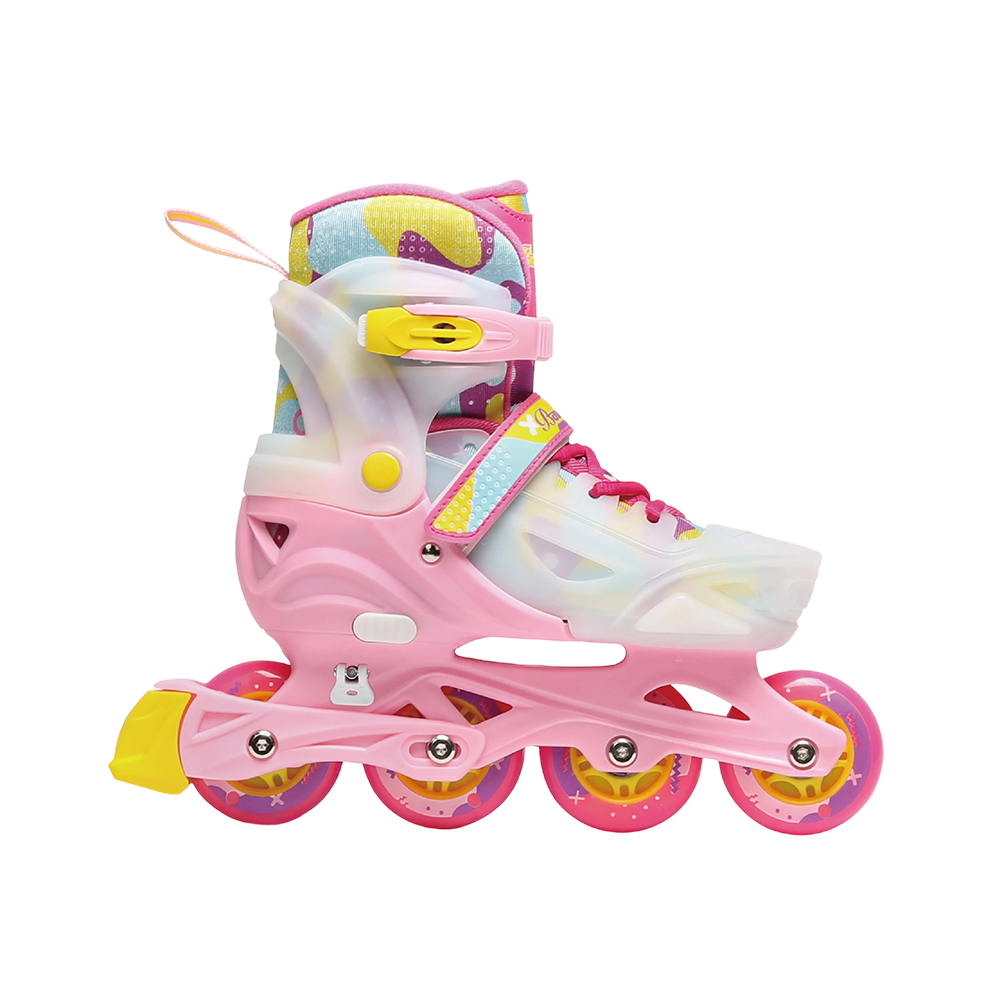
The BW-220-A LED adjustable inline skate is designed around these practical requirements. It combines a thickened PP hard shell, adjustable sizing, illuminated PU wheels, a supportive structure, and customizable colors and patterns. The result is a versatile inline skate intended for basic training, recreational use, and everyday skating on suitable flat surfaces. It is particularly appropriate for children and teenagers who are learning fundamental skating movements or who want a visually attractive product for outdoor play.
Unlike a basic soft-surface roller skate, this model uses a rigid protective shell to provide stronger support around the foot and ankle. Its adjustable construction also allows one pair to accommodate changing foot dimensions over multiple growth stages. This helps families reduce the need for frequent replacement while giving young users a more secure and consistent fit.
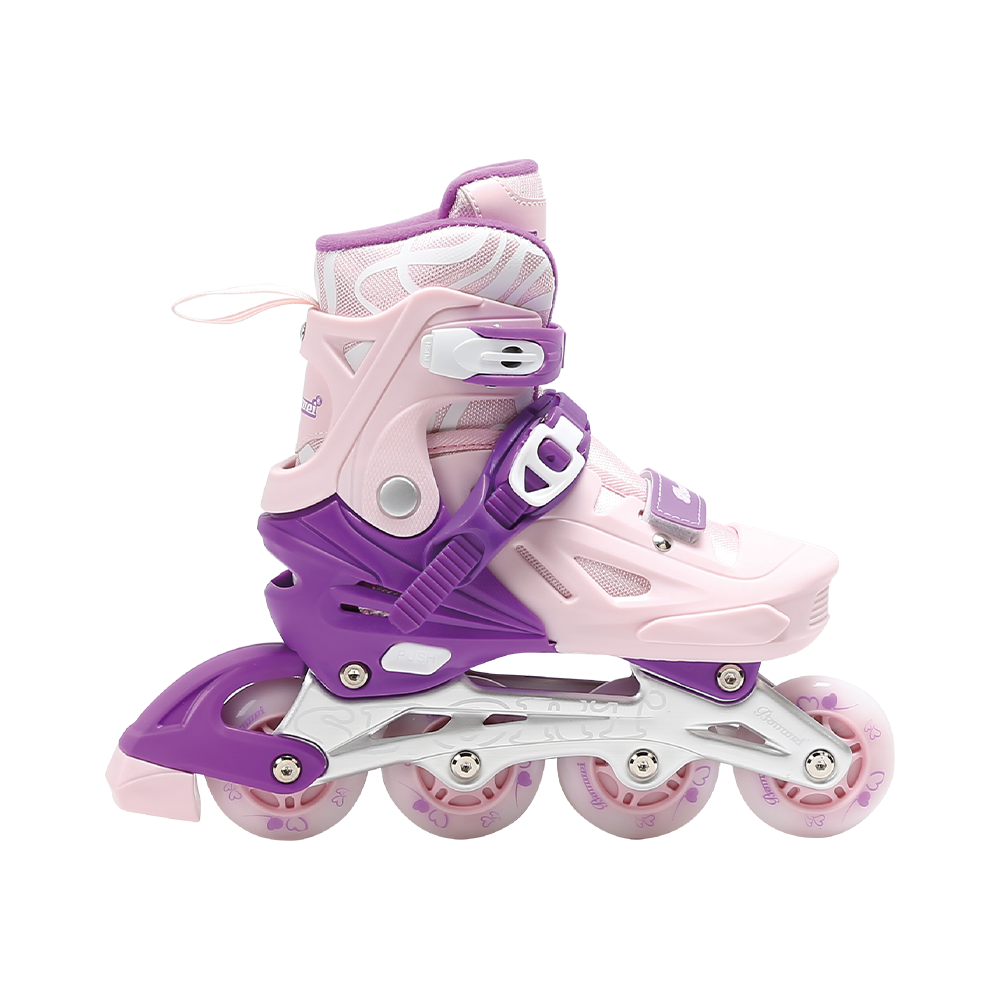
BW-220-A Led Adjustable Inline Skate
Product Overview
The BW-220-A is an adjustable inline skate developed for children and teenagers. It is categorized as an inline skate shoe and is available in size ranges suitable for different stages of growth. The product information identifies three size groups: 31–34, 35–38, and 39–42. These ranges are intended to provide flexible fitting as a child’s foot develops.
The skate body uses a high-strength, one-piece molded PP hard shell. Polypropylene is widely used in sporting goods because it offers a useful combination of low weight, rigidity, impact resistance, and processing flexibility. In this product, the shell acts as the primary structural barrier between the foot and external impacts caused by ordinary bumps, minor falls, and contact during beginner practice.
The BW-220-A also includes LED-lit PU wheels. The illuminated wheel system is designed to flash automatically when the wheels rotate, without requiring a separate charging operation. This creates a distinctive appearance during evening or indoor use while maintaining the practical skating characteristics expected from wear-resistant polyurethane wheels.
The model is suitable for basic inline skating training, casual skating, and recreational use on smooth, flat surfaces. It is not presented as a professional racing skate or an extreme-sports product. Instead, its main purpose is to offer young skaters a safer, adjustable, durable, and visually engaging way to learn essential skating skills.
| Product Attribute | Specification or Feature |
|---|---|
| Product model | BW-220-A |
| Product type | Adjustable inline skate |
| Primary users | Children and teenagers |
| Shell material | High-strength PP hard shell |
| Wheel material | Wear-resistant PU |
| Wheel feature | Automatic LED illumination during skating |
| Available size groups | 31–34, 35–38, and 39–42 |
| Recommended use | Beginner training and recreational skating |
| Suitable surfaces | Flat indoor and outdoor surfaces |
| Customization | Colors, patterns, and body appearance can be customized |
Why a Hard Shell Matters for Young Skaters
Children who are learning to skate frequently experience small losses of balance. Their movements are still developing, and they may place unusual pressure on the side, toe, or heel of the skate. A protective shell helps manage these everyday demands by maintaining the shape of the skate body and reducing direct exposure of the foot to external impacts.
The BW-220-A uses a thickened PP shell with a rigid structure. Compared with a soft upper that can compress easily, the shell provides stronger lateral support. This is important when a beginner is trying to stand upright, shift weight from one foot to the other, or recover from a minor imbalance. The shell helps keep the foot enclosed and gives the user a more stable platform from which to learn.
A rigid shell can also offer better resistance to deformation. During regular recreational use, skates may be placed on hard floors, knocked against other equipment, or exposed to accidental contact with curbs and furniture. The hard PP construction is designed to resist these everyday bumps and maintain its protective shape over time.
The shell extends around the foot and ankle area, helping to wrap and support these sensitive zones. This does not eliminate the possibility of injury, and proper protective equipment remains important, but it can provide a more substantial level of protection than an ordinary soft-surface design. For parents and purchasing managers, this combination of structural support and material durability is one of the product’s most important advantages.
The hard shell is also suitable for manufacturing consistency. Because the body is produced through one-piece molding, the shell can be formed with repeatable dimensions and a consistent overall structure. This supports stable assembly, predictable product appearance, and efficient quality control across production batches.
Adjustable Sizing for Growing Feet
Children’s feet can change significantly within a relatively short period. A fixed-size skate may become uncomfortable before the wheels, shell, and other components have reached the end of their useful service life. The adjustable construction of the BW-220-A addresses this problem by allowing the fit to change within the designated size range.
The product is organized into three size groups: 31–34, 35–38, and 39–42. This structure gives retailers and distributors a practical way to present the model to different age groups and foot dimensions. It also enables families to select a suitable range without immediately purchasing a new pair every time a child grows.
An adjustable skate must provide more than additional length. It should also maintain a secure relationship between the foot, the shell, the liner, and the fastening system. When correctly adjusted, the skate should hold the foot firmly without creating unnecessary pressure. The BW-220-A is designed with a simple adjustment method intended to make this process understandable for beginners and caregivers.
Ease of adjustment has an important effect on actual product use. If the adjustment process is complicated, children may avoid correcting the fit, while parents may spend unnecessary time preparing the skates. A straightforward system helps users adapt the skate to the foot more quickly and encourages consistent use of the correct setting.
Retailers can also benefit from the adjustable design. A single model can serve a wider customer group, simplifying stock planning and improving the product’s appeal to families looking for long-term value. For importers and private-label buyers, adjustable sizing can also support a broader sales strategy without requiring an excessive number of separate molds or product variations.
Fit should always be checked before every skating session. The heel should remain appropriately positioned, the toes should not be forced against the front, and the fastening system should be secure. Adjustment is intended to accommodate growth within the specified range; it should not be used to compensate for a size that is fundamentally unsuitable.
LED-Lit PU Wheels for Added Visual Appeal
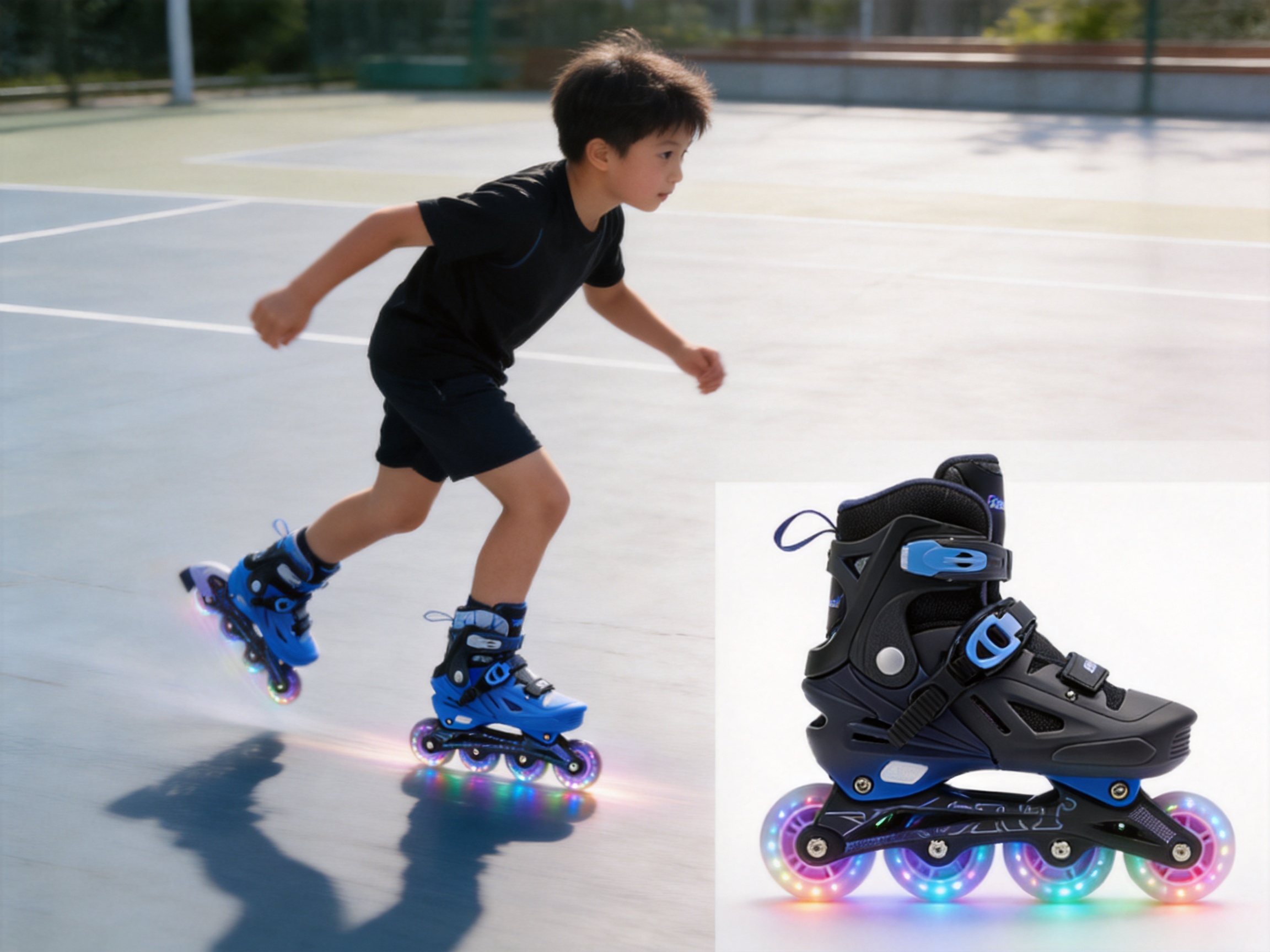
The illuminated wheels are one of the most recognizable features of the BW-220-A. When the skates move, the wheels automatically produce a flashing LED effect. The system is designed to operate through wheel rotation, so users do not need to charge the wheels separately before skating.
For children, visual appeal can make a meaningful difference in how often a product is used. Bright wheels and customizable body designs can make practice feel more like play. This encourages children to spend more time developing balance and coordination instead of viewing skating as a difficult exercise.
The LED effect also adds character during evening recreation and indoor skating. In a suitable, well-managed environment, illuminated wheels can make the skater easier to notice visually. They should not, however, be treated as a substitute for supervision, reflective clothing, lighting, or safe skating practices in low-light areas.
PU is commonly used for inline skate wheels because it offers a practical balance of grip, resilience, wear resistance, and smooth rolling performance on appropriate surfaces. The wear-resistant PU wheels on this model are intended to support regular recreational use while providing traction for basic movements.
Wheel performance depends on the skating surface, user weight, temperature, maintenance, and skating style. Smooth indoor floors and clean, flat outdoor areas are generally more suitable than rough pavement, gravel, wet ground, or uneven paths. Keeping the wheels free from dirt and checking them regularly can help preserve rolling quality and extend service life.
The combination of PU wheels and automatic illumination gives the product a competitive visual and functional profile. Some entry-level skates offer basic wheels but no lighting effect, while fashion-focused products may emphasize appearance without providing a strong protective shell. The BW-220-A brings these two priorities together in one youth-oriented design.
Comfort, Stability, and Beginner-Friendly Design
Early skating practice is often determined by the user’s first few sessions. If the skate feels unstable, difficult to adjust, or uncomfortable, a child may lose confidence quickly. The BW-220-A is intended to reduce these barriers through a supportive shell, a simple fitting process, and a design suitable for basic skating movements.
Beginners need time to learn how to stand correctly on inline wheels. They must coordinate ankle position, knee flexion, body posture, and controlled weight transfer. A skate with a stable body can help them focus on these actions instead of constantly compensating for excessive movement within the boot.
The rigid shell also provides a consistent interface between the user and the frame. When the foot is properly secured, small changes in body position can be transferred more predictably to the skate. This can support practice in standing, gliding, stopping, and turning, although instruction and supervision remain essential.
Comfort should be considered together with support. A hard shell should not be excessively loose, but it should also not be fastened so tightly that it creates pain or restricts normal circulation. The correct adjustment depends on the user’s foot shape, socks, and personal comfort. Parents and caregivers should inspect the fit regularly, especially as the child grows.
The model is intended for teenagers as well as younger children. Teenagers who are new to inline skating may appreciate the product’s protective construction and adjustable range, while its LED wheels and customizable appearance help prevent it from looking like a purely utilitarian training product.
Advantages Over Basic Competing Designs
The BW-220-A competes in a category that includes soft roller skates, fixed-size inline skates, basic hard-shell models, and visually decorated youth skates. Its main advantage is the combination of several useful features rather than reliance on only one selling point.
Hard-Shell Support Versus Soft-Surface Construction
Soft-surface skates may feel flexible, but they can provide less structural support when a beginner is learning to balance. The BW-220-A’s PP shell is designed to resist deformation and help protect the foot and ankle during ordinary practice impacts. This makes it a stronger option for buyers who prioritize protection and durability.
Adjustability Versus Fixed Sizing
Fixed-size products may need to be replaced as a child’s feet grow. The adjustable size ranges of the BW-220-A can extend the practical service period of one pair, provided that the user remains within the designated range and the skates are maintained properly. This can improve value for families and simplify inventory for retailers.
Integrated Lighting Versus Plain Wheels
Plain wheels can perform adequately, but illuminated PU wheels provide an additional visual feature that appeals to children. Automatic wheel-powered lighting also avoids the inconvenience of separate charging. The result is a product that is more engaging for recreational use while still serving a training purpose.
Customization Versus Standard Appearance
The skate body supports different colors, patterns, and design treatments. This gives buyers, brands, and distributors greater flexibility when developing market-specific collections. Customization can be especially valuable in children’s products, where color and visual identity strongly influence purchasing decisions.
Beginner Orientation Versus Professional Specialization
Professional racing skates are designed for speed, advanced control, and specialized performance. The BW-220-A has a different purpose. It prioritizes protection, adjustability, attractiveness, and approachable operation for children and teenagers who are developing basic skills. This clear positioning makes it suitable for mass-market sporting goods channels, family recreation stores, and youth-focused product lines.
| Comparison Point | BW-220-A Approach | Common Basic Alternative |
|---|---|---|
| Foot and ankle structure | Thickened PP hard shell with rigid support | Soft upper or less substantial shell |
| Fit over time | Adjustable size ranges for growing feet | Fixed size requiring earlier replacement |
| Wheel appearance | Automatic LED illumination during rotation | Standard non-illuminated wheels |
| Wheel material | Wear-resistant PU | Material and performance vary by product |
| Design flexibility | Colors and patterns can be customized | Usually limited to standard catalog designs |
| Primary market position | Beginner training and recreational youth skating | Basic play or general-purpose use |
Recommended Applications
Basic Inline Skating Training
The BW-220-A is suitable for learning fundamental movements, including standing, controlled gliding, straight-line travel, weight transfer, and basic stopping techniques. Beginners can use the skates during supervised practice sessions while gradually improving balance and confidence.
Training should begin on a clean, flat, and open surface. A quiet sports court, smooth indoor venue, or suitable residential recreation area may be appropriate if local rules permit skating there. Beginners should avoid crowded spaces until they can control speed and direction reliably.
Indoor and Outdoor Recreational Skating
The illuminated wheels make the product attractive for both daytime and evening recreation. Indoor venues can highlight the LED effect, while flat outdoor areas provide opportunities for family activities and regular exercise. Skaters should avoid wet surfaces because water can reduce traction and affect braking control.
Children’s Outdoor Activity
Inline skating can contribute to balance, coordination, leg strength, and general physical activity. The BW-220-A makes the activity more engaging through its colorful appearance and illuminated wheels. For parents, the adjustable structure provides a practical way to support continued use as the child grows.
Gift, Retail, and Promotional Programs
The product’s combination of adjustable sizing, strong shell construction, LED wheels, and customizable appearance makes it suitable for gift programs and seasonal sports promotions. Retailers can position it as an introductory fitness product, an outdoor recreation item, or a visually appealing youth sports gift.
Safety and Responsible Use
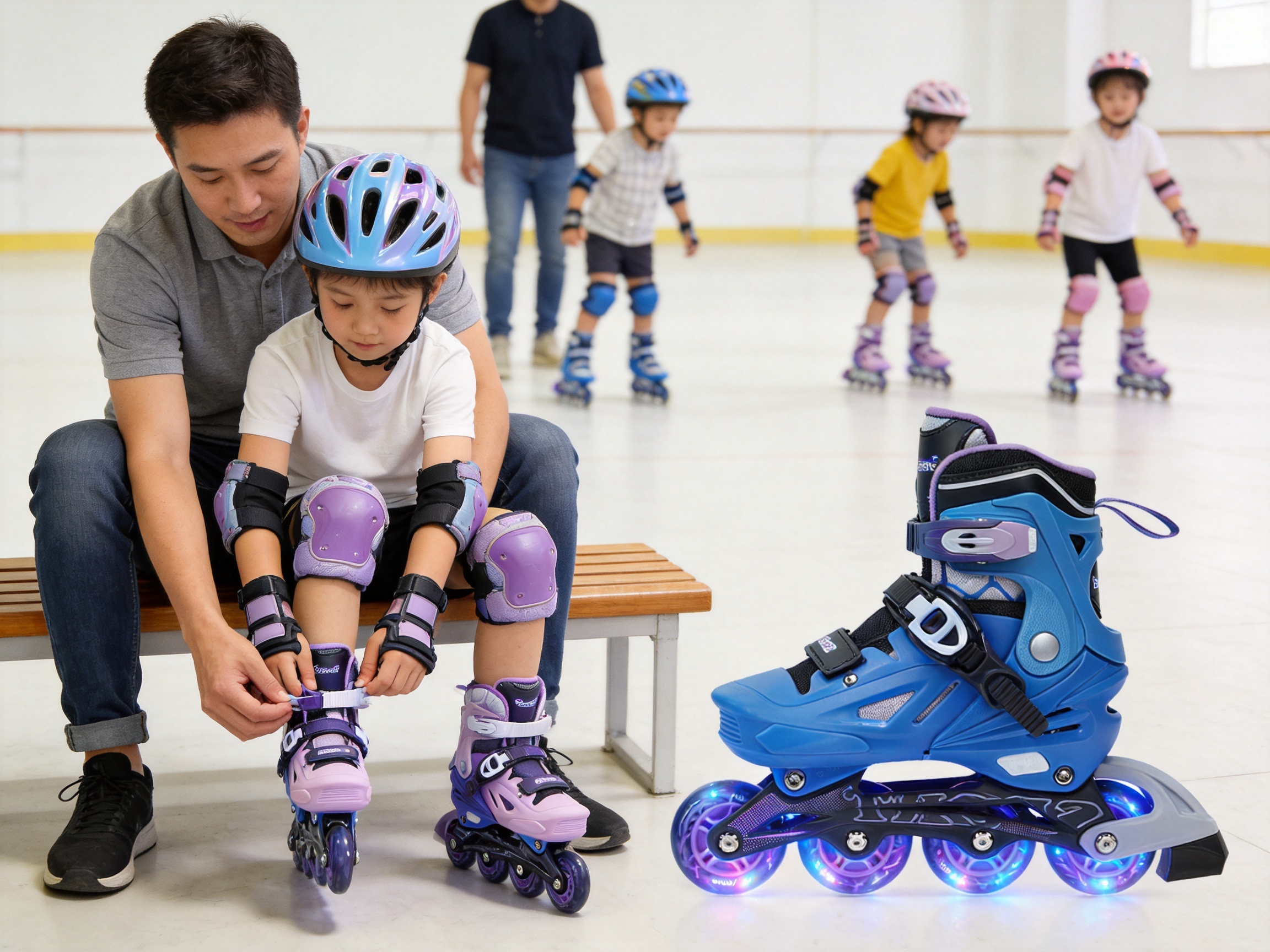
Protective skates are only one part of a safe skating system. Users should wear a properly fitted helmet, wrist guards, elbow pads, and knee pads. These items help reduce the severity of injuries caused by falls and are particularly important for beginners.
Children should skate under appropriate adult supervision. Before use, caregivers should inspect the shell, frame, wheels, axles, fasteners, and adjustment mechanism. Any loose, cracked, excessively worn, or damaged component should be addressed before skating continues.
The skates should be used on surfaces appropriate for inline wheels. Gravel, sand, mud, standing water, broken pavement, steep slopes, and heavily trafficked roads can create unnecessary hazards. The product is designed for basic recreational skating rather than road traffic, aggressive tricks, jumps, or high-speed competition.
Beginners should practice falling safely under instruction, maintain bent knees, keep their center of gravity controlled, and avoid reaching backward with rigid arms. Speed should increase only after the skater can stop and turn with confidence. Proper braking technique should be taught before the user attempts longer distances or crowded locations.
LED illumination is an appearance feature and does not guarantee visibility or safety in darkness. Evening skating should take place in adequately lit areas, and additional reflective or high-visibility clothing may be advisable.
Customization Opportunities for Buyers and Brands
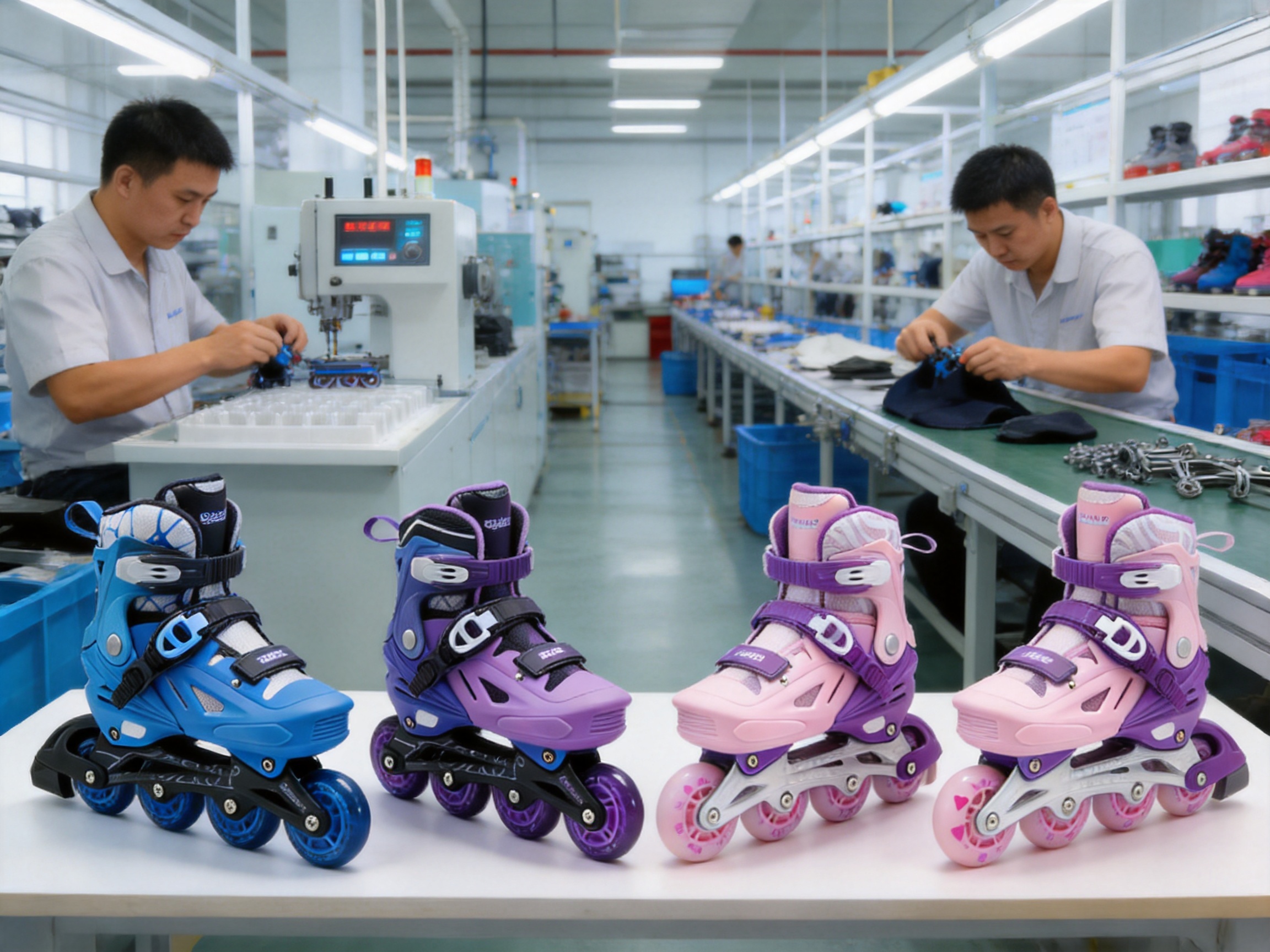
The BW-220-A supports a variety of colors and patterns, creating opportunities for differentiated product collections. Children may prefer bright colors, energetic graphics, playful patterns, or contrasting wheel and shell combinations. Distributors can adapt the appearance to local preferences, seasonal campaigns, or specific retail channels.
Customization can also support private-label and OEM programs. A buyer may request a coordinated color system across inline skates, scooters, helmets, or protective gear. Matching visual language across a product range can improve shelf recognition and help create a stronger sports equipment identity.
Color planning should consider both appearance and production consistency. High-contrast accents can emphasize the shell structure, fasteners, and wheels, while darker base colors may be practical for everyday use. Pattern placement should be planned around molding, assembly, and surface finishing requirements so that the final design remains clear and durable.
Customization is most effective when it is supported by a capable engineering and manufacturing team. Product appearance must remain compatible with mold design, material flow, assembly access, quality inspection, packaging, and applicable safety requirements. The manufacturer’s integrated facilities provide a foundation for coordinating these details from development through production.
Manufacturing Capabilities Behind the Product
The product is manufactured by Ningbo Feile Sporting Goods Co., Ltd., a sporting goods producer established in 2010. The company specializes in children’s scooters, inline skates, roller skates, and ice skates. Its experience across several related product categories supports a broader understanding of children’s mobility products, plastic components, wheel systems, protective structures, and recreational-use requirements.
The company operates a workshop of approximately 20,000 square meters and has more than 200 employees. Five advanced automatic production lines support volume manufacturing and help organize production into repeatable processes. An automatic production environment can improve consistency in molding, component handling, assembly, and inspection when properly managed by trained personnel.
The company’s facilities include mold, injection molding, sewing, and assembly workshops. This level of internal integration is valuable for a product such as an adjustable inline skate because the shell, soft components, structural parts, and final assembly must work together accurately.
Mold Development and Engineering
Mold capability is particularly important for a hard-shell skate. The mold determines major aspects of the shell’s dimensions, surface appearance, reinforcement areas, fit relationship, and repeatability. An experienced mold team can make adjustments during development to improve manufacturability and help support customized colors and patterns.
Internal mold resources can also shorten communication paths between product design and production. When changes are needed, engineers and mold technicians can evaluate the effect on tooling, cycle time, material flow, part strength, and assembly. This supports more efficient development for standard models and custom projects.
Injection Molding
The PP shell is produced through injection molding, a process well suited to high-volume plastic sporting goods. Plastic material is heated, injected into a prepared mold, cooled, and released as a formed component. Consistent molding conditions are essential for maintaining shell dimensions, surface quality, and structural performance.
Injection molding also allows manufacturers to produce repeatable protective bodies in large quantities. Process control may include monitoring material preparation, molding temperature, injection pressure, cooling time, part removal, and visual inspection. These controls help reduce variation between units and support dependable assembly.
Sewing and Soft Component Production
Although the outer shell is a rigid component, inline skates also require soft materials and comfort-related parts. Sewing capabilities allow the manufacturer to produce or manage textile and padded components that interact with the foot. Accurate sewing can help maintain consistent dimensions, clean finishing, and a comfortable relationship between the inner structure and the user’s foot.
Coordination between the injection molding and sewing workshops is important. The soft components must fit inside the shell, while the shell must provide adequate room for the intended size range. An integrated production system makes it easier to address these relationships during sampling and mass production.
Assembly and Final Inspection
Final assembly brings together the shell, liner components, fastening elements, frame, axles, wheels, and decorative features. This stage requires attention to alignment, tightening, movement, appearance, and adjustment function. For an illuminated wheel product, assembly personnel must also ensure that the wheel components operate correctly and that the lighting effect is present during rotation.
Final inspection can include checking product appearance, shell integrity, wheel rotation, fastener security, adjustment range, packaging condition, and labeling. A well-organized assembly system helps identify issues before products leave the factory and supports consistent delivery to international customers.
Quality Systems and Certifications
The company reports certification under ISO9001, BSCI, and Kmart factory certification systems. These credentials indicate attention to quality management, social compliance, and factory evaluation requirements. Certification does not replace product-specific testing, but it can provide buyers with greater confidence in the organization’s operating procedures and management structure.
The company also reports product certifications and testing credentials including 3C, CE, EN71, EN62115, ASTM, EMC, and EN13843:2009. The relevance of each standard depends on the specific product, market, configuration, and testing scope. Importers should confirm the documentation applicable to the exact model, materials, destination country, and current regulatory requirements before placing commercial orders.
For international buyers, documented quality systems can simplify supplier evaluation. They provide a starting point for reviewing manufacturing controls, product records, corrective-action processes, and inspection procedures. Buyers may still request samples, test reports, factory audits, pre-shipment inspections, and packaging reviews as part of their own procurement process.
The company’s participation in international exhibitions also supports communication with overseas markets. Exhibition activity can help the manufacturer understand changing consumer preferences, regional design expectations, packaging requirements, and new product opportunities. This market feedback is valuable when developing customizable youth products.
Research, Development, and Product Innovation
The company maintains a professional research and development engineering team and has more than 30 college-educated management staff. This organizational foundation supports continued work in product structure, appearance, materials, safety, comfort, and manufacturing efficiency.
Innovation in children’s skating products does not always require a completely new category. It may involve improving adjustment systems, strengthening the shell, refining wheel performance, simplifying assembly, enhancing visual appeal, or making the product easier for caregivers to use. The BW-220-A demonstrates this practical approach by combining established materials and manufacturing methods with adjustable sizing and automatic wheel illumination.
The company also reports holding multiple national patents and launching new products each year. Regular product development helps the manufacturer respond to market changes and maintain a wider product portfolio. For OEM and private-label customers, this can create more options when selecting a platform for a new collection.
Packaging and Logistics Considerations
The supplied product information lists packaging dimensions for the three size groups. The 31–34 size group is associated with packaging dimensions of approximately 540 × 410 × 290 millimeters. The 35–38 size group is associated with approximately 560 × 420 × 305 millimeters, while the 39–42 size group is associated with approximately 600 × 430 × 315 millimeters.
| Size Group | Listed Packaging Dimensions |
|---|---|
| 31–34 | Approximately 540 × 410 × 290 mm |
| 35–38 | Approximately 560 × 420 × 305 mm |
| 39–42 | Approximately 600 × 430 × 315 mm |
Packaging dimensions are important for warehouse planning, container loading, freight quotations, retail shelf planning, and e-commerce fulfillment. Buyers should confirm whether the dimensions refer to a single pair, a master carton, or another packaging configuration before finalizing logistics calculations.
Protective packaging should prevent the shell and wheels from being damaged during transport. It should also keep the skates securely positioned and protect decorative surfaces from rubbing. For international distribution, packaging materials should be selected to tolerate handling, stacking, humidity changes, and normal warehouse movement.
Customization projects may require different carton artwork, labels, inserts, barcodes, or language requirements. These details should be finalized during the pre-production stage so that packaging development does not delay the manufacturing schedule.
Commercial Value for Distributors and Retailers
The BW-220-A has several characteristics that can support retail differentiation. Its adjustable sizing gives it a practical value proposition, while the hard shell communicates protection and durability. The LED wheels and customizable appearance add an emotional and visual benefit that can attract children and families.
For sporting goods stores, the model can be displayed as an entry-level inline skate for children and teenagers. For department stores and online retailers, it can be presented as a recreational activity product or seasonal outdoor gift. For distributors, the three size groups and customizable design options can support regional product planning.
The product may also complement other categories supplied by the same manufacturer, including scooters, roller skates, ice skates, and protective gear. A buyer seeking a broader children’s mobility assortment can potentially coordinate purchasing, development discussions, packaging standards, and quality communication through one experienced supplier.
Customization can help a retailer create exclusive versions that are less directly comparable with generic catalog products. A distinctive color combination or pattern may improve brand recognition and reduce reliance on price competition alone. At the same time, buyers should ensure that customization does not compromise product safety, fit, assembly, or regulatory compliance.
Maintenance Recommendations
Regular maintenance can help preserve both performance and appearance. After each session, users should remove dirt and moisture from the shell, frame, and wheels. The skates should be stored in a dry, ventilated area away from excessive heat and direct sunlight.
Wheels should be checked for uneven wear, cracks, embedded stones, or reduced rolling quality. Fasteners and axles should be inspected for looseness. If a component is damaged or cannot be secured correctly, the skates should not be used until the issue has been resolved.
The LED function should be checked periodically by rotating the wheels. If illumination stops, the wheel assembly may require inspection or replacement according to the manufacturer’s service instructions. Users should not attempt unsafe modifications to the lighting components or wheel structure.
The adjustable mechanism should remain clean and should be operated according to the supplied instructions. Forcing the mechanism beyond its intended range can damage the skate or create an inaccurate fit. The selected size should be checked as children grow, particularly before a new skating season.
Frequently Asked Questions
What type of product is the BW-220-A?
The BW-220-A is an adjustable inline skate designed for children and teenagers. It is intended for basic skating training, casual skating, and recreational use on suitable flat surfaces.
What material is used for the protective shell?
The skate body uses a high-strength PP hard shell formed as a one-piece molded structure. The shell is designed to provide strong support and resistance to everyday impacts and deformation.
Which sizes are available?
The listed size groups are 31–34, 35–38, and 39–42. Each group is intended to provide adjustment within the stated range. Buyers should confirm the detailed adjustment method and fit guidance when ordering.
Do the LED wheels require charging?
The product information states that the sensor-illuminated wheels flash automatically while skating without needing to be charged separately.
Are the wheels suitable for outdoor use?
The skates are suitable for recreational use on clean, flat outdoor surfaces and appropriate indoor floors. Rough, wet, sandy, gravel-covered, or uneven surfaces should be avoided because they can reduce control and increase wear.
Are these skates suitable for professional racing?
The BW-220-A is designed for beginners, teenagers, and recreational users. It is not presented as a specialized professional racing or aggressive-skating model.
Can the colors and patterns be customized?
Yes. The skate body supports a variety of colors, patterns, and design treatments. Specific customization options, minimum order quantities, artwork requirements, and production conditions should be confirmed with the manufacturer.
What protective equipment should be worn?
Users should wear a properly fitted helmet, wrist guards, elbow pads, and knee pads. Children should skate under suitable adult supervision and learn in a controlled environment.
What manufacturing capabilities does the supplier have?
The supplier operates mold, injection molding, sewing, and assembly workshops, along with five automatic production lines. It also has a professional research and development engineering team and experience producing children’s scooters, inline skates, roller skates, and ice skates.
What quality credentials are reported?
The company reports ISO9001, BSCI, and Kmart factory certification systems, as well as product-related certifications and testing credentials including 3C, CE, EN71, EN62115, ASTM, EMC, and EN13843:2009. Buyers should request current documentation for the exact product configuration and target market.
What are the listed packaging dimensions?
The listed dimensions are approximately 540 × 410 × 290 millimeters for size 31–34, 560 × 420 × 305 millimeters for size 35–38, and 600 × 430 × 315 millimeters for size 39–42. The packaging unit should be confirmed with the supplier.
How does the adjustable design benefit families?
The adjustable design allows the skate to accommodate foot growth within its specified range. This may extend the useful period of one pair and reduce the need for immediate replacement as a child’s foot changes.
Can the skates be used at night?
The LED wheels make the skates visually attractive during evening recreation, but they should only be used in appropriate, well-managed environments. The lights are not a replacement for proper illumination, supervision, reflective clothing, or safe skating practices.
Conclusion
The BW-220-A LED adjustable inline skate is a practical youth-oriented product that brings together safety-conscious construction, flexible sizing, visual appeal, and recreational functionality. Its thickened PP hard shell provides stronger support than many soft-surface alternatives, while the adjustable size ranges help accommodate growing feet. Wear-resistant PU wheels support smooth recreational movement, and automatic LED illumination gives the product a distinctive appearance without requiring separate charging.
For children and teenagers, the model offers an approachable way to practice basic skating skills, improve balance, and participate in regular outdoor activity. For parents, the hard shell and adjustable structure provide meaningful practical benefits. For retailers and distributors, the combination of customizable design, three size groups, and broad youth appeal creates opportunities for differentiated product collections.
The supplier’s manufacturing strengths further support the product’s commercial potential. Mold development, injection molding, sewing, assembly, automatic production lines, research and development, quality systems, certifications, and experience across multiple skating categories provide an integrated foundation for OEM and private-label cooperation.
When used with appropriate protective equipment, proper supervision, regular inspection, and suitable skating surfaces, the BW-220-A can serve as a durable and engaging choice for beginner training and casual recreation. Its balance of protection, adjustability, appearance, and manufacturing flexibility makes it well suited to the expanding market for children’s skating and sports equipment.
References
1. Product specification and feature information for the BW-220-A LED adjustable inline skate, supplied for this article.
2. Manufacturer-provided company profile and factory capability information for Ningbo Feile Sporting Goods Co., Ltd.
3. General principles of inline skating safety, protective equipment, beginner instruction, and recreational surface selection.
4. General technical information regarding polypropylene molded shells and polyurethane inline skate wheels.
5. General quality-management and product-compliance considerations for children’s sporting goods manufacturing.
Product: BW-220-A Led Adjustable Inline Skate
Recommended Articles

Get in Touch
Your email address will not be published. Required fields are marked *
Have a project in mind? Contact with us!
We are happy to answer your questions. Please fill out this form
and one of our professional team will get back to you as soon as possible.

We specialize in producing various types of children's toy cars, children's skateboards, and ice skates.
