
 En
En
 Español
 русский
 عربى
عربى
Children’s Double-Row Roller Skates: Stable, Durable, and Designed for Confident Beginners
Date:Aug 02, 2026
Content
- 1 1. Understanding the Product Positioning
- 2 2. PP Hard-Shell Construction for Support and Durability
- 3 3. Stability Advantages of the Double-Row Four-Wheel Structure
- 4 4. Comfort for Extended Recreational Use
- 5 5. Adjustable Wheels and Convenient Daily Handling
- 6 6. Suitable Surfaces and Application Scenarios
- 7 7. Product Advantages Compared with Common Alternatives
- 8 8. Manufacturing Strengths Behind the Product
- 9 9. Quality Systems and Certification Experience
- 10 10. OEM and One-Stop Sourcing Value
- 11 11. Packaging, Logistics, and Size Information
- 12 12. Safe Introduction to Roller Skating
- 13 13. How the Product Supports Long-Term Customer Value
- 14 14. Why Manufacturing Experience Matters to Buyers
- 15 15. Recommended Buyer Evaluation Checklist
- 16 16. Frequently Asked Questions
- 16.1 Q1: What type of skate is the BW-125?
- 16.2 Q2: Why is a double-row structure suitable for beginners?
- 16.3 Q3: What material is used for the outer shell?
- 16.4 Q4: Is the product suitable for indoor and outdoor skating?
- 16.5 Q5: Is the skate comfortable for longer sessions?
- 16.6 Q6: Can the wheel tightness be adjusted?
- 16.7 Q7: What sizes are available?
- 16.8 Q8: What safety equipment should children wear?
- 16.9 Q9: Can the product be used for stage performances or photography?
- 16.10 Q10: What manufacturing capabilities does the supplier have?
- 16.11 Q11: Does the supplier support OEM projects?
- 16.12 Q12: Which certifications are associated with the company’s products?
- 17 17. Conclusion
- 18 References
- 19 Product: BW-125 Girls Roller Skate
Children’s Double-Row Roller Skates: Stable, Durable, and Designed for Confident Beginners
Choosing the right pair of roller skates for a child involves more than selecting an attractive color or a low purchase price. Young skaters need equipment that feels stable, protects the foot, remains comfortable during extended use, and can withstand the repeated impacts associated with learning. Parents and retailers also need a product that is easy to maintain, suitable for multiple environments, and reliable enough for everyday recreation. The BW-125 Girls Roller Skate is designed around these practical requirements.
This children’s double-row roller skate combines a supportive PP hard-shell upper, a classic four-wheel structure, adjustable wheel tightness, comfortable interior padding, and a gentle appearance intended for girls and teenage beginners. Its construction is straightforward and durable, making it suitable for family recreation, beginner training, indoor skating, outdoor leisure, stage activities, and casual fitness. Rather than depending on a complicated design, the skate focuses on the qualities that matter most to a new user: balance, control, comfort, protection, and dependable service life.
For distributors, wholesalers, retailers, and private-label buyers, the product also represents the manufacturing strengths of Ningbo Feile Sporting Goods Co., Ltd. The company has specialized in children’s scooters, inline skates, roller skates, and ice skates since 2010. Its integrated production capabilities, engineering team, automatic production lines, testing certifications, and experience with international customers support a consistent approach to sports equipment manufacturing.
This article examines the product’s design, user benefits, manufacturing value, application scenarios, and competitive advantages. It also explains why a stable double-row skate can be an excellent choice for children who are beginning to develop skating skills.
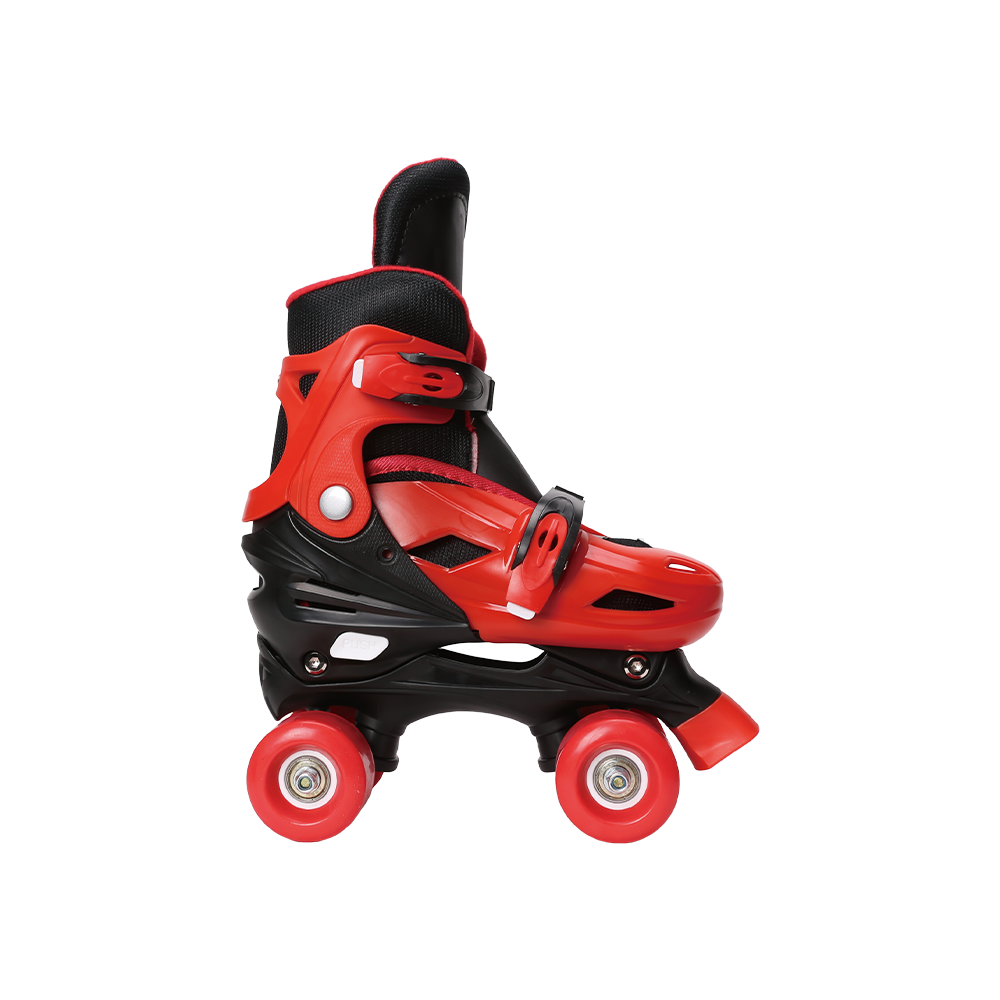
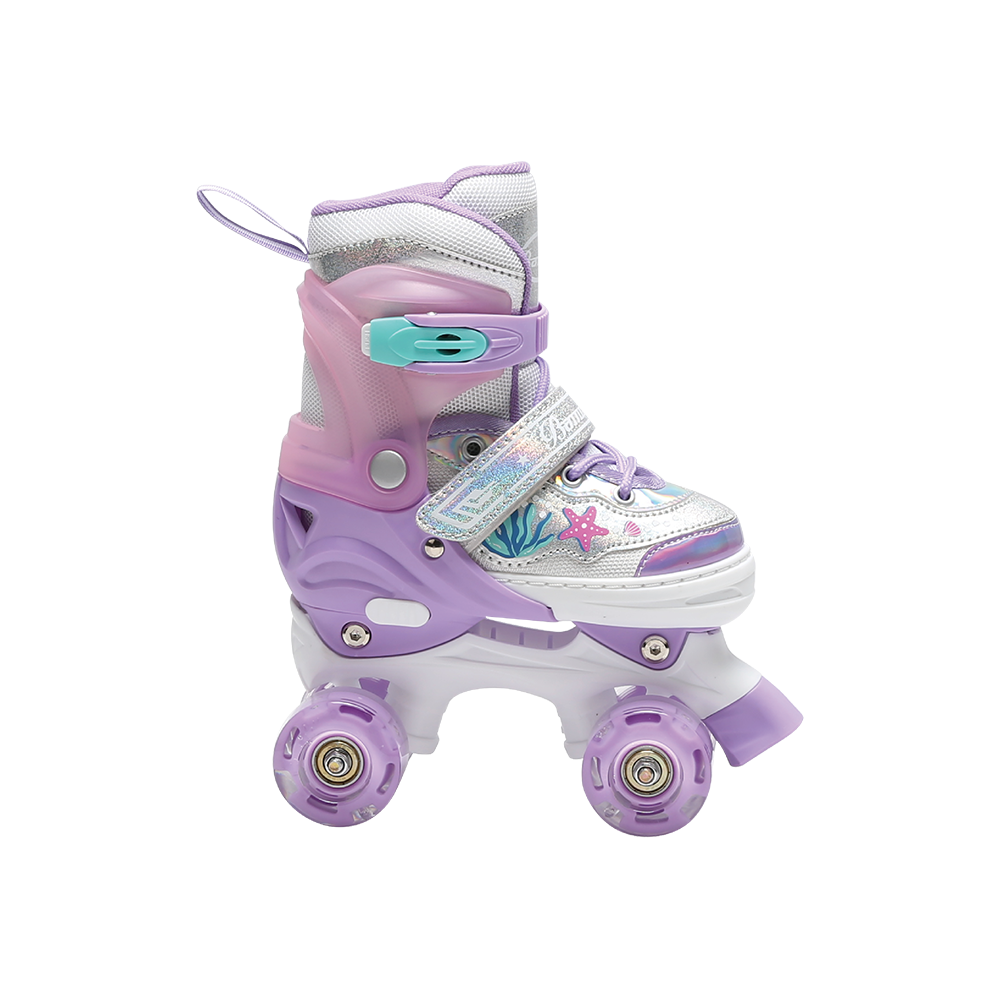
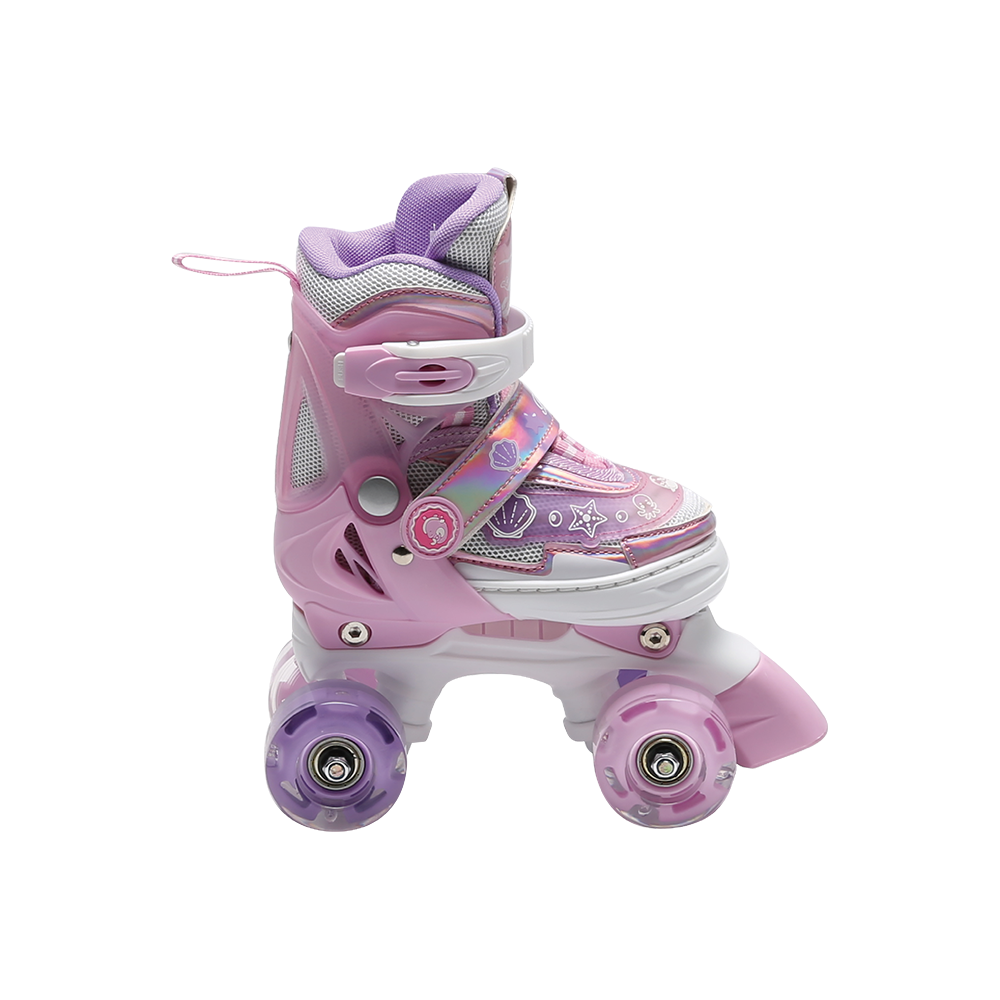
BW-125 Girls Roller Skate
1. Understanding the Product Positioning
The BW-125 is a girls’ double-row roller skate intended primarily for recreational use and beginner-level skating. It is designed for children and teenage girls who may be learning to stand, balance, push, turn, and stop on skates for the first time. The double-row configuration places two wheels at the front and two wheels at the rear, creating a broad and stable support base beneath the foot.
Unlike many performance-oriented inline skates, which place four wheels in one line, a double-row skate emphasizes lateral stability. This arrangement can make it easier for beginners to remain upright while they are learning basic skating movements. For younger children, the feeling of a wider base may reduce anxiety and help them concentrate on posture and direction rather than constantly correcting side-to-side movement.
The product is not intended to replace specialized racing skates, aggressive skates, or advanced fitness inline skates. Instead, it serves a different market segment: children and families seeking accessible recreational equipment with a gentle learning curve. Its product value comes from combining ease of use, durable materials, attractive styling, and a cost-conscious construction suitable for regular family use.
The available size ranges are 31–34, 35–38, and 39–42. These ranges cover a broad selection of children’s and teenage foot sizes. Since sizing can vary between users, buyers should compare the product’s actual sizing information with the child’s foot length and consider wearing suitable socks during fitting. A secure fit is important because excessive movement inside the skate can reduce control, while an overly tight fit can create discomfort.
1.1 A Beginner-Focused Design Philosophy
A child’s first roller skates should inspire confidence. Equipment that feels unstable, difficult to adjust, or uncomfortable may discourage a child from practicing. The BW-125 addresses this concern through a simple structure that is easy to understand and operate. Its wheels, shell, lining, and support arrangement are designed to work together without creating unnecessary complexity.
The four-wheel layout provides a stable base when the child is standing still or moving slowly. This is particularly useful during the first practice sessions, when the skater is learning how to distribute weight between both feet. The design also supports gradual progression. Once the child becomes comfortable standing and gliding, the skates can be used for turning, controlled stops, and longer recreational sessions.
Parents can also manage the equipment with relatively little effort. Wheel tightness can be adjusted to suit the user’s needs and riding environment. A properly adjusted wheel system helps balance rolling smoothness with control. Beginners may prefer a controlled setup while they develop confidence, while more experienced young users may appreciate smoother rolling during recreational skating.
1.2 Recreational Rather Than Overly Technical
Many children do not need highly technical equipment when they first start skating. A specialized performance product may include features that are valuable for racing or advanced training but unnecessary for casual family use. The BW-125 is positioned as an approachable recreational skate that can be used at home, at an indoor rink, in suitable outdoor areas, or during parent-child activities.
This practical positioning makes the product attractive to families who want one pair of skates for several occasions. It can support beginner training, weekend recreation, daily exercise, photography, stage performances, and informal social activities. Its visual styling also helps it function as a lifestyle product rather than merely a piece of protective sports equipment.
2. PP Hard-Shell Construction for Support and Durability
One of the product’s most important features is its one-piece molded PP hard-shell upper. Polypropylene is widely used in sporting goods because it offers a useful combination of strength, impact resistance, lightness, and processing flexibility. In a children’s roller skate, the shell helps maintain the shape of the boot while providing external support around the foot and ankle.
The hard shell is especially valuable for young skaters because beginners may experience frequent contact with the ground, walls, furniture, or other objects while developing balance. A supportive outer structure can help protect the foot from ordinary bumps and reduce the likelihood that the boot will quickly lose its shape. The shell also gives the skate a more stable feel than a soft, flexible upper that may collapse under repeated pressure.
2.1 Resistance to Deformation
Children’s sports equipment is often subjected to demanding everyday use. Skates may be stored in bags, placed in closets, transported to parks, or used by children who are still learning how to handle equipment carefully. A molded shell helps the skate retain its structure during repeated use and storage. Resistance to deformation supports a more consistent fit over time.
Maintaining the original shape is important for control. If the upper becomes excessively loose or distorted, the child may find it harder to transfer movement from the foot to the skate. A stable shell allows the foot to remain better supported while the wheels respond to changes in weight and direction.
2.2 Support Without Excessive Complexity
The PP shell provides firm support without relying on a complicated collection of external components. This simplified construction can be advantageous for families because there are fewer unnecessary parts to maintain. It also supports an attractive, clean appearance that fits the product’s gentle styling.
For manufacturers and buyers, molded plastic construction offers additional benefits. It allows the shell to be produced with repeatable dimensions, consistent wall structure, and efficient production cycles. When supported by appropriate mold design and quality inspection, this process helps achieve reliable product consistency across larger production orders.
2.3 Protection and Responsible Use
The hard shell is one component of a complete safety approach, not a substitute for responsible skating practices. Children should use the skates on suitable surfaces, remain under appropriate adult supervision, and wear protective equipment such as helmets, wrist guards, elbow pads, and knee pads when necessary. The shell supports the foot, but safe behavior, proper fit, and controlled practice remain essential.
3. Stability Advantages of the Double-Row Four-Wheel Structure
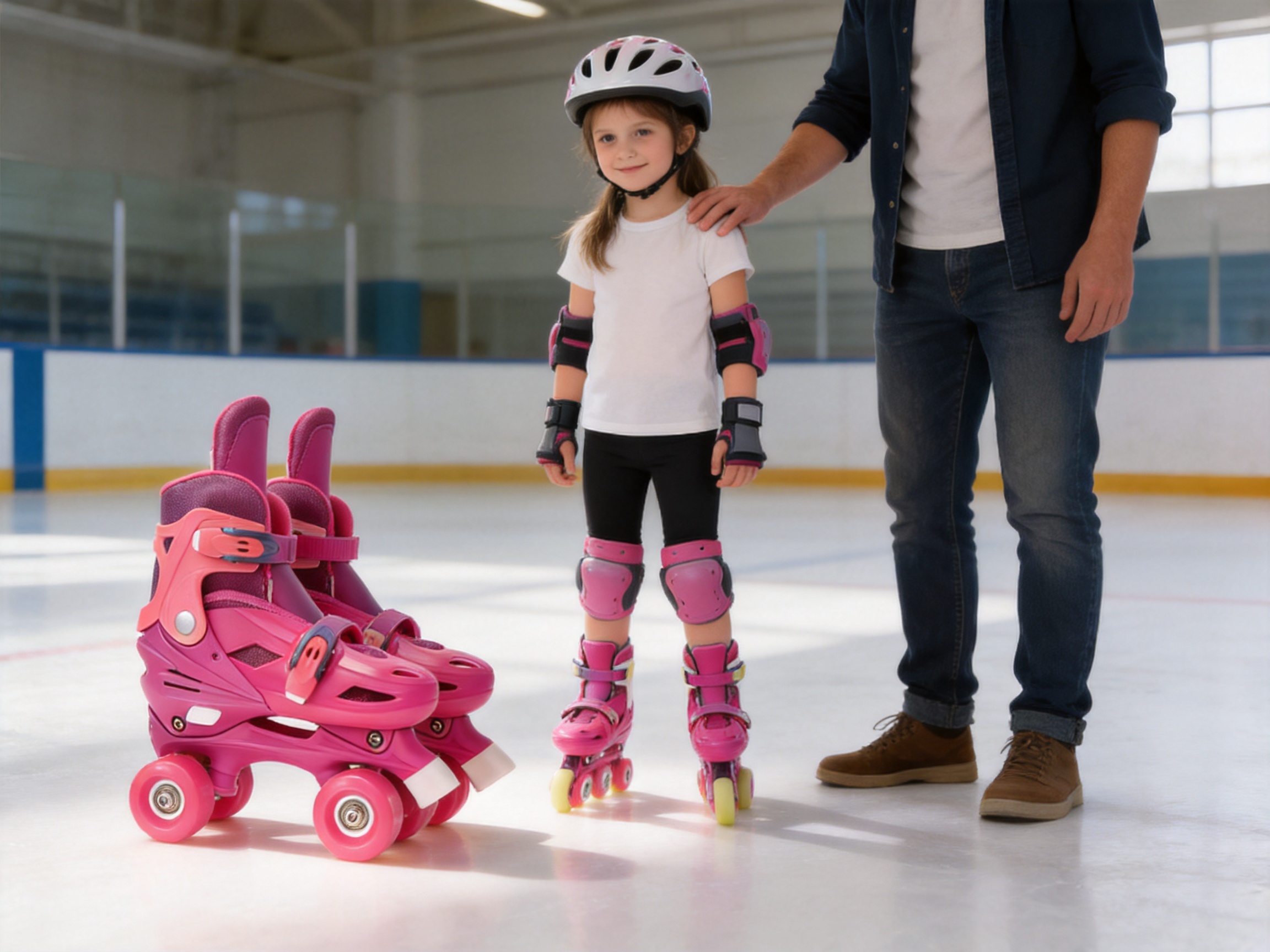
The classic double-row structure is one of the clearest advantages of this product for beginners. Each skate has two front wheels and two rear wheels, creating four points of contact with the ground. Compared with a narrow single-line wheel arrangement, this configuration offers a broader platform for maintaining balance.
For new skaters, balance is usually the first major challenge. Before a child can glide efficiently, they must learn how to stand with the knees slightly bent, keep the upper body controlled, and distribute weight across both feet. The double-row design helps create a more stable starting position, reducing the sensation of immediately tipping toward one side.
3.1 Lower Perceived Learning Barrier
A product that feels stable can make the learning process more enjoyable. Children are more likely to practice when they can experience small successes, such as standing independently, moving a short distance, or completing a gentle turn. The four-wheel structure supports these early achievements by offering dependable ground contact at low speeds.
This does not mean that the skates eliminate the need to learn technique. Children still need to practice posture, balance, pushing, turning, and stopping. However, stable equipment can give them a more forgiving platform during the early stages. It can also make it easier for parents or instructors to assist without constantly correcting the skater’s position.
3.2 Suitable for Slow and Moderate-Speed Recreation
The design is well suited to controlled recreational skating rather than high-speed performance. Children can use it for gentle gliding in indoor rinks, smooth play areas, or other appropriate surfaces. The wide support arrangement can be particularly useful when the child is practicing at slow speed, where balance corrections are frequent and movements are still developing.
Because the product is designed for beginners, its performance should be evaluated according to the needs of its intended user. The most important measures are not racing speed or advanced maneuverability, but comfort, controllability, durability, and the ability to help a child enjoy regular practice.
3.3 A Practical Alternative to Advanced Inline Skates
Inline skates can offer excellent performance for experienced users, but their narrow wheel alignment may feel less stable to a first-time skater. A double-row roller skate can be a more approachable alternative for children who are nervous about balancing. It may also be suitable for families who want a traditional skating experience or for activities that value appearance and ease of use over speed.
In competitive product selection, the BW-125 therefore stands out not because it tries to imitate an advanced inline skate, but because it serves a different purpose effectively. It provides a stable and accessible experience for recreational beginners while maintaining a durable, attractive design.
4. Comfort for Extended Recreational Use
Durability and stability are important, but comfort determines whether a child will want to continue using the skates. The BW-125 includes an inner lining designed to follow the contours of the foot. A comfortable interior can help reduce rubbing, pressure around the ankle, and the feeling of stuffiness during longer sessions.
Children may use roller skates for more than a few minutes at a time. A family outing, indoor rink visit, school activity, or stage rehearsal can involve repeated movement and prolonged wear. If the interior creates friction or pressure, the child may become distracted or stop participating. A supportive lining helps maintain a more pleasant experience.
4.1 Fit and Foot Position
A good fit keeps the foot positioned correctly inside the skate. The heel should remain reasonably secure, while the toes should not be compressed. The upper should provide support without causing painful pressure points. Parents should check the fit before each longer skating session, especially for growing children.
Appropriate socks also contribute to comfort. Smooth, breathable sports socks can help reduce friction and manage moisture. Thick or uneven socks may affect the fit, so they should be selected according to the available interior space and the child’s comfort.
4.2 Reducing Fatigue During Play
Comfortable materials and smooth rolling work together to reduce perceived fatigue. When the wheels roll with low resistance on a suitable surface, the child does not need to use excessive force to maintain movement. This can make the skating rhythm feel gentler and easier to control.
A smoother experience is beneficial for both beginners and families. Beginners can focus on technique without fighting unnecessary resistance, while parents can encourage longer, more relaxed practice sessions. The goal is not maximum speed, but an enjoyable movement experience that supports regular participation.
4.3 Comfort as a Retail Value
For retailers, comfort is an important product feature because it influences customer satisfaction and repeat purchases. Parents often judge children’s sports equipment by observing whether the child can use it happily and without complaints. A skate that combines a secure outer shell with a comfortable lining can provide a stronger value proposition than a product that focuses on appearance alone.
5. Adjustable Wheels and Convenient Daily Handling
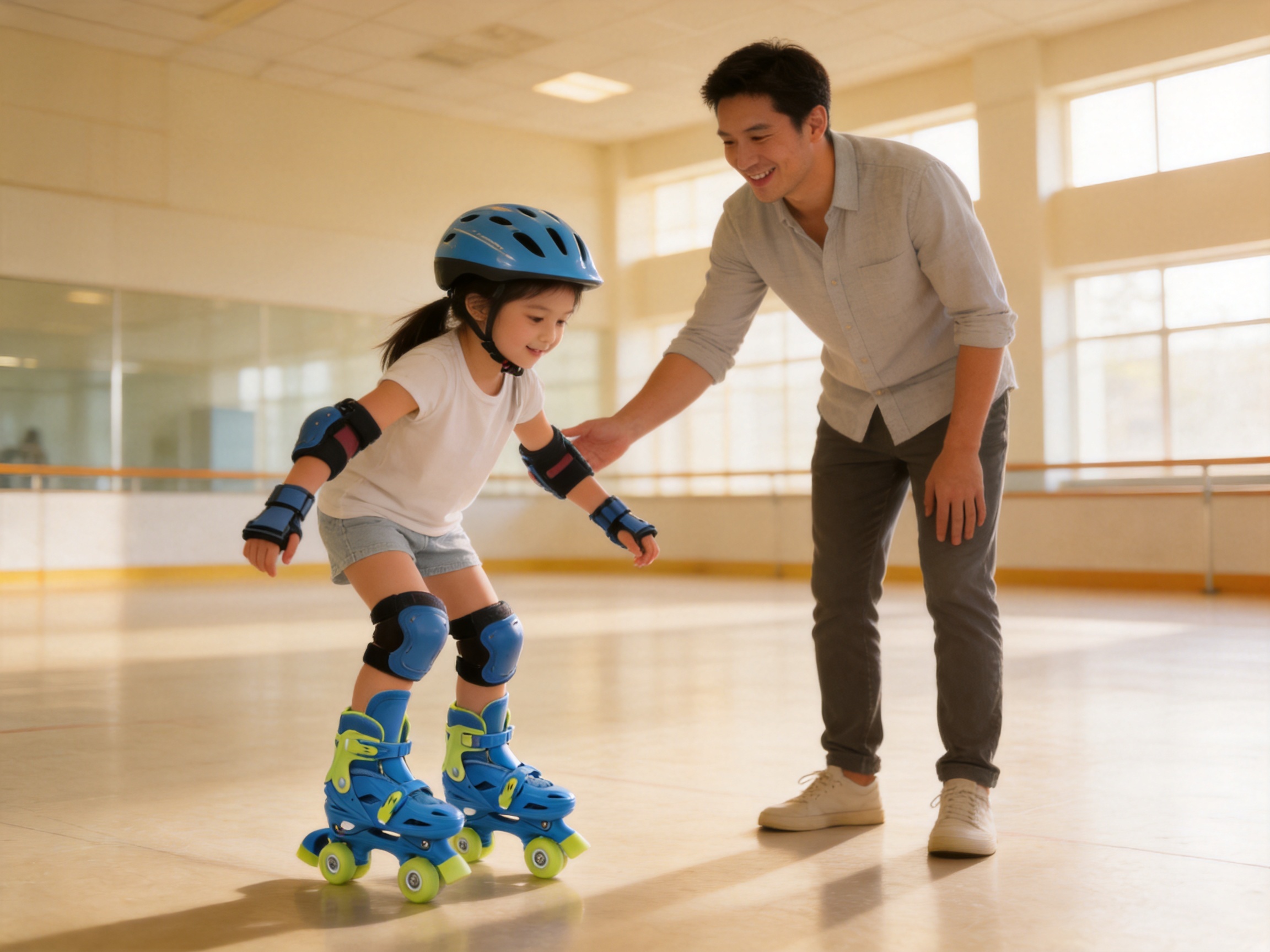
The BW-125 is designed to be easy to wear, remove, and adjust. Wheel tightness can be managed to provide a suitable balance between rolling flexibility and beginner control. This adjustability gives parents and users more control over the skating experience as the child develops.
When a child is just beginning, controlled movement may be preferable. A parent or instructor can check that the wheels are properly tightened and that the skate feels stable before practice begins. As the child gains confidence, the settings may be adjusted according to the user’s comfort and the characteristics of the skating surface.
5.1 Ease of Use for Children
Children are more likely to use equipment independently when it is simple to put on and remove. The product is designed with practical handling in mind, allowing children to learn basic equipment care with parental guidance. Teaching a child to check the skates, wear them correctly, and store them after use helps build responsible sports habits.
5.2 Ease of Maintenance for Parents
Parents generally prefer products that do not require frequent technical attention. The sturdy overall construction is intended to reduce loosening and minimize routine maintenance. Even so, regular inspection remains important. Parents should examine the wheels, fasteners, shell, lining, and general condition before use.
After skating, the skates should be kept in a dry and ventilated location. Dirt and moisture should be removed when necessary, and the equipment should not be stored while wet. Proper storage can extend the service life of the materials and maintain a more comfortable interior.
5.3 Cost-Effective Ownership
The product’s simple construction, durable shell, and low-maintenance design contribute to cost-effective ownership. Families can purchase a pair of skates for regular recreational use without immediately needing specialized accessories or complicated servicing. For retailers, this creates a clear product message: durable beginner equipment with accessible operating requirements.
Cost-effectiveness should not be understood as the lowest possible initial price. A better measure is the relationship between purchase cost, durability, comfort, usability, and expected frequency of use. A skate that remains functional and attractive through repeated family outings can provide better long-term value than a cheaper product that quickly becomes uncomfortable or deformed.
6. Suitable Surfaces and Application Scenarios
The BW-125 can be used on appropriate indoor and outdoor surfaces. Its flexible and durable wheels are intended for recreational skating in settings such as indoor skating rinks, smooth outdoor leisure areas, family activity spaces, and other suitable surfaces. Users should avoid rough, damaged, wet, oily, or uneven ground, as these conditions can increase the risk of falls and accelerate wear.
6.1 Beginner Training
Beginner training is one of the product’s primary applications. Children can start by learning to stand, walk slowly, glide, and stop with assistance. As their balance improves, they can practice gentle turns and longer gliding distances. The stable wheel arrangement supports a progressive learning process.
6.2 Indoor Skating Rinks
Indoor rinks provide a controlled environment with a relatively smooth surface and clearly defined skating areas. The BW-125 is suitable for casual rink use, family outings, and introductory practice. Its appearance also makes it appropriate for children who want skates that look attractive while they participate in recreational activities.
6.3 Parent-Child Outdoor Activities
Roller skating can be a convenient way for parents and children to exercise together. Family skating supports physical activity, coordination, communication, and shared recreation. The product’s stable design can help younger participants remain involved while more experienced family members provide guidance and encouragement.
6.4 Daily Fitness and Leisure
Although the BW-125 is designed for children, it can support regular light exercise. Controlled skating uses the legs, hips, and core while encouraging balance and coordination. Short, consistent sessions may be more suitable for young users than demanding high-intensity training. Families can incorporate skating into weekend recreation or casual outdoor activity.
6.5 Performances and Photography
The gentle and elegant styling gives the product additional value for stage performances, themed events, photography, and other visual activities. In these settings, the skates contribute to the overall appearance while still offering practical recreational functionality. Buyers should ensure that any performance environment has a safe surface and adequate supervision.
7. Product Advantages Compared with Common Alternatives
Product comparisons should be based on intended use. The BW-125 is not positioned as a racing skate or an advanced technical inline skate. Its advantages become clearer when it is compared with other beginner and recreational options.
| Comparison Factor | BW-125 Double-Row Roller Skate | Basic Soft Recreational Skate | Performance-Oriented Inline Skate |
|---|---|---|---|
| Beginner stability | Broad four-wheel support helps new users maintain balance | May feel comfortable but can provide less structured support | Requires more balance control because wheels are aligned in one line |
| External protection | PP hard shell supports the foot and resists ordinary impact and deformation | Soft construction may offer less structural support | Often provides strong support but may be more technical than necessary |
| Ease of learning | Designed for slow, controlled recreational practice | May be easy to wear but can lack a stable platform | Better suited to users who are ready for more advanced technique |
| Visual positioning | Gentle girls’ styling suitable for recreation and performances | Often emphasizes basic utility | Frequently uses sporty or performance-focused styling |
| Maintenance expectations | Simple structure with adjustable wheels and limited routine maintenance | May vary depending on materials and components | Can require more attention to wheel alignment and performance parts |
| Primary application | Children’s beginner training, family recreation, and leisure skating | Casual use where support requirements are moderate | Fitness skating, speed practice, or advanced activities |
The table demonstrates why the product can be competitive in its intended category. Its main strengths are not based on extreme speed or specialized performance. Instead, it offers a balanced package for families seeking durable, stable, attractive, and manageable children’s roller skates.
7.1 Stability Versus Speed
Inline skates may roll efficiently and support higher speeds, but that performance can be difficult for a beginner to control. The BW-125 prioritizes stability and confidence. For a young child, the ability to remain upright and move safely may be more valuable than achieving a faster glide.
7.2 Protection Versus Flexibility
A soft skate may feel flexible, but excessive flexibility can make it difficult for a child to maintain foot alignment. The PP hard shell gives the BW-125 a firmer structure. This support helps the child feel that the skate is responding as one unit with the foot, while the interior lining preserves comfort.
7.3 Simplicity Versus Technical Features
Advanced skates may include specialized frames, replaceable performance parts, and technical adjustment systems. These features can be valuable to experienced users, but they may be unnecessary for a child who is learning basic movement. The BW-125 focuses on practical adjustments and a straightforward structure, making it more accessible to families and easier for retailers to explain.
8. Manufacturing Strengths Behind the Product
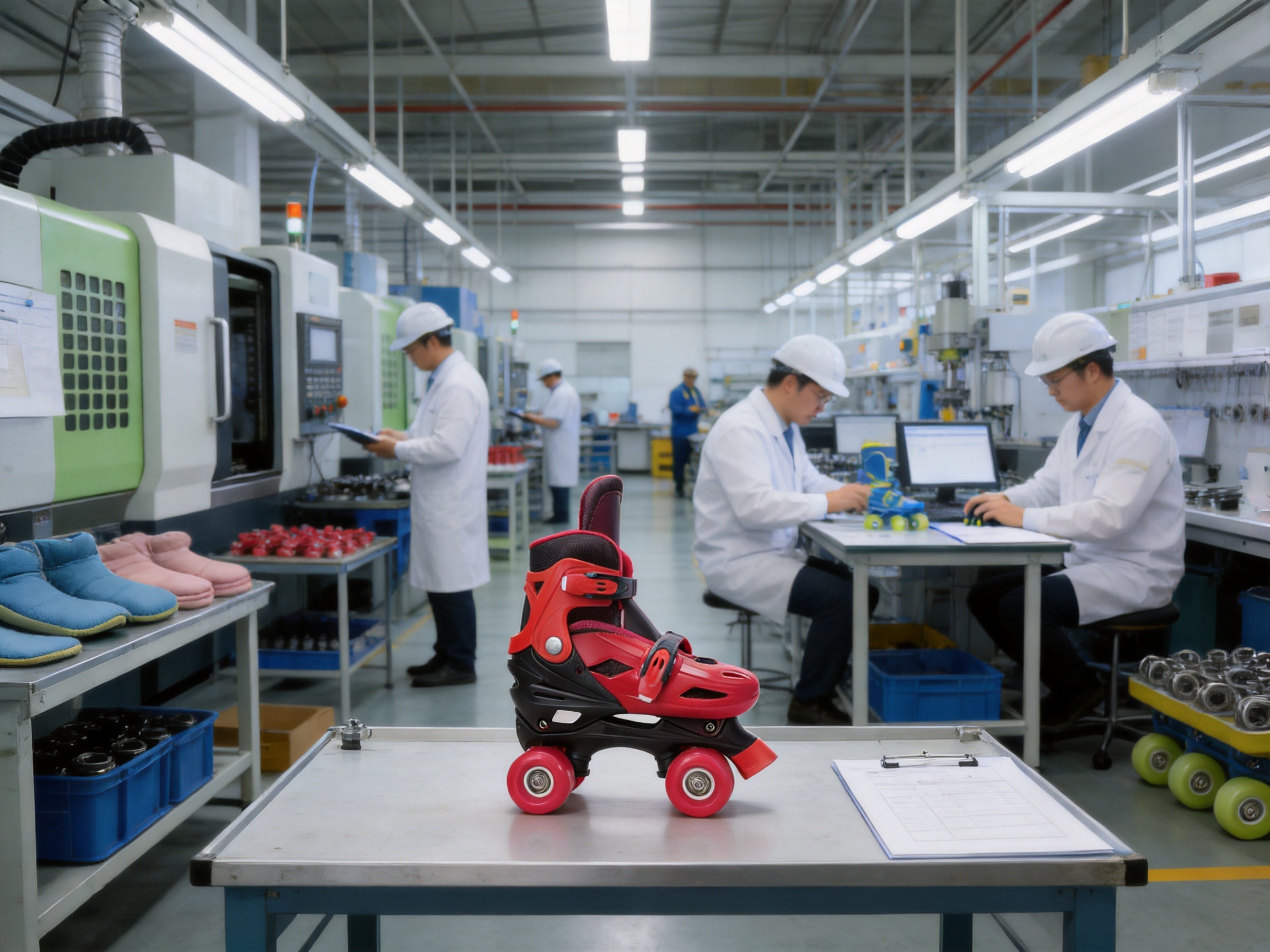
The quality of a children’s skate depends not only on its design but also on the manufacturing system used to produce it. Ningbo Feile Sporting Goods Co., Ltd. was established in 2010 and specializes in children’s scooters, inline skates, roller skates, and ice skates. This category-focused experience gives the company a practical understanding of children’s mobility products, plastic components, comfort requirements, and safety expectations.
The company operates a workshop of approximately 20,000 square meters and employs more than 200 people. Its facilities include mold, injection molding, sewing, and assembly workshops. This combination of capabilities enables the company to manage several important stages of product development and production within one coordinated manufacturing environment.
8.1 Integrated Mold Development
Mold quality is essential for molded plastic products. The shape, dimensions, surface finish, and structural consistency of a hard shell depend heavily on mold design and maintenance. An in-house or closely managed mold capability can help a manufacturer respond more efficiently to design requirements, improve dimensional consistency, and reduce reliance on disconnected suppliers.
For the BW-125, the molded PP shell requires accurate tooling so that the product maintains its intended shape across production batches. Good mold management also supports design refinement, helping the manufacturer improve appearance, fit, and production efficiency over time.
8.2 Injection Molding Capability
Injection molding is a suitable process for producing repeatable plastic components at scale. It allows manufacturers to form complex shapes with consistent dimensions while supporting efficient production for large orders. The company’s injection molding workshop contributes to control over the hard-shell components and other molded parts used in skating and scooter products.
Production control in injection molding includes material preparation, temperature management, pressure control, cycle consistency, trimming, and visual inspection. Each stage can influence the final appearance and performance of the component. Consistent processing is particularly important for children’s products, where sharp edges, inconsistent surfaces, or deformation are unacceptable quality concerns.
8.3 Sewing and Assembly Workshops
A roller skate is not made from plastic alone. The inner lining, padding, closures, straps, and other textile or soft components influence comfort and fit. A dedicated sewing workshop supports the production of these elements, while the assembly workshop brings the shell, wheel system, lining, and hardware together as a finished product.
Coordinating sewing and assembly with molded component production can improve communication between departments. It also allows the manufacturer to identify fit or assembly issues earlier, rather than discovering them only after products have been shipped to a customer.
8.4 Automatic Production Lines
The company has five advanced automatic production lines. Automation can support stable production rhythms, repeatable assembly operations, improved efficiency, and better capacity planning. It does not eliminate the need for skilled workers or inspection; instead, it combines process consistency with human oversight.
For international buyers, production-line capability is important because reliable delivery depends on more than nominal factory capacity. A capable factory must coordinate materials, production schedules, quality checks, packaging, and shipment preparation. Organized production lines help support this coordination for both standard products and customized orders.
8.5 Research and Development Support
The company maintains a professional R&D engineering team and launches new products each year. Product development in children’s sports equipment involves more than visual design. Engineers must consider fit, stability, material selection, assembly, wheel behavior, durability, safety, and manufacturing feasibility.
An experienced engineering team can help translate market requirements into practical products. For example, a buyer may request a different color, a modified appearance, a new size range, packaging changes, or a private-label version. Engineering knowledge helps determine whether these requests can be achieved without compromising structural performance or production efficiency.
9. Quality Systems and Certification Experience
Quality management is a key consideration when sourcing children’s sports equipment. Ningbo Feile Sporting Goods Co., Ltd. has passed ISO9001, BSCI, and Kmart factory certification systems. These certifications and assessments indicate experience with structured quality management, social compliance expectations, and customer-specific factory requirements.
The company’s products have received certifications including 3C, CE, EN71, EN62115, ASTM, EMC, and EN13843:2009. The exact applicability of a certification depends on the product, market, model, and current regulatory requirements, so buyers should confirm the relevant documentation for the specific order and destination country.
9.1 ISO9001 Quality Management
ISO9001 is associated with a systematic approach to quality management. A structured system can help define responsibilities, document processes, manage corrective actions, and support continuous improvement. For a product such as a children’s roller skate, this approach may cover incoming materials, mold and injection processes, assembly, inspection, packaging, and customer feedback.
9.2 Product Safety Awareness
Children’s products require careful attention to materials, mechanical structure, edges, small components, labeling, and foreseeable use. Certifications such as CE, EN71, ASTM, and other market-related standards may support buyer confidence when appropriately applied. However, certification should be viewed as part of a broader quality program that also includes factory controls, product testing, traceability, and responsible use instructions.
9.3 Social Compliance and International Supply
BSCI and customer factory assessments reflect the importance of responsible supply-chain practices. International retailers increasingly evaluate not only product quality but also working conditions, factory organization, environmental practices, and ethical business processes. A manufacturer with experience in these assessments is better positioned to communicate with global buyers and manage compliance-related requirements.
10. OEM and One-Stop Sourcing Value
For importers and brand owners, the product can be sourced as part of a broader skating and scooter equipment program. The company specializes in children’s scooters, inline skates, roller skates, and ice skates, allowing buyers to evaluate multiple product categories through one manufacturing partner.
This one-stop sourcing approach can simplify communication, sampling, product development, quality coordination, and shipment planning. Instead of managing separate suppliers for every category, a buyer may be able to develop a more coherent children’s sports range with coordinated colors, packaging, materials, and merchandising concepts.
10.1 Private-Label Opportunities
OEM buyers often require more than an existing catalog product. They may need customized colors, logos, packaging, instruction materials, product combinations, or market-specific specifications. A factory with mold, injection molding, sewing, assembly, and R&D capabilities can provide a stronger foundation for this process.
Before beginning a private-label project, buyers should define the target market, age range, size requirements, performance expectations, packaging regulations, certification needs, minimum order quantity, and delivery schedule. Clear specifications help reduce misunderstandings and ensure that the final product matches the intended retail positioning.
10.2 Product Portfolio Coordination
The BW-125 can serve as a girls’ roller skate within a larger children’s sports portfolio. It may be coordinated with children’s scooters, protective gear, inline skates, or other recreational products. A consistent product family can help retailers create seasonal displays, gift sets, and activity-based promotions.
For example, a retailer may present beginner roller skates together with helmets and protective pads, or create a family recreation collection featuring scooters and skates. The product’s accessible positioning makes it suitable for customers who are beginning to explore wheeled sports.
11. Packaging, Logistics, and Size Information
Product dimensions should be considered when planning packaging, warehousing, and shipment. The available package information includes the following size-based measurements:
| Product Size Range | Stated Package Measurement |
|---|---|
| 31–34 | 470 × 390 × 345 mm |
| 35–38 | 500 × 420 × 345 mm |
| 39–42 | 545 × 430 × 350 mm |
Buyers should confirm whether these measurements refer to an individual package, an inner carton, or another packaging unit before finalizing logistics calculations. They should also verify gross weight, net weight, carton quantity, pallet configuration, loading plan, and shipping marks with the supplier.
11.1 Retail Presentation
The product’s girls’ styling can support attractive retail presentation. Roller skates are often purchased as gifts or as part of a child’s first sports experience, so visual appeal can influence the buying decision. Product photography, packaging graphics, and point-of-sale materials should communicate the skate’s stability, comfort, protective shell, and beginner-friendly purpose.
11.2 E-Commerce Considerations
Online retailers should provide clear sizing guidance, product dimensions, suitable-use information, safety recommendations, and photographs from multiple angles. Customers should understand that the product is a double-row roller skate rather than an inline skate. Clear descriptions can reduce returns and help parents choose a product that matches the child’s experience level.
Online listings should also explain that protective gear and adult supervision are recommended. Providing practical information builds trust and helps position the product as a responsible choice for family recreation.
12. Safe Introduction to Roller Skating
Children should learn to use roller skates gradually. The first session should take place on a clean, smooth, and obstacle-free surface. A parent or qualified instructor should help the child put on the skates, stand securely, and practice controlled movement.
Protective equipment is strongly recommended. A properly fitted helmet can help protect the head, while wrist guards, elbow pads, and knee pads can reduce the consequences of common beginner falls. Protective gear should be selected according to the child’s size and worn correctly.
12.1 Basic Learning Sequence
A sensible learning sequence begins with standing still while holding a stable support. The child can then practice bending the knees slightly, keeping the feet apart, and maintaining an upright but relaxed posture. Short steps can follow, followed by gentle gliding when the child feels ready.
Stopping should be taught early. Children should understand how to slow down, use available braking methods, and avoid skating beyond their ability. They should also learn to look ahead, maintain a safe distance from other people, and avoid roads or areas with vehicle traffic.
12.2 Surface Awareness
Outdoor surfaces should be checked before use. Water, sand, leaves, stones, cracks, and uneven pavement can affect wheel movement and increase the risk of losing balance. Indoor surfaces should also be free from clutter, loose rugs, and slippery substances.
The product is designed for suitable indoor and outdoor recreational surfaces, but no roller skate can make an unsafe surface safe. Appropriate site selection is an essential part of responsible use.
12.3 Regular Inspection
Before every session, parents should inspect the wheels and fasteners. The wheels should rotate as expected without excessive looseness, and the shell should not show cracks or severe deformation. The lining and closures should also be checked for damage.
If any component appears damaged or unstable, the skates should not be used until they have been properly repaired or replaced. Regular inspection is a simple habit that supports both safety and product longevity.
13. How the Product Supports Long-Term Customer Value
The BW-125 is designed to be more than a one-time novelty item. Its durable PP shell, stable double-row structure, comfortable lining, adjustable wheel system, and broad application range support continued use as the child develops basic skating skills.
Children may initially use the skates for short assisted sessions. Over time, they can progress toward independent gliding, gentle turns, and longer recreational activities. This development potential increases the value of the product because it can remain relevant beyond the first few uses.
For families, the product can become part of regular outdoor recreation. For retailers, it can be positioned as a practical beginner product with a clear target audience. For OEM buyers, it offers a foundation for a girls’ skating series or a broader children’s sports equipment collection.
13.1 Durability and Reduced Replacement Pressure
A sturdy shell and stable construction may reduce the need for frequent replacement caused by ordinary deformation or loosening. This does not mean the product is indestructible. Wheels and other wear components may eventually require attention depending on usage. Nevertheless, a durable basic structure provides a stronger foundation for long-term ownership.
13.2 Emotional and Social Value
Children’s skating products also have emotional value. Attractive equipment can make a child feel excited about learning and encourage participation with friends or family. Parent-child skating creates opportunities for shared exercise and positive outdoor experiences. A product that looks appealing and feels comfortable can help turn a new activity into a regular habit.
14. Why Manufacturing Experience Matters to Buyers
When buyers evaluate a sports equipment supplier, they should consider more than the appearance of the catalog. Manufacturing experience influences product consistency, communication, customization, quality management, and delivery reliability. A company that has operated in the category for many years is more likely to understand the practical challenges associated with children’s products.
Ningbo Feile Sporting Goods Co., Ltd. has built its business around skating and scooter equipment since 2010. Its more than 200 employees, approximately 20,000-square-meter workshop, five automatic production lines, R&D engineering team, and specialized production areas provide a substantial base for serving international customers.
The company’s location in Yuyao City, Ningbo, Zhejiang Province, offers access to established manufacturing resources and transportation connections. The area is known for plastics production, which is relevant to products containing molded PP components. Convenient access to Ningbo Airport and Shanghai can also support international business operations and export logistics.
14.1 Experience Across Multiple Product Categories
Experience with scooters, inline skates, roller skates, and ice skates allows the manufacturer to apply knowledge across related product categories. Lessons learned in wheel systems, molded shells, textile components, fastening methods, and assembly can support continuous product improvement.
This broader category experience may also help buyers develop coordinated collections. A supplier that understands several types of children’s wheeled equipment can provide more consistent recommendations regarding materials, packaging, color strategy, and product positioning.
14.2 Continuous Product Development
The company introduces new products each year to respond to market and customer needs. Continuous development is important in the sports equipment sector because consumer preferences, safety expectations, seasonal trends, and retail channels continue to change.
Product improvement may involve appearance, comfort, materials, structure, packaging, or manufacturing efficiency. A supplier with an active engineering and development program is better prepared to support buyers who want to update a product line rather than simply repeat the same design indefinitely.
15. Recommended Buyer Evaluation Checklist
Businesses considering the BW-125 or similar products should assess the following points before placing an order:
First, confirm the target customer. The product is intended primarily for children and teenage girls who want recreational and beginner-level roller skates.
Second, confirm the size range and request detailed sizing guidance. Compare the product’s internal dimensions with the expected users’ foot measurements.
Third, review the material and construction. The PP hard shell, lining, wheel system, closures, and assembly should match the requirements of the intended market.
Fourth, request current product samples. A sample allows the buyer to evaluate appearance, fit, comfort, wheel movement, adjustment, packaging, and overall finish.
Fifth, confirm testing and certification documentation applicable to the destination market. Requirements may differ by country, sales channel, age classification, and product configuration.
Sixth, discuss customization options. Buyers should specify logos, colors, packaging, labels, manuals, barcodes, and carton markings at the beginning of the project.
Seventh, confirm production and logistics details. Minimum order quantities, lead times, payment terms, inspection procedures, shipping documents, and loading plans should be agreed in writing.
Eighth, establish after-sales communication. Clear procedures for handling product questions, quality concerns, replacement parts, and customer feedback help maintain a productive long-term relationship.
16. Frequently Asked Questions
Q1: What type of skate is the BW-125?
The BW-125 is a children’s double-row roller skate with two front wheels and two rear wheels on each skate. It is designed for recreational skating and beginner training rather than racing or advanced performance use.
Q2: Why is a double-row structure suitable for beginners?
The four-wheel arrangement creates a broad support base and can provide a stable center of gravity. This may make it easier for new skaters to stand, move slowly, and practice balance before progressing to more advanced techniques.
Q3: What material is used for the outer shell?
The upper uses a sturdy PP hard-shell construction. The one-piece molded plastic shell provides structural support, impact resistance, and resistance to ordinary deformation during regular recreational use.
Q4: Is the product suitable for indoor and outdoor skating?
Yes. The flexible and durable wheels are intended for suitable indoor and outdoor recreational surfaces. Users should avoid wet, oily, rough, damaged, or heavily uneven surfaces and should always choose a safe skating area.
Q5: Is the skate comfortable for longer sessions?
The inner lining is designed to follow the contours of the foot and provide a comfortable fit. Proper sizing, suitable socks, correct adjustment, and regular breaks are also important for maintaining comfort during extended use.
Q6: Can the wheel tightness be adjusted?
Yes. The wheels can be adjusted to manage tightness and rolling behavior. Parents should make adjustments carefully and check the skate before use to ensure that the wheel system is secure and appropriate for the child’s ability.
Q7: What sizes are available?
The stated size ranges are 31–34, 35–38, and 39–42. Buyers should request detailed sizing information and compare it with the child’s actual foot measurement before purchase.
Q8: What safety equipment should children wear?
Children should use a properly fitted helmet and may also benefit from wrist guards, elbow pads, and knee pads. Adult supervision and a safe skating environment are essential, especially for beginners.
Q9: Can the product be used for stage performances or photography?
Yes. Its gentle and attractive design makes it suitable for stage performances, photography, themed activities, and similar occasions, provided that the surface and environment are safe for roller skating.
Q10: What manufacturing capabilities does the supplier have?
The manufacturer operates mold, injection molding, sewing, and assembly workshops, along with five automatic production lines and a professional R&D engineering team. These capabilities support product development, production efficiency, and OEM cooperation.
Q11: Does the supplier support OEM projects?
The company provides OEM-oriented manufacturing and one-stop sourcing for skating and scooter equipment. Buyers should discuss customization requirements, packaging, certifications, minimum order quantities, and production schedules directly with the supplier.
Q12: Which certifications are associated with the company’s products?
The company reports product certifications including 3C, CE, EN71, EN62115, ASTM, EMC, and EN13843:2009. Buyers should confirm the documents applicable to the specific model and destination market before ordering.
17. Conclusion
The BW-125 Girls Roller Skate is a practical beginner-focused product that combines stability, protection, comfort, attractive styling, and manageable maintenance. Its classic double-row four-wheel structure gives children a broad support base, while the PP hard shell helps protect the foot and resist ordinary impact and deformation. The comfortable lining, adjustable wheel tightness, and smooth rolling experience further support enjoyable recreational use.
Compared with advanced inline skates, the product places greater emphasis on balance and accessibility. Compared with less structured soft recreational skates, it offers stronger external support and a more durable molded construction. These advantages make it a compelling option for children and teenage girls who are starting to learn roller skating or who want reliable equipment for family leisure activities.
The product is also supported by the manufacturing strengths of Ningbo Feile Sporting Goods Co., Ltd. Since 2010, the company has developed specialized experience in children’s scooters and skating products. Its production resources include a 20,000-square-meter workshop, more than 200 employees, five automatic production lines, mold and injection molding facilities, sewing and assembly workshops, and a professional R&D engineering team. Its quality management and certification experience further support cooperation with international buyers.
For families, the product offers an approachable way to introduce children to skating. For retailers, it provides a clear beginner and recreational product position. For OEM customers, it offers a dependable foundation for developing a broader skating and scooter equipment range. With proper sizing, protective equipment, supervision, and responsible surface selection, the BW-125 can help children enjoy a stable, comfortable, and positive introduction to roller skating.
References
1. Product information supplied for the BW-125 Girls Roller Skate, including construction, applications, size ranges, and package measurements.
2. Ningbo Feile Sporting Goods Co., Ltd. company profile and manufacturing capability information.
3. ISO 9001 quality management system principles and process-based quality practices.
4. General guidance on children’s wheeled sports equipment, protective gear, supervision, and recreational surface selection.
5. General technical principles of polypropylene injection molding for sporting goods applications.
6. General product development and quality-control practices for children’s roller skates, inline skates, and scooters.
Product: BW-125 Girls Roller Skate
Recommended Articles
-
BW-905 Boys Roller Skate05/09
-
BW-127BD Kids Ice Skate05/09

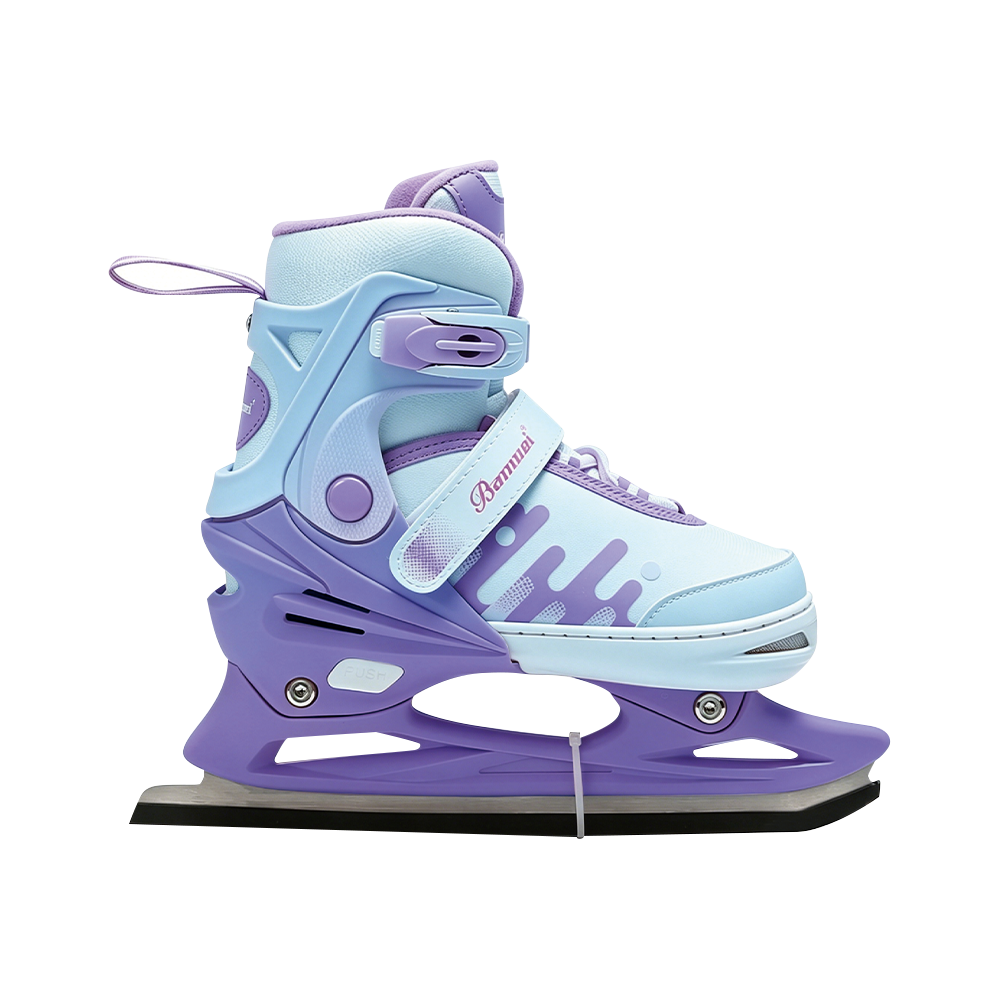
Get in Touch
Your email address will not be published. Required fields are marked *
Have a project in mind? Contact with us!
We are happy to answer your questions. Please fill out this form
and one of our professional team will get back to you as soon as possible.

We specialize in producing various types of children's toy cars, children's skateboards, and ice skates.
