
 En
En
 Español
 русский
 عربى
عربى
Why Three-Wheeled Inline Skates Are Changing Urban Commuting
Date:Aug 22, 2026
Content
- 1 Designed for the Reality of Urban Travel
- 2 Three-Wheel Performance Compared with Conventional Designs
- 3 Adjustable Sizing for Wider Household Use
- 4 Comfort for Commuting and Longer Rides
- 5 Frame and Bearing Construction
- 6 Wear-Resistant PU Wheels for Outdoor Routes
- 7 One Product for Commuting, Recreation, and Light Exercise
- 8 Product Specifications at a Glance
- 9 Advantages for Importers, Distributors, and Retailers
- 10 Manufacturing Capabilities Behind the Product
- 11 Research, Development, and Product Improvement
- 12 Quality Management and International Market Readiness
- 13 Why Factory Integration Matters in OEM Sourcing
- 14 Safety, Training, and Responsible Use
- 15 Care and Maintenance Recommendations
- 16 Positioning the Product Against Alternative Mobility Choices
- 17 Company Strength and Product Development Support
- 18 Q&A: Understanding the BW-228-1 Cityrun Inline Skate
- 18.1 What is the main purpose of the BW-228-1?
- 18.2 Why does the product use three wheels instead of four?
- 18.3 Is the product suitable for beginners?
- 18.4 What size ranges are available?
- 18.5 Can children use this product?
- 18.6 What surfaces are appropriate?
- 18.7 What materials are used for the wheels and frame?
- 18.8 How does the upper improve comfort?
- 18.9 Can the product be used for long-distance rides?
- 18.10 What manufacturing capabilities does the supplier have?
- 18.11 Does the manufacturer support OEM projects?
- 18.12 What certifications and systems are associated with the company?
- 19 Conclusion
- 20 References
- 21 Product: BW-228-1 Cityrun Inline Skate
Urban transportation is changing rapidly. As cities become more crowded, commuters are looking for practical ways to travel short distances without depending entirely on cars, buses, or crowded trains. Walking remains useful, but it can be slow when several kilometers separate a home, office, school, park, or transit station. Bicycles and electric scooters provide speed, yet they may require additional storage space, charging, registration, or maintenance. Inline skates offer another solution: they combine personal mobility, light exercise, and compact storage in one wearable product.
The BW-228-1 Cityrun Inline Skate is designed for this growing urban mobility requirement. Instead of using the conventional four-wheel layout associated with many traditional roller skates and recreational inline products, it adopts a large three-wheeled configuration intended for city roads, community paths, squares, greenways, and riverside routes. Its design focuses on efficient gliding, stable handling, adjustable sizing, comfort during longer rides, and convenient everyday use.
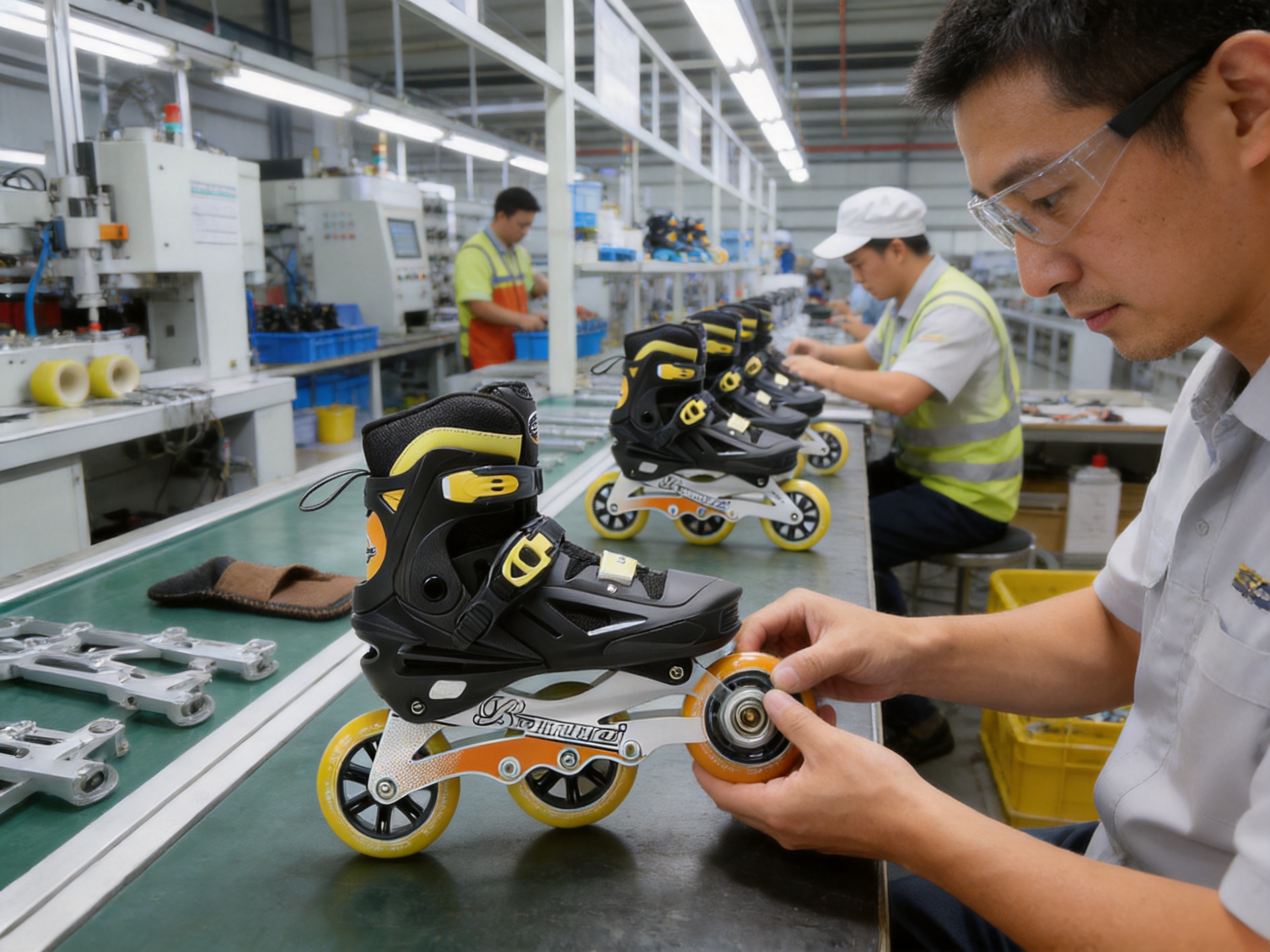
Produced by Ningbo Feile Sporting Goods Co., Ltd., the product reflects the capabilities of an established Chinese sports equipment manufacturer specializing in children’s scooters, inline skates, roller skates, and ice skates. The manufacturer combines product development, mold production, injection molding, sewing, assembly, quality management, and international certification experience. This vertically coordinated structure supports consistent production and allows the company to respond to changing market expectations.
The BW-228-1 is not positioned merely as a recreational skate. It is developed as an urban commuter skate for users who want a lightweight, energy-saving alternative for short trips, daily movement, and long-distance leisure gliding. Its adjustable structure also makes it suitable for households where users have different foot sizes or where children are still growing.
Designed for the Reality of Urban Travel
Urban surfaces are different from the smooth floors and specialized skating tracks often used for conventional skating. A commuter may need to move across asphalt, municipal paths, residential roads, concrete plazas, paved walkways, and slightly uneven outdoor surfaces. For this reason, an urban skate must provide more than speed. It must offer dependable rolling, controlled movement, adequate support, and a comfortable fit.
The BW-228-1 Cityrun Inline Skate addresses these requirements through a large three-wheel structure. The arrangement is intended to support a smooth forward glide while reducing unnecessary rolling resistance. Compared with a traditional four-wheel roller skate, the three-wheel layout provides a longer wheelbase and a streamlined contact arrangement. This can make the skating motion feel more direct and efficient, particularly when traveling in a straight line over suitable outdoor surfaces.
The configuration is especially appropriate for commuters who value momentum. Once the user establishes a stable rhythm, the skate can help maintain forward movement with less frequent correction than a compact recreational design. This characteristic is useful on city greenways, riverside paths, and open paved areas where the user has enough room to glide safely.
Its purpose is not to replace every form of urban transportation. Rather, it fills a practical space between walking and other personal mobility products. For a short trip to a nearby store, a neighborhood ride, a journey from a parking area to a destination, or an evening exercise session, the skates can be put on quickly and stored more easily than a bicycle or scooter.
The product also supports a more active lifestyle. Users who spend long hours sitting may use skating as a light outdoor activity that encourages lower-limb movement. With appropriate technique and safety equipment, regular recreational gliding may help users stay active, improve coordination, and reduce the physical inactivity associated with desk-based routines.
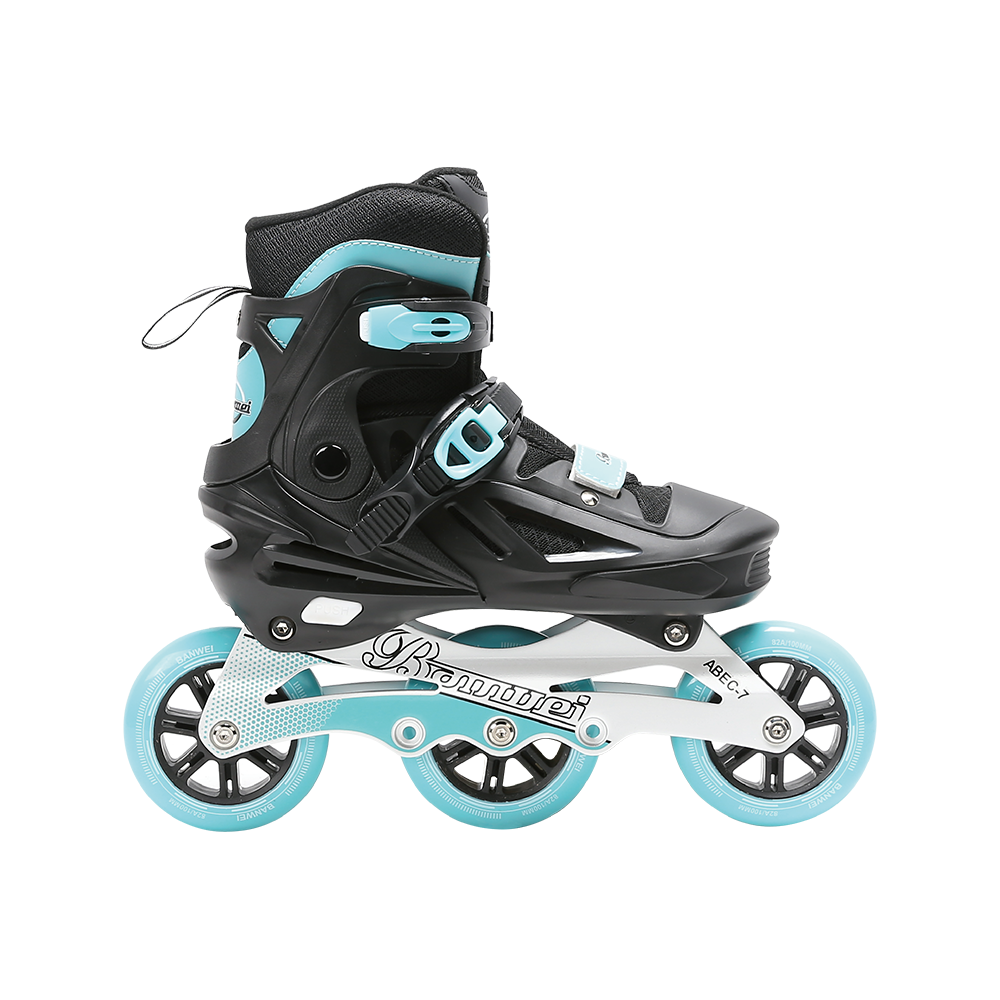
BW-228-1 Cityrun Inline Skate
Three-Wheel Performance Compared with Conventional Designs
Inline skate design involves a balance between maneuverability, stability, speed, comfort, and intended terrain. Smaller four-wheel recreational skates can feel familiar and approachable, especially for beginners practicing indoors or on smooth surfaces. However, a commuter-oriented skate may benefit from a different geometry. The BW-228-1 is built around three larger wheels, giving it a configuration more closely associated with efficient outdoor gliding.
A three-wheel layout can provide several functional advantages for urban riding. First, larger wheels generally help the skate roll over minor surface irregularities more effectively than very small wheels. They can preserve momentum over longer distances and reduce the feeling of interruption caused by small cracks or changes in pavement texture. Second, the longer wheel arrangement can promote directional stability during straight-line travel. Third, fewer wheel contact points can contribute to a clean, low-resistance rolling experience when the frame and bearings are properly matched.
These advantages should be understood in relation to the product’s intended use. The BW-228-1 is designed for roads, paths, squares, neighborhood routes, and greenways rather than for aggressive tricks, crowded indoor skating, or highly technical slalom performance. Its main priority is efficient commuting and relaxed outdoor gliding. Users seeking a product for urban transport may therefore find the design more relevant than a skate optimized exclusively for compact turning or artistic movements.
The product’s large wheels also support the idea of energy-saving movement. Skating requires physical effort, but the correct wheel diameter, bearing quality, frame balance, and upper support can make that effort more productive. Instead of repeatedly accelerating from a nearly stationary position, the user can establish a steady pace and maintain it over a reasonable distance. This is one reason the product is suitable for both short commutes and longer leisure rides.
Compared with bicycles and scooters, skates offer a different relationship between the user and the ground. They are worn directly on the feet, allowing the user to step off immediately and carry them when necessary. This makes them attractive in locations where a larger vehicle would be inconvenient. Compared with walking, they can cover a familiar route more quickly while adding a moderate level of exercise.
Safety and judgment remain essential. No wheel configuration eliminates the need for a suitable helmet, protective pads, controlled speed, and awareness of pedestrians, vehicles, slopes, and surface conditions. The three-wheel arrangement is designed to improve the commuting experience, but users should practice braking and turning before attempting longer or busier routes.
Adjustable Sizing for Wider Household Use
One of the most useful features of the BW-228-1 is its adjustable sizing system. The product is available in M, L, and XL size ranges, with listed size groupings of 35–38, 39–42, and 42–45. The adjustable structure is designed to accommodate different foot shapes and reduce the need to purchase a completely new pair when the wearer’s foot size changes within the relevant range.
Adjustability is particularly valuable for families. Children and teenagers may grow quickly, while different family members may want to use the same product for occasional recreation. A one-button adjustment approach helps simplify fitting and allows the user to make changes without complicated tools or lengthy preparation. For retailers, this can also make the product easier to present as a flexible family-use item rather than a single-purpose purchase.
A correct fit is essential for skating comfort and control. If a skate is too loose, the foot may move inside the shell, reducing stability and increasing fatigue. If it is too tight, the wearer may experience pressure points, discomfort, or restricted circulation. The adjustable design helps users find a closer fit while retaining the convenience of a product that can be modified as required.
The size options also support broader distribution. Retailers and importers can offer a practical range for adults, older children, and developing skaters without maintaining an excessive number of fixed-size variations. This may simplify inventory planning and provide customers with a clearer purchasing decision.
Although the product is adjustable, users should still select the appropriate size range based on actual foot measurements and the manufacturer’s fitting guidance. The adjustment mechanism should be secured before riding, and the user should confirm that the heel, ankle, and forefoot feel supported. Proper socks and an appropriate break-in period can further improve comfort.
Comfort for Commuting and Longer Rides
Urban commuting can place repeated pressure on the feet and ankles. A skate intended for daily use therefore needs an upper that balances support with breathability. The BW-228-1 features a breathable commuter upper designed to hold the foot securely while allowing airflow. This is important during warm-weather riding or extended sessions when heat and moisture can cause discomfort.
The lining is described as thickened, soft, and cushioned. This construction helps the interior conform more closely to the foot and provides a softer contact area around pressure-sensitive zones. Cushioning can also help reduce rubbing during repeated motion. While no skate can guarantee that every user will experience the same fit, a supportive padded interior is a valuable feature for users who expect to ride for more than a few minutes at a time.
The upper must perform several functions simultaneously. It needs to maintain the foot’s position, support the ankle, allow controlled movement, resist wear, and remain comfortable during active use. A commuter skate that is fast but uncomfortable will rarely become a dependable daily product. The BW-228-1’s design therefore places comfort alongside rolling performance rather than treating it as an optional feature.
For long-distance leisure gliding, comfort becomes even more important. Riders on urban greenways or riverside paths may spend considerably longer on their skates than someone making a short neighborhood trip. The combination of adjustable sizing, padded lining, breathable materials, and a balanced frame is intended to reduce avoidable foot fatigue and make the experience more enjoyable.
Users should also understand that comfort depends on technique and preparation. Feet should be positioned correctly, laces or closures should be secured evenly, and the skater should begin with a moderate session. Gradual adaptation is better than immediately attempting a long-distance ride, particularly for beginners.
Frame and Bearing Construction
The BW-228-1 includes a high-strength aluminum frame. Aluminum is widely used in performance-oriented skating products because it can provide a useful combination of strength, low weight, and structural rigidity. A rigid frame helps transfer the user’s movement to the wheels efficiently, while a reasonable weight supports easier handling during commuting and carrying.
Frame balance is especially important in a three-wheel product. The wheel arrangement must support stable forward motion without creating an awkward feeling when the user shifts weight. A well-coordinated frame can help the skate respond predictably to changes in body position and maintain a smooth relationship between the foot, frame, wheels, and ground.
The product also uses high-smooth carbon steel bearings. Bearings are a small but essential component of the rolling system. Their role is to allow the wheels to rotate with reduced friction while supporting consistent movement. When the frame, wheel material, and bearings are matched appropriately, the result can be a smoother glide and better retention of momentum.
The combination of a high-strength aluminum frame and carbon steel bearings supports the product’s commuter orientation. It is not enough to install large wheels; the supporting structure must also be capable of maintaining alignment and handling repeated outdoor use. A balanced rolling system helps users feel more confident while traveling across suitable city surfaces.
Maintenance remains important. Bearings and wheels should be kept reasonably clean, and users should inspect the skate after riding over wet or dirty surfaces. Loose hardware, unusual noise, wheel damage, or a change in rolling behavior should be addressed before the next ride. Regular care can preserve the performance benefits of the construction and extend the product’s service life.
Wear-Resistant PU Wheels for Outdoor Routes
The wheels are made from high-quality, wear-resistant polyurethane. PU is commonly selected for skating wheels because it can offer a practical balance of resilience, grip, durability, and smooth rolling. The material is suitable for outdoor routes where the surface may be more demanding than a polished indoor floor.
For the BW-228-1, the wheel specification supports riding on city roads, community paths, squares, and other paved outdoor areas. The wheels are intended to provide reliable contact and slip resistance on appropriate surfaces. Their wear-resistant characteristics are also relevant to commuters who may use the skates regularly rather than only on occasional weekends.
Outdoor wheels must withstand repeated contact with asphalt and other hard surfaces. They may encounter dust, small stones, joints, and changing levels of surface roughness. A durable PU compound helps the product remain functional under normal use. However, riders should avoid surfaces that are excessively wet, oily, sandy, broken, or covered with debris, as these conditions can reduce traction regardless of wheel material.
Wheel size and hardness influence the riding experience. Larger wheels can help maintain speed and cross minor imperfections, while the compound affects grip and durability. The BW-228-1’s overall wheel system is selected to support commuting rather than highly specialized freestyle activity. This makes the product a practical option for users who prioritize steady outdoor movement.
Wheel inspection should be part of routine care. Users can check for flat spots, cracks, severe wear, and embedded objects. Rotating or replacing wheels when necessary can help maintain balanced performance. Proper storage away from excessive heat, moisture, and direct sunlight may also help protect the materials.
One Product for Commuting, Recreation, and Light Exercise
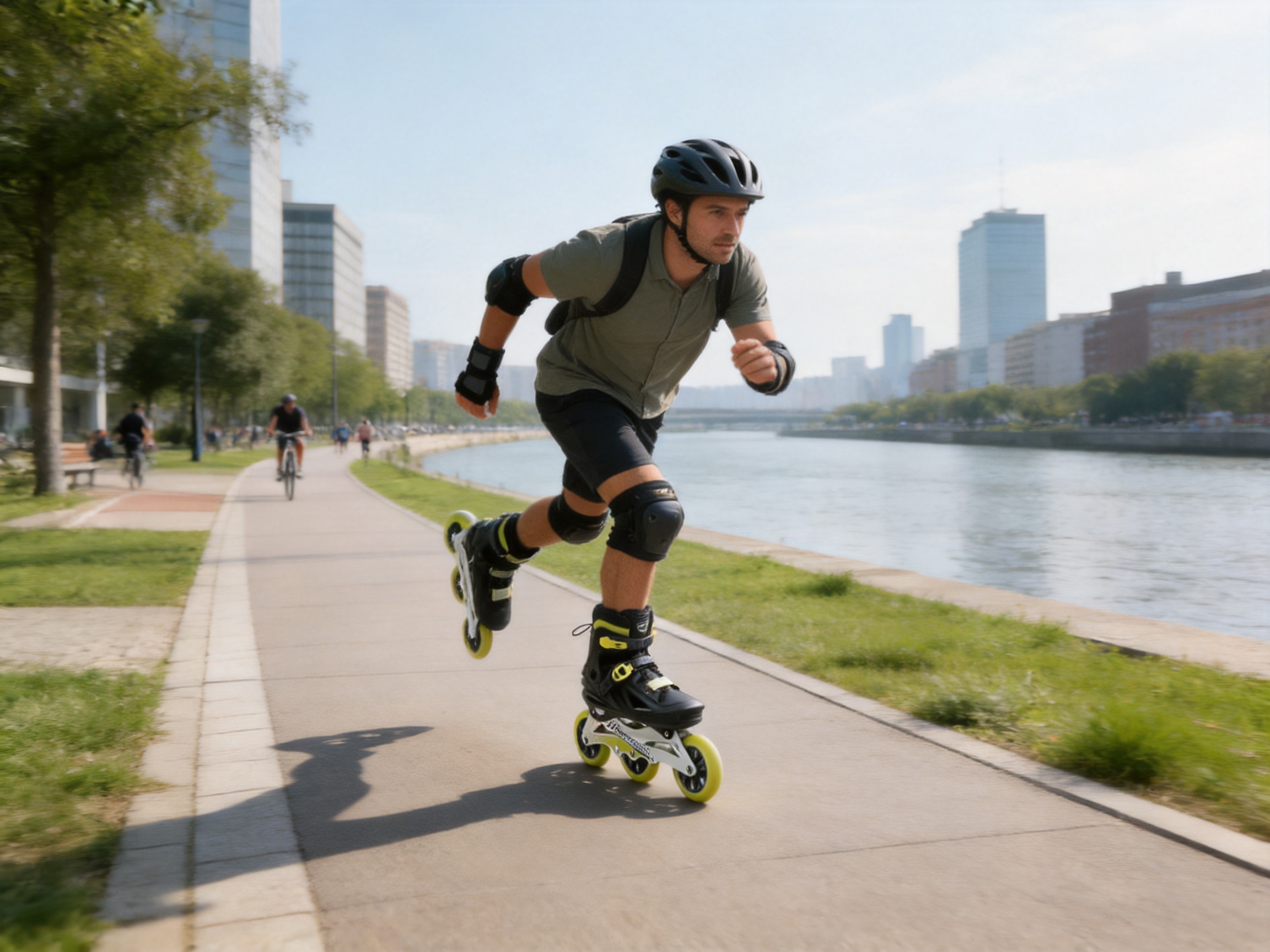
The BW-228-1 is versatile because it serves several connected use cases. Its primary role is urban commuting, including short trips to nearby destinations and movement through residential areas. It can also support leisure rides on greenways and riverside paths, where the user has more space to establish a relaxed rhythm.
For short-distance travel, the product offers a time-saving alternative to walking. A user may choose to skate between a home and a nearby store, through a residential community, or from a transit stop to a final destination. The skates are also useful for informal neighborhood rides when the user wants to remain active without organizing a complex sporting activity.
For longer outdoor gliding, the large three-wheel structure and low-resistance rolling system are intended to reduce unnecessary effort. A smooth route allows the user to maintain momentum and enjoy a more comfortable experience. The product can therefore serve as a recreational item for adults, older children, and families who want an accessible outdoor activity.
Light exercise is another meaningful application. Skating involves balance, leg movement, posture control, and coordination. It can encourage users to spend more time outdoors and move their lower limbs after long periods of sitting. As with all exercise equipment, the intensity should match the user’s age, physical condition, and experience level.
This combination of transportation and recreation gives the product a broader value proposition than a skate designed only for occasional play. It can be used during a commute in the morning, for a neighborhood ride in the afternoon, or for a longer leisure session on a weekend. Retailers can present it to consumers as a practical mobility product with recreational and wellness benefits.
Product Specifications at a Glance
| Item | Specification | Practical Relevance |
|---|---|---|
| Product model | BW-228-1 Cityrun Inline Skate | Urban commuting and outdoor leisure gliding |
| Wheel configuration | Three large wheels | Designed for stable, efficient forward movement |
| Size ranges | 35–38, 39–42, and 42–45 | Supports different users and growing feet |
| Adjustment | One-button adjustment system | Allows convenient fitting changes |
| Wheel material | Wear-resistant PU | Suitable for normal outdoor paved surfaces |
| Frame | High-strength aluminum | Balances structural support and manageable weight |
| Bearings | High-smooth carbon steel bearings | Supports smooth rolling and reduced resistance |
| Upper | Breathable commuter upper | Combines ventilation with foot support |
| Lining | Thickened, soft, and cushioned | Helps reduce rubbing and fatigue |
| Main applications | Short commutes, neighborhood travel, greenways, riverside paths, and light exercise | Provides multiple usage scenarios |
Advantages for Importers, Distributors, and Retailers
From a business perspective, the BW-228-1 fits several trends in the global sporting goods market. Consumers are increasingly interested in compact mobility products, active commuting, family recreation, and equipment that can support more than one activity. A product that combines transportation and exercise can appeal to customers who may not consider themselves traditional skaters.
The adjustable size structure can simplify product selection. Instead of stocking a large number of fixed sizes for every age group, distributors can organize the product around the three available size ranges. This does not eliminate the need for size guidance, but it can make inventory planning and retail communication more straightforward.
The product’s visual and functional identity is also clear. It is not simply a children’s toy or a competition skate. It is an urban commuter skate with a large three-wheel configuration, breathable comfort features, a supportive frame, and outdoor-oriented PU wheels. This positioning helps retailers explain its purpose to consumers who want a practical alternative for short trips.
For private-label buyers and original equipment customers, the manufacturing background is equally important. Ningbo Feile Sporting Goods Co., Ltd. has experience across several product categories, including children’s scooters, inline skates, roller skates, and ice skates. This category knowledge can help an OEM customer develop coordinated product lines rather than sourcing every product from unrelated factories.
The company’s product range also creates opportunities for assortment expansion. A buyer could combine urban inline skates with children’s scooters, recreational roller skates, protective gear, or seasonal ice-skating products. Such a product portfolio can support different age groups and market seasons while maintaining a coherent sports equipment theme.
Packaging, color, branding, accessories, and market-specific configurations can be discussed during an OEM or sourcing project. Exact customization options depend on production requirements, order quantities, tooling, compliance expectations, and target-market regulations. The company’s internal engineering and manufacturing resources provide a foundation for evaluating these requirements efficiently.
Manufacturing Capabilities Behind the Product
The quality of a finished skate depends on more than its advertised features. It also depends on the factory’s ability to control materials, dimensions, assembly, and inspection throughout the production process. Ningbo Feile Sporting Goods Co., Ltd. was established in 2010 and has developed a manufacturing structure focused on skating and scooter equipment.
The company operates a workshop covering approximately 20,000 square meters and employs more than 200 people. It has five advanced automatic production lines, along with a professional research and development engineering team. These resources support higher production efficiency and help coordinate the stages required to manufacture complex sporting goods.
The company’s facilities include mold, injection molding, sewing, and assembly workshops. This combination is significant because skates contain both hard and soft components. Plastic shells, structural parts, and other molded elements require tooling and injection molding. Upper materials, liners, straps, and comfort components may require sewing and textile assembly. Final assembly then brings the components together into a functional product.
In-house or closely coordinated mold capability can improve development control. When a product requires a new shell, frame interface, adjustment component, or structural detail, engineering teams can evaluate the mold design and production feasibility more directly. This can shorten communication cycles and reduce the risk of misunderstandings between separate suppliers.
Injection molding expertise is particularly relevant to sports equipment. Molding conditions influence dimensional consistency, surface finish, strength, and assembly fit. A capable factory can control material preparation, mold temperature, injection parameters, cooling, trimming, and inspection. Stable processes are essential when multiple components must fit together accurately.
Sewing and assembly capabilities also matter. A breathable upper and cushioned lining must be cut, stitched, padded, and attached consistently. The frame, wheels, bearings, fasteners, and boot structure must then be assembled according to defined procedures. Attention to these details helps produce a finished skate that feels balanced and secure.
Research, Development, and Product Improvement
Urban sports products must evolve as customer expectations change. Users increasingly want equipment that is comfortable, lightweight, attractive, easy to use, and suitable for more than one scenario. An established R&D engineering team can help translate these expectations into practical product improvements.
For the BW-228-1, development priorities include the relationship between the three-wheel layout, frame balance, adjustment system, upper construction, and wheel performance. These elements cannot be considered separately. A larger wheel may improve momentum, but the frame must support it. A flexible adjustment system may improve fit, but it must remain secure. A padded upper may improve comfort, but it must also provide adequate support.
Product development may include prototype evaluation, fit testing, rolling tests, durability checks, material review, and user feedback. Engineering teams can examine how the skate performs on different paved surfaces, how the adjustment mechanism behaves under repeated use, and how the upper responds to long sessions. These evaluations support continuous improvement rather than relying solely on initial design assumptions.
The company also holds multiple national patents and launches new products each year. This indicates a continuing emphasis on innovation and market responsiveness. For OEM customers, regular product development can be valuable because it provides access to updated designs and manufacturing experience when consumer preferences shift.
Innovation in this category does not always mean adding complicated electronic functions. It can also involve improving stability, reducing weight, simplifying adjustment, refining comfort, selecting more suitable materials, or optimizing production efficiency. These practical improvements often have a direct effect on the user experience.
Quality Management and International Market Readiness
International sports equipment buyers must consider quality systems, product safety, documentation, and market compliance. Ningbo Feile Sporting Goods Co., Ltd. has passed ISO9001, BSCI, and Kmart factory certification systems. These systems and audits relate to different aspects of manufacturing and social responsibility, helping demonstrate that the company operates within structured production and management frameworks.
The company’s products have received certifications including 3C, CE, EN71, EN62115, ASTM, EMC, and EN13843:2009. The applicability of each certification depends on the specific product, market, model, and intended use, so importers should confirm current documentation for the exact order. Nevertheless, experience with multiple international standards can help buyers navigate compliance discussions more effectively.
Certification should not be treated as a substitute for responsible product use or ongoing quality control. A manufacturer must continue monitoring materials, production batches, labeling, packaging, and finished products. Buyers should also review technical files, test reports, user instructions, and destination-market requirements before importing.
A structured quality process may include incoming material inspection, first-piece approval, in-process checks, assembly inspection, functional testing, appearance review, packaging verification, and pre-shipment inspection. The precise procedure depends on the product and customer agreement. For adjustable inline skates, quality attention may be directed toward wheel alignment, bearing rotation, adjustment security, frame attachment, closure strength, and overall stability.
International market readiness also involves communication. Buyers often need product specifications, carton information, test documentation, production schedules, packaging details, and shipping coordination. A factory with experience in international exhibitions and export-oriented manufacturing is better positioned to understand these requirements and support cross-border cooperation.
Why Factory Integration Matters in OEM Sourcing
OEM sourcing involves more than selecting a low unit price. Buyers must consider product consistency, development speed, tooling management, quality control, communication, production capacity, and after-sales support. A factory with multiple internal departments can offer advantages when these factors are managed effectively.
For skating products, the relationship between design and manufacturing is particularly important. A product may look attractive in a drawing but require difficult tooling, excessive assembly time, or materials that do not perform reliably. Engineers who understand the production process can help adjust the design before mass production begins.
Integrated mold, injection molding, sewing, and assembly capabilities can also simplify responsibility. Instead of asking one supplier to coordinate several unrelated subcontractors, the buyer can communicate with a manufacturer that manages a broader portion of the process. This may improve traceability and make it easier to identify the source of a production issue.
Automatic production lines support repeatability and output. They can help maintain consistent cycle times and reduce variation in selected operations. However, automation is most effective when supported by trained staff, clear specifications, maintenance procedures, and final inspection. The company’s more than 200 employees and professional management team provide human oversight alongside its equipment and production lines.
For buyers developing a private-label collection, factory integration can support a staged process. The first stage may involve reviewing the product concept and target market. The second may cover samples, color, packaging, and compliance documents. The third may involve pilot production and approval. The final stage includes mass production, inspection, shipping, and ongoing improvement.
This approach is suitable for distributors serving sporting goods stores, online marketplaces, school and family recreation channels, and urban mobility retailers. It also allows a buyer to evaluate whether the BW-228-1 should be sold as a standalone product or included in a wider line of skates, scooters, and protective equipment.
Safety, Training, and Responsible Use
The BW-228-1 is designed to make urban gliding more convenient, but safe use remains the responsibility of the rider and supervising adults. Beginners should practice on a flat, open, and low-traffic surface. They should learn how to stand, push, slow down, stop, turn, and recover balance before traveling on public routes.
Protective equipment is strongly recommended. A properly fitted helmet can help protect the head, while wrist guards, elbow pads, and knee pads can reduce the severity of common falls. Reflective or visible clothing may improve awareness during early morning or evening rides. Users should follow local laws and consider the rights of pedestrians and other road users.
Surface selection is important. Suitable routes may include smooth city roads, community paths, plazas, greenways, and riverside paths when permitted and safe. Wet pavement, oil, loose gravel, deep cracks, steep slopes, crowded sidewalks, and heavily trafficked roads require caution or avoidance. PU wheels can provide useful grip, but no wheel material can guarantee traction under all conditions.
The adjustable system should be checked before every session. The selected size must fit securely, and the one-button adjustment should be fully locked. The frame, wheel mounts, bearings, and fasteners should also be inspected. If a skate feels unstable, produces unusual noise, or shows visible damage, it should not be used until it has been checked and repaired.
Children should use the product only when they have the physical coordination and judgment required for skating, and they should be supervised according to their age and local safety guidance. The product’s adjustable size range makes it suitable for different users, but adjustability does not remove the need for correct fitting and supervision.
Care and Maintenance Recommendations
Regular maintenance helps protect the performance of an outdoor inline skate. After use, the wheels and frame can be checked for dust, stones, and other debris. If the skates become wet, they should be dried thoroughly before storage. Prolonged moisture may affect bearings, fasteners, and other components.
Wheels should be monitored for uneven wear. Repeated travel on the same type of surface can cause one area of a wheel to wear faster than another. Depending on the wheel design and manufacturer recommendations, rotation may help balance wear. Severely worn or damaged wheels should be replaced rather than used beyond their practical service life.
Bearings should rotate smoothly without excessive grinding or resistance. Cleaning and lubrication should follow the manufacturer’s instructions. Using unsuitable oils or aggressive solvents may damage seals or attract more dirt. If a bearing is corroded or seriously damaged, replacement is generally safer than continued use.
The upper and lining should be kept clean and allowed to air dry. Strong heat sources may damage materials or deform components. The adjustment mechanism should remain free of dirt, and users should avoid forcing it when the system is not aligned correctly.
For retailers and distributors, maintenance guidance should be included in product education and customer support. Clear instructions can reduce misuse, improve customer satisfaction, and help preserve the product’s reputation in the market.
Positioning the Product Against Alternative Mobility Choices
Consumers compare products according to convenience, cost, storage, exercise value, and travel distance. The BW-228-1 has a distinctive position because it is compact enough to carry while still being designed for practical outdoor movement.
Walking requires no equipment, but it may take longer for medium-distance trips. A bicycle can cover greater distances efficiently, but it is larger and may need dedicated storage. A scooter can be convenient, but some models require charging or have a heavier frame. Inline skates are worn directly on the feet and can be carried into a building, placed in a bag, or stored in a relatively small space.
Traditional four-wheel roller skates may offer a familiar recreational experience, but the BW-228-1’s large three-wheel structure is more focused on forward efficiency and urban gliding. Compact recreational inline skates may be easier to maneuver in tight spaces, while a larger three-wheel commuter design can be more comfortable for maintaining momentum over suitable outdoor routes.
These differences do not make one product universally better than another. They reflect different priorities. The advantage of the BW-228-1 is its combination of a commuter-oriented structure, adjustable fit, outdoor PU wheels, aluminum frame, smooth bearings, and padded breathable upper. This package is intended for users who want stable, efficient, and versatile urban skating.
Company Strength and Product Development Support
Ningbo Feile Sporting Goods Co., Ltd. has specialized in skating and scooter products since 2010. Its location in Yuyao, Ningbo, Zhejiang Province, places it within a region recognized for plastics manufacturing and industrial supply-chain access. The company is also positioned with convenient access to Ningbo Airport and Shanghai, which can support communication, logistics, and international business coordination.
The manufacturer has more than 30 college-educated management staff and a professional R&D engineering team. This management foundation supports planning, quality coordination, production scheduling, customer communication, and product development. A strong engineering function is particularly useful when customers require changes to fit, color, packaging, structure, materials, or market specifications.
The company participates in international exhibitions every year. Exhibition participation can help manufacturers understand regional trends, meet distributors, observe competitive products, and gather direct feedback from customers. This market awareness supports the development of products that are more closely aligned with international expectations.
Feile’s product philosophy emphasizes reliable quality, reasonable pricing, safety, comfort, and innovation. These priorities are reflected in the BW-228-1’s practical design. The product does not depend on unnecessary complexity. Instead, it focuses on a clear use case and combines structural efficiency with user comfort.
For international buyers, the company’s experience across scooters, inline skates, roller skates, and ice skates can support one-stop sourcing. A buyer can discuss several related categories with one manufacturing partner, potentially simplifying product planning and supplier management.
Q&A: Understanding the BW-228-1 Cityrun Inline Skate
What is the main purpose of the BW-228-1?
The main purpose is urban commuting and outdoor gliding. It is designed for short city trips, neighborhood travel, community paths, squares, greenways, riverside routes, and light recreational exercise.
Why does the product use three wheels instead of four?
The three-wheel structure is intended to support efficient forward gliding, stable straight-line movement, and reduced rolling resistance. It is especially suited to users who want to maintain momentum during urban commuting and longer outdoor rides.
Is the product suitable for beginners?
Yes, the product includes an easy-to-adjust structure and is described as suitable for beginners as well as experienced skaters. Beginners should still practice basic skating skills in a safe, open area and use appropriate protective equipment.
What size ranges are available?
The listed size ranges are 35–38, 39–42, and 42–45. The adjustable design helps users obtain a closer fit within the relevant range. Actual selection should be based on foot measurement and fitting guidance.
Can children use this product?
The adjustable sizing makes the product suitable for growing children within the available size ranges. Children should have adequate coordination, wear protective equipment, and be supervised according to their age and experience.
What surfaces are appropriate?
Appropriate surfaces include suitable city roads, community paths, squares, greenways, and riverside paths. Users should avoid wet, oily, loose, severely damaged, or highly congested surfaces.
What materials are used for the wheels and frame?
The product uses wear-resistant PU wheels, a high-strength aluminum frame, and high-smooth carbon steel bearings. Together, these components are intended to support durable outdoor use and smooth rolling.
How does the upper improve comfort?
The breathable upper is designed to balance support and ventilation. The thickened, soft, cushioned lining helps conform to the foot and may reduce fatigue and chafing during longer sessions.
Can the product be used for long-distance rides?
It is suitable for long-distance leisure gliding on appropriate urban greenways and riverside paths. Riders should build experience gradually, select safe routes, and take breaks when necessary.
What manufacturing capabilities does the supplier have?
The manufacturer operates a 20,000-square-meter workshop, five advanced automatic production lines, mold and injection molding workshops, sewing and assembly workshops, and a professional R&D engineering team. It employs more than 200 people and has experience producing skates and scooters.
Does the manufacturer support OEM projects?
The company is positioned as an OEM skating and scooter equipment manufacturer. Buyers can discuss product development, specifications, packaging, branding, compliance documentation, and order requirements directly with the manufacturer.
What certifications and systems are associated with the company?
The company has passed ISO9001, BSCI, and Kmart factory certification systems. Its products have received certifications including 3C, CE, EN71, EN62115, ASTM, EMC, and EN13843:2009. Buyers should verify the documents applicable to the exact product and destination market.
Conclusion
The BW-228-1 Cityrun Inline Skate offers a focused response to the needs of modern urban users. Its large three-wheel configuration is intended to make forward gliding more efficient than many conventional recreational layouts, while wear-resistant PU wheels support normal outdoor paved surfaces. The high-strength aluminum frame and smooth carbon steel bearings contribute to a stable, low-resistance rolling system.
Its value also comes from versatility. The skate can support short commutes, neighborhood trips, long-distance leisure gliding, and light daily exercise. The one-button adjustable structure and three size ranges make it practical for different users, including growing children and families who want flexible equipment.
Behind the product is a manufacturer with experience in skating and scooter production, a substantial workshop, automatic production lines, internal mold, injection molding, sewing, and assembly capabilities, and a dedicated engineering team. Its quality systems, international certification experience, patents, and continuing product development provide a strong foundation for OEM cooperation.
For distributors, retailers, and brand owners seeking a compact urban mobility product, the BW-228-1 combines a clear market position with practical manufacturing support. It is not simply another pair of skates. It is a commuter-oriented product designed around efficient movement, adaptable sizing, outdoor durability, comfort, and the changing relationship between transportation and active living.
References
1. Product specification and feature materials for the BW-228-1 Cityrun Inline Skate, supplied for product communication and OEM evaluation.
2. Ningbo Feile Sporting Goods Co., Ltd. company profile and manufacturing capability information.
3. General principles of inline skate frame geometry, wheel materials, bearing performance, and outdoor skating equipment design.
4. General guidance on recreational skating safety, protective equipment, route selection, and equipment maintenance.
5. General quality management and product compliance principles for international sporting goods manufacturing.
Product: BW-228-1 Cityrun Inline Skate

Recommended Articles

Get in Touch
Your email address will not be published. Required fields are marked *
Have a project in mind? Contact with us!
We are happy to answer your questions. Please fill out this form
and one of our professional team will get back to you as soon as possible.

We specialize in producing various types of children's toy cars, children's skateboards, and ice skates.
