
 En
En
 Español
 русский
 عربى
عربى
BW-128 Adjustable Ice Skates: A Minimalist, Durable, and Flexible Solution for Modern Skating Programs
Date:Aug 18, 2026
Content
- 1 1. Product Overview and Design Philosophy
- 2 2. Advantages of Adjustable Sizing
- 3 3. PP Shell Performance in Cold Environments
- 4 4. Semi-Soft Upper for Comfort and Support
- 5 5. Stainless Steel Blade and Maintenance Advantages
- 6 6. Minimalist Styling as a Commercial Advantage
- 7 7. Comparison with Common Competing Product Types
- 8 8. Manufacturing Strengths and Production Capabilities
- 9 9. Quality Systems, Certification, and Compliance Support
- 10 10. Applications Across Multiple User Groups
- 11 11. Order, OEM, and Sourcing Considerations
- 12 12. Maintenance and User Safety
- 13 13. Sustainability and Total Ownership Value
- 14 14. Why the BW-128 Is a Strong OEM Product Candidate
- 15 15. Final Assessment
- 16 Questions and Answers
- 16.1 Q1: What type of product is the BW-128?
- 16.2 Q2: What colors are available?
- 16.3 Q3: Is the BW-128 suitable for children?
- 16.4 Q4: What is the shell made of?
- 16.5 Q5: What material is used for the upper?
- 16.6 Q6: What material is used for the blade?
- 16.7 Q7: What are the standard size categories?
- 16.8 Q8: Can the skates be used by more than one family member?
- 16.9 Q9: Is the model appropriate for skating schools?
- 16.10 Q10: Is the product suitable for rental businesses?
- 16.11 Q11: What are the main advantages over fixed-size skates?
- 16.12 Q12: Does the minimalist design reduce functionality?
- 16.13 Q13: What manufacturing capabilities support this product?
- 16.14 Q14: What quality and certification information is available?
- 16.15 Q15: How should the blades be maintained?
- 16.16 Q16: Can the product be customized for OEM orders?
- 17 References
- 18 Product: BW-128 Adjustable Ice Skates
Ice skating equipment must combine stability, comfort, durability, safety, and visual appeal without adding unnecessary complexity. For families, schools, skating academies, rental operators, and sporting goods distributors, the ideal skate is not merely attractive. It must also be practical to manage, adaptable to changing users, simple to maintain, and reliable in demanding low-temperature environments. The BW-128 Adjustable Ice Skates are designed around these requirements.
With an impact-resistant PP shell, semi-soft upper, stainless steel blade, adjustable sizing mechanism, and a solid-color visual system, the BW-128 presents a functional approach to recreational and training equipment. Available in Black, White, and Blue, the model avoids excessive patterns, decorative panels, flashing elements, and cartoon-style graphics. Instead, it emphasizes structural clarity and a professional appearance suitable for individual users and organized programs.
The adjustable construction is especially valuable for children and teenagers whose feet are still growing. Rather than replacing skates every time the user moves to a larger shoe size, families and institutions can select a model that accommodates multiple stages of growth. This can lower long-term ownership costs and reduce the frequency of equipment replacement.
For buyers comparing adjustable ice skates in a competitive market, the BW-128 distinguishes itself through a combination of adaptable sizing, neutral styling, low-temperature material suitability, straightforward maintenance, and scalable manufacturing support. These qualities make it a practical option for OEM customers, sporting goods importers, rental businesses, schools, and retailers seeking dependable ice skating equipment.
1. Product Overview and Design Philosophy
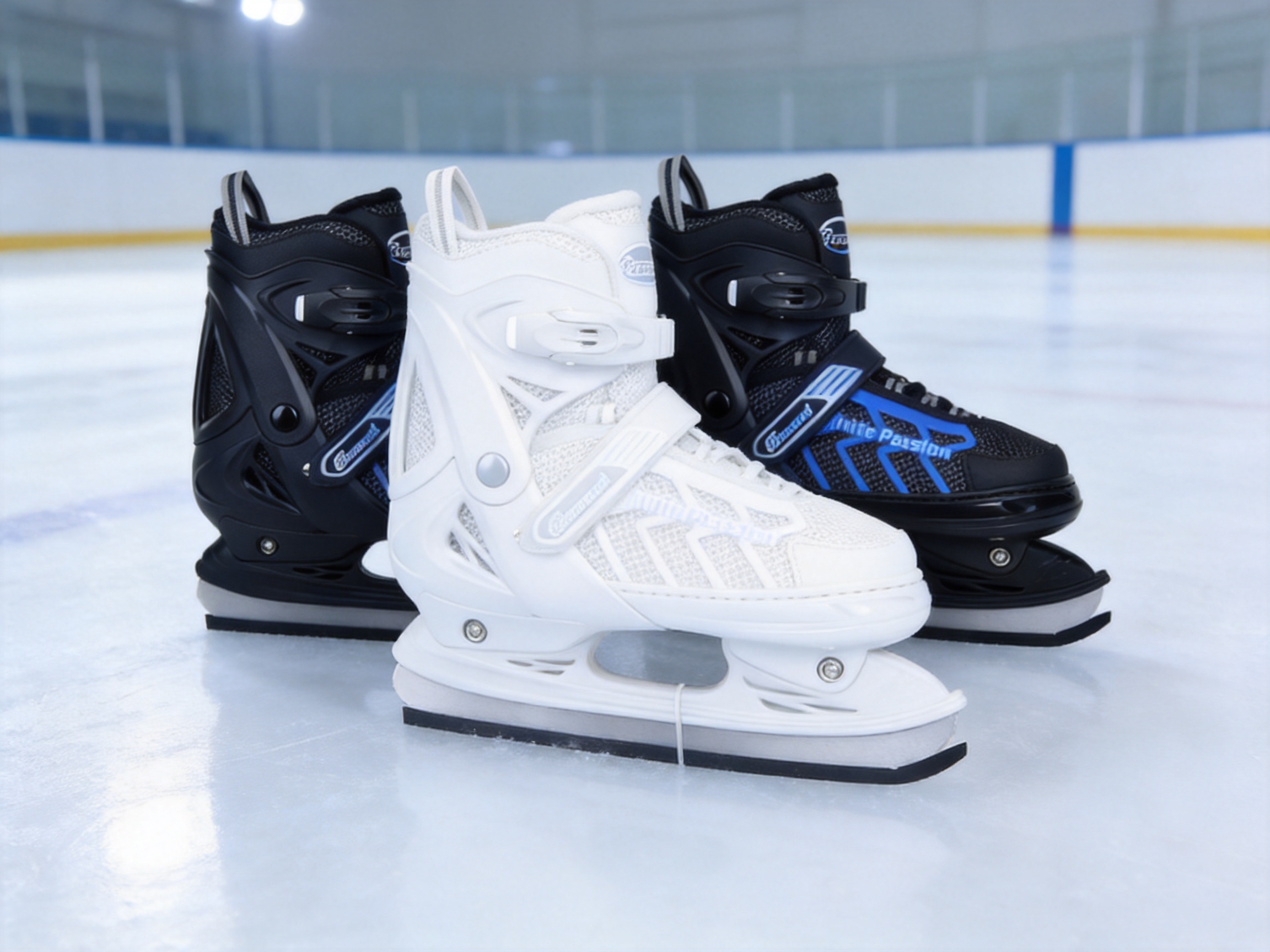
The BW-128 Adjustable Ice Skates are built according to a “solid color uniformity” design strategy. The Black version uses a predominantly black appearance, the White version follows an all-white visual direction, and the Blue version combines a black foundation with blue strap systems. The design avoids unnecessary color blocks and decorative graphics, creating an integrated and equipment-oriented appearance.
This approach offers more than a cosmetic benefit. A simple color system makes the skates easier to organize in family, school, and commercial environments. Neutral black and white options can be assigned to users without strong gender or age associations, while the blue option provides additional visibility without becoming visually excessive.
The product’s minimalist appearance also supports professional positioning. Many skating products rely on bright graphics, contrasting panels, lights, cartoon characters, or other decorative elements to attract attention. Those features may be appropriate for certain consumer segments, but they can also make product lines more difficult to standardize. The BW-128 focuses instead on the essential components that influence performance, comfort, and service life.
The model code “128” is concise and easy to communicate. Retailers, distributors, rental facilities, and procurement departments can identify the product without managing a complicated series of functional suffixes or graphic editions. This can simplify catalog management, purchasing discussions, stock allocation, and product training.
Core Product Characteristics
| Feature | Product Information | Practical Value |
|---|---|---|
| Product type | Adjustable ice skate | Supports use across multiple foot-growth stages |
| Model | BW-128 | Simple identification for sales and procurement |
| Available colors | Black, White, and Blue | Provides neutral and easily managed visual options |
| Shell material | Impact-resistant PP | Offers toughness and structural protection |
| Upper material | Semi-soft material | Balances support, flexibility, and comfort |
| Blade material | Stainless steel | Supports corrosion resistance and seasonal maintenance |
| Target users | Children, teenagers, families, trainees, and rental users | Suitable for multiple recreational and institutional scenarios |
The BW-128 is therefore not based on one isolated feature. Its competitive value comes from the way several practical features work together. The shell protects the foot, the upper contributes to comfort and fit, the blade provides the skating interface, and the adjustable structure extends the usable life of the product. The color system and simplified styling then make the product easier to position in different markets.
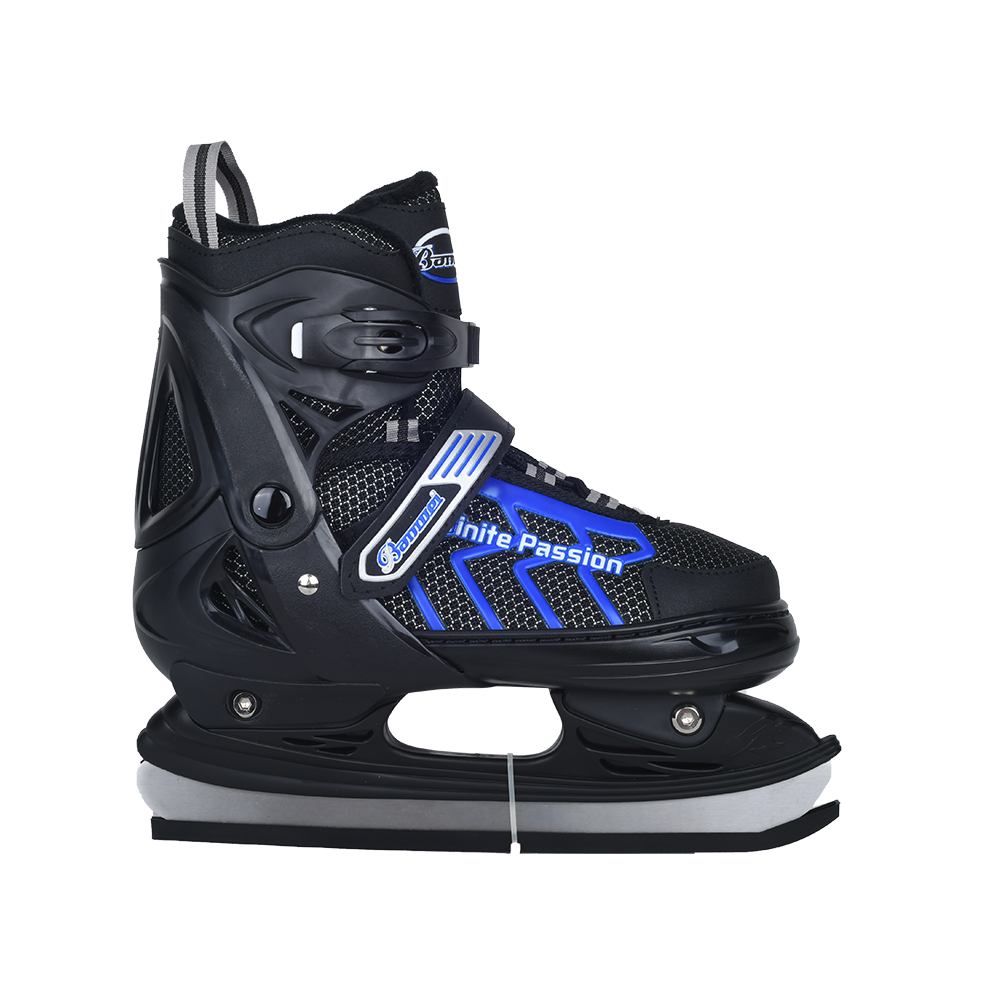
BW-128 Adjustable Ice Skates
2. Advantages of Adjustable Sizing
Adjustable sizing is one of the most important advantages of the BW-128. Children’s feet can change significantly over a relatively short period, and traditional fixed-size skates may become unsuitable before the product has experienced substantial wear. For parents, this can create repeated purchasing costs. For schools and rental operators, it can increase inventory complexity because a wider range of sizes must be stocked.
The BW-128 addresses this issue by accommodating changing foot sizes through an adjustable mechanism. The exact adjustment range should be confirmed with the product specification sheet for a particular order, but the supplied product information identifies three standard size categories: S, M, and L. These categories are intended to cover users from children to teenagers.
An adjustable skate can reduce the number of separate size units required for a household or organization. A family may be able to use one pair for a longer period, while a training center can allocate the same model to different students as their sizes change. In commercial rental operations, adjustable sizing can help staff serve a broader customer range with fewer product variations.
Benefits for Families
For families, the most direct advantage is improved purchasing efficiency. Parents do not need to replace an entire pair of skates every time a child moves to the next size. The skate can be adjusted as the child grows, provided the user remains within the supported range and the product is properly fitted before use.
Adjustability can also make equipment sharing more practical. Siblings may have different foot sizes, but a sufficiently flexible skate can be adjusted between users. This is especially useful when skating is an occasional family activity rather than a daily sport. A family can maintain a basic skating setup without purchasing a complete set of fixed-size equipment for every person.
Benefits for Schools and Training Programs
Schools and skating academies often serve many users with different foot sizes. Fixed-size equipment requires careful inventory planning and can result in certain sizes being overused while other sizes remain idle. An adjustable model can help reduce this imbalance.
During beginner classes, students may develop at different rates. Adjustable skates allow instructors and equipment managers to focus more on fit verification and less on constantly replacing products. The solid-color appearance also supports easy identification and allocation. A school can organize equipment by condition, size range, or class group without dealing with a large number of graphic variations.
Benefits for Rental Facilities
Rental operations prioritize versatility, durability, serviceability, and fast customer turnover. An adjustable ice skate can serve more users than a fixed-size model with the same inventory count. This can reduce the total number of pairs required to cover common customer needs.
Rental staff can also simplify storage and selection procedures. Instead of searching through many fixed-size products, employees can choose an appropriate adjustable range and then fine-tune the fit. This may shorten service time during busy periods, although staff must always verify that the final adjustment is secure and comfortable before the customer enters the ice surface.
The adjustable structure is therefore a key advantage over basic fixed-size competitors. It does not eliminate the need for correct sizing, but it gives buyers a more flexible tool for managing growth, sharing, training, and rental use.
3. PP Shell Performance in Cold Environments
The shell of the BW-128 is made from impact-resistant polypropylene, commonly known as PP. The shell is an important structural component because it helps protect the foot and maintain the shape of the skate during use. Ice skating involves contact with hard surfaces, equipment handling, occasional falls, and repeated loading. A shell must therefore provide a balance of toughness, weight, and process consistency.
One advantage associated with PP is its ability to maintain useful toughness in low-temperature conditions when an appropriate grade and formulation are selected. Ice rinks expose equipment to cold environments, and materials that perform well only at room temperature may not provide the same level of reliability during winter or rink use. The PP shell of the BW-128 is intended to provide structural protection while remaining suitable for the conditions commonly associated with ice skating.
Impact resistance is particularly relevant for beginner users. New skaters may experience more frequent balance loss and contact with barriers or the ice surface. A robust shell helps protect the foot area and contributes to the overall service life of the product. For rental businesses and schools, where equipment may be used by many individuals, this structural durability can be more valuable than decorative features.
The shell also provides a stable foundation for the upper, fastening systems, and blade assembly. A well-integrated structure reduces the risk that the skate will feel loose or inconsistent during basic movements. Although skating performance depends on many factors, including blade maintenance, user technique, fit, and surface conditions, the shell remains a central component of the equipment system.
Why PP Can Be an Advantage over Less Suitable Materials
Material selection affects both product performance and manufacturing efficiency. PP is widely used in sporting goods and consumer products because it can be processed into consistent shapes, supports efficient injection molding, and offers a useful balance between durability and weight. When compared with materials that are excessively rigid, heavy, or less suitable for impact, PP can provide a more practical solution for recreational skating equipment.
For distributors, material clarity is also important. A clearly identified PP shell gives buyers a straightforward basis for comparing products. It communicates that the skate is designed around a functional protective structure rather than a thin decorative exterior.
The shell should still be inspected regularly. Users and operators should check for cracks, deformation, loose components, and other signs of damage. No material can eliminate the need for responsible equipment care, but the impact-resistant PP construction gives the BW-128 a sound foundation for repeated use.
4. Semi-Soft Upper for Comfort and Support
The upper of the BW-128 uses a semi-soft material designed to balance support and comfort. A completely rigid upper may provide strong structure but can feel restrictive, particularly for beginners who are still learning how to position their feet. A very soft upper may feel comfortable initially but may not provide sufficient support during movement. The semi-soft construction aims to occupy a practical middle ground.
Comfort is important because discomfort can interfere with balance, concentration, and willingness to continue skating. Children in particular may be less able to describe the source of discomfort accurately. A supportive but forgiving upper can help create a more positive learning experience, provided the skate is adjusted correctly and worn with suitable socks.
The upper also contributes to fit. A good fit should hold the foot securely without creating excessive pressure points. The user should be able to maintain stable contact with the interior of the skate while moving the ankle in a controlled manner. The semi-soft material can help accommodate normal foot contours and support a more natural feeling during basic skating exercises.
Support for Beginners and Developing Skaters
Beginner skaters need equipment that does not create unnecessary technical obstacles. If the foot moves excessively inside the skate, the user may struggle to transfer body weight to the blade. If the upper is too rigid or uncomfortable, the user may avoid practicing for an adequate amount of time. The BW-128 seeks to support a more balanced learning experience through its semi-soft upper.
For technical training, the minimalist design can also be beneficial. The skate does not use lights, flashes, or cartoon elements that may distract from the equipment’s primary purpose. Users can focus on posture, balance, edge control, stopping techniques, and safe movement.
Comfort in Family and Rental Use
In a family setting, different users may have different preferences and foot shapes. A semi-soft upper can provide a more adaptable contact area than a highly rigid construction. In a rental setting, comfort becomes even more significant because customers may have varying levels of experience and may wear the product for different lengths of time.
Comfort should always be evaluated together with size adjustment and fastening. Even a well-designed upper cannot compensate for an incorrectly adjusted skate. Operators should ensure that the skate is neither too loose nor excessively tight and that the user can stand and walk safely before entering the ice.
5. Stainless Steel Blade and Maintenance Advantages
The BW-128 uses a stainless steel blade. The blade is the component that directly interacts with the ice, making its condition important for glide, control, and user confidence. Stainless steel is valued for its corrosion resistance, which can be particularly helpful in seasonal sports equipment exposed to moisture and repeated drying cycles.
Ice skating equipment frequently encounters water from melting ice, wet floors, condensation, and storage environments. If moisture is not removed, metal components may develop corrosion over time. Stainless steel does not remove the need for care, but it can reduce the maintenance burden compared with less corrosion-resistant materials.
For families, this means the product can be easier to maintain between occasional skating sessions. For schools and rental facilities, corrosion resistance can support more consistent equipment management across a long operating season. Staff should still dry the blades after use and store the skates in a ventilated location.
Blade Care Recommendations
After skating, users should wipe moisture from the blade and allow the skate to dry naturally. Blades should not be left in damp bags for extended periods. Protective guards may be used when walking away from the ice, but wet guards should not be stored on the blade for long periods because trapped moisture can encourage corrosion.
Operators should inspect the blade regularly for visible damage, unusual wear, loose attachment points, or changes in edge condition. Sharpening should be performed by qualified personnel using equipment appropriate for ice skate blades. A stainless steel blade still requires correct sharpening and handling to preserve skating performance.
Compared with products that prioritize appearance but provide little information about blade material, the BW-128 offers a clearer functional specification. Buyers can evaluate the stainless steel blade as part of a complete durability and maintenance strategy.
6. Minimalist Styling as a Commercial Advantage
The BW-128’s solid-color design is not simply a matter of taste. It can provide practical advantages in product positioning, inventory management, and institutional use. Black, White, and Blue are familiar color choices that can be presented across different markets without requiring a complex explanation of the visual concept.
Black is often selected for its ability to conceal minor marks from regular use. This can be valuable in rental or training environments where equipment is handled frequently. White creates a clean and professional impression, although it may require more attention to surface cleanliness. Blue offers a balance between visibility and practical dirt resistance when used with a dark base.
| Color | Visual Character | Potential Application |
|---|---|---|
| Black | Discreet, practical, and resistant to showing minor wear | Rental facilities, families, and frequent users |
| White | Clean, professional, and visually bright | Training programs, retail presentation, and users who prefer a crisp appearance |
| Blue | Visible, modern, and balanced by a dark base | Young users, recreational programs, and buyers seeking a distinctive but restrained option |
The absence of excessive decoration can also support brand-neutral procurement. Schools, clubs, and public programs may prefer equipment that does not strongly target a particular gender, age group, or character theme. The BW-128 can be used in mixed groups while maintaining a consistent visual identity.
From a retail perspective, a minimalist design can have a longer market life than a highly trend-dependent graphic. Decorative themes may become outdated, while solid colors remain broadly acceptable. This can help distributors maintain inventory across multiple selling seasons.
Minimalism also communicates a clear product message: the skate is equipment first. The visual design directs attention toward the shell, upper, blade, adjustment system, and overall construction. This is especially suitable for buyers who prefer technical simplicity over decorative complexity.
7. Comparison with Common Competing Product Types
The BW-128 competes with several categories of ice skates, including fixed-size recreational skates, highly decorated children’s skates, and basic rental models. Its advantages become clearer when compared according to practical purchasing criteria rather than appearance alone.
Compared with Fixed-Size Skates
Fixed-size skates may offer a simple construction and can be suitable for users whose feet have stopped growing. However, they are less flexible for children and families. Once the user outgrows the skate, another pair must be purchased. A fixed-size inventory also requires more individual sizes to serve a similar customer base.
The BW-128 provides a stronger value proposition for growing users because its adjustable design can extend the usable period of the product. This can reduce replacement frequency and simplify household or institutional stock planning.
Compared with Highly Decorated Skates
Decorative skates may appeal to customers seeking bright graphics or novelty features. However, graphics, lights, and additional decorative components do not necessarily improve structural protection, fit, blade durability, or maintenance. They can also create a more limited visual market position.
The BW-128 concentrates its design resources on core components. Its neutral appearance can be used by children, teenagers, adults, families, schools, and rental businesses. This broad positioning may provide greater flexibility for distributors and procurement managers.
Compared with Basic Rental Equipment
Basic rental equipment is often selected primarily for low initial cost, but low price alone may not produce the best operational value. Rental products are used repeatedly, exposed to moisture, and handled by many customers. Durability, corrosion resistance, fit flexibility, and cleanability all affect the total cost of ownership.
The BW-128 combines an impact-resistant PP shell, a stainless steel blade, semi-soft upper, and adjustable sizing. This feature combination can make it a practical upgrade from less adaptable rental equipment. The solid-color appearance may also make the fleet look more consistent and professional.
Competitive Feature Summary
| Purchasing Criterion | Typical Fixed-Size Model | Typical Decorative Model | BW-128 Adjustable Ice Skates |
|---|---|---|---|
| Growth accommodation | Limited | Often limited | Supported through adjustable sizing |
| Visual neutrality | Varies | Often limited | Strong, with solid Black, White, and Blue options |
| Shell specification | Varies by supplier | Varies by supplier | Impact-resistant PP |
| Upper construction | Varies by supplier | May prioritize decoration | Semi-soft material for support and comfort |
| Blade specification | Varies by supplier | Varies by supplier | Stainless steel |
| Institutional suitability | Depends on size range | May be less neutral | Suitable for schools, clubs, and rental programs |
These comparisons do not mean that every competing product has the same limitations. Product quality varies by supplier and specification. However, the BW-128 provides a balanced configuration that addresses several common weaknesses in entry-level and general-purpose ice skates.
8. Manufacturing Strengths and Production Capabilities
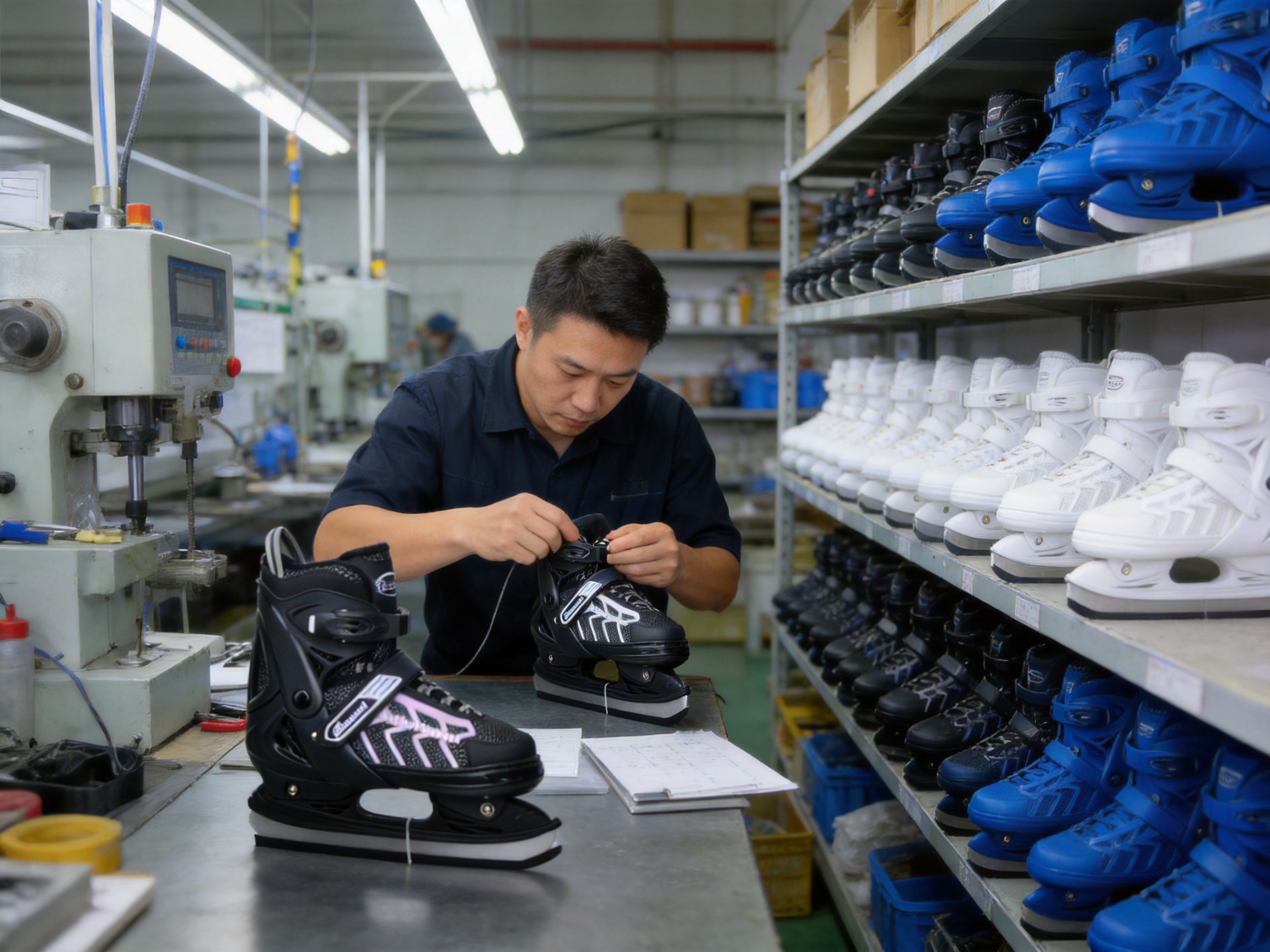
The reliability of a finished skate depends not only on its design but also on the manufacturing system used to produce it. Ningbo Feile Sporting Goods Co., Ltd. was established in 2010 and specializes in children’s scooters, inline skates, roller skates, and ice skates. Its product focus gives the company experience across several related categories of wheeled and ice-based sporting goods.
The company operates a workshop of approximately 20,000 square meters and has more than 200 employees. Its manufacturing system includes five advanced automatic production lines, along with dedicated mold, injection molding, sewing, and assembly workshops. This integrated structure allows multiple stages of production to be coordinated within one organization.
For an adjustable ice skate, integrated manufacturing is important. The product contains molded structural parts, textile or semi-soft upper components, fastening systems, adjustment features, and a blade assembly. Coordination between these stages can support better dimensional consistency and reduce the risks associated with fragmented outsourcing.
Mold and Injection Molding Capability
The shell is one of the most important molded components of the BW-128. A dedicated mold capability can help the manufacturer manage product geometry, surface finish, fit-related dimensions, and production repeatability. Injection molding also supports efficient volume production when the tooling and process parameters are properly controlled.
For OEM customers, in-house or closely managed mold operations can improve communication during product development. Adjustments to structure, appearance, or production details can be discussed with engineering and tooling teams familiar with the product category. This can shorten the distance between design requirements and manufacturing execution.
Injection molding is particularly valuable for PP components because it can produce consistent shells at commercial scale. Consistency matters for adjustable skates because the shell must work reliably with the upper, adjustment system, and other components across many units.
Sewing and Upper Assembly
The semi-soft upper requires careful cutting, sewing, reinforcement, and assembly. A company with dedicated sewing workshops can manage these processes as part of a complete production workflow. Proper sewing quality supports comfort, appearance, and resistance to repeated use.
The upper must also align correctly with the shell and fastening components. Poor alignment may create pressure points or reduce the stability of the foot. Coordinated assembly procedures and inspection standards can help maintain a consistent user experience from pair to pair.
Assembly and Quality Coordination
Final assembly brings together the shell, upper, adjustment mechanism, fasteners, and blade. Each element must be positioned and secured correctly. A manufacturing system with dedicated assembly capacity can establish standardized work instructions, inspection points, and production records.
The company’s professional R&D engineering team supports product development and technical improvement. More than 30 college-educated management staff contribute to organizational and production coordination. These resources are relevant to OEM buyers that require communication across sampling, production, packaging, certification, and delivery stages.
Manufacturing scale is especially useful for customers seeking stable repeat orders. A supplier that can coordinate molds, injection molding, sewing, assembly, and quality control is better positioned to support consistent product output than a supplier that depends entirely on disconnected external factories.
9. Quality Systems, Certification, and Compliance Support
Sporting goods intended for children and families must be produced with attention to safety, materials, mechanical performance, and regulatory expectations. The supplied company information states that Feile has passed ISO9001, BSCI, and Kmart factory certification systems and has obtained multiple national patents.
The company also reports product certifications including 3C, CE, EN71, EN62115, ASTM, EMC, and EN13843:2009. The relevance of each certification depends on the specific product, market, configuration, and intended use. Buyers should always request current documentation for the exact BW-128 model and destination market before placing an order.
ISO9001-related quality management practices can support controlled procedures, documentation, corrective action, and continuous improvement. BSCI-related social compliance evaluation can be relevant to international buyers that assess labor, workplace, and ethical sourcing standards. Factory certification programs requested by major retailers can further demonstrate the manufacturer’s ability to meet structured procurement requirements.
Importance of Documentation for OEM Buyers
International buyers commonly require more than a product sample. They may request material declarations, test reports, packaging specifications, inspection records, factory audit information, and shipment documentation. A manufacturer experienced with international certification systems is better prepared to support these processes.
For the BW-128, documentation should address the shell material, upper materials, blade construction, adjustment mechanism, mechanical safety, labeling, and packaging. If the product is marketed for children, buyers should confirm that the intended age range and claims are consistent with applicable regulations.
Compliance should be treated as an ongoing process rather than a one-time marketing statement. Changes to materials, suppliers, colors, molds, or production locations may affect testing requirements. A responsible supplier should help buyers identify when updated evaluation is necessary.
10. Applications Across Multiple User Groups
The BW-128 is designed to serve a broad range of use scenarios. Its adaptable sizing, simple appearance, and durable material selection make it suitable for both personal and organized use.
Family Recreational Skating
Families can use the BW-128 as a practical basic setup for occasional or regular skating. The adjustable mechanism helps accommodate children as they grow, while the color options allow family members to select a preferred appearance. Black and White are especially easy to share among siblings because they do not depend on strongly gendered or age-specific styling.
Families should store the skates in a dry place, clean the upper according to the material instructions, and dry the blade after every session. Proper maintenance can extend the usable life of the product and preserve comfort.
Individual Technical Training
Teenagers and developing skaters who prefer equipment with a tool-oriented appearance may appreciate the BW-128’s minimalist styling. The absence of unnecessary visual elements keeps the focus on movement and technical progress.
For structured training, coaches can use the skates as part of beginner instruction, balance exercises, controlled gliding, stopping practice, and basic edge work. As with all recreational skating equipment, the product should be matched to the user’s skill level and used under appropriate supervision.
School Physical Education Programs
Schools require equipment that can be allocated fairly, stored efficiently, and maintained through repeated use. The BW-128’s neutral colors and adjustable sizing can simplify management for physical education programs and school skating activities.
The product can also support standardized procurement. Instead of purchasing numerous visually unrelated models, a school can select one core design with multiple color options. This can improve the consistency of instruction and make replacement planning more straightforward.
Skating Academies and Training Classes
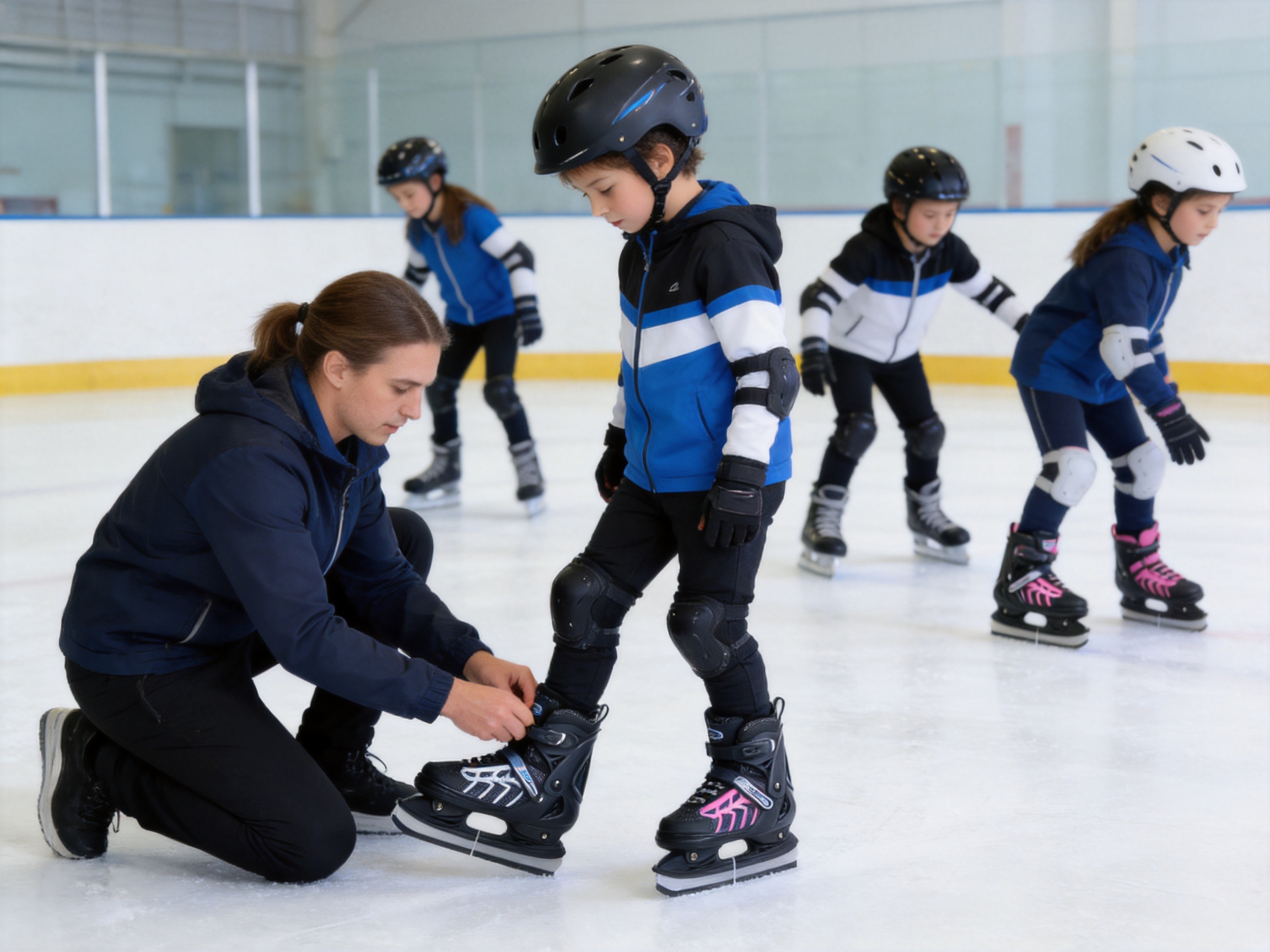
Training centers often need equipment for students who are at different stages of development. An adjustable skate can reduce the pressure to maintain every possible fixed size. The PP shell and stainless steel blade provide a practical foundation for repeated instructional use, while the semi-soft upper supports beginner comfort.
Academies should establish inspection procedures for adjustment locks, fasteners, shell condition, upper stitching, and blade edges. Regular checks are particularly important when equipment is shared by many students.
Commercial Rental Operations
Rental operators can use the BW-128 to create a consistent, practical fleet. Black skates can help conceal minor marks, while the solid-color design presents a clean and organized appearance. Adjustable sizing may improve inventory utilization by allowing each pair to serve a wider range of customers.
Rental facilities should develop clear cleaning, drying, sharpening, and inspection procedures. Customers should be instructed not to walk on unsuitable surfaces without blade protection, and staff should verify that each pair is properly adjusted before use.
11. Order, OEM, and Sourcing Considerations
For international buyers, product selection is only one stage of the sourcing process. A successful project also requires clear communication about specifications, colors, packaging, labeling, quantity, testing, delivery schedules, and after-sales support.
Feile’s experience in scooters, inline skates, roller skates, and ice skates provides a useful foundation for customers seeking a broader skating and scooter equipment supplier. Buyers can potentially coordinate multiple product categories through one manufacturing partner, which may simplify sourcing and reduce communication overhead.
Specification Confirmation
Before production, buyers should confirm the supported adjustment range, size labeling, product dimensions, net and gross weight, carton dimensions, blade specifications, packaging format, and user instructions. The supplied information lists standard product size categories as S, M, and L, with dimensions of approximately 47 × 38 × 29 cm, 51 × 39 × 30 cm, and 55 × 40 × 31 cm respectively. Buyers should verify whether these measurements refer to product, packaging, or shipping dimensions in the final technical sheet.
Color confirmation should include a physical sample or an agreed color reference. Solid-color products make shade consistency especially important because large uninterrupted surfaces can make color differences more noticeable. The Black, White, and Blue versions should be approved before mass production.
Packaging and Retail Presentation
Retail packaging should protect the shell, upper, and blade during transport. It should also provide clear information about adjustment, care, safety, and intended use. For e-commerce customers, packaging dimensions and product photography can influence shipping costs and conversion rates.
OEM customers may request customized cartons, inserts, labels, instruction manuals, barcodes, or color boxes. These requirements should be confirmed early because they can affect artwork approval, testing, packing procedures, and production timing.
Quality Inspection
Quality inspection can include appearance checks, dimensional verification, adjustment function testing, fastening inspection, stitching inspection, blade alignment, and packaging review. For larger orders, buyers may use an agreed acceptable quality limit system or third-party inspection service.
Particular attention should be given to the adjustment mechanism. It should operate smoothly, lock securely, and remain stable during normal use. The shell should be checked for molding defects, cracks, sharp edges, or significant surface imperfections. The upper should be inspected for loose threads, uneven seams, and attachment problems.
12. Maintenance and User Safety
Correct maintenance is essential for preserving the performance and safety of any ice skate. Users should inspect the skates before every session, especially when the product is shared or used by children.
The shell should be checked for cracks, deformation, and loose parts. The upper should be examined for damage or stitching failure. The adjustment system should be tested before the user steps onto the ice. The blade should be free of visible damage and should be properly dried after use.
Skaters should wear suitable socks and ensure that the skate fits securely. The foot should not slide excessively inside the boot, and the fastening system should not create painful pressure. Children should be supervised by a responsible adult, particularly during their first skating sessions.
Users should avoid walking on rough surfaces with exposed blades. When moving away from the ice, suitable blade guards should be used. Afterward, the blades should be dried before storage. Skates should not be placed in a sealed, damp bag for an extended period.
The BW-128 is intended to support recreational and training activities, but no skate can replace instruction, supervision, protective behavior, or appropriate rink rules. Helmets and other protective gear should be selected according to the activity and the requirements of the skating facility.
13. Sustainability and Total Ownership Value
Adjustable sizing can contribute to a more efficient ownership model because one pair may remain usable across multiple stages of growth. Extending product use can reduce the frequency of replacement and may lower the material and packaging consumption associated with repeated purchases.
Durable components also influence total ownership value. An impact-resistant shell can support longer service life under normal use, while a stainless steel blade can reduce maintenance concerns related to corrosion. A semi-soft upper that remains comfortable and supportive may help the product continue serving users rather than being replaced due to discomfort.
For rental and institutional buyers, total ownership value includes more than the initial unit price. It can include storage, staff handling, cleaning, repair, replacement, inventory loss, and customer satisfaction. The BW-128’s adjustable construction and straightforward styling may help reduce several of these operational pressures.
Buyers should evaluate sustainability claims carefully and consider the complete product life cycle. Proper maintenance, responsible repair, appropriate recycling of materials where available, and efficient inventory management can all contribute to better environmental performance.
14. Why the BW-128 Is a Strong OEM Product Candidate
The BW-128 combines several characteristics that are attractive to OEM and wholesale customers. Its design is easy to understand, its colors are broadly marketable, and its materials have clear functional purposes. The product can be positioned as a family skate, beginner training skate, school program item, or rental fleet upgrade.
The product’s minimalist appearance also allows buyers to apply different market strategies. A retailer may present it as a practical growth-friendly skate. A school may emphasize standardized allocation and neutral styling. A rental facility may focus on durability, corrosion resistance, and adjustable inventory. An importer may use the model as part of a larger skating and scooter equipment collection.
Feile’s factory resources further support OEM potential. The company’s mold, injection molding, sewing, and assembly capabilities provide a coordinated manufacturing base. Its R&D engineering team can support product development, while its experience with international exhibitions and certification systems can assist global buyers during sourcing and commercialization.
As a China OEM skating and scooter equipment manufacturer, Feile offers a product range that includes children’s scooters, inline skates, roller skates, ice skates, and sports protective gear. This one-stop category coverage can be useful for distributors that prefer to consolidate orders and develop a consistent product portfolio.
15. Final Assessment
The BW-128 Adjustable Ice Skates are designed for buyers who value practical performance over unnecessary decoration. The adjustable sizing mechanism helps accommodate children’s growth and supports family sharing, school procurement, training classes, and rental operations. The impact-resistant PP shell provides structural protection, the semi-soft upper balances support and comfort, and the stainless steel blade supports corrosion-resistant seasonal use.
The solid-color design strengthens the product’s commercial flexibility. Black, White, and Blue offer distinct choices without creating a complicated graphic range. The neutral appearance works in mixed-age and mixed-gender environments, while the absence of lights, flashes, cartoon elements, and excessive panels keeps attention on skating technique and equipment function.
Compared with fixed-size skates, the BW-128 offers greater adaptability. Compared with heavily decorated models, it provides a more professional and enduring visual language. Compared with basic rental equipment, its combination of adjustable sizing, PP structure, semi-soft upper, and stainless steel blade creates a stronger platform for repeated use.
Supported by Feile’s manufacturing infrastructure, quality systems, engineering resources, and experience in related sports equipment categories, the BW-128 is a credible OEM and wholesale option for global buyers. It is particularly suitable for customers seeking a straightforward, scalable, and versatile ice skate that can serve both individual consumers and organized sports programs.
Questions and Answers
Q1: What type of product is the BW-128?
The BW-128 is an adjustable ice skate designed for recreational skating, beginner training, family use, institutional programs, and commercial rental applications.
Q2: What colors are available?
The model is available in Black, White, and Blue. The design emphasizes solid-color uniformity, with minimal contrast and no unnecessary decorative graphics.
Q3: Is the BW-128 suitable for children?
Yes. The adjustable mechanism is intended to accommodate growth and can cover users from children to teenagers, depending on the selected size range and the user’s foot measurements.
Q4: What is the shell made of?
The shell is made from impact-resistant polypropylene, or PP. The material is selected for structural protection, toughness, and suitability for cold-temperature use when properly formulated and processed.
Q5: What material is used for the upper?
The upper uses a semi-soft material designed to balance support, flexibility, and comfort during skating.
Q6: What material is used for the blade?
The blade is made from stainless steel. This material supports corrosion resistance and can reduce maintenance concerns related to moisture, although the blade must still be dried and maintained after use.
Q7: What are the standard size categories?
The supplied information identifies three standard categories: S, M, and L. The listed dimensions are approximately 47 × 38 × 29 cm, 51 × 39 × 30 cm, and 55 × 40 × 31 cm. Buyers should confirm the exact size interpretation and adjustment range with the final technical specification.
Q8: Can the skates be used by more than one family member?
They may be shared when the users’ foot sizes fall within the supported adjustment range. The skate must be readjusted and checked for secure fit each time it is transferred to another user.
Q9: Is the model appropriate for skating schools?
Yes. Its adjustable sizing, neutral colors, and practical construction make it suitable for skating classes, school physical education programs, and other organized training environments.
Q10: Is the product suitable for rental businesses?
Yes. Adjustable sizing can help rental businesses serve more customers with fewer size variations. The PP shell, stainless steel blade, and solid-color appearance are also suitable for a practical rental fleet, provided that regular inspection and maintenance procedures are followed.
Q11: What are the main advantages over fixed-size skates?
The primary advantages are greater flexibility for growing users, fewer size units required for some applications, easier family sharing, and improved inventory efficiency for schools and rental facilities.
Q12: Does the minimalist design reduce functionality?
No. The minimalist design is intended to remove unnecessary visual elements while concentrating attention on the shell, upper, blade, fastening system, and adjustment structure. It is a visual and commercial strategy rather than a reduction in core function.
Q13: What manufacturing capabilities support this product?
The manufacturer operates mold, injection molding, sewing, and assembly workshops, along with five automatic production lines and an R&D engineering team. These capabilities support coordinated production of molded shells, semi-soft uppers, and assembled skate systems.
Q14: What quality and certification information is available?
The company reports ISO9001, BSCI, and Kmart factory certification systems, as well as product certifications including 3C, CE, EN71, EN62115, ASTM, EMC, and EN13843:2009. Buyers should request current documentation for the exact product configuration and destination market.
Q15: How should the blades be maintained?
The blades should be wiped dry after every use and stored in a ventilated location. Users should avoid walking on rough surfaces with exposed blades and should arrange professional sharpening when required.
Q16: Can the product be customized for OEM orders?
OEM customers can discuss color, packaging, labeling, documentation, order quantity, and other project requirements with the manufacturer. Customization should be confirmed before production because it may affect tooling, testing, packaging, and lead time.
References
1. Product specification and content materials for BW-128 Adjustable Ice Skates, supplied for this article.
2. Ningbo Feile Sporting Goods Co., Ltd. company profile and manufacturing capability information, supplied for this article.
3. General principles of polypropylene material selection for molded sporting goods.
4. General guidance for stainless steel blade care and moisture control in ice skating equipment.
5. General quality management and product compliance considerations for international sporting goods sourcing.
Product: BW-128 Adjustable Ice Skates

Recommended Articles
-
BW-127BD Kids Ice Skate05/09

Get in Touch
Your email address will not be published. Required fields are marked *
Have a project in mind? Contact with us!
We are happy to answer your questions. Please fill out this form
and one of our professional team will get back to you as soon as possible.

We specialize in producing various types of children's toy cars, children's skateboards, and ice skates.
