
 En
En
 Español
 русский
 عربى
عربى
How Adjustable Inline Skates Support Confident Youth Skating
Date:Aug 26, 2026
Content
- 1 1. Product Overview and Intended User
- 2 2. Why Adjustability Matters for Growing Feet
- 3 3. Beginner-Friendly Control and Balance
- 4 4. Comfort for Daily Practice
- 5 5. Construction for Repeated Basic Practice
- 6 6. A Practical Alternative to Fixed-Size and Advanced Skates
- 7 7. Suitable Skating Environments
- 8 8. Health and Skill Development Benefits
- 9 9. Product Positioning for Retail and Wholesale Buyers
- 10 10. Manufacturing Capabilities Supporting Product Quality
- 11 11. Quality Management and International Readiness
- 12 12. Research, Development, and Product Improvement
- 13 13. Integrated Production as a Sourcing Advantage
- 14 14. What Makes the Product Commercially Attractive
- 15 15. Recommended Buyer Evaluation Process
- 16 16. Care and Use Recommendations
- 17 17. Q&A
- 17.1 Q1: Who is the BW-187 Adjustable Kids Inline Skate designed for?
- 17.2 Q2: What sizes are available?
- 17.3 Q3: What is the main advantage of the adjustable design?
- 17.4 Q4: Is it suitable for first-time skaters?
- 17.5 Q5: Where can the skates be used?
- 17.6 Q6: Is protective equipment recommended?
- 17.7 Q7: Is the product designed for advanced racing or aggressive skating?
- 17.8 Q8: What comfort features does it offer?
- 17.9 Q9: What manufacturing capabilities support this product?
- 17.10 Q10: Can buyers discuss OEM or private-label requirements?
- 17.11 Q11: What certifications and management systems are associated with the manufacturer?
- 17.12 Q12: How should buyers confirm the correct product specifications?
- 18 18. Conclusion
- 19 References
- 20 Product: BW-187 Adjustable Kids Inline Skate
Inline skating is an engaging way for children and teenagers to develop balance, coordination, lower-body strength, and confidence while enjoying active recreation. However, the quality and suitability of the equipment can strongly influence the learning experience. Skates that are uncomfortable, difficult to adjust, unstable, or poorly matched to a young beginner may create unnecessary frustration. A practical pair of inline skates should therefore combine a supportive fit, manageable control, dependable construction, and enough adjustability to accommodate growing feet.
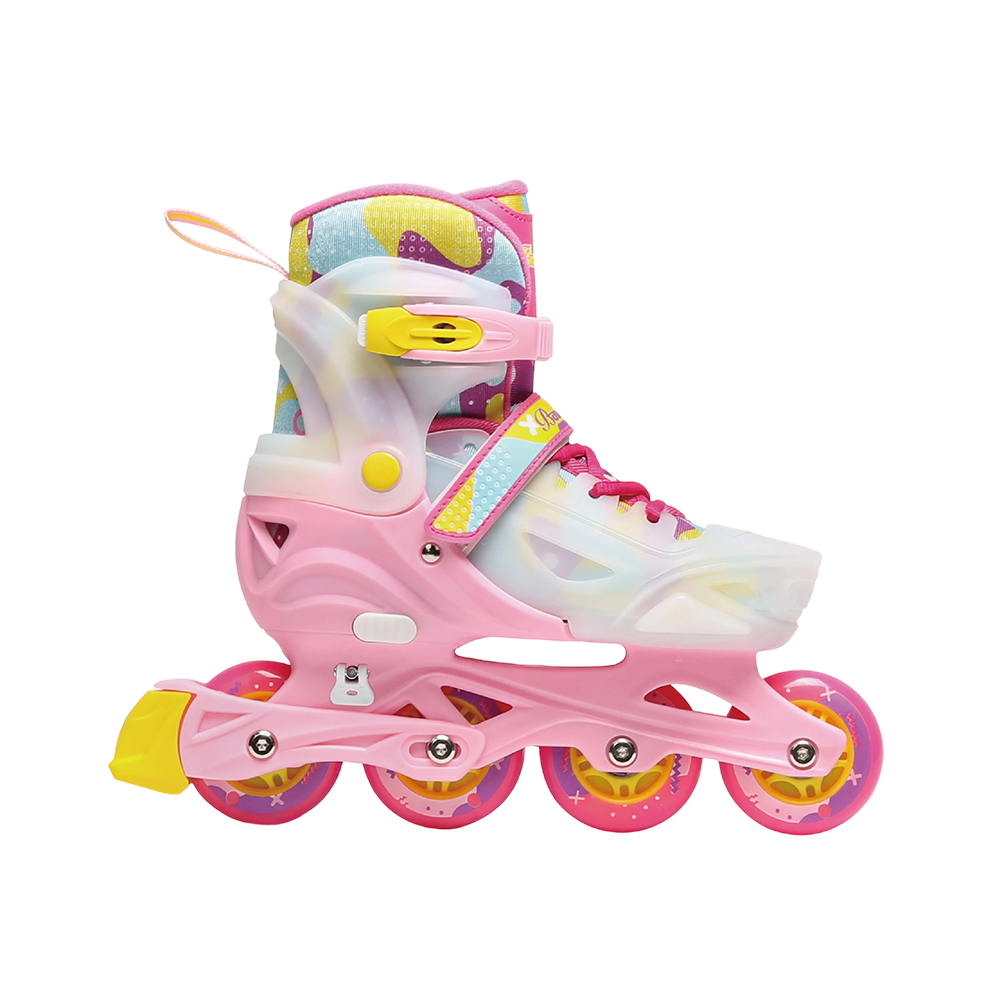
The BW-187 Adjustable Kids Inline Skate is designed around these requirements. It is a beginner-oriented inline skate developed for children, teenagers, and older young users who are learning basic skating skills or practicing regularly. Instead of relying on an overly complex design, it focuses on straightforward operation, comfortable wear, stable movement, and long-term practicality. Its adjustable structure is available in three size ranges, allowing one pair to serve a growing child for a longer period than a fixed-size skate.
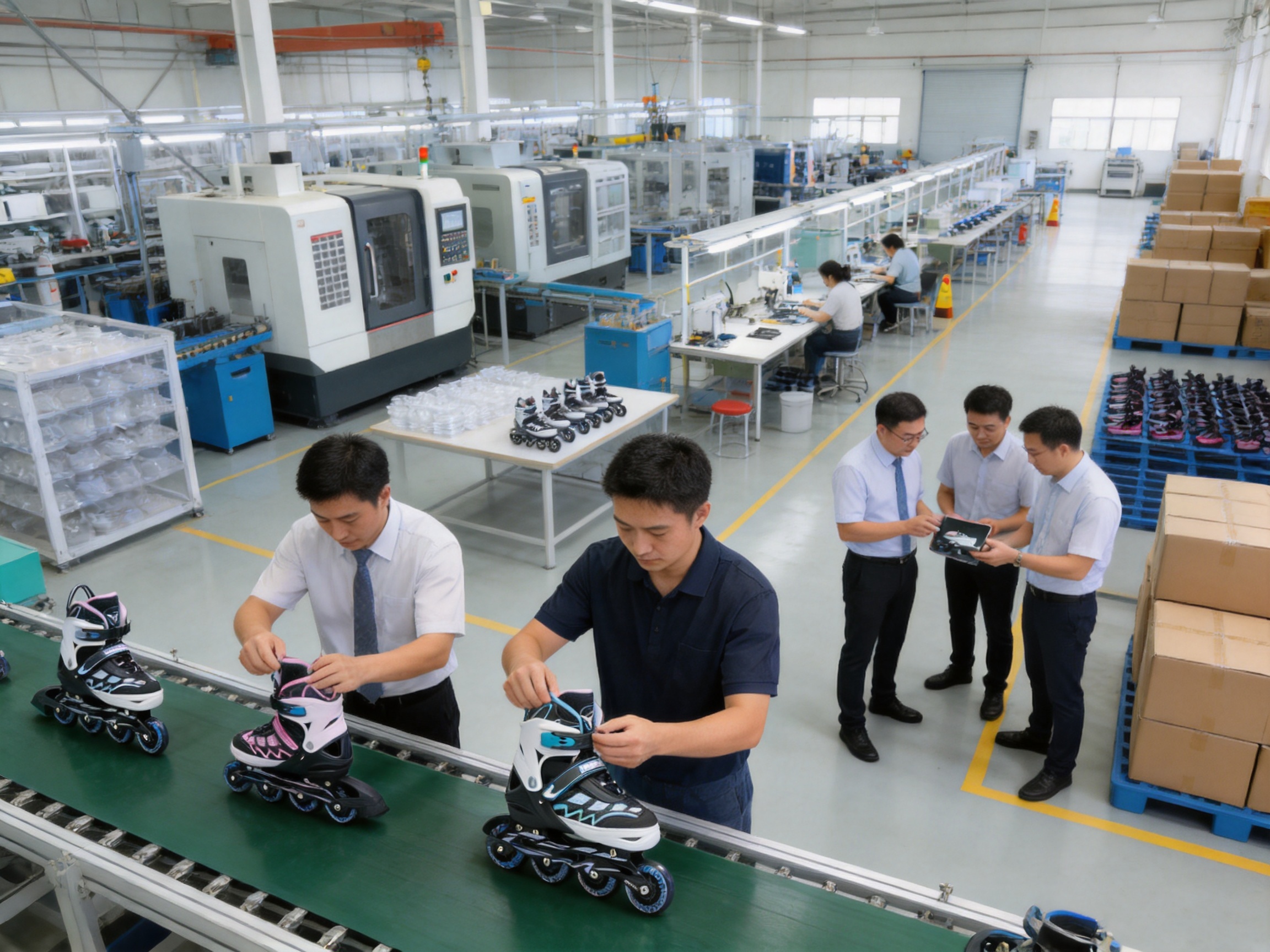
For importers, retailers, distributors, sports brands, and other buyers, this product also represents more than a single recreational item. It is supported by a manufacturer with experience in children’s scooters, inline skates, roller skates, and ice skates. The company operates dedicated mold, injection molding, sewing, and assembly workshops, supported by automatic production lines and an engineering team. These capabilities help create a reliable foundation for OEM and wholesale cooperation.
This article examines the product’s design, user benefits, size flexibility, beginner-friendly performance, manufacturing background, quality systems, and commercial value. It also explains how the skate can compare favorably with basic fixed-size alternatives and why a well-organized production partner matters when sourcing skating equipment for international markets.
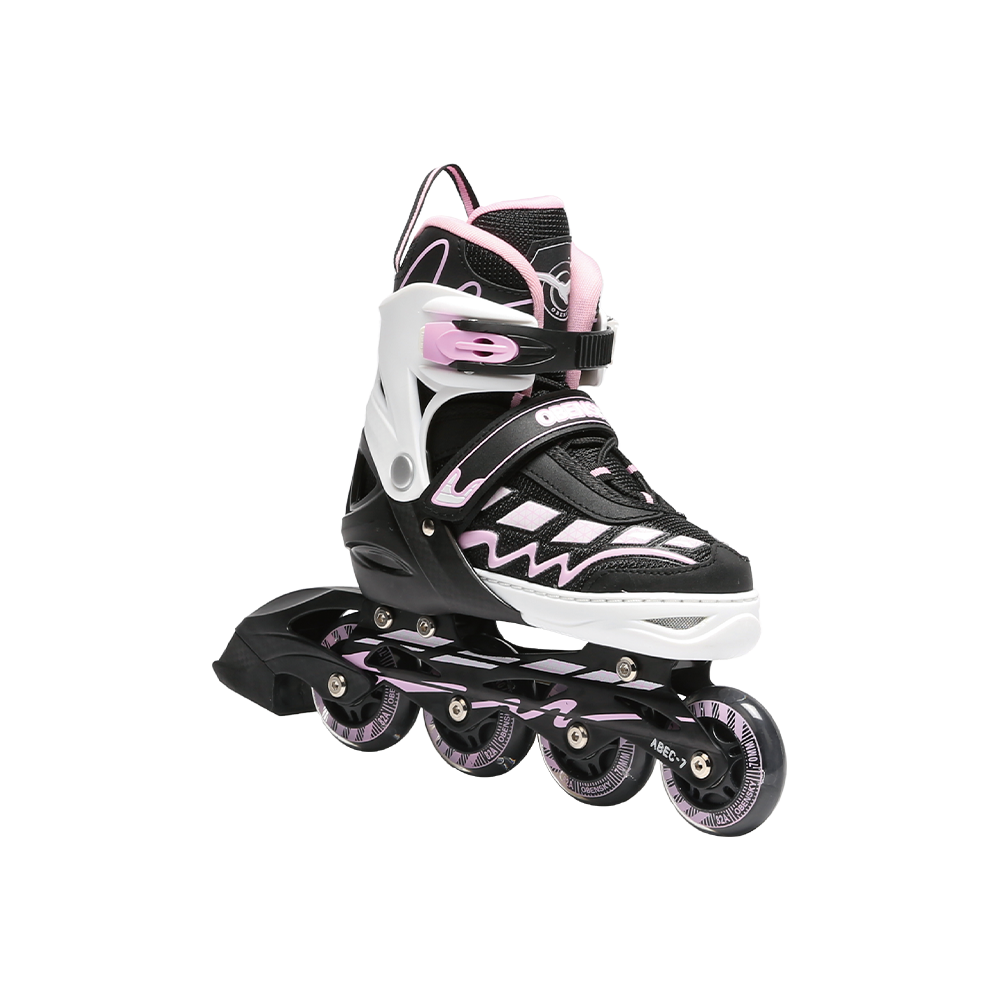
BW-187 Adjustable Kids Inline Skate
1. Product Overview and Intended User
The BW-187 Adjustable Kids Inline Skate is a pair of inline skate shoes intended primarily for beginners. It is suitable for children developing their first skating skills, teenagers beginning from scratch, and young users who need a practical product for regular recreational practice. The design is not centered on decoration or unnecessary complexity. Instead, it emphasizes the basic functions that matter most during early learning: putting the skates on easily, achieving a secure fit, maintaining balance, and practicing fundamental movements with greater confidence.
The skate is offered in three standard size groups: S, M, and L. The available foot-length ranges are represented by sizes 31–34, 35–38, and 39–42. This structure covers a broad span from children’s sizes through older teenagers’ sizes. Since young feet can grow quickly, the adjustable format helps extend the useful life of the product and reduces the need to replace a pair after a relatively short period.
The product is appropriate for several everyday settings. Beginners can use it for lessons and basic training. Families can use it for casual skating in plazas, residential areas, and other suitable flat outdoor locations. It can also be used indoors on smooth surfaces, provided that the venue permits skating and the floor is appropriate. For teenagers, it offers a simple form of after-school exercise that encourages regular movement without requiring a complicated training environment.
The skate should be viewed as a recreational and beginner-training product. It is designed for learning balance, posture, stopping awareness, direction changes, and other fundamental skills. As with any youth sports equipment, users should skate in appropriate areas and wear suitable protective equipment. The product’s beginner focus makes it especially relevant to first-time users who value stability and easy adaptation over advanced racing performance.
2. Why Adjustability Matters for Growing Feet
One of the most significant advantages of an adjustable skate is its ability to accommodate changes in foot length. Children and teenagers do not remain the same size for long. A fixed-size skate may fit well at the time of purchase but become too small after one growth period. When that happens, the family must either purchase another pair or stop using the original product. An adjustable model offers a more practical alternative by allowing the internal length to be modified within its designated range.
The BW-187 is available in three size groups rather than requiring a separate model for every individual foot length. This makes the selection process easier for families and retailers. A buyer can select the appropriate range and then adjust the skate to create a closer fit. The result is a longer adaptation period and greater value from one purchase.
Adjustability also supports comfort. A skate that is too loose can permit excessive foot movement, while a skate that is too tight can create pressure and discomfort. The ability to make gradual changes helps users maintain a snug fit as their feet develop. This is particularly useful for young skaters who may not yet understand how a poorly fitted skate affects balance and control.
From a retail perspective, adjustable sizing can simplify inventory planning. A distributor does not need to carry as many narrowly separated fixed sizes to cover a similar customer group. The three-range system can make product presentation more straightforward and may help retailers serve more customers with fewer stock variations. It also provides a clear selling point for parents who are concerned about rapid growth and repeated equipment costs.
Compared with low-cost fixed-size alternatives, the BW-187 can therefore provide a stronger practical proposition. Its advantage is not merely that the size can be changed once. The broader benefit is that one pair can remain useful across a longer stage of a child’s development, provided the user remains within the stated range and the skate is adjusted correctly.
Size Range and Packaging Information
The three primary ranges are summarized below. The listed dimensions are supplied product or packaging measurements and should be confirmed with the manufacturer when preparing final shipping calculations, carton markings, or container-loading plans.
| Size Group | Foot Size Range | Listed Dimensions | Typical User Profile |
|---|---|---|---|
| S | 31–34 | 540 × 410 × 290 mm | Children and smaller young beginners |
| M | 35–38 | 560 × 420 × 305 mm | Older children and medium-foot teenagers |
| L | 39–42 | 600 × 430 × 315 mm | Larger teenagers and young users |
Exact fit should always be determined by measuring the user’s foot and following the product’s adjustment instructions. Foot shape, sock thickness, and personal comfort preferences may affect the final setting. The size range is intended to provide flexibility, not to replace proper fitting.
3. Beginner-Friendly Control and Balance
Learning to inline skate requires the user to coordinate several movements at once. The skater must stand upright, distribute body weight correctly, control ankle position, and manage forward movement. Beginners may feel unstable during the first sessions, especially when they are unfamiliar with wheels beneath their feet. Equipment that is simple to operate and supportive around the foot can make this learning period less intimidating.
The BW-187 is designed with beginner use in mind. Its straightforward structure avoids adding unnecessary controls that could confuse a new skater. The user can concentrate on basic balance, posture, and movement rather than trying to understand advanced features. This simplicity is useful for parents, instructors, and retailers seeking an accessible entry-level product.
The wheelset is described as basic, smooth, and stable. This type of setup is appropriate for controlled practice because it is intended to provide a steady skating feel rather than an aggressive, high-performance response. For first-time users, predictable movement can be more beneficial than excessive speed. A stable wheel arrangement may help the learner practice pushing, gliding, turning, and stopping with greater awareness.
Confidence is an important part of the beginner experience. If a child feels that the equipment is difficult to control, they may become hesitant to practice. A balanced design with a secure fit can encourage repeated use. Regular practice, in turn, helps develop lower-limb coordination, movement rhythm, and body control.
The product is not presented as a replacement for instruction or safety equipment. Rather, it provides a practical platform on which fundamental skills can be practiced. Users should learn gradually, begin at low speed, choose an open and flat surface, and follow safe skating behavior. In this context, the skate’s stable and uncomplicated character is a meaningful advantage over products designed primarily for experienced or performance-focused users.
4. Comfort for Daily Practice
Comfort influences whether a young skater will continue using a product after the initial purchase. A skate may have attractive styling, but if it creates pressure points, rubs the foot, or feels heavy, the user may avoid longer practice sessions. The BW-187 focuses on a comfortable fit and a lightweight upper design to support more consistent use.
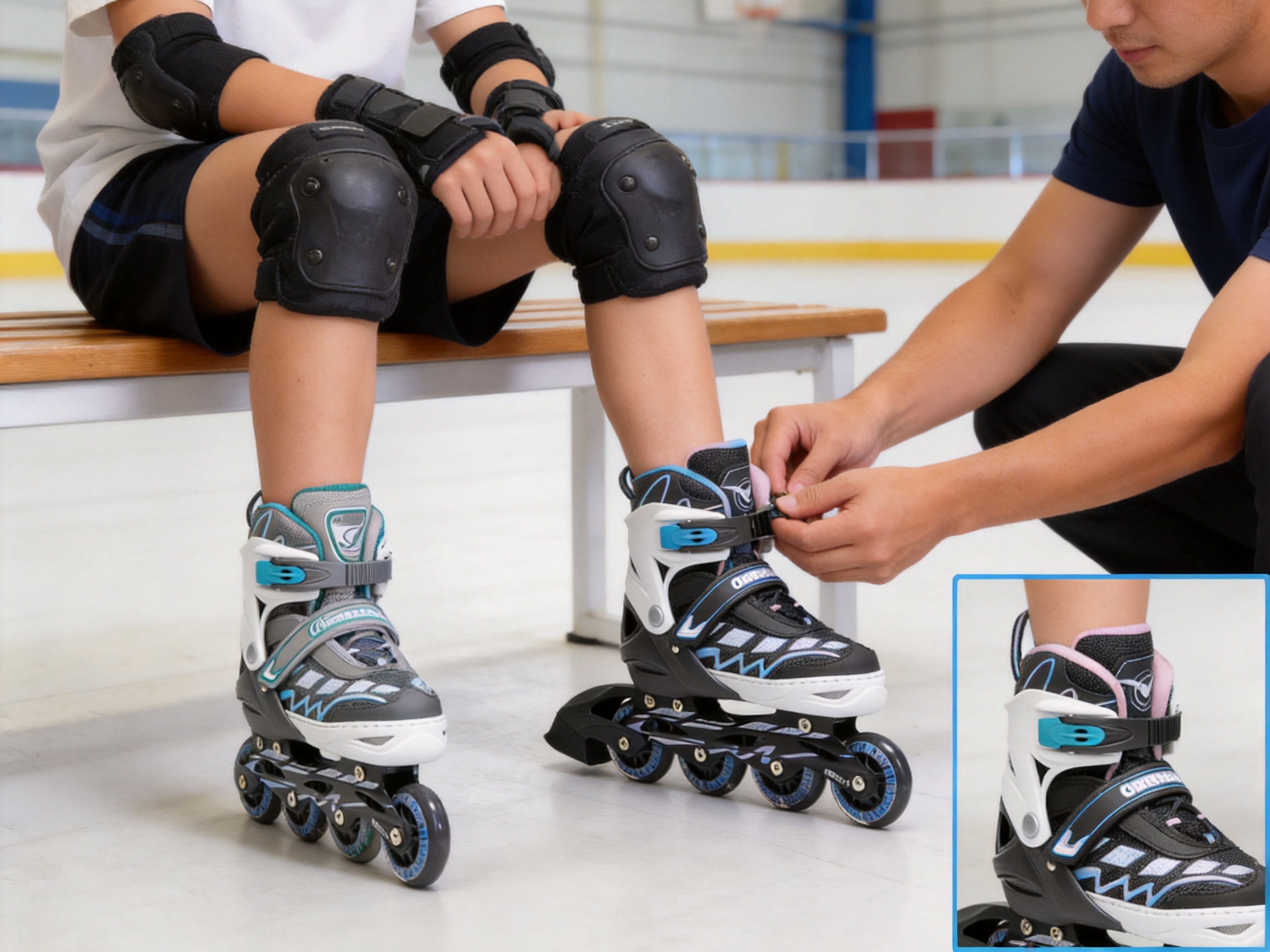
The upper is intended to fit most common foot shapes while providing a snug feel. A close fit helps reduce unnecessary movement inside the boot and may improve the user’s sense of control. At the same time, the adjustable construction allows the fit to be modified as the foot changes. Even pressure across the foot can support a more stable stance during basic practice.
The simple upper design also helps reduce the feeling of bulk. Young users often need to concentrate on posture and balance, and an overly heavy or restrictive skate can increase fatigue. A lighter-feeling design may make it easier to remain active for a longer period, especially during casual skating or repeated beginner exercises.
Comfort is particularly important for family-oriented products because children may not always describe discomfort accurately. A practical adjustment system gives parents a way to improve fit and reduce avoidable rubbing or looseness. When combined with appropriate socks and correct fastening, the skate can offer a more pleasant experience for daily recreational use.
For commercial buyers, comfort is also connected to customer satisfaction. Products that are easy to wear and comfortable during normal sessions are more likely to generate positive feedback and repeat interest. This makes fit and wearability valuable selling points alongside appearance and price.
5. Construction for Repeated Basic Practice
Children’s sports equipment often experiences frequent use, transport, storage, and occasional impacts. Inline skates may be carried by hand, placed in school or family vehicles, used on outdoor surfaces, and returned to storage without elaborate maintenance. A beginner product must therefore be practical enough for repeated basic practice.
The BW-187 is described as having a sturdy structure intended to resist damage from ordinary repeated use. This does not mean that the skate is indestructible or suitable for every surface and activity. It means that the product is developed for the everyday demands associated with learning and recreational skating. Responsible use, routine inspection, and proper storage remain necessary for safe service life.
A durable construction can help protect the value of the original purchase. Parents generally expect children’s equipment to withstand more than a few sessions, while distributors need products that can maintain their presentation and function through transportation and retail handling. A strong structure supports both expectations.
The manufacturer’s integrated production capabilities are relevant here. When a supplier manages mold development, injection molding, sewing, and assembly within its own organized facilities, it can coordinate multiple stages of the product more effectively. Consistent component fit, controlled material processing, and repeatable assembly methods can contribute to dependable product quality.
Manufacturing strength is especially important for adjustable products. The adjustment mechanism, upper, frame, wheel assembly, and fastening components must work together correctly. If any element is poorly matched, the user may experience difficulty achieving a secure fit. A manufacturer with engineering and production experience can evaluate these relationships as part of the overall product-development process.
6. A Practical Alternative to Fixed-Size and Advanced Skates
The market includes many types of inline skates, from inexpensive fixed-size models to advanced products built for speed, aggressive tricks, fitness training, or competitive use. The BW-187 occupies a practical position between basic casual equipment and specialized performance gear. Its purpose is to provide approachable skating for beginners and growing young users.
Compared with fixed-size children’s skates, its principal advantage is the adjustable format. Families can use the product across a wider growth period, which may reduce the frequency of replacements. Retailers can explain this benefit clearly: the skate is selected within a size range and then adjusted to the user’s current foot length.
Compared with advanced performance skates, the BW-187 prioritizes simplicity and stability. A beginner does not necessarily benefit from highly responsive equipment or advanced racing components. In many cases, overly specialized features can make the learning process more difficult. A straightforward model may be more suitable for basic practice, family recreation, and after-school exercise.
Compared with purely decorative children’s products, the BW-187 emphasizes practical wearability. Its design is described as simple rather than flashy, allowing attention to remain on comfort, fit, and control. This can appeal to buyers who want reliable everyday equipment rather than a product designed primarily for visual impact.
These comparisons do not mean that the skate is intended for every user. Experienced skaters seeking high speed, competition performance, or specialized maneuverability may require a different category of product. The strength of the BW-187 lies in serving beginners and growing young users with a balanced combination of adjustability, comfort, durability, and ease of use.
7. Suitable Skating Environments
The BW-187 is suitable for casual skating in indoor and outdoor areas where the surface is flat, clean, and appropriate for inline skates. Examples include plazas, residential recreational areas, indoor flat surfaces, and other controlled locations. These settings allow beginners to practice without the additional challenges created by steep slopes, rough pavement, heavy traffic, or crowded pathways.
Indoor use can be useful when weather conditions limit outdoor activity. A smooth indoor surface may provide a controlled environment for practicing standing, stepping, gliding, and basic turning. Outdoor use can add variety and make skating a convenient family activity. In either case, the chosen location should be legally permitted, free of dangerous obstacles, and appropriate for the user’s ability level.
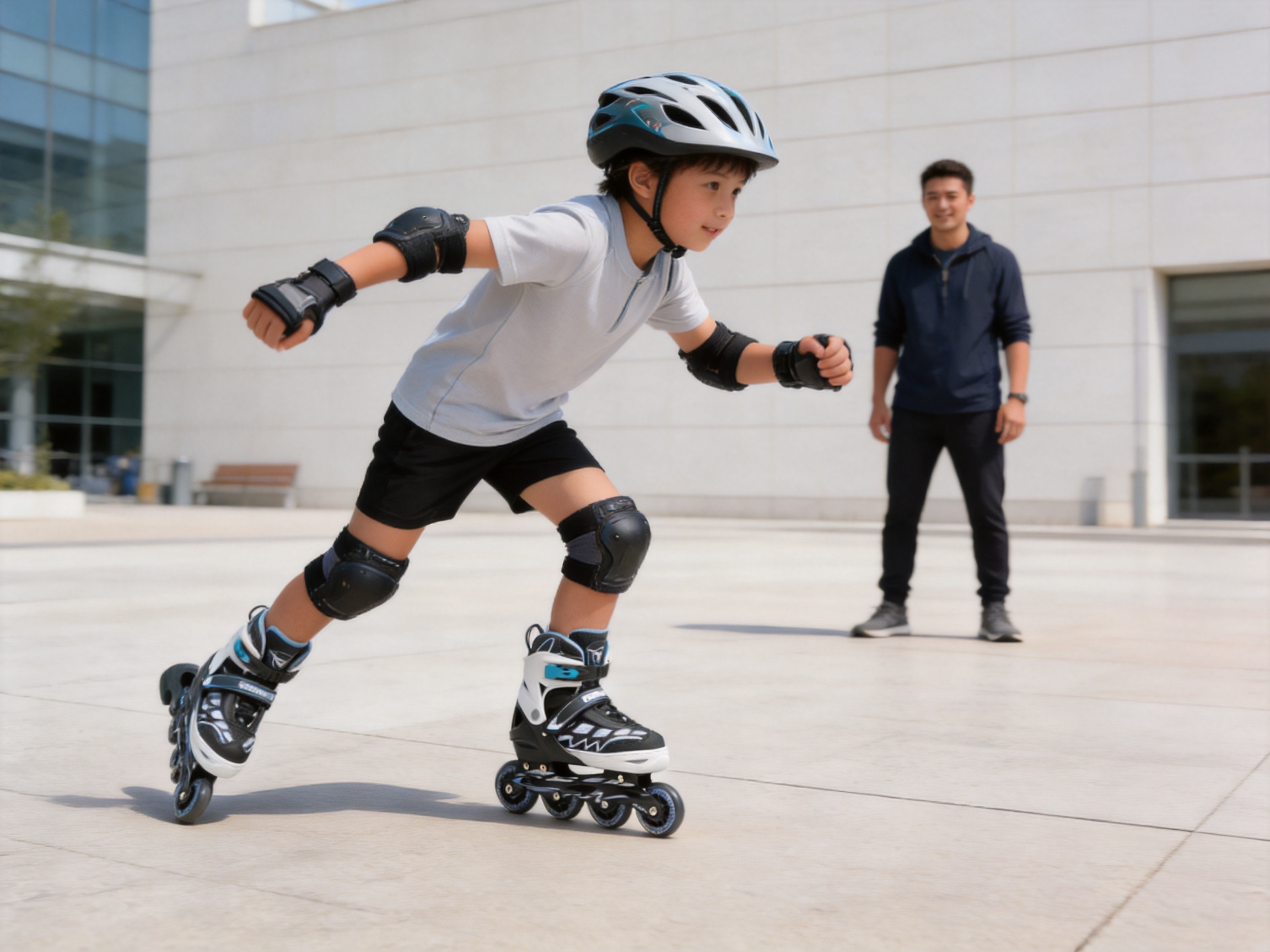
Beginners should start slowly. They can first practice standing with support, then move to short glides, controlled stops, and gradual changes of direction. Children should remain supervised according to their age and ability. Protective gear, including a properly fitted helmet, wrist guards, elbow pads, and knee pads, is strongly recommended for learning and recreational use.
The product’s value is enhanced by this broad range of everyday applications. It does not require a specialized track or a dedicated training facility. Families can use it for short practice sessions, weekend recreation, or regular after-school exercise. This versatility may help increase the frequency of use, which is important for developing balance and movement skills.
8. Health and Skill Development Benefits
Inline skating can support several aspects of physical development. The activity requires the user to stabilize the body while moving, engage the legs, and coordinate the arms and torso. Regular practice may contribute to improved balance, lower-limb movement, body awareness, and general athletic ability.
For children and teenagers, the activity can be an enjoyable alternative to sedentary entertainment. A product that is easy to adjust and comfortable to wear may lower the barrier to regular participation. Instead of viewing exercise as a formal obligation, young users may approach skating as a recreational activity with an immediate sense of movement and progress.
Beginners can also gain confidence by learning skills in stages. The first achievement may be standing securely. The next may be moving a short distance, followed by turning or stopping. A stable and supportive skate can help create a manageable learning path. These gradual achievements encourage patience, concentration, and continued practice.
Skating should still be approached responsibly. The activity involves wheels and movement, so falls are possible, especially during the early stages. Protective equipment, suitable surfaces, supervision, and instruction are essential parts of a complete skating experience. The skate supports the activity, but safe behavior remains the responsibility of the user and supervising adult.
9. Product Positioning for Retail and Wholesale Buyers
For retailers, the product can be positioned as an adjustable beginner inline skate for growing children and teenagers. The clearest sales messages include three size ranges, practical fit adjustment, comfortable everyday wear, stable basic movement, and suitability for casual indoor and outdoor use.
The product may appeal to parents who are buying a first pair of inline skates. These customers often have several concerns: whether the child can learn easily, whether the skate will remain useful as the child grows, whether it will be comfortable, and whether the structure can withstand repeated use. The BW-187 addresses these concerns in a direct and understandable way.
It can also be included in sports, toy, outdoor recreation, and seasonal product collections. During school holidays and warmer seasons, recreational skating products may attract families seeking accessible outdoor activities. The adjustable design can help distinguish the item from products offered in only one fixed size.
For distributors and OEM customers, the product’s simple positioning can support multiple sales channels. It may be suitable for sporting-goods stores, children’s activity retailers, online marketplaces, educational recreation suppliers, and general outdoor product distributors. Final packaging, color, branding, labeling, and market-specific compliance requirements should be confirmed during the sourcing process.
A buyer should evaluate more than the product image when selecting a supplier. Consistent production, quality documentation, packaging capability, communication, lead times, and after-sales support all affect commercial success. A manufacturer with its own production resources can provide a more coordinated purchasing experience than a supplier that only performs trading activities.
10. Manufacturing Capabilities Supporting Product Quality
The manufacturer behind the product was established in 2010 and specializes in children’s scooters, inline skates, roller skates, and ice skates. Its production experience covers several related categories, allowing knowledge gained from one product line to support development in another. This specialization is valuable because skating products require coordinated attention to plastics, textiles, footwear construction, wheel assemblies, fastening systems, and user safety.
The company operates a workshop of approximately 20,000 square meters and employs more than 200 people. It has five advanced automatic production lines as well as a professional research and development engineering team. These resources provide a foundation for managing larger orders, organizing production stages, and developing products for different customer requirements.
Its facilities include mold, injection molding, sewing, and assembly workshops. Mold capability is important for developing accurate and repeatable plastic components. Injection molding supports the production of shaped structural parts and other plastic elements. Sewing resources contribute to upper construction and textile components. Assembly capacity brings the product together through organized fitting and inspection procedures.
Having multiple production functions available within the same company can improve coordination. Design changes can be reviewed with the relevant manufacturing departments. Engineering staff can consider how a component will be molded, sewn, assembled, adjusted, packaged, and used. This integrated approach can reduce the communication gaps that sometimes occur when every stage is outsourced to a different party.
Automatic production lines can also support consistency in repetitive operations. Automation does not eliminate the need for skilled workers or inspection, but it can help standardize production steps and improve efficiency. For buyers, this may contribute to more predictable output, especially when ordering larger quantities or repeating the same model over multiple seasons.
The company also has more than 30 college-educated management staff. A structured management team can support production planning, quality coordination, export communication, customer service, and documentation. These functions are important for international sourcing, where successful cooperation depends on more than manufacturing capacity alone.
11. Quality Management and International Readiness
The manufacturer has passed ISO9001, BSCI, and Kmart factory certification systems. These credentials indicate attention to quality management, social responsibility, and factory evaluation processes. Buyers should request current documentation and confirm the precise scope and validity of each certification during procurement, but the company’s stated certification background demonstrates preparation for international cooperation.
The company also reports product certifications including 3C, CE, EN71, EN62115, ASTM, EMC, and EN13843:2009 across its product portfolio. The exact certification applicable to a particular model, market, and configuration should be verified before sale. Requirements can differ according to product type, destination country, age grading, materials, electrical content, packaging, and intended use.
For a children’s skating product, compliance awareness is especially important. Importers may need to consider mechanical safety, material safety, labeling, packaging warnings, testing reports, and local consumer product rules. A professional supplier should be able to discuss these matters clearly and provide relevant documents for the selected product.
Quality management also relates to consistency between samples and mass production. A buyer may approve a pre-production sample, but the commercial order must reproduce the same specifications reliably. Organized processes for incoming materials, component inspection, assembly checks, and finished-product review can help reduce variation.
The manufacturer’s engineering team and production infrastructure can support this process. When product design and factory operations are connected, feedback from production can be used to improve later batches. This is helpful for OEM customers who need adjustments to sizes, colors, materials, packaging, or market positioning.
12. Research, Development, and Product Improvement
Children’s sports products must evolve with user expectations. Parents look for comfort, safety, durability, attractive presentation, and value. Retailers need products that are easy to explain and suitable for changing market preferences. Manufacturers must therefore continue to improve materials, construction, appearance, and usability.
The company maintains a professional R&D engineering team and launches new products every year. This indicates an ongoing effort to respond to customer and market needs rather than relying only on a fixed product catalog. The company has also obtained multiple national patents, demonstrating participation in product development and technical innovation.
For the BW-187, the development focus is practical rather than excessive. The product combines adjustable sizing with a simple upper, a stable wheelset, and a structure intended for daily practice. This kind of design can be valuable because it concentrates investment on the functions that beginner users actually need.
R&D capability is also important for OEM projects. A customer may want to adapt the product for a specific market, retail channel, age group, or brand identity. Possible areas for discussion may include color combinations, printed graphics, packaging presentation, size labeling, accessory bundles, and documentation. Any modification should be evaluated for technical feasibility, minimum order quantity, cost, testing, and lead time.
Successful product improvement depends on communication between the customer and factory. Clear specifications, approved samples, drawings, packaging files, and inspection standards can help ensure that expectations are understood. A supplier with engineering and manufacturing resources is generally better positioned to support this process than a supplier with no direct production capability.
13. Integrated Production as a Sourcing Advantage
One-stop sourcing can reduce the complexity of purchasing skating equipment. The manufacturer specializes in several related categories, including children’s scooters, inline skates, roller skates, and ice skates. Buyers looking to develop a broader children’s sports assortment may be able to coordinate multiple products through one experienced production partner.
This can provide practical advantages in communication, product development, quality coordination, and shipment planning. Instead of managing unrelated factories for each category, a buyer can discuss a coordinated product strategy with a company familiar with children’s wheeled sports equipment.
The company’s factory includes the major workshops needed for key manufacturing stages. This gives it greater control over molds, plastic parts, sewn components, and final assembly. It can also support closer cooperation when a customer needs to examine a production issue or request a design adjustment.
For international buyers, geographical location is another consideration. The facility is located in Yuyao City, Ningbo, Zhejiang Province, an area known for plastics manufacturing and convenient access to Ningbo Airport and Shanghai. This location can support connections to manufacturing networks, logistics services, ports, and export-related resources.
Manufacturing scale does not automatically guarantee that every order will be perfect. Buyers should still complete sample approval, factory communication, testing review, and pre-shipment inspection where appropriate. However, factory size, dedicated workshops, experienced employees, and organized production lines create a stronger platform for reliable cooperation.
14. What Makes the Product Commercially Attractive
The BW-187 brings together several benefits that are easy to communicate in a product listing or retail presentation. Its adjustable size is the leading feature because it addresses the problem of growing feet. Its beginner-friendly character makes it accessible to families purchasing a first pair. Its comfortable upper and stable wheelset support the everyday experience. Its sturdy structure positions it for repeated basic practice.
The product also offers a broad customer age range within its three size groups. Smaller children can begin with the S range, older children can use the M range, and larger teenagers can select the L range. This helps retailers display the product as a family-oriented or youth-oriented skating solution rather than a narrowly limited children’s item.
The simple design can be an advantage in markets where customers value practicality. Not every buyer wants an aggressive appearance or advanced performance profile. Some families want a skate that is easy to wear, easy to adjust, comfortable for short outings, and suitable for learning. The BW-187 can be positioned clearly for this audience.
Its potential for OEM cooperation adds another commercial dimension. The manufacturer can discuss product presentation, packaging, and other requirements with professional buyers. Customers should provide detailed specifications and confirm all customization conditions before placing an order, but the factory’s equipment and engineering resources provide a reasonable basis for private-label or project-based sourcing discussions.
15. Recommended Buyer Evaluation Process
A responsible buyer should begin by identifying the intended market and user group. Consider whether the product will be sold to first-time skaters, families, schools, recreational facilities, or general sporting-goods customers. The answer will influence packaging language, safety information, color preferences, size presentation, and accessory requirements.
The next step is to review the size range and confirm how the adjustment system works. Request measurements, fitting instructions, and sample units where necessary. Foot-size charts should be clear and consistent with the actual product. Buyers should avoid relying on generic age descriptions alone because children of the same age can have very different foot lengths.
Product samples should be examined for fit, comfort, wheel movement, fastening, stitching, surface finish, and overall assembly. The buyer should test adjustment across the complete size range to ensure that the skate remains secure and comfortable at each setting. Packaging should also be reviewed for protection during transportation and clarity at the point of sale.
Documentation is another essential area. Confirm applicable testing reports, certificates, material information, labeling requirements, age grading, warnings, and instructions. Requirements should be matched to the destination market. If the buyer is developing an OEM version, all changes to materials, components, graphics, or packaging should be reviewed for their effect on compliance.
Finally, clarify commercial terms. Important points include minimum order quantity, sample charges, production lead time, payment terms, packaging specifications, carton dimensions, shipping marks, quality standards, inspection procedures, and after-sales handling. Clear agreements reduce misunderstandings and help both sides manage production efficiently.
16. Care and Use Recommendations
Proper care can help extend the useful life of the skates. Users should inspect the wheels, frame, fasteners, adjustment mechanism, and upper before each session. Loose parts, visible damage, unusual noise, or changes in fit should be addressed before skating continues.
The skates should be used on appropriate surfaces. Rough pavement, gravel, sand, water, steep slopes, and areas with heavy traffic can increase wear and risk. After outdoor use, dirt should be removed before storage. The skates should be kept in a dry, ventilated location away from excessive heat and moisture.
Children should wear protective equipment and learn basic stopping techniques before attempting faster movement. Beginners should practice in open spaces where they can move without colliding with people, vehicles, furniture, or other obstacles. Supervision is recommended for young users and anyone with no prior skating experience.
Adjustments should be made according to the product instructions. The skate should fit securely without creating excessive pressure. Users should check both skates for equal adjustment and proper fastening. A well-adjusted pair supports more consistent balance and helps the skater feel confident during movement.
These care recommendations are not only relevant to end users. Retailers and distributors can include basic maintenance and safety guidance in product literature. Clear instructions can improve customer satisfaction, reduce misuse, and reinforce the product’s responsible positioning.
17. Q&A
Q1: Who is the BW-187 Adjustable Kids Inline Skate designed for?
It is designed mainly for children, teenagers, and young beginners learning inline skating. It is suitable for users who want to practice balance, posture, basic movements, and recreational skating rather than pursue specialized competitive performance.
Q2: What sizes are available?
The skate is available in three size groups: S for sizes 31–34, M for sizes 35–38, and L for sizes 39–42. Buyers should measure the user’s foot and select the appropriate range before making the final adjustment.
Q3: What is the main advantage of the adjustable design?
The adjustable design allows the skate to accommodate changes in foot length within the selected range. This can extend the product’s useful period as a child grows and reduce the need for frequent replacement.
Q4: Is it suitable for first-time skaters?
Yes. The skate is specifically positioned for beginners. Its simple operation, supportive fit, and stable basic wheelset are intended to help new users adapt to skating and practice fundamental skills.
Q5: Where can the skates be used?
They are suitable for casual skating in appropriate indoor and outdoor locations, such as plazas, residential recreation areas, and smooth, flat indoor surfaces. Users should avoid dangerous, crowded, wet, steep, or rough areas.
Q6: Is protective equipment recommended?
Yes. A helmet, wrist guards, elbow pads, and knee pads are strongly recommended, particularly for children and beginners. Protective equipment should fit correctly and be used together with supervision and safe skating practices.
Q7: Is the product designed for advanced racing or aggressive skating?
The product is designed for beginners and everyday recreational practice. Users seeking specialized racing, aggressive, or advanced-performance equipment should select a product specifically developed for those purposes.
Q8: What comfort features does it offer?
The skate has a lightweight, practical upper intended to fit common foot shapes, provide support, and reduce unnecessary pressure. Its adjustable structure helps users maintain a closer fit as their feet grow.
Q9: What manufacturing capabilities support this product?
The manufacturer has mold, injection molding, sewing, and assembly workshops, five automatic production lines, a professional R&D engineering team, and a workforce of more than 200 employees. These resources support coordinated product development and production.
Q10: Can buyers discuss OEM or private-label requirements?
The company is an OEM skating and sports equipment manufacturer and can discuss sourcing and customization requirements with professional buyers. Specific options, minimum order quantities, prices, packaging, testing, and lead times should be confirmed directly for each project.
Q11: What certifications and management systems are associated with the manufacturer?
The manufacturer reports ISO9001, BSCI, and Kmart factory certification systems, as well as product certifications including 3C, CE, EN71, EN62115, ASTM, EMC, and EN13843:2009 across its product portfolio. Buyers should verify the current documents and confirm which requirements apply to the selected model and destination market.
Q12: How should buyers confirm the correct product specifications?
Buyers should request samples, size charts, adjustment instructions, packaging details, technical documents, and current certification information. They should also agree on inspection standards and confirm all specifications before mass production.
18. Conclusion
The BW-187 Adjustable Kids Inline Skate is built around a clear and useful purpose: helping children and teenagers learn inline skating with equipment that is adjustable, comfortable, stable, and practical for repeated use. Its three size ranges make it suitable for growing feet, while its straightforward design supports beginners who are still developing balance and movement control.
Its advantages over basic fixed-size alternatives include longer usability, easier size planning, and improved value for families. Compared with advanced performance skates, it offers a more approachable configuration for first-time users and casual recreational activity. Its simple upper, supportive fit, stable wheelset, and sturdy structure address the everyday needs of young skaters without introducing unnecessary complexity.
For commercial buyers, the product is supported by a manufacturer with broad category experience, integrated production workshops, automatic production lines, engineering resources, certifications, and international sourcing capabilities. The company’s experience in children’s scooters, inline skates, roller skates, and ice skates provides a relevant foundation for product development and OEM cooperation.
As with all sports equipment, final product selection should include sample evaluation, correct fitting, safety review, and destination-market compliance verification. When properly matched to the user and used in a suitable environment, the BW-187 can serve as a dependable entry point into inline skating and a practical addition to a youth sports equipment range.
References
1. Product specification and descriptive materials for the BW-187 Adjustable Kids Inline Skate.
2. Manufacturer information concerning children’s scooters, inline skates, roller skates, and ice skates.
3. Manufacturer-provided information regarding factory facilities, production lines, engineering resources, and management structure.
4. Manufacturer-reported quality management and factory certification information, including ISO9001 and BSCI.
5. Manufacturer-reported product certification information, including 3C, CE, EN71, EN62115, ASTM, EMC, and EN13843:2009.
6. General principles of beginner inline skating, protective equipment, fitting, surface selection, and recreational sports safety.
Product: BW-187 Adjustable Kids Inline Skate

Recommended Articles

Get in Touch
Your email address will not be published. Required fields are marked *
Have a project in mind? Contact with us!
We are happy to answer your questions. Please fill out this form
and one of our professional team will get back to you as soon as possible.

We specialize in producing various types of children's toy cars, children's skateboards, and ice skates.
