
 En
En
 Español
 русский
 عربى
عربى
Why Adjustable Inline Skates Are a Smart Choice for Young Beginners
Date:Sep 03, 2026
Content
- 1 Designed Around the Needs of Beginners
- 2 Adjustable Sizing for Growing Feet
- 3 Comfort for Extended Practice
- 4 Stable Handling for Early Skill Development
- 5 Useful for Indoor and Outdoor Recreation
- 6 Durability for Repeated Basic Practice
- 7 How the Product Compares with Common Alternatives
- 8 Manufacturing Capabilities Behind the Product
- 9 Research, Development, and Product Improvement
- 10 Quality Management and Compliance Strengths
- 11 OEM and One-Stop Sourcing Advantages
- 12 Packaging, Logistics, and Order Planning
- 13 Responsible Use and Safety Considerations
- 14 Maintenance for Longer Product Life
- 15 Commercial Value for Retailers and Distributors
- 16 Why the Manufacturing Location Matters
- 17 Product Selection Guidance for Buyers
- 18 Environmental and Operational Considerations
- 19 Four Reasons to Consider This Model
- 20 Q&A About the Adjustable Kids Inline Skate
- 20.1 Q1: Who is the BW-187 designed for?
- 20.2 Q2: What size ranges are available?
- 20.3 Q3: What is the main benefit of the adjustable design?
- 20.4 Q4: Is this a racing or professional performance skate?
- 20.5 Q5: Where can the skates be used?
- 20.6 Q6: Does the skate eliminate the risk of falling?
- 20.7 Q7: What maintenance is recommended?
- 20.8 Q8: What manufacturing facilities does the supplier have?
- 20.9 Q9: Can the product be customized for OEM orders?
- 20.10 Q10: Does the company have quality and compliance certifications?
- 20.11 Q11: What are the listed packing dimensions?
- 20.12 Q12: Why might retailers choose an adjustable beginner skate?
- 21 Conclusion
- 22 References
- 23 Product: BW-187 Adjustable Kids Inline Skate
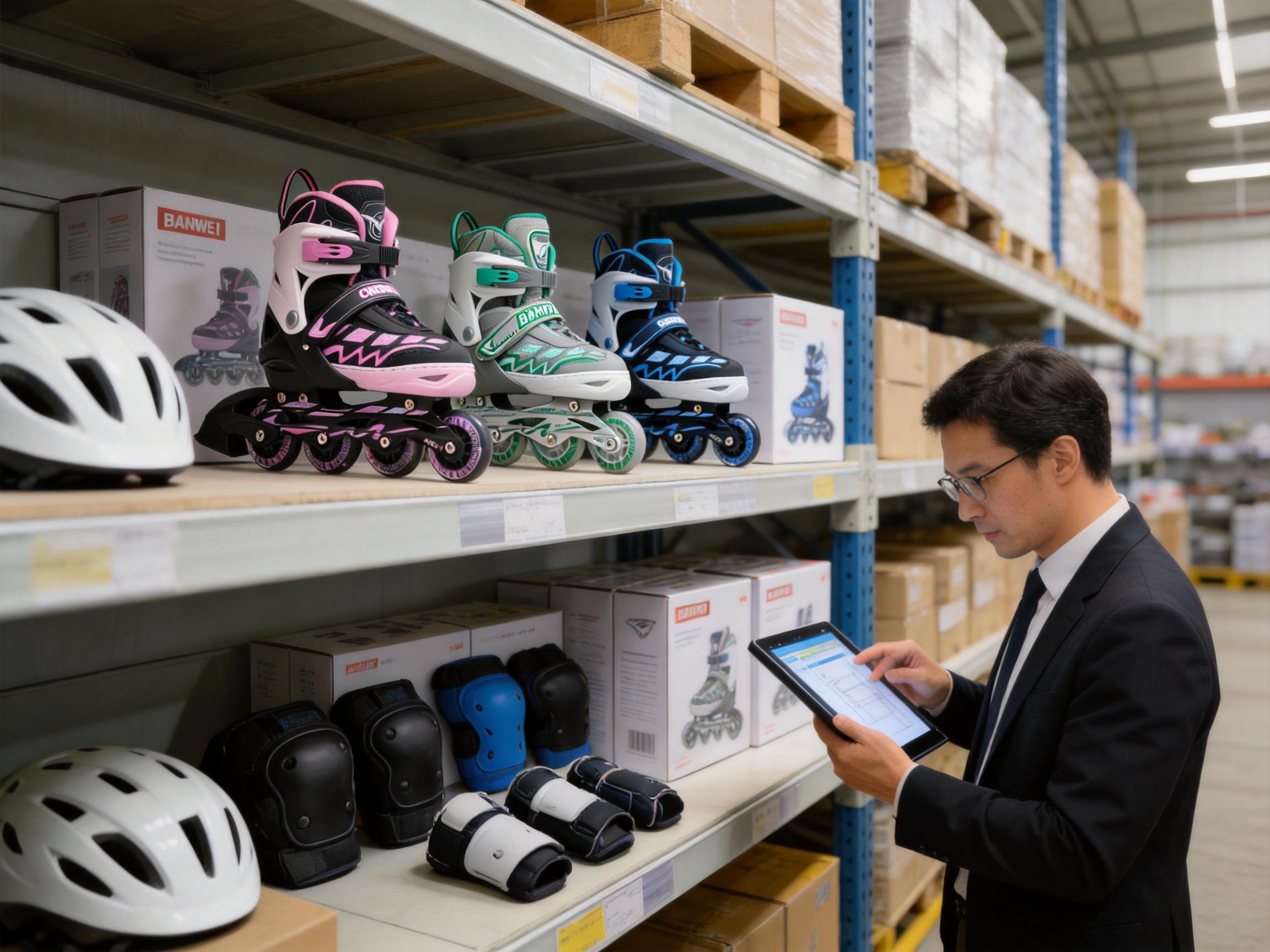
Choosing a first pair of inline skates is an important decision for children and teenagers. A suitable pair should be comfortable enough for regular practice, stable enough to support early balance training, durable enough for repeated use, and adjustable enough to accommodate growing feet. If a skate is difficult to control, uncomfortable, or too rigid for a beginner, a young user may quickly lose confidence. If the skate is too small after only a short period, parents may also face unnecessary replacement costs.
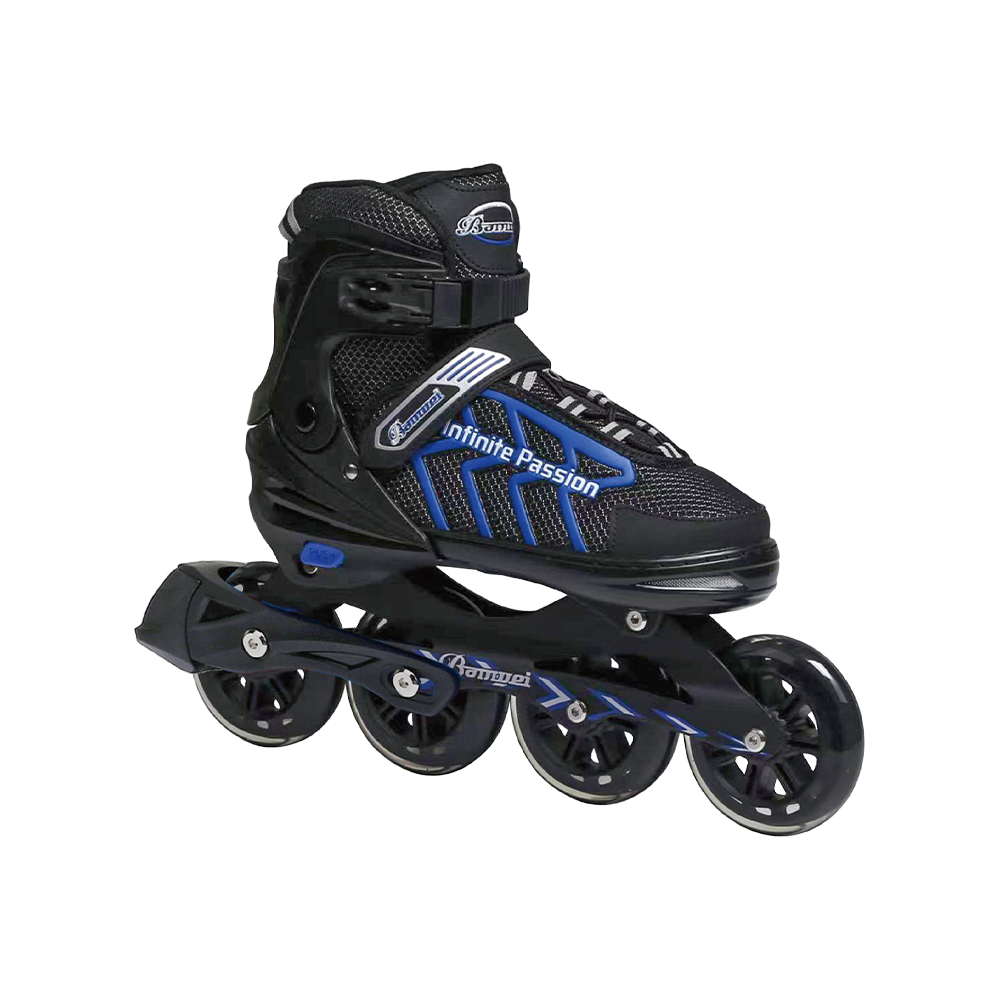
The BW-187 Adjustable Kids Inline Skate is designed to address these practical concerns. It is an entry-level inline skate for children, older children, and teenagers who are learning the fundamentals of inline skating or looking for a dependable pair for casual exercise. Available in three adjustable size ranges, it is intended to provide a longer period of use than a fixed-size skate. Its straightforward construction focuses on fit, balance, support, and everyday practicality rather than excessive decoration.
This design philosophy gives the BW-187 a useful position in the beginner skate market. Instead of treating inline skating as a short-term novelty, the product is developed as equipment that can support gradual learning. A beginner can use the skates to practice standing, balancing, gliding, stopping, turning, and basic movement. As confidence improves, the same pair can continue to support regular recreational sessions in suitable indoor and outdoor locations.
The product is manufactured by Ningbo Feile Sporting Goods Co., Ltd., a sports equipment producer specializing in children’s scooters, inline skates, roller skates, and ice skates. The company combines product development, mold production, injection molding, sewing, assembly, quality management, and export experience within its own manufacturing organization. This integrated structure helps support consistent production and one-stop sourcing for buyers seeking skating and scooter equipment.
Designed Around the Needs of Beginners
Inline skating requires coordination between the feet, legs, hips, and upper body. New users often need time to understand how to distribute their weight and control their speed. A product intended for beginners should therefore provide a stable platform and predictable handling. The BW-187 is designed with this learning process in mind.
Its simple and practical appearance avoids unnecessary visual complexity. The emphasis is placed on ease of wearing, basic control, and a comfortable fit. For a first-time skater, simplicity can be an advantage. A beginner can focus on posture and movement without being distracted by complicated features or an overly aggressive performance design.
The skate is suitable for young users beginning from zero experience. Basic practice may include learning to stand safely, moving slowly, maintaining a balanced posture, and understanding how to stop. The product’s stable wheel arrangement and supportive upper help create a reassuring skating feel during these early stages. This can make it easier for teenagers and children to adapt to the rhythm of inline skating.
A stable beginner skate does not remove the need for supervision, protective equipment, or proper instruction. However, an appropriate design can make the learning process more manageable. When the foot is held securely and the skate responds in a predictable way, the user can gradually build confidence through repeated practice.
Adjustable Sizing for Growing Feet
One of the main advantages of the BW-187 is its adjustable size design. It is offered in three standard size groups: 31–34, 35–38, and 39–42. These ranges cover children through older teenagers and allow the skate to adapt to changing foot length within the selected range.
Children’s feet can grow quickly, which makes fixed-size sports equipment difficult to purchase economically. A fixed-size skate may fit perfectly when purchased but become uncomfortable after a relatively short period. An adjustable skate provides a more flexible alternative. Parents can select an appropriate range and adjust the fit as the child’s foot develops.
| Size Range | Recommended User Group | Main Practical Benefit |
|---|---|---|
| 31–34 | Children beginning recreational skating | Provides room for adjustment during early growth stages |
| 35–38 | Older children and younger teenagers | Supports continued practice without immediate replacement |
| 39–42 | Teenagers and larger-footed young users | Offers a longer usable period for adolescent skaters |
The adjustable structure may also benefit distributors and retailers. Instead of carrying many separate fixed sizes for a beginner product, buyers can stock a smaller number of adjustable size groups. This can simplify inventory planning and help reduce the risk of having large quantities of one narrow size that sells slowly.
For families, the value comes from the longer adaptation period. One pair can remain useful as the child grows, provided that the foot remains within the relevant size range and the skate continues to be in good condition. This makes the product practical for regular practice, casual recreation, and shared family purchasing decisions.
Correct adjustment remains important. The skate should fit securely without creating painful pressure. The heel should remain stable, the toes should not be forced against the front, and the fastening system should be checked before each session. An adjustable design works best when the user takes time to create a balanced and comfortable fit.
Comfort for Extended Practice
Comfort is essential for young skaters because learning often requires repeated sessions. A beginner may spend considerable time practicing basic movements, and discomfort can quickly lead to fatigue or reluctance to continue. The BW-187 is designed to provide a supportive fit for everyday use while reducing unnecessary rubbing and pressure.
The upper is intended to fit a broad range of foot shapes. A snug fit helps keep the foot aligned with the skate, while even pressure can make balance practice more comfortable. The design is also lightweight and avoids an unnecessarily heavy feeling around the foot. This can help reduce soreness during longer sessions.
A comfortable skate should support the foot without feeling restrictive. The BW-187’s practical upper construction is intended to create this balance. It holds the foot in place for control but is designed for ordinary recreational use rather than intensive competitive performance. This makes it appropriate for children and teenagers who skate after school, during weekends, or during family outings.
Comfort also influences technique. When a skater experiences pressure points or movement inside the boot, the body may compensate with an uneven stance. This can make balance more difficult. A more secure and evenly fitted skate allows the user to concentrate on posture and movement instead of constantly adjusting the foot.
Parents and retailers should remember that comfort depends on more than the skate itself. Socks, foot shape, adjustment settings, and the duration of each session all influence the experience. The skate should be worn with suitable socks, adjusted carefully, and used with breaks during early practice. These habits can help young users enjoy a more positive introduction to skating.
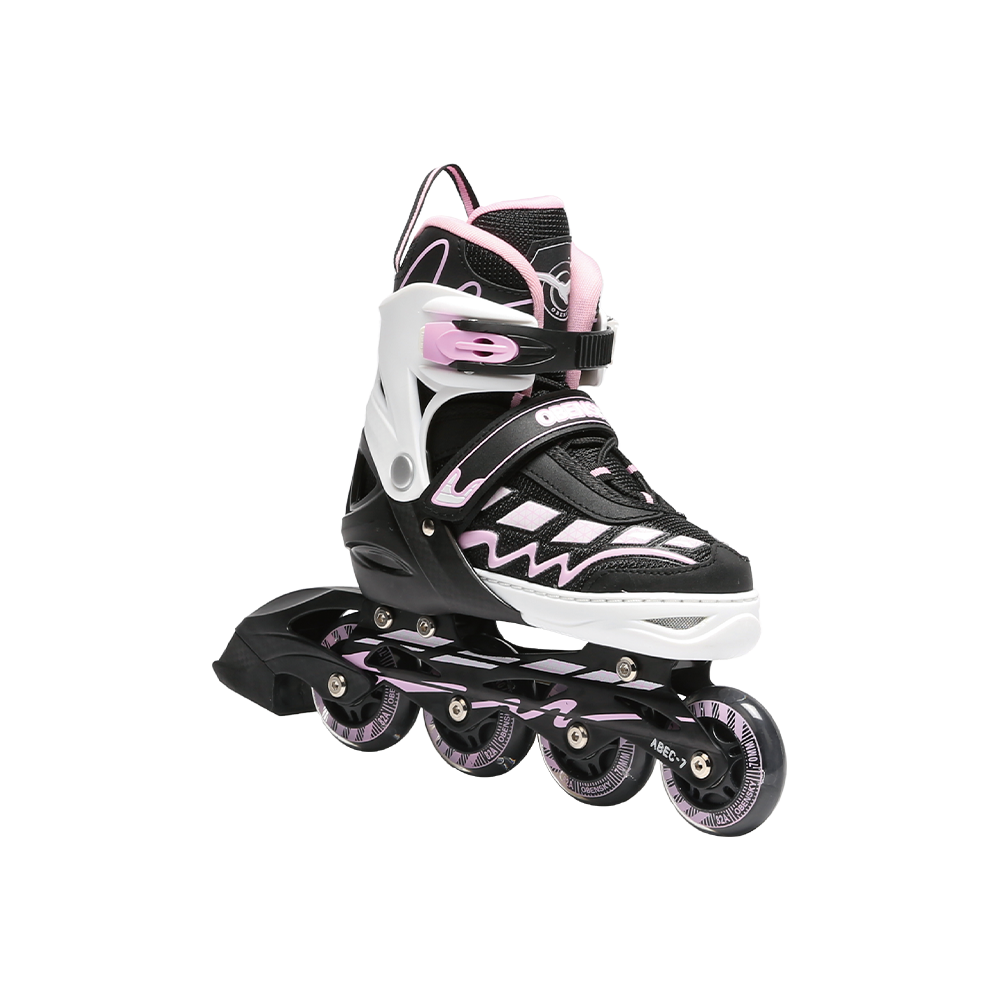
BW-187 Adjustable Kids Inline Skate
Stable Handling for Early Skill Development
Beginners commonly find it difficult to control speed and direction. A skate that feels unpredictable can increase hesitation, while a stable and smooth wheelset can make basic practice easier to manage. The BW-187 uses a basic wheel configuration intended to provide a steady skating feel for new users.
The goal is not extreme speed. Instead, the product is positioned as a practical learning skate that supports controlled gliding and fundamental movement. A beginner can work on maintaining a straight path, shifting weight gradually, and developing a balanced posture. These skills form the foundation for later turning, stopping, and more advanced techniques.
The smooth and stable wheelset is particularly useful for casual skating on appropriate flat surfaces. It is intended to give the user a predictable response under ordinary recreational conditions. For a first-time skater, predictability may be more valuable than high-performance speed. The ability to move at a manageable pace can reduce anxiety and help the user understand how body position affects the skate.
Stable handling also contributes to confidence. Young skaters may be cautious when they first put on inline skates. A design that feels secure under slow movement can encourage them to continue practicing. Over time, repeated exposure to controlled movement can improve balance, coordination, and lower-limb strength.
The product should not be understood as a replacement for braking technique or safety instruction. No skate can prevent every fall, and surface conditions have a significant effect on control. Beginners should practice in open areas with smooth, level ground, away from traffic, steep slopes, wet surfaces, and obstacles. Protective equipment should always be used.
Useful for Indoor and Outdoor Recreation
The BW-187 is suitable for casual skating in a variety of everyday environments. Appropriate locations may include indoor flat surfaces, plazas, residential areas, and other open spaces where skating is permitted and the ground is smooth and safe. This flexibility makes the product useful beyond formal training sessions.
Children can use the skates for after-school exercise, weekend recreation, and family activities. Teenagers may use them for light exercise or relaxed skating with friends. Regular skating encourages lower-limb movement and can contribute to balance, coordination, and general athletic ability.
For indoor use, the surface should be clean, level, and free from loose objects. Outdoor users should pay attention to cracks, stones, sand, water, and uneven pavement. These conditions can affect wheels and stability. Selecting an appropriate practice location is an important part of using beginner skates responsibly.
The product’s simple styling also helps it fit different retail markets. It can be presented as a beginner sports product, a recreational gift, or part of a broader children’s activity range. Retailers may position it alongside scooters, helmets, knee pads, elbow pads, and other sports protective gear.
Durability for Repeated Basic Practice
Young users often repeat the same movements many times while learning. They may practice starting, stopping, changing direction, and maintaining balance during frequent sessions. Equipment designed for this market must therefore tolerate regular handling and ordinary wear.
The BW-187 is built around a sturdy structure intended for daily practice. Its practical construction is designed to resist damage caused by repeated basic use and to provide long-term value. Durability is especially important for families who expect the product to remain useful as the child grows within the adjustable range.
A durable skate offers benefits throughout the product lifecycle. It reduces the likelihood of early replacement, supports consistent learning, and helps retailers provide a more reliable product experience. It can also be more economical than choosing a low-cost skate that must be replaced after limited use.
Durability does not mean that maintenance is unnecessary. Wheels, fasteners, closures, and structural components should be inspected regularly. Dirt should be removed after outdoor use, and the skates should be stored in a dry location. Users should also avoid activities for which the product was not designed, such as high-speed downhill skating, jumps, or aggressive tricks.
For distributors, product durability is closely connected with customer satisfaction. Returns and complaints may increase when entry-level equipment wears out quickly. A well-structured beginner skate can help reduce these problems when supported by clear size guidance, usage instructions, and after-sales service.
How the Product Compares with Common Alternatives
The beginner inline skate market includes fixed-size skates, highly specialized performance models, low-cost novelty products, and adjustable recreational designs. Each type serves a different purpose. The BW-187 competes most directly with other adjustable entry-level skates, but several design choices help clarify its market position.
Compared with Fixed-Size Children’s Skates
Fixed-size skates can provide a direct fit when the selected size is correct, but they may become too small as a child grows. Families may need to purchase another pair sooner than expected. The BW-187’s three adjustable size ranges offer a more flexible alternative for users whose feet are still developing.
The advantage is not simply financial. An adjustable skate can help maintain continuity in practice. A child does not need to change to a completely different pair after a small amount of growth. Familiar equipment may make it easier to continue learning and preserve confidence.
Compared with Highly Technical Performance Skates
Performance-oriented skates may include features intended for speed, aggressive skating, racing, or advanced maneuvering. These features are valuable for experienced users but may be unnecessary for a beginner. A new skater often benefits more from a supportive fit, manageable handling, and a simple learning platform.
The BW-187 is deliberately focused on fundamentals rather than specialized performance. Its practical design can make it easier for families to select an appropriate first product without paying for functions the user may not yet need.
Compared with Decorative Novelty Products
Some children’s skates emphasize bright decoration or novelty features. Visual appeal can be useful, but it should not replace structural support, fit, and durability. The BW-187 uses a simple appearance that prioritizes everyday function. This makes it suitable for buyers seeking a dependable sports product rather than a short-term novelty item.
Compared with Very Low-Cost Entry Products
The lowest-priced skate may appear attractive at the time of purchase, but low initial cost does not always represent the best value. If the fit is poor, the structure is weak, or the product cannot accommodate growth, the total cost of ownership may be higher.
The BW-187 offers value through adjustability, daily usability, comfort, and a sturdy construction approach. Buyers can evaluate the product based on its expected period of use and practical features rather than price alone.
| Evaluation Point | BW-187 Adjustable Kids Inline Skate | Typical Fixed-Size Model | Specialized Performance Model |
|---|---|---|---|
| Growth accommodation | Three adjustable size ranges | Limited to one fixed size | Usually focused on a precise fixed fit |
| Primary user | Children, older children, and teenage beginners | Children needing a specific size | Experienced or performance-focused skaters |
| Design priority | Comfort, stability, ease of learning, and daily practice | Basic fit and simple use | Speed, response, or advanced maneuvering |
| Buying practicality | Longer adaptation period and simplified size planning | More frequent replacement as feet grow | Higher specialization and potentially higher cost |
| Best use | Recreational skating on suitable flat surfaces | Casual skating at a selected size | Technical training or advanced skating activities |
This comparison does not mean that one type of skate is suitable for every user. Fixed-size models may be appropriate when a precise fit is required, while performance skates are valuable for experienced athletes. The BW-187 is strongest in the area for which it was designed: accessible, adjustable, and dependable beginner skating.
Manufacturing Capabilities Behind the Product
The performance of a children’s skate depends not only on the visible design but also on how the product is manufactured. Consistent dimensions, reliable materials, accurate assembly, and effective inspection all contribute to the final user experience. Ningbo Feile Sporting Goods Co., Ltd. has developed an integrated production system to support these requirements.
Established in 2010, the company specializes in children’s scooters, inline skates, roller skates, and ice skates. Its product range gives the company experience across several related sports equipment categories. This specialization can support the development of components, materials, and production methods suited to active children’s products.
The company operates a workshop of approximately 20,000 square meters and employs more than 200 people. Its manufacturing organization includes five advanced automatic production lines and a professional research and development engineering team. These resources provide a foundation for producing different models and managing repeat orders for international customers.
Mold Development and Tooling
Skate production begins with accurate tooling. The company has a mold workshop that supports the development and production of components used in its products. Reliable molds help maintain consistent shapes, dimensions, and surface quality across repeated production runs.
For an adjustable skate, dimensional consistency is particularly important. The shell, adjustment structure, fastening areas, and other components must work together correctly. Accurate tooling can reduce variation and help ensure that products assembled on different production days maintain a consistent fit and appearance.
In-house or closely managed mold capability can also support product development. When customer requirements change, the engineering team can evaluate design modifications more efficiently. This is useful for OEM and private-label buyers who may require specific colors, packaging, component changes, or market adaptations.
Injection Molding
The company maintains injection molding facilities as part of its production system. Injection molding is widely used for sports equipment components because it can create repeatable plastic parts at commercial volumes. The process requires control of material preparation, mold temperature, injection pressure, cooling, and cycle time.
Well-managed injection molding helps produce components with stable dimensions and consistent structural characteristics. For children’s skating products, this consistency is important because the shell and support components must work reliably during ordinary use. It also contributes to a uniform appearance across large orders.
Automatic production lines can support process efficiency and reduce unnecessary variation. Automation does not replace skilled management; rather, it gives production teams better control over repeatable operations. Operators, engineers, and quality personnel remain important for setup, monitoring, inspection, and continuous improvement.
Sewing and Soft-Goods Production
Comfortable skates include both rigid and soft components. The company’s sewing workshop supports the production of fabric and padded parts used in relevant products. Sewing quality affects the fit, appearance, and durability of the upper.
Accurate cutting and stitching can help reduce loose threads, uneven seams, and inconsistent padding. For a beginner skate, the upper should provide support while remaining comfortable against the foot. Proper sewing processes contribute to this balance and help the product withstand regular handling.
Assembly and Process Coordination
Assembly is where the different parts become a finished skate. The shell, upper, adjustment components, wheelset, closures, and other elements must be installed in the correct sequence and position. Assembly workers and production supervisors must verify that each component is properly attached and that the finished product operates as intended.
Coordinating mold production, injection molding, sewing, and assembly within one manufacturing organization can improve communication. Problems identified during assembly can be passed back to engineering or production teams more efficiently. This integrated approach may also support better lead-time management and more consistent quality across product batches.
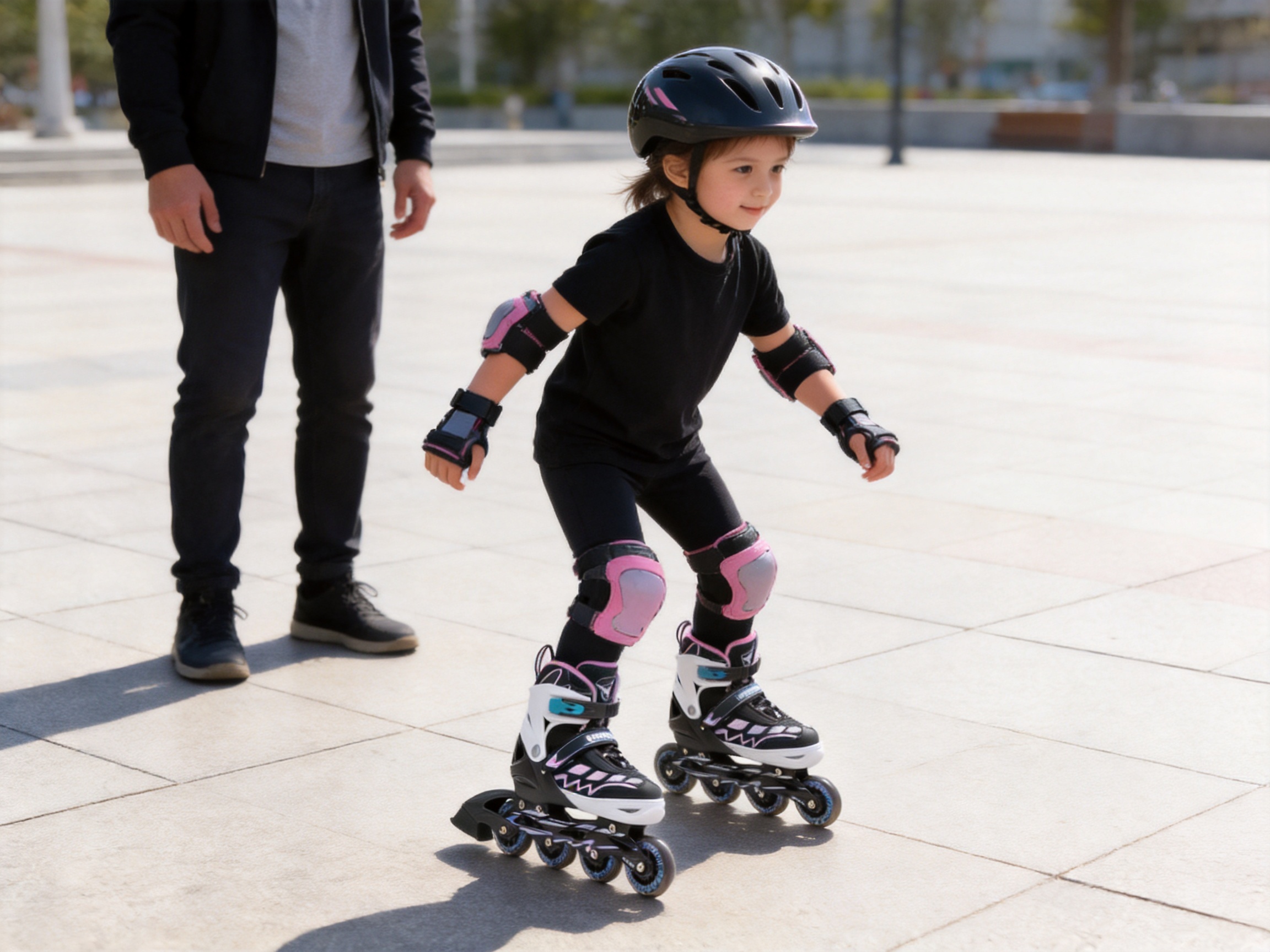
Research, Development, and Product Improvement
The company maintains a professional R&D engineering team and launches new products each year. This ongoing development is important in a market where children’s sports equipment must balance safety, comfort, appearance, price, and ease of use.
Product development may involve reviewing customer feedback, studying market demand, evaluating materials, testing component structures, and adjusting manufacturing processes. For adjustable skates, engineering work can focus on the reliability of the adjustment mechanism, the relationship between shell sizes and foot length, the comfort of the upper, and the stability of the wheelbase.
Continuous development also helps the manufacturer serve different markets. Retailers and importers may require different colors, packaging formats, size labels, or product combinations. An experienced engineering team can help translate those commercial requirements into practical production solutions.
The company has obtained multiple national patents, reflecting its focus on product innovation. Patents alone do not guarantee that every model is superior to every competitor, but they indicate that the manufacturer invests in technical development rather than relying only on unchanged designs.
Quality Management and Compliance Strengths
Quality control is especially important for products used by children. Parents, retailers, and importers need confidence that products are manufactured under organized procedures. Ningbo Feile Sporting Goods Co., Ltd. has passed ISO9001, BSCI, and Kmart factory certification systems according to the supplied company information.
ISO9001 relates to quality management system practices. A quality management system can help define responsibilities, document processes, manage nonconformities, and support corrective actions. In a manufacturing environment, these procedures provide a framework for maintaining consistent production and responding to quality issues.
BSCI is associated with social compliance auditing and responsible supply-chain practices. Factory certification systems requested by major retailers can also require attention to working conditions, production management, documentation, and operational standards. These systems are relevant to international buyers evaluating manufacturing partners.
The company also reports product certifications including 3C, CE, EN71, EN62115, ASTM, EMC, and EN13843:2009 across its product portfolio. Buyers should confirm which certification applies to the specific BW-187 configuration, destination market, and final sales package. Certification requirements may vary according to product category, country, age classification, electrical content, and intended use.
For importers, this distinction is important. A responsible purchasing process should request current technical files, test reports, declarations, labeling information, and other documents relevant to the exact model. The manufacturer’s broad certification experience can make this process more efficient, but model-specific verification remains necessary.
OEM and One-Stop Sourcing Advantages
The company’s capabilities make it suitable for buyers looking for more than a single finished product. Its range includes children’s scooters, inline skates, roller skates, ice skates, and sports protective gear. This allows international customers to explore a broader product program through one manufacturing partner.
One-stop sourcing can simplify communication, sampling, order coordination, packaging development, and shipment planning. A retailer could potentially combine adjustable inline skates with helmets, knee pads, elbow pads, scooters, or other complementary items. A unified product program may create a more consistent presentation in stores and online channels.
OEM customers may also benefit from the manufacturer’s production infrastructure. Depending on the project, cooperation can include product selection, color development, logo application, packaging, size labeling, and market-specific documentation. The exact options should be confirmed during technical and commercial discussions.
Working with a specialized factory can reduce the need to coordinate multiple unrelated suppliers. It may also help buyers develop seasonal collections or expand from one successful product category into another. Because skating and scooter products share some materials, components, and market knowledge, an experienced manufacturer can provide useful category insight.
Packaging, Logistics, and Order Planning
The supplied product information includes packing dimensions for the three size ranges. The listed dimensions are 540 × 410 × 290 millimeters for sizes 31–34, 560 × 420 × 305 millimeters for sizes 35–38, and 600 × 430 × 315 millimeters for sizes 39–42.
| Size Range | Listed Packing Dimensions | Planning Consideration |
|---|---|---|
| 31–34 | 540 × 410 × 290 mm | Suitable for compact storage and shipment planning |
| 35–38 | 560 × 420 × 305 mm | Requires allowance for mid-range product volume |
| 39–42 | 600 × 430 × 315 mm | Requires additional space for the larger size range |
Packaging dimensions are useful for estimating carton requirements, warehouse space, pallet planning, container loading, and freight costs. Buyers should confirm whether the dimensions refer to individual retail packaging, inner cartons, or master cartons before final logistics calculations.
Clear packaging information can also support international distribution. Importers can coordinate warehouse receiving, barcode placement, carton marking, and retail display planning more effectively when product measurements are confirmed in advance.
For OEM projects, packaging can be developed to match the target market. Buyers may request multilingual instructions, safety warnings, care information, age guidance, product images, or retailer-specific labels. These details should be reviewed early because they can affect printing schedules and order lead times.
Responsible Use and Safety Considerations
Inline skating is an active sport, and protective equipment should be treated as essential for beginners. A helmet, wrist guards, knee pads, and elbow pads can help reduce the severity of injuries during ordinary falls. Protective gear should fit correctly and be inspected regularly.
Children should learn in a controlled area away from vehicles, deep slopes, stairs, water, loose gravel, and crowded pathways. Beginners should start slowly and practice with an adult or qualified instructor when possible. They should understand how to stop before attempting longer distances or higher speeds.
The BW-187 is intended for basic recreational practice. It should not be used for activities beyond its intended purpose, including competitive racing, aggressive tricks, jumping, or high-speed downhill skating unless the product has been specifically assessed and approved for those activities.
Regular inspection is a practical safety habit. Before each session, users should check whether the wheels rotate normally, the fasteners are secure, the adjustment mechanism is locked, and the upper and closures show no obvious damage. Any damaged component should be repaired or replaced before further use.
Safety information is also important for retailers. Product listings and packaging should communicate appropriate age guidance, surface recommendations, protective equipment requirements, and basic maintenance instructions. Clear information helps customers use the product as intended and supports a better ownership experience.
Maintenance for Longer Product Life
Simple maintenance can preserve comfort and handling. After outdoor use, the skates should be wiped clean and allowed to dry naturally. They should not be stored while wet, especially in a closed bag or damp room. Moisture and dirt can affect soft materials, metal parts, fasteners, and wheel performance.
The wheels should be checked for unusual wear or embedded debris. If a wheel becomes damaged or does not rotate smoothly, it should be inspected by a qualified adult or service provider. The adjustment system should also be operated carefully and should never be forced beyond its intended range.
Fastening systems should remain secure but should not be tightened excessively. Over-tightening may create uncomfortable pressure, while under-tightening may allow unwanted movement inside the skate. Children should be taught not to modify structural parts or remove components without adult supervision.
Proper storage is equally important. Keeping the skates in a cool, dry, ventilated location helps protect the upper and reduces the chance of odor or material deterioration. Storing them away from direct heat and strong sunlight can also help preserve their appearance and structure.
Commercial Value for Retailers and Distributors
The BW-187 has several characteristics that can support retail sales. Its adjustable design is easy to explain to customers, its target audience is broad, and its use case is clear. Parents can understand the benefit of purchasing a skate that accommodates growth, while teenagers can recognize its suitability for practice and casual recreation.
The three size groups simplify product communication. Retailers can organize the product by age or foot length while still advising customers to confirm the actual fit. Product pages can highlight the adjustable structure, beginner-friendly handling, comfortable upper, sturdy construction, and suitable recreational environments.
The model can also be included in seasonal promotions. Inline skates are relevant during school holidays, summer recreation, birthday gifting, outdoor activity campaigns, and sports equipment promotions. Bundling the skate with protective gear can create a more complete beginner package and encourage safer purchasing behavior.
For distributors, the product may serve as an entry model within a broader skating collection. It can be paired with more advanced models for older or experienced users, creating a tiered product range. The BW-187 can attract first-time buyers, while the manufacturer’s wider product portfolio supports future upgrades or category expansion.
Retail success depends on more than product features. Accurate sizing, reliable stock, attractive packaging, suitable photography, clear instructions, and responsive after-sales support all influence customer satisfaction. The manufacturer’s OEM and sourcing capabilities can help buyers coordinate these elements during product development.
Why the Manufacturing Location Matters
The company is located in Yuyao City, Ningbo, Zhejiang Province, within the Lianghui Economic District. The area is known for its plastics industry and provides access to manufacturing resources relevant to sports equipment production. The company also benefits from convenient access to Ningbo Airport and Shanghai, supporting international logistics and customer visits.
Location can affect supply-chain efficiency, especially for products requiring plastic molding, hardware, packaging, and assembly. Access to experienced material suppliers and industrial services may support faster development and more reliable sourcing. Proximity to major transportation infrastructure can also assist export planning.
For overseas customers, a manufacturing base in a well-established industrial region may provide advantages in communication, component availability, production scalability, and shipping coordination. These benefits are strengthened when the factory has its own engineering, mold, molding, sewing, and assembly resources.
Product Selection Guidance for Buyers
When selecting the BW-187, buyers should begin with the user’s current foot length and expected growth. The three size ranges provide flexibility, but the correct range should still be chosen carefully. A skate should not be selected solely on the basis of age because foot length and shape vary among children and teenagers.
Buyers should also consider how the skates will be used. The model is appropriate for beginner practice and casual skating on suitable flat surfaces. It is not positioned as a specialist racing or aggressive skating product. Matching the product to the intended activity helps ensure realistic expectations.
For commercial buyers, important questions may include minimum order quantity, available colors, packaging options, sample policy, delivery schedule, replacement parts, warranty terms, testing documentation, and customization capability. The factory can provide the most accurate answers based on the specific order configuration.
Importers should verify destination-market requirements before confirming production. These may include labeling, warning language, testing, packaging materials, chemical restrictions, age grading, and documentation. The company’s existing certification experience can support the process, but the buyer remains responsible for confirming applicable legal obligations in the target market.
Environmental and Operational Considerations
Sports equipment manufacturers are increasingly expected to consider material efficiency, packaging reduction, production waste, and responsible factory management. An integrated manufacturing system can help identify opportunities for better process control and more efficient use of materials.
Accurate molding can reduce rejected parts caused by dimensional inconsistency. Organized assembly procedures can reduce rework. Clear packaging specifications can help avoid unnecessary materials while still protecting the product during shipment. These operational improvements may support both commercial efficiency and more responsible manufacturing.
Buyers interested in sustainability should ask specific questions about material composition, recycled content, packaging design, factory waste handling, energy use, and product end-of-life considerations. These details should be evaluated based on documented factory practices rather than general assumptions.
Four Reasons to Consider This Model
1. It Grows with the User
The adjustable structure is the most visible practical advantage. Children and teenagers can continue using the skates as their feet develop within the selected size range. This can reduce replacement frequency and make the purchase more useful over time.
2. It Supports Beginner Learning
The design emphasizes basic balance, stable handling, and ease of use. It is intended for users who are learning from the beginning and need a predictable platform for practicing fundamental movements.
3. It Balances Comfort and Support
The upper is designed to provide a snug, supportive fit while remaining comfortable for everyday recreational use. Its lightweight practical approach can help reduce fatigue during longer practice sessions.
4. It Comes from an Experienced Category Manufacturer
The manufacturer has specialized in scooters and skating products since 2010 and operates a substantial production system with automatic lines, engineering resources, and multiple workshops. This background can be valuable for buyers seeking stable OEM production and broader sourcing support.
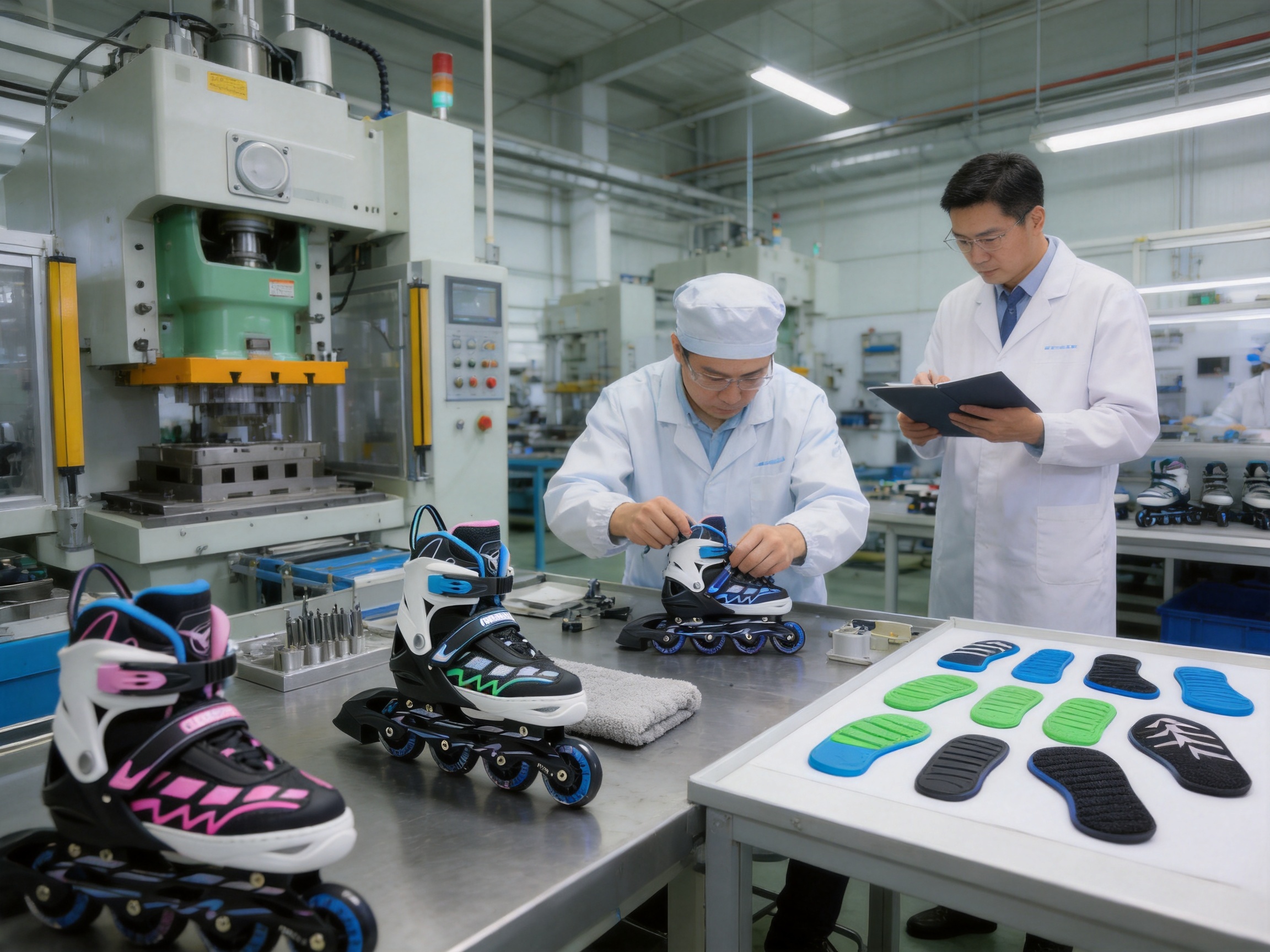
Q&A About the Adjustable Kids Inline Skate
Q1: Who is the BW-187 designed for?
The BW-187 is designed for children, older children, and teenagers who are beginners or casual recreational skaters. It is suitable for users learning balance, posture, gliding, and other basic inline skating techniques.
Q2: What size ranges are available?
The product is available in three size ranges: 31–34, 35–38, and 39–42. Buyers should confirm foot measurements and use the manufacturer’s fitting guidance before placing an order.
Q3: What is the main benefit of the adjustable design?
The adjustable design allows one pair of skates to accommodate foot growth within the relevant size range. This can extend the useful period of the product and reduce the need for frequent replacement.
Q4: Is this a racing or professional performance skate?
No. The BW-187 is positioned as a beginner and recreational inline skate. Its design focuses on comfort, basic stability, ease of learning, and daily practice rather than racing, aggressive tricks, or specialized performance.
Q5: Where can the skates be used?
They are suitable for casual skating on appropriate indoor and outdoor flat surfaces, such as indoor activity areas, plazas, and smooth residential spaces where skating is allowed. Wet, uneven, crowded, or dangerous areas should be avoided.
Q6: Does the skate eliminate the risk of falling?
No. Inline skating is an active sport, and beginners may fall while learning. Users should wear a helmet and appropriate protective gear, practice at a controlled speed, and learn basic stopping techniques under suitable supervision.
Q7: What maintenance is recommended?
Users should keep the skates clean and dry, inspect the wheels and fasteners regularly, check the adjustment mechanism before use, and store the product in a cool, dry, ventilated place. Damaged parts should be repaired or replaced before further skating.
Q8: What manufacturing facilities does the supplier have?
The company reports a 20,000-square-meter workshop, five automatic production lines, a professional R&D engineering team, and mold, injection molding, sewing, and assembly workshops. These capabilities support integrated production and OEM cooperation.
Q9: Can the product be customized for OEM orders?
The manufacturer provides OEM and one-stop sourcing services for skating and scooter equipment. Potential customization may include colors, packaging, branding, and other project-specific requirements. Exact options, minimum order quantities, and technical conditions should be confirmed directly with the factory.
Q10: Does the company have quality and compliance certifications?
The company reports passing ISO9001, BSCI, and Kmart factory certification systems and having products with certifications including 3C, CE, EN71, EN62115, ASTM, EMC, and EN13843:2009. Buyers should request documentation for the specific product configuration and destination market.
Q11: What are the listed packing dimensions?
The supplied information lists 540 × 410 × 290 millimeters for sizes 31–34, 560 × 420 × 305 millimeters for sizes 35–38, and 600 × 430 × 315 millimeters for sizes 39–42. Buyers should confirm the packaging level represented by these figures before final logistics planning.
Q12: Why might retailers choose an adjustable beginner skate?
An adjustable beginner skate can appeal to families seeking longer product use, help simplify inventory by reducing the number of fixed sizes, and complement related products such as helmets, pads, scooters, and other sports equipment.
Conclusion
The BW-187 Adjustable Kids Inline Skate is designed as a practical starting point for children and teenagers entering the world of inline skating. Its adjustable size structure addresses the challenge of growing feet, while its comfortable upper, supportive fit, stable wheelset, and straightforward design support the needs of beginners.
Compared with fixed-size alternatives, it can provide a longer adaptation period. Compared with highly specialized performance skates, it offers a simpler and more accessible learning platform. Compared with novelty-focused or low-cost products, it places greater emphasis on everyday usability, comfort, and sturdy construction.
The product is supported by the manufacturing capabilities of Ningbo Feile Sporting Goods Co., Ltd., including automatic production lines, mold development, injection molding, sewing, assembly, engineering, quality management, and international sourcing experience. The company’s broader range of scooters, skates, and protective gear also makes it a useful partner for buyers seeking a coordinated sports equipment program.
For families, the model offers a practical way to introduce young users to skating. For retailers and distributors, it provides an adjustable beginner product with clear market positioning. For OEM customers, it represents an opportunity to work with a specialized manufacturer capable of supporting product development, production, packaging, and broader category sourcing.
As with all active sports equipment, correct sizing, protective gear, responsible supervision, and regular maintenance are essential. When used in suitable environments and for its intended purpose, the BW-187 can help young skaters build confidence, improve balance, and enjoy a healthy recreational activity over an extended period.
References
1. Product information supplied for the BW-187 Adjustable Kids Inline Skate, including size ranges, product features, applications, and packing dimensions.
2. Company information supplied for Ningbo Feile Sporting Goods Co., Ltd., including facilities, workforce, product categories, engineering capabilities, and manufacturing workshops.
3. ISO 9001 Quality Management Systems: Fundamentals and Vocabulary.
4. ISO 9001 Quality Management Systems: Requirements and quality-management principles.
5. General guidance on children’s inline skating safety, protective equipment, surface selection, and beginner instruction.
6. General principles of injection molding, mold maintenance, production-line control, and dimensional consistency in plastics manufacturing.
7. General retail and distribution practices for adjustable children’s sports equipment, including inventory planning, packaging review, and product documentation.
Product: BW-187 Adjustable Kids Inline Skate

Recommended Articles

Get in Touch
Your email address will not be published. Required fields are marked *
Have a project in mind? Contact with us!
We are happy to answer your questions. Please fill out this form
and one of our professional team will get back to you as soon as possible.

We specialize in producing various types of children's toy cars, children's skateboards, and ice skates.
